 Pin it
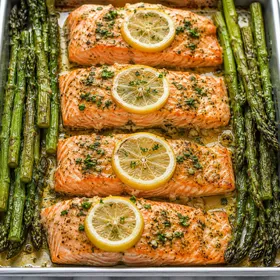
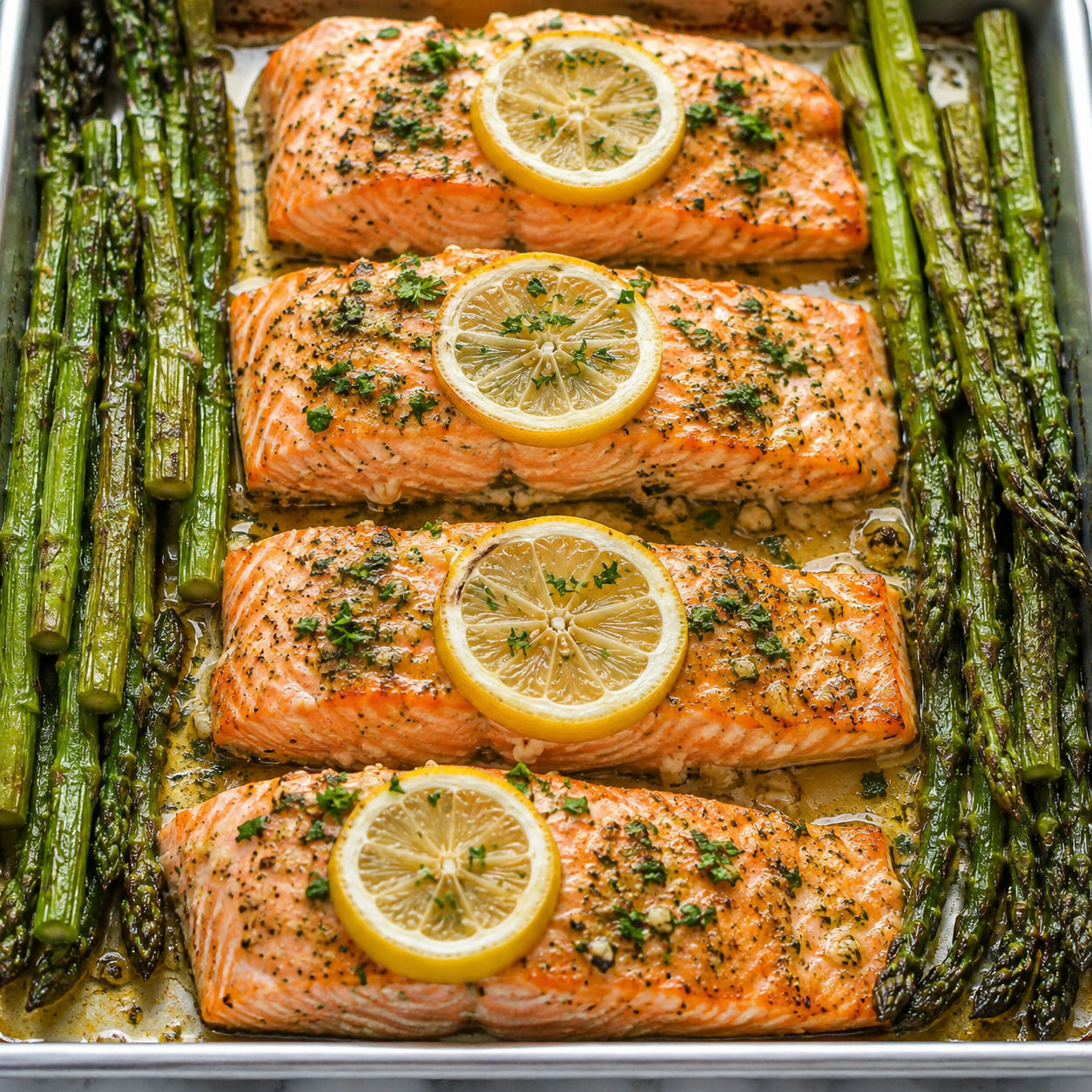
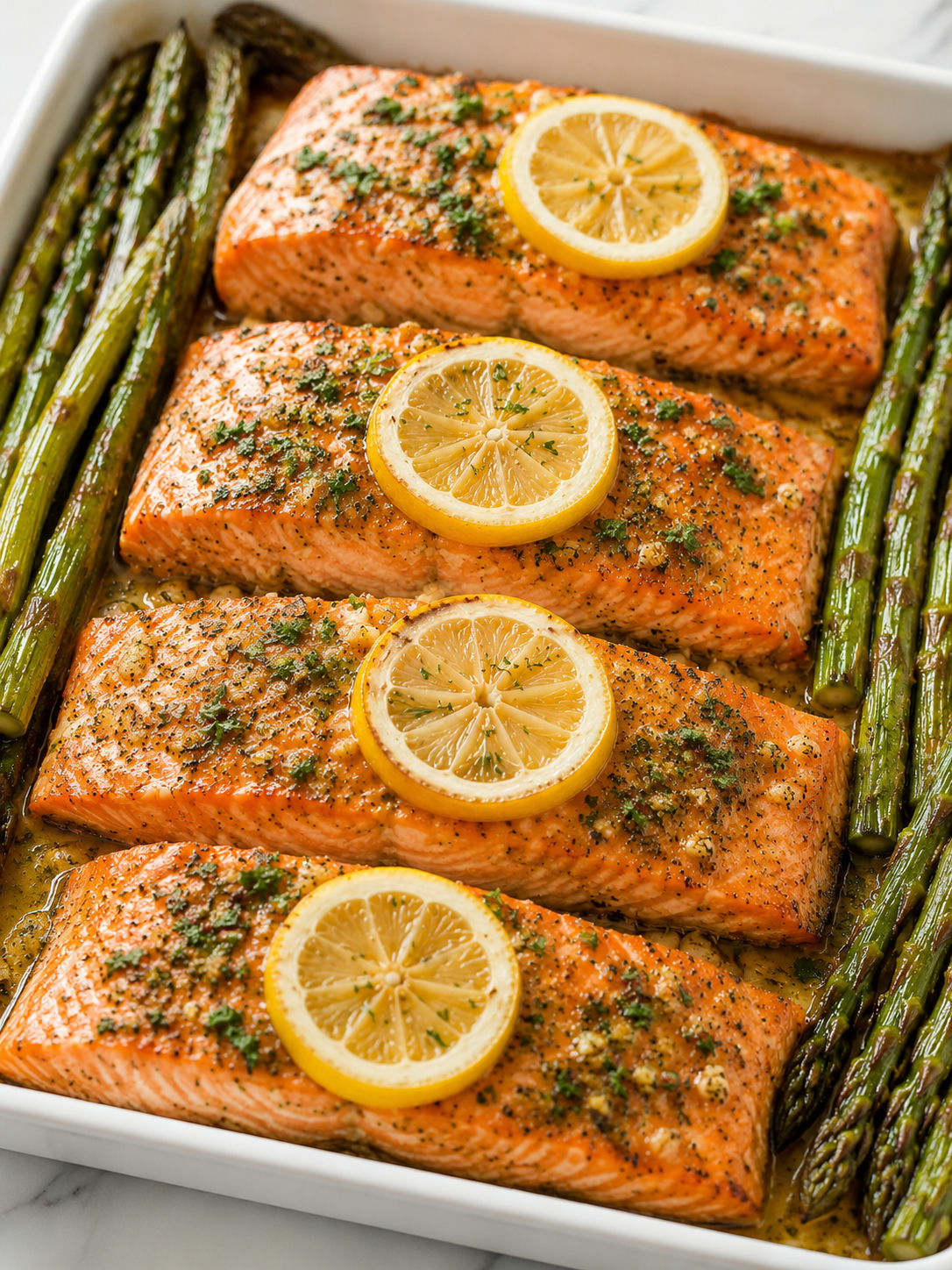
This juicy, flaky salmon baked in a rich garlic butter sauce with fresh lemon is simple enough for a weeknight and nice enough to serve when you want dinner to look planned. The butter melts into the fish, the lemon keeps it bright, and the asparagus roasts right beside it.
I like this version because it does not ask you to babysit a skillet. Pat the salmon dry, season it well, spoon over the garlic butter, and let the oven do the quiet work.
The buttery lemon lineup
Choose salmon fillets that are similar in thickness so they finish at the same time. Medium asparagus works well here because it can roast alongside the fish without turning limp.
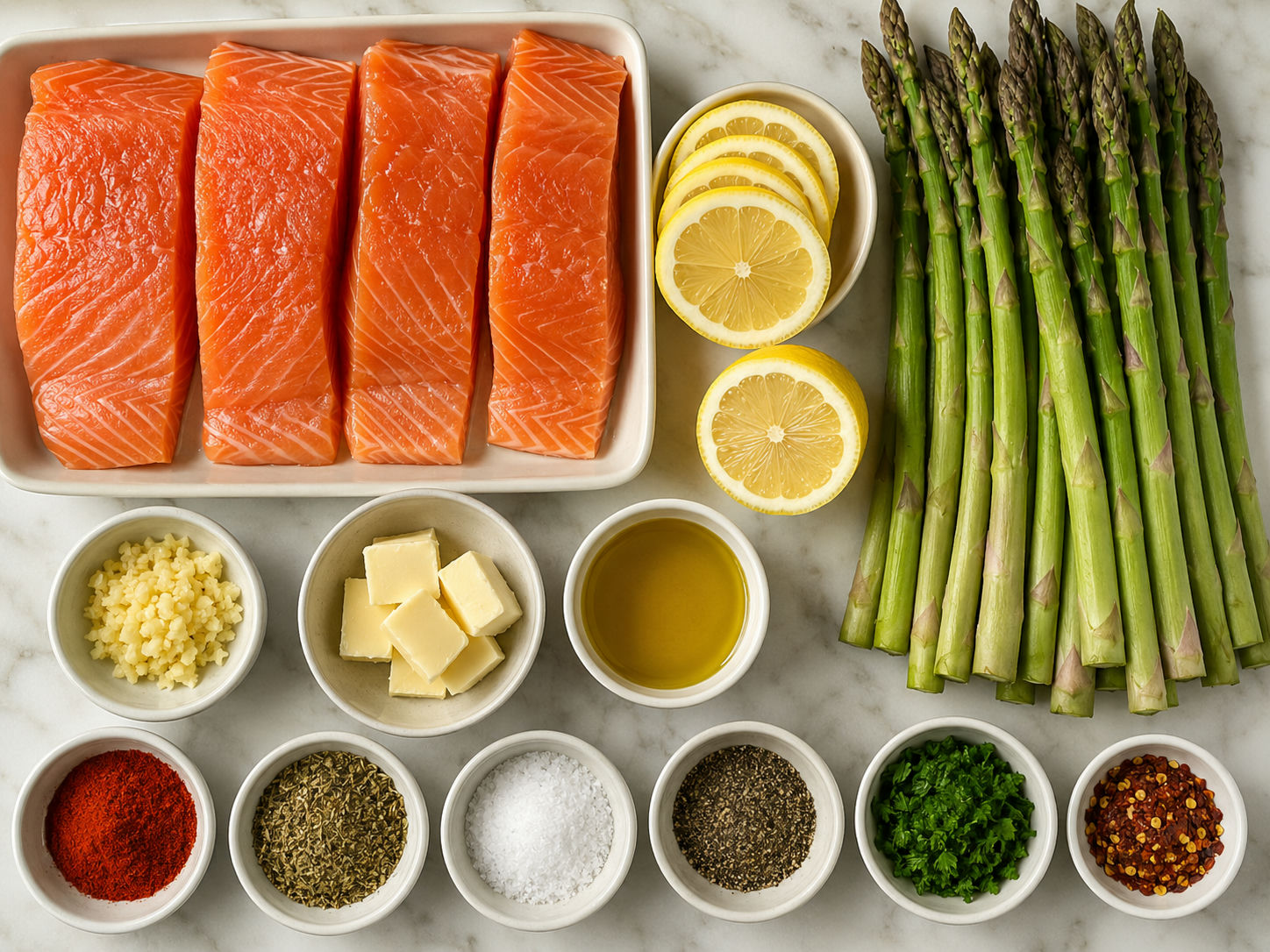
- Salmon fillets. Center-cut pieces stay juicy and bake evenly, especially when they are close in size.
- Asparagus. The spears roast in the same pan and soak up the lemon butter at the edges.
- Unsalted butter. It gives the sauce body and lets you control the salt.
- Olive oil. A little oil helps the asparagus roast instead of dry out.
- Fresh garlic. Minced garlic perfumes the butter and clings to the top of the fish.
- Fresh lemon. Juice brightens the sauce while slices protect the salmon from drying on top.
- Paprika and Italian seasoning. They add color and an easy herb flavor without crowding the fish.
- Parsley. A fresh finish that makes the rich butter taste cleaner.
Bake it juicy and simple
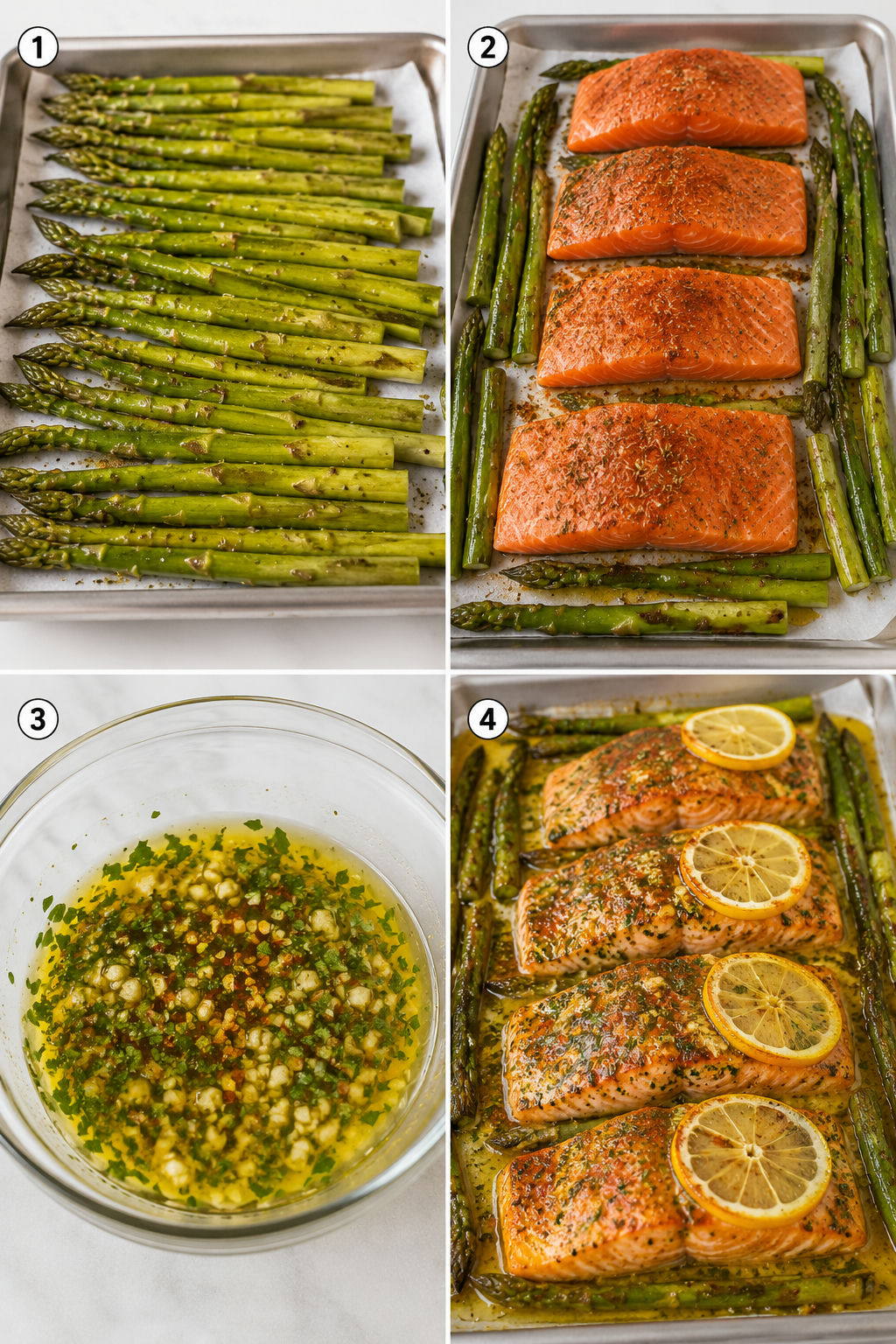
- Heat the oven. Set the oven to 400°F and line a rimmed sheet pan with parchment or foil for easier cleanup.
- Season the asparagus. Spread trimmed asparagus on the pan, drizzle with olive oil, and season with salt and pepper.
- Add the salmon. Pat the fillets dry, place them among the asparagus, and season the tops with salt, pepper, paprika, and Italian seasoning.
- Mix the garlic butter. Stir melted butter with garlic, lemon juice, and a little parsley until the garlic is evenly suspended.
- Coat and top. Spoon the butter over the salmon and asparagus, then add lemon slices and a small pat of butter to each fillet.
- Bake and broil. Bake for 12-15 minutes until the salmon flakes. Broil for 1-2 minutes if you want a lightly browned top.
- Finish hot. Spoon the pan juices over the fish and sprinkle with parsley before serving.
Juicy flaky salmon, simply baked
The main thing with salmon is to stop cooking before it dries out. The center should look moist, not chalky, and the flakes should separate with gentle pressure. The USDA safe temperature chart lists 145°F for fish and shellfish. I still start checking early because carryover heat keeps working after the pan leaves the oven.
If you are using wild salmon, check sooner. It is usually leaner than farmed salmon and can go from silky to dry faster. Thick farmed fillets have a little more forgiveness.
Why the sauce works
Butter brings richness, lemon cuts through it, and garlic gives the pan juices real depth. Stirring the lemon juice into melted butter can look a little separated at first. That is fine. Once it hits the hot pan and mingles with the salmon juices, it becomes a glossy spoon-over sauce.
For a similar bright one-pan dinner, try one-pan lemon herb chicken and vegetables. It uses the same dinner logic, protein in the center, vegetables around the sides, and a lemony finish.
Asparagus timing matters
Medium asparagus is the easiest match for salmon. Very thin spears can overcook by the time the fish is done, so add them halfway through baking or pull them off the pan early. Thick asparagus may need a quick trim and a firm toss in oil so the tips do not dry out.
The FDA has useful seafood buying and storage guidance, including choosing fish that smells mild and keeping seafood cold until cooking. Their seafood safety guide is worth checking if you cook fish often.
Easy swaps and sides
No Italian seasoning? Use dried oregano with a pinch of thyme. You can skip the paprika, but it gives the salmon a warmer color. Red pepper flakes are good if you like a quiet heat behind the lemon.
Serve this with rice, roasted potatoes, or a crisp salad. The buttery pan juices are rich, so something fresh helps. I like it with fresh hearty protein salad when I want extra greens, or mixed fruit salad with honey lime dressing when the meal needs a cool, bright side.
Store it without drying
Leftover salmon is best handled gently. Chill it in a shallow airtight container and use it within 2 days. Warm it covered over low heat with a splash of water, or flake it cold over salad. The microwave works in a pinch, but short bursts are better than one long blast.
If you plan to meal prep, cook the asparagus a shade firm. It softens more when reheated. The salmon can also be served cold with a squeeze of lemon and a spoonful of the leftover butter sauce.
Summary
Serve the salmon hot from the pan with the buttery lemon juices spooned over the top.
Frequently Asked Questions
- How long should salmon bake at 400°F?
-
Most 6-ounce salmon fillets bake in 12-15 minutes at 400°F. Start checking around 11 minutes if your pieces are thin, and give thick center-cut fillets a few extra minutes.
- Can I use frozen salmon for this recipe?
-
Yes, thaw it fully in the refrigerator first, then pat it very dry. Extra moisture on the surface can dilute the garlic butter and make the fish steam instead of roast.
- What can I use instead of asparagus?
-
Green beans, broccolini, thin zucchini spears, or halved baby potatoes all work. Potatoes need a head start in the oven because they take longer than salmon.
- How do I know when baked salmon is done?
-
The fish should turn opaque and separate into moist flakes when nudged with a fork. For food safety, the USDA lists 145°F as the safe internal temperature for fish and shellfish.
- Can I make lemon garlic butter salmon ahead?
-
You can mix the butter sauce and trim the asparagus a day ahead. For the best texture, bake the salmon right before serving because reheated salmon can dry out quickly.
- How should I store leftovers?
-
Refrigerate leftovers in an airtight container for up to 2 days. Reheat gently in a covered skillet over low heat with a spoonful of water or butter until just warm.
- Is this recipe low carb?
-
Yes, the salmon and asparagus are naturally low in carbohydrates. Serve it as written, or add cauliflower rice if you want a fuller low-carb plate.