 Pin it
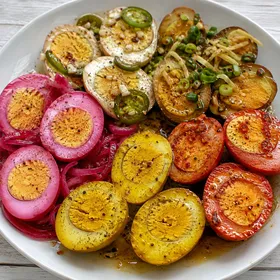
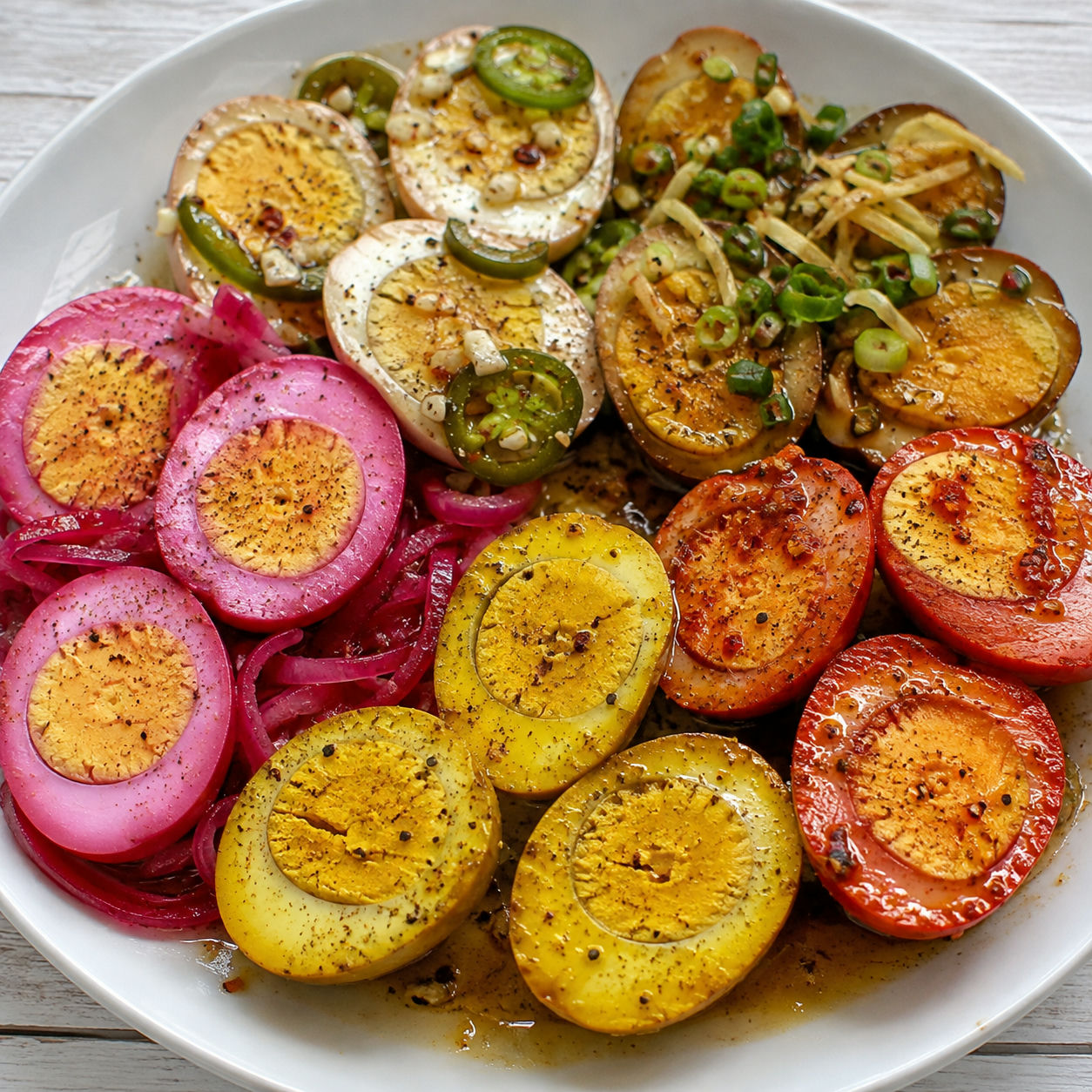
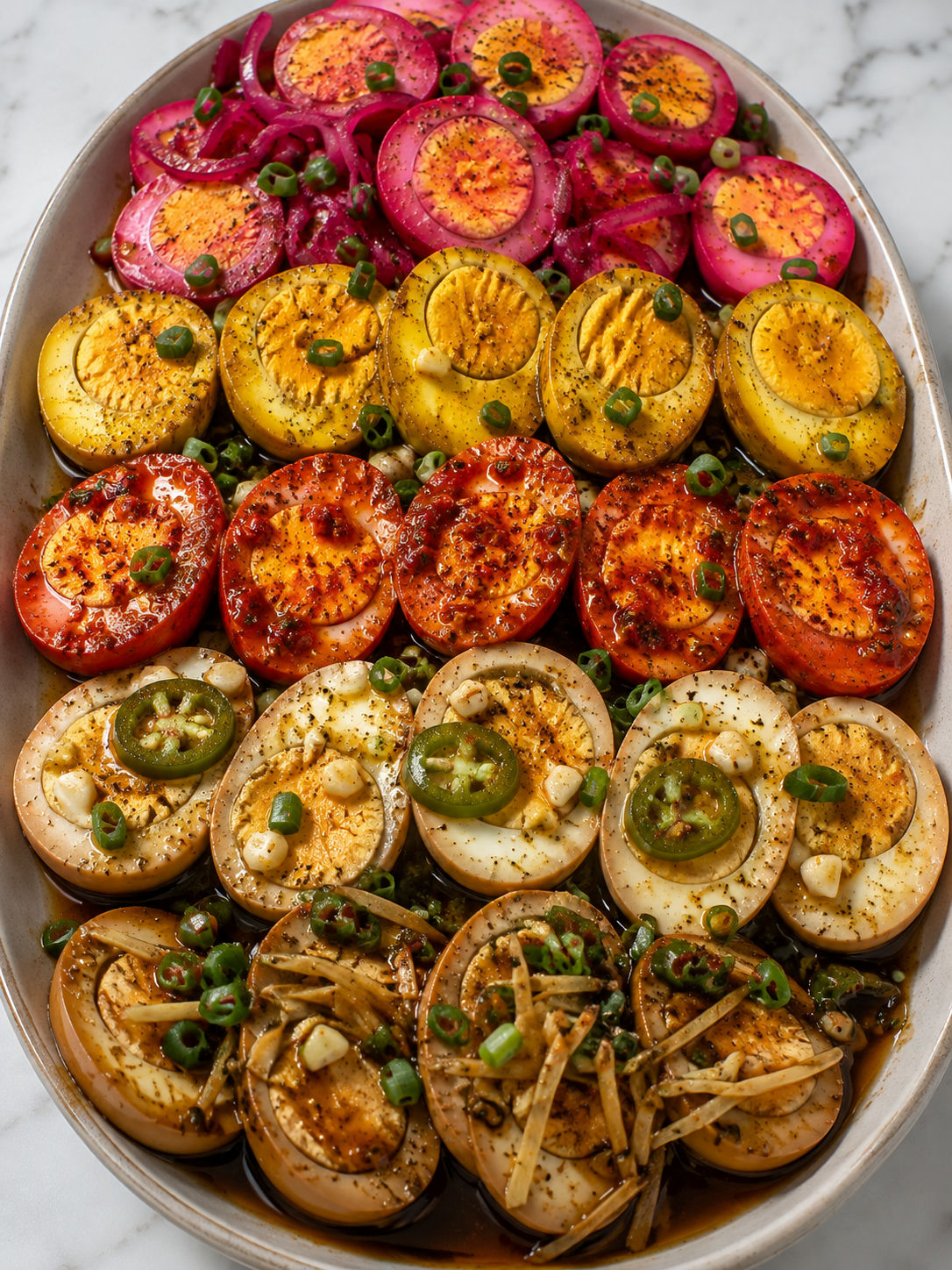
Pickled eggs just got a serious upgrade! Instead of one plain jar, this recipe gives you five small batches with very different moods. There is a beet-pink jar, a spicy garlic jar, a golden curry jar, a chili rice-vinegar jar, and a soy ginger jar.
I like this setup because it turns one carton of eggs into snacks that actually feel planned. Slice them over salad, tuck them onto a board, or eat one cold from the fridge with cracked pepper.
Upgraded Pickled Egg Lineup
Start with well-cooked eggs and clean jars. The brines do the rest, so use fresh spices and vinegar with clear flavor.
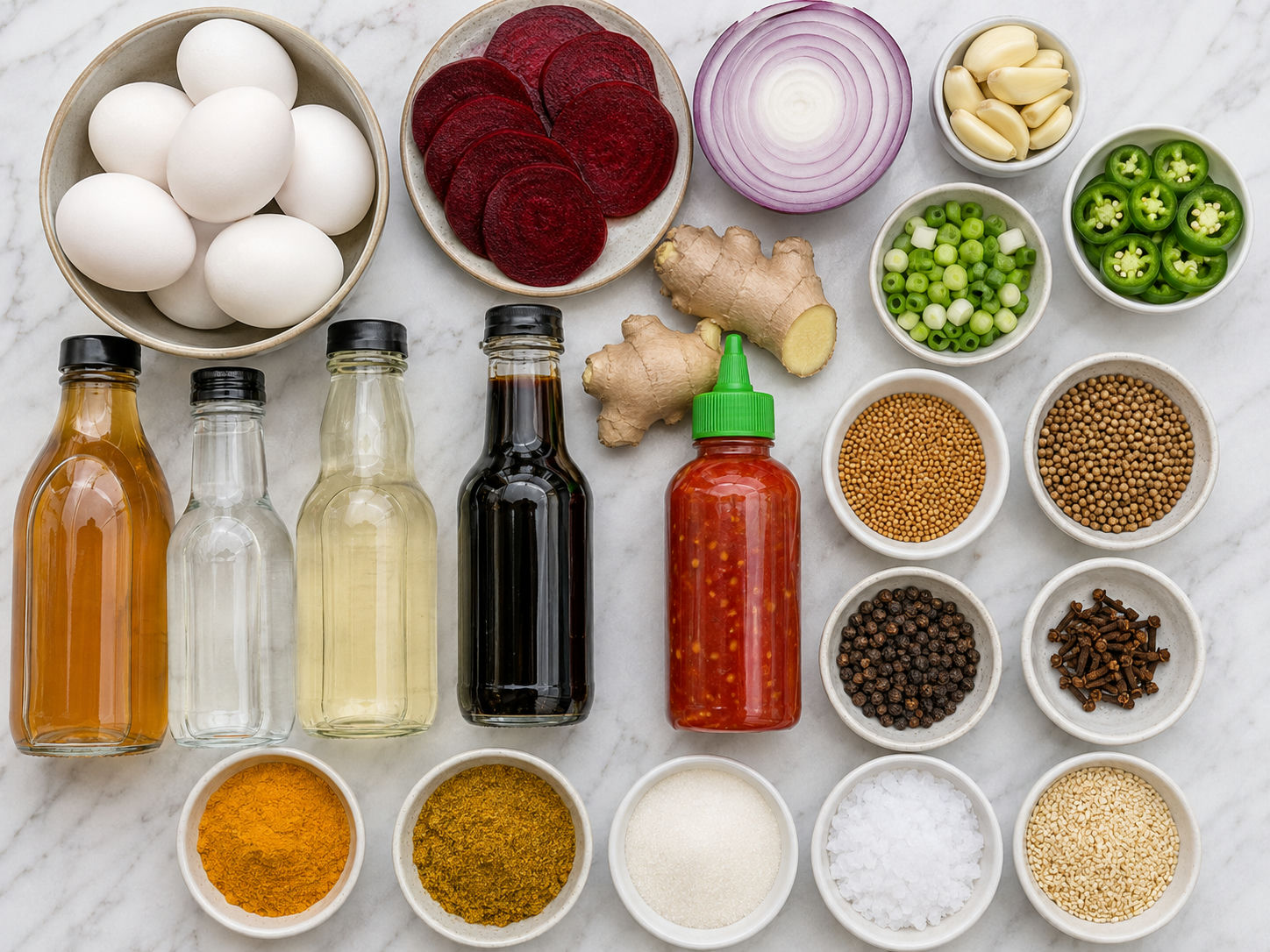
- Hard-boiled eggs. The base of every jar, firm enough to slice cleanly but still creamy in the yolk.
- Vinegar. Gives the eggs their bright tang and helps the refrigerator brine do its job.
- Beet and red onion. Stain one jar deep pink with earthy sweetness and a sharp onion bite.
- Garlic and jalapenos. Make the spicy jar bold, savory, and a little hot.
- Mustard and coriander seeds. Add small pops of pickle-shop spice without muddying the brine.
- Curry powder and turmeric. Turn one jar golden and warm, with a gentle spice aroma.
- Chili sauce and rice vinegar. Give the red jar a softer acidity and steady heat.
- Soy sauce, ginger, and scallions. Build a salty, savory brine that is excellent over rice bowls.
Build Bright Refrigerator Jars
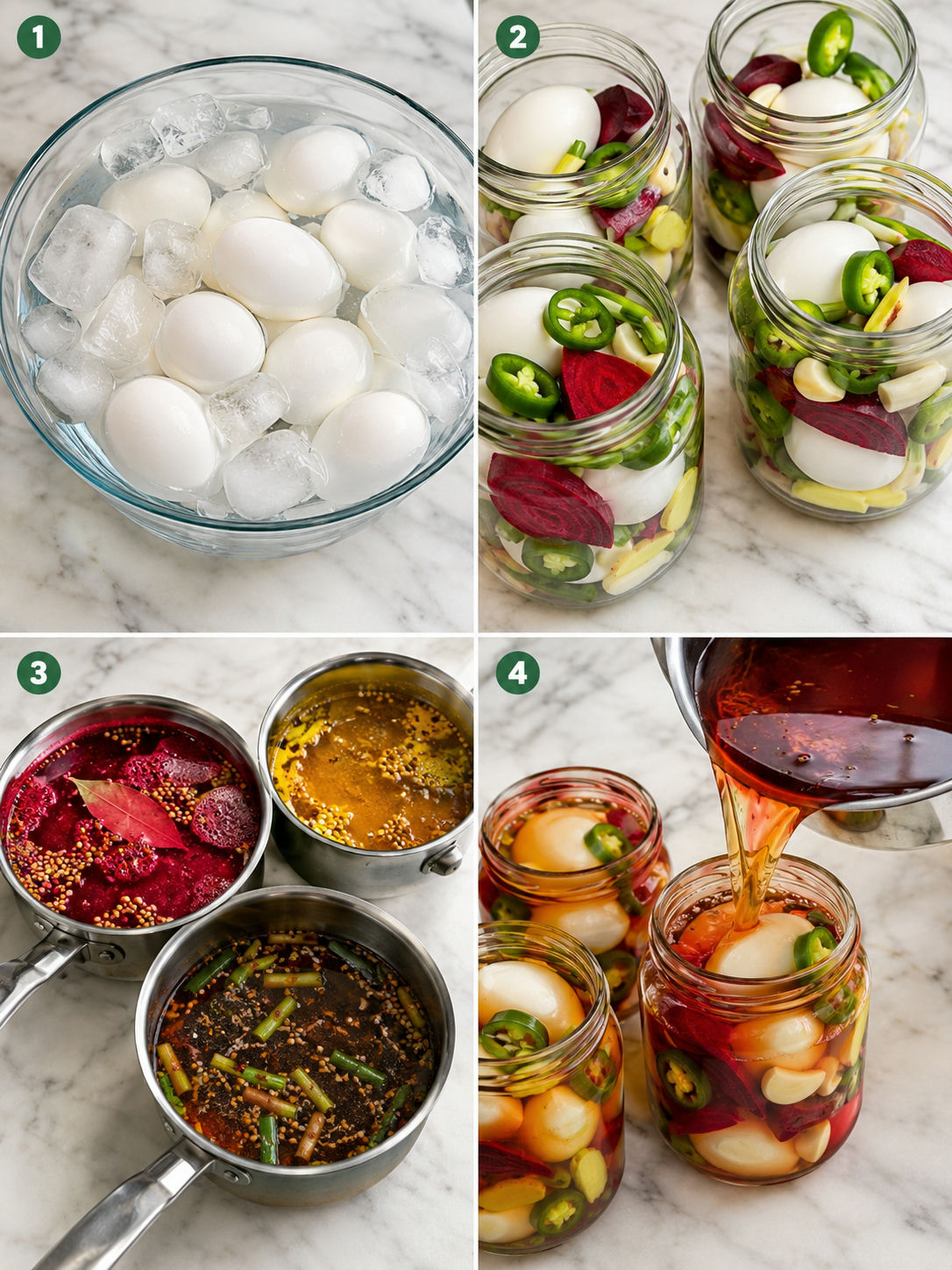
- Cook the eggs. Steam or boil the eggs until fully set, then cool them in ice water so the shells release cleanly.
- Peel and sort. Peel the eggs under cool running water and divide them among five clean pint jars, six eggs per jar.
- Make each brine. Heat the vinegar mixture for each flavor just until the salt and sugar dissolve. Simmer whole spices for 1-2 minutes when used.
- Pour and cover. Pour warm brine over the eggs until they are fully submerged. Tap the jars gently to release trapped air.
- Cool and refrigerate. Let the jars cool briefly, then seal and refrigerate. Wait at least 24 hours before eating.
- Serve cold. Halve the eggs, spoon a little brine and garnish over them, and keep the rest chilled between servings.
Why Refrigerator Pickling Matters
These eggs are made for the refrigerator, not the pantry. Oklahoma State University Extension notes that there are no home canning directions for pickled eggs and that homemade pickled eggs should stay refrigerated except during short serving windows. That matters because an egg is dense. Vinegar seasons it slowly, and the center does not behave like a sliced cucumber. Read the extension guidance on pickled eggs before treating them like shelf-stable pickles.
For the best texture, keep every egg covered with brine. If an egg floats, press it down with a clean spoon when you open the jar. A small piece of onion or beet sitting above the liquid can spoil faster than the eggs, so tuck the solids under the surface too. If you want another fast vinegar project for the fridge, these quick refrigerator-pickled red onions use the same low-stress idea.
Get Cleanly Peeled Eggs
Ragged whites still pickle fine, but smooth eggs look better in the jar and slice better on a plate. The American Egg Board gives a reliable hard-boiled method with an ice-water chill, which helps stop the cooking and makes peeling easier. Their pickled eggs guide also uses a hot marinade poured over peeled eggs.
If peeling is usually your trouble spot, cook the eggs first and do not rush the chill. Crack the shells all over, then peel under a thin stream of cool water. Older eggs often peel more neatly than very fresh ones. For a lower-fat breakfast approach using the same ingredient, keep how to cook eggs without oil handy for the rest of the carton.
Flavor Timing And Texture
The first day gives you tang around the edge. By day three, the beet jar turns noticeably pink, the curry jar smells warmer, and the soy ginger jar tastes rounded instead of salty. The spicy garlic jar gets hotter as the jalapenos sit, so taste it before adding extra chile flakes next time.
Very strong vinegar can make egg whites firmer over time. That is why these brines balance vinegar with water, beet liquid, rice vinegar, or soy sauce. If you prefer a softer bite, eat the eggs within the first week. If you like a sharper pickle, let them sit a few days longer. To manage freshness before you pickle, use this guide on how to store eggs the right way.
Serving The Five Flavors
The beet eggs are the prettiest, so put those on a snack board with cheddar, rye crackers, and cucumber slices. The spicy garlic eggs are good with cold beer, potato salad, or anything smoky. Curry eggs like a sprinkle of flaky salt and a little chopped cilantro. The chili rice-vinegar eggs are sharp enough for chopped salads. Soy ginger eggs are my favorite over warm rice with sesame seeds and scallions.
For meal prep, leave the eggs whole until serving. Cut eggs dry out faster once sliced. If you are packing lunch, slice one egg in the morning and keep it in a small sealed container away from delicate greens until you are ready to eat.
Summary
These upgraded pickled eggs are tangy, colorful, and practical. Keep them cold, keep them submerged, and give them a few days for the brine to reach the center.
Frequently Asked Questions
- How long do pickled eggs need before eating?
-
You can taste them after 24 hours, but they are still mild in the center. For better flavor, wait 2-5 days. Large eggs may need closer to a week for the brine to season them deeply.
- Can I make these with store-bought hard-boiled eggs?
-
Yes, as long as they are fresh, plain, and kept cold. Check the date and avoid eggs with added flavoring. Pat them dry before packing so the brine stays clean.
- Can I reuse pickled egg brine?
-
I do not reuse egg brine for a fresh batch. Eggs change the strength and cleanliness of the liquid. If you love a flavor, make a fresh brine with the same spices.
- Are pickled eggs shelf-stable?
-
No. These are refrigerator pickled eggs and must stay chilled. Do not store homemade pickled eggs at room temperature or try to can them at home.
- What can I serve with pickled eggs?
-
Serve them with crackers, cheese, olives, sliced cucumbers, smoked fish, or a simple green salad. The beet and curry versions are especially good halved with flaky salt and black pepper.
- How do I make the soy ginger eggs gluten-free?
-
Use gluten-free tamari instead of regular soy sauce. The flavor stays savory and deep, but the recipe avoids wheat-based soy sauce.