
 Pin it
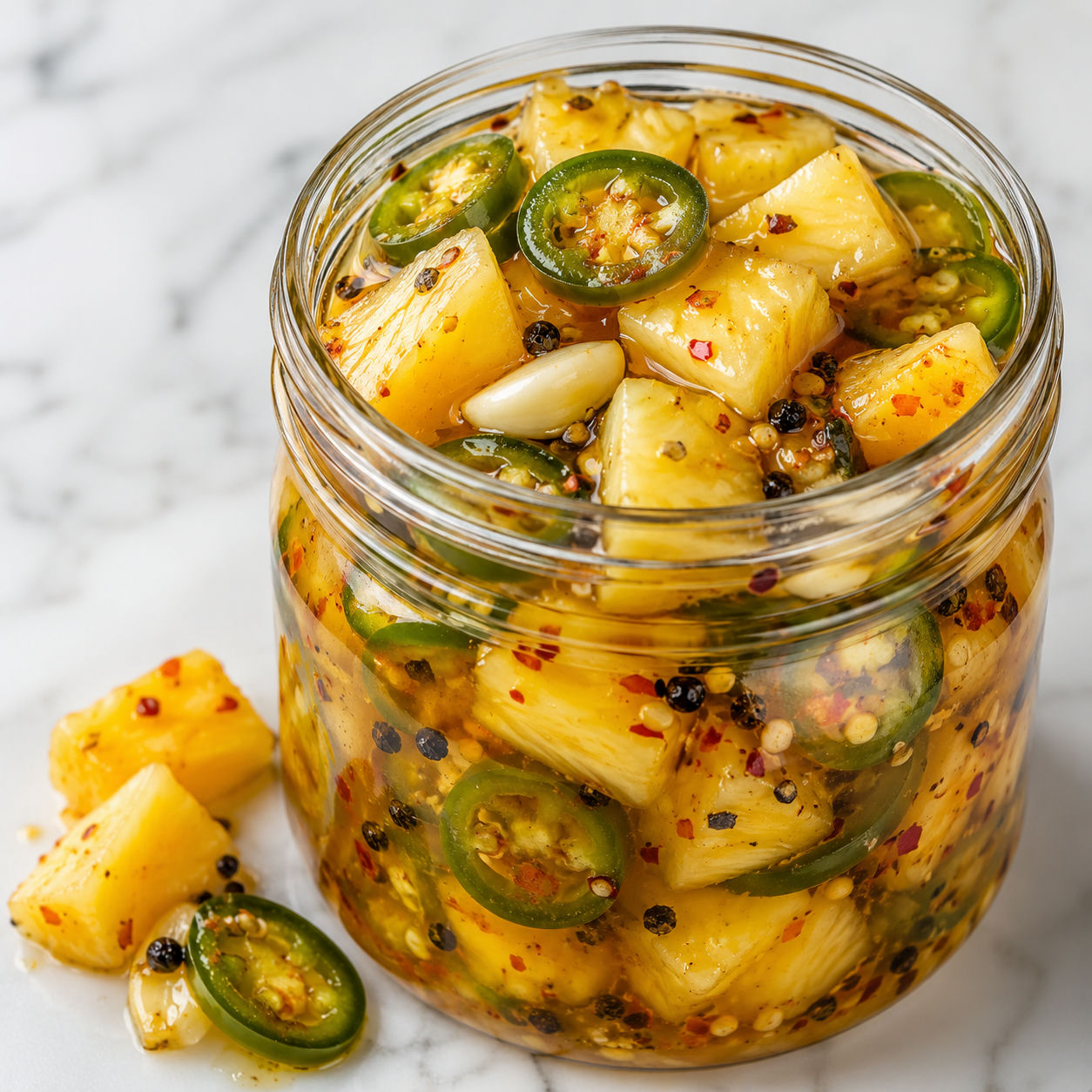
Sweet, tangy, spicy, and crunchy, these Pineapple Jalapeño Pickles are the ultimate little jar to keep in the fridge when dinner needs a lift. The pineapple stays juicy. The jalapeños bring heat. The brine turns sharp, fruity, and garlicky by the next day.
This is a refrigerator pickle, not a shelf-stable canning recipe. That means it is fast, low-stress, and meant to stay cold. Spoon it over tacos, burgers, grilled chicken, rice bowls, or anything smoky from the grill.
The Bright Jar Lineup
Choose pineapple that smells sweet at the base and feels heavy for its size. The jalapeños should be firm and glossy, with no soft patches.
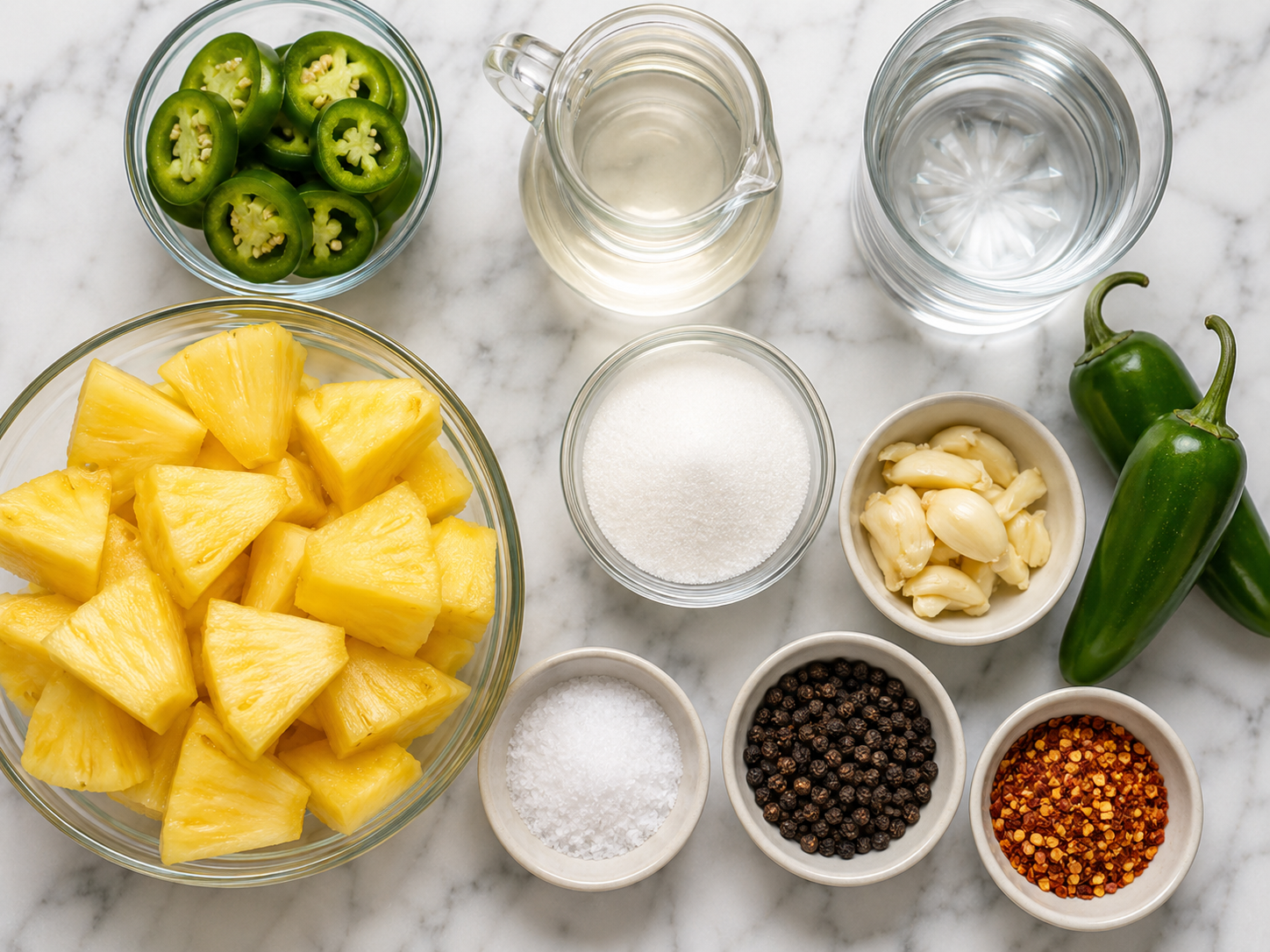
- Fresh pineapple. Gives the pickles their juicy bite, tropical sweetness, and golden color.
- Jalapeños. Add grassy heat and a crisp pepper snap that keeps the jar from tasting candy-sweet.
- White vinegar. Brings clean sharpness and lets the pineapple color stay bright.
- Water. Softens the brine so it tastes tangy instead of harsh.
- Sugar or honey. Rounds out the vinegar and helps the pineapple taste fuller after chilling.
- Kosher salt. Seasons the fruit and pulls the pickle flavor into every piece.
- Garlic. Adds a savory edge that makes these work with tacos, burgers, and BBQ.
- Peppercorns and chili flakes. Bring gentle spice and a little warmth in the finish.
How Pineapple Jalapeño Pickles Set
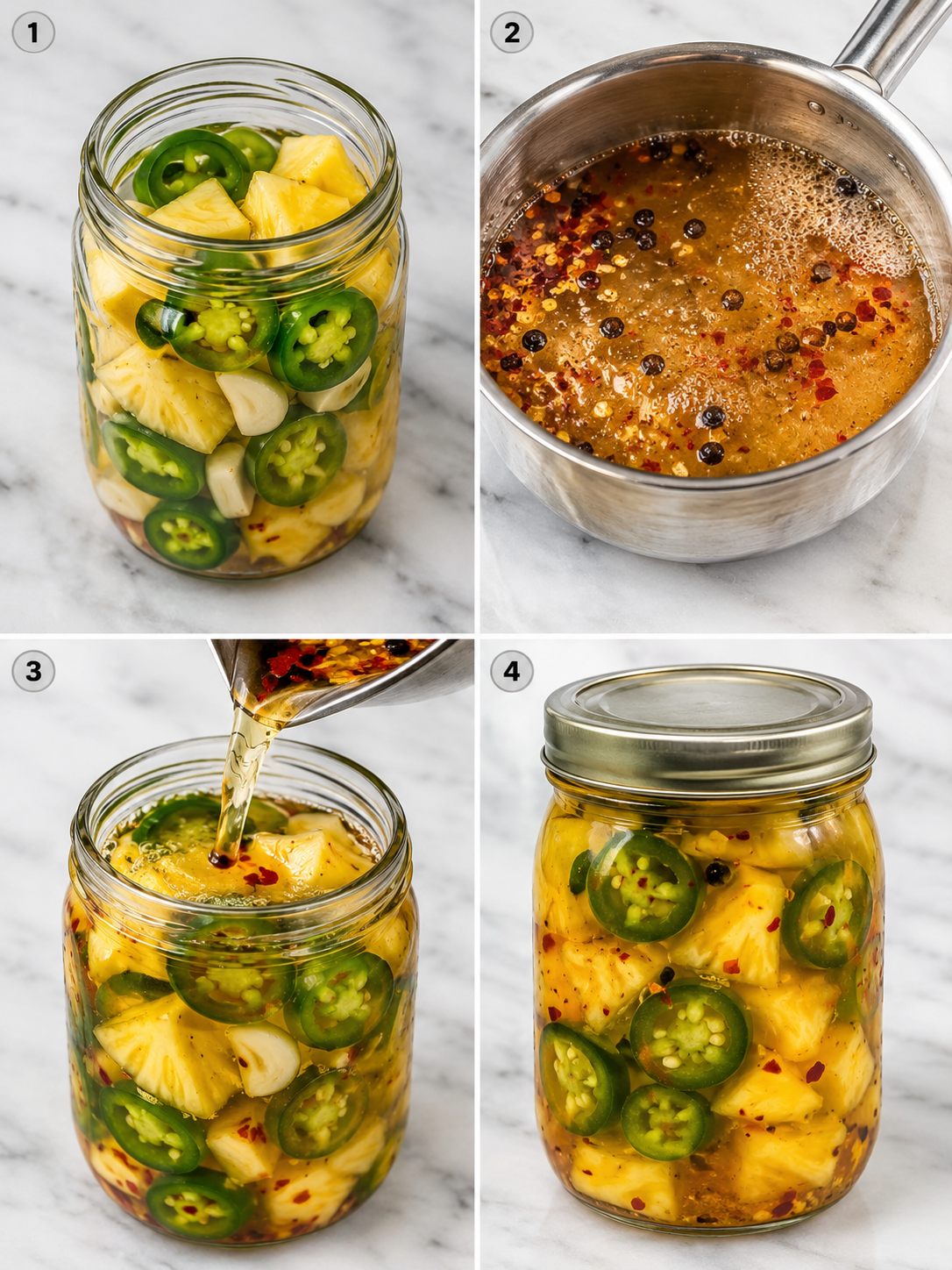
- Prep the jar. Wash a quart jar and lid well, then rinse and dry them. Add the pineapple chunks, jalapeño slices, and smashed garlic.
- Simmer the brine. Combine vinegar, water, sugar, salt, peppercorns, and chili flakes in a small saucepan. Heat until the sugar and salt dissolve.
- Cover the fruit. Pour the hot brine over the pineapple and jalapeños. Press gently so everything is covered.
- Cool safely. Let the jar cool at room temperature for about 30 minutes, then seal it.
- Chill for flavor. Refrigerate at least 4 hours. For the best sweet heat, wait until the next day.
Keep The Crunch
The trick is to pour hot brine over the fruit, not boil the pineapple in the brine. Pineapple is tender already. Too much heat makes it slump and lose the snappy edges that make these pickles so good on sandwiches.
Cut the pineapple into bite-size chunks or short spears. Keep them big enough to hold texture after soaking. Thin jalapeño rings are fine because they need to soften a little. If you like the sharp crunch of quick pickles, you might also like the same cold-brine mood in quick pickled red onions.
Heat You Can Control
Most of the heat in jalapeños sits in the pale ribs and seeds. Remove both for a gentler jar. Leave them in if you want a sharper bite that can stand up to grilled meat and fried food.
The brine gets spicier as it sits. Taste after the first overnight chill before adding more peppers. If you want something hotter at the table, spoon these over spicy chicken quesadillas or tuck them next to garlic butter chili shrimp. The pineapple sweetness keeps the heat from feeling flat.
Refrigerator Pickle Safety
This recipe is for the refrigerator. It is not designed for pantry storage. The National Center for Home Food Preservation explains that acidity and tested proportions matter in pickled foods, especially if jars will be stored at room temperature. Read their pickling safety guidance if you plan to can anything.
Wash the pineapple and jalapeños before cutting. The FDA recommends rinsing produce under running water before peeling or slicing, since dirt and bacteria can move from the outside to the inside during prep. Their produce safety guide is a good plain-English reference.
Where To Spoon Them
These pickles love anything rich, smoky, salty, or creamy. Add them to pulled pork, BBQ chicken, fried fish sandwiches, bratwurst, rice bowls, tacos, and breakfast burritos. Chop a few pieces smaller and stir them into slaw for a fast sweet-spicy crunch.
They also make an easy shortcut salsa. Drain a handful, chop it, and fold it into fresh herbs with a squeeze of lime. For a bigger fruit topping, pair the same flavors with pineapple salsa for tacos, seafood, and chicken or serve them beside grilled shrimp pineapple mango salad.
Storage And Brine Uses
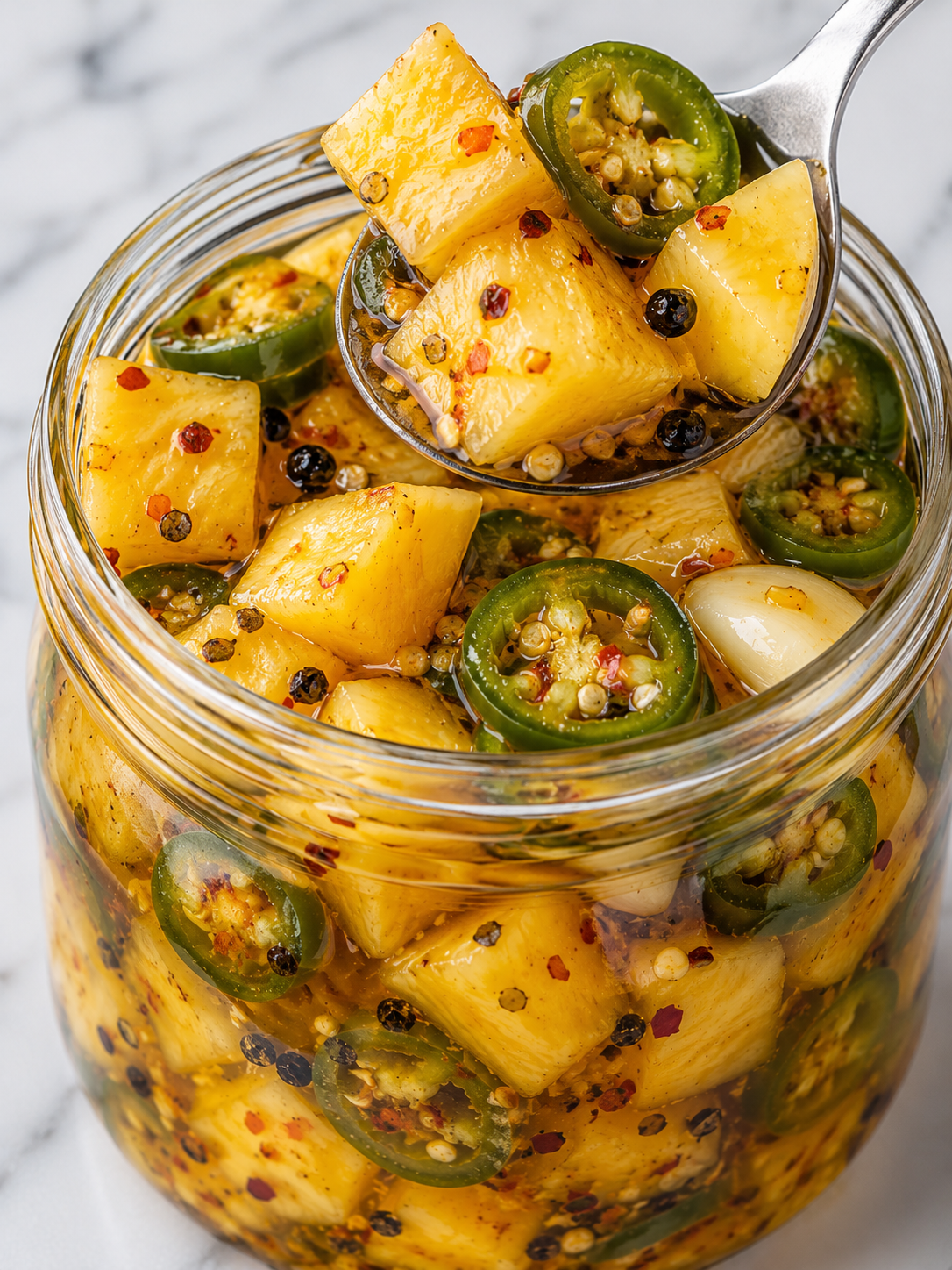
Store the jar in the refrigerator for up to one week. The pineapple will keep absorbing flavor, so day two is usually the sweet spot. After that, the taste is still good, but the fruit gets softer.
Do not reuse the brine for a new batch of pickles. It has already been diluted by the pineapple and peppers. You can use a few spoonfuls in vinaigrette, coleslaw dressing, or a BBQ sauce for flavor, then discard the rest when the pickles are gone.
Summary
These quick pineapple jalapeño pickles are bright, crisp, and ready with a short simmered brine. Keep them refrigerated and use them within one week for the best texture.
Frequently Asked Questions
- How long before Pineapple Jalapeño Pickles are ready?
-
They taste good after about 4 hours, but the best flavor comes after 12-24 hours in the refrigerator. The pineapple absorbs more tang and the jalapeño heat spreads through the brine overnight.
- Can I use canned pineapple?
-
Yes, use pineapple packed in juice and drain it well. Fresh pineapple gives a firmer bite, while canned pineapple turns softer and sweeter. Avoid pineapple packed in heavy syrup unless you reduce the sugar in the brine.
- How spicy are these pickles?
-
With two jalapeños, they are medium-spicy once chilled. For less heat, remove the seeds and pale ribs before slicing. For more heat, add a serrano or increase the chili flakes.
- Can I can this recipe for pantry storage?
-
No. This is written as a refrigerator pickle only. For shelf-stable jars, use a tested canning recipe from a trusted preservation source and follow the vinegar, water, produce, and processing instructions exactly.
- How long do they keep in the fridge?
-
Keep the jar refrigerated and use the pickles within one week for the cleanest flavor and crunch. Always use a clean spoon or fork, and discard the jar if it smells off, looks cloudy in a strange way, or shows mold.
- What do Pineapple Jalapeño Pickles go with?
-
They are especially good on pulled pork, fish tacos, grilled shrimp, burgers, chicken sandwiches, hot dogs, rice bowls, and nachos. The sweet acid cuts through rich, smoky, salty foods.
