
 Pin it
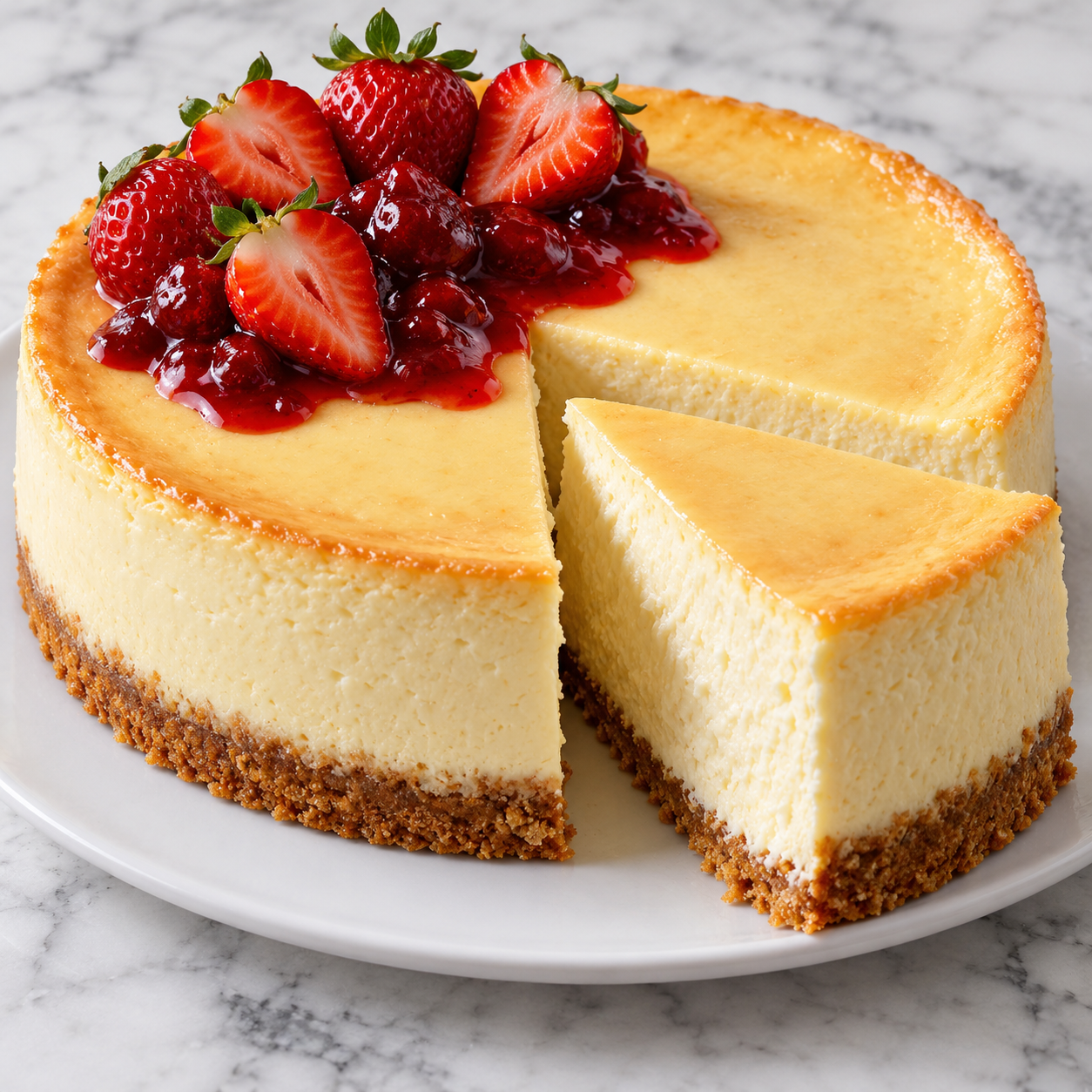
A good New York cheesecake should feel rich without being heavy in a dull way. This one has a buttery graham crust, a thick cream cheese filling, and just enough sour cream and lemon to keep every bite bright.
The real work is patience. Start with room-temperature dairy, mix gently, bake in a protected water bath, then let the cake chill overnight. The reward is a tall cheesecake that cuts clean and tastes like it came from a bakery case.
Creamy New York Cheesecake Lineup
Use full-fat brick cream cheese and let the dairy soften on the counter before you start. Cold cream cheese leaves small lumps that are hard to fix once the eggs are mixed in.
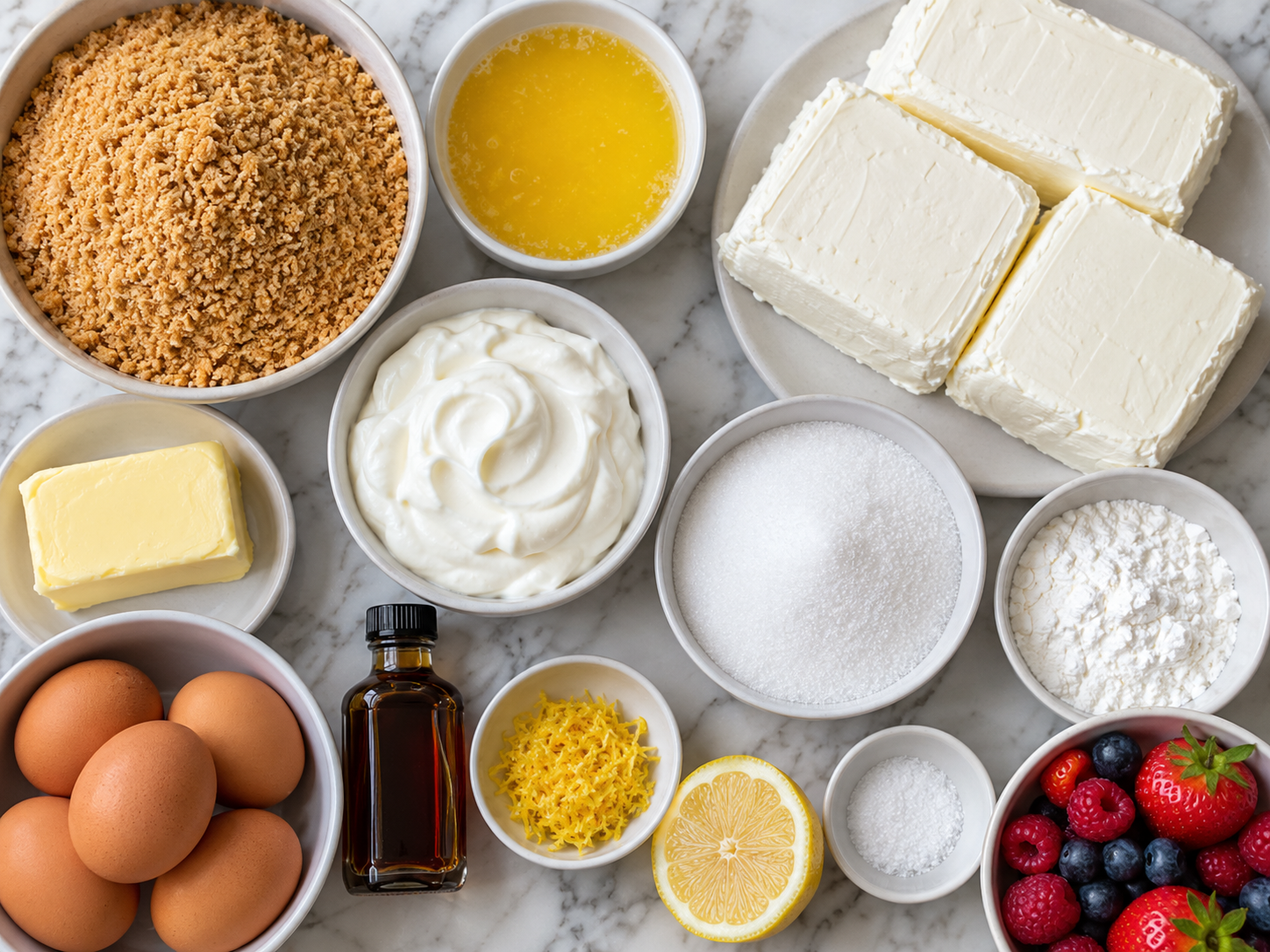
- Graham cracker crumbs. Build a crisp, buttery base that holds the tall filling.
- Unsalted butter. Binds the crust and adds richness to the filling.
- Full-fat cream cheese. Gives New York cheesecake its dense, smooth body.
- Granulated sugar. Sweetens the filling without adding extra moisture.
- Cornstarch. Helps the custard set cleanly and reduces the chance of weeping.
- Sour cream. Adds tang and a softer finish to the rich cream cheese.
- Eggs. Set the filling into a sliceable custard.
- Vanilla, lemon zest, and lemon juice. Brighten the cheesecake so it does not taste flat.
Bake It Low And Slow
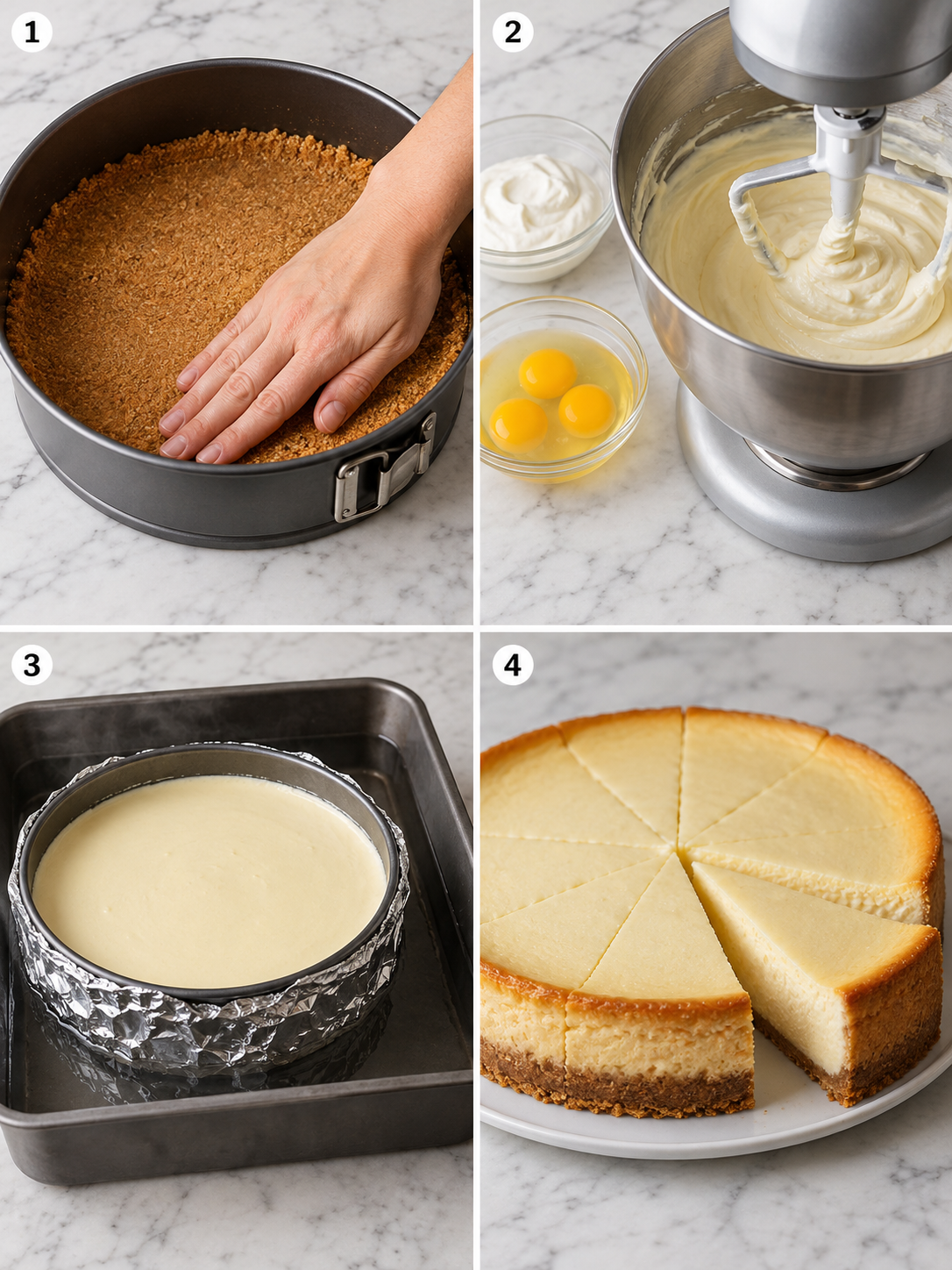
- Prepare the pan. Butter a 10-inch springform pan, line the bottom with parchment, and wrap the outside with two layers of heavy foil.
- Make the crust. Mix graham crumbs, sugar, salt, and melted butter until the crumbs feel like damp sand, then press firmly into the pan and bake until fragrant.
- Beat the filling base. Mix the softened cream cheese, butter, sugar, and cornstarch on low to medium-low until smooth. Scrape the bowl more than once.
- Add dairy and flavor. Blend in the sour cream, vanilla, lemon zest, and lemon juice until the batter looks glossy.
- Add the eggs gently. Mix in the eggs one at a time on low speed. Stop as soon as each egg disappears so you do not whip in excess air.
- Bake in a water bath. Pour the filling over the crust, set the pan in a roasting pan, add hot water, and bake until the edges are set and the center still jiggles.
- Cool and chill. Rest the cheesecake in the turned-off oven, cool to room temperature, then refrigerate overnight before slicing.
Amazing New York Cheesecake Details
The texture comes from gentle mixing and slow heat. Cream cheese can look smooth on top while a thick layer clings to the bottom of the bowl, so scrape under the paddle and around the sides. Once the eggs go in, treat the batter like custard. Too much air makes the cake puff high, then sink and crack as it cools.
A water bath gives the oven moist, even heat. Martha Stewart's cheesecake guide explains how a water bath helps cheesecake bake evenly, and it is worth doing for a tall cake like this. If you love creamy cheesecake desserts, save Mango Biscoff Layered Cheesecake for a no-bake style contrast.
Water Bath Without Panic
Water baths sound fussy, but the setup is simple if you prepare the counter first. Set the wrapped springform pan inside a roasting pan before pouring in the filling. Move it to the oven rack, then add hot water from a kettle or measuring cup until it reaches about halfway up the springform pan. This keeps you from carrying a heavy pan of sloshing water across the kitchen.
Heavy-duty foil matters. Use two wide sheets and press them firmly up the sides so water cannot sneak into the crust. If your foil is narrow, place the springform pan inside a large oven-safe roasting bag before setting it in the water. For another crust-forward dessert, Pecan Cheesecake Squares scratch the same buttery, creamy itch in bar form.
How To Avoid Cracks
A crack is not a failure, but you can usually avoid it. Do not beat the batter hard after adding eggs. Do not bake until the center is firm. Do not move the cake from hot oven to cold refrigerator. Those quick temperature changes make the surface tighten before the middle settles.
For food safety, remember that this filling contains eggs. The FDA's egg safety guidance recommends careful cooking and refrigeration for egg dishes. Let the cheesecake cool at room temperature until it is no longer warm, then chill it promptly. If a hairline crack still appears, cover it with berries or a thin sour cream topping and move on.
Chill Before You Slice
The cheesecake is not done when it leaves the oven. It finishes setting as it cools, then firms further in the refrigerator. Cutting too soon gives you a soft, messy wedge, even if the flavor is good. Overnight chilling gives the filling time to become dense and velvety.
For clean slices, dip a long thin knife in hot water and wipe it dry before each cut. Serve the slices cold or let them sit at room temperature for 15 minutes if you like a softer bite. The same patient chilling step helps layered desserts like Biscoff Cheesecake Lasagna hold their shape.
Serving Ideas And Storage
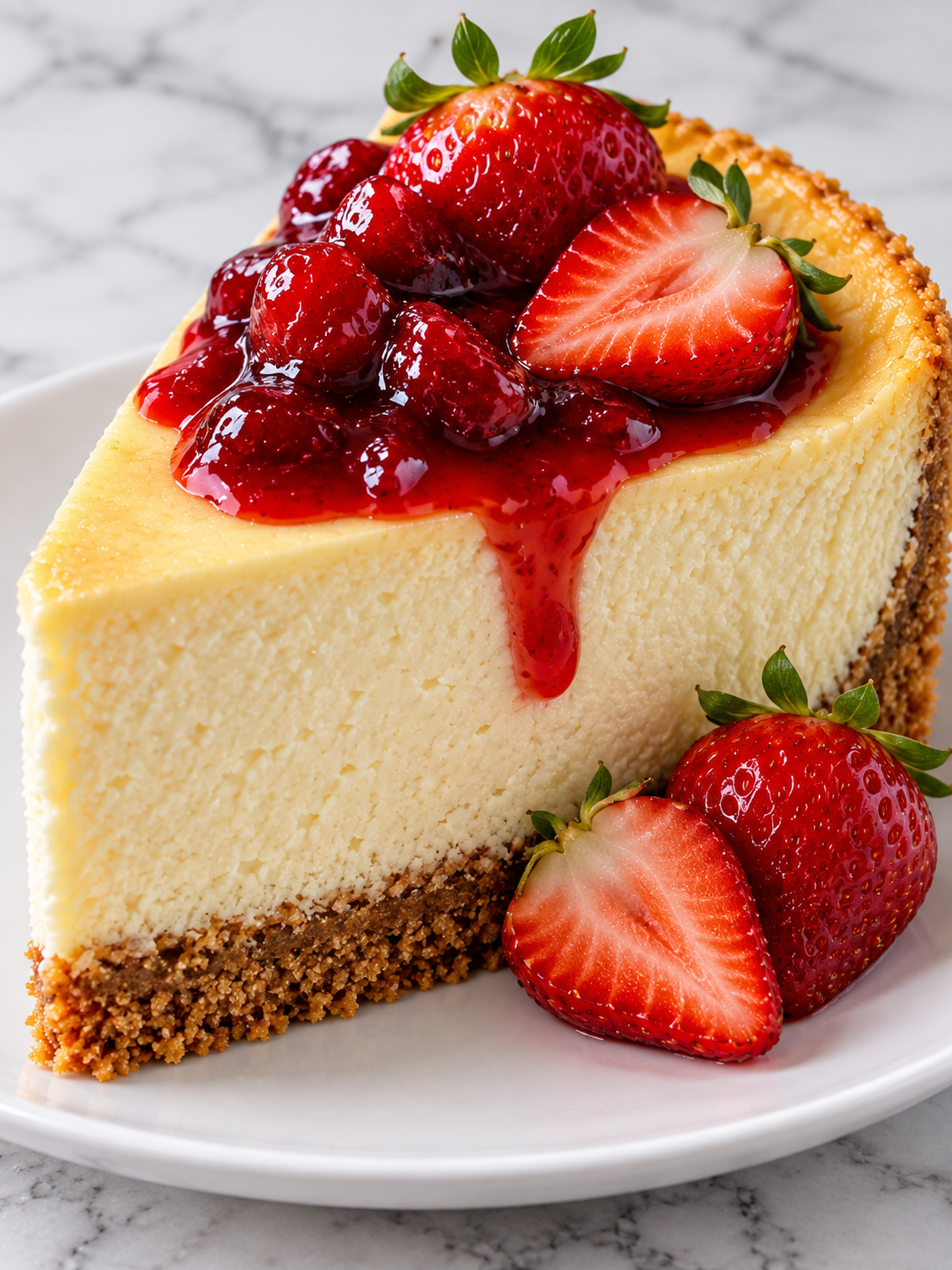
This cheesecake does not need much. Fresh strawberries, cherry topping, blueberry sauce, caramel, or a spoonful of whipped cream are enough. If you want a brighter dessert table, pair it with Homemade Lemon Meringue Pie so guests get both creamy and citrusy choices.
Cover leftover cheesecake and refrigerate it for up to 4 days. USDA leftover guidance says cooked leftovers keep best in the refrigerator for 3 to 4 days. For longer storage, freeze plain slices on a tray until firm, then wrap them tightly. Add fruit toppings after thawing so the surface stays clean and creamy.
Summary
Serve this cheesecake plain, with berries, or with a glossy fruit sauce. It is best made a day ahead.
Frequently Asked Questions
- What makes New York cheesecake different?
-
New York cheesecake is denser and richer than many lighter cheesecakes because it leans hard on full-fat cream cheese. Sour cream, butter, eggs, and a little lemon round out the filling without making it fluffy or mousse-like.
- Can I make this cheesecake without a water bath?
-
You can, but the texture will usually be a little firmer at the edges and the top may crack. If you skip the water bath, place a pan of hot water on the lower oven rack for steam and check the cheesecake early.
- Can I use low-fat cream cheese?
-
Full-fat brick cream cheese gives the smoothest, richest result. Low-fat cream cheese has more moisture and stabilizers, so the cheesecake can bake up softer and less creamy.
- How long should New York cheesecake chill?
-
Chill it for at least 8 hours. Overnight is better because the filling firms evenly and the flavor settles into that classic dense, creamy bite.
- Why did my cheesecake crack?
-
Cracks usually come from overmixing, overbaking, or cooling too fast. Mix on low once the eggs go in, pull the cake when the center still wobbles slightly, and cool it slowly before chilling.
- Can I freeze New York cheesecake?
-
Yes. Chill it fully first, wrap whole or individual slices tightly, and freeze for up to 2 months for best texture. Thaw overnight in the refrigerator before serving.
- What should I serve with it?
-
Plain cheesecake is classic, but berries, cherry sauce, lemon curd, caramel, or a small spoonful of whipped cream all work well. Keep toppings light so the cream cheese flavor still comes through.
