
 Pin it
Homemade lemon meringue pie should taste sharp, creamy, and light all at once. The filling needs enough lemon to make your mouth water, but it should still slice cleanly instead of sliding across the plate.
This version keeps the method practical. Bake the crust first, cook the lemon filling until it is thick and glossy, then cover it with meringue while the filling is still hot. That hot filling helps the underside of the meringue set, which is the detail that saves many pies from weeping.
The Bright Lemon Lineup
Choose lemons that feel heavy for their size and smell fragrant when you scratch the peel. You need both juice and zest here, so wash them well before grating.
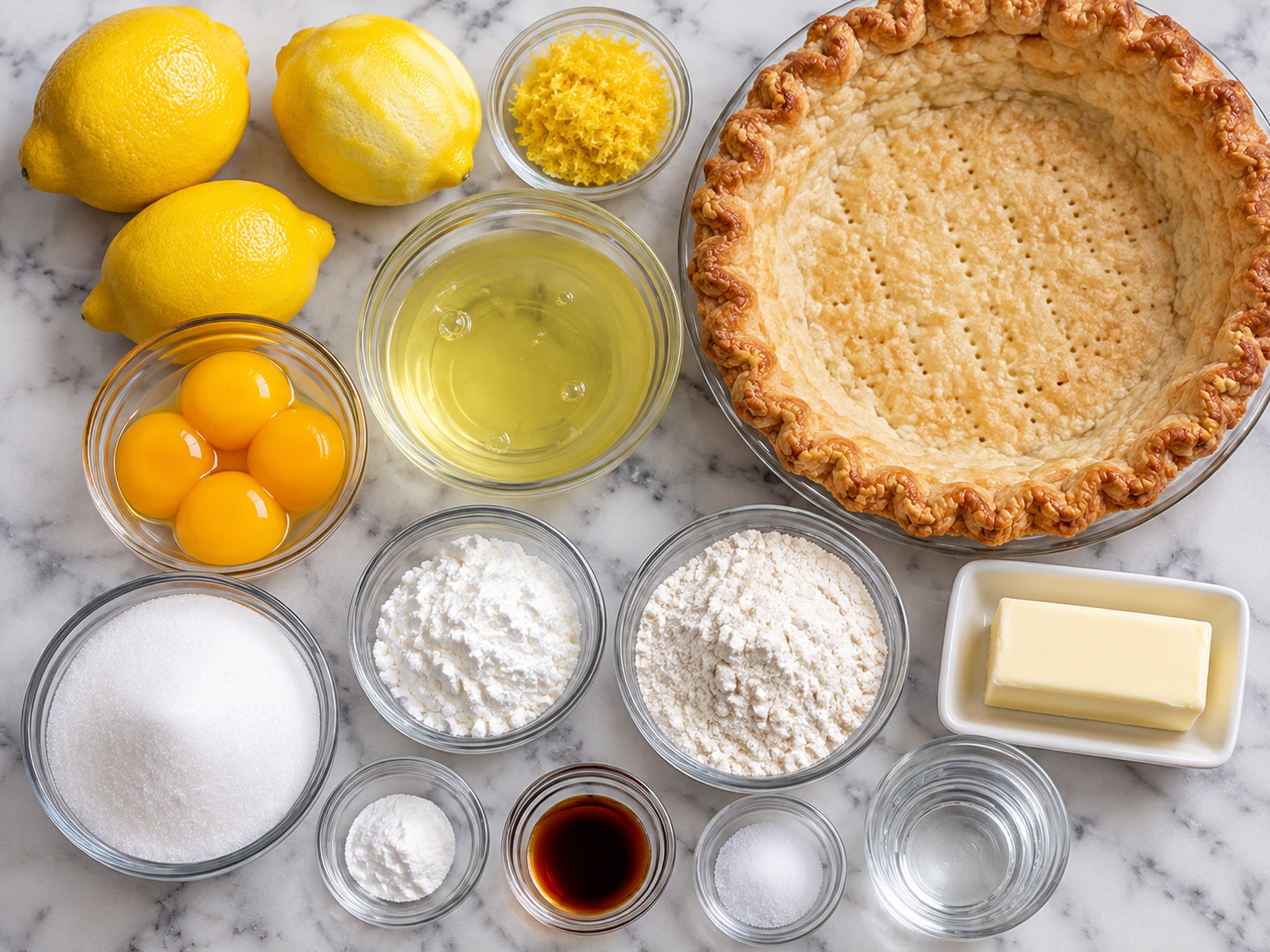
- Baked pie crust. A crisp shell holds the soft filling and keeps each slice tidy.
- Fresh lemons. Juice gives tartness, while zest adds a clean citrus scent.
- Granulated sugar. Sweetens the filling and makes the meringue glossy.
- Cornstarch and flour. Thicken the lemon filling so it slices instead of puddles.
- Egg yolks. Add richness and a custard-like body to the filling.
- Egg whites. Whip into the airy topping that browns in the oven.
- Butter. Rounds out the lemon filling and gives it a smooth finish.
- Cream of tartar. Helps the meringue stay stable as it bakes.
Homemade Lemon Meringue Pie Steps
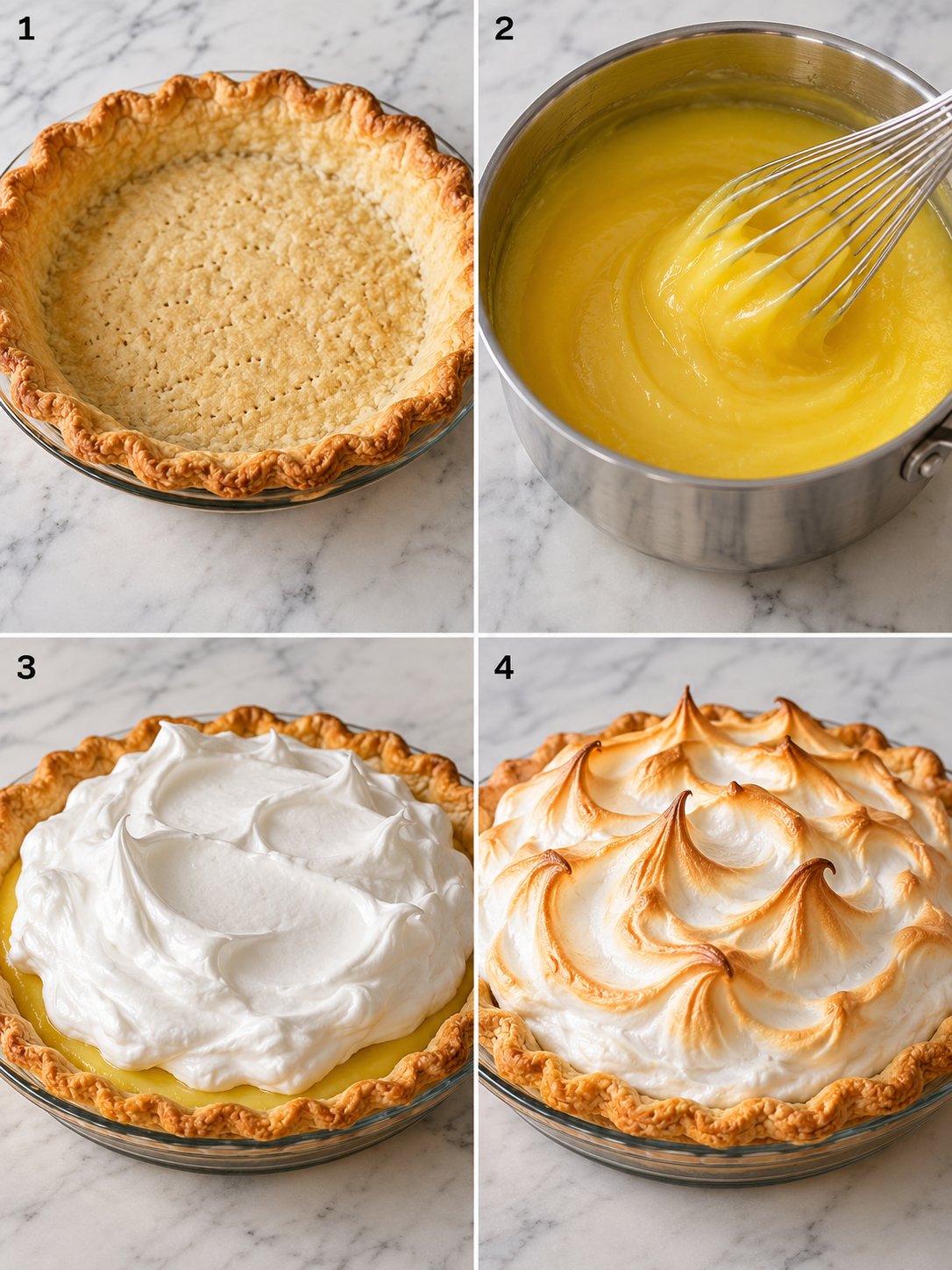
- Blind bake the crust. Bake a 9-inch pie shell until golden and dry. Let it cool while you start the filling.
- Cook the starch base. Whisk sugar, cornstarch, flour, salt, water, lemon juice, and zest in a saucepan. Cook until the mixture bubbles and turns thick.
- Temper the yolks. Slowly whisk some hot lemon mixture into the egg yolks. This warms them gently so they do not scramble.
- Finish the filling. Return the yolk mixture to the pan and cook, whisking, until thick and glossy. Stir in butter, then pour the hot filling into the crust.
- Whip the meringue. Beat egg whites and cream of tartar until foamy. Add sugar gradually and beat until glossy stiff peaks form.
- Top and bake. Spread meringue over the hot filling, sealing it to the crust. Bake until the peaks are golden, then cool fully before slicing.
Why Hot Filling Matters
The filling should go into the crust hot, and the meringue should go on right away. That heat starts cooking the bottom of the meringue while the oven browns the top. It helps the two layers hold together instead of separating into a slick layer of syrup.
Use the back of a spoon to push the meringue to the crust before making swirls. The USDA notes that meringue-topped pies are safer when baked properly, and that advice lines up with better texture too. The topping should be pale gold with toasted tips, not raw and foamy underneath.
A Filling That Slices Clean
Lemon filling needs a real boil. Once it thickens, keep whisking for about 1 minute so the starch fully activates and the yolks cook into a smooth custard. It should look glossy and thick enough to leave tracks from the whisk.
If you like lemon desserts with a sharper edge, add another teaspoon of zest rather than a big splash of extra juice. Too much juice can loosen the filling. For another bright dinner built around fresh lemon, try one-pan lemon herb chicken and vegetables or lemon garlic butter baked salmon before serving this pie.
Meringue Without Weeping
Clean equipment matters. Any streak of yolk or grease in the bowl can keep egg whites from whipping well. The Exploratorium explains egg-white foams as proteins stretching around tiny air bubbles, which is why a clean bowl and gradual sugar make such a difference.
Add the sugar slowly after the whites turn foamy. Rub a little meringue between your fingers. If it feels gritty, keep beating. Smooth, glossy peaks bake up softer and more even.
Crust Choices That Work
A homemade butter crust gives the richest flavor, but a good store-bought deep-dish crust is fine when time is tight. The important part is that the crust is fully baked before the lemon filling goes in. Pale, underbaked pastry turns damp quickly under custard.
For a classic baked shell, follow the same basic idea used by King Arthur Baking's lemon meringue pie method. Dock the pastry, weight it if needed, and bake until the bottom is dry. If you are planning a larger meal, pair this with something simple from easy homemade sauces for the savory side.
Serving And Storage Notes
Let the pie cool at room temperature for several hours. Warm lemon filling may smell wonderful, but it will not slice cleanly. A thin knife dipped in hot water gives the neatest pieces. Wipe the blade between cuts.
Leftovers should be loosely covered and refrigerated. The crust will soften as it sits, but the flavor stays bright for up to 3 days. For a sunny drink beside dessert, watermelon lemon sweet tea keeps the lemon theme without making the plate feel heavy.
Summary
Cool the pie at room temperature before chilling, then slice with a clean warm knife for neat servings.

Frequently Asked Questions
- Why is my lemon meringue pie watery?
-
Watery pie usually means the filling was not boiled long enough after thickening, or the meringue was spread over cool filling. Cook the lemon filling until it is very thick and bubbling, then add the meringue while the filling is still hot.
- Can I use bottled lemon juice?
-
Fresh lemon juice tastes brighter and gives the pie a cleaner finish. Bottled juice works in a pinch, but use fresh zest if you can because it carries much of the lemon aroma.
- How do I stop meringue from shrinking?
-
Spread the meringue all the way to the crust so it touches the pastry around the full edge. That seal gives it something to hold onto as it bakes and cools.
- Can lemon meringue pie be made ahead?
-
It is best the day it is made, after several hours of cooling. You can bake the crust a day ahead and keep it covered at room temperature, then fill and top it the day you plan to serve.
- Do I need cream of tartar?
-
Cream of tartar helps stabilize the egg-white foam, so the meringue holds its shape better. If you do not have it, use 1/2 teaspoon lemon juice instead and beat just until glossy stiff peaks form.
- How should I store leftover pie?
-
Cover the pie loosely and refrigerate it for up to 3 days. The meringue will soften over time, so avoid airtight plastic pressed against the topping.
References
Reliable references aided in composing and refining this content.
- https://1strecipes.com/recipes/homemade-lemon-meringue-pie-2
- https://www.kingarthurbaking.com/recipes/classic-lemon-meringue-pie-recipe
- https://www.fsis.usda.gov/food-safety/safe-food-handling-and-preparation/eggs/shell-eggs-farm-table
- https://annex.exploratorium.edu/cooking/icooks/article_5-03.html
