
 Pin it
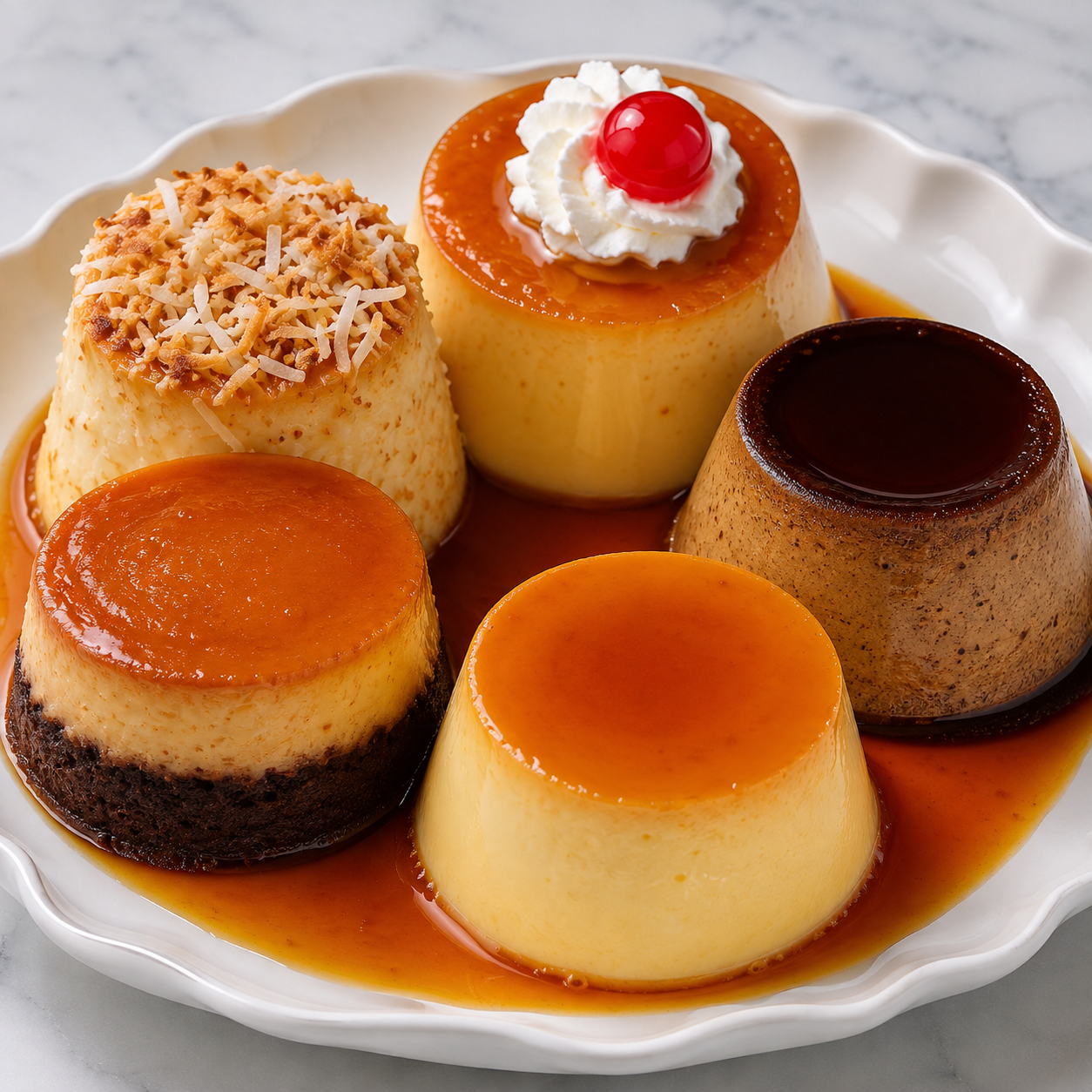
Creamy Flan Dreams is really a small dessert toolkit. Once you know how to make caramel, strain custard, and bake low and gentle, you can turn the same method into a rich cream cheese flan, a coconut version, a coffee-scented caramel flan, a layered chocoflan, or a softer Japanese purin.
The texture should be smooth enough to slice but tender enough to wobble when the plate moves. The biggest secret is not a fancy ingredient. It is patience. Keep the heat gentle, avoid whipping air into the eggs, and give the custard a long chill before you flip it.
The Creamy Flan Lineup
Good flan starts with fresh eggs, full-fat dairy, and sugar cooked just far enough to taste like caramel instead of plain syrup. Keep the dairy at room temperature when you can, especially if using cream cheese, so the custard blends without little white flecks.
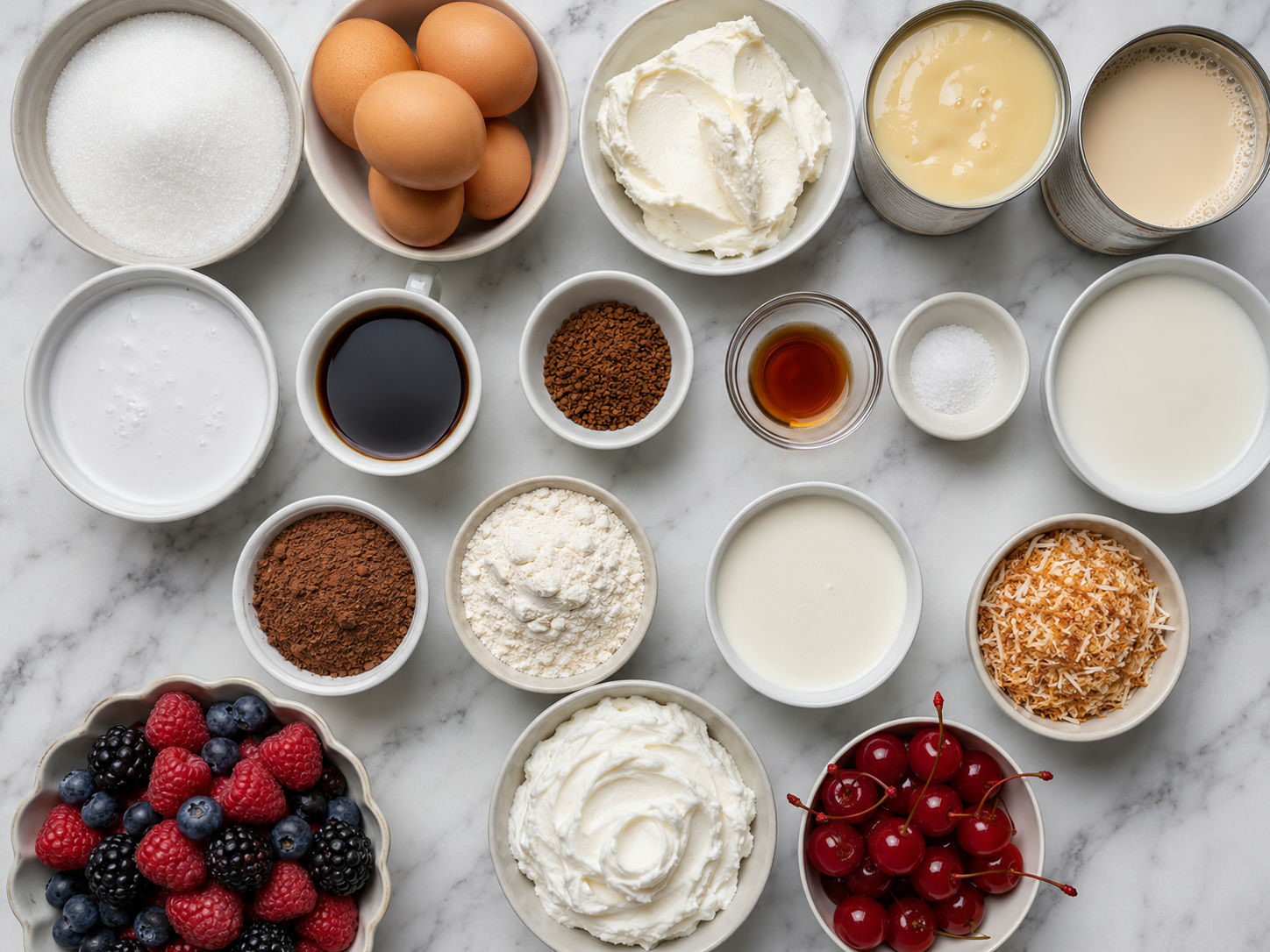
- Granulated sugar. Melts into the amber caramel that becomes the glossy sauce after chilling.
- Eggs and yolks. Set the custard and give each slice its soft wobble.
- Sweetened condensed milk. Adds body, sweetness, and that familiar leche flan richness.
- Evaporated milk. Keeps the custard creamy without making it too heavy.
- Cream cheese. Makes the classic version plush and slightly tangy.
- Coconut milk. Turns the custard fragrant and round, especially with toasted coconut on top.
- Coffee. Deepens the caramel and cuts the sweetness with a roasted edge.
- Chocolate cake batter. Builds the chocoflan layer that bakes under the custard after flipping.
- Whole milk and cream. Give Japanese purin its lighter, cafe-style texture.
Build The Custard Slowly
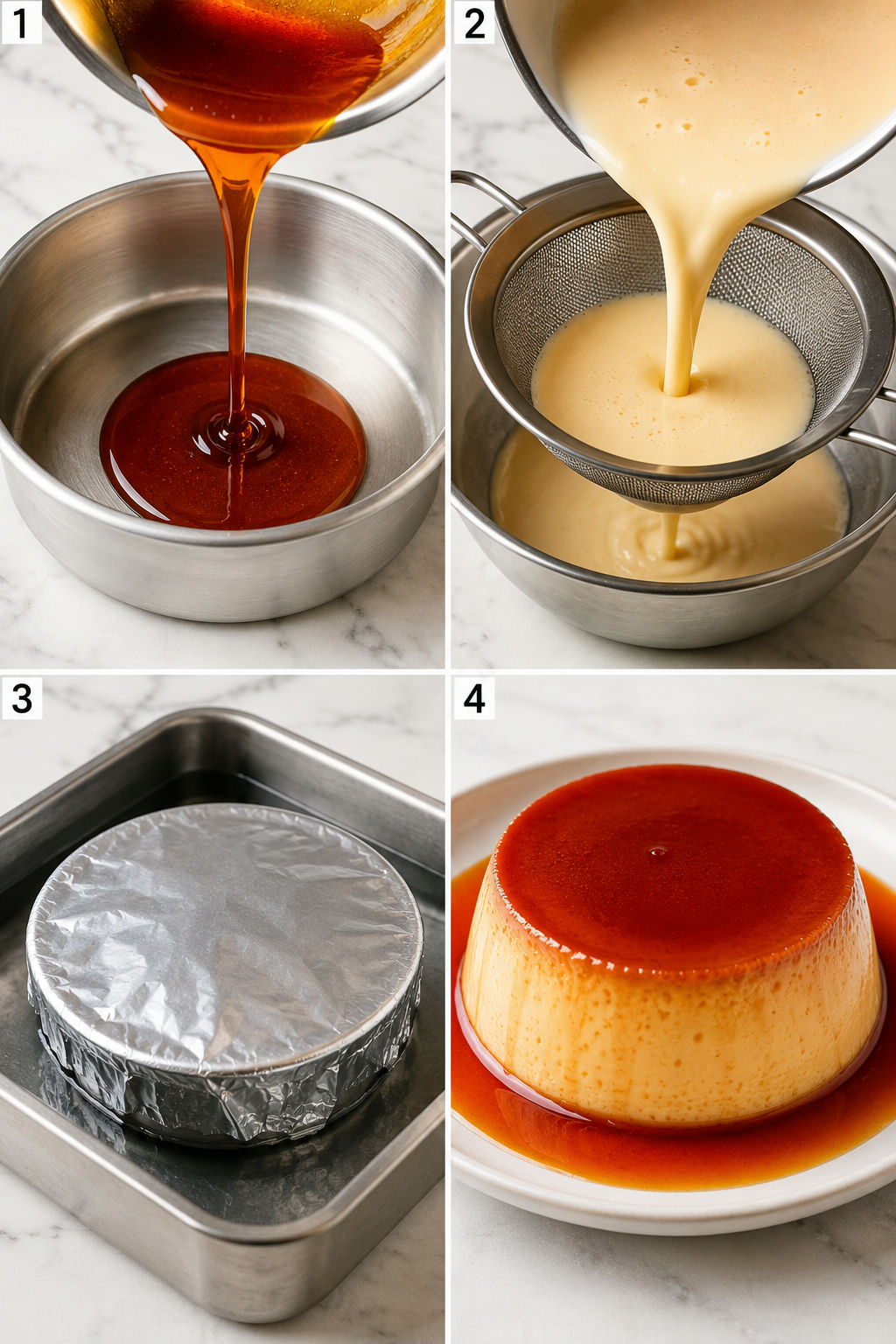
- Cook the caramel. Melt the sugar until deep amber, then pour it into the mold right away. Tilt the pan carefully because caramel hardens fast and stays very hot.
- Mix the custard. Blend or whisk the chosen custard base just until smooth. Do not whip it like cake batter because air bubbles bake into little holes.
- Strain and fill. Pass the custard through a fine sieve into the caramel-lined pan. Skim any foam from the top before covering with foil.
- Bake in water. Set the mold in a larger pan and add hot water halfway up the sides. Bake until the edges are set and the center still jiggles softly.
- Chill and unmold. Cool to room temperature, then refrigerate at least 4 hours. Run a thin knife around the edge, invert onto a rimmed plate, and let the caramel spill over.
Caramel Without Panic
Caramel moves from golden to burnt quickly, so set the mold beside the stove before you begin. I like a dry caramel for classic flan because it tastes cleaner, but adding a spoonful or two of water gives you a little more control. Swirl the pan instead of stirring once the sugar starts melting. If you want more sauce ideas for serving, the caramel section pairs well with dessert sauces for ice cream and pancakes.
Choose Your Flan Mood
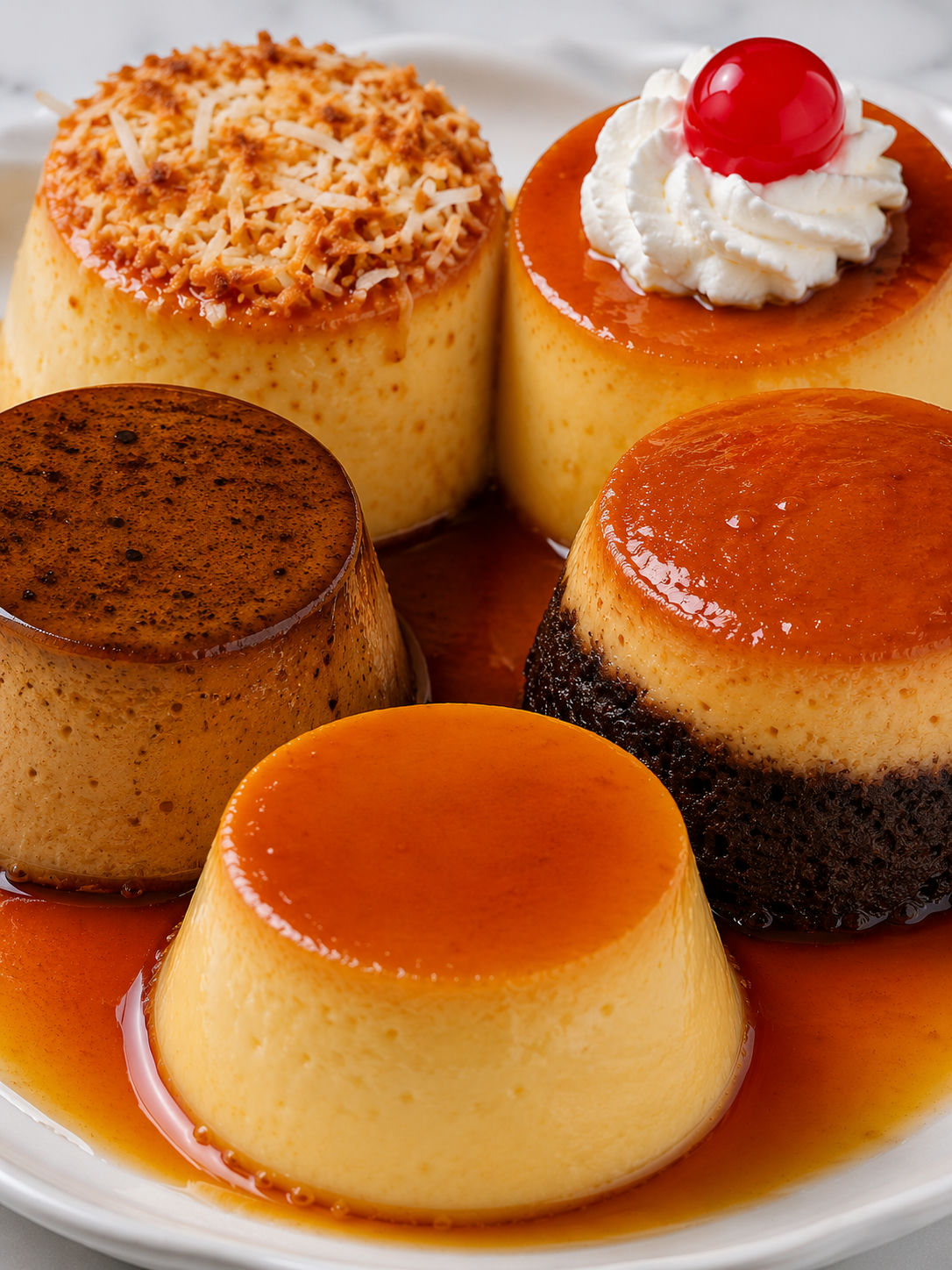
Classic cream cheese flan is the richest and easiest to slice. Coconut flan tastes softer and more fragrant, especially with full-fat coconut milk. Coffee caramel flan works best when strong coffee goes into the caramel and a small pinch of instant coffee goes into the custard. Chocoflan needs a Bundt pan and more baking time because the chocolate cake has to set too. The Kitchn explains the layer switch clearly, and it is the reason the dessert is often called impossible cake.
Purin Is Gentler
Japanese purin is closer to a delicate caramel pudding than a dense leche flan. Use whole eggs, milk, and a little cream instead of condensed milk. Warm the milk first, whisk gently, and strain twice if you want that glassy cafe texture. Sudachi Recipes uses a bain-marie method for purin, which is the same gentle idea that protects any custard from curdling.
Serving The Sweet Spread
Serve flan cold, with a warm knife for neat slices. Coconut flan likes toasted coconut and lime zest. Coffee caramel flan is good with barely sweet whipped cream. Chocoflan is already rich, so berries help more than extra frosting. For a dessert table, pair small slices with chocolate coconut truffles or a chilled coconut lime slush so the plate does not feel heavy.
Storage That Keeps Texture
Flan keeps well in the refrigerator for 3 days, covered tightly once fully cold. Leave it in the mold if you are making it ahead, then unmold shortly before serving. Chocoflan also keeps for about 3 days, but the cake layer will slowly drink in more caramel as it sits. Do not freeze flan. The custard can turn watery and grainy after thawing.
Summary
Once the caramel and water bath are under control, these five flan styles become simple variations on one calm method. Keep the custard smooth, bake gently, and chill longer than you think.
Frequently Asked Questions
- Can I make flan without cream cheese?
-
Yes. For a lighter classic flan, skip the cream cheese and use 5 large eggs with the condensed milk and evaporated milk. The texture will be more delicate and less cheesecake-like.
- Why does my flan have bubbles?
-
Bubbles usually come from overmixing or baking too hot. Blend or whisk only until smooth, strain the custard, skim the foam, and keep the water bath hot but not violently bubbling.
- How long should flan chill before unmolding?
-
Four hours is the minimum, but overnight gives cleaner slices and a steadier flip. Cold custard releases better and the caramel has time to loosen into a sauce.
- Can I use coconut milk in any flan?
-
Full-fat coconut milk works best when it replaces part of the evaporated milk, not all of it. Too much coconut milk can make the custard softer, so yolk-rich coconut flan is usually the safest version.
- What makes chocoflan switch layers?
-
The cake batter rises while the heavier flan sinks during baking. Pour the flan over a spoon so it lands gently, then bake the Bundt pan in a water bath until the cake tests done.
- Can I steam flan instead of baking it?
-
Yes. Use a covered mold and steam over medium-low heat until the center is just set. Avoid a hard boil because rough steam can make the custard coarse.
