 Pin it
These dessert sauces are great for ice cream, pancakes, waffles, cheesecake, brownies, bread pudding, and the usual late-night spoonful over a plain slice of cake. I like having a few jars in the fridge because one warm drizzle can make a very ordinary dessert feel finished.
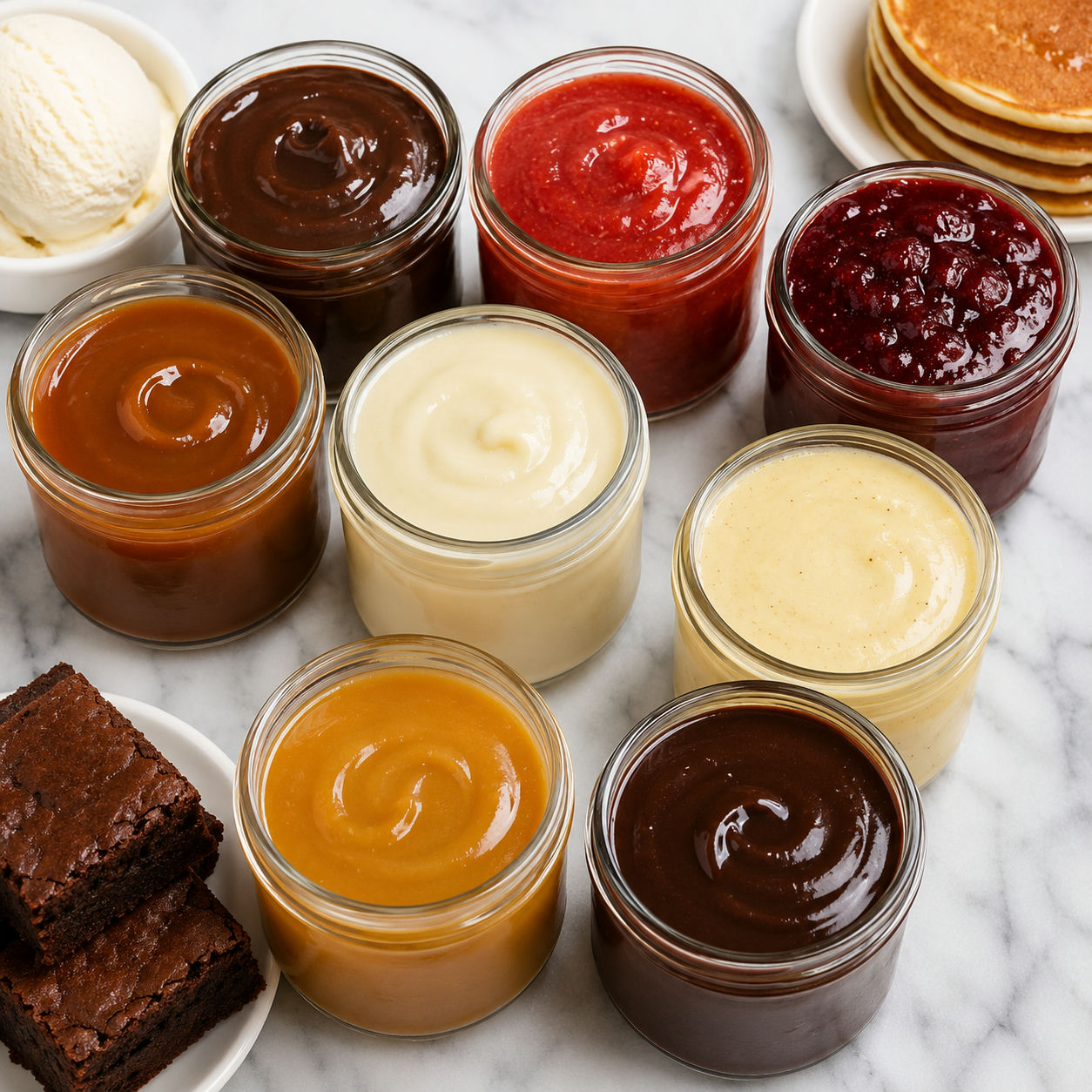
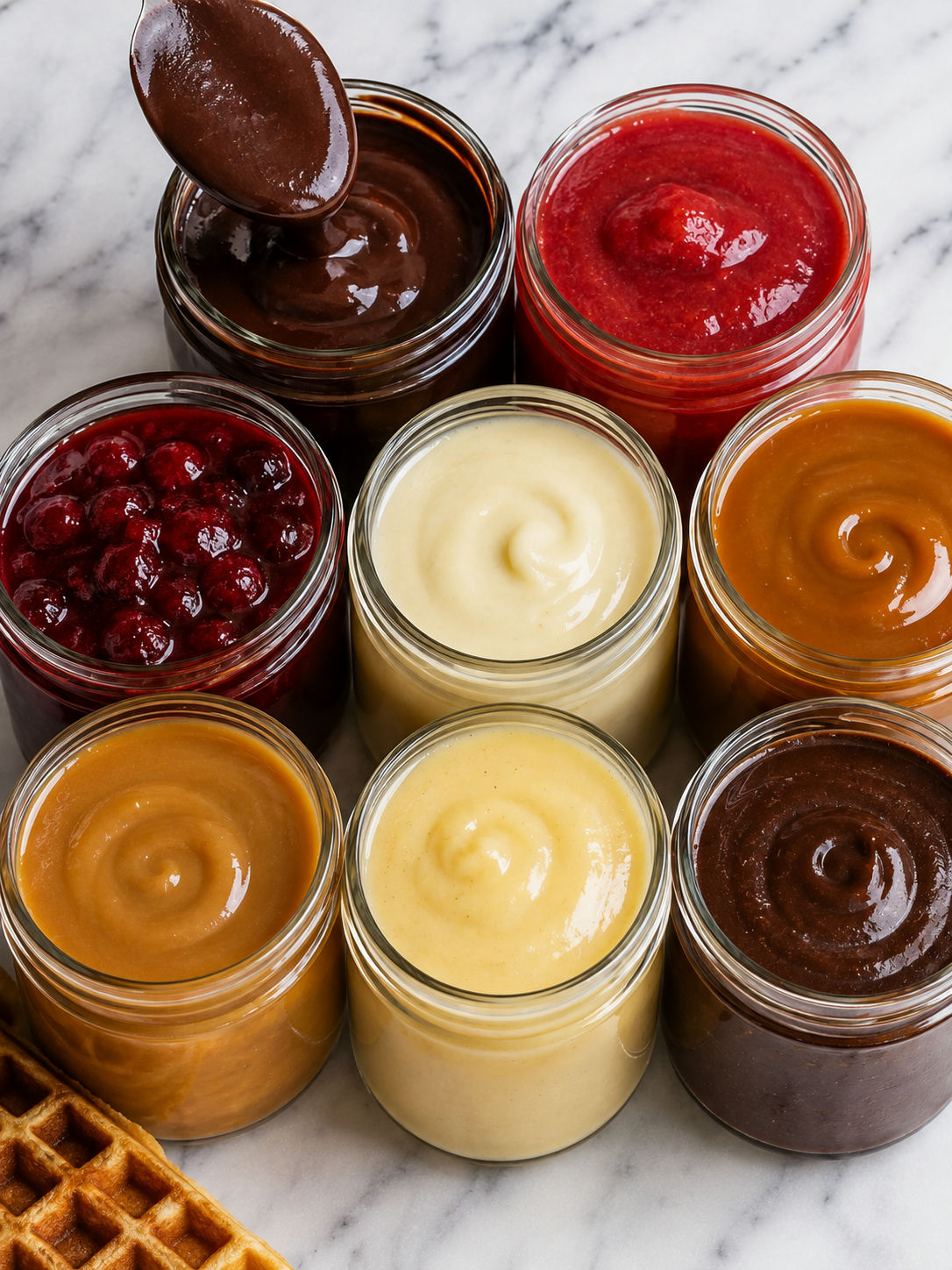
The set covers the big moods. There is a deep chocolate sauce, two fruit sauces, two caramel-style sauces, a white chocolate sauce, a mocha sauce, and a vanilla custard sauce for when you want something softer and more old-fashioned.
Most of them are simple saucepan recipes. The custard is the only one that asks for patience, and even that is mostly about low heat and steady stirring.
Dessert sauces, eight ways
The best jars start with simple ingredients that taste good on their own. Use real butter, fresh cream, good cocoa, ripe or frozen fruit, and vanilla you actually like.
Set out clean jars before you begin. Several of these sauces thicken quickly as they cool, so it helps to have a landing spot ready.
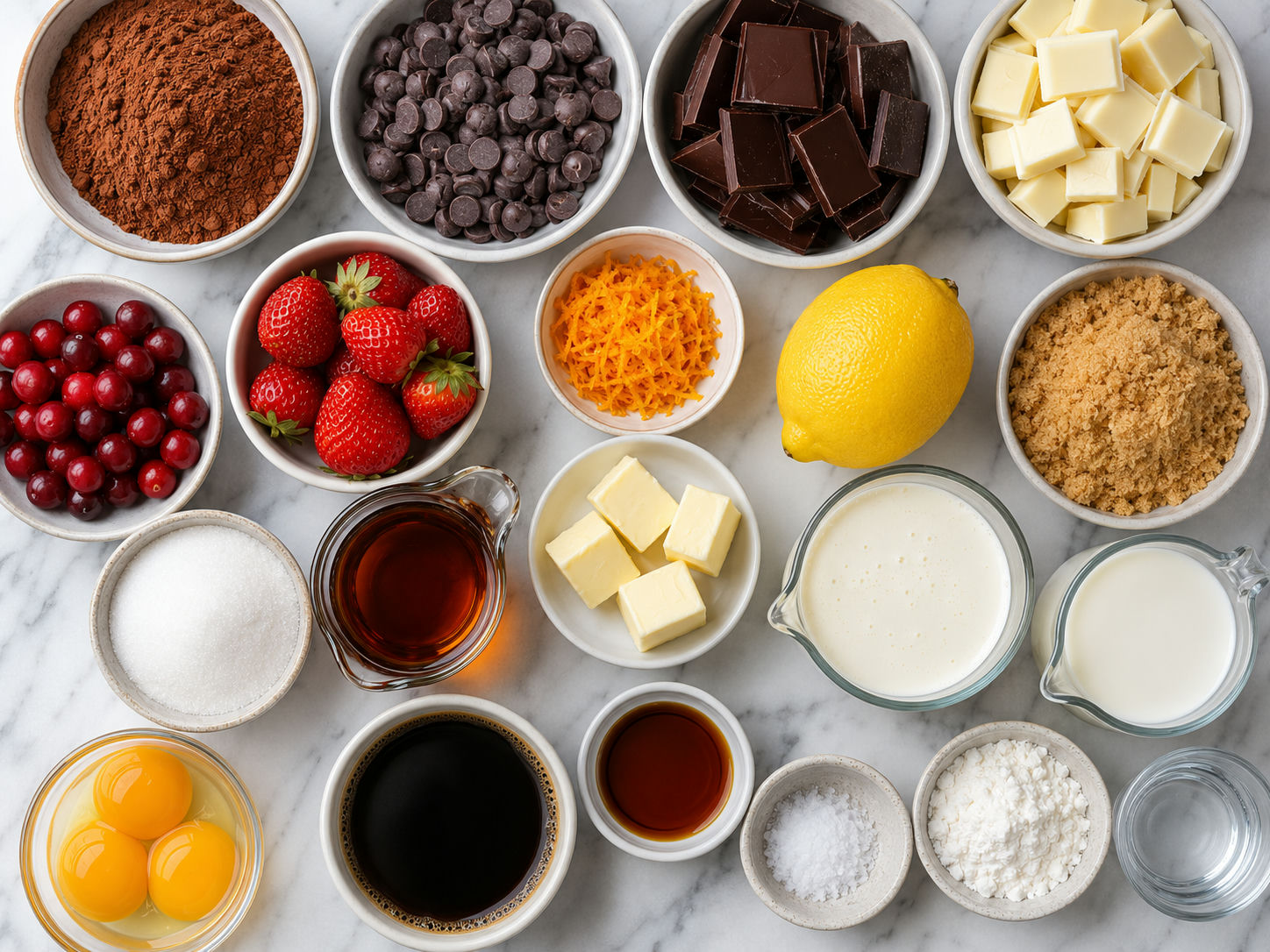
- Unsweetened cocoa powder. Gives the chocolate and mocha sauces a deep base before the chopped chocolate melts in.
- Semi-sweet and dark chocolate. Add body, shine, and a smoother finish than cocoa alone.
- Fresh or frozen cranberries. Burst as they simmer and set into a tart sauce that cuts through rich desserts.
- Fresh or frozen strawberries. Cook down into a bright red spoon sauce for pancakes, waffles, and shortcake-style desserts.
- Brown sugar. Brings molasses notes to the maple caramel and butterscotch sauces.
- Pure maple syrup. Makes the caramel sauce taste warm and rounded without needing a candy thermometer.
- Heavy cream. Gives caramel, butterscotch, white chocolate, mocha, and custard their smooth pour.
- Egg yolks. Thicken the vanilla custard sauce into a silky pourable cream.
- Orange zest and lemon juice. Keep the fruit sauces from tasting flat.
- Vanilla and salt. Small amounts sharpen the sweetness and make each sauce taste complete.
Cook the sauces without panic
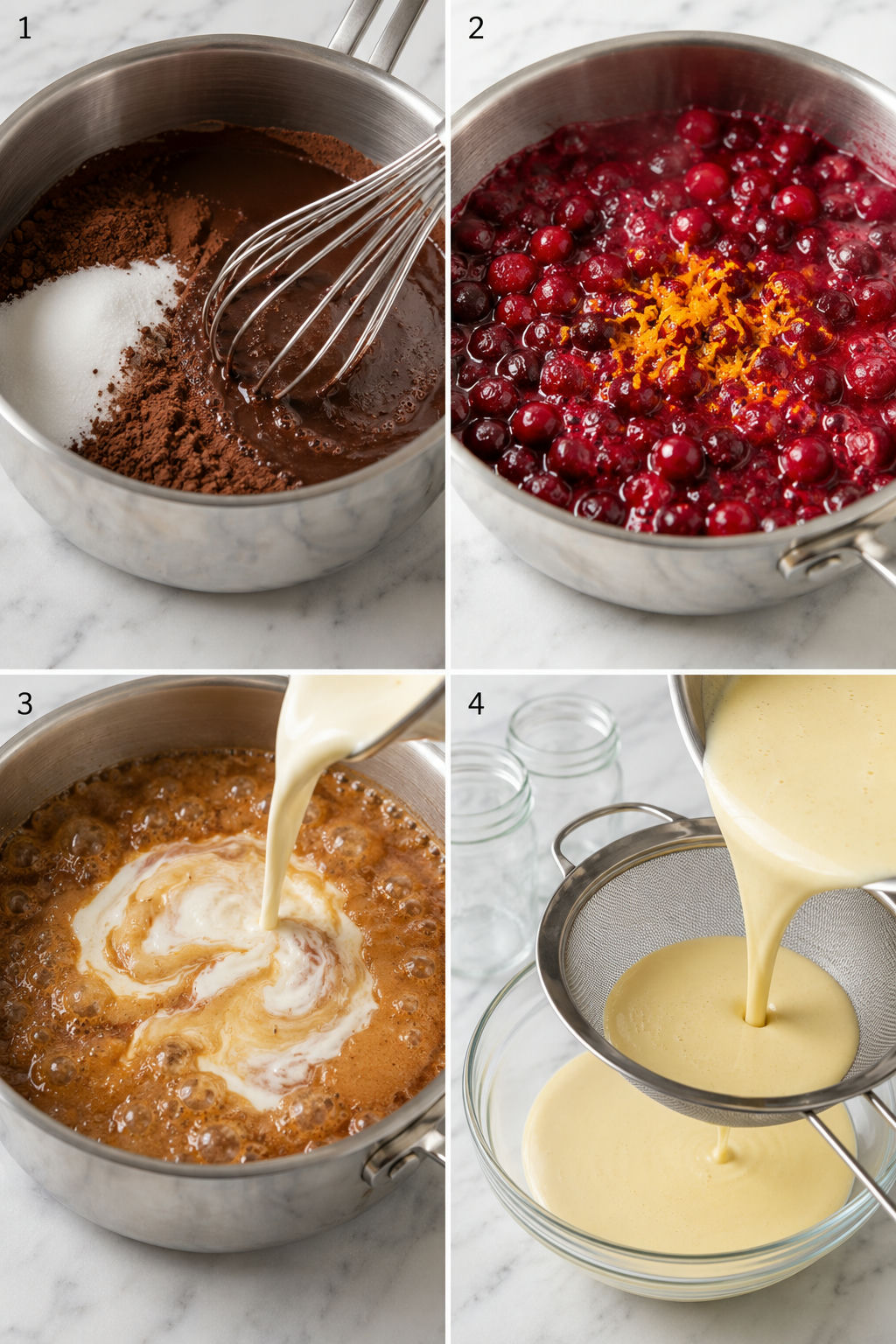
- Make the chocolate sauce. Whisk sugar, cocoa, salt, and water in a saucepan until smooth. Simmer 2-3 minutes, then remove from the heat and stir in chocolate chips, butter, and vanilla until glossy.
- Simmer the cranberry sauce. Combine cranberries, sugar, water, orange zest, and salt. Simmer 10-15 minutes until the berries pop and the sauce thickens, then cool it uncovered until the steam fades.
- Cook the maple caramel. Melt butter with brown sugar and maple syrup over medium-low heat. Stir in cream slowly, simmer 4-5 minutes, then finish with vanilla and salt.
- Stir the white chocolate sauce. Heat cream until steaming, pull the pan off the heat, and add white chocolate. Let it sit for 1 minute, then stir until smooth with vanilla and salt.
- Cook the vanilla custard. Heat milk and cream until steaming. Temper egg yolks with a little hot dairy, return everything to low heat, and stir until it coats a spoon, then strain and chill.
- Thicken the strawberry sauce. Simmer strawberries, sugar, and lemon juice until juicy. Stir in a cornstarch slurry and cook 1-2 minutes more, then mash lightly or leave chunky.
- Finish the butterscotch. Melt butter with brown sugar, then stir in cream. Simmer gently for 4-6 minutes until smooth, then add vanilla and salt.
- Whisk the mocha sauce. Heat cream, strong coffee, sugar, cocoa, and salt until smooth. Simmer briefly, then remove from the heat and melt in dark chocolate, butter, and vanilla.
Where each jar shines
The chocolate sauce is the jar for brownies, vanilla ice cream, and banana splits. It has enough cocoa to taste dark without turning bitter. The mocha sauce is deeper and less childlike. Spoon it over coffee ice cream, chocolate cake, or a warm brownie with whipped cream.
The strawberry sauce is the one I reach for at breakfast. It wakes up pancakes and waffles without needing a whole fruit salad on the plate. It would also be right at home beside ricotta stuffed French toast. The cranberry sauce is sharper and more wintery. Try it with cheesecake, vanilla ice cream, bread pudding, or a slice of Biscoff cheesecake lasagna when you want the sweetness balanced by a little tang.
Custard needs gentle heat
The vanilla custard sauce is the only jar that can punish rushing. Keep the heat low after the yolks go back into the pan. Stir with a spatula and watch the texture, not the clock. It should coat the back of a spoon in a thin, silky layer. If you use a thermometer, classic custard guidance keeps the sauce around 180°F to 185°F and below a boil. Road to Pastry gives a helpful breakdown of the temperature window for vanilla custard sauce.
If you see tiny curds, strain the sauce right away into a clean bowl. A quick pass with an immersion blender can smooth a mild scramble, but a fully boiled custard will taste eggy. Pour it over bread pudding, pound cake, berries, or the crumbly edges from strawberry shortcake dump cake.
Fruit sauces can be flexible
Frozen fruit is not a backup plan here. It is often picked ripe and works beautifully in sauces because the texture softens anyway. The Washington Post version of strawberry sauce also uses frozen berries, which is useful when fresh berries are pale or expensive.
For a smoother strawberry sauce, blend it after it cools for a few minutes. For a chunkier sauce, mash only half the berries. Cranberry sauce sets more firmly because cranberries are naturally high in pectin. If it gets too thick after chilling, stir in a spoonful of orange juice or warm water. If you like keeping freezer-friendly components around, this same make-ahead mindset fits the site guide on storing bread in the freezer safely, especially if bread pudding is your plan.
Storage and serving rhythm
Let each sauce cool until it is no longer steaming, then move it into clean airtight jars. The USDA says perishable leftovers should be refrigerated within 2 hours and used within 3-4 days for best safety, which is especially important for the egg-based custard. Their leftovers and food safety guidance is a good rule for any homemade sauce with dairy or eggs.
Serve chocolate, mocha, maple caramel, and butterscotch warm enough to pour. Serve strawberry and cranberry chilled or room temperature. White chocolate sauce can go either way, but it firms up in the fridge, so loosen it gently with warm cream if needed. A tray of three sauces and one crunchy topping also makes a simple dessert board. Add brownies, berries, pound cake, and chocolate coconut truffles for dipping and drizzling.
Summary
Choose one sauce for tonight or make several jars for a dessert board. Chill quickly, label the jars, and warm the thicker sauces gently before serving.
Frequently Asked Questions
- Which dessert sauce should I make first?
-
Start with the chocolate sauce if you want the most flexible jar. It works on ice cream, waffles, brownies, cheesecake, and sliced bananas. The strawberry sauce is the next best all-purpose choice if you want something brighter and fruitier.
- Can I use frozen fruit for the berry sauces?
-
Yes. Frozen strawberries and frozen cranberries both work well because they soften and release juice as they simmer. Do not thaw cranberries first, but frozen strawberries cook a little more evenly if they sit at room temperature for 10 minutes.
- How do I keep caramel and butterscotch sauces smooth?
-
Use medium-low heat and add cream slowly while stirring. If the sauce looks split for a minute, keep whisking over gentle heat until it comes together. Do not boil it hard after the cream goes in.
- How long do homemade dessert sauces keep?
-
Most of these sauces keep about 5-7 days in clean airtight jars in the refrigerator. The vanilla custard sauce contains egg yolks, so use it within 3-4 days. Always chill the sauces promptly after they cool slightly.
- Can I make any of these dairy-free?
-
The fruit sauces are naturally dairy-free as written. For chocolate or mocha sauce, use dairy-free chocolate chips and plant butter. Caramel, butterscotch, white chocolate, and custard rely more heavily on dairy, so they need more testing with coconut cream or another rich substitute.
- What is the best way to reheat thick sauces?
-
Warm the jar in a bowl of hot water or spoon the sauce into a small saucepan over low heat. Add a teaspoon or two of cream, milk, or water if it is too thick. Stir often so the edges do not scorch.