
 Pin it
These croissants are flaky, soft, and bakery-level good without asking you to buy special equipment. The secret is not speed. It is keeping the butter and dough at the same cool, workable texture.
I like this method because it breaks the work into calm stages. Mix the dough, lock in the butter, fold it a few times, then let the fridge do most of the waiting.
The finished croissants bake up deeply golden with crisp ridges and a tender center that pulls apart in buttery layers. They are worth making on a quiet weekend.
Butter, Flour, Patience
Use good unsalted butter because it is half the flavor here. Weigh the flour if possible, since cup measurements can swing a lot from one kitchen to another.
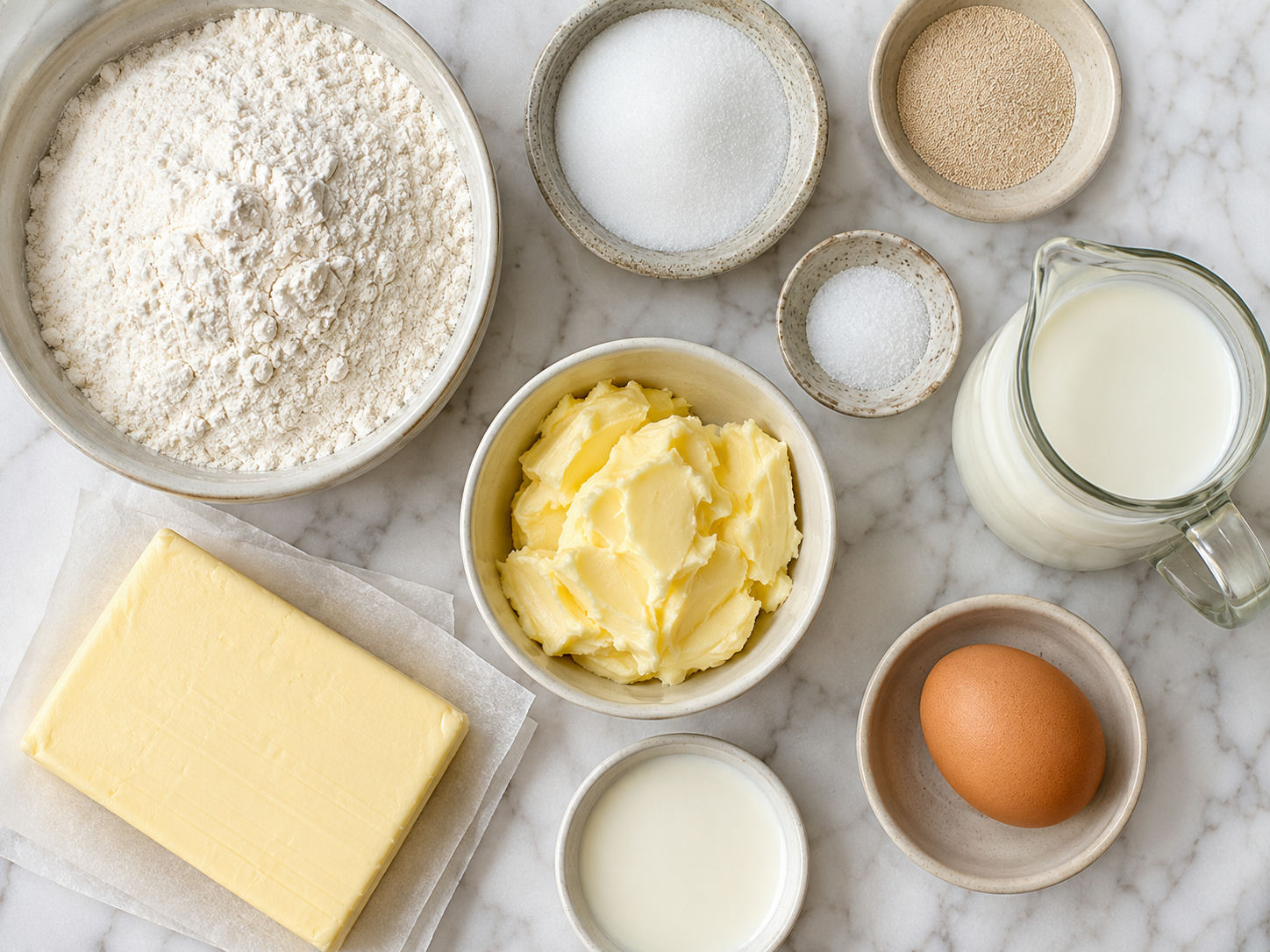
- All-purpose flour. Gives the dough enough structure to stretch around the butter while staying tender after baking.
- Warm milk. Hydrates the dough and adds a soft crumb.
- Active dry yeast. Lifts the pastry so the croissants are airy, not just crisp.
- Granulated sugar. Feeds the yeast and helps the crust brown.
- Fine salt. Sharpens the buttery flavor and keeps the dough from tasting flat.
- Softened butter. Goes into the dough for richness before lamination starts.
- Cold unsalted butter. Becomes the thin layers that steam and separate in the oven.
- Egg wash. Gives the croissants their glossy, deep golden finish.
Fold Cool Butter Into Layers
- Wake the yeast. Stir yeast and a pinch of sugar into warm milk, then wait until foamy so you know it is active.
- Mix the dough. Combine flour, sugar, salt, softened butter, and the yeast milk until a shaggy dough forms, then knead until smooth.
- Chill the dough. Pat it into a square, cover it, and refrigerate until cool and relaxed.
- Shape the butter block. Pound cold butter between parchment into a neat square that bends without cracking.
- Lock in the butter. Roll the dough larger than the butter, fold the corners over it, and pinch the seams closed.
- Roll and fold. Roll into a long rectangle, fold in thirds, chill, and repeat until you have three total turns.
- Cut and shape. Roll the chilled dough thin, cut triangles, notch the wide ends, and roll into crescents.
- Proof and bake. Let the croissants puff, brush with egg wash, and bake until deeply golden and crisp.
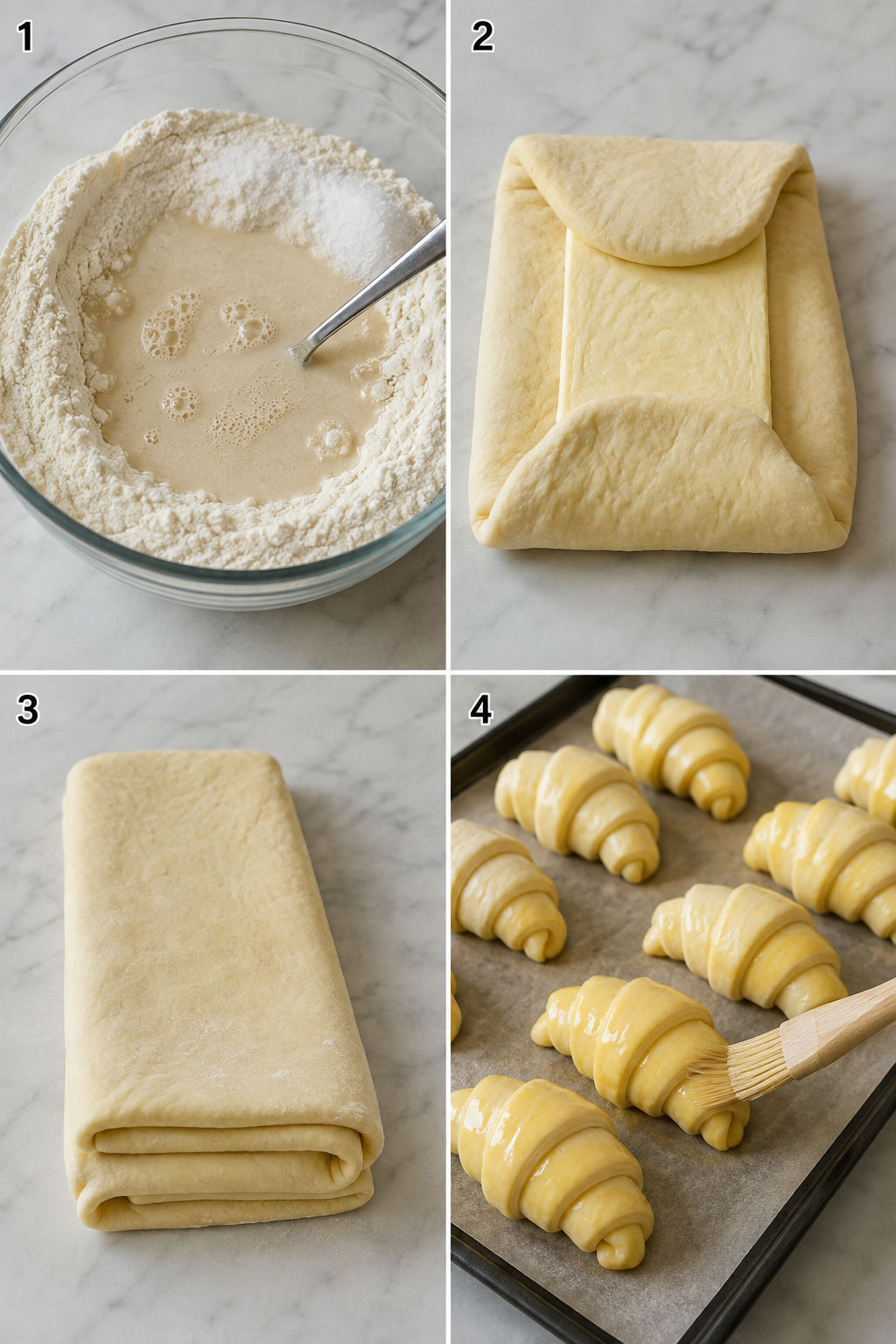
Flaky, Soft, and Bakery-Level Good
Lamination is just dough and butter stacked into thin layers. When the croissants hit the hot oven, moisture in the butter turns to steam and pushes those layers apart. King Arthur Baking has a helpful visual guide to laminated croissant dough if you want to see the folds in action.
The key is texture. The butter should feel cool and bendable, like clay. If it is rock hard, it breaks into shards and creates patchy layers. If it is soft and shiny, it melts into the dough and you lose the flaky lift.
Measure Before You Roll
Croissants are easier when the dough stays square and the edges stay straight. A ruler is not fussy here. It helps the butter spread evenly instead of bunching at one end. For consistent dough, I also like weighing flour, and the King Arthur ingredient weight chart is a reliable reference.
Brush away extra flour before each fold. Loose flour between layers can make the dough slide around and bake with dry streaks. Use just enough flour to keep the rolling pin moving.
Fix Dough That Fights Back
If the dough snaps back, it needs rest. Wrap it and chill it for 20-30 minutes, then try again. Gluten tightens as you roll, and rest lets it relax. This is the same idea that makes soft homemade flatbreads easier to shape after a short pause.
Small butter leaks are not a disaster. Dust the spot with a little flour, press gently, and chill before continuing. Big tears need a patch of dough from an edge trimming.
Make Ahead Without Stress
This dough fits best into a two-day plan. Make and fold the dough on day one, then chill it overnight. Shape, proof, and bake the next morning. That overnight rest improves flavor and makes the dough easier to handle.
You can also freeze shaped croissants before proofing. Set them on a tray until firm, then bag them. Thaw overnight in the fridge and proof at room temperature before baking. For easier sweet baking days, keep this recipe near soft honey oat muffins and soft stuffed sweet rolls.
Serve Them While Crisp
Croissants taste best within a few hours of baking, when the shell is crisp and the center is still soft. Serve them plain, with jam, or split and filled with eggs and cheese. Day-old croissants are excellent toasted.
If you want a savory pastry tray, add feta spinach puffs beside them. The croissants bring buttery layers, and the puffs bring salty filling. It feels generous without needing a complicated brunch menu.
Summary
Cold, bendable butter and patient chilling are what make these homemade croissants crisp outside, soft inside, and full of visible layers.

Frequently Asked Questions
- Can I make croissant dough without a stand mixer?
-
Yes. Mix the dough with a sturdy spoon, then knead by hand until it feels smooth and elastic, about 8-10 minutes. The later rolling and folding also builds strength, so do not worry if the dough is not fully springy at first.
- Can I use instant yeast instead of active dry yeast?
-
Yes. Use the same amount of instant yeast and mix it directly into the flour. If you use active dry yeast, dissolve it in warm milk first so you can confirm that it foams before you build the dough.
- Why did butter leak out of my croissants?
-
Butter usually leaks when it gets too warm, when the dough tears, or when the croissants are underproofed. Chill the dough whenever it feels greasy or stretchy, and proof the shaped croissants until they look puffy and gently wobble when the pan moves.
- Can I freeze homemade croissants?
-
Yes. Freeze shaped croissants before the final proof, then thaw overnight in the refrigerator and proof at room temperature before baking. You can also freeze baked croissants and rewarm them in a 325 F oven until crisp.
- What flour works best for croissants?
-
All-purpose flour gives tender croissants with enough strength for rolling. Bread flour can make them a little chewier. Measure by weight if you can, since too much flour makes laminated dough stiff.
- How do I know croissants are fully baked?
-
Look for a deep golden exterior, crisp edges, and no pale raw-looking dough where the layers overlap. If they brown too fast, lower the oven slightly for the final few minutes so the centers can finish baking.