 Pin it
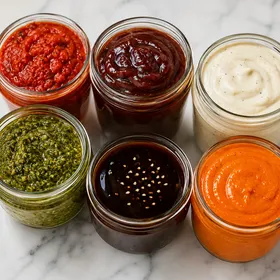
Easy homemade sauces are one of the quickest ways to make plain food feel cooked with care. A jar of marinara turns pasta or pizza into dinner. A spoonful of pesto wakes up eggs, sandwiches, and roasted vegetables.
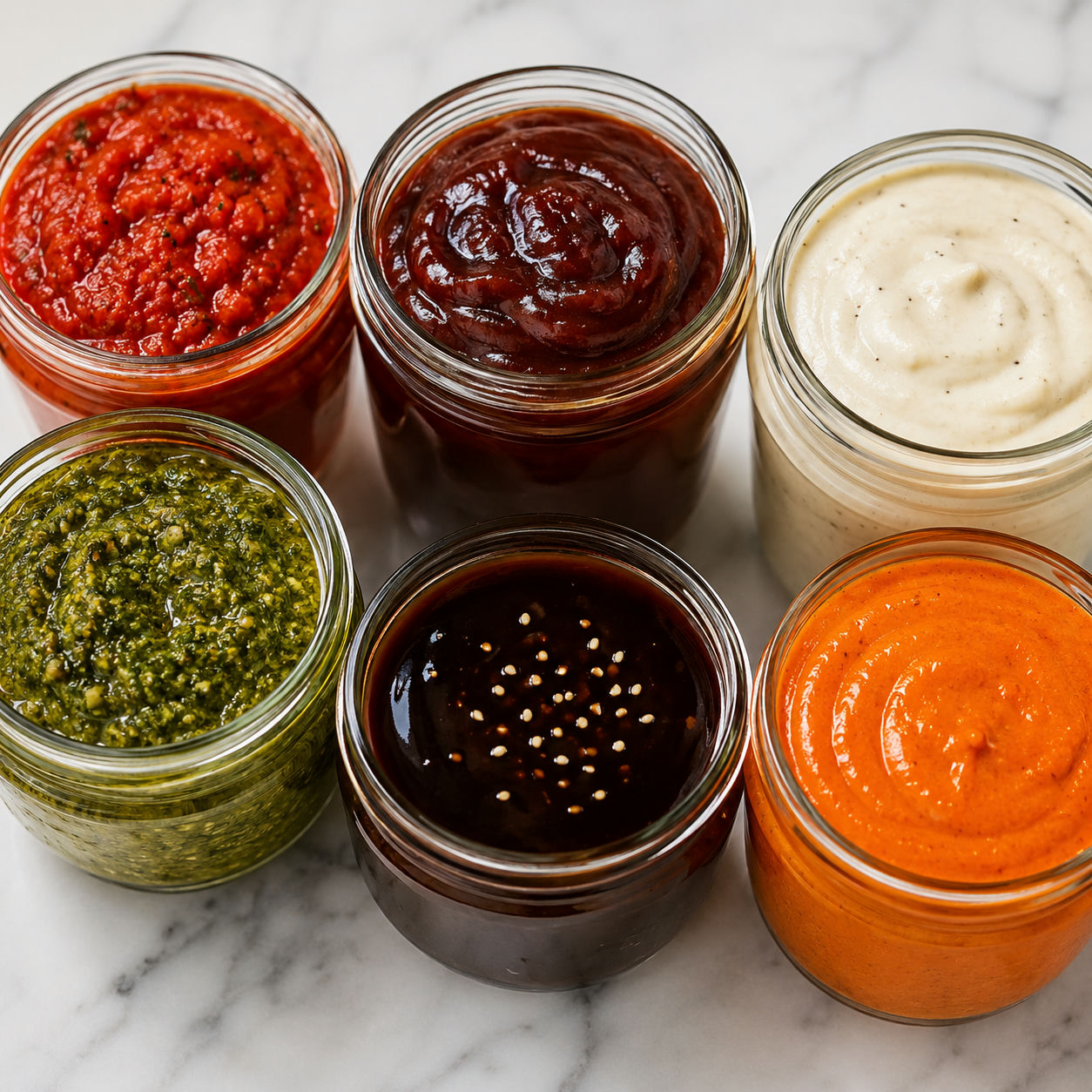
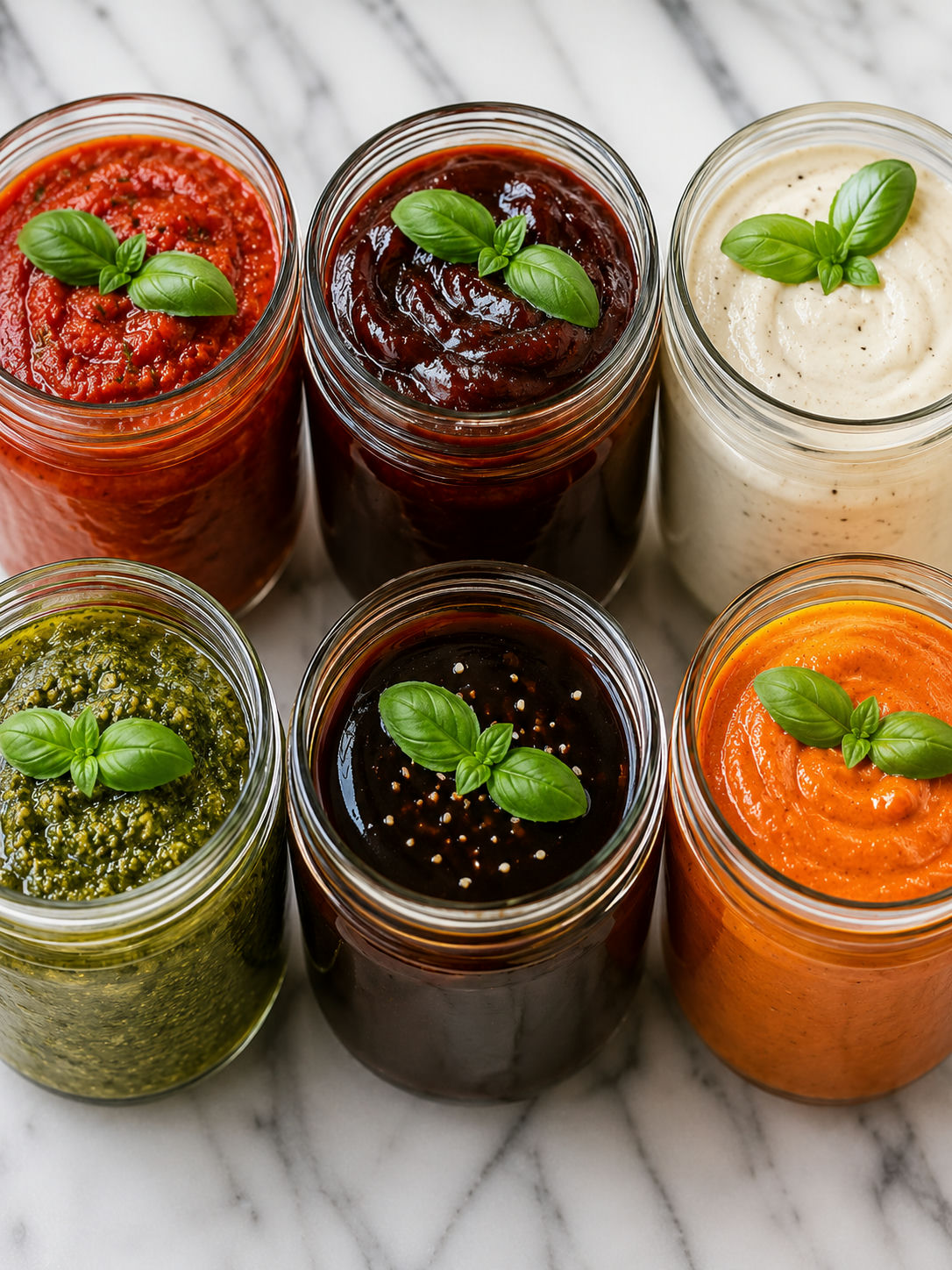
This set is built for real kitchens. Some sauces simmer, one blends cold, and a couple come together in minutes. Make all six for a stocked fridge, or pick two for the meals you know are coming.
The jars worth making
These sauces share the same pantry backbone: aromatics, fat, acid, sweetness, and salt. Start with fresh garlic, good dairy, ripe basil, and a soy sauce you already like because those flavors come through clearly.
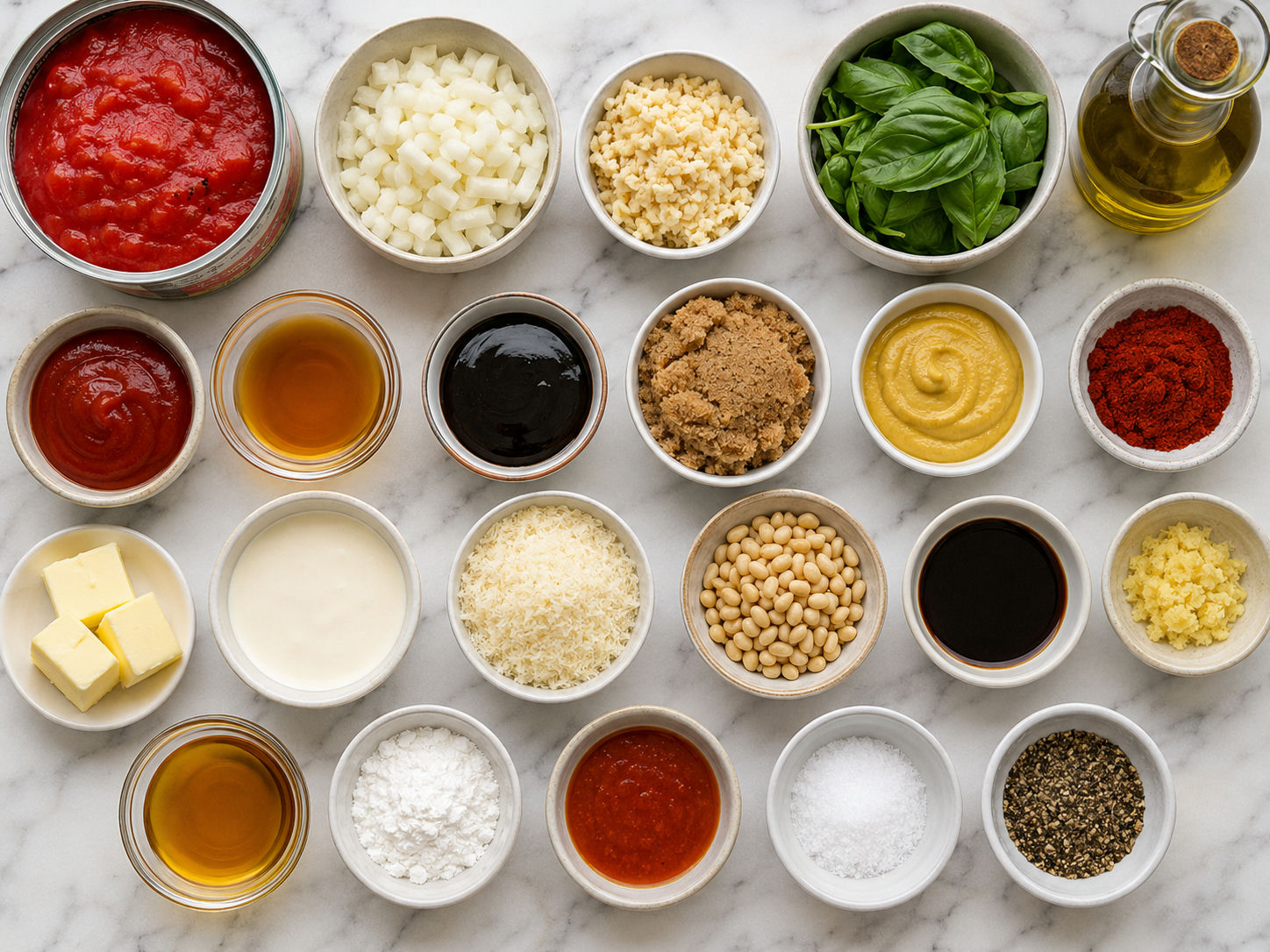
- Crushed tomatoes. They make a bright marinara with enough body for pasta, pizza, and meatballs.
- Onion and garlic. They give the tomato sauce and barbecue sauce a cooked, rounded base.
- Ketchup, vinegar, molasses, and brown sugar. This mix creates a glossy barbecue sauce with tang and smoke-friendly sweetness.
- Butter, cream, and Parmesan. They melt into a rich Alfredo that needs gentle heat to stay smooth.
- Fresh basil and nuts. They turn pesto fragrant, green, and textured instead of flat.
- Soy sauce, ginger, garlic, and sesame oil. They build a savory teriyaki glaze for bowls, noodles, and chicken.
- Hot sauce and butter. They make Buffalo sauce sharp, glossy, and ready for wings or wraps.
Cook and jar the sauces
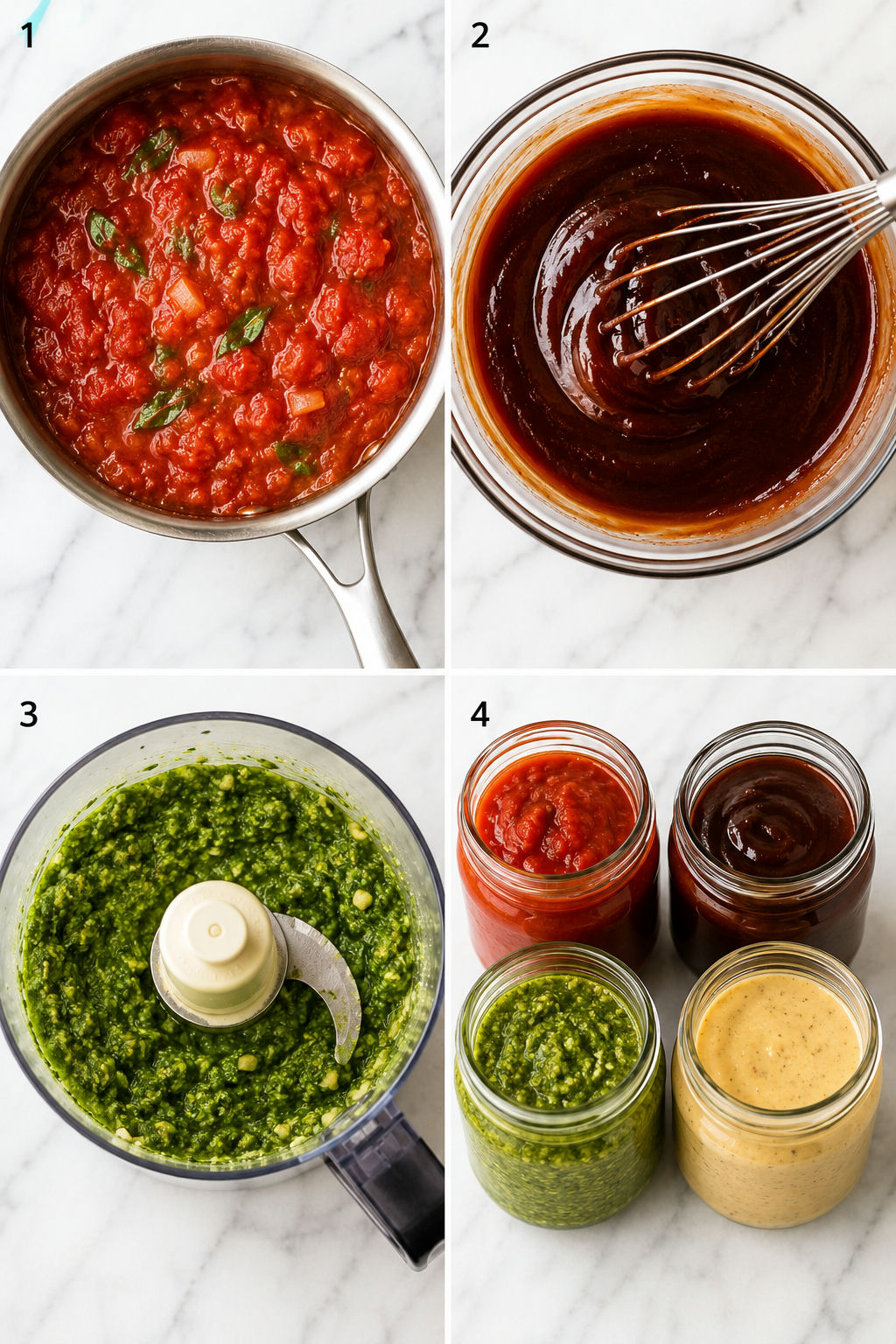
- Start the marinara. Soften onion in olive oil, add garlic, tomatoes, herbs, and a small pinch of sugar, then simmer until the sauce smells sweet and tomato-rich.
- Simmer the barbecue sauce. Whisk the ketchup, vinegar, molasses, brown sugar, Worcestershire sauce, and spices in a saucepan until thick enough to coat a spoon.
- Make the Alfredo gently. Melt butter with garlic, add cream, then whisk in Parmesan over low heat so the sauce stays silky.
- Blend the pesto. Pulse basil, toasted nuts, garlic, and Parmesan, then stream in olive oil until loose and spoonable.
- Thicken the teriyaki. Simmer soy sauce, water, sugar, honey, ginger, garlic, vinegar, and sesame oil, then whisk in a cornstarch slurry until glossy.
- Finish the Buffalo sauce. Melt butter on low heat, whisk in hot sauce, vinegar, garlic powder, and paprika, then jar while warm.
Balance beats bottled flavor
The reason homemade sauces taste better is not magic. You can taste as you go. Marinara may need a little sugar if the tomatoes are sharp. Barbecue sauce may need more vinegar if it tastes heavy. Teriyaki should be salty-sweet, not syrupy. Buffalo sauce should bite first, then finish buttery.
Do not season all six the same way. Taste each sauce warm, then taste again after it cools for a few minutes. Heat dulls sweetness and sharpens spice. A cooled spoonful tells you more about how the sauce will taste from the jar.
Storage without guesswork
Let hot sauces cool in shallow containers before sealing them. The USDA says leftovers should be refrigerated promptly and used within 3-4 days, with more detail in its leftovers safety guide. Label every jar with the sauce name and date. It sounds fussy until you have three red sauces in the fridge.
For longer storage, freeze marinara, barbecue sauce, pesto, and teriyaki in small portions. Food Network notes that many sauces freeze well when cooled safely and packed with little air space in its guide to freezing sauces.
What to put them on
Marinara goes straight onto pasta, pizza, meatballs, and baked eggs. Alfredo is best with hot pasta, roasted broccoli, or a quick chicken bake. Pesto is the jar I reach for when lunch tastes tired. Spoon it over toast, grain bowls, or the fresh protein salad for an instant herb dressing.
Barbecue sauce belongs on ribs and pulled chicken, but it is also good brushed over roasted chickpeas or stirred into beans. Teriyaki makes quick rice bowls taste finished, especially with saucy noodle bowls. Buffalo sauce is for wings, wraps, shrimp, and anything crispy, like crispy chicken with sticky sauces.
Swaps that still work
If you are out of San Marzano tomatoes, use any good crushed tomatoes and let the marinara simmer a little longer. No molasses for barbecue sauce means brown sugar and a splash more Worcestershire can carry it. Walnuts or sunflower seeds can replace pine nuts in pesto. Low-sodium soy sauce works well in teriyaki, but taste before adding more sweetener because the balance changes.
For dairy-free meals, skip the Alfredo and use pesto without Parmesan, or lean on marinara, teriyaki, and barbecue sauce. If you already like keeping homemade sauces in jars, this batch adds more range without making the prep complicated.
Fixes for common sauce problems
If marinara tastes thin, simmer it uncovered until a spoon leaves a clear trail across the pan. If barbecue sauce tastes too sweet, add vinegar by the teaspoon. If teriyaki gets too thick, whisk in warm water until it drizzles again. Alfredo needs the most care. Reheat it on low with a splash of cream or pasta water, then whisk until it relaxes.
Pesto should be textured, not baby-food smooth. Pulse instead of blending nonstop. Buffalo sauce may firm up in the fridge because of the butter. Warm it gently and shake or whisk before serving.
Summary
Keep the sauces in clean jars, label them with dates, and freeze the ones you will not use within a few days. Rewarm cream and butter sauces gently so they stay smooth.
Frequently Asked Questions
- How long do homemade sauces last in the fridge?
-
Most cooked homemade sauces are best within 3-4 days when stored in clean, airtight containers. High-vinegar sauces like barbecue sauce and teriyaki often keep a little longer in good condition, but use smell, texture, and common sense.
- Can I freeze all six sauces?
-
Marinara, barbecue sauce, teriyaki, and pesto freeze very well. Alfredo and Buffalo sauce can separate after freezing because of the dairy and butter, but they can usually be whisked smooth again over low heat.
- Can I make these sauces lower in salt?
-
Yes. Use low-sodium soy sauce in the teriyaki, unsalted butter in the Alfredo and Buffalo sauce, and taste before adding extra salt. Homemade sauces are easier to adjust than bottled ones because you control the salty ingredients from the start.
- What jars are best for storing homemade sauces?
-
Use clean glass jars with tight lids, small deli containers, or freezer-safe containers. Smaller jars are useful because they cool faster and you can thaw only what you need.
- What can I use instead of pine nuts in pesto?
-
Walnuts, cashews, almonds, or sunflower seeds all work. Toast them lightly first for deeper flavor, then blend them with the basil and garlic before streaming in the oil.
- How do I keep Alfredo sauce from turning grainy?
-
Keep the heat low once the Parmesan goes in. Add the cheese gradually and whisk until smooth. Pre-shredded cheese often has anti-caking starches, so freshly grated Parmesan melts better.