 Pin it
Homemade sauces in jars are my favorite kind of meal prep because they do not lock you into one dinner. One red sauce becomes pasta, pizza, a meatball dip, or a quick skillet meal.
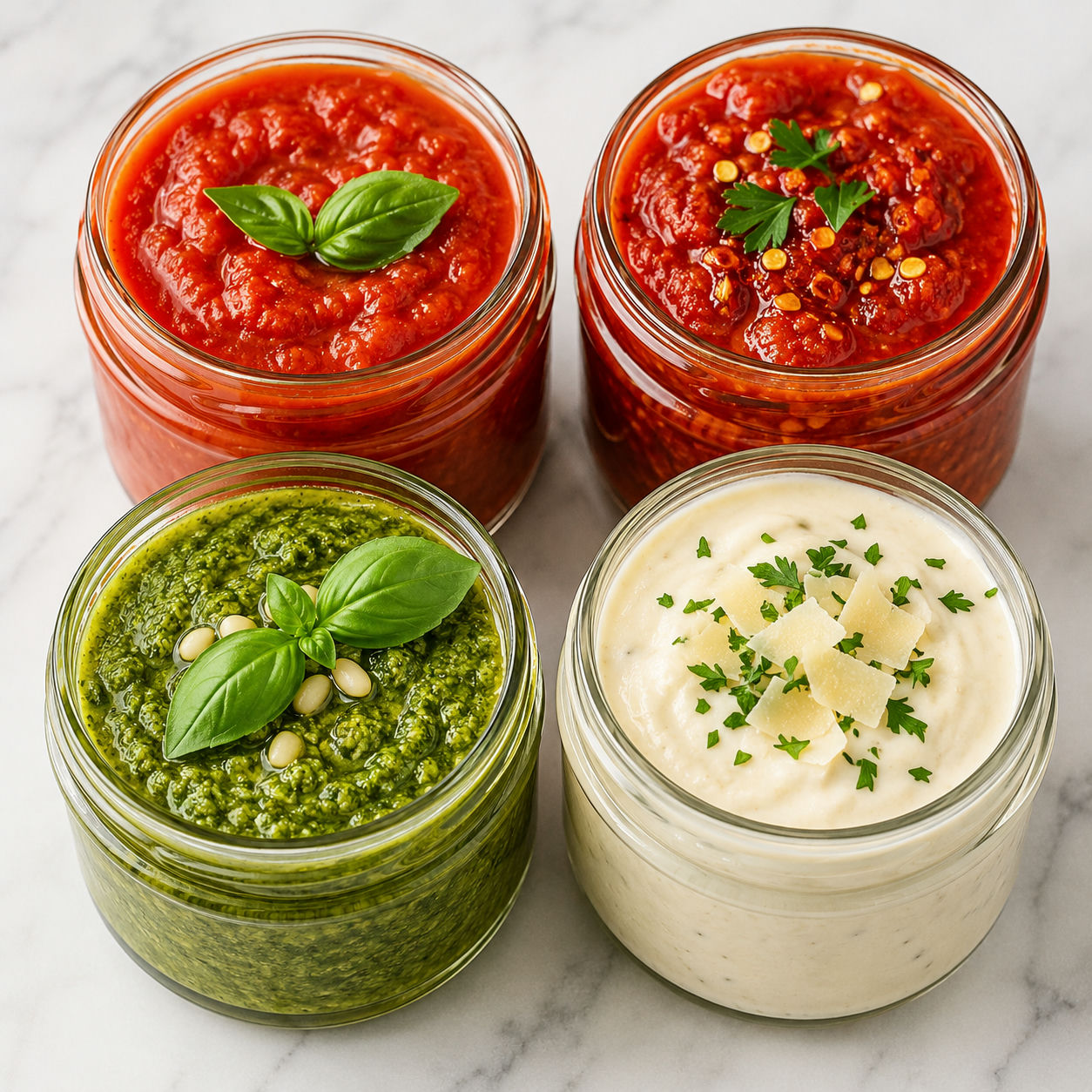
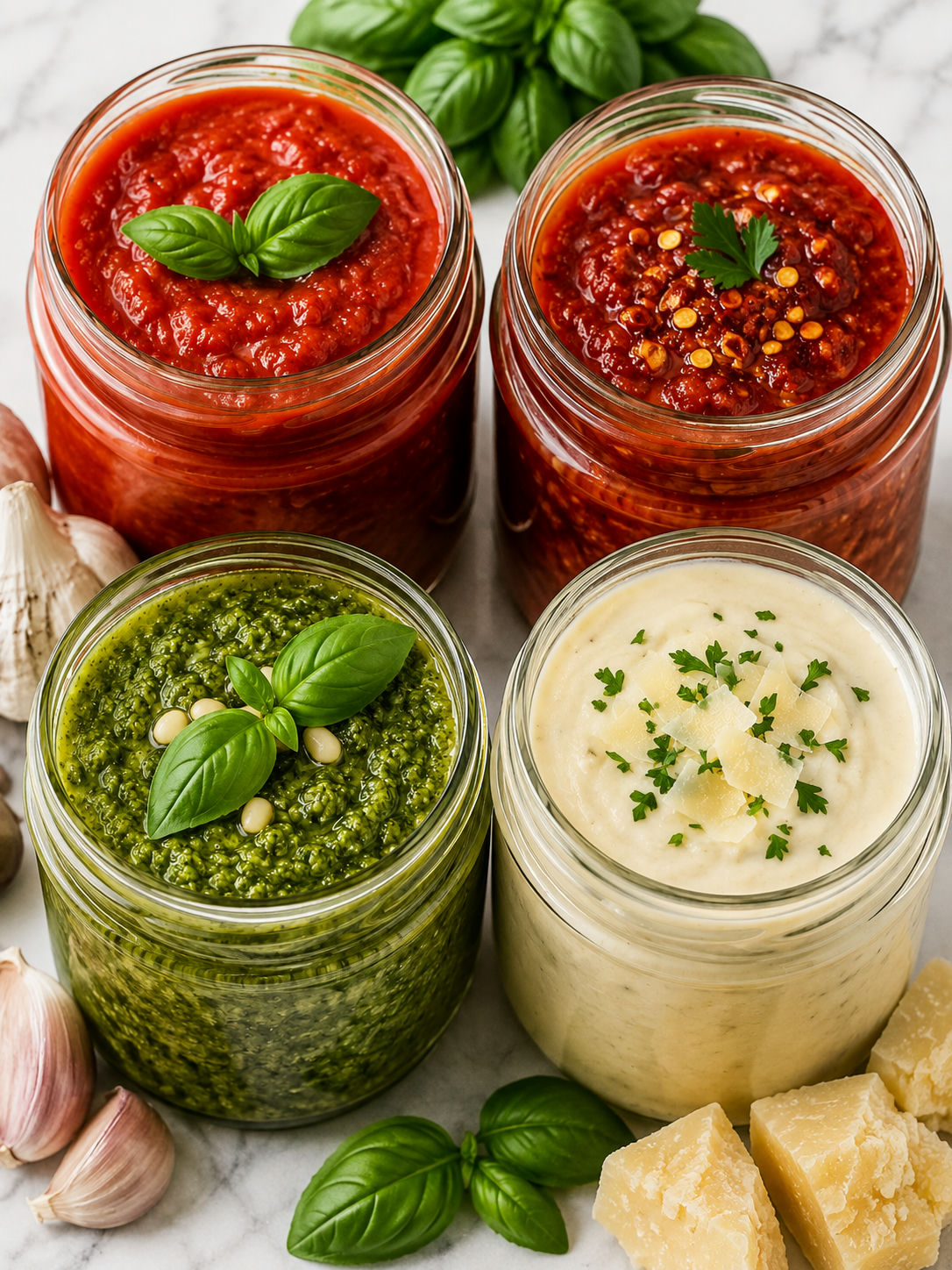
This set gives you four useful sauces. The marinara is bright and garlicky, the pesto is green and punchy, the arrabbiata brings heat, and the Alfredo is creamy enough to turn plain noodles into comfort food.
The Jar Sauce Lineup
Choose good canned tomatoes, fresh basil, real Parmesan, and clean-tasting olive oil. Simple sauces do not hide dull ingredients well, so this is where quality pays you back.
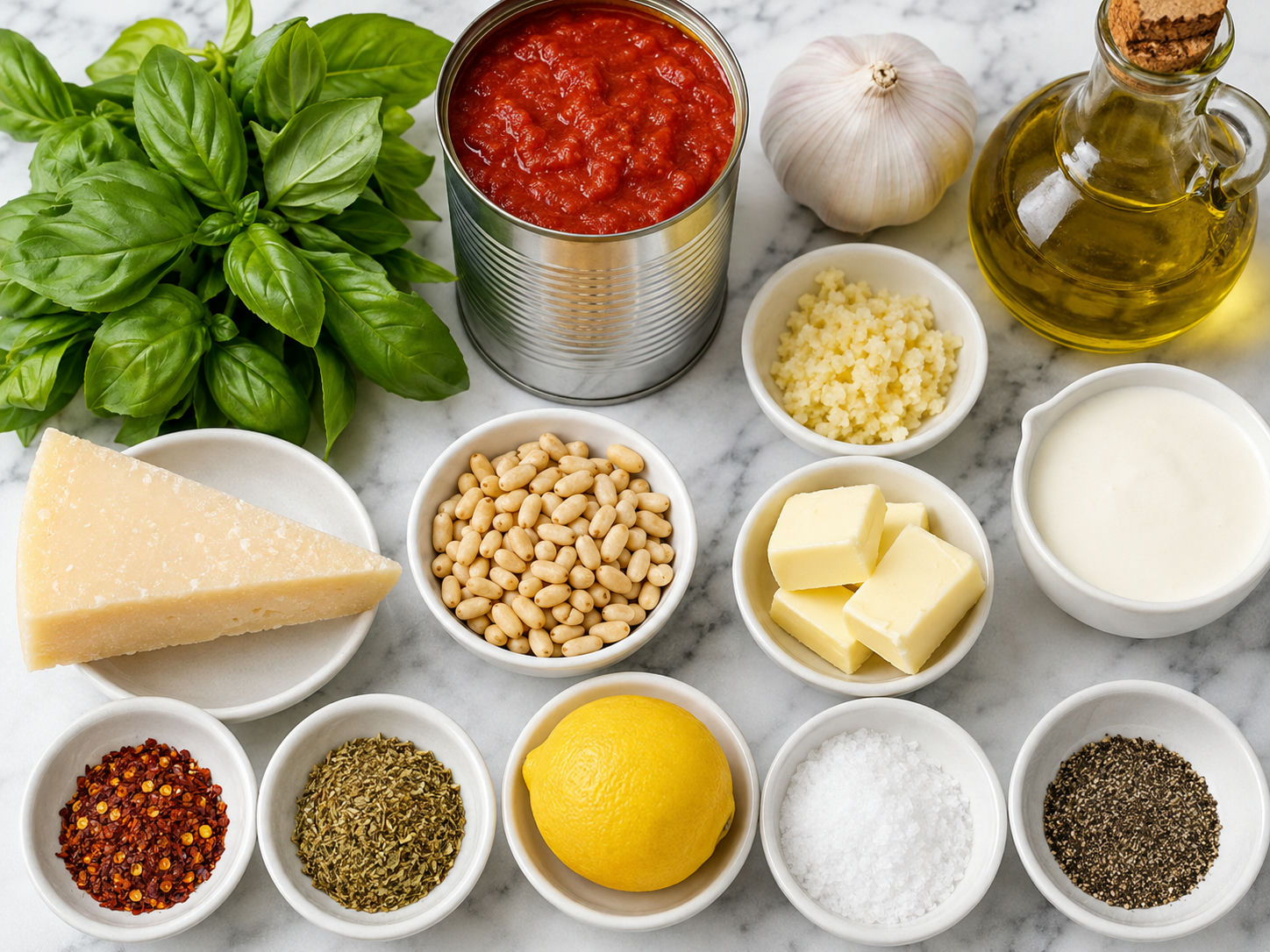
- Crushed tomatoes. The base for the marinara and arrabbiata, giving both sauces body and bright acidity.
- Garlic. Adds the first warm smell in the pan and gives each sauce a savory backbone.
- Olive oil. Carries the garlic, softens tomato acidity, and makes pesto glossy.
- Fresh basil. Keeps the red sauces fresh and makes the pesto taste green and lively.
- Parmesan. Adds salt, nuttiness, and body to the pesto and Alfredo.
- Pine nuts or walnuts. Give pesto its creamy texture without turning it heavy.
- Red pepper flakes. Turn a simple tomato sauce into a spicy arrabbiata.
- Butter and cream. Build the Alfredo so it coats pasta instead of soaking into it.
Homemade Sauces in Jars Method
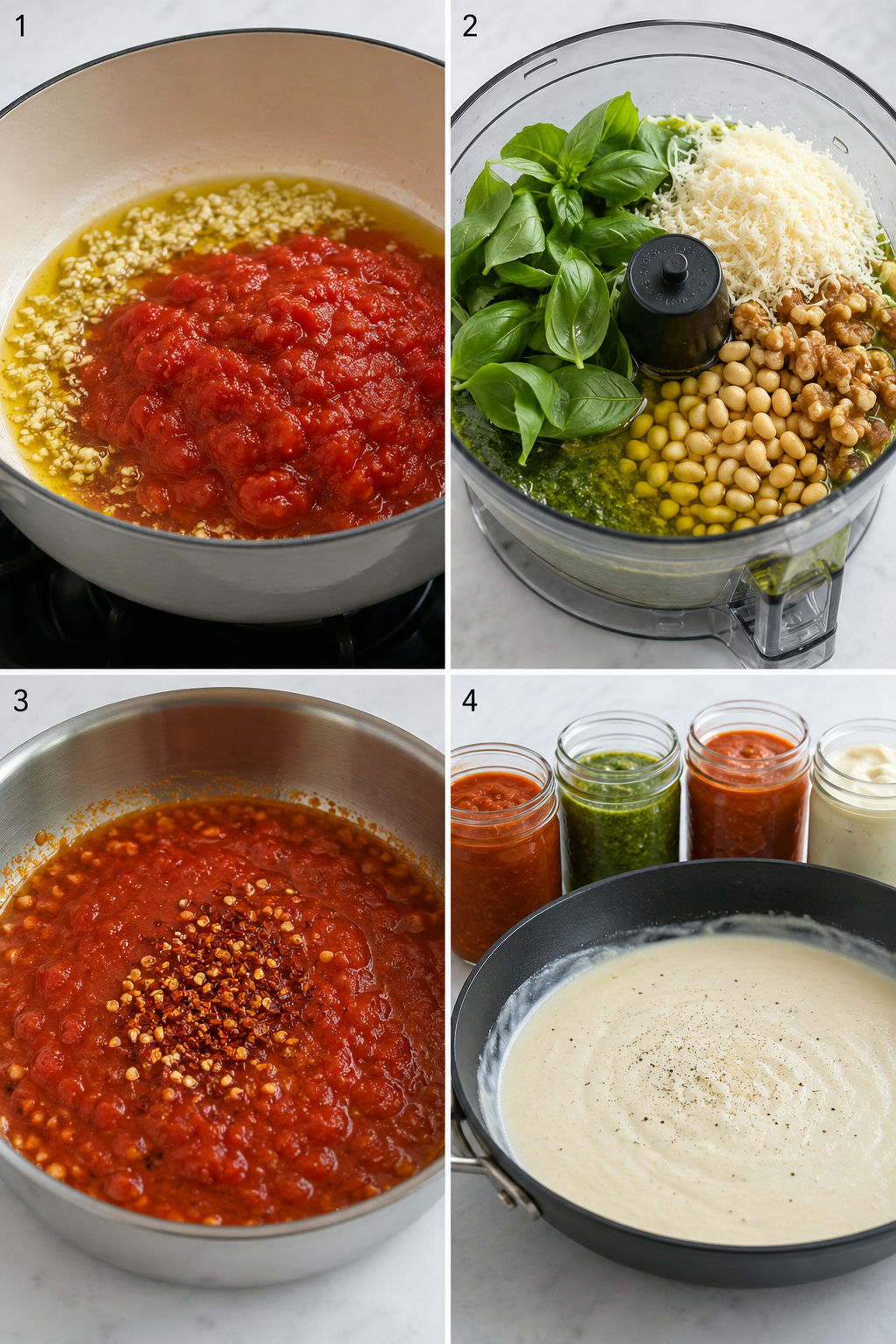
- Start the marinara. Warm olive oil, cook garlic just until fragrant, then add tomatoes, salt, oregano, pepper, and a small pinch of sugar if the tomatoes taste sharp.
- Simmer until glossy. Let the marinara bubble gently for 20-25 minutes, stirring now and then, until it thickens enough to leave a trail on the spoon.
- Blend the pesto. Pulse basil, garlic, nuts, and Parmesan until finely chopped, then stream in olive oil until the sauce looks loose and spoonable.
- Make the arrabbiata. Bloom garlic and red pepper flakes in olive oil for a few seconds, add tomatoes and seasoning, then simmer 15-20 minutes.
- Cook the Alfredo gently. Melt butter, soften garlic, add cream, and keep it at a low simmer before whisking in Parmesan a little at a time.
- Cool and jar. Spoon each sauce into clean jars, leave room at the top, label with the date, and refrigerate once the jars are no longer hot.
Keep Each Sauce Bright
The tomato sauces want a gentle simmer, not a hard boil. A steady bubble cooks off the canned edge while keeping the tomatoes fresh. If the pan spits, lower the heat and partially cover it.
Pesto needs the opposite treatment. Do not cook it in the blender and do not pour it into a hot jar. Heat dulls basil fast. For the best color, blend it quickly, scrape it into a small jar, and cover the surface with a thin slick of olive oil.
Fridge Life Without Guessing
These jars are for fridge and freezer storage, not pantry canning. The USDA says leftovers should be cooled and refrigerated promptly, and sauces, soups, and gravies should be reheated thoroughly. You can read the USDA leftover safety guide for the official timing.
Opened tomato products are high-acid foods, and the FSIS gives a 5-7 day refrigerator window for opened canned tomato products in its opened canned food guidance. I use that same cautious window for these tomato sauces.
Fast Meals From One Batch
A jar of sauce turns almost-cooked food into dinner. Marinara goes on pizza quesadillas, spooned pasta, or baked meatballs. Arrabbiata is made for quick noodles, especially if you already like saucy noodle bowls.
Pesto is the jar I reach for when food tastes flat. Stir it into rice, spread it on toast, or loosen it with lemon for salads like a hearty protein salad. Alfredo is richer, so I save it for pasta nights, chicken, or roasted vegetables.
Swaps That Make Sense
Use whole peeled tomatoes and crush them by hand if you like a rustic sauce. Use crushed tomatoes if you want a smoother jar. Walnuts can replace pine nuts in pesto, and Pecorino Romano can stand in for Parmesan if you like a sharper bite.
For a lighter Alfredo, use half-and-half, but keep the heat low and expect a thinner sauce. If you want a dairy-free set, skip Alfredo and make an extra jar of marinara or arrabbiata. That gives you a better result than forcing cream sauce to behave without cream.
Reheat Without Breaking Sauce
Tomato sauces are sturdy. Warm them in a small pan over medium-low heat until steaming, then loosen with a splash of water if they thickened in the fridge. They are easy partners for crispy chicken with sticky sauces or a simple pasta bowl.
Alfredo needs gentler heat. Warm it low and slow, whisking often. If it looks grainy, add a spoonful of milk or pasta water and keep whisking. FoodSafety.gov notes that cold storage times are about safety and quality, with frozen food best held at 0°F or below in its cold food storage chart.
Where They Fit Best
For an easy weekly rhythm, make the red sauces first, blend pesto while they simmer, then cook Alfredo last. The dairy sauce is the most delicate, so it should not sit around while everything else cools.
Use these jars to make pasta night feel less repetitive. Marinara and pesto can even share the table with pasta dinner recipe ideas when everyone wants a different bowl.
Frequently Asked Questions
- How long do homemade sauces in jars last in the fridge?
-
Tomato sauces usually keep about 5-7 days when cooled quickly and stored cold in clean airtight jars. Alfredo is best used within 3-4 days because dairy sauces lose quality faster.
- Can I freeze all four sauces?
-
Marinara and arrabbiata freeze very well for up to 3 months for best texture. Pesto also freezes well, especially in small portions. Alfredo can be frozen, but the dairy may separate, so reheat it gently and whisk in a splash of milk.
- Can I use walnuts instead of pine nuts in pesto?
-
Yes. Walnuts make a good budget swap and give the pesto a slightly deeper flavor. Toast them lightly first if you want a rounder, less raw taste.
- Do I need to sterilize the jars?
-
For fridge storage, wash jars well with hot soapy water or run them through the dishwasher. This recipe is not a shelf-stable canning recipe, so the jars still need to stay refrigerated or frozen.
- How should I cool sauce before putting it in jars?
-
Let hot sauces stop steaming hard, then divide them into shallow containers or jars so they cool faster. The USDA recommends refrigerating leftovers within 2 hours, or within 1 hour in very hot weather.
- What meals can I make with these sauces?
-
Use marinara on pizza, arrabbiata with penne, pesto in sandwiches or rice bowls, and Alfredo with pasta, chicken, or vegetables. A spoonful of sauce also wakes up leftovers without much work.
References
Reliable references aided in composing and refining this content.
- https://www.fsis.usda.gov/food-safety/safe-food-handling-and-preparation/food-safety-basics/leftovers-and-food-safety
- https://ask.fsis.usda.gov/article/After-you-open-a-can-how-long-can-you-keep-the-food-in-the-refrigerator
- https://akaprod-www.foodsafety.gov/food-safety-charts/cold-food-storage-charts