 Pin it
Quick, saucy, flavor-packed noodle bowls are what I make when dinner needs to feel fun without turning into a project. The noodles are chewy, the sauces cling well, and every bowl has a different mood.
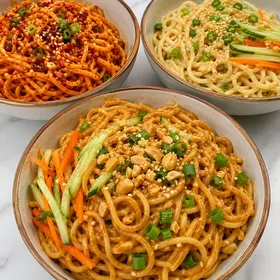
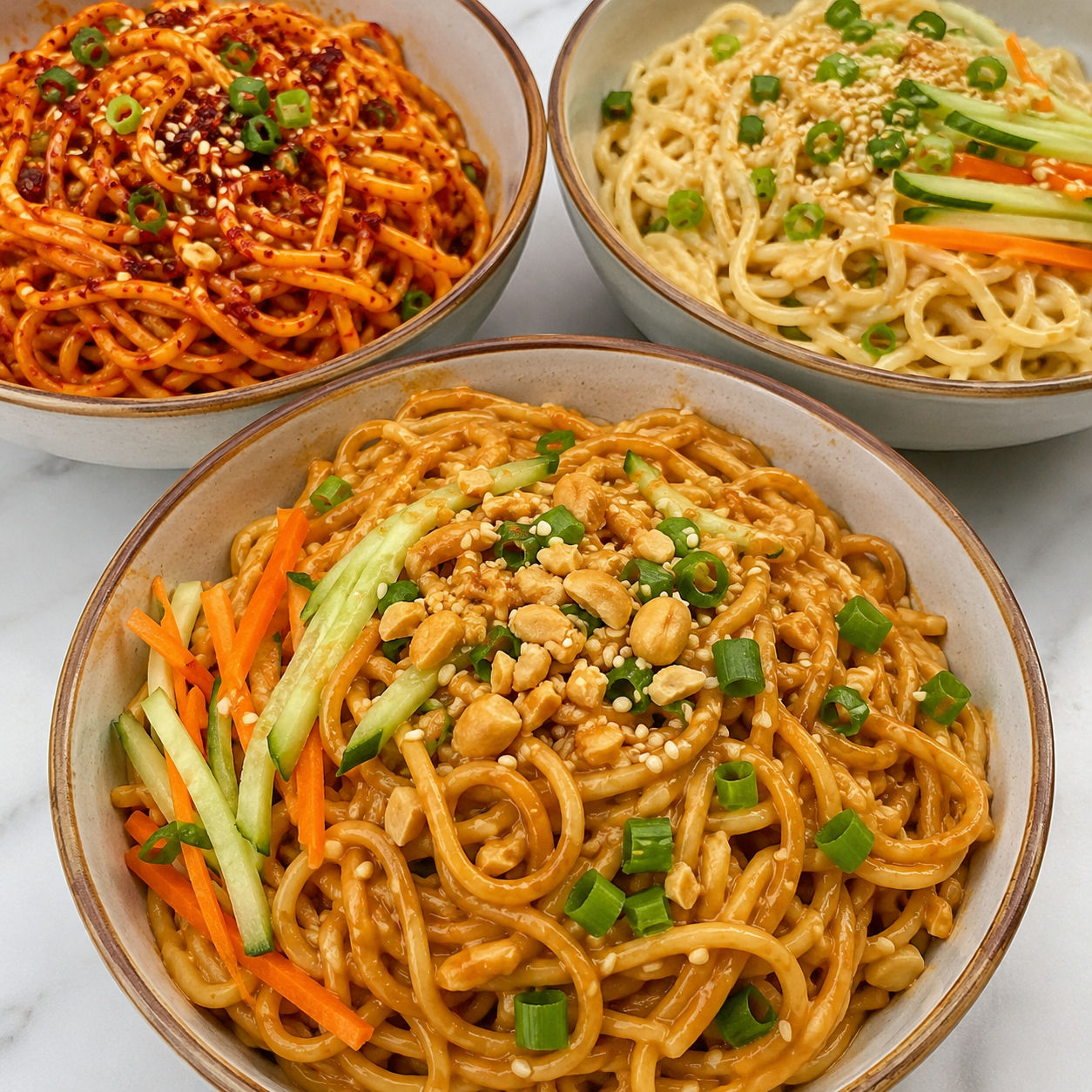
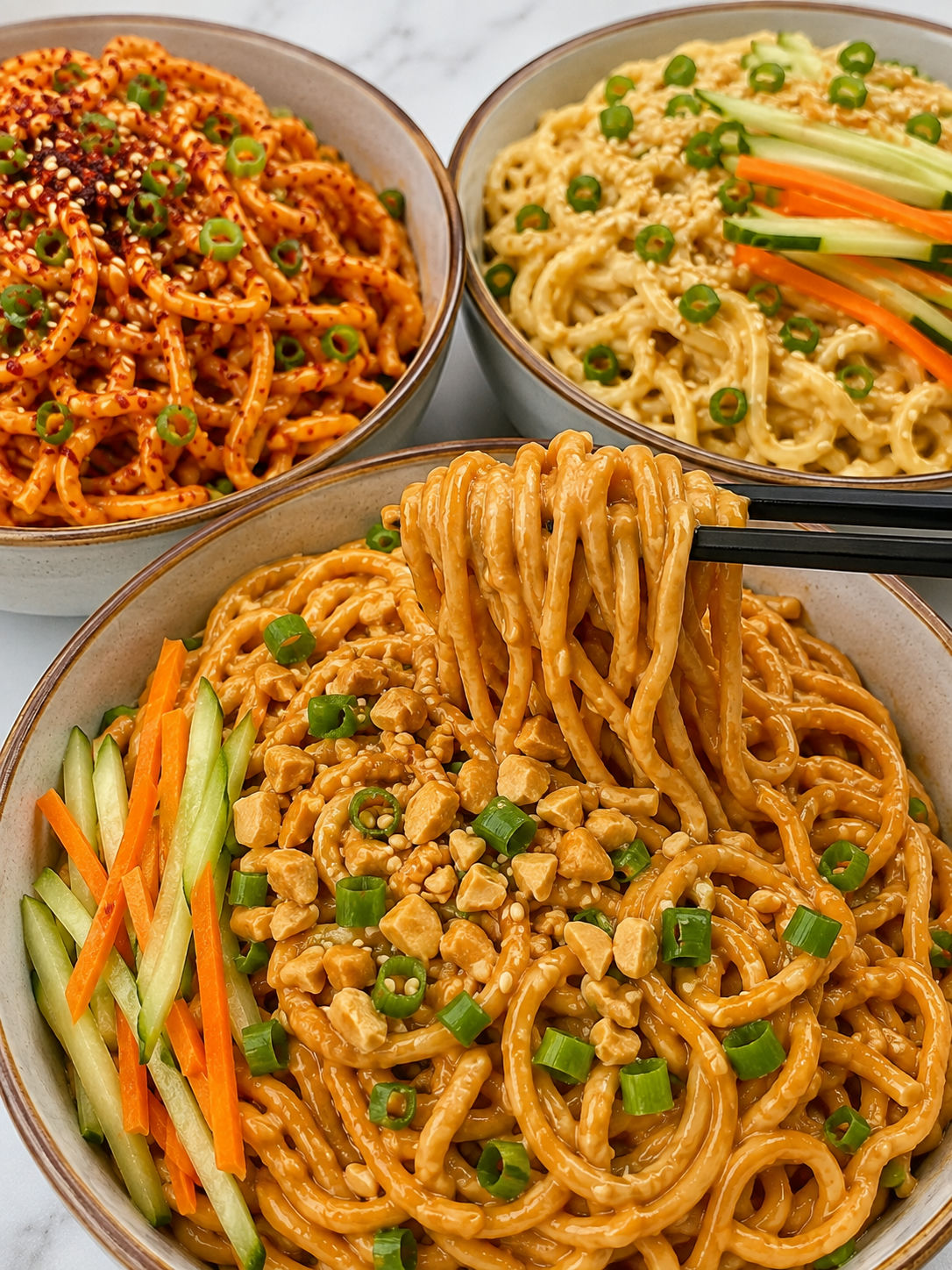
This version gives you three options from one simple method. Make all three for a noodle night, or pick the sauce that matches your pantry and call it dinner.
Saucy Bowl Building Blocks
The best noodle bowls start with chewy noodles and sauces that balance salt, heat, sweetness, and acid. Smooth peanut butter, toasted sesame oil, rice vinegar, garlic, and soy sauce do most of the heavy lifting here.
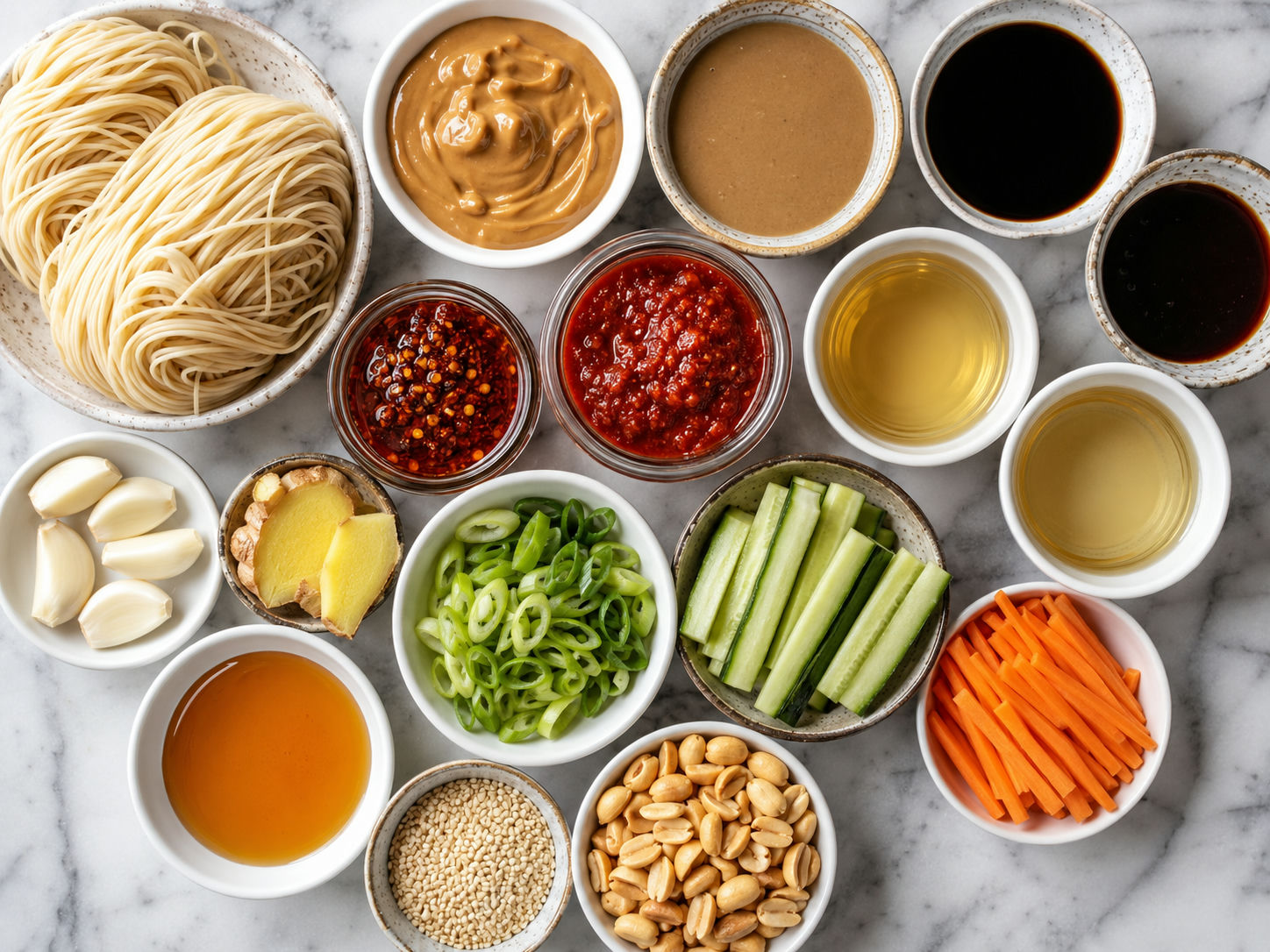
- Wheat noodles. Chewy knife-cut noodles or dried wheat noodles hold sauce better than thin, soft pasta.
- Peanut butter. Makes the spicy peanut sauce creamy and rich without needing dairy.
- Sesame paste. Gives the cold bowl a deep roasted flavor. Tahini works in a pinch.
- Soy sauce. Adds salt and savoriness to all three bowls.
- Rice vinegar. Keeps the sauces bright so they do not taste heavy.
- Garlic and ginger. Bring sharp, fresh flavor that wakes up the pantry sauces.
- Chili oil and chili garlic sauce. Add heat, color, and a glossy finish.
- Cucumber, carrot, and scallions. Add crunch and freshness against the rich sauces.
- Sesame seeds and peanuts. Finish the bowls with nutty crunch.
Make Three Noodle Bowls
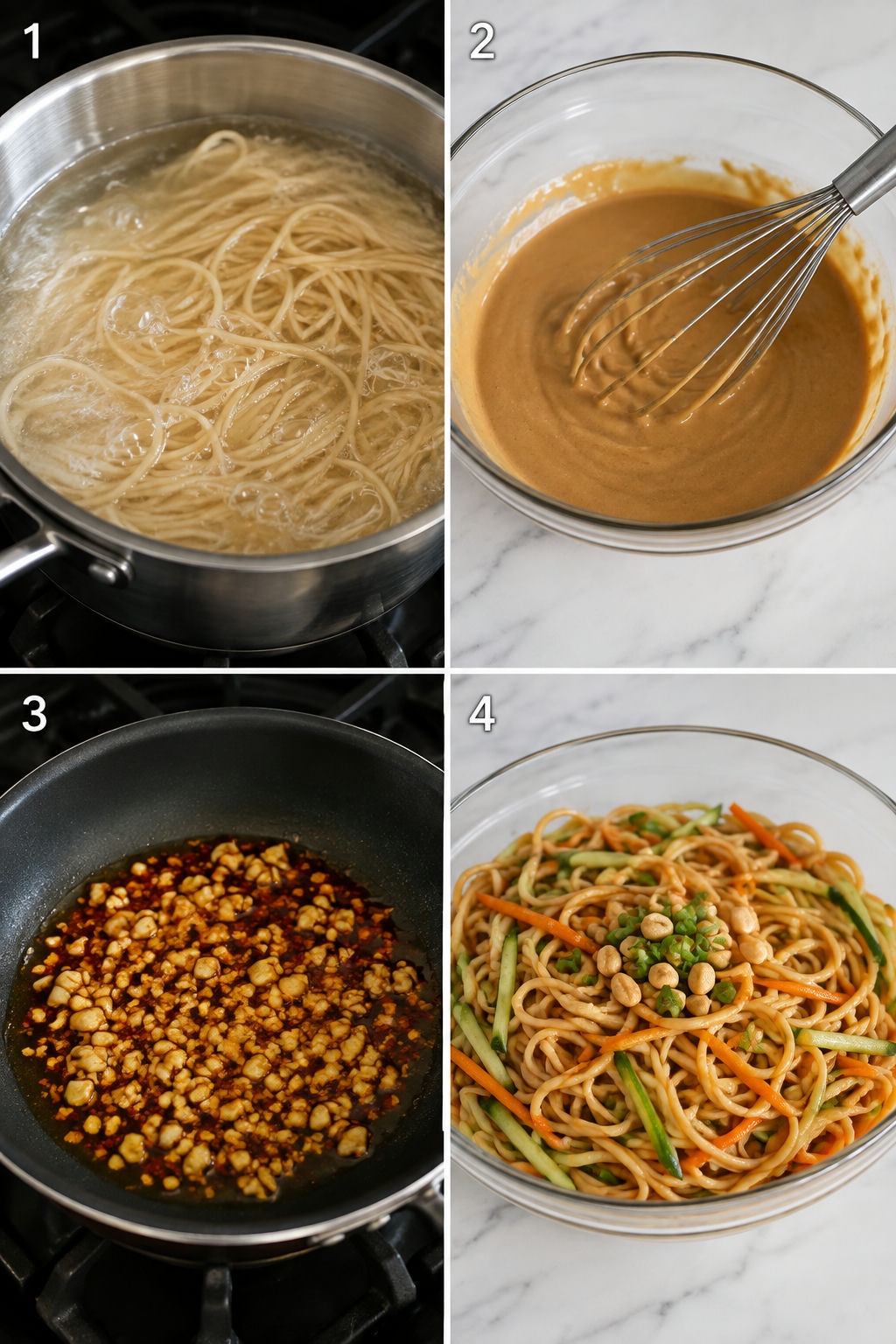
- Boil the noodles. Cook each batch of noodles until tender with a little chew. Save a cup of hot cooking water before draining.
- Mix the peanut sauce. Whisk peanut butter, garlic, soy sauce, rice vinegar, chili garlic sauce, honey, sesame oil, and hot water until smooth. Toss with hot noodles.
- Warm the chili garlic oil. Cook garlic briefly in chili oil, then stir in soy sauce, dark soy sauce, rice vinegar, and sugar. Toss with drained noodles until shiny.
- Build the cold sesame sauce. Whisk sesame paste, peanut butter, soy sauce, vinegar, sesame oil, honey, ginger, garlic, water, and chili oil until creamy.
- Cool the sesame noodles. Rinse the last batch of noodles under cold water, drain well, then toss with the sesame sauce, cucumber, carrot, and scallions.
- Garnish and serve. Finish the peanut noodles with scallions and sesame seeds, the chili oil noodles with cucumber, and the cold sesame noodles with peanuts.
Quick, Saucy Noodle Bowls
The keyword here is saucy, not soupy. A good noodle sauce should cling to each strand and leave a light shine in the bowl. If it puddles at the bottom, toss longer. If it clumps, add hot noodle water one spoonful at a time.
For more chewy noodle dinner ideas, the site already has quick beef broccoli noodles and japchae with glass noodles. Those are fuller skillet meals. These bowls are faster and more sauce-focused.
Choosing The Right Noodles
Use noodles that stay springy after boiling. Knife-cut wheat noodles give the peanut and chili oil bowls a great bite. Thin Taiwanese-style wheat noodles are especially good for the cold sesame bowl. The Kitchn notes that wheat-based noodles are a strong choice for sesame noodles because they stay chewy and do not turn gluey as quickly.
Rice noodles can work, but they need a gentler hand. Rinse them well, drain them thoroughly, and toss right away. Too much water left on the noodles will thin the sauce.
Heat, Sweetness, And Salt
The sauces all use the same basic balance. Soy sauce brings salt. Vinegar adds lift. Honey or sugar rounds the edges. Chili oil or chili garlic sauce gives heat and a little red sheen.
If you like the sticky-saucy side of dinner, try these bowls next to crispy chicken with sticky sauces. For a fresh side, spicy Korean cucumber salad cuts through the richness nicely.
Cold Bowl Prep That Works
Cold sesame noodles are the easiest one to make ahead. Rinse the noodles until cool, shake off as much water as possible, and toss with the sauce right before packing. Add cucumber and carrot at the end so they stay crisp.
Classic cold sesame noodle recipes often lean on sesame paste, peanut butter, vinegar, soy sauce, and crunchy vegetables. Saveur's classic version follows that same nutty, tangy direction with cucumber and carrot for texture.
Storage And Reheating
Keep each bowl in an airtight container in the fridge. The USDA leftover guidance gives 3 to 4 days for refrigerated cooked leftovers, but these noodles taste best within 3 days.
Reheat peanut or chili oil noodles in a skillet or microwave with a splash of water. Cold sesame noodles are better straight from the fridge or brought to room temperature for 10 minutes.
Easy Add-Ins For Dinner
These bowls are vegetarian as written, but they can take almost any cooked protein. Add crispy tofu for a meatless dinner, shredded rotisserie chicken for speed, or seared shrimp if you want something a little special. Keep the toppings simple so the sauce stays in charge.
For a bigger spread, serve the noodles with one-pan red curry dumplings or a bowl of quick pickled vegetables. The contrast makes the meal feel generous without adding much work.
Summary
These noodle bowls are built from pantry sauces, wheat noodles, and crisp toppings. The peanut bowl is creamy and spicy, the chili oil bowl is glossy and garlicky, and the sesame bowl is cool enough for lunch prep.
Frequently Asked Questions
- Can I make just one noodle bowl instead of all three?
-
Yes. Use 8 ounces of noodles and make only one sauce group. Each sauce makes about two generous servings, so it is easy to scale for lunch or a fast dinner.
- What noodles work best for saucy noodle bowls?
-
Knife-cut wheat noodles, Taiwanese-style wheat noodles, ramen noodles, or dried udon all work well. Choose a noodle with some chew and rinse it only if you are making a cold bowl.
- Can I make these noodle bowls gluten-free?
-
Use rice noodles or 100 percent buckwheat soba, then swap regular soy sauce for gluten-free tamari. Check chili oil and chili garlic sauce labels because some brands contain wheat-based ingredients.
- How do I keep peanut sauce from getting too thick?
-
Whisk in hot water one tablespoon at a time until it looks glossy and loose. The sauce should coat a spoon but still pour easily, because noodles keep absorbing moisture as they sit.
- Can I add protein?
-
Yes. Try crispy tofu, shredded chicken, jammy eggs, seared shrimp, or thin sliced steak. Keep the sauce amounts the same and add a splash of noodle water if the bowl looks dry.
- How long do leftovers keep?
-
Store leftovers in airtight containers in the refrigerator for up to 3 days. Cold sesame noodles hold best. Peanut and chili oil noodles reheat better with a splash of water.