 Pin it
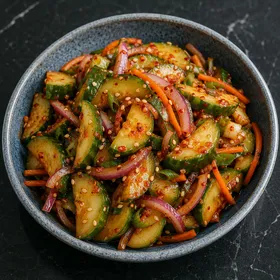
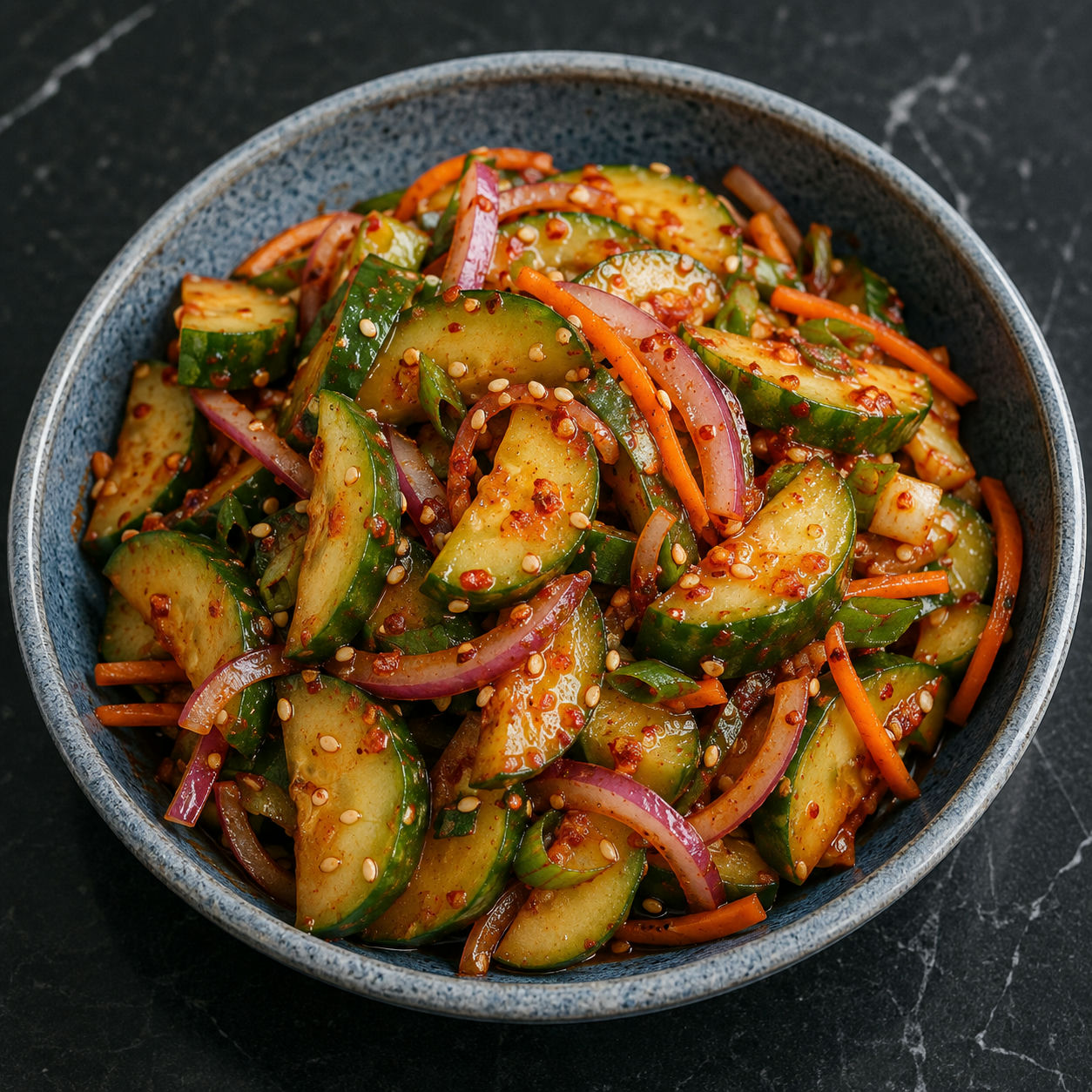
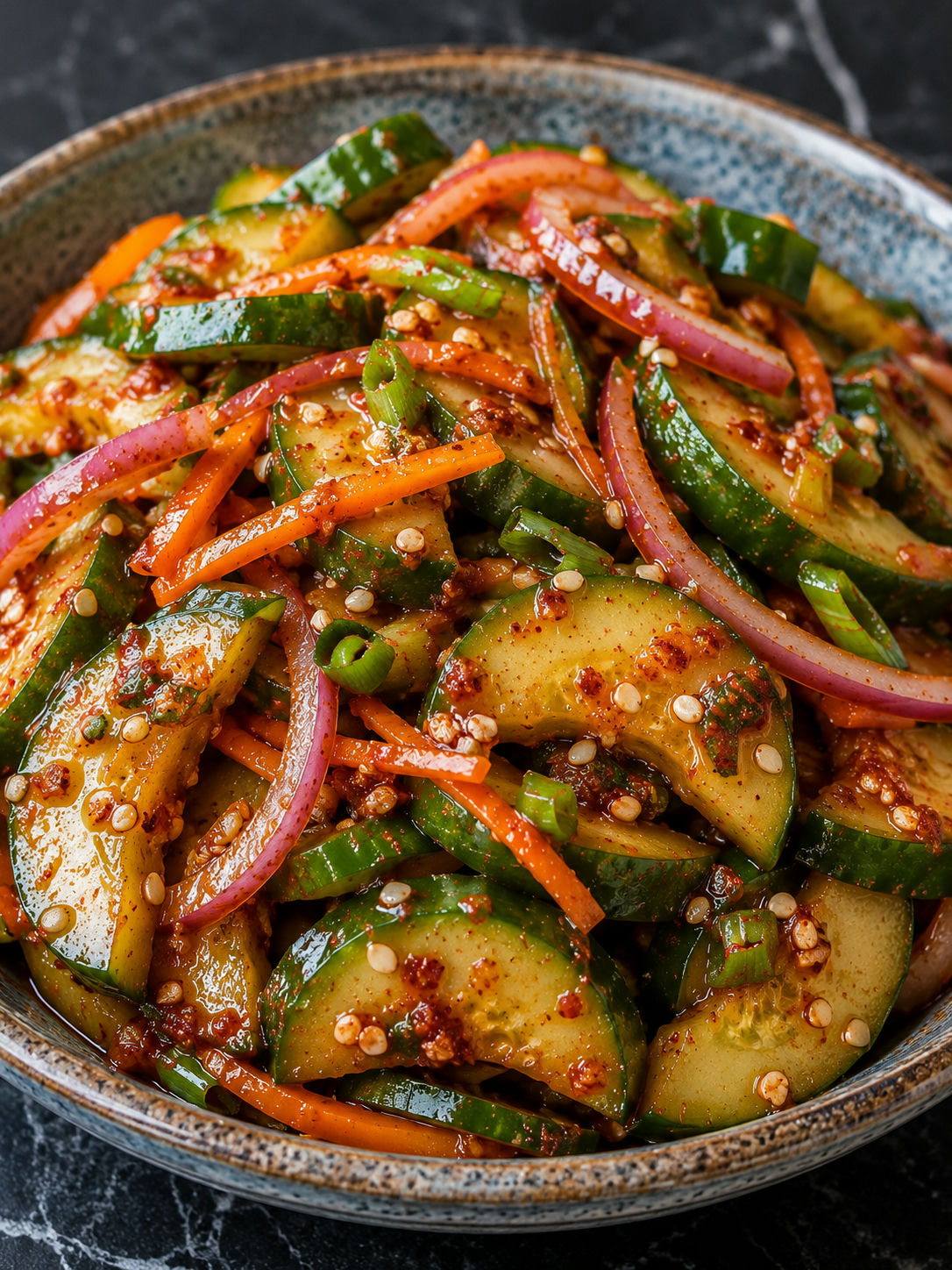
Spicy Korean Cucumber Salad (Oi Muchim Style) is the side dish I reach for when dinner needs crunch and heat without turning on the stove. The cucumbers stay cool and juicy, while the red pepper flakes cling in a glossy sesame dressing.
The small salting step matters. It pulls out extra water before the dressing goes on, so the salad tastes seasoned instead of diluted. Make it just before serving and it has that fresh banchan snap.
The Crunchy Red Lineup
Choose firm cucumbers with thin skins and small seeds. Persian, Kirby, Korean, or English cucumbers all work well here, but watery slicers need extra draining.
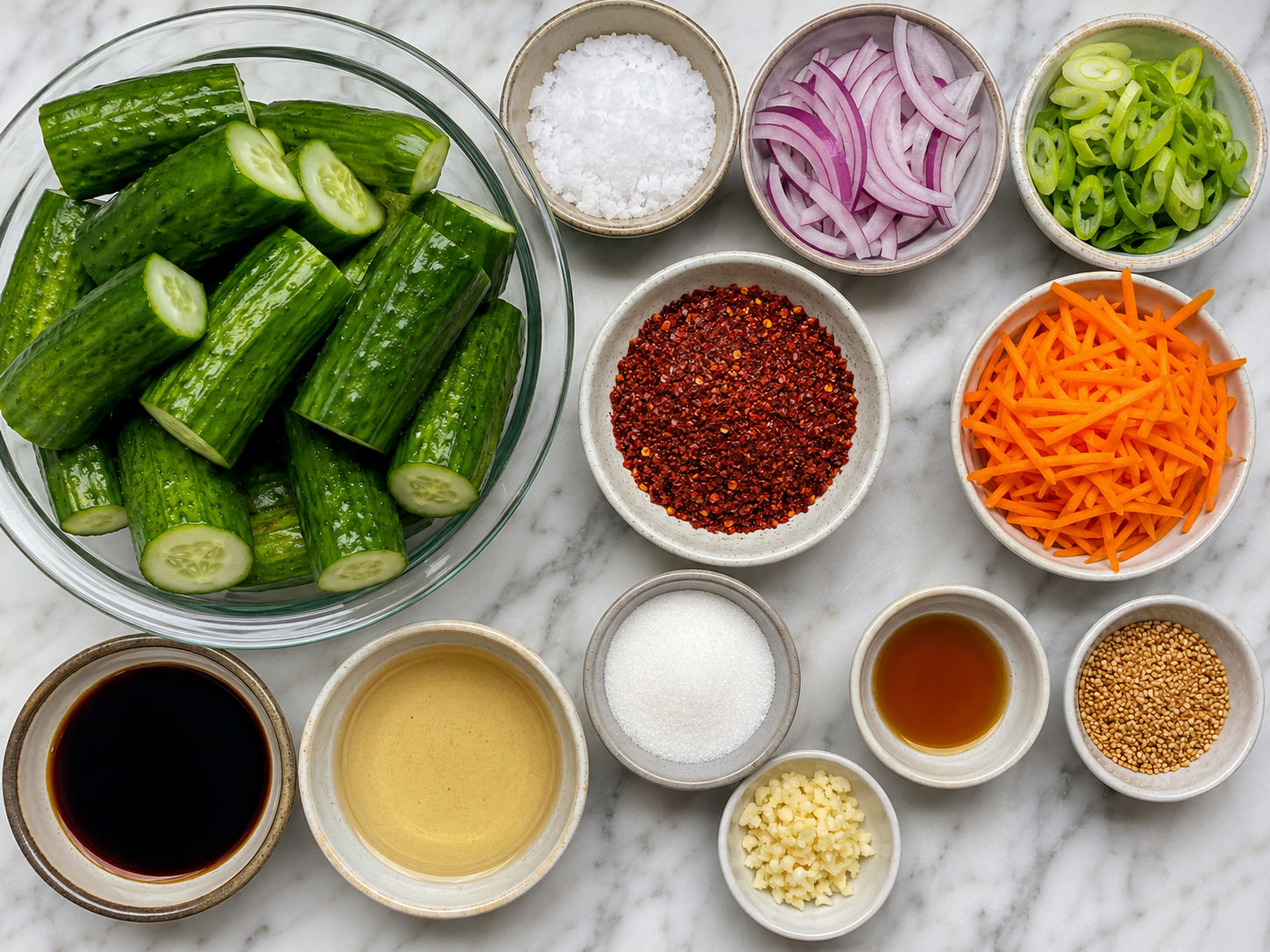
- Cucumbers. The crisp base of the salad. Thin skins and tight seeds give the cleanest bite.
- Kosher salt. Pulls moisture from the cucumber so the dressing stays punchy.
- Red onion. Adds sharpness and a little snap between the cucumber slices.
- Scallions. Bring a fresh onion flavor that feels lighter than raw onion alone.
- Carrot. Adds color and a faint sweetness. Keep it thin so it bends into the salad.
- Gochugaru. Gives the salad its red color and mellow Korean chili heat.
- Tamari. Adds salt and savoriness while keeping the recipe gluten free.
- Rice vinegar. Brightens the dressing and keeps the salad lively.
- Sugar. Softens the chili and vinegar without making the salad sweet.
- Toasted sesame oil. Adds the nutty aroma you smell first.
- Garlic and sesame seeds. Finish the salad with bite, texture, and a toasted edge.
Spicy Korean Cucumber Salad Steps
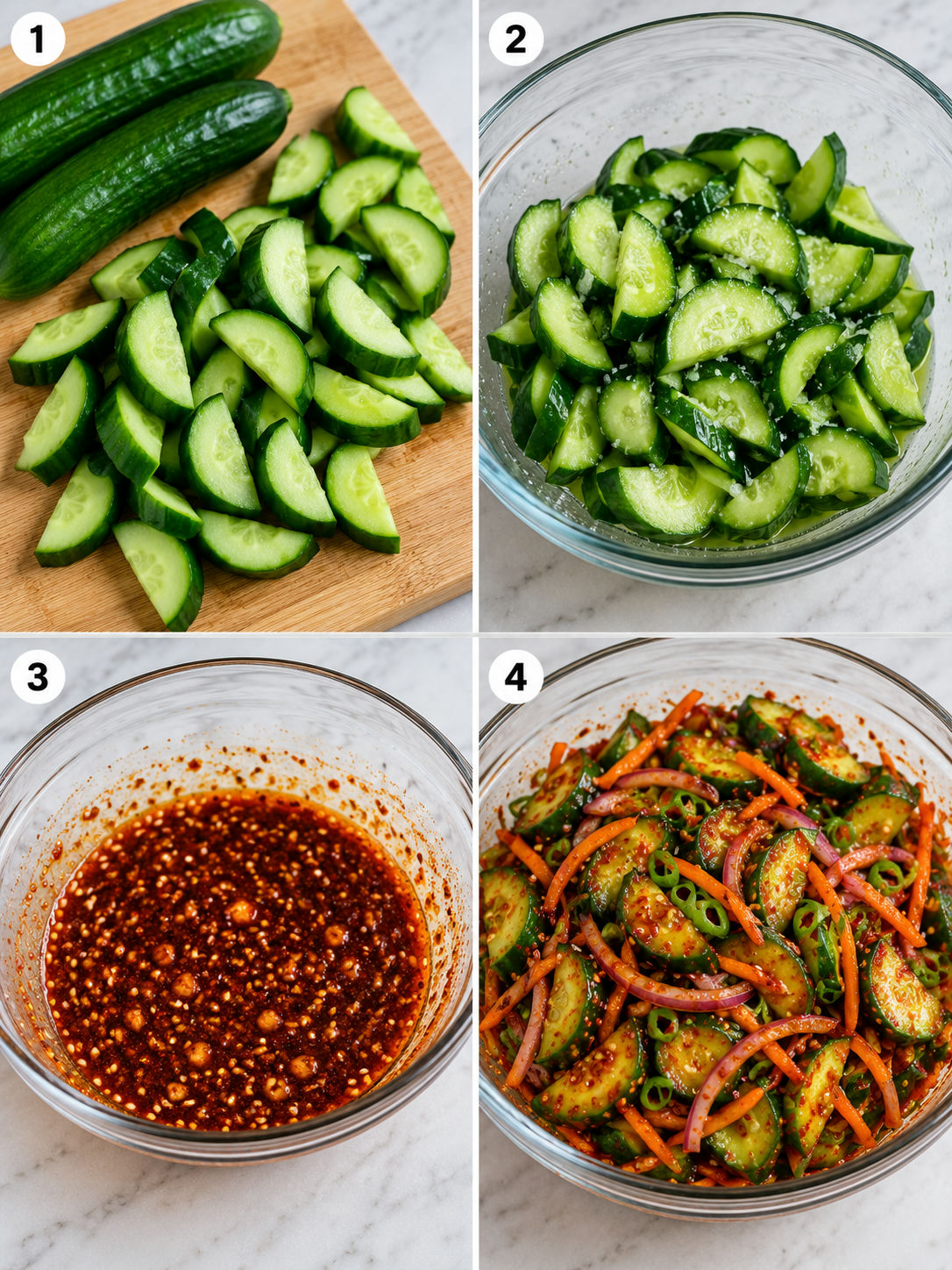
- Slice the cucumbers. Cut the cucumbers into 1/4-inch rounds or angled half-moons. Keep the pieces similar so they salt evenly.
- Salt and rest. Toss the cucumber with kosher salt and let it sit for 15 minutes. The bowl should collect a little pale green liquid.
- Drain gently. Rinse quickly under cold water, then drain and pat dry. Do not crush the slices, since bruised cucumber turns limp fast.
- Mix the dressing. Stir gochugaru, tamari, rice vinegar, sugar, sesame oil, garlic, and sesame seeds in a wide bowl until glossy.
- Toss the vegetables. Add cucumber, red onion, scallions, and carrot. Toss until every slice is lightly coated in red seasoning.
- Chill and serve. Rest for 10 minutes in the fridge if you like it colder. Taste once more before serving and add a pinch of gochugaru for extra heat.
Salt Without Softening
The goal is not to cure the cucumbers. You only want enough salt and time to draw out surface water. Korean Bapsang notes that salting helps keep oi muchim from turning watery, and you can read that same method in this Korean cucumber salad guide.
After 15 minutes, rinse just enough to remove harsh salt. Then pat the slices dry with a towel. If you squeeze them hard, they lose their fresh snap. The salad should feel juicy when you bite it, not limp in the bowl.
Choosing The Right Chili
Gochugaru is the main flavor here, not just a way to add heat. It tastes round, lightly smoky, and a little fruity. Maangchi's oi muchim recipe uses gochugaru for a fast fresh banchan, and her spicy cucumber side dish is a useful reference for the simple, mixed-and-served style.
Use coarse flakes if you like visible red specks and a lighter texture. Fine gochugaru gives a smoother dressing and stains the cucumbers more deeply. Regular crushed red pepper is usually sharper and seedier, so start with half the amount if you are substituting.
Make It A Meal
This salad is small but loud. It belongs next to warm rice, grilled meat, tofu, noodles, or anything rich. For a simple weeknight plate, serve it beside grilled chicken salad or tuck it into a rice bowl with a fried egg and avocado.
It also works as the cool crunchy side for seafood. The sesame and chili pair nicely with the sweet fruit notes in grilled shrimp pineapple mango salad. If you are building lighter lunches, the ideas in using cucumber salad in a healthy weight-loss plan can help you turn this into a filling plate without losing the fresh bite.
Storage Is Short
Oi muchim is a fresh salad, not a fermented kimchi. The cucumber keeps releasing water after it is dressed, so the first day has the best crunch. Store leftovers in a sealed container and stir before serving because the dressing settles at the bottom.
For general refrigerated food safety, the USDA recommends keeping cold foods at 40 F or below and not leaving perishable foods out for more than 2 hours, as outlined in its food safety basics. For texture, I would finish this salad within 24 hours. For safety and quality, do not stretch it past 2 days.
Swaps And Heat Control
Persian cucumbers are my first pick because they stay crisp and barely need seeding. English cucumber works too. Cut it lengthwise and scrape out the watery center if the seeds look large. Carrot is optional, but it makes the bowl prettier and adds a soft sweetness.
For a soy-free version, season with salt instead of tamari and add a tiny splash more vinegar. For a sweeter dressing, add another 1/2 teaspoon sugar. For a sharper one, add a few extra drops of rice vinegar. This is also a strong side for other fresh bowls, including fresh hearty protein salad with tangy homemade vinaigrette.
Summary
This oi muchim style cucumber salad is quick, spicy, and best served fresh. Use firm cucumbers, drain them after salting, and adjust the gochugaru to match your heat level.
Frequently Asked Questions
- What does oi muchim mean?
-
Oi means cucumber, and muchim means seasoned or mixed. In practice, oi muchim is a fresh Korean cucumber side dish tossed with chili, garlic, sesame, and a little tang.
- Can I make this without gochugaru?
-
Gochugaru gives the salad its fruity red pepper flavor, so it is worth using if you can find it. If you need a backup, use a smaller amount of mild crushed red pepper or Aleppo pepper, then taste before adding more.
- Do I have to salt the cucumbers first?
-
You can skip it if you are eating the salad immediately, but salting gives a better texture. It draws out extra water, which helps the dressing taste bold instead of thin.
- How long does Korean cucumber salad last?
-
It keeps in an airtight container in the refrigerator for up to 2 days. The flavor stays good, but the cucumbers soften and release more liquid as they sit.
- Can I make oi muchim gluten free?
-
Yes. Use gluten-free tamari instead of regular soy sauce and check that your gochugaru was packaged without cross-contact warnings if that matters for your household.
- What should I serve with spicy cucumber salad?
-
Serve it with rice bowls, grilled chicken, shrimp, noodles, or a simple fried egg. It is especially good beside rich or smoky food because the cucumber and vinegar cut through heavier flavors.