 Pin it
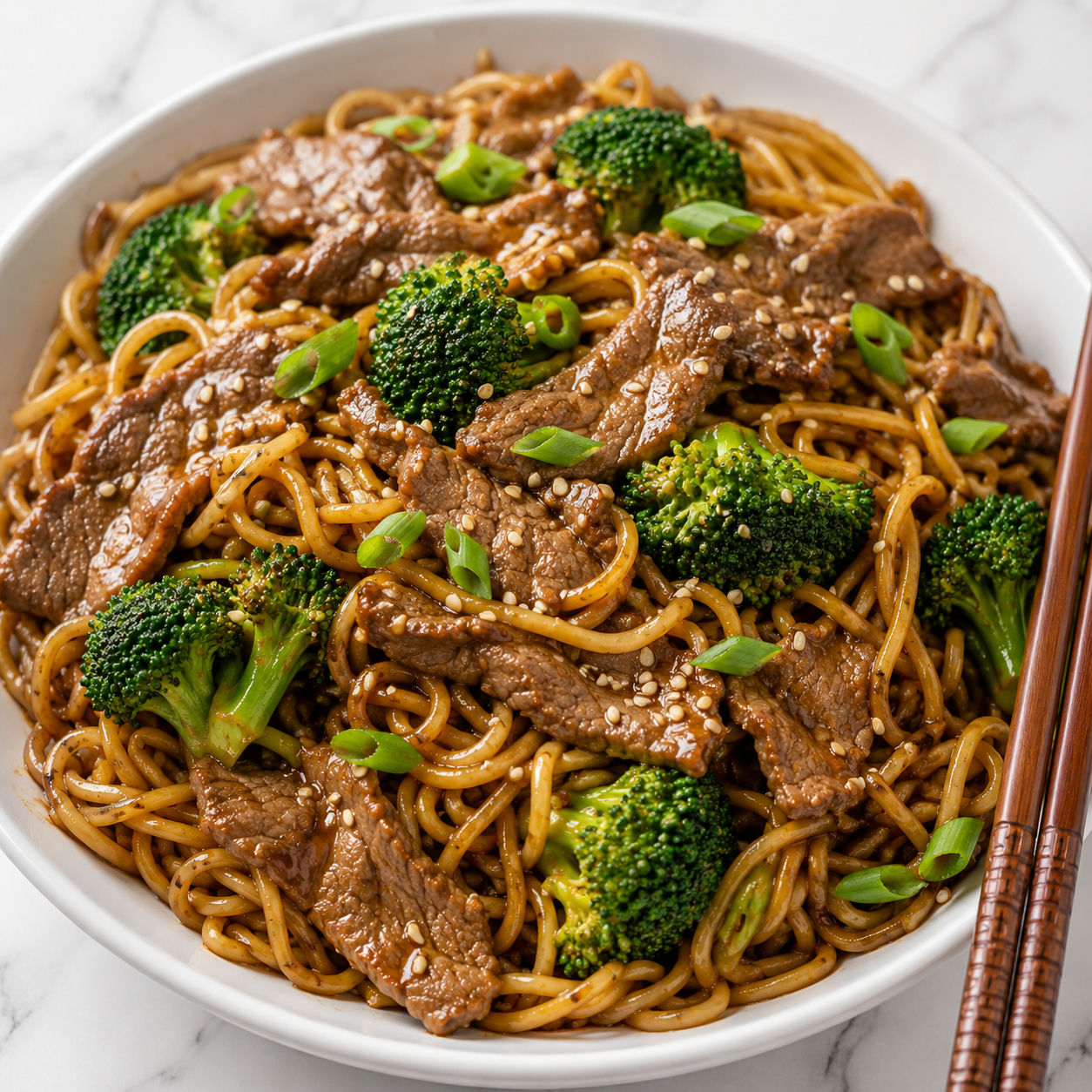
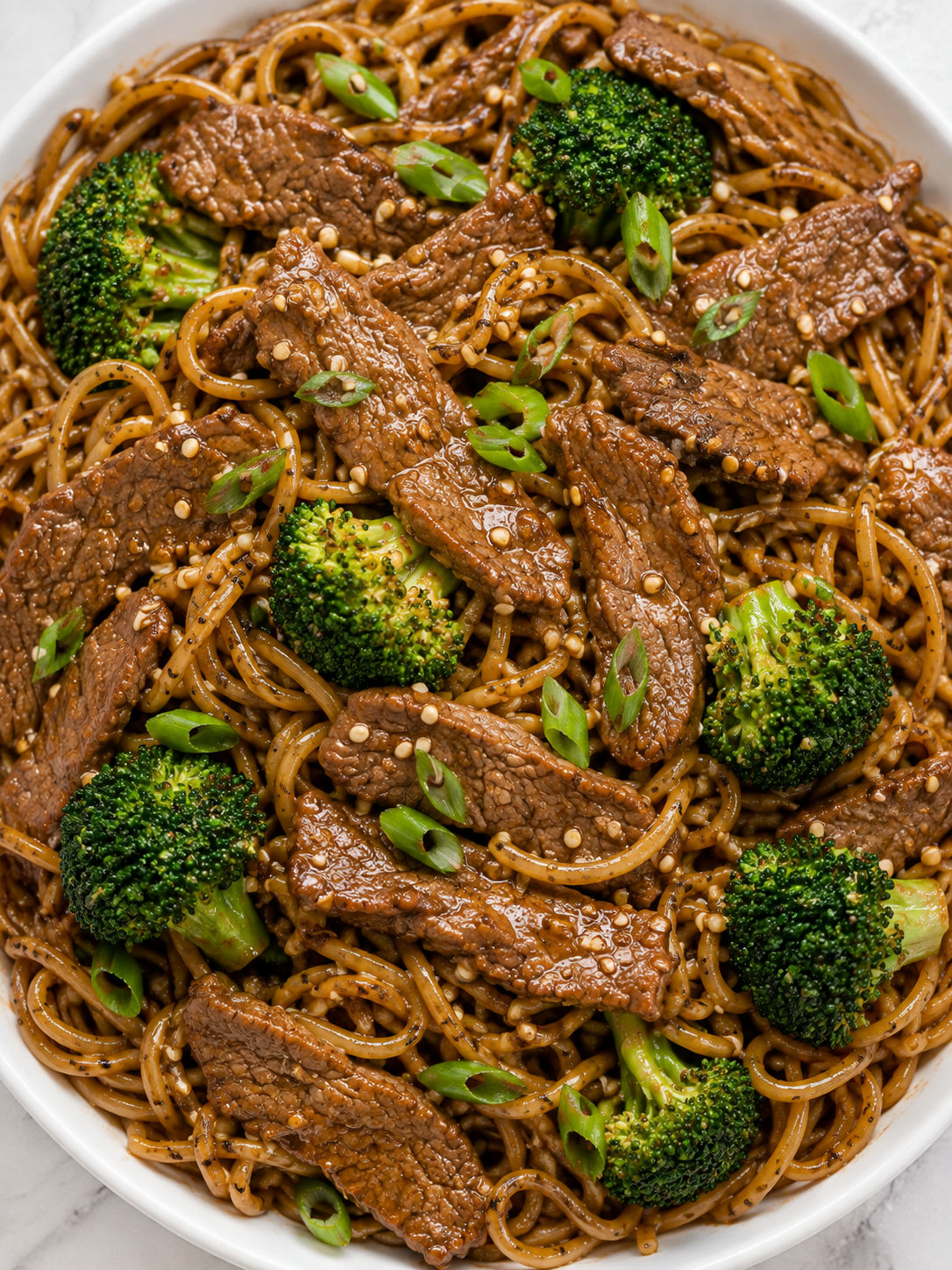
Best Beef Broccoli Noodles are what I make when takeout sounds good but I want a fresher, hotter bowl from my own pan. The beef gets a quick cornstarch marinade, the broccoli stays bright, and the noodles soak up just enough sauce without turning heavy.
The key is order. Cook the noodles first, give the broccoli a short head start, sear the beef hard, then bring everything together at the end. Once the sauce hits the pan, dinner moves quickly.
Saucy Beef Noodle Lineup
Choose beef with visible grain so you can slice across it cleanly. Cut broccoli into small florets, since large pieces will lag behind the noodles.
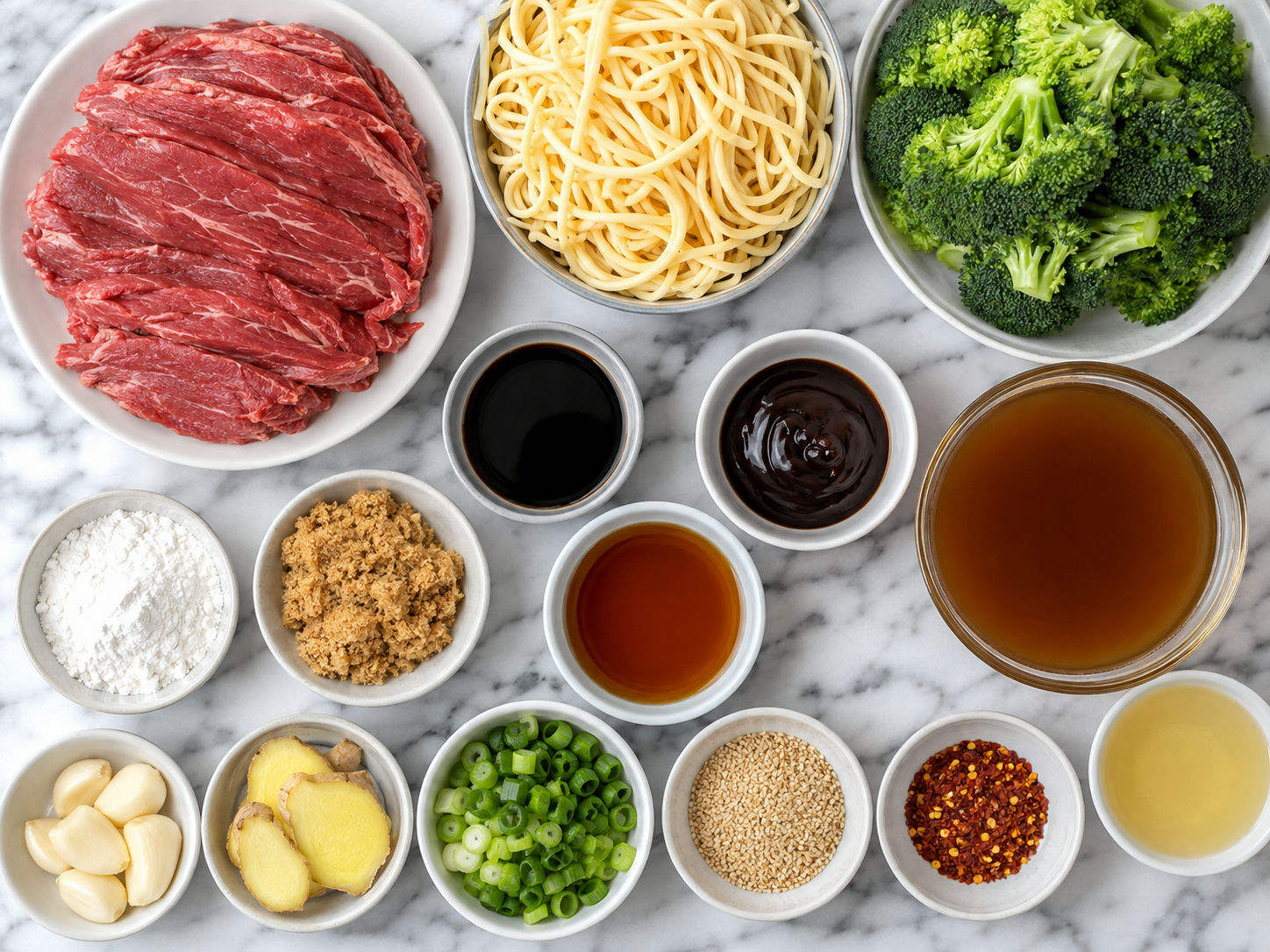
- Flank steak or sirloin. Thin slices cook quickly and stay tender when cut across the grain.
- Soy sauce. Seasons the beef and builds the salty backbone of the sauce.
- Cornstarch. Helps the beef brown and gives the sauce a glossy cling.
- Sesame oil. Adds a toasted aroma that makes the skillet smell like takeout.
- Lo mein or rice noodles. The chewy base that catches the sauce in every fold.
- Broccoli florets. Bring crunch, color, and a clean bite against the rich beef.
- Garlic and ginger. Wake up the pan in the final minutes of cooking.
- Oyster sauce and hoisin. Make the sauce savory, slightly sweet, and rounded.
- Green onions and sesame seeds. Finish the bowl with freshness and texture.
Best Beef Broccoli Noodles Method
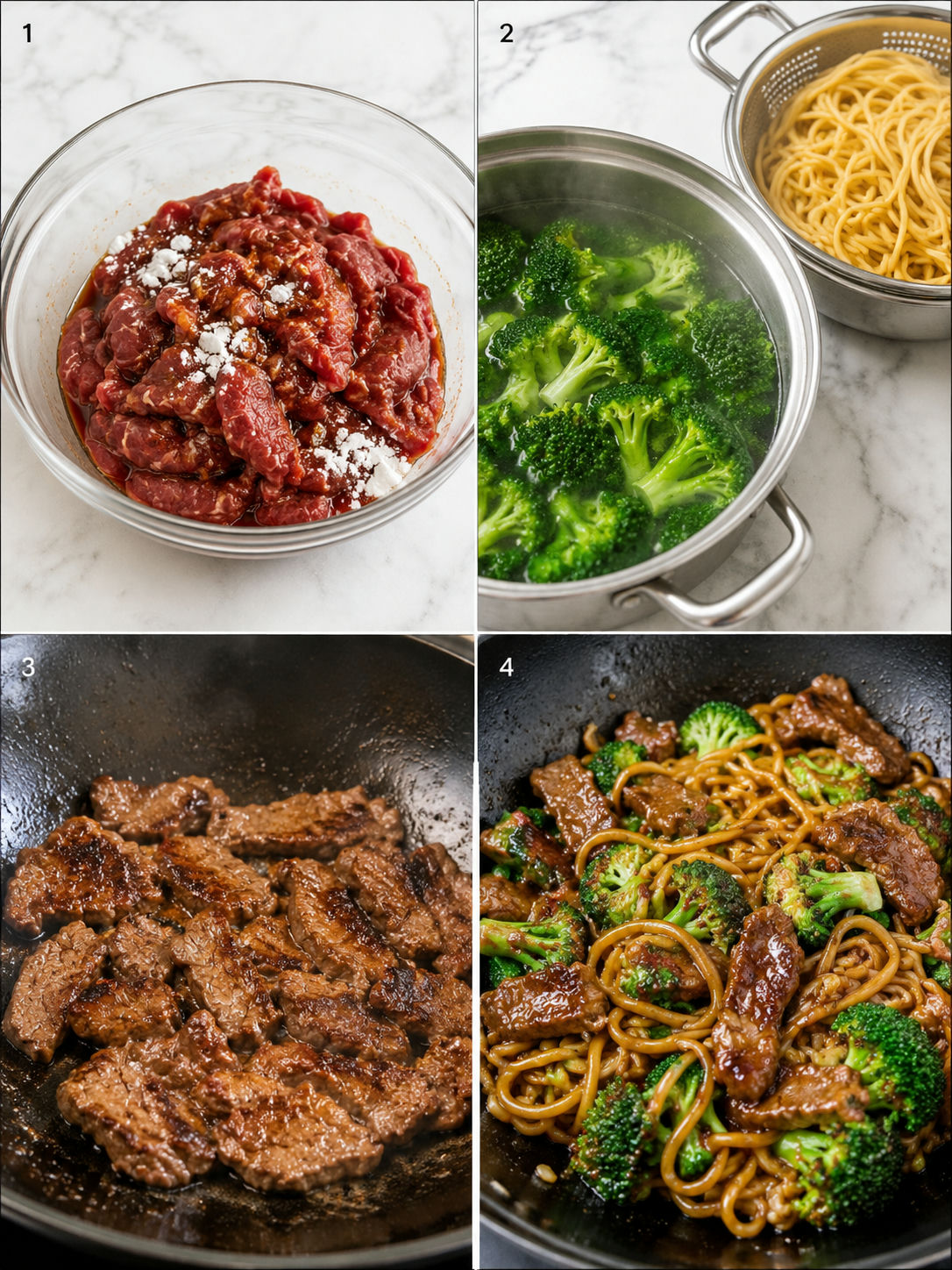
- Marinate the beef. Toss thin beef with soy sauce, cornstarch, sesame oil, and pepper. Let it sit while you prep the rest so the surface gets seasoned.
- Cook the noodles. Boil or soak the noodles according to the package, then rinse lightly if they seem sticky. Keep them ready near the stove.
- Blanch the broccoli. Cook the florets for 1-2 minutes until bright green and barely tender, then drain well.
- Mix the sauce. Whisk soy sauce, oyster sauce, hoisin, brown sugar, broth, cornstarch, sesame oil, and chili flakes until smooth.
- Sear the beef. Heat oil in a wok or large skillet and cook the beef in batches until browned at the edges. Move it to a plate.
- Toss everything together. Cook garlic and ginger for a few seconds, then return the noodles, broccoli, beef, and sauce. Toss until glossy and thickened.
Slice Beef For Tender Bites
Thin slices are the difference between tender beef and chewy strips. Cut flank steak or sirloin across the grain, then coat it with soy sauce, cornstarch, and sesame oil while the noodles cook. That short rest is enough for the starch to protect the surface and help the beef brown in a hot pan. Jet Tila's Food Network beef and broccoli uses the same idea of quick heat control for tender meat and bright broccoli. Keep the pan hot and cook the beef in two batches. Crowding drops the heat and leaves juice in the skillet, which makes the sauce taste flat.
Keep Broccoli Snappy
Broccoli needs a head start because noodles and beef finish fast. Blanch the florets for 90 seconds or steam them until vivid green, then drain them well. You want the stems just tender, not soft. The last minute in the sauce will finish the job. Broccolini works too, and it looks a little dressier in the bowl. If you usually make easy beef cabbage stir-fry, use the same high-heat habit here. Prep every bowl before the pan goes on. Stir-fries move quickly once garlic and ginger hit hot oil.
Sauce That Coats Noodles
The sauce should taste bold before it goes into the skillet because the noodles will soften it. Low-sodium soy sauce keeps it savory without turning salty. Oyster sauce brings roundness, hoisin adds a little sweetness, and beef broth gives the cornstarch something to thicken. Whisk until no dry starch hides at the bottom of the bowl. A tested quick version from McCormick's beef and broccoli lo mein finishes in about 25 minutes, and that timing is realistic when your sauce is mixed ahead. Add it only after the noodles, beef, and broccoli are back in the pan. It thickens fast.
Storage And Reheating
These noodles are best right out of the wok, but leftovers still work for lunch. Cool them quickly, pack in shallow containers, and refrigerate within 2 hours. FoodSafety.gov lists cooked meat leftovers at 3 to 4 days in the refrigerator in its cold food storage chart. Reheat in a skillet with a spoonful of water or broth. The steam loosens the sauce without turning the noodles mushy. For another dinner that reheats nicely, save one-pan taco pasta for a different night.
Swaps For Real-Life Cooking
Wide rice noodles make a glossy, chewy bowl. Lo mein noodles give it the takeout feel. Spaghetti works when that is what you have. Swap flank steak for sirloin, skirt steak, or thinly sliced chicken thigh. Use tamari with rice noodles and gluten-free hoisin if you need a gluten-free version. For a lighter plate, double the broccoli and add snap peas or shredded cabbage. If ground beef is easier, the same sauce idea fits ground beef beans stir fry. Serve with cucumber slices, chili crisp, or fluffy yellow rice when someone wants extra carbs.
Frequently Asked Questions
- What noodles work best for beef broccoli noodles?
-
Lo mein noodles give the dish a classic takeout feel because they are springy and easy to toss. Wide rice noodles are chewier and glossy, but they break more easily, so fold them through gently.
- Can I use frozen broccoli?
-
Yes. Steam or microwave it just until hot, then drain it very well before adding it to the skillet. Extra water thins the sauce and makes the noodles slippery instead of glossy.
- How do I keep the beef tender?
-
Slice the beef thinly across the grain and let it sit with soy sauce, cornstarch, and sesame oil for at least 15 minutes. Cook it in batches over high heat so it browns fast instead of steaming.
- Can I make this gluten-free?
-
Use wide rice noodles, tamari, and certified gluten-free hoisin. Check the oyster sauce label too, since many brands contain wheat or use wheat-based soy sauce.
- How do I know the beef is cooked enough?
-
Thin stir-fry slices should be browned at the edges with no raw-looking center. For thicker steak pieces, the USDA lists 145 F with a 3-minute rest for beef steaks in its safe temperature chart.
- How long do leftovers keep?
-
Store leftovers in shallow containers in the refrigerator for 3 to 4 days. Reheat in a skillet with a splash of water or broth so the sauce loosens before the noodles overcook.
References
Reliable references aided in composing and refining this content.
- https://www.mccormick.com/blogs/recipes/beef-broccoli-lo-mein
- https://www.foodnetwork.com/recipes/beef-and-broccoli-20-23375565
- https://www.fsis.usda.gov/food-safety/safe-food-handling-and-preparation/food-safety-basics/safe-temperature-chart
- https://akaprod-www.foodsafety.gov/food-safety-charts/cold-food-storage-charts