 Pin it
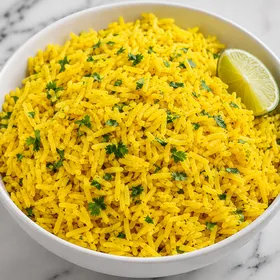
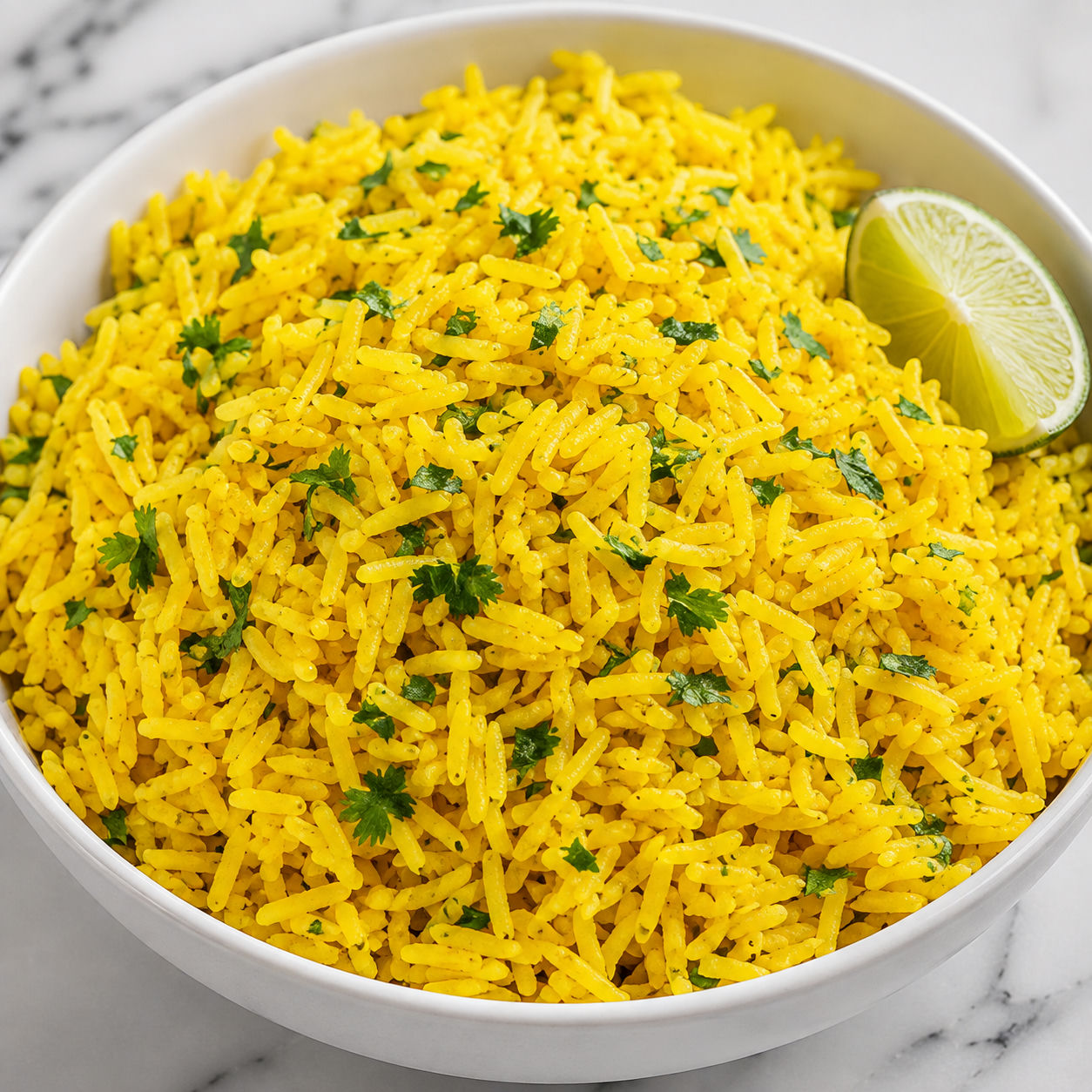
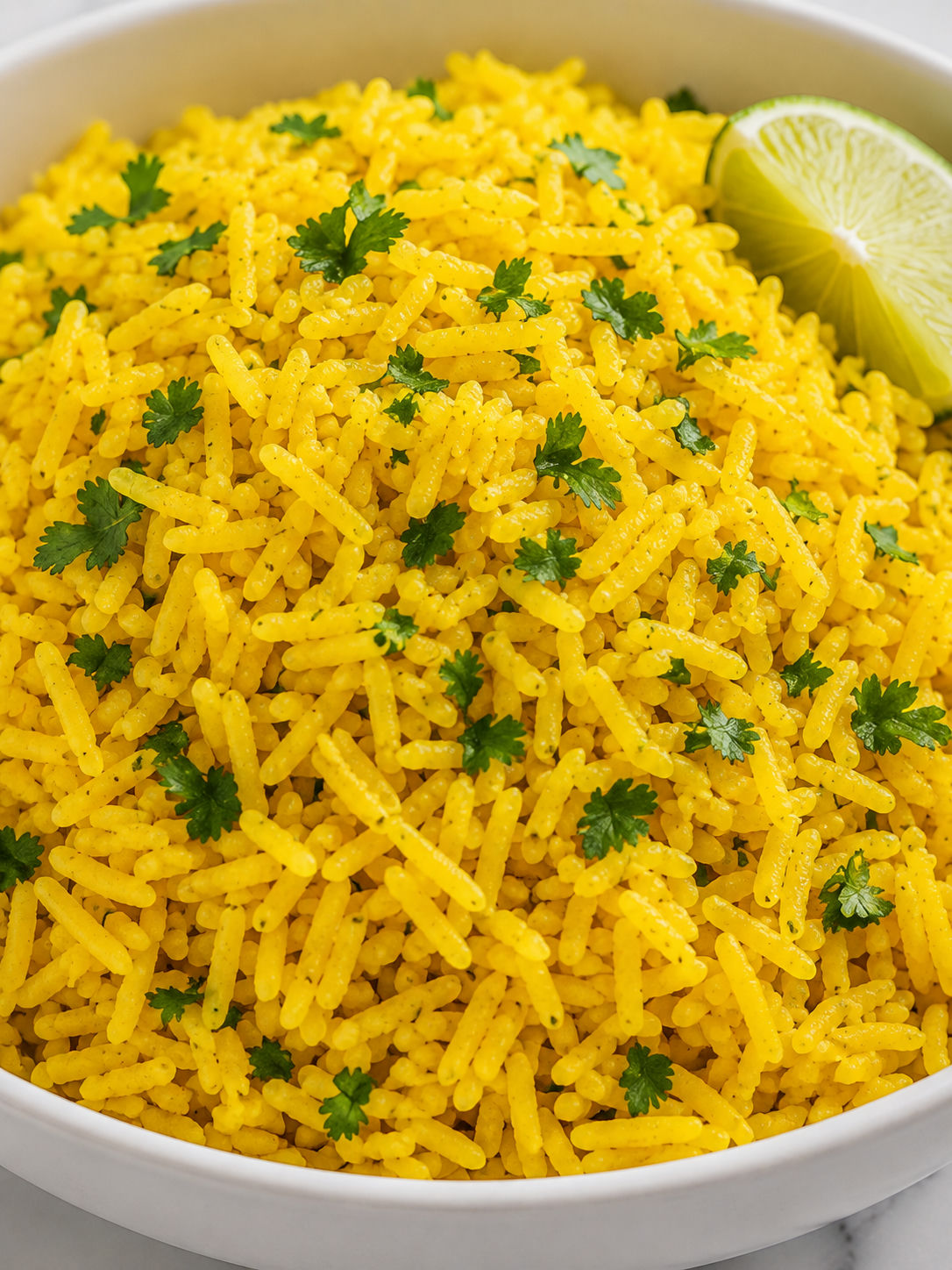
Fluffy Yellow Rice is the side dish I reach for when plain rice feels too quiet. The turmeric gives it that sunny color, garlic makes the pot smell good before dinner is even close, and lime wakes everything up at the end.
This version is simple enough for a weeknight but still tastes like you paid attention. The grains stay separate because the rice is rinsed, toasted, simmered gently, and left alone to steam before serving.
What Makes It Golden
The best pot starts with dry, separate rice and a broth that already tastes good. Choose long-grain rice if you want fluffy grains since USA Rice notes that long grains cook up lighter and more separate than shorter varieties.
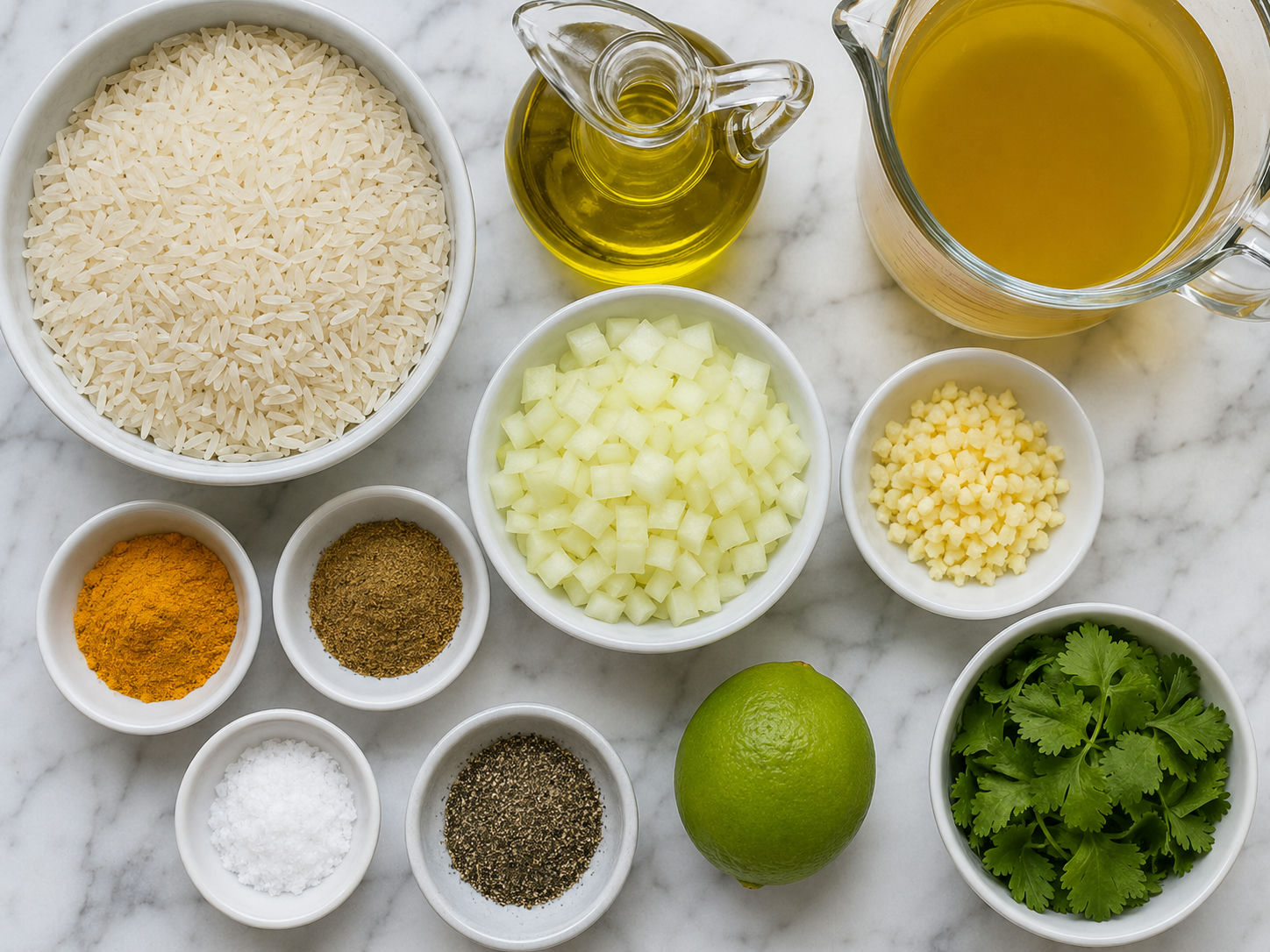
- Long-grain white rice. Gives the dish its light texture and separate grains.
- Olive oil. Coats the rice so it toasts lightly before simmering.
- Onion and garlic. Build a savory base that keeps the rice from tasting flat.
- Turmeric. Adds the bright yellow color and a gentle earthy flavor.
- Cumin. Brings warmth without taking over the pot.
- Vegetable broth. Seasons every grain as the rice absorbs liquid.
- Lime juice. Adds freshness at the end so the rice tastes lively.
- Cilantro. Finishes the bowl with color and a fresh herbal bite.
Fluffy Yellow Rice Method
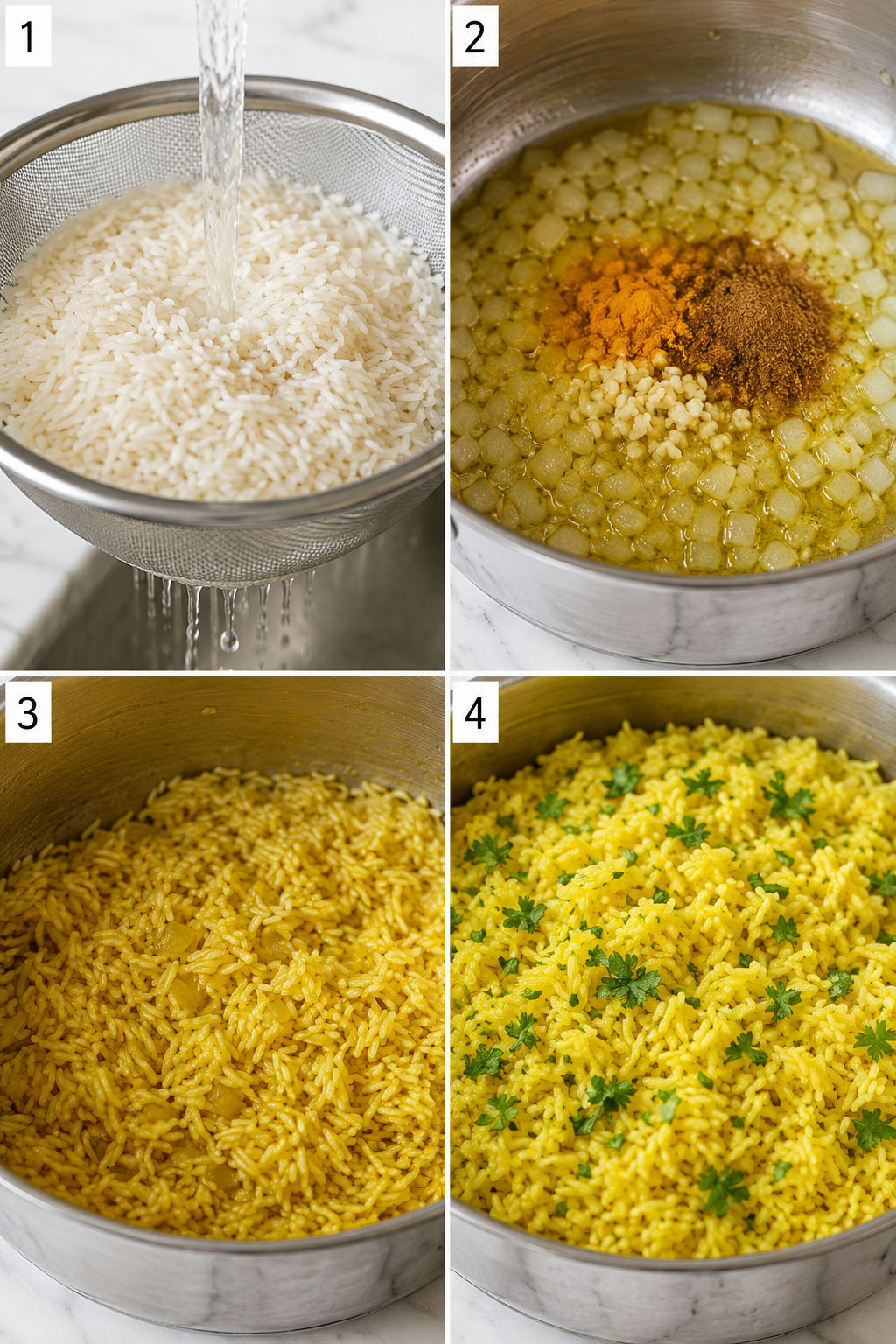
- Rinse the rice. Rinse under cool water until the water looks mostly clear, then drain well so the rice can toast instead of steam.
- Cook the aromatics. Warm olive oil in a saucepan, then cook the onion until softened. Add garlic, turmeric, and cumin for a short bloom.
- Toast the grains. Stir in the drained rice and cook for 2 minutes until the grains look glossy and smell lightly nutty.
- Simmer gently. Add broth, salt, and pepper. Bring it to a boil, cover, lower the heat, and cook until the liquid is absorbed.
- Rest before fluffing. Take the pot off the heat and leave it covered for 10 minutes. Fluff with a fork, then fold in lime juice and cilantro.
The Rinse Really Matters
Rinsing is not busywork here. The water carries away loose surface starch that can make the rice gluey. Harvard's Nutrition Source notes that rinsing can reduce excess starch, though it may also wash away some added nutrients from enriched white rice. For this recipe, I rinse because the goal is clean, separate grains.
Drain the rice well after rinsing. If it goes into the oil soaking wet, it will sputter and steam. Give the sieve a few shakes and let it sit while you chop the onion and cilantro. That small pause makes the toast step work better.
Toast Before You Simmer
The short toast is where the rice starts tasting like more than broth and spice. The grains should look shiny from the oil, and a few may turn lightly opaque at the edges. You are not browning them hard. You are drying the surface and giving the turmeric a chance to bloom in the fat.
This rice is easy to pair with saucy mains. I like it under beef broccoli noodles when I want extra rice instead of noodles, beside red curry dumplings, or with a cold, crisp protein salad for a bright meal prep plate.
How To Avoid Mushy Rice
Once the broth goes in, stir just enough to level the rice and dissolve the seasonings. Then stop. Stirring during the simmer releases more starch and breaks the grains. Keep the lid on, set the heat low, and let steam do its job.
The covered rest is just as important as the simmer. It lets the last bits of moisture settle into the rice instead of sitting on the bottom of the pan. Use a fork to lift and separate the grains. A spoon presses them together and makes the pot feel heavier than it should.
Swaps And Add-Ins
Chicken broth works if you do not need the rice to stay vegan. Butter can replace half the oil for a richer flavor, but olive oil keeps the grains light and dairy-free. If you want more color, add a handful of thawed peas during the final 5 minutes of resting. They warm through without turning dull.
For a fresh plate, spoon this yellow rice next to watermelon mango salsa and grilled chicken, tofu, shrimp, or roasted vegetables. For heat, add a pinch of cayenne with the turmeric. For a softer citrus note, use lemon instead of lime.
Storage That Keeps It Safe
Cooked rice needs quick, tidy storage. Spread leftovers in a shallow container so they cool faster, then cover and refrigerate. The USDA leftovers guide recommends refrigerating leftovers within 2 hours and using them within 3-4 days.
Reheat yellow rice with a tablespoon or two of water. Cover it in the microwave or warm it gently in a skillet with a lid. The steam loosens the grains and brings back the soft texture. Freeze extra rice in flat portions if you want quick bowls later.
Summary
Use long-grain rice, rinse it well, toast it in oil with aromatics, simmer in seasoned broth, then rest covered before fluffing. That short rest is what keeps the rice tender instead of wet.
Frequently Asked Questions
- What kind of rice makes the fluffiest yellow rice?
-
Long-grain white rice is the best choice because the cooked grains stay light and separate. Basmati is especially fragrant, but regular long-grain rice also works well.
- Can I use jasmine rice instead?
-
Yes, jasmine rice works, but it cooks a little softer and more aromatic. Keep the same liquid amount and avoid stirring once the lid goes on.
- Why did my yellow rice turn mushy?
-
Mushy rice usually means too much liquid, too much stirring, or a lid that was lifted often. Rinse the rice, drain it well, measure the broth carefully, and let the covered pot rest before fluffing.
- Can I make fluffy yellow rice in a rice cooker?
-
Yes. Saute the onion, garlic, turmeric, cumin, and rice in a skillet first, then transfer everything to the rice cooker with the broth. Let it sit on warm for 10 minutes before fluffing.
- Can I make this with chicken broth?
-
Yes. Chicken broth gives a richer, more savory flavor. Vegetable broth keeps the recipe vegan and still gives the rice more depth than water.
- How should I store leftover yellow rice?
-
Cool it quickly, then refrigerate it in a shallow airtight container. Use it within 3-4 days and reheat with a splash of water so the grains steam back to life.