 Pin it
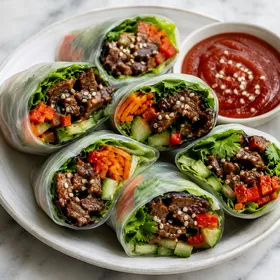
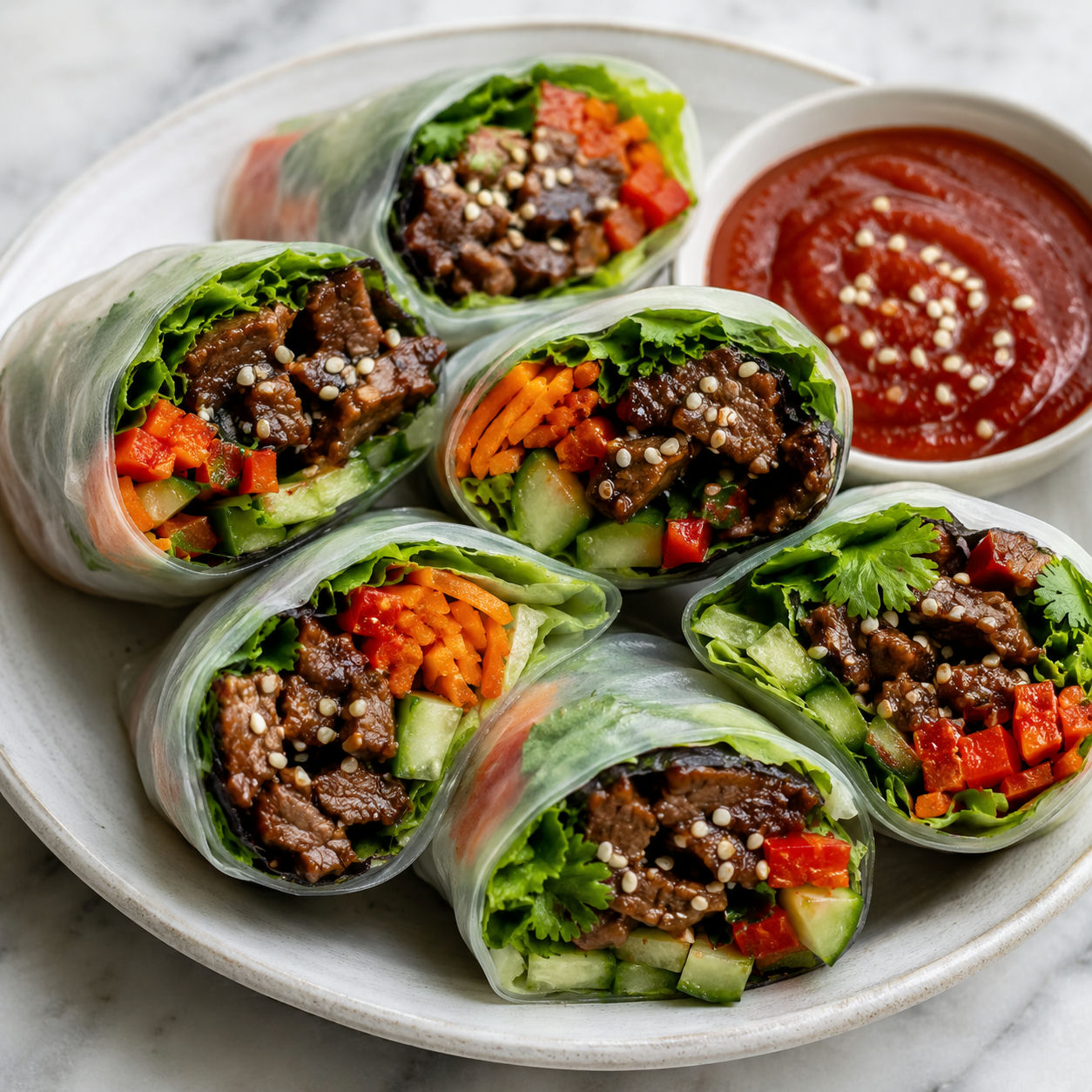
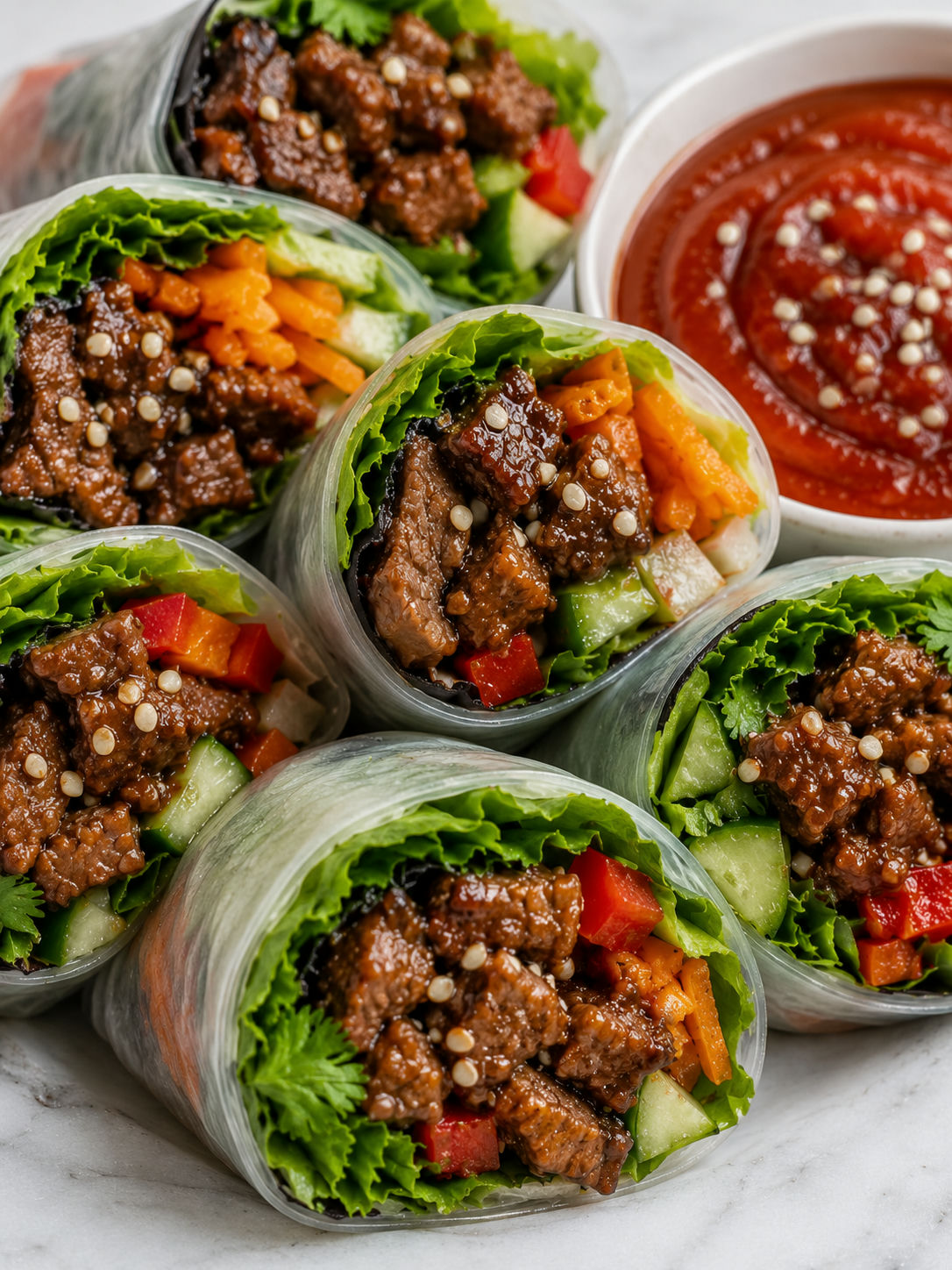
Korean BBQ Beef Rice Paper Rolls are what I make when I want something fresh but still satisfying. The beef is glossy, savory, a little sweet, and gently spicy. The vegetables keep every bite crisp.
The key is balance. Let the beef cool for a few minutes so it does not wilt the lettuce or tear the wrapper. Keep the rice paper just pliable, not floppy, and the rolls will come out tight and clean.
The Fresh Roll Lineup
Choose crisp vegetables that can hold their shape after rolling. The beef should be saucy but not wet. Too much loose sauce makes the wrappers slide and split.
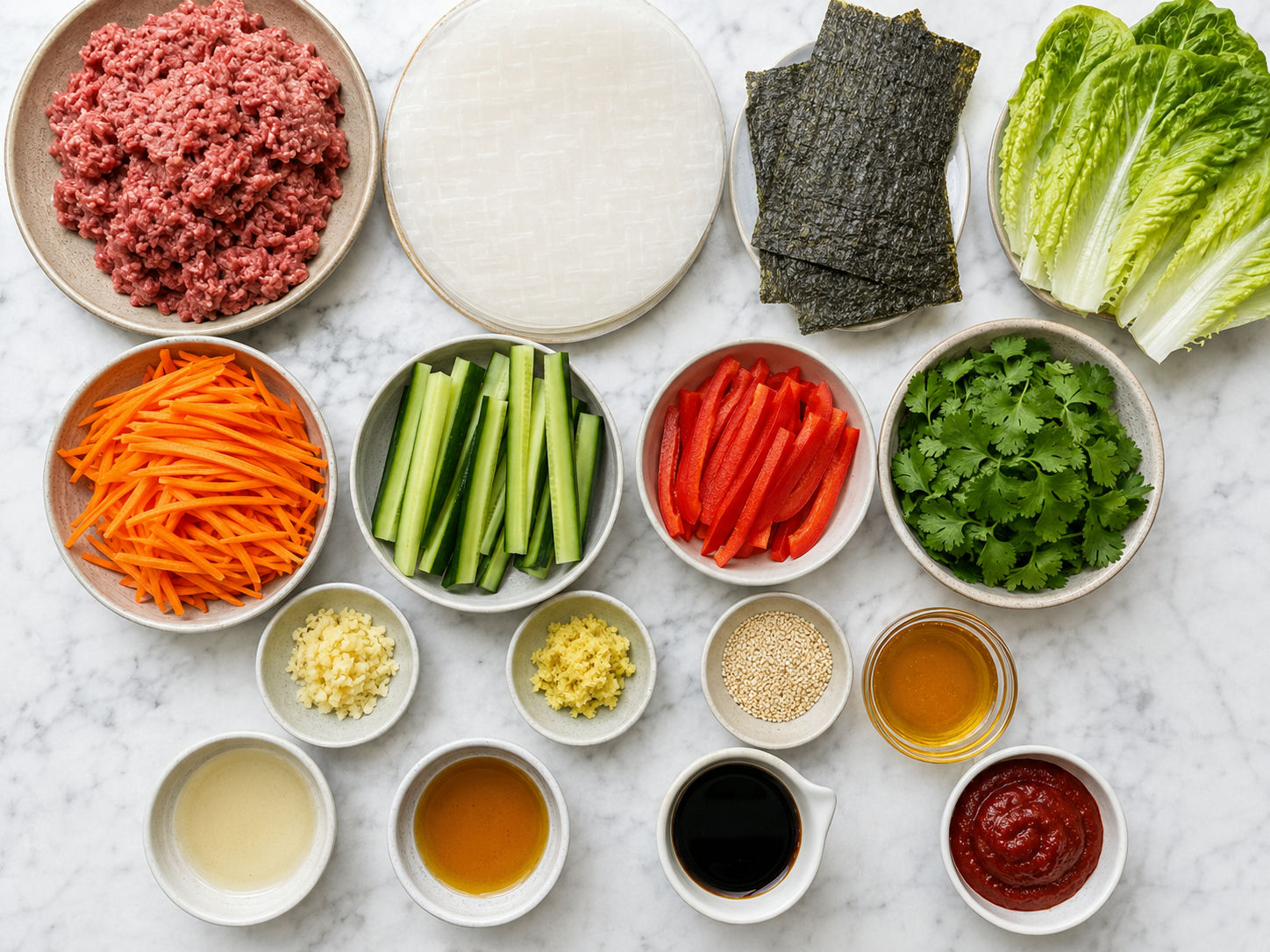
- Ground beef. Gives the rolls a savory, juicy center and cooks faster than sliced steak.
- Garlic and ginger. Bring warmth and make the quick sauce taste deeper than the cook time suggests.
- Soy sauce. Adds salt and umami. Use tamari if you need a gluten-free version.
- Gochujang. Adds mild heat, sweetness, and fermented depth. Start small if your brand runs hot.
- Honey or brown sugar. Helps the sauce cling to the beef with a light glaze.
- Rice vinegar. Cuts through the richness and keeps the filling bright.
- Rice paper wrappers. Turn soft and stretchy after a quick dip in warm water.
- Nori sheets. Add a roasted seaweed note and help shield the wrapper from juicy beef.
- Romaine, carrot, cucumber, and bell pepper. Bring crunch, color, and freshness.
- Cilantro and sesame seeds. Finish the rolls with a fresh, nutty lift.
Roll Them Without Splitting
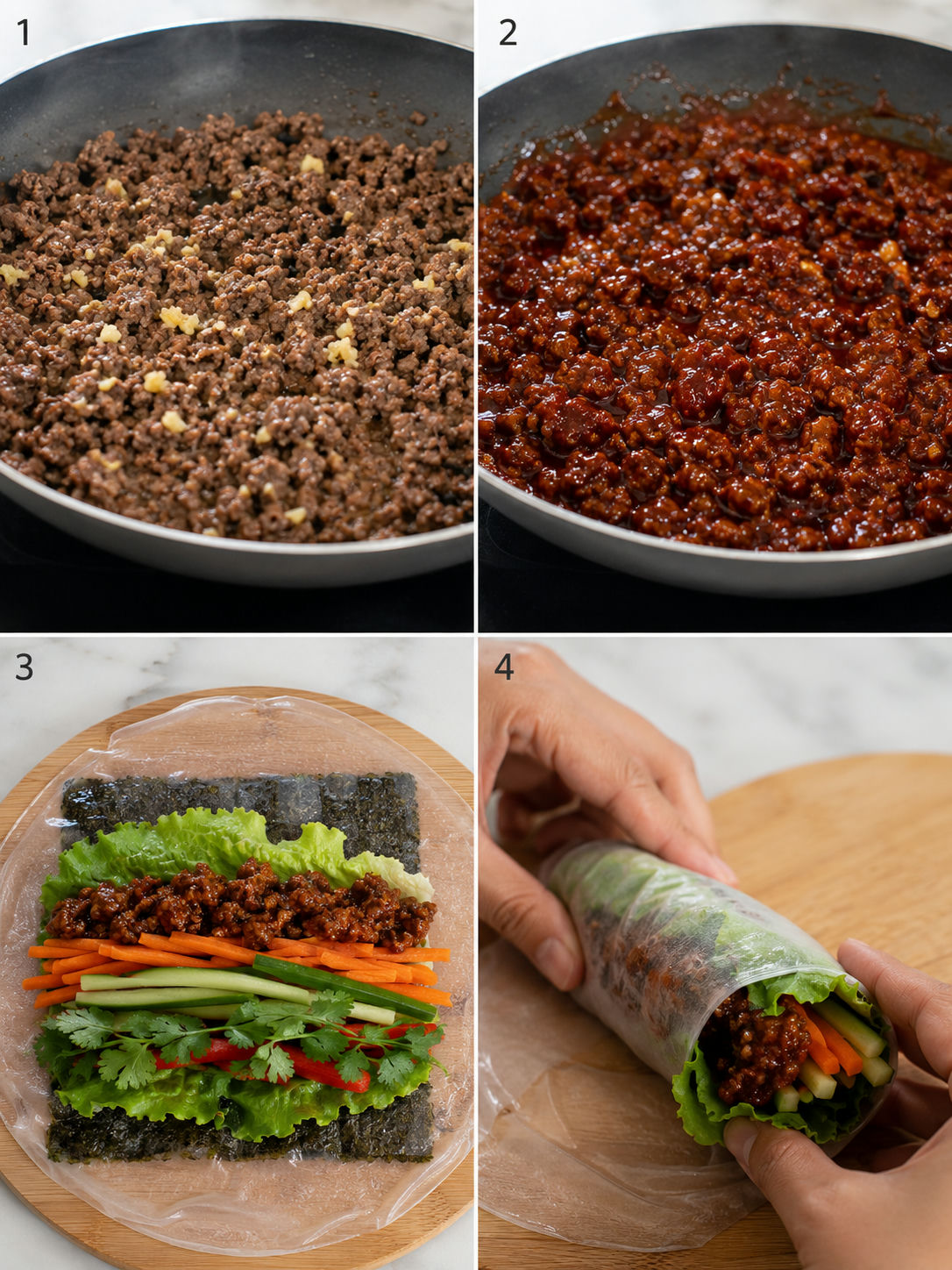
- Brown the beef. Cook the beef in a hot skillet, breaking it into small crumbles, until no pink remains. Spoon off excess fat so the sauce can coat the meat.
- Glaze the filling. Add garlic, ginger, soy sauce, honey, sesame oil, gochujang, rice vinegar, and pepper. Cook for 2-3 minutes until the beef looks glossy.
- Mix the sauce. Whisk gochujang, soy sauce, rice vinegar, honey, sesame oil, garlic, sesame seeds, and water until pourable.
- Soften the wrapper. Dip one rice paper sheet in warm water for 5-8 seconds. It should still feel a little firm when it hits the board.
- Layer the center. Add nori, lettuce, beef, carrot, cucumber, bell pepper, cilantro, and sesame seeds in a compact strip.
- Tuck and roll. Fold the bottom over the filling, tuck in the sides, then roll tightly without squeezing hard. Repeat and serve with sauce.
Why The Beef Needs Cooling
Hot beef is the most common reason these rolls feel messy. Steam softens the lettuce, loosens the rice paper, and makes the nori wrinkle. Give the cooked beef 8-10 minutes on a plate before you assemble.
The beef should still be warm enough to taste juicy, not hot enough to fog the wrapper. If you like quick saucy beef dinners, the same skillet rhythm works in Ground Beef Beans Stir Fry and Easy Beef Cabbage Stir-Fry.
Rice Paper Timing Matters
Rice paper keeps softening after it leaves the water. Dip it briefly, then wait a few seconds on the board before adding the filling. This method follows the same idea used in Korean-style Vietnamese rolls like wollamssam.
If the wrapper turns gummy, your water may be too hot or the soak was too long. Use warm water, not boiling water. If your kitchen is dry, keep a damp towel nearby and cover finished rolls lightly while you work.
Sauce Heat And Sweetness
Gochujang brands vary. Some are sweeter and mild, others are sharper and saltier. Stir the dipping sauce, taste it, then adjust with water, honey, or vinegar. The sauce should coat the cut side of a roll without sitting like a paste.
For a deeper Korean BBQ flavor, you can swap half the ground beef for thin shaved beef. My Korean Kitchen uses bulgogi in rice paper rolls with a sweet ssamjang-style sauce, which is a helpful reference for the fresh roll format and dipping sauce idea from Bulgogi Spring Rolls.
Serving And Meal Prep
These are best right after rolling, when the vegetables are crisp and the wrapper still has a pleasant chew. For a platter, slice a few rolls in half and leave some whole so they do not dry out too fast.
For lunch prep, cook the beef and slice the vegetables up to two days ahead. Roll the same day you plan to eat. If you need another hand-held dinner with a crisp wrapper, try Buffalo Chicken Egg Rolls. For a saucy beef night with noodles instead of wrappers, Quick Easy Beef Broccoli Noodles fits the same craving.
Food Safety For The Filling
Ground beef should be fully cooked before it goes into the rolls. The safe minimum internal temperature for ground beef is 160°F according to FoodSafety.gov. If you do not use a thermometer, cook until no pink remains and the juices are not red.
Do not leave finished rolls at room temperature for a long party spread. Keep a smaller plate out and refill from the fridge as needed.
Summary
Serve these rolls as a light dinner, party platter, or meal-prep lunch with the sauce packed separately.
Frequently Asked Questions
- Can I use shaved beef instead of ground beef?
-
Yes. Shaved beef gives the rolls more of a bulgogi feel. Sear it quickly over medium-high heat, then toss it with the sauce just until glossy. Let it cool slightly before rolling.
- How do I stop rice paper from tearing?
-
Do not soak it until it feels fully soft in the water. Dip it for about 5-8 seconds, lay it down, and let it finish softening on the board. If your wrappers are very thin, use two overlapping sheets for sturdier rolls.
- Can I make Korean BBQ Beef Rice Paper Rolls ahead?
-
They are best within a few hours. Place them in a single layer, cover with a lightly damp paper towel, and refrigerate. Keep the dipping sauce separate so the wrappers do not get sticky.
- What can I substitute for gochujang?
-
Gochujang has a fermented savory flavor that is hard to match exactly. In a pinch, use a mix of sriracha, white miso, and a little honey. The rolls will taste different but still work.
- Are these rolls gluten-free?
-
They can be gluten-free if you use gluten-free tamari and check the gochujang label. Some gochujang contains wheat or barley. Rice paper and plain nori are usually gluten-free, but labels matter.
- What should I serve with them?
-
Serve them with kimchi, edamame, cucumber salad, or a simple rice side. If you want a fuller meal, pair them with fluffy yellow rice or a crunchy salad.