 Pin it
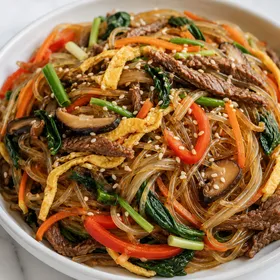
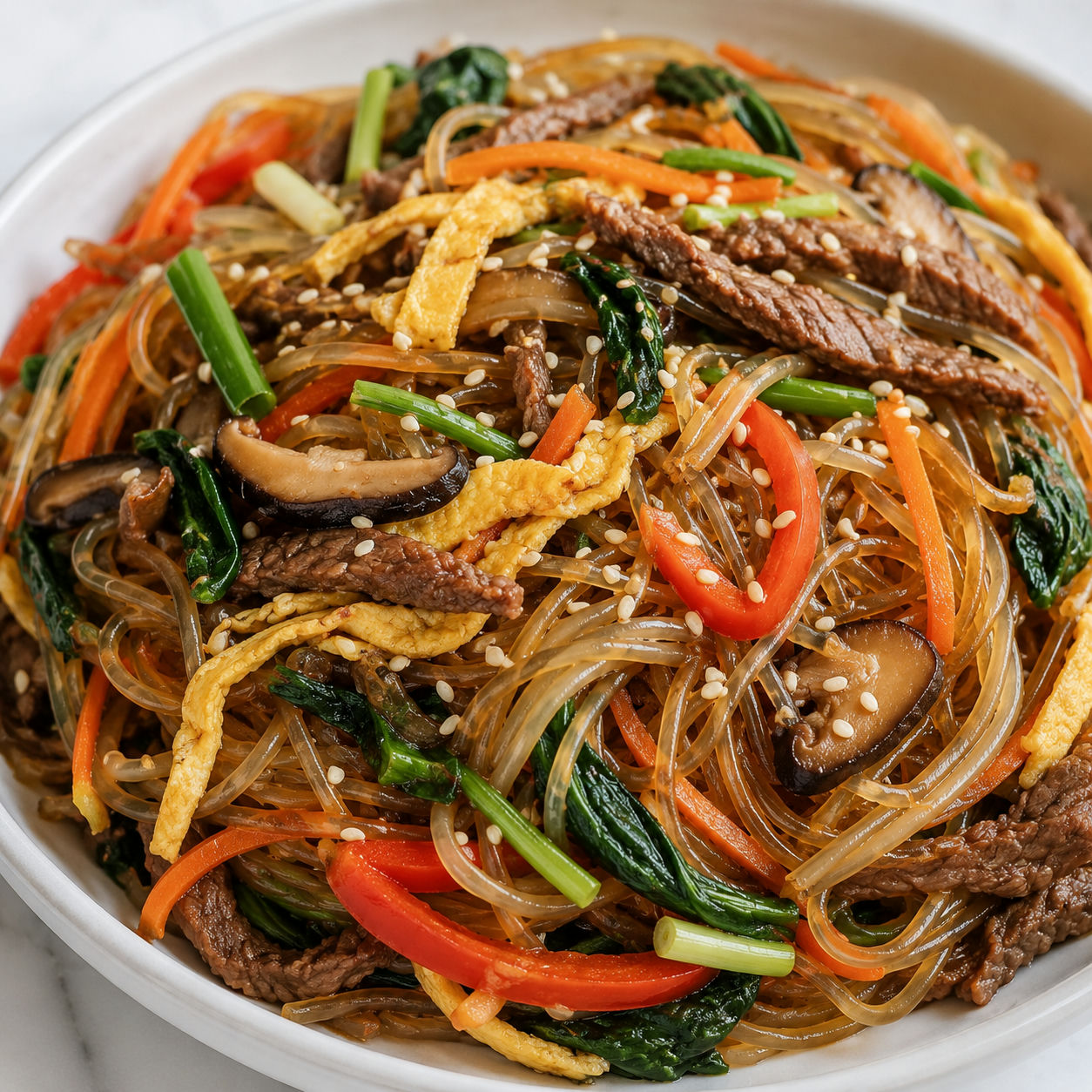
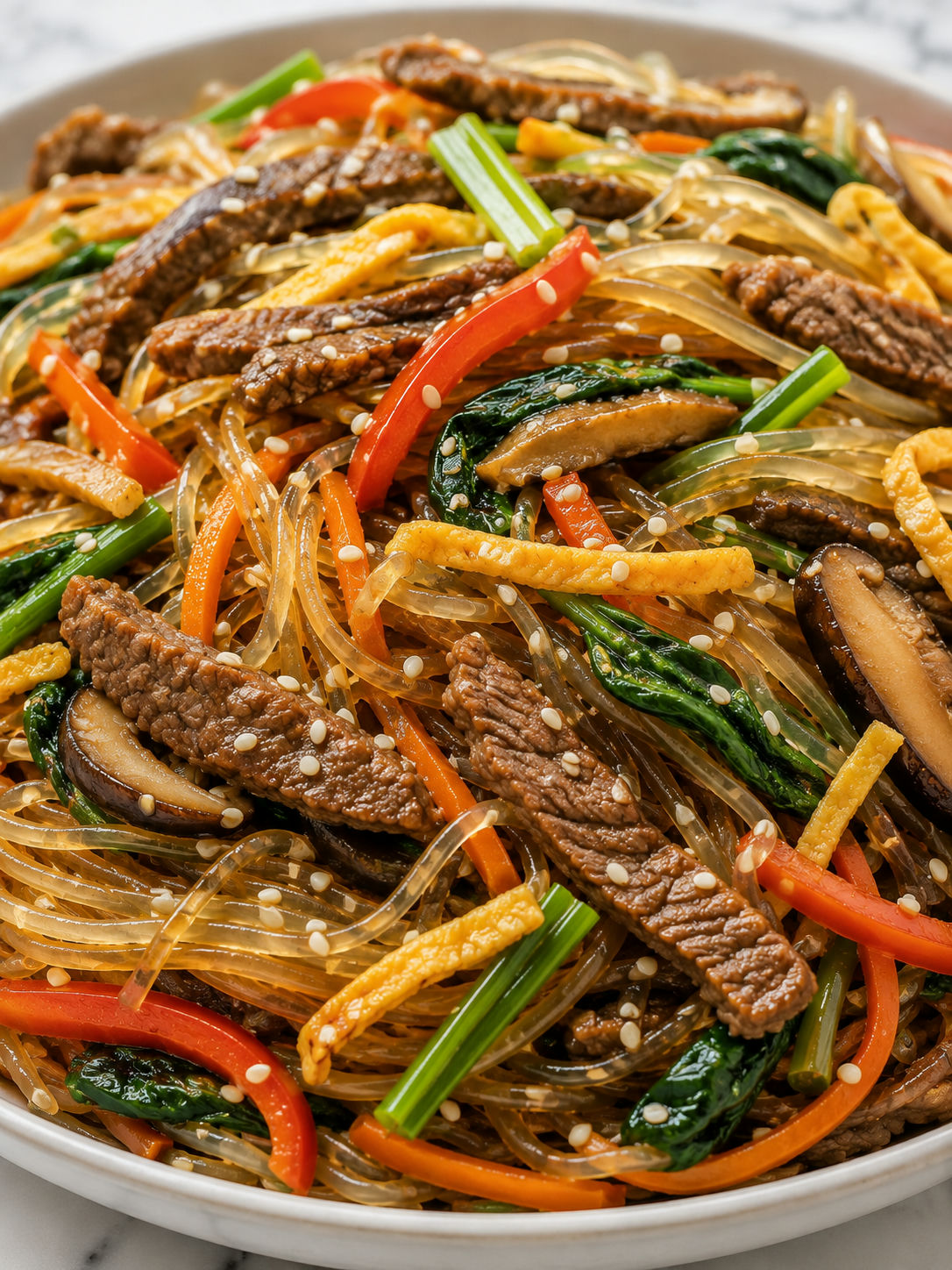
Japchae (Korean Stir-Fried Glass Noodles) is the kind of dish that looks festive but still feels calm enough for a weeknight if you prep first. The noodles are slippery and chewy, the vegetables stay bright, and the sauce lands sweet, savory, and nutty without feeling heavy.
I like this version with thin beef, shiitake mushrooms, spinach, carrot, onion, red pepper, and soft egg ribbons. The extra pans are not busywork. Each ingredient gets the heat it needs, then everything meets in one big bowl while still warm.
Colorful Japchae Building Blocks
Start with real Korean sweet potato starch noodles if you can find them. They are usually labeled dangmyeon, and their springy bite is the heart of japchae.
Slice everything before you turn on the stove. Once the pan is hot, the cooking moves quickly.
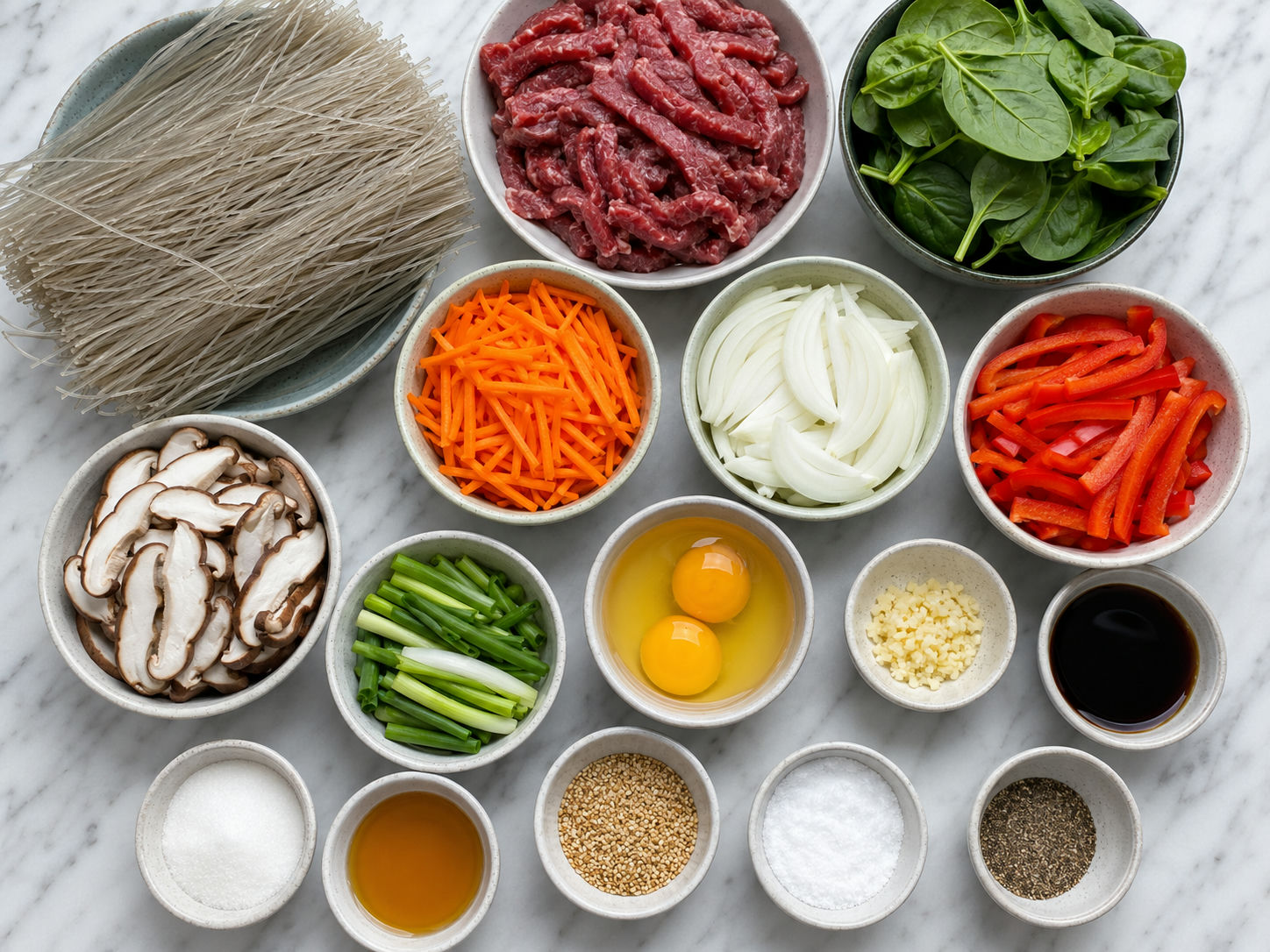
- Dangmyeon noodles. Sweet potato glass noodles give japchae its clear, chewy strands.
- Beef. Thin sirloin or ribeye adds savory depth and cooks in minutes.
- Shiitake mushrooms. They bring earthiness and soak up the soy sesame sauce.
- Spinach. A quick blanch keeps it green and tender without flooding the noodles.
- Carrot, onion, and red bell pepper. These add sweetness, color, and a little crunch.
- Eggs. Thin egg ribbons make the bowl richer and more traditional looking.
- Soy sauce, sugar, garlic, and sesame oil. The classic sweet-savory base that coats every strand.
- Sesame seeds and green onion. A nutty, fresh finish that wakes up the whole dish.
Cook Each Part With Care
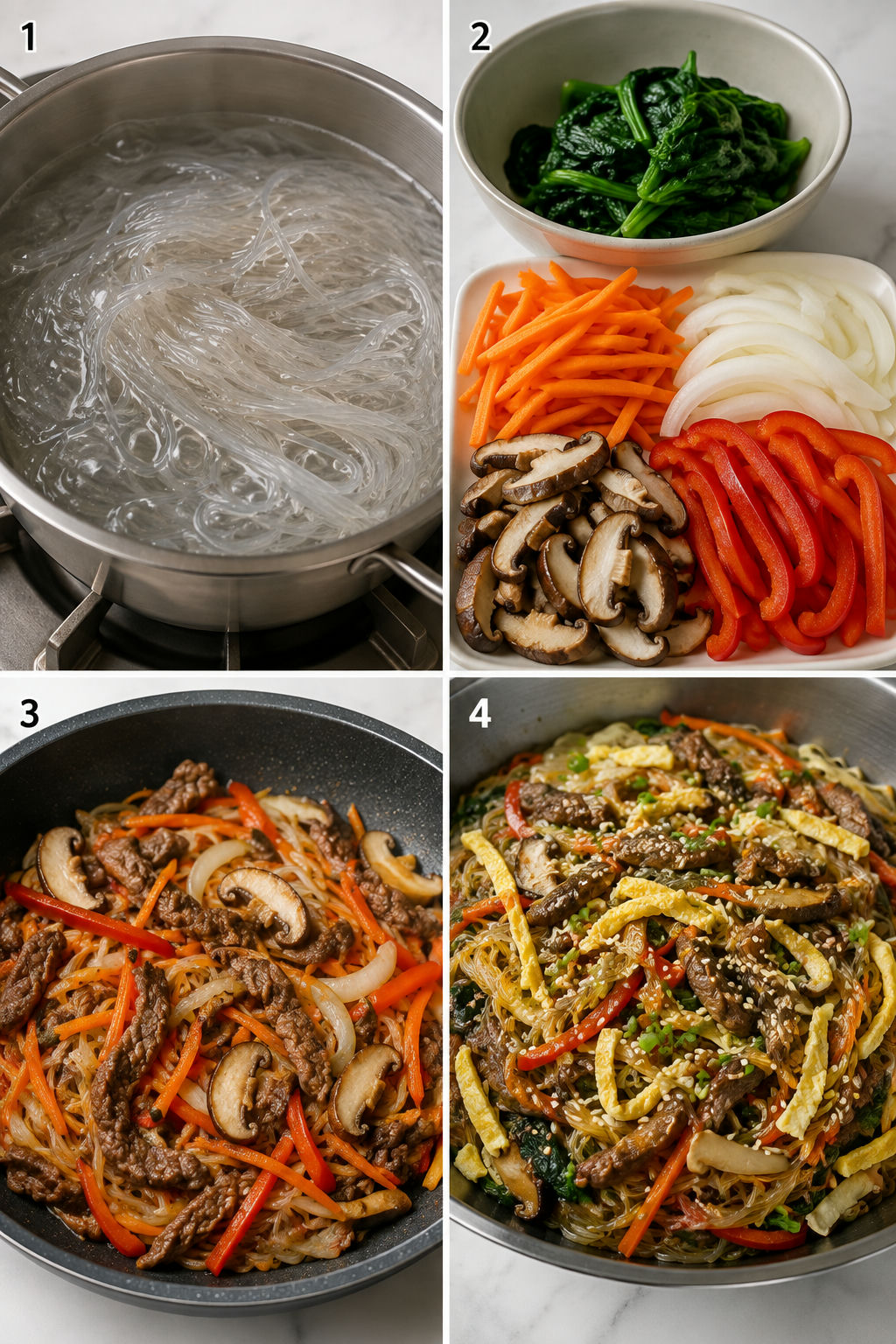
- Mix the sauce. Stir soy sauce, sugar, sesame oil, garlic, sesame seeds, and black pepper until the sugar mostly dissolves.
- Cook the noodles. Boil the dangmyeon until translucent and soft, then rinse, drain, and cut into shorter lengths with kitchen scissors.
- Blanch the spinach. Wilt it for about 30 seconds, rinse cold, squeeze dry, and season lightly.
- Make egg ribbons. Cook beaten eggs in a thin sheet over low heat, then slice into narrow strips.
- Stir-fry the vegetables. Cook carrot, onion, pepper, and scallions just until crisp-tender, then move them to the mixing bowl.
- Cook beef and mushrooms. Stir-fry them with a little sauce until the beef is cooked and the mushrooms smell savory.
- Toss and finish. Add noodles, spinach, vegetables, beef, remaining sauce, egg ribbons, and sesame seeds. Toss until glossy and warm.
Chewy Noodles Matter Most
Dangmyeon should be soft all the way through, not firm in the center. That feels odd if you are used to Italian pasta, but japchae needs elastic noodles that can absorb sauce. Korean Bapsang's japchae guide notes the same point, and it matters.
After boiling, rinse the noodles well and let them drain until they stop dripping. I cut them with scissors so the finished bowl is easier to toss and eat. If the noodles sit too long, toss them with a spoonful of sauce to keep them from clumping.
Keep The Vegetables Bright
The prettiest japchae comes from quick, separate cooking. Carrots should bend but still snap a little. Onion should turn glossy. Spinach needs only a brief blanch, then a firm squeeze so it does not water down the sauce.
If you enjoy colorful skillet dinners, this same prep rhythm works well in beef broccoli noodles and beef cabbage stir-fry. Cut everything thin and keep the heat high enough that vegetables cook fast instead of steaming.
Beef, Tofu, Or No Meat
Sirloin, ribeye, or chuck tender all work if sliced thinly across the grain. Cook the beef just until done, then stop. The USDA safe temperature chart lists whole cuts of beef at 145°F with rest time, and thin strips should be cooked until no raw spots remain. Check the USDA temperature chart if you want a safety reference.
For a vegetarian batch, use extra mushrooms or pan-seared tofu. Skip the egg for a vegan version and use a vegan sugar. For another cozy one-pan dinner with big sauce payoff, try red curry dumplings.
Make Ahead Without Mushy Noodles
Japchae is friendly to meal prep because it tastes good warm or at room temperature. Store it in a shallow airtight container once it has cooled. The USDA says cooked leftovers are generally best within 3-4 days, and that timing fits japchae well. You can read more in the USDA leftovers guide.
To reheat, use a skillet over medium-low heat with a tablespoon or two of water. The noodles soften, the sauce loosens, and the sesame aroma comes back. Microwaving works, but stir halfway through so the center heats evenly.
What To Serve Beside It
Japchae can be a side dish, party platter, or full dinner. Serve it with kimchi, cucumber salad, grilled chicken, or a bowl of fluffy yellow rice when you want something extra filling.
Maangchi's easy japchae recipe shows how flexible the dish can be. The key is balance. Keep the sauce sweet enough to round out the soy, but not so sweet that it hides the sesame and vegetables.
Summary
Serve japchae warm, at room temperature, or chilled from the fridge for a quick lunch. A small splash of water in the pan brings the noodles back to life when reheating.
Frequently Asked Questions
- What are japchae noodles made from?
-
Japchae is made with dangmyeon, Korean glass noodles made from sweet potato starch. They cook up translucent, springy, and chewy rather than soft like wheat pasta.
- Can I make japchae without beef?
-
Yes. Leave out the beef and add extra shiitake mushrooms, firm tofu, or more vegetables. Use tamari instead of soy sauce if you need a gluten-free version.
- Why are my japchae noodles sticky?
-
The noodles may be overcooked or not rinsed well enough after boiling. Rinse them under cold water, drain thoroughly, and toss with sauce while they are still loose.
- Can I make japchae ahead of time?
-
Yes. Japchae holds well for 3-4 days in the refrigerator. Reheat it gently in a skillet with a splash of water or a few drops of sesame oil so the noodles turn glossy again.
- Do I have to cook each vegetable separately?
-
It is worth doing when you want the best texture and color. Carrots need more heat than spinach, and mushrooms need enough time to release moisture. Separate cooking keeps the final bowl from turning dull or watery.
- What should I serve with japchae?
-
Serve it as a side with grilled meat, rice, kimchi, or simple vegetables. It can also be a main dish when you add extra beef, tofu, or a fried egg on top.
References
Reliable references aided in composing and refining this content.
- https://www.koreanbapsang.com/japchae-korean-stir-fried-starch
- https://www.maangchi.com/recipe/easy-japchae
- https://www.fsis.usda.gov/food-safety/safe-food-handling-and-preparation/food-safety-basics/leftovers-and-food-safety
- https://www.fsis.usda.gov/food-safety/safe-food-handling-and-preparation/food-safety-basics/safe-temperature-chart