 Pin it
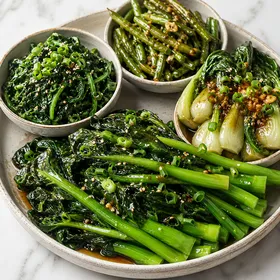
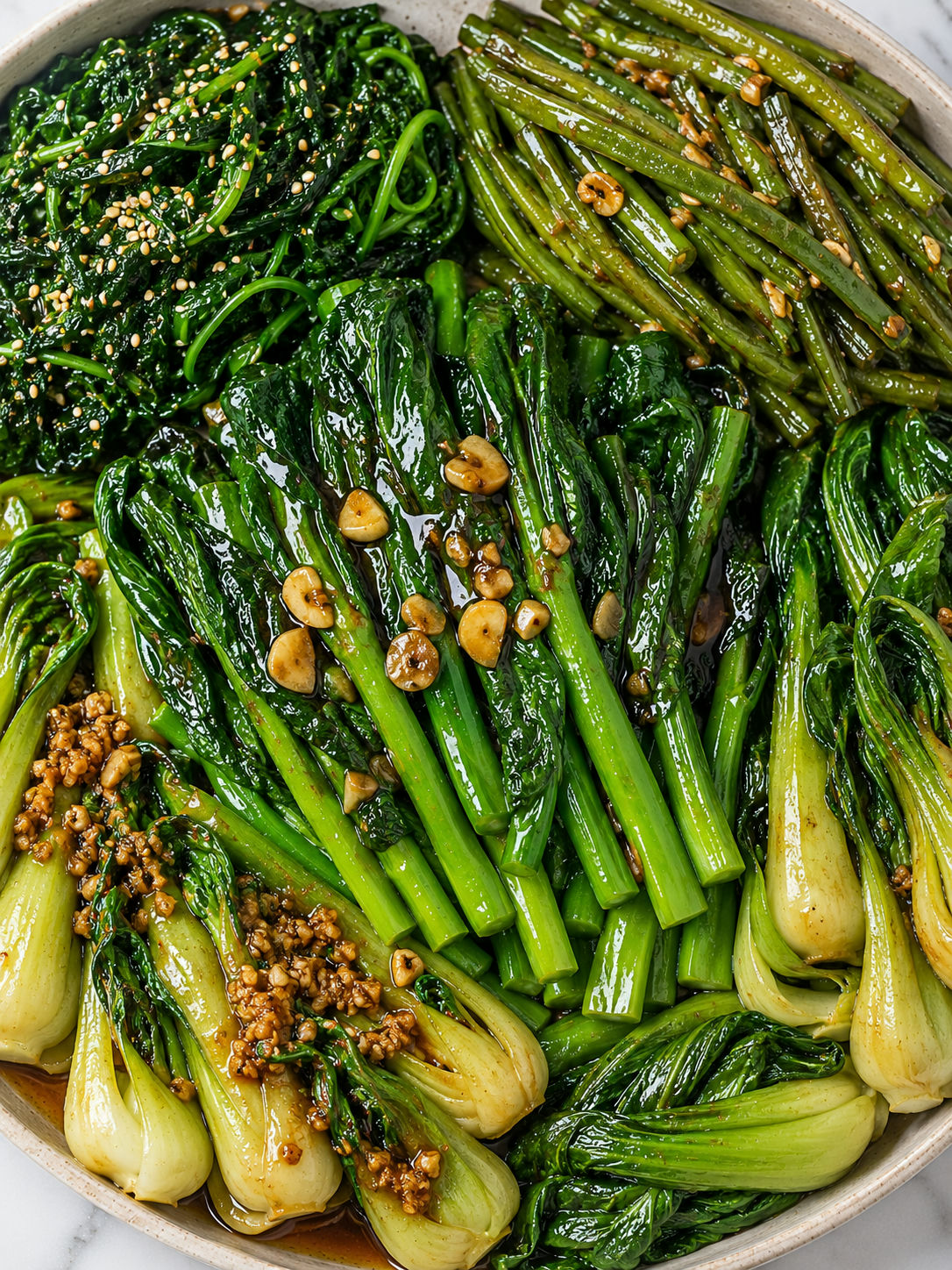
A good green side dish can save dinner. These are the fast vegetables I reach for when the main dish is rich, salty, or saucy and the plate needs something fresh.
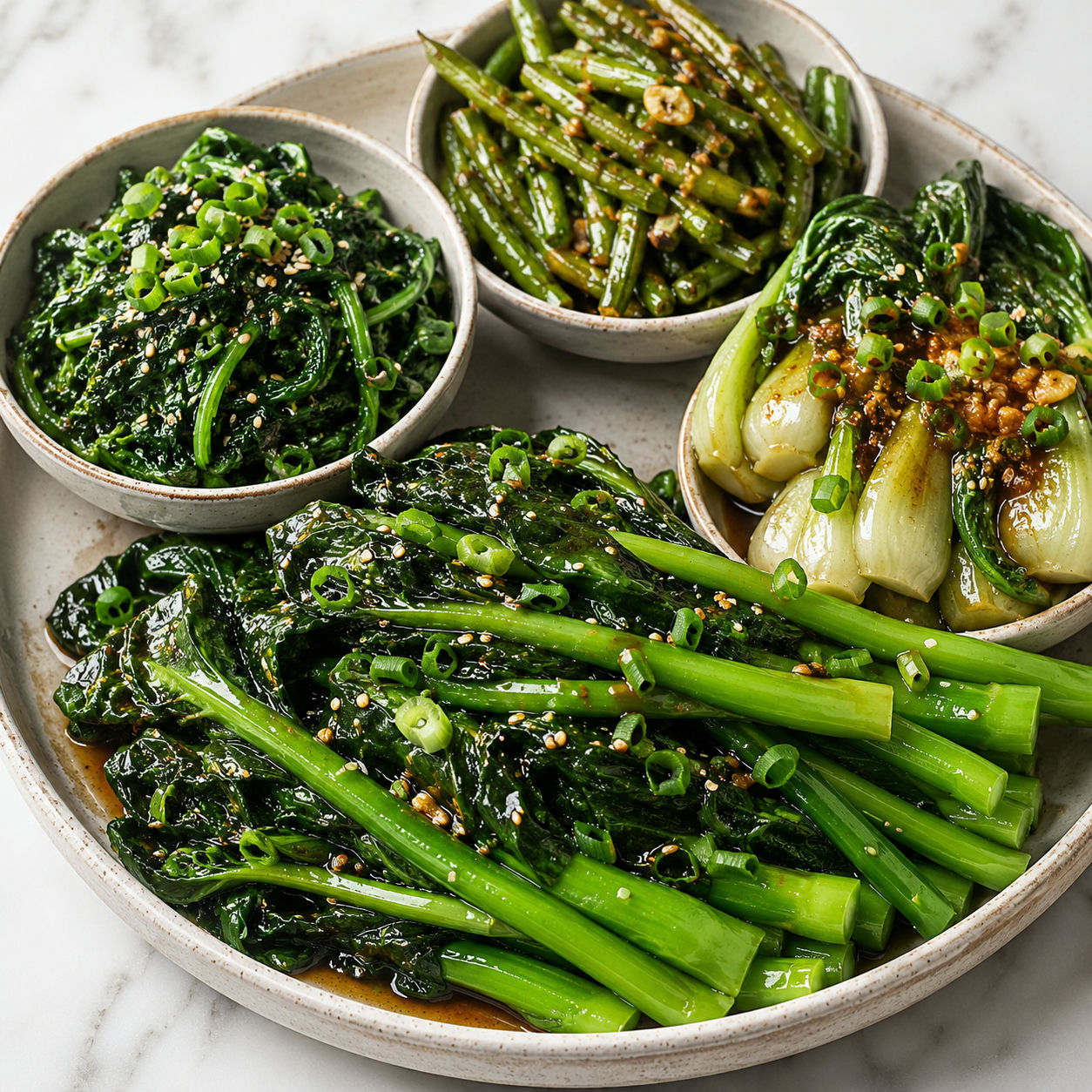
The idea is simple. Cook the greens just enough, season them boldly, and stop before they turn dull or soggy. You get four popular Asian green vegetables side dish options here, so you can match what you have in the fridge.
Four Greens To Buy
Choose greens that look lively, not limp. Spinach should be perky, gai lan stems should feel firm, green beans should snap cleanly, and baby bok choy should have pale crisp stems with deep green leaves.
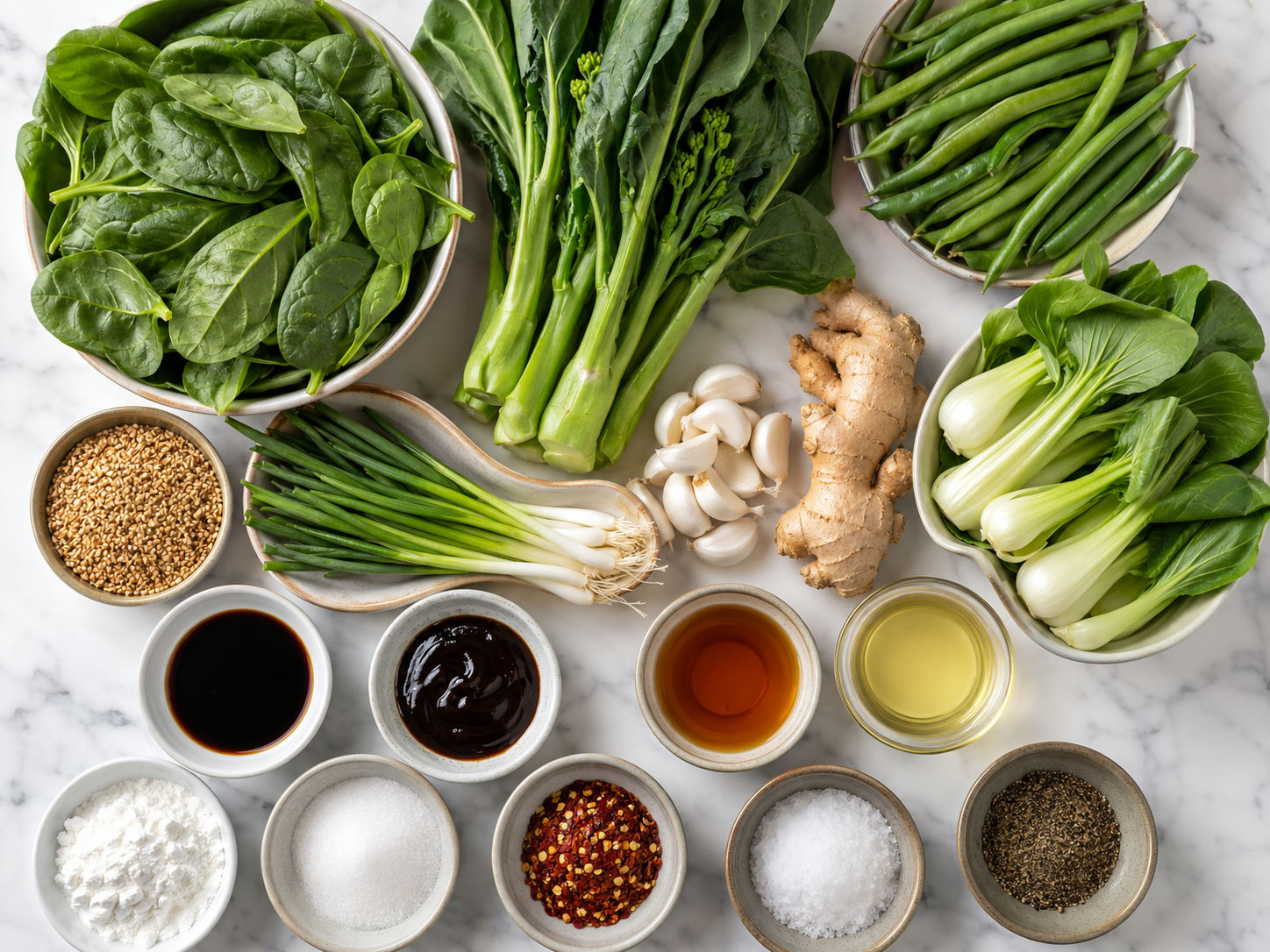
- Fresh spinach. Turns silky after a short blanch and carries soy, garlic, sesame oil, and toasted seeds beautifully.
- Chinese broccoli. Also called gai lan, it has sturdy stems and slightly bitter leaves that love oyster sauce.
- Green beans. They blister in hot oil and give the set a crisp, garlicky bite.
- Baby bok choy. Tender leaves and juicy stems soak up a glossy garlic sauce.
- Garlic and ginger. These aromatics make the hot dishes smell restaurant-style fast.
- Soy sauce and oyster sauce. They add salt, sweetness, and deep savory flavor.
- Sesame oil and sesame seeds. A nutty finish that makes the spinach taste complete.
Cook The Greens Without Mush
- Wash everything well. Swish leafy greens in cool water, lift them out, and repeat if grit settles at the bottom of the bowl.
- Make the sauces first. Mix the oyster sauces before the heat goes on so garlic does not burn while you measure.
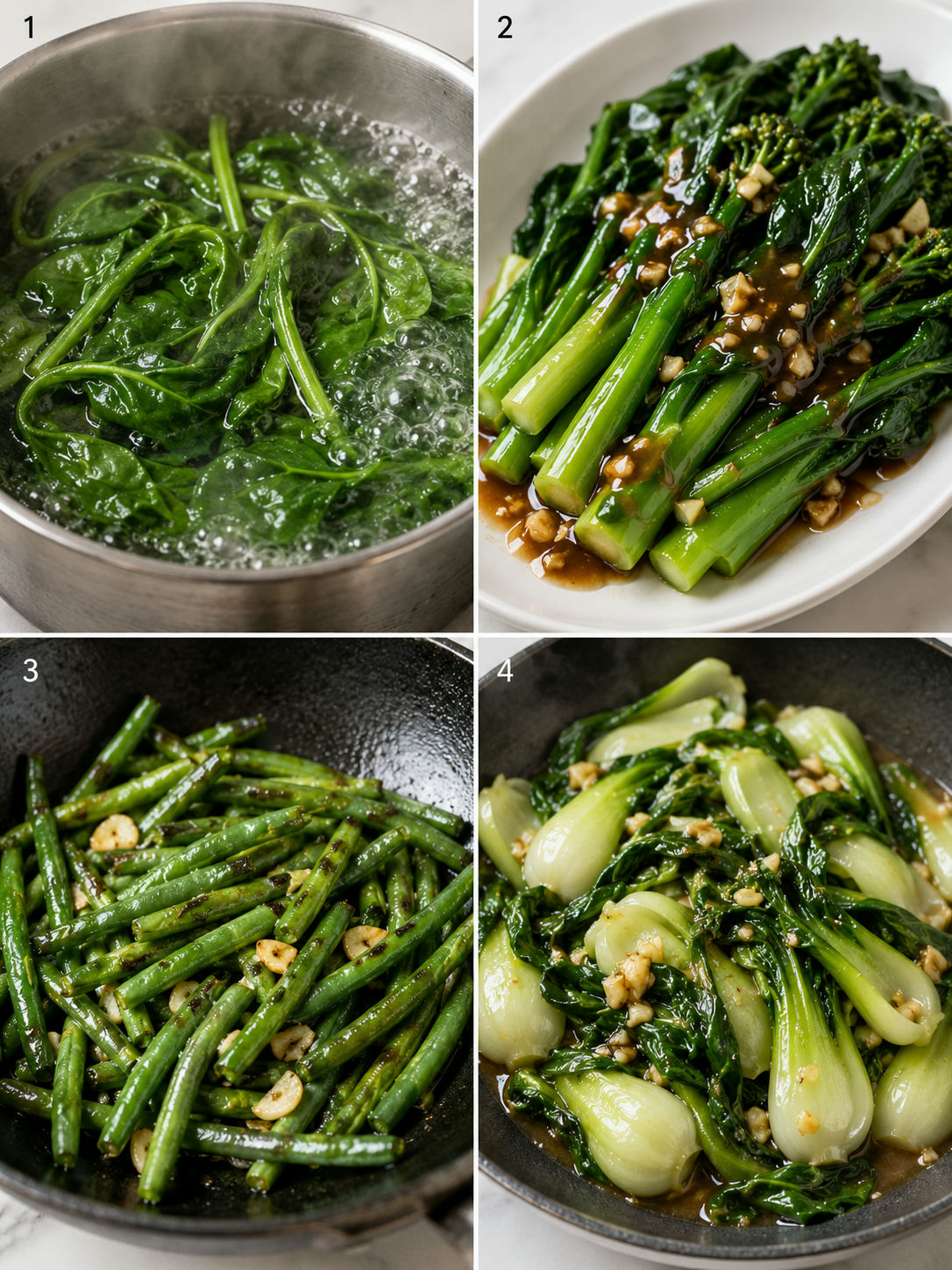
- Blanch the spinach. Cook it for 30-45 seconds, cool it under cold water, squeeze gently, then season with soy, garlic, green onion, sesame oil, and sesame seeds.
- Cook the gai lan. Blanch until the stems are crisp-tender, then spoon over a hot garlic ginger oyster sauce.
- Blister the green beans. Stir-fry dry beans in hot oil until wrinkled, then toss with garlic, soy sauce, oyster sauce, and sesame oil.
- Sauce the bok choy. Blanch briefly, simmer garlic sauce until glossy, then toss the bok choy just until coated.
Why Blanching Works
Blanching is the cleanest way to cook tender greens quickly. The water heats the leaves evenly, then a cold rinse stops the cooking before the color fades. This matters most for spinach and bok choy. Spinach can go from fresh to muddy in less than a minute if you walk away.
For the Korean spinach version, the method is close to classic sigeumchi namul, a common banchan made with garlic, soy sauce, sesame oil, and seeds. Maangchi has a helpful reference for traditional spinach namul if you want to compare the Korean style. Serve this one beside Korean BBQ beef rice paper rolls or a bowl of warm rice.
The Sauce Should Gloss
The hot Chinese-style sauces need only a short bubble. Garlic and ginger bloom in oil first, then the sauce goes in and thickens fast. For gai lan, the sauce can be poured over the arranged greens. For bok choy, toss the vegetables in the pan so every cut side catches the glossy coating.
Chinese broccoli with oyster sauce is a restaurant and dim sum staple. The Woks of Life notes that gai lan should stay a little crunchy, which is the cue I use at home too. Read their Chinese broccoli guide if you are buying it for the first time. These greens are a natural match for saucy Asian beef stir-fry or crispy General Tso's chicken.
Dry Beans Brown Better
Green beans are the one vegetable here that should be very dry before cooking. Water on the surface drops the pan temperature and makes them steam. Dry beans blister, wrinkle, and pick up little browned spots that taste nutty and sweet.
Use a wide skillet or wok and keep the beans moving. They need enough contact with the pan to blister, but not so much time that the garlic burns later. Once the beans look wrinkled, move them out, fry the garlic for only a few seconds, then return the beans with the sauces. This version is excellent with shrimp pad Thai, rice bowls, or simple grilled chicken.
Swaps For Any Market
You can treat this recipe like a flexible side dish formula. Use broccolini if you cannot find gai lan. Use mature bok choy cut into wedges if baby bok choy is unavailable. Use tender kale in place of spinach, but remove thick stems first and blanch it a little longer.
For gluten-free cooking, choose certified gluten-free tamari and check the oyster sauce label. For vegetarian cooking, use mushroom-based vegetarian oyster sauce. If you are cooking for someone with sesame allergies, skip the sesame oil and seeds in the spinach and finish with a few drops of neutral oil instead. The flavor changes, but the greens still work.
Wash, Store, Reheat
Grit hides where stems meet leaves, so wash greens in a bowl of water rather than just spraying them. The FDA recommends rinsing produce under running water and drying it with a clean towel before prep. Their produce safety guidance is worth following for leafy vegetables.
Store leftovers in shallow airtight containers. The USDA says cooked leftovers keep 3-4 days in the refrigerator, and its leftover safety guide is the standard I use. Reheat the gai lan, beans, and bok choy quickly in a skillet. Eat the spinach cold or at room temperature.
Summary
Pick one green or make the whole set for a small banchan-style spread. The spinach is best cool or room temperature, while the gai lan, green beans, and bok choy are best warm.
Frequently Asked Questions
- What is the most popular Asian green vegetables side dish?
-
There is not just one. Korean spinach side dish, Chinese broccoli with oyster sauce, garlic green beans, and bok choy with garlic sauce are all common favorites. They share the same goal, which is tender-crisp greens with a salty, savory finish.
- Can I use regular broccoli instead of gai lan?
-
Yes. Cut broccoli into small florets and slice the stems thin so everything cooks evenly. Blanch until bright green, then spoon the garlic oyster sauce over the top.
- How do I keep the greens bright green?
-
Use plenty of boiling water for blanched greens and cook them briefly. Spinach needs less than a minute. Bok choy and gai lan usually need 1-2 minutes, depending on thickness.
- Can I make these vegetable sides ahead?
-
The Korean spinach is the best make-ahead choice because it tastes good chilled. The other three are best cooked close to serving, but you can wash, trim, and mix the sauces earlier in the day.
- How can I make these vegetarian?
-
Use vegetarian oyster sauce or mushroom stir-fry sauce for the gai lan, green beans, and bok choy. The spinach version is already vegetarian if your soy sauce is vegetarian.
- What should I serve with Asian green vegetables?
-
Serve them with steamed rice, fried rice, noodles, dumplings, grilled fish, chicken, or beef stir-fry. The sesame spinach is also good tucked into bibimbap or lunch bowls.
References
Reliable references aided in composing and refining this content.
- https://www.maangchi.com/recipe/sigumchi-namul
- https://thewoksoflife.com/chinese-broccoli-with-oyster-sauce
- https://www.fda.gov/food/buy-store-serve-safe-food/selecting-and-serving-produce-safely
- https://www.fsis.usda.gov/food-safety/safe-food-handling-and-preparation/food-safety-basics/leftovers-and-food-safety