 Pin it
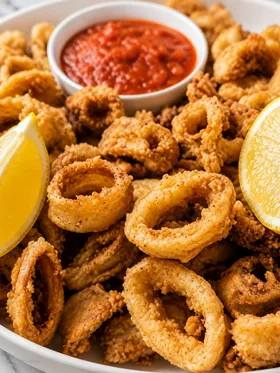
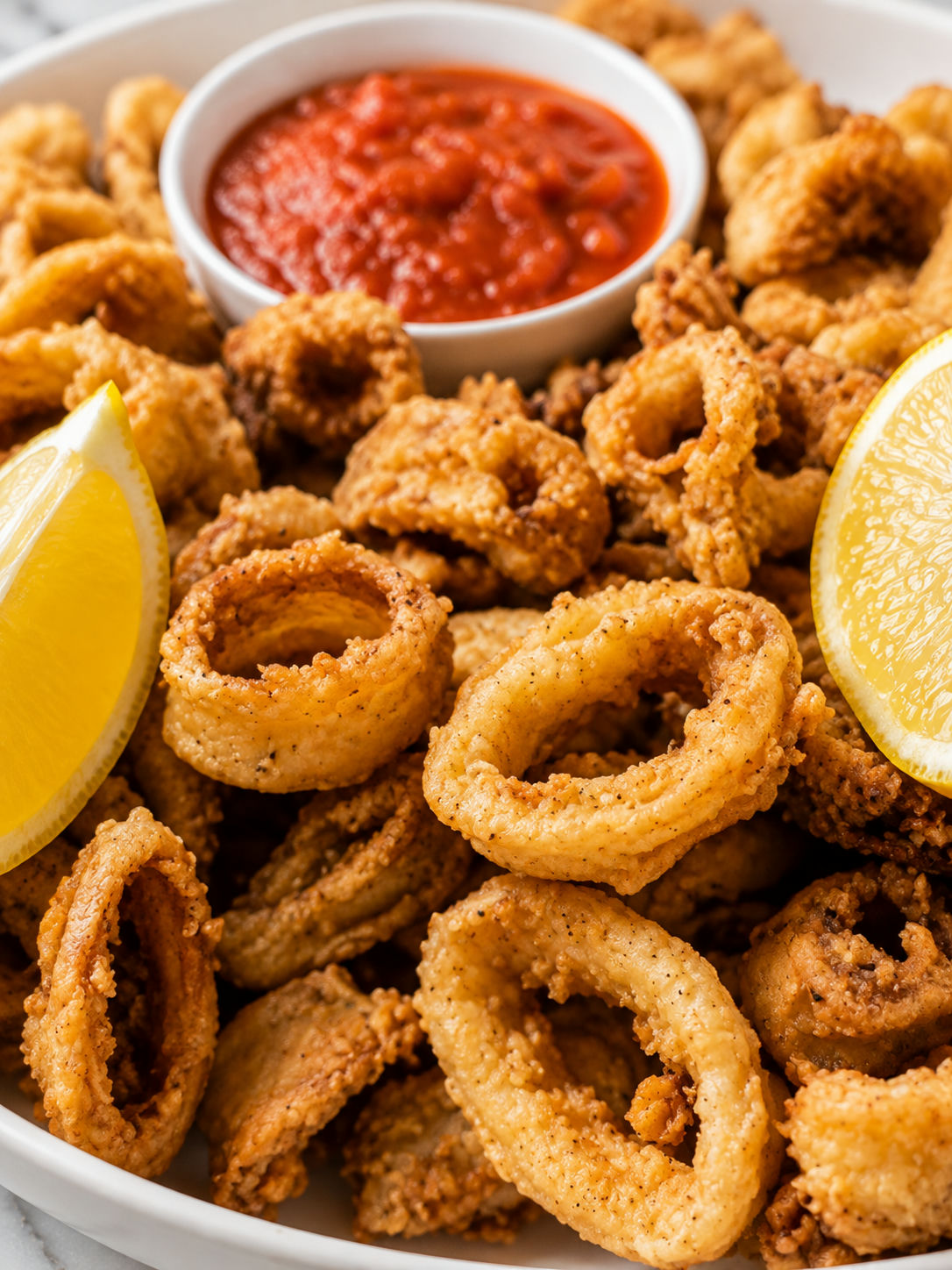
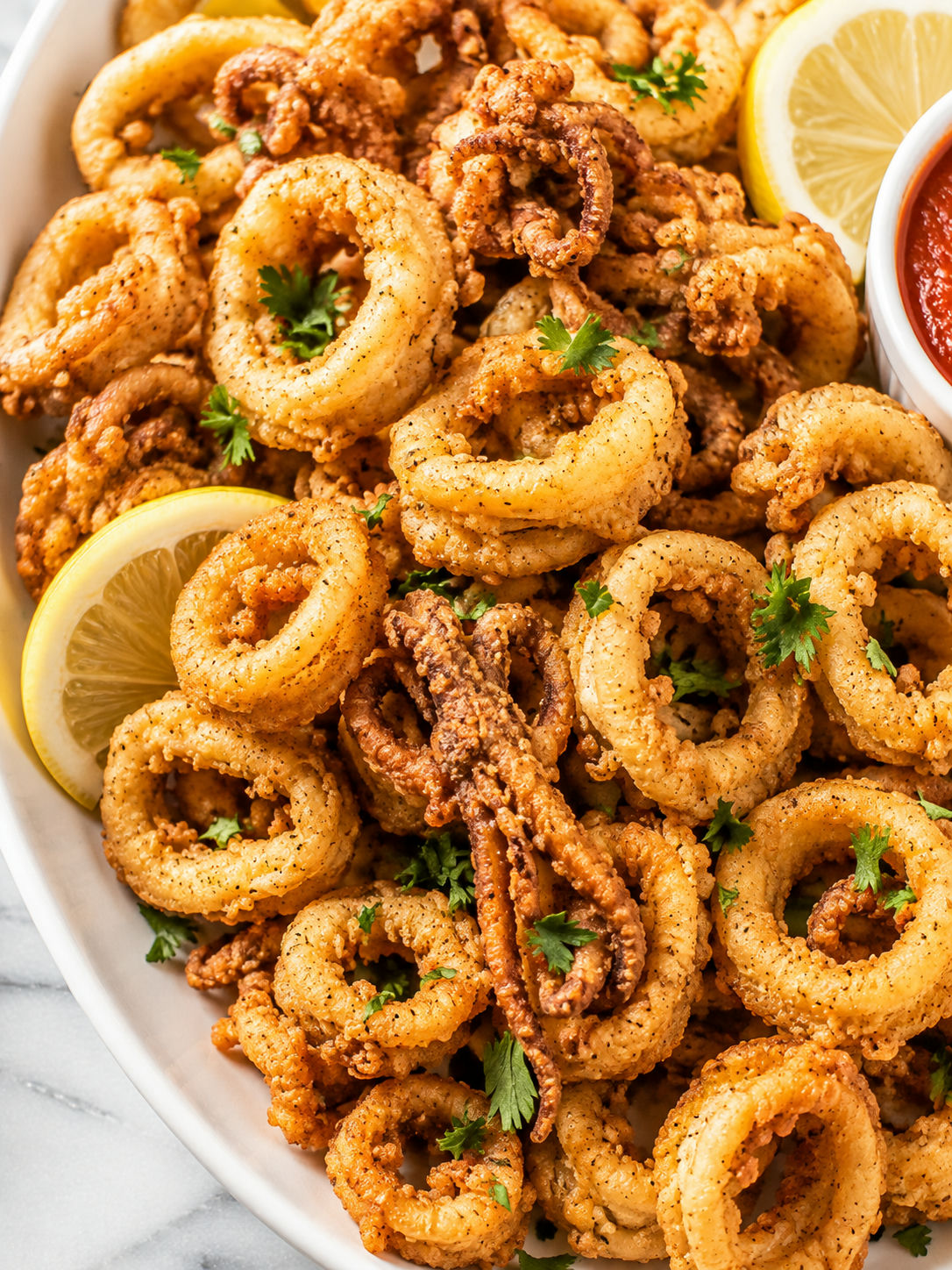
Crunchy outside, tender inside, and ready in minutes is exactly what fried calamari should be. The catch is that squid gives you a tiny window. Fry it fast and it stays sweet and tender. Let it linger and it turns chewy.
This version uses a short buttermilk soak and a light flour-cornstarch coating that cracks when you bite it. It is the kind of appetizer that disappears while the next batch is still draining.
The crisp calamari lineup
Buy cleaned squid tubes and tentacles if you can. The tubes should smell mild and fresh, not sharp or fishy. Cut the rings about 1/2 inch thick so they cook evenly and stay tender.
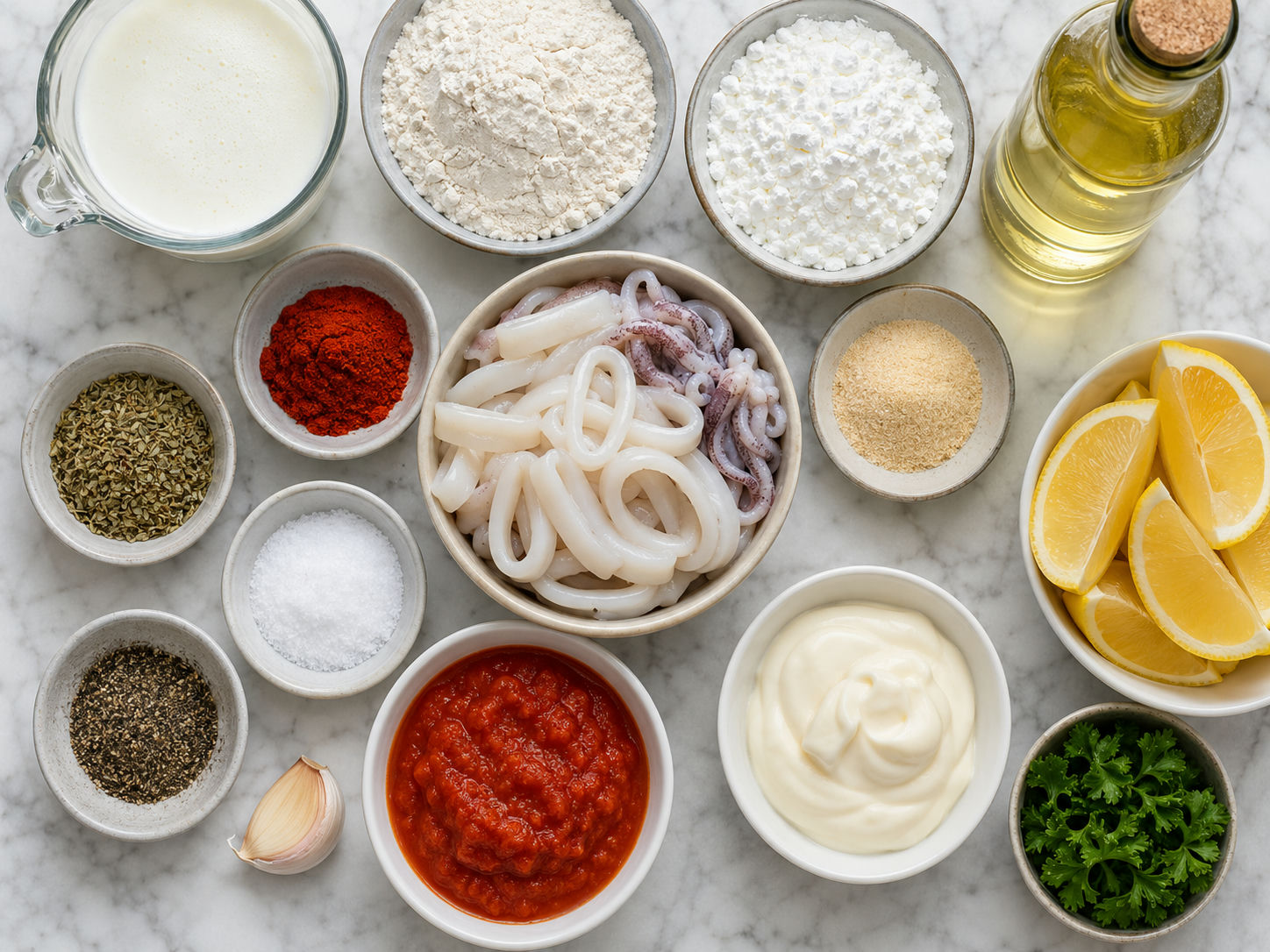
- Cleaned squid. Rings and tentacles cook quickly and give the platter a mix of tender centers and crisp edges.
- Buttermilk. Helps the coating cling and gives the squid a gentle tang.
- All-purpose flour. Builds the main crust without making it heavy.
- Cornstarch. Keeps the coating crisp and light after frying.
- Paprika and garlic powder. Add warm flavor without covering the seafood.
- Neutral frying oil. Canola, vegetable, or peanut oil handles the heat well.
- Lemon, marinara, and garlic aioli. Bright and creamy dips make the hot calamari taste balanced.
Fast frying, tender rings
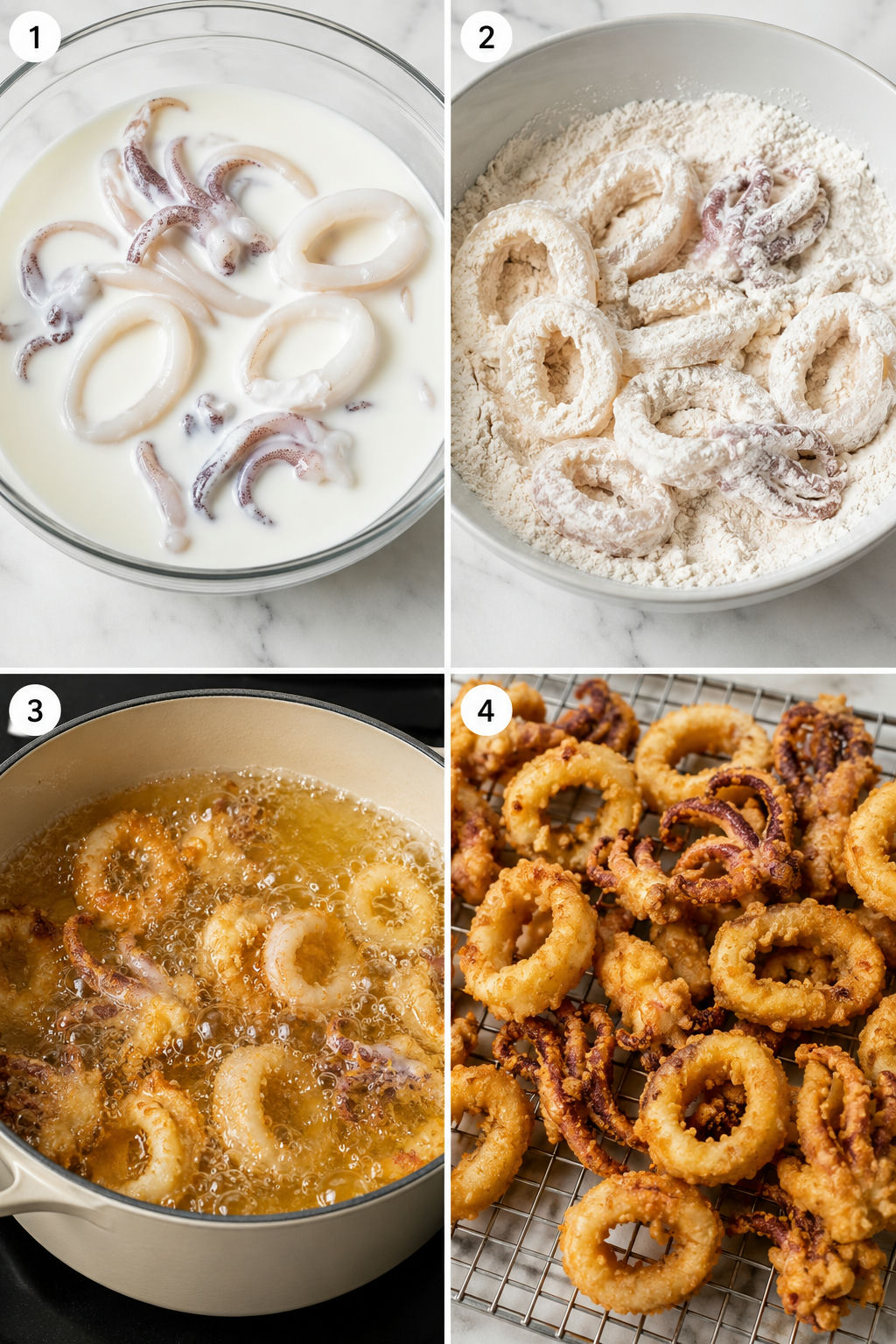
- Soak the squid. Pat the calamari dry, then toss it with buttermilk and chill for 20-30 minutes. This gives the coating something to grab.
- Mix the dredge. Whisk flour, cornstarch, salt, pepper, paprika, garlic powder, and oregano in a shallow bowl. Keep it loose and dry.
- Heat the oil. Pour 2 inches of oil into a heavy pot and heat to 350-375 F. Use a thermometer if you have one.
- Coat the rings. Lift calamari from the buttermilk, let the excess drip off, then toss in the flour mixture. Shake off loose coating.
- Fry in small batches. Fry for 1-2 minutes until lightly golden and crisp. Move the pieces around gently so they do not clump.
- Salt and serve. Drain on a rack or paper towels, season while hot, and serve right away with lemon, marinara, and aioli.
Crunchy outside, tender inside
The biggest mistake is waiting for deep brown color. Calamari is ready before it looks like fried chicken. Aim for a pale golden crust that feels dry and crisp. The squid inside should be opaque and tender, not bouncy.
Hot oil matters. The USDA notes that deep-frying oil is usually held around 350-375 F. Below that, the coating drinks oil and turns heavy. Above that, the crust browns before the squid cooks through. If you do not have a thermometer, drop in one coated ring. It should sizzle hard and turn golden in about 90 seconds.
Keep the coating light
Calamari does not need a thick batter. A thin dusting gives you the clean crunch people want from a restaurant-style plate. Cornstarch is the quiet helper here because it dries the coating and keeps it snappy.
Let the buttermilk drip off before dredging. Then toss the rings through the flour mixture with a loose hand. Clumps look promising, but they can fry up doughy. This same light-crust idea works beautifully in other crunchy seafood snacks, like golden wonton shrimp. If you want a bigger dipping spread, add hot honey chili ranch beside the marinara.
Seafood safety without overcooking
Start with seafood that smells clean and keep it cold until you cook. The FDA's seafood safety guide says most seafood should reach 145 F, and shrimp or similar shellfish should be firm and opaque. Squid is thin, so it reaches that point quickly in hot oil.
Do not leave cooked calamari sitting out for a long party. If you are frying in rounds, keep cooked batches on a rack in a low oven for only a short time. For another fast seafood dinner with the same garlic-lemon energy, try garlic butter chili shrimp.
Dips and bright sides
Lemon is not optional for me. A squeeze over hot calamari wakes up the crust and keeps the plate from feeling heavy. Marinara is classic, but garlic aioli gives you that cool creamy dip people keep going back to.
If you want a fresher table, add pineapple salsa or a crunchy salad with vinegar dressing. Fried calamari also works as a starter before pasta, grilled chicken, or a simple rice bowl. Keep the sides sharp and juicy rather than rich. The calamari already brings the crunch.
Leftovers need dry heat
Fried calamari is a cook-and-eat food. The crust starts softening as soon as steam gets trapped, so serve it on a rack or a warm platter instead of piling it into a deep bowl.
If you do have leftovers, refrigerate them in a shallow container for up to 1 day. Reheat at 400 F on a rack until hot and crisp at the edges. An air fryer works well too. Skip the microwave because it warms the squid unevenly and makes the coating limp.
Summary
Serve fried calamari as soon as it leaves the oil, with lemon and two simple dips. The texture is at its best while the crust is hot and dry.
Frequently Asked Questions
- How do I keep fried calamari tender?
-
Cook it hot and fast. Squid is tender after a very short fry, usually 1-2 minutes, but it tightens if it sits in the oil too long. Pull it when the coating is pale golden and crisp.
- Can I use frozen calamari rings?
-
Yes. Thaw them overnight in the fridge or in a sealed bag under cold water. Pat them very dry before soaking so the coating does not slide off.
- Can I replace buttermilk?
-
Use regular milk with 1 tablespoon of lemon juice or vinegar stirred in. Let it stand for 5 minutes before adding the squid. Plain milk works too, but the coating clings a little less firmly.
- Why did my calamari coating fall off?
-
The squid was probably too wet or the oil was not hot enough. Let excess buttermilk drip away, press the rings lightly into the flour mixture, then shake off loose flour before frying.
- Can I make fried calamari gluten-free?
-
Yes. Use a cup-for-cup gluten-free flour blend with cornstarch. Fry one test ring first because some blends brown faster than wheat flour.
- What should I serve with fried calamari?
-
Lemon wedges and marinara are classic. Garlic aioli, hot honey ranch, pineapple salsa, or a crisp green salad also work well because they cut through the fried coating.
- How do I store and reheat leftovers?
-
Fried calamari is best fresh, but leftovers can be refrigerated for 1 day. Reheat on a rack in a 400 F oven or air fryer for a few minutes. The microwave will soften the crust.