 Pin it
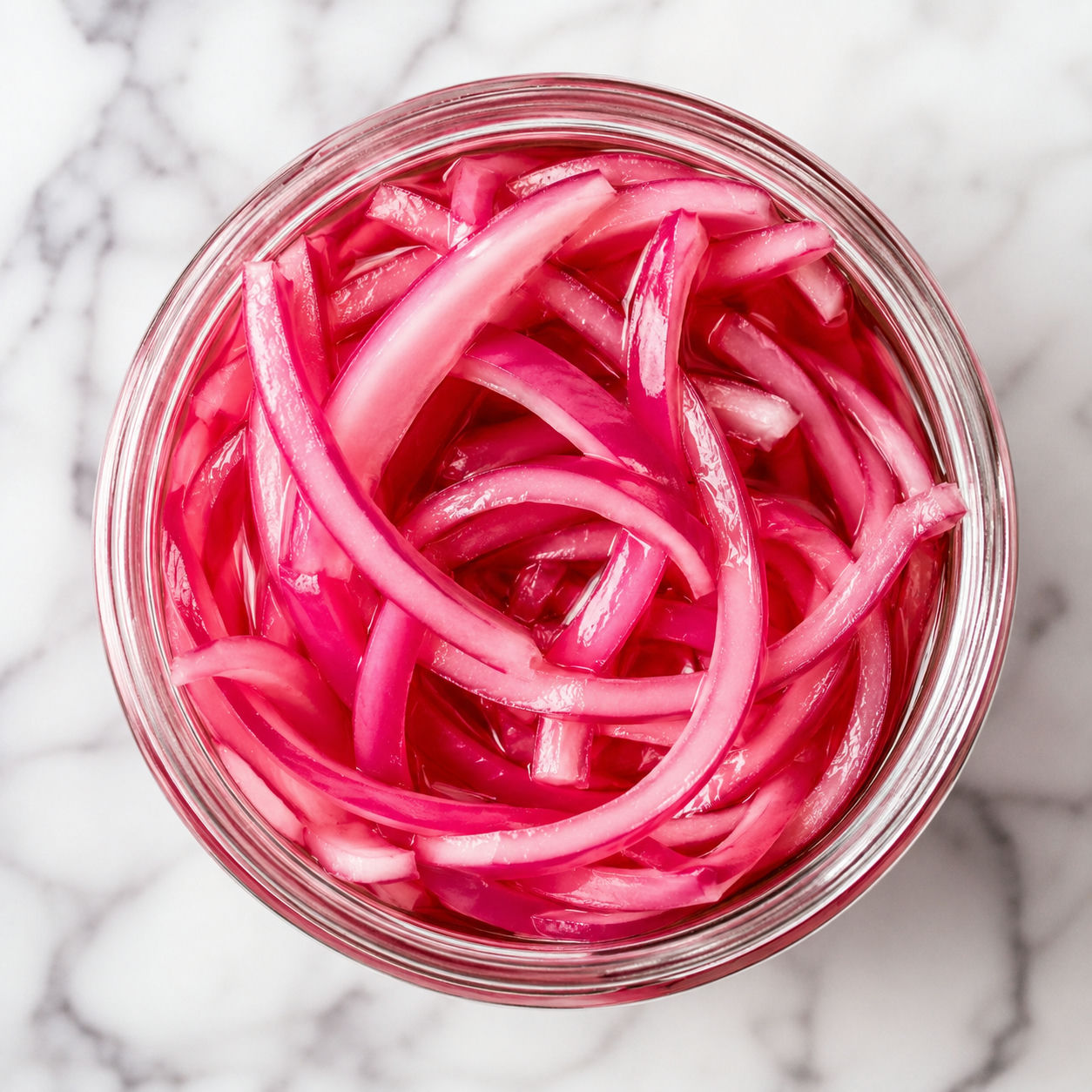
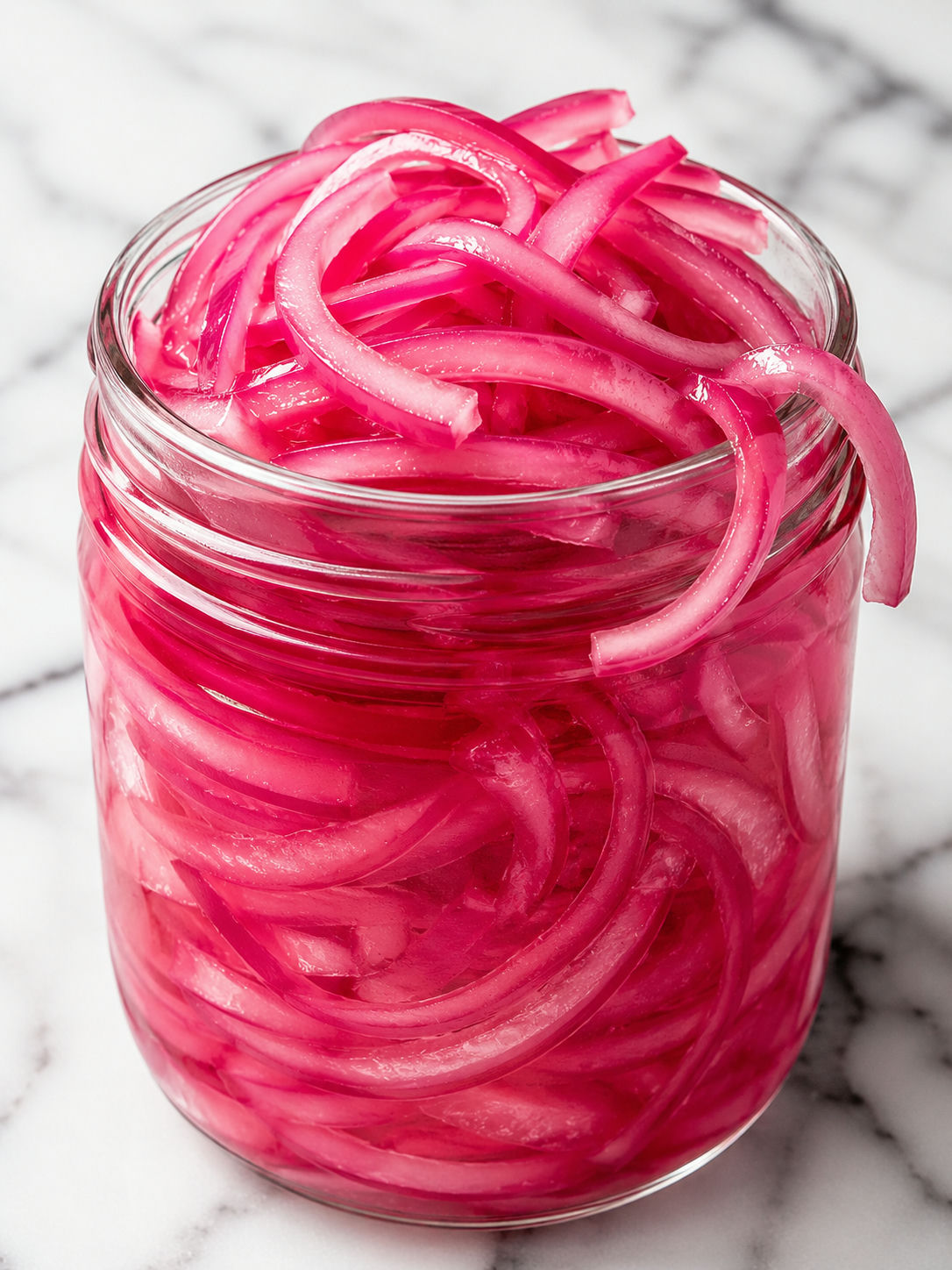
Pickled red onions are the jar I reach for when dinner tastes flat. A few rings bring crunch, color, acid, and a little sweetness without asking you to chop herbs or make a sauce.
This version uses a simple warm brine so the onion softens fast but still keeps a clean bite. It is sharp enough for tacos and rice bowls, gentle enough for sandwiches, and pretty enough to make leftovers look planned.
The Pickled Red Onions Lineup
Choose a firm red onion with tight, shiny skin and no soft spots. Use vinegar labeled 5% acidity, since the brine needs enough acid to taste bright and keep the onions in good condition in the fridge.
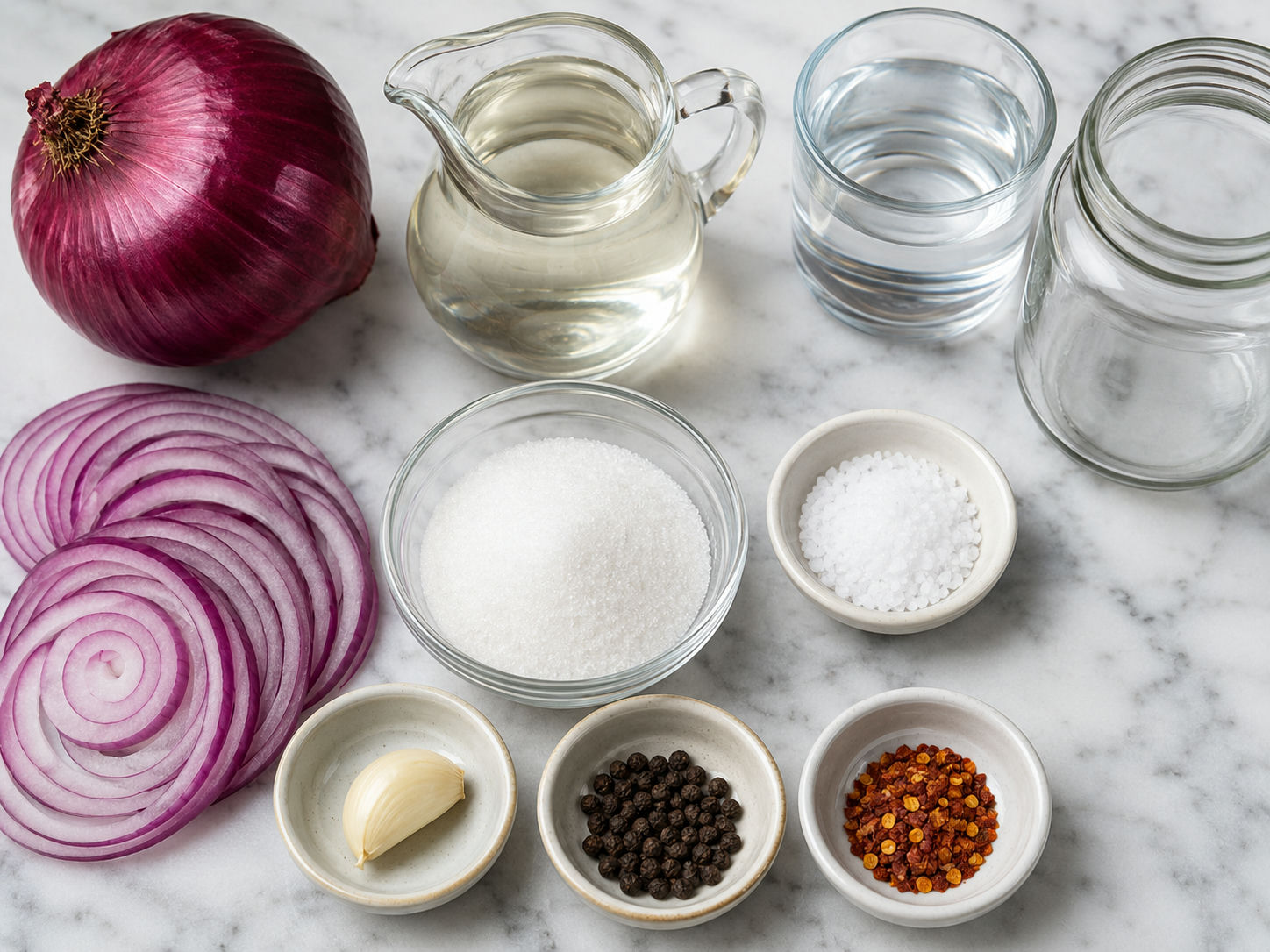
- Red onion. Gives the jar its crisp bite and rosy color as the slices sit in the acidic brine.
- White vinegar. Makes the cleanest, sharpest pickle and keeps the onion flavor front and center.
- Water. Softens the vinegar so the onions taste tangy rather than harsh.
- Granulated sugar. Balances the acid and helps the brine taste rounded, not sweet.
- Kosher salt. Seasons the onion slices and pulls out some of their raw edge.
- Garlic clove. Adds a mellow savory note without taking over the jar.
- Black peppercorns. Bring light warmth and a little bite.
- Chili flakes. Add optional heat for tacos, burgers, and rice bowls.
How The Jar Turns Pink
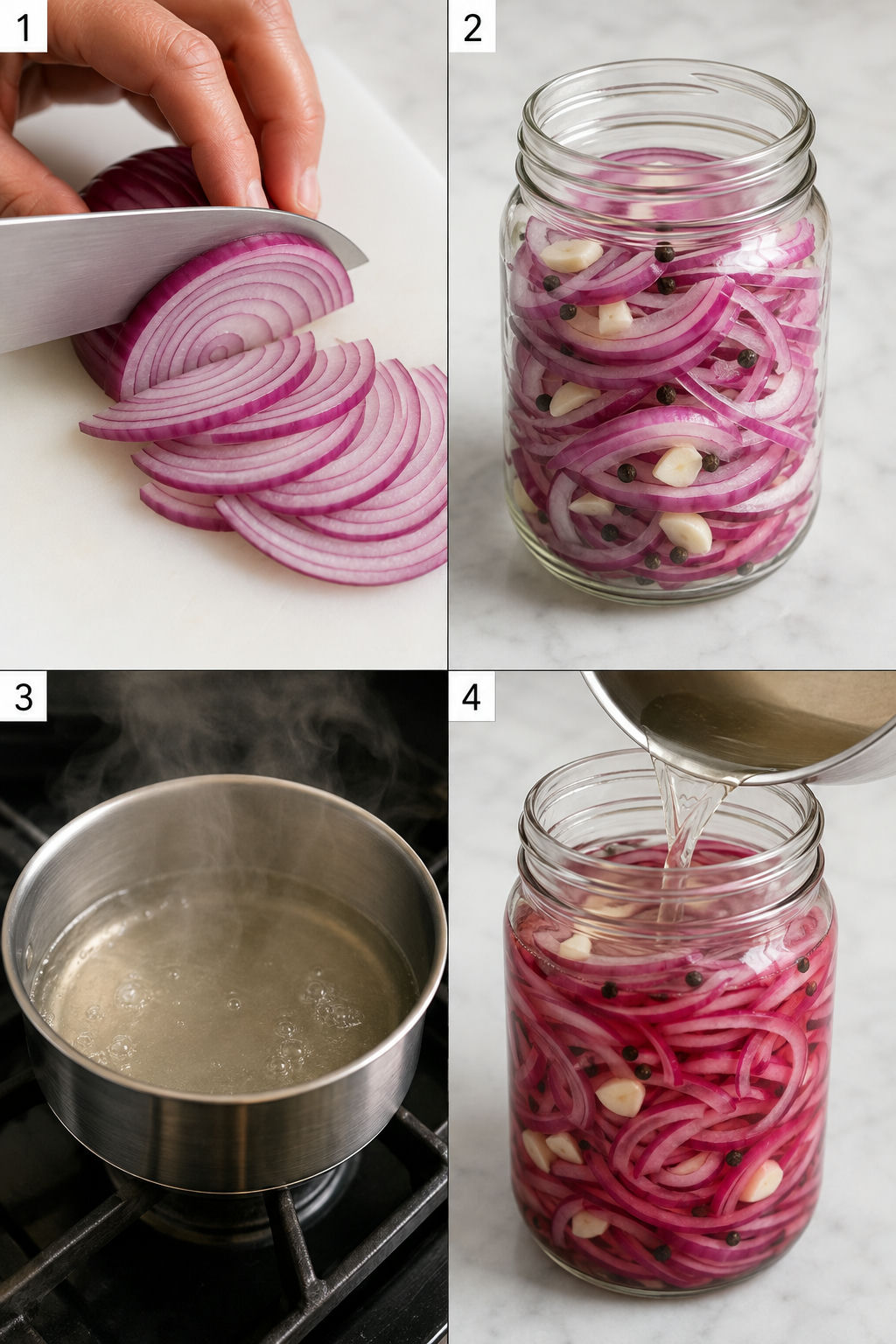
- Slice the onion. Cut the onion from root to tip into thin half-moons, about 1/8 inch thick, so the brine can move through the layers quickly.
- Pack the jar. Place the onion slices in a clean pint jar with the garlic, peppercorns, and chili flakes if using.
- Warm the brine. Heat the vinegar, water, sugar, and salt just until steaming and fully dissolved. It does not need a hard boil.
- Cover the onions. Pour the warm brine over the onion slices, pressing them down so they are fully submerged.
- Cool and chill. Let the jar cool for 15 minutes, then cover and refrigerate for at least 30 minutes before using.
Pickled Red Onions Timing
The first 30 minutes gives you bright, snappy onions that still taste fresh. After a couple of hours, the color turns more vivid and the onion bite relaxes. By the next day, the brine tastes fuller and the slices are bendy but not limp.
Thin slicing matters more than almost anything else. A mandoline gives even slices, but a sharp knife works fine if you take your time. Thick pieces will still pickle, but they need several hours and can taste sharp in the center.
The Brine Balance
This recipe uses equal parts vinegar and water because it gives a bright pickle without making every bite taste like straight vinegar. The small spoonful of sugar is not there to make the onions sweet. It rounds off the acid so the brine tastes clean.
For food safety and texture, do not water the brine down beyond the recipe. The National Center for Home Food Preservation notes that vinegar, water, and food proportions matter in pickled foods. This jar is for the refrigerator, not the pantry.
Ways To Use The Jar
Pickled onions love rich, salty, creamy foods. Pile them on tacos, nachos, breakfast eggs, grilled cheese, burgers, and anything with avocado. They are especially good over a chicken burrito bowl salad or a blackened salmon rice bowl, where the tang cuts through rice and sauce.
They also work as a quick sidekick for other bright toppings. Spoon them next to pineapple salsa for tacos, or serve them with upgraded pickled eggs when you want a snack board with a little bite.
Storage Without Guessing
Store the jar in the refrigerator once it has cooled. The onions should stay covered in brine, and the lid should seal tightly enough that the fridge does not smell like vinegar. The USDA refrigeration guide recommends keeping refrigerators at 40°F or below, which is the right habit for quick pickles too.
I like them best in the first week, when the slices are still crisp. They can last up to 2 weeks if handled cleanly. Toss the jar if the brine turns cloudy in a strange way, smells off, or grows anything fuzzy.
Flavor Add-Ins That Behave
Garlic, peppercorns, and chili flakes are easy add-ins because they flavor the brine without making it muddy. A small bay leaf, a pinch of cumin seed, or a few oregano leaves can also work. Keep the amounts light on the first batch. The onion should still taste like onion.
For a softer flavor, use apple cider vinegar. For sharper taco-shop style onions, use white vinegar. Red wine vinegar is good with steak, grain bowls, and Mediterranean salads, but it darkens the brine more than the others.
Summary
Keep the onions fully covered in brine, use clean utensils, and treat this as a refrigerator pickle rather than a shelf-stable canned recipe.
Frequently Asked Questions
- How long do pickled red onions need before eating?
-
They taste good after 30 minutes, especially if the onion is sliced thin. For a softer bite and deeper pink color, let the jar chill for 1-2 hours before serving.
- Can I use apple cider vinegar instead of white vinegar?
-
Yes. Apple cider vinegar gives the onions a fruitier, rounder tang. White vinegar tastes cleaner and sharper, while red wine vinegar makes the brine a little deeper in color.
- How long do refrigerator pickled red onions last?
-
Keep them covered in brine in a sealed jar in the refrigerator for up to 2 weeks. Use a clean fork each time so crumbs, sauce, or oil do not get into the jar.
- Why are my pickled onions too harsh?
-
The slices may be thick, or they may need more time in the brine. Slice them thinner next time, and let the jar rest for at least an hour before judging the flavor.
- Can I make pickled red onions without sugar?
-
You can leave the sugar out, but the onions will taste sharper. For a less sweet jar, use 1 teaspoon sugar instead of the full amount rather than skipping it completely.
- Can this recipe be canned for pantry storage?
-
No. This is a refrigerator pickle, not a tested canning recipe. Keep it cold, and use a tested canning source if you want shelf-stable pickled onions.