
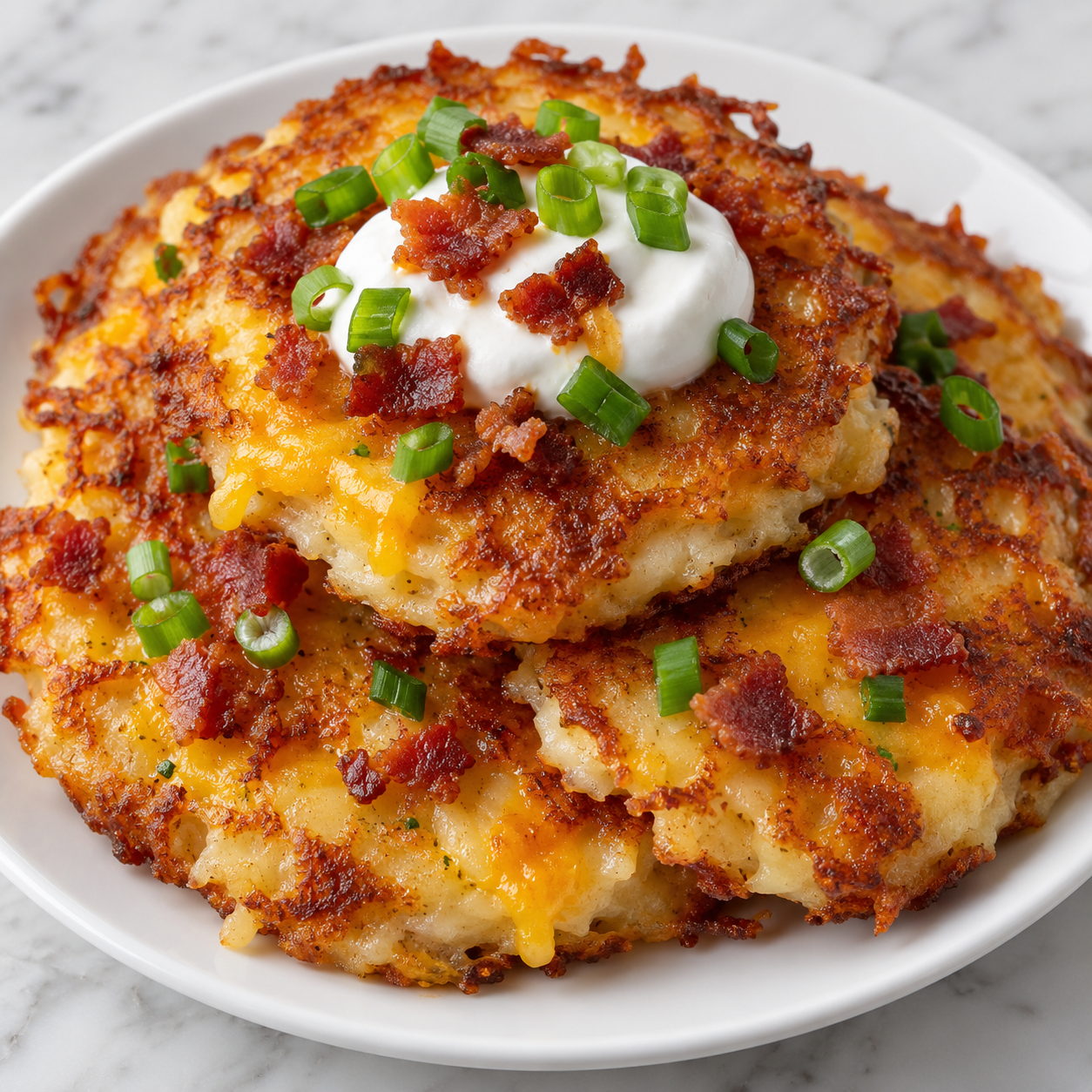
 Pin it
These potato pancakes, 1st Recipes style, are the kind of leftover recipe that makes the second meal better than the first. Cold mashed potatoes turn sturdy and scoopable overnight, which is exactly what you want for patties that fry up crisp without falling apart.
I make this version loaded with bacon, cheddar, and a little green onion. The edges get deeply golden, the centers stay creamy, and a spoonful of sour cream on top makes them feel like a small skillet supper.
What Makes These Pancakes Loaded
Start with cold, well-seasoned mashed potatoes. If the potatoes tasted good on their own, the pancakes will already have a solid base.
Bacon and cheddar bring salt, smoke, and richness. Green onion cuts through the creamy potatoes and keeps each bite from feeling flat.
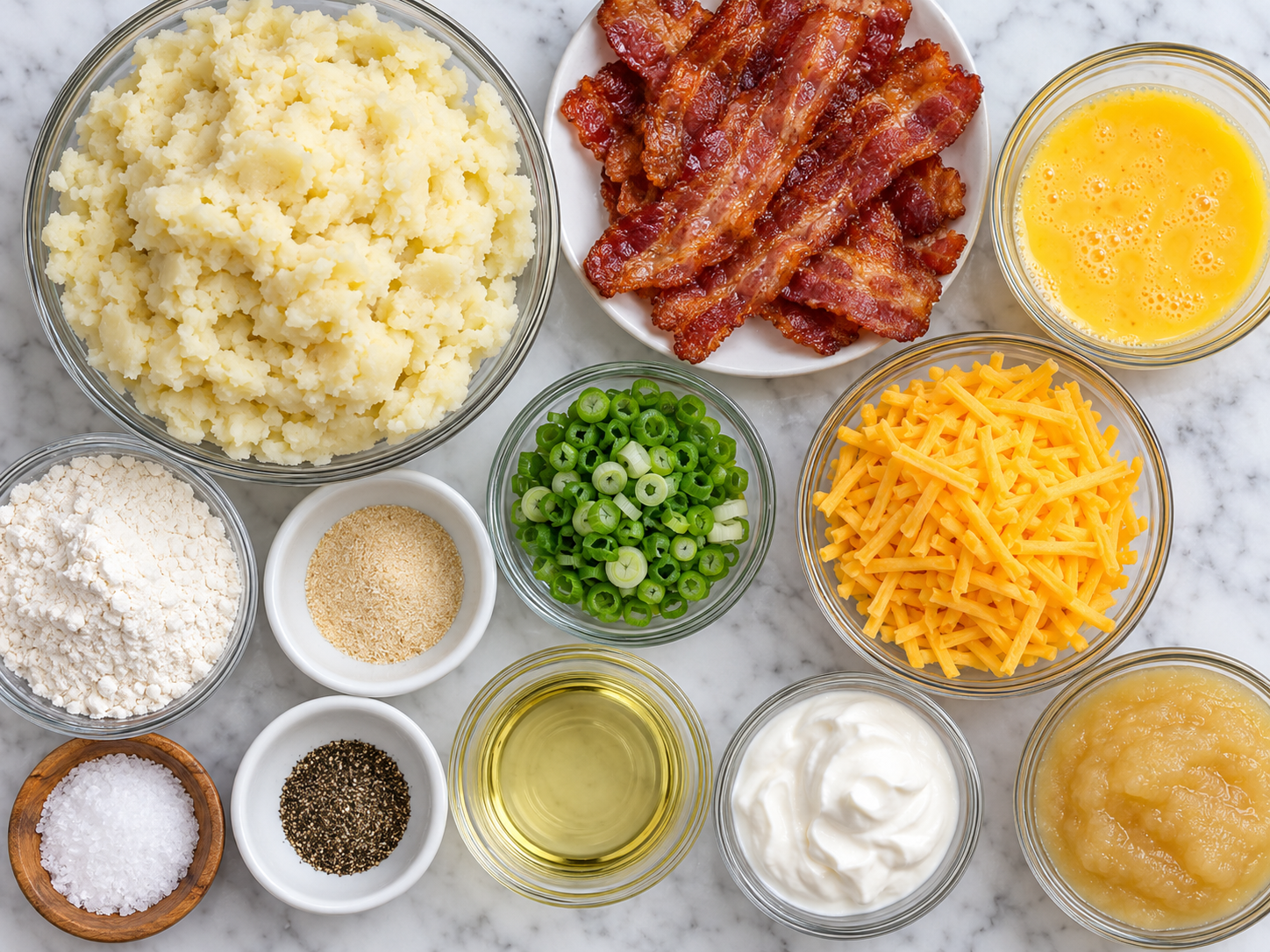
- Cold mashed potatoes. The firm base that shapes into patties and fries with a creamy center.
- Bacon. Adds smoky crunch and gives you flavorful drippings for the skillet.
- Eggs. Bind the mixture so the pancakes hold together when flipped.
- All-purpose flour. Absorbs extra moisture and helps the outside brown.
- Cheddar cheese. Melts into the potatoes and gives the cakes a sharp, savory bite.
- Green onion. Adds freshness without the moisture of raw grated onion.
- Onion powder and pepper. Season the potatoes evenly from the inside out.
- Sour cream. A cool topping that balances the crisp, salty pancakes.
How Potato Pancakes Crisp Up
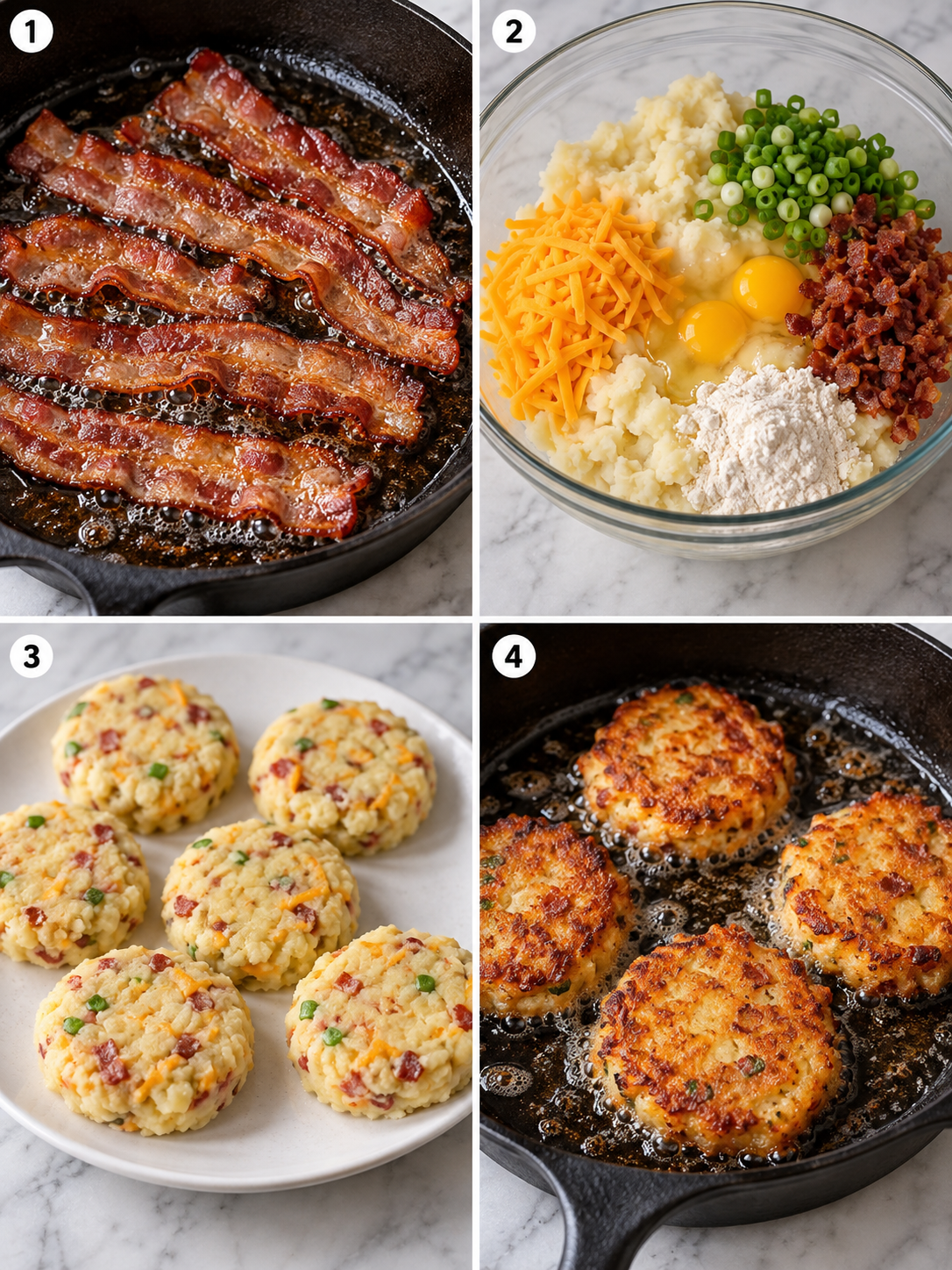
- Cook the bacon. Fry the bacon in a large skillet until crisp, then drain it on a towel and save a thin layer of drippings in the pan.
- Mix the base. Stir cold mashed potatoes with beaten eggs, flour, onion powder, pepper, cheddar, green onion, and crumbled bacon until the mixture holds together.
- Shape the patties. Form 8 patties about 1/2 inch thick. If the mixture sticks badly, dust your hands with flour.
- Heat the skillet. Warm the bacon drippings over medium heat. Add a splash of oil if the pan looks dry.
- Pan-fry until golden. Cook the patties for 3-4 minutes per side, leaving space between them so steam can escape.
- Serve hot. Move the pancakes to a rack or plate, then top with sour cream and extra green onion while the edges are still crisp.
Cold Potatoes Matter Most
Cold mashed potatoes are drier and firmer than fresh ones. That small change makes the mixture easier to shape and keeps you from adding too much flour. A little flour is helpful. Too much turns the cakes dense and bready.
If your mashed potatoes are very loose, stir in the flour and let the bowl sit for 5 minutes before shaping. The flour hydrates and the mixture tightens. If the potatoes are stiff, add the eggs first and mix gently. You want a scoopable mixture, not a sticky paste.
This is also a smart place to use leftovers from a potato-heavy meal. If you like easy potato sides, pair these with roasted carrots, potatoes and onions on a weekend table, or save them for breakfast the next day.
The Right Skillet Heat
Medium heat is the sweet spot. Too low and the pancakes soak up fat before they brown. Too high and the cheese near the surface can scorch before the center warms through.
Listen when the first patty goes in. You want a steady sizzle, not angry popping. Once the pancakes are in the skillet, leave them alone for a few minutes. The crust forms against the pan, and that crust is what makes flipping clean. A thin metal spatula helps because it slides under the browned edge without bending the cake.
For another crisp potato side, the site also has baked garlic parmesan fries. These pancakes are softer inside, but the same idea applies. Give the potatoes enough heat and enough space.
Serve Them Sweet Or Savory
This loaded bacon-cheddar version leans savory, so sour cream, chives, and a few cracks of black pepper make sense. Applesauce still works if you like the old-fashioned sweet and salty thing. It is especially good when the bacon is crisp and the cheddar is sharp.
For dinner, set the pancakes beside fried cabbage with bacon, onion, and garlic or a simple green salad with vinegar dressing. They also fit next to roasted chicken, beef roast, or eggs. If you serve them for brunch, keep the pancakes small so each one has more crispy edge.
Food Safety And Leftovers
Because this recipe starts with leftovers and includes egg, treat the mixture like a perishable food. The USDA leftover safety guide recommends refrigerating leftovers promptly and using refrigerated leftovers within 3-4 days. The FDA egg safety guide also advises cooking foods with eggs thoroughly.
Do not leave the potato mixture sitting on the counter while the skillet heats. Shape the patties, cook what fits in the pan, and keep the rest chilled if you are working in batches. Reheat finished pancakes until hot all the way through.
Easy Changes That Work
The bacon-cheddar mix is close to the 1st Recipes style, but it is flexible. Swap cheddar for pepper jack, smoked gouda, or Swiss. Add a pinch of cayenne if you want heat. For a sharper onion flavor, use chives or a tablespoon of very finely minced shallot.
You can also turn these into a heartier plate with a fried egg on top. For a bigger comfort meal, serve them with wrapped potato with bacon when you want a full potato-and-bacon spread. It is not light food, but it is cozy and honest.
I looked at a few loaded mashed potato pancake methods while testing the ratios, including a version from How Sweet Eats. This recipe keeps the 1st Recipes bacon-and-cheddar spirit and adds a little more structure for easier flipping.
Summary
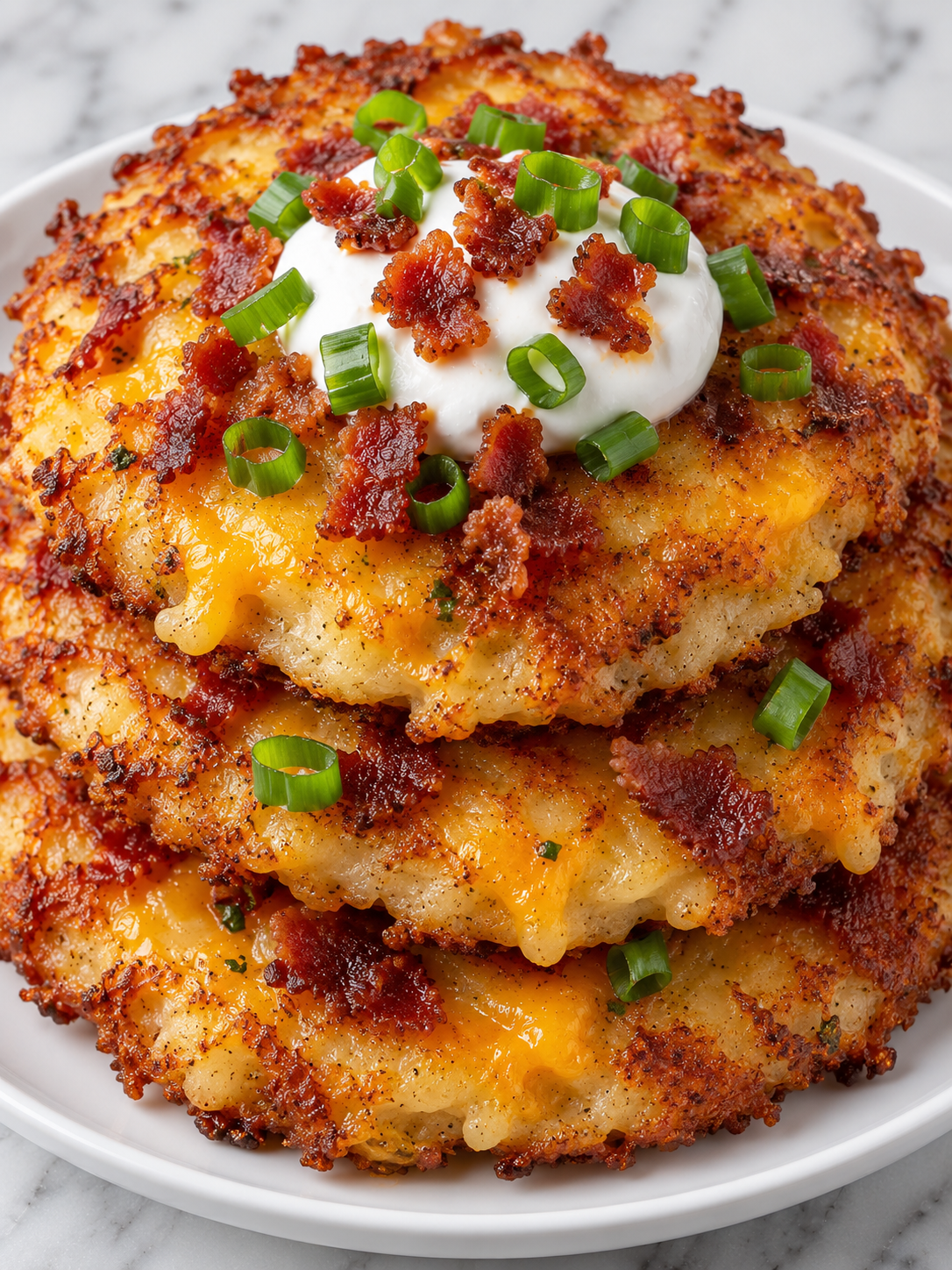
Serve these potato pancakes hot from the skillet with sour cream, applesauce, or a simple salad. They work as breakfast, lunch, or a cozy side dish.
Frequently Asked Questions
- Can I make potato pancakes with fresh mashed potatoes?
-
Yes, but chill them first if you can. Warm mashed potatoes are softer and need more flour, which can make the pancakes heavy. Spread the potatoes in a shallow dish and refrigerate until firm.
- Why are my potato pancakes falling apart?
-
The mixture is usually too loose or the pancakes are being moved too soon. Add flour one tablespoon at a time until the mixture holds a patty shape. Once the pancakes hit the skillet, let the first side brown before you flip.
- Can I leave out the bacon?
-
Yes. Use butter or olive oil for frying and add more green onion, chives, or finely chopped cooked mushrooms for savory flavor. Without bacon, the recipe can be vegetarian if your mashed potatoes are vegetarian too.
- What should I serve with potato pancakes?
-
Sour cream, applesauce, and chopped chives are the classics. For dinner, serve them with roasted vegetables, cabbage, or a simple pan-fried protein. They are rich, so something crisp or tangy on the side helps.
- How do I store and reheat leftovers?
-
Cool the pancakes, then refrigerate them in an airtight container for up to 3 days. Reheat them in a skillet or air fryer so the crust comes back. The microwave works, but the edges soften.
- Can I make these gluten-free?
-
Yes. Swap the all-purpose flour for a cup-for-cup gluten-free flour blend or use potato starch. Start with the same amount, then add a little more only if the mixture feels too soft to shape.
