
 Pin it
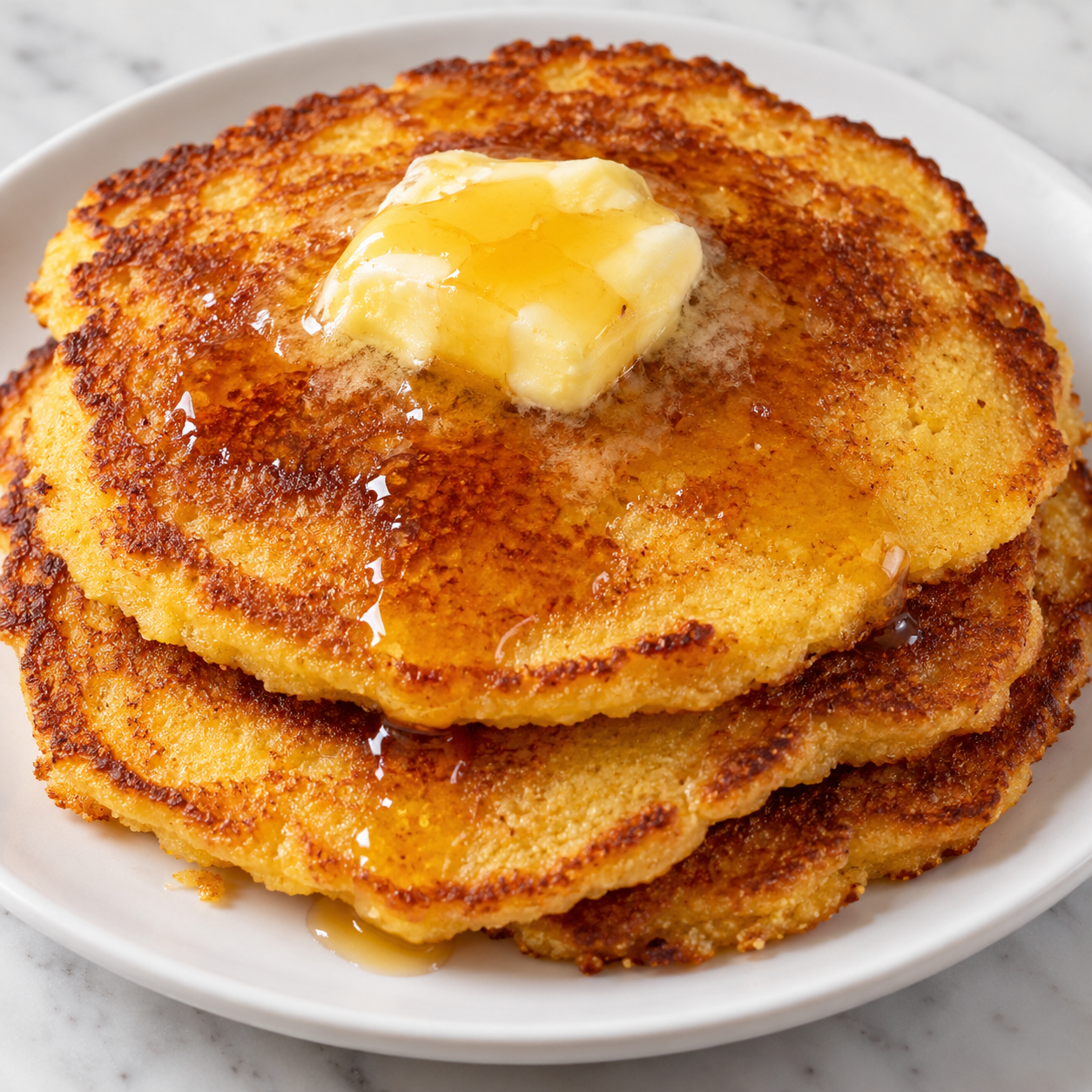
Southern Hoe Cakes, 1st Recipes style, sit somewhere between skillet cornbread and pancakes. They are small, crisp-edged, and fast enough for breakfast, but they also belong beside beans, greens, ribs, and gravy at supper.
The batter is simple. Cornmeal gives the bite, buttermilk keeps the crumb tender, and a little flour helps each cake hold together when you flip it. The pan matters too. You want a steady medium heat and enough oil to make the edges sizzle.
Cornmeal Takes The Lead
Choose yellow cornmeal with a fresh, sweet corn aroma. Fine or medium grind works best here because the cakes cook quickly and stay tender inside.
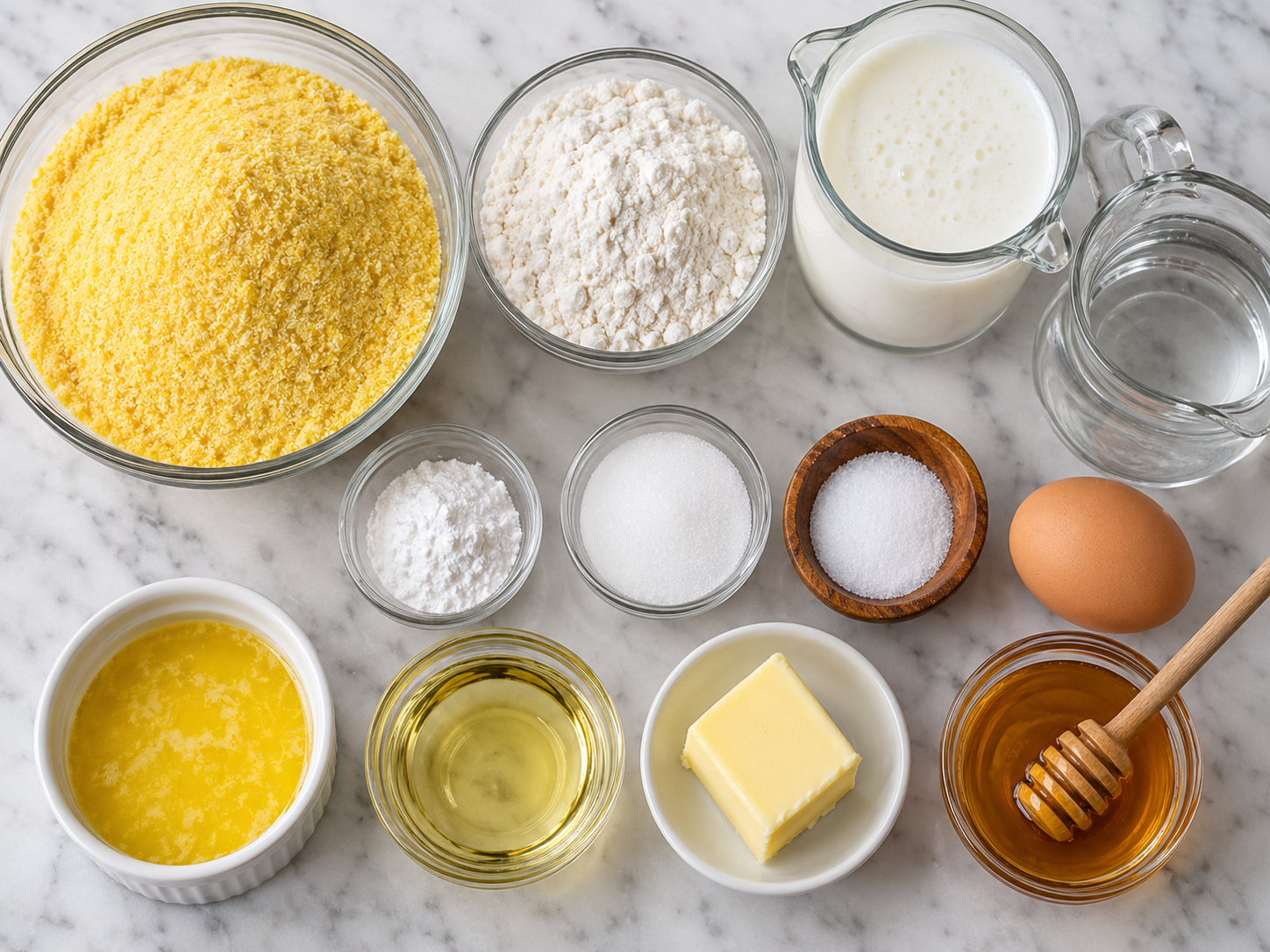
- Yellow cornmeal. Brings the main corn flavor and the lightly gritty bite that makes hoe cakes different from regular pancakes.
- All-purpose flour. Helps the cakes hold together so they flip cleanly without turning bready.
- Baking powder. Gives the batter enough lift for tender centers.
- Buttermilk. Adds tang and keeps the crumb soft against the crisp fried edges.
- Egg. Binds the batter and adds a little richness.
- Melted butter. Rounds out the corn flavor and keeps the middle moist.
- Sugar. Adds just enough sweetness to make the corn taste fuller.
- Vegetable oil or bacon grease. Fries the cakes and builds those browned, lacy edges.
Fry Them Golden
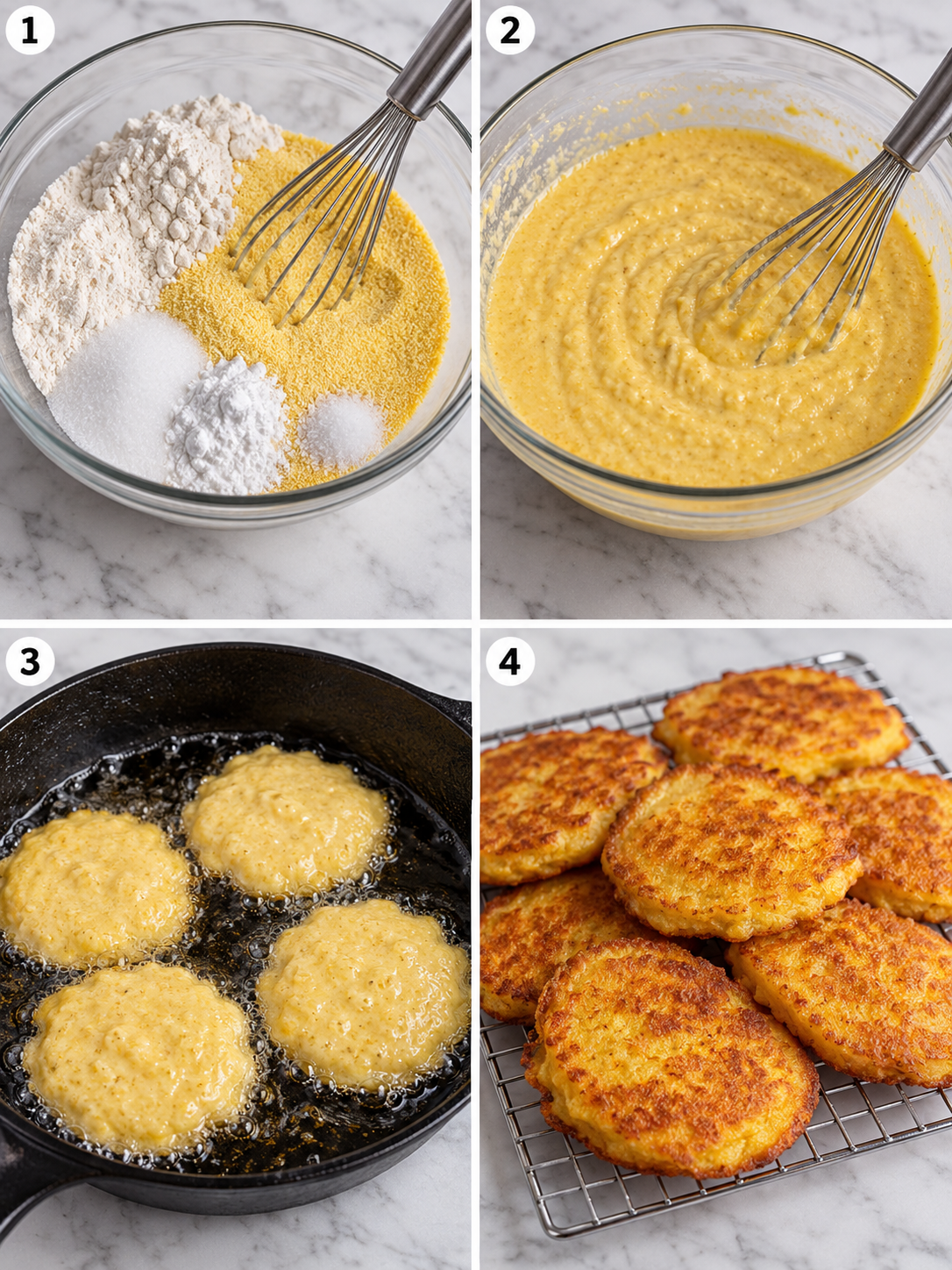
- Mix the dry bowl. Whisk cornmeal, flour, baking powder, sugar, and salt until the leavening is evenly spread through the bowl.
- Add the wet bowl. Whisk buttermilk, water, egg, and melted butter, then stir it into the dry ingredients just until no dry pockets remain.
- Rest the batter. Let it sit for 5 minutes so the cornmeal can drink up some liquid. It should be thick, spoonable, and a little rustic.
- Heat the skillet. Warm a cast-iron skillet over medium heat, then add enough oil or bacon grease to thinly coat the bottom.
- Cook in small rounds. Drop about 3 tablespoons batter per cake into the skillet. Fry until the edges set and the bottoms are deep golden, about 2-3 minutes.
- Flip and serve. Turn carefully and cook 1-2 minutes more. Drain briefly, then serve hot while the edges still crackle.
The Pan Decides The Crust
A cast-iron skillet gives hoe cakes their best edge because it holds heat when cool batter hits the pan. Medium heat is usually enough. Too high and the outside browns before the center cooks. Too low and the cakes soak up oil before they crisp.
Drop one tiny spoonful of batter in first. It should sizzle right away but not smoke. If you are making a full breakfast, fry bacon first and use a spoonful of the drippings. That smoky edge is especially good beside Sausage Gravy Recipe, 1st Recipes Style.
Keep The Batter Thick
Hoe cake batter should not pour like thin pancake batter. It should mound slightly from the spoon and spread into a 3-inch round once it hits the pan. That thickness keeps the center tender while the outside fries.
If it feels stiff after resting, add water 1 tablespoon at a time. Stop as soon as it loosens. Food Network has a richer buttermilk hoe cake variation with a short yeast rest and molasses butter, but this quick version keeps closer to a weeknight skillet bread.
You can read that variation at Food Network if you want a slower, brunch-style version.
Old Roots, Everyday Food
Hoe cakes are part of a long cornmeal bread tradition. The National Park Service notes that johnny cakes and hoe cakes were early American griddle cakes, with the word hoe tied to an old term for a griddle. That history explains why the recipe is so plain and useful.
They work with sweet toppings, but I like them most as a savory side. Put two next to Fried Cabbage with Bacon, Onion, and Garlic, or use them to catch sauce from Slow Cooker Barbequed Beef Ribs. For more background, see the National Park Service note on johnny cakes and hoe cakes.
Swaps That Cook Cleanly
No buttermilk is the easiest fix. Stir lemon juice or vinegar into milk and wait a few minutes before using it. For a sweeter breakfast cake, increase the sugar to 2 tablespoons and serve with honey butter. For a savory batch, fold in 2 tablespoons minced scallions, a pinch of cayenne, or a handful of cooked crumbled bacon.
Gluten-free flour blends can work, but the cakes will be more delicate. Make them smaller and flip with a thin spatula. If you are serving a big Southern-style spread, these also fit beside Roasted Carrots, Potatoes & Onions when you want a quick bread instead of rolls.
Store And Recrisp
Leftover hoe cakes lose their snap once they sit, but they come back well with dry heat. Cool them on a rack, then store in an airtight container in the fridge. The USDA says cooked leftovers are best used within 3-4 days, and you can check its leftovers and food safety guidance for the full storage advice.
To reheat, use a 375 F oven or a dry skillet for 5-8 minutes. Skip the microwave if crisp edges matter. It warms the middle, but the crust turns soft.
Frequently Asked Questions
- What are Southern hoe cakes?
-
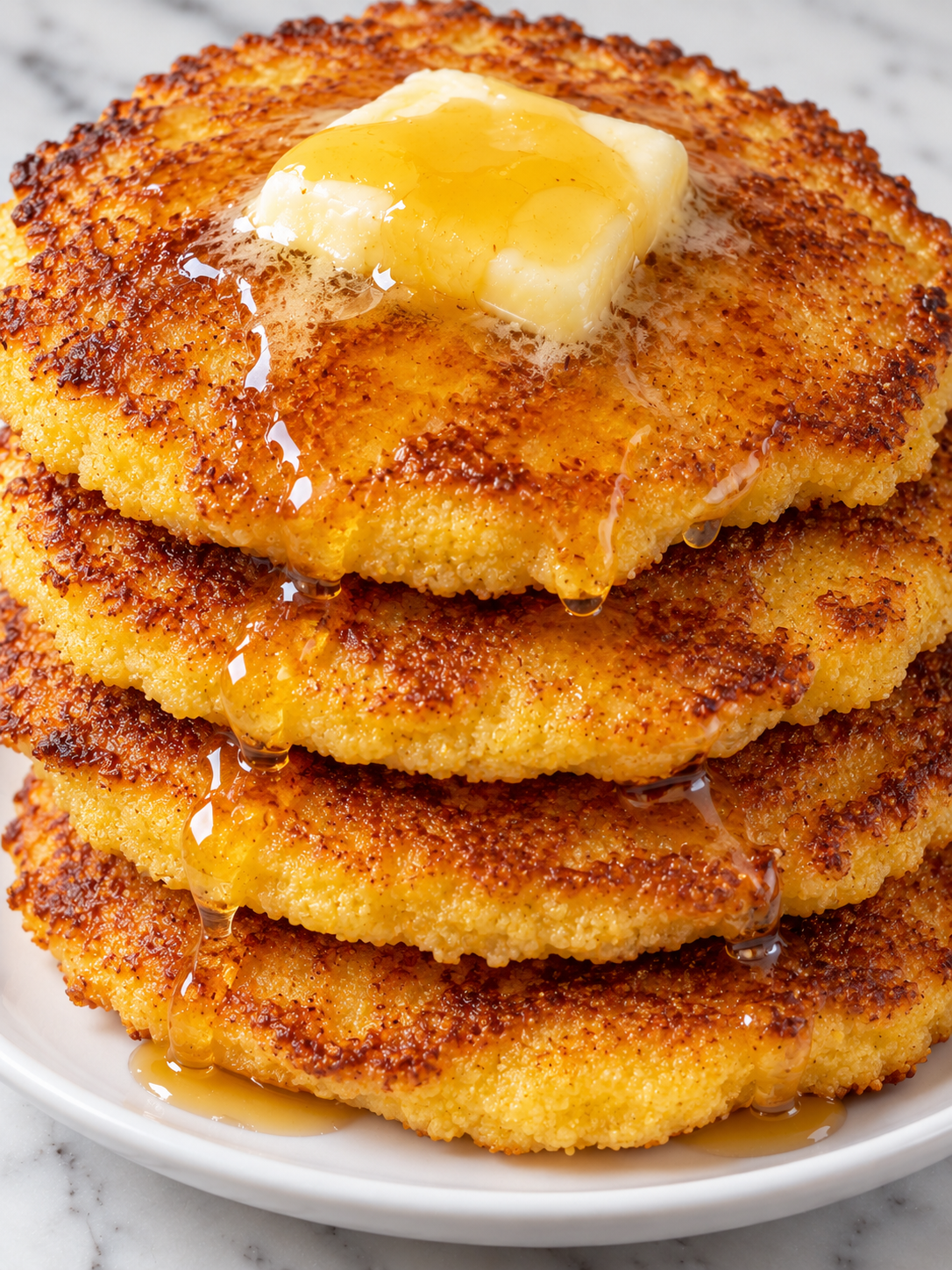
Southern hoe cakes are small cornmeal cakes cooked on a hot skillet or griddle. They are thinner and quicker than baked cornbread, with crisp browned edges and a soft center.
- Can I make hoe cakes without buttermilk?
-
Yes. Use 1 cup whole milk mixed with 1 tablespoon lemon juice or white vinegar, then let it stand for 5 minutes. The flavor will be a little milder, but the batter will still cook well.
- Why are my hoe cakes falling apart?
-
The batter may be too wet, the pan may be too cool, or the cakes may have been flipped too early. Let the edges look set and the top show a few bubbles before sliding the spatula underneath.
- Can I use self-rising cornmeal mix?
-
You can. If your mix already contains flour, salt, and leavening, skip the flour, baking powder, and salt in this recipe. Add liquid slowly until the batter is thick but spoonable.
- How do I store leftover hoe cakes?
-
Cool them fully, then refrigerate in an airtight container for up to 3 days. Reheat in a dry skillet, toaster oven, or 375 F oven until the edges crisp again.
- What do you serve with hoe cakes?
-
For breakfast, serve them with butter, honey, syrup, or sausage gravy. For dinner, use them like a cornbread side with beans, greens, fried cabbage, roasted vegetables, or saucy meats.
- Can I make the batter ahead?
-
You can mix the dry ingredients ahead and whisk the wet ingredients just before cooking. Fully mixed batter can rest in the fridge for a few hours, but it may thicken as the cornmeal hydrates, so loosen it with a spoonful of water if needed.
