
 Pin it
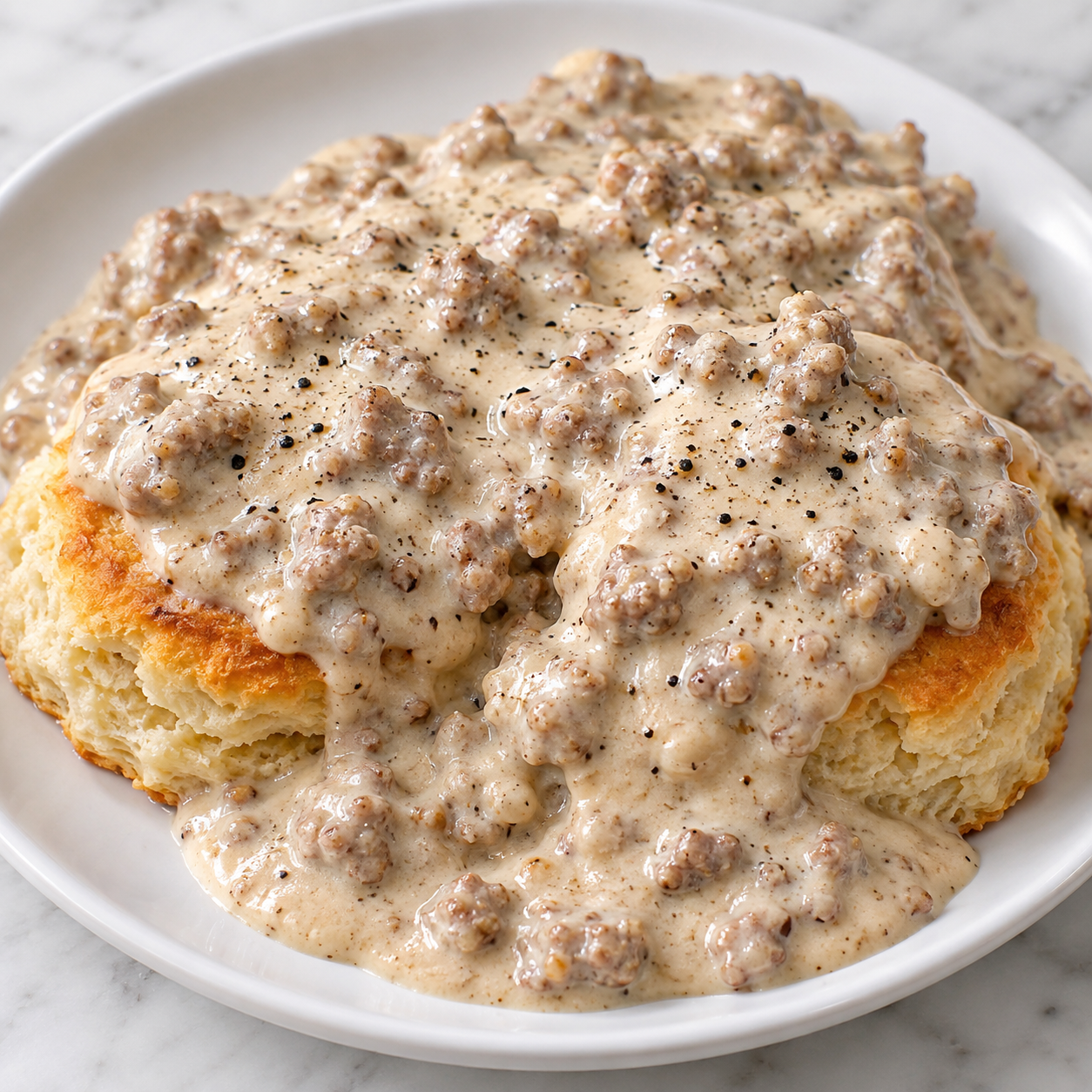
This sausage gravy recipe is the kind of breakfast that makes the kitchen smell like a small-town diner. It starts with browned breakfast sausage and ends with a creamy, peppery gravy that clings to every flaky edge of a biscuit.
The method is simple, but the order matters. Cook the sausage until it leaves browned bits in the pan, let the flour taste cook out, then add the milk in stages so the gravy stays smooth instead of pasty.
What Builds The Gravy
Use a breakfast sausage you already like because its seasoning becomes the backbone of the gravy. Whole milk gives the sauce body without making it heavy, and fresh black pepper keeps the flavor from tasting flat.

- Breakfast sausage. Mild pork sausage brings the savory fat, seasoning, and browned bits that make the gravy taste slow-cooked.
- All-purpose flour. It thickens the sausage drippings into a smooth roux when cooked for a minute before the milk goes in.
- Whole milk. It turns the roux into a creamy white gravy with enough richness to spoon over biscuits.
- Butter. A small backup for lean sausage, it gives the flour enough fat to absorb cleanly.
- Garlic powder. It adds a gentle savory note without competing with the sausage.
- Black pepper. Sausage gravy should be peppery, so grind it fresh if you can.
- Biscuits. Warm split biscuits catch the gravy in their layers and make the plate feel complete.
Sausage Gravy Recipe Method
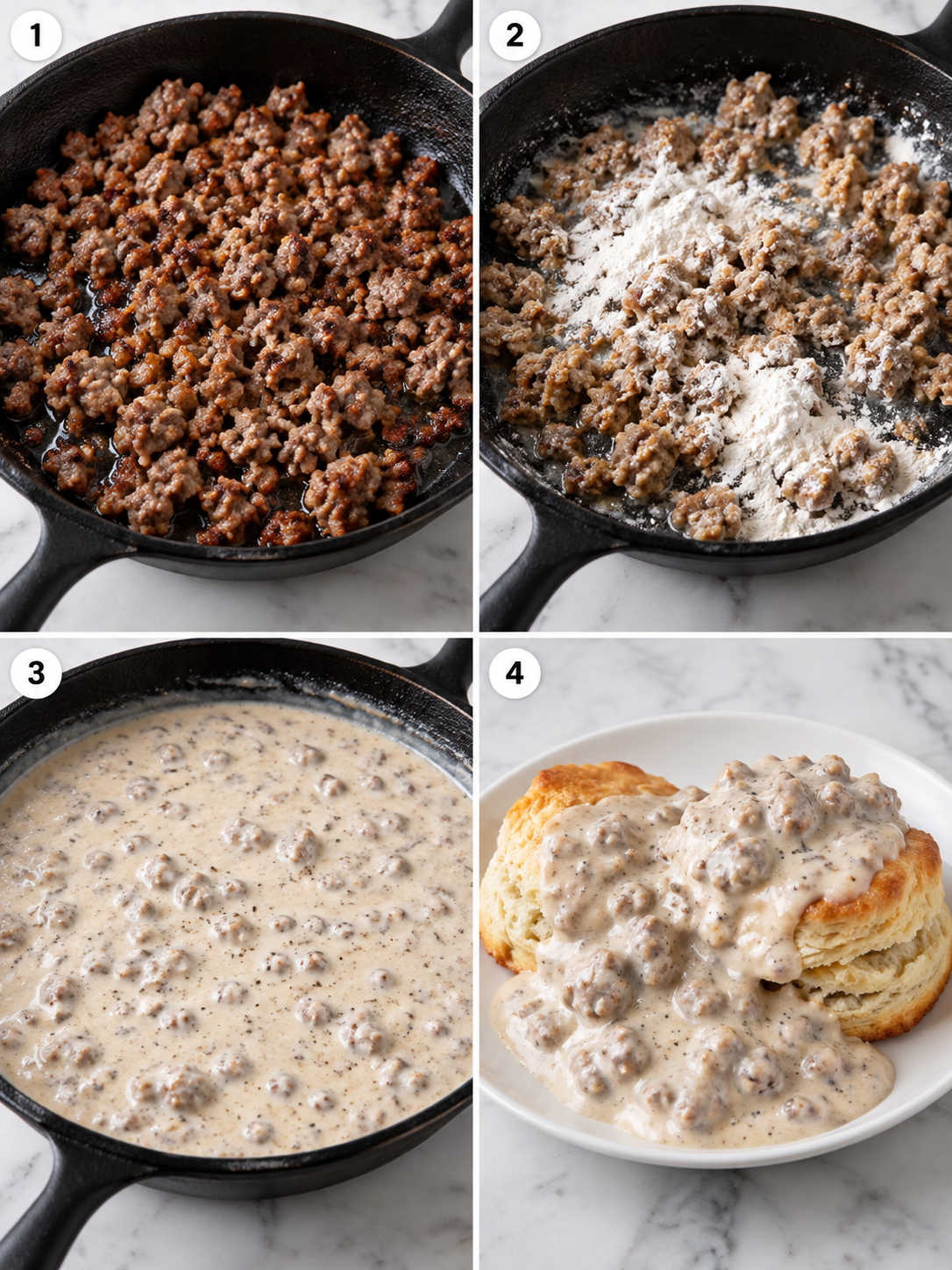
- Brown the sausage. Cook it in a wide skillet over medium to medium-high heat, breaking it into small crumbles until no pink remains and the edges look browned.
- Check the fat. You need about 2 tablespoons of drippings in the skillet. If the pan looks dry, add butter and let it melt before adding flour.
- Cook the flour. Sprinkle the flour over the sausage and stir for about 1 minute, until the meat looks lightly coated and no dry patches remain.
- Whisk in the milk. Pour in the milk slowly, starting with a small splash and stirring until smooth before adding the rest.
- Simmer until creamy. Lower the heat and cook for 3-5 minutes, stirring often, until the gravy thickens enough to coat a spoon.
- Season and serve. Stir in garlic powder, black pepper, and salt to taste. Spoon the hot gravy over warm split biscuits right away.
Brown First, Then Thicken
The best flavor in this gravy comes before the milk ever touches the pan. Let the sausage sit against the hot skillet long enough to brown in spots. Those browned bits dissolve into the milk and make the gravy taste deeper than the short cook time suggests.
Once the sausage is cooked, the flour needs a minute in the fat. Stir until the crumbles look dusty and the flour smell softens. That short cook removes the raw edge and helps prevent lumps. Food Network uses the same basic skillet rhythm for white sausage gravy, browning the sausage first and then cooking flour in the fat before adding milk in its white sausage gravy method.
Milk Makes The Texture
Whole milk is the easiest choice here. It thickens into a soft, creamy gravy and still tastes like sausage instead of cream sauce. Add it slowly at the start. The first splash will look too thick, almost like paste, but that is normal. Keep stirring and add more milk only after the first bit turns smooth.
If the gravy tightens as it sits, do not panic. Sausage gravy thickens quickly off the heat because the flour keeps absorbing liquid. Whisk in warm milk until it looks pourable again. The same trick works for leftover Perfect Turkey Gravy, although sausage gravy is usually thicker and more rustic.
Season After It Simmers
Breakfast sausage can be salty, especially if it is highly seasoned or comes from a tube. Taste after the gravy simmers, not before. The milk dulls the salt at first, then the flavor settles as the gravy thickens. Add black pepper early and late if you like that classic speckled country gravy look.
Garlic powder is useful in this 1st Recipes style version because it melts into the gravy without adding little pieces of fresh garlic. Sage sausage also works well. Hot sausage gives the gravy a gentle kick without needing cayenne. If you are cooking for a bigger comfort-food breakfast, this sits naturally beside Yorkshire Puddings 1st Recipes Style or a pan of fried cabbage with bacon, onion, and garlic.
Make It Fit Your Kitchen
For a richer gravy, replace 1/2 cup of the milk with half-and-half. For a lighter batch, use 2 percent milk and keep the simmer gentle. Turkey sausage works, but add butter because it does not render like pork. Gluten-free measure-for-measure flour can thicken the gravy, though the finish may be slightly less silky.
You can serve the gravy beyond biscuits too. Spoon it over hash browns, grits, toast, scrambled eggs, or leftover mashed potatoes. If your meal is leaning cozy and hearty, pair it with Creamy Italian Sausage Tortellini Soup later in the week to use up another pack of sausage.
Store And Reheat Gently
Cool leftover sausage gravy, then refrigerate it in a covered container for up to 3 days. Reheat it on the stovetop over low heat. Add milk a splash at a time and stir until the gravy relaxes back into a creamy sauce.
For food safety, cook ground sausage fully before building the gravy. USDA guidance lists ground meats at 160°F on its safe minimum temperature chart. With crumbled sausage, look for browned pieces with no pink spots, and use a thermometer if you are checking larger chunks.
Summary
Keep the heat steady, whisk the milk in slowly, and season after the sausage has simmered in the gravy. That is how you get rich country-style sausage gravy without lumps or a raw flour taste.
Frequently Asked Questions
- Can I make sausage gravy ahead of time?
-
Yes. Make it up to 2 days ahead and refrigerate it in an airtight container. Reheat it slowly in a skillet or saucepan with a splash of milk, stirring often until it loosens and turns creamy again.
- Why did my sausage gravy turn lumpy?
-
Lumps usually happen when milk is poured in too fast or the flour is not fully stirred into the sausage fat. Add the milk in small splashes at first and whisk until smooth before adding more. If lumps remain, keep whisking over low heat and thin with a little milk.
- Can I use turkey sausage instead of pork sausage?
-
Yes, but turkey sausage is leaner and may not leave enough drippings for the roux. Add 1-2 tablespoons of butter before stirring in the flour. The flavor will be lighter, so use plenty of black pepper and taste for salt near the end.
- What kind of milk works best for sausage gravy?
-
Whole milk gives the best balance of creamy texture and clean dairy flavor. Two percent milk works, but the gravy will be a little thinner. Avoid skim milk unless you plan to add a small pat of butter for richness.
- How thick should sausage gravy be?
-
It should coat a spoon and slowly settle over a biscuit without running like soup. If it gets too thick, whisk in warm milk a few tablespoons at a time. If it is too thin, simmer it for another minute or two while stirring.
- What can I serve with biscuits and sausage gravy?
-
Eggs, roasted potatoes, fruit salad, and hot coffee all fit well. For a bigger brunch table, add something sharp or fresh to balance the richness, such as marinated tomatoes or roasted vegetables.
