
 Pin it
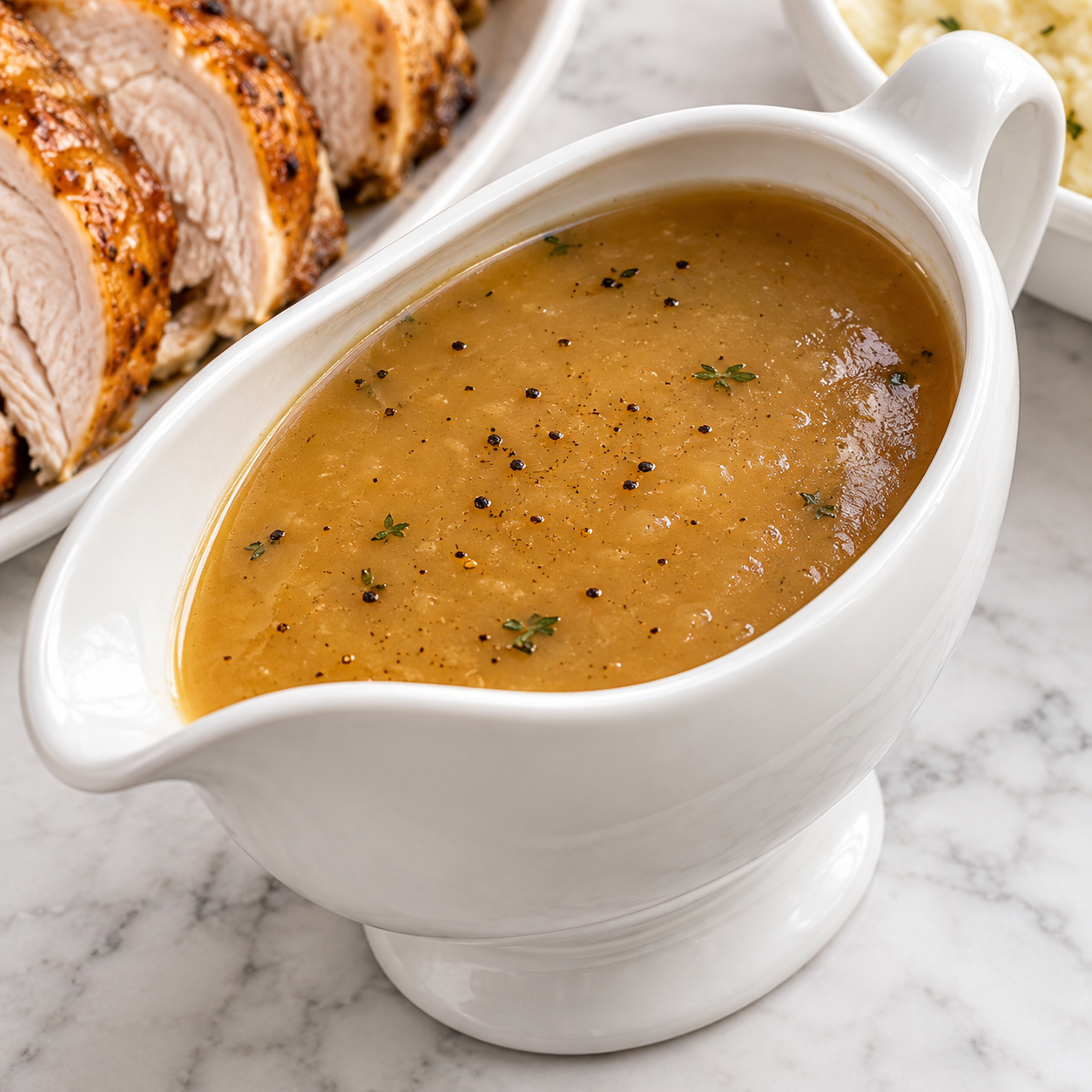
Perfect Turkey Gravy starts with the good stuff left in the roasting pan. Those browned bits and juices give the gravy a deep roasted flavor that plain broth cannot quite copy.
This version is built to work on a busy holiday. You can make it with turkey drippings, stretch it with stock, or make the whole thing from broth if the pan comes up short.
Turkey Gravy Building Blocks
Good gravy starts with well-seasoned drippings, a measured roux, and warm stock. Taste the drippings before adding salt because a brined turkey can make the pan juices salty.
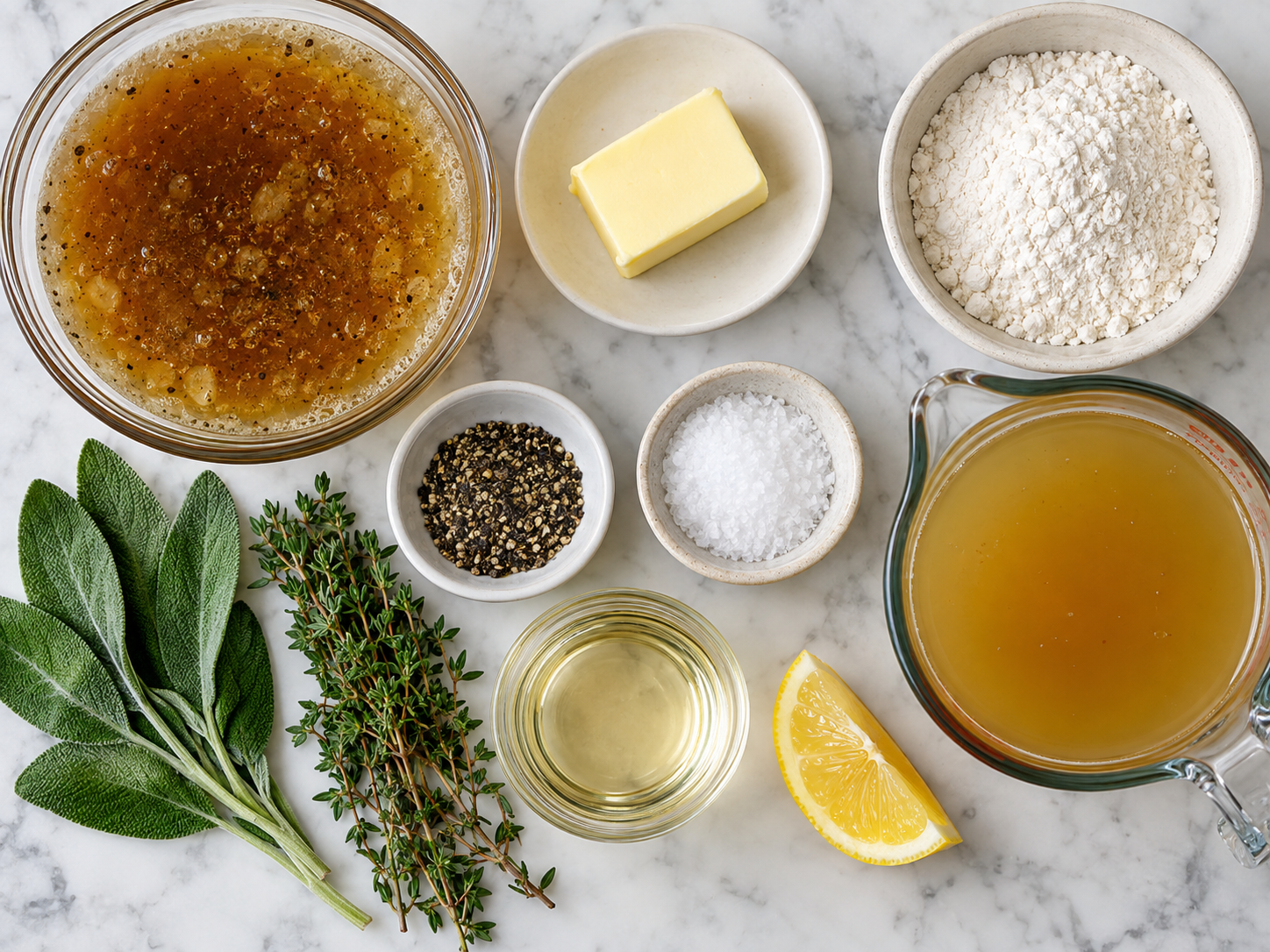
- Turkey drippings. They bring the roasted flavor and browned pan bits that make the gravy taste like the holiday meal.
- Turkey fat or butter. This is the fat for the roux. Use skimmed turkey fat first, then add butter if you are short.
- All-purpose flour. It thickens the gravy and gives it a silky body once cooked with the fat.
- Turkey or chicken stock. Warm stock stretches the drippings and gives you enough gravy for the table.
- Black pepper. Freshly cracked pepper cuts through the richness without making the gravy spicy.
- Fresh sage or thyme. A small amount adds a classic turkey-dinner aroma.
- Dry white wine. Optional, but useful for loosening browned bits from the roasting pan.
Whisk It Smooth
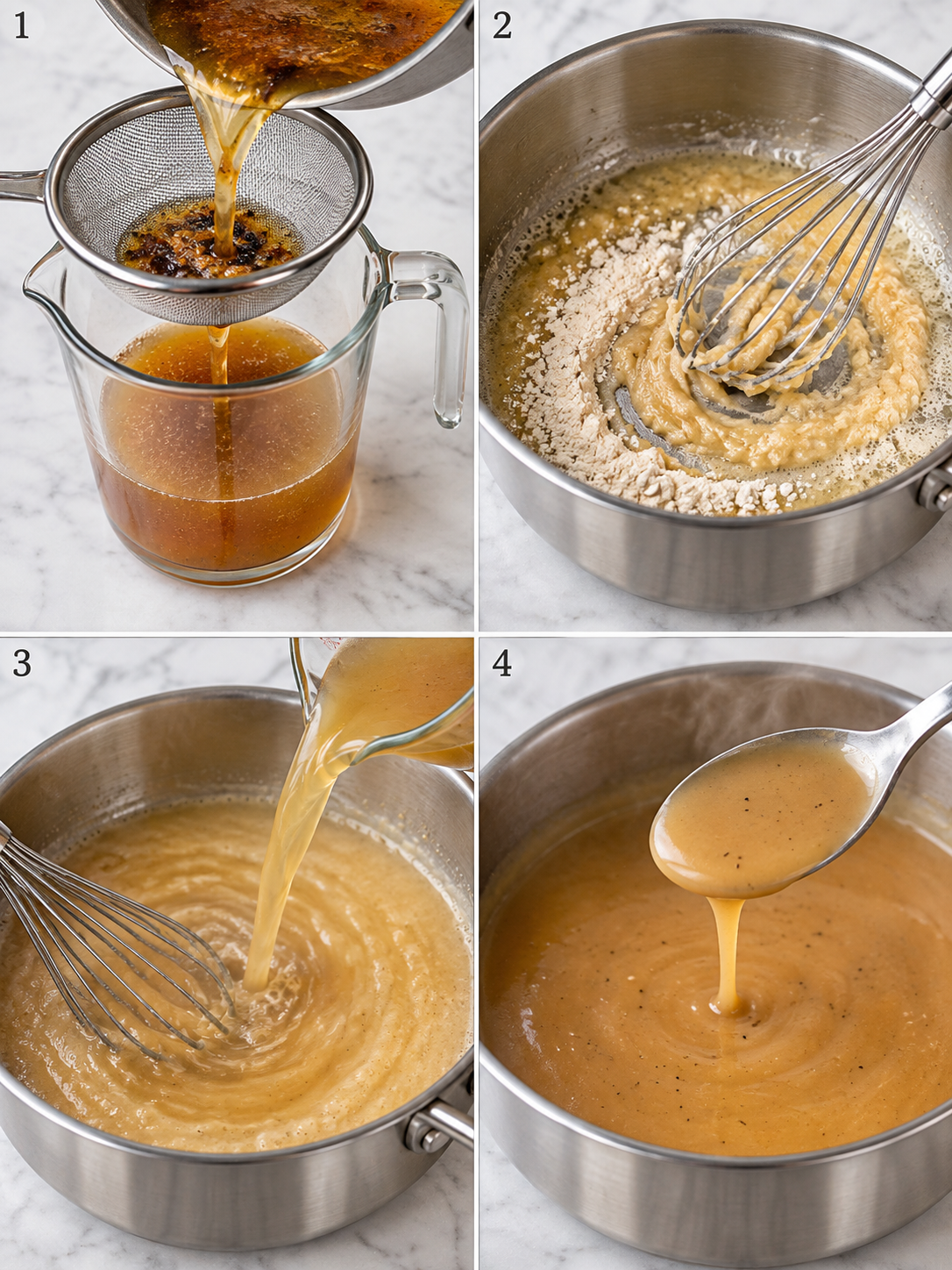
- Separate the drippings. Pour the pan juices through a fine-mesh sieve into a fat separator or measuring cup. Let the fat rise, then measure out 1/2 cup fat for the roux.
- Build the liquid. Measure the defatted drippings. Add enough warm turkey or chicken stock to make 4 cups total liquid.
- Cook the roux. Melt the turkey fat or butter in a saucepan over medium heat. Whisk in the flour and cook for 3-4 minutes until it smells toasty and looks light golden.
- Add liquid slowly. Whisk in the warm dripping-stock mixture a little at a time. Start with small splashes so the roux loosens smoothly.
- Simmer and season. Simmer 8-10 minutes, whisking often, until the gravy coats the back of a spoon. Add pepper, herbs, and salt only after tasting.
- Strain and serve. Pour through a fine sieve for extra-smooth gravy, then keep warm over very low heat until dinner is ready.
Perfect Turkey Gravy Timing
Start the gravy after the turkey comes out of the oven. The bird needs to rest, and that gives you a clean window to collect drippings, cook the roux, and bring everything together. The USDA notes that turkey should rest before carving, and its turkey safe-cooking guide is a useful check for holiday timing.
If your table has a lot of sides, make gravy last. It tastes best hot and loose. It also thickens as it sits, so keep extra warm stock nearby. This gravy fits right beside cozy mains like Soupe Potatoes and Chicken when you want the same comfort outside Thanksgiving.
Why The Roux Matters
A roux is just fat and flour cooked together, but measuring it matters. Equal amounts of fat and flour make gravy that is thick enough for mashed potatoes without turning pasty. The Kitchn explains this classic turkey gravy roux method clearly.
Do not rush the roux. Raw flour tastes dusty and dull. Give it a few minutes over medium heat until it bubbles and smells nutty. If it gets dark brown, the gravy will taste toasted and stronger. For turkey dinner, light golden is the safer place to stop.
Drippings Without Grease
The best drippings have two parts. The fat rises to the top and the darker juices settle underneath. Use the fat for the roux, then use the darker juices as part of the liquid. If you pour everything in together, the gravy can taste slick.
A fat separator is handy, but a glass measuring cup works too. Let the drippings stand for 10 minutes, then skim with a spoon. If the turkey was heavily brined, dilute the drippings with low-sodium stock before seasoning. Save desserts like Pecan Cheesecake Squares and Homemade Lemon Meringue Pie for after the salty parts of the meal are balanced.
Fixes For Common Gravy Problems
Too thick is easy. Whisk in warm stock a splash at a time until the gravy pours cleanly. Too thin needs heat and patience. Simmer it uncovered so some water evaporates, or whisk in a small flour slurry and cook it long enough to lose the raw taste.
Lumps are not a disaster. Strain the gravy, whisk hard, or use an immersion blender for a few seconds. Greasy gravy means too much fat made it past the separator. Skim the surface with a spoon, or blot lightly with a plain paper towel. Do this gently so you do not pull away all the flavor.
Storing And Reheating Gravy
Cool leftover gravy in a shallow container and refrigerate it promptly. The USDA says gravy can be stored in the refrigerator for 3-4 days, or frozen for longer storage.
Reheat gravy in a saucepan over medium-low heat, whisking often. Add stock or water if it looks too tight. Bring it to a full boil before serving leftovers. For more poultry storage habits, the same careful cooling idea shows up in How to Store Cooked Chicken Safely.
Frequently Asked Questions
- Can I make Perfect Turkey Gravy without drippings?
-
Yes. Use turkey stock or low-sodium chicken stock for the liquid and butter for the fat. It will be lighter than drippings gravy, but fresh herbs, black pepper, and a tiny splash of vinegar help it taste finished.
- Why is my turkey gravy lumpy?
-
Lumps usually happen when liquid goes into the roux too fast or the liquid is cold. Whisk in warm stock slowly at first. If lumps still show up, strain the gravy through a fine-mesh sieve or blend it briefly with an immersion blender.
- How do I thicken turkey gravy?
-
Simmer it uncovered for a few extra minutes, whisking often. For a faster fix, mix 1 tablespoon flour with 2 tablespoons cool stock until smooth, then whisk that into the simmering gravy and cook until the raw flour taste is gone.
- How do I fix gravy that is too salty?
-
Add unsalted stock in small splashes until the salt settles down. If the gravy gets too thin, simmer it longer. A spoonful of unsalted mashed potato can also soften saltiness while adding body.
- Can I make turkey gravy ahead?
-
You can make the roux and stock base up to 2 days ahead, then whisk in hot turkey drippings right before serving. Reheat gently and whisk well. Add a little stock if it thickens too much in the refrigerator.
- Is turkey gravy gluten-free?
-
This recipe uses all-purpose flour, so it is not gluten-free as written. For a gluten-free version, skip the flour roux and thicken the hot stock with a cornstarch slurry instead. Use about 1 tablespoon cornstarch mixed with 1 tablespoon cold water per cup of liquid.
- What should I serve with turkey gravy?
-
Serve it with roast turkey, mashed potatoes, stuffing, biscuits, or roasted vegetables. Leftover gravy is also excellent over turkey sandwiches or spooned into pot pie filling.
