
 Pin it
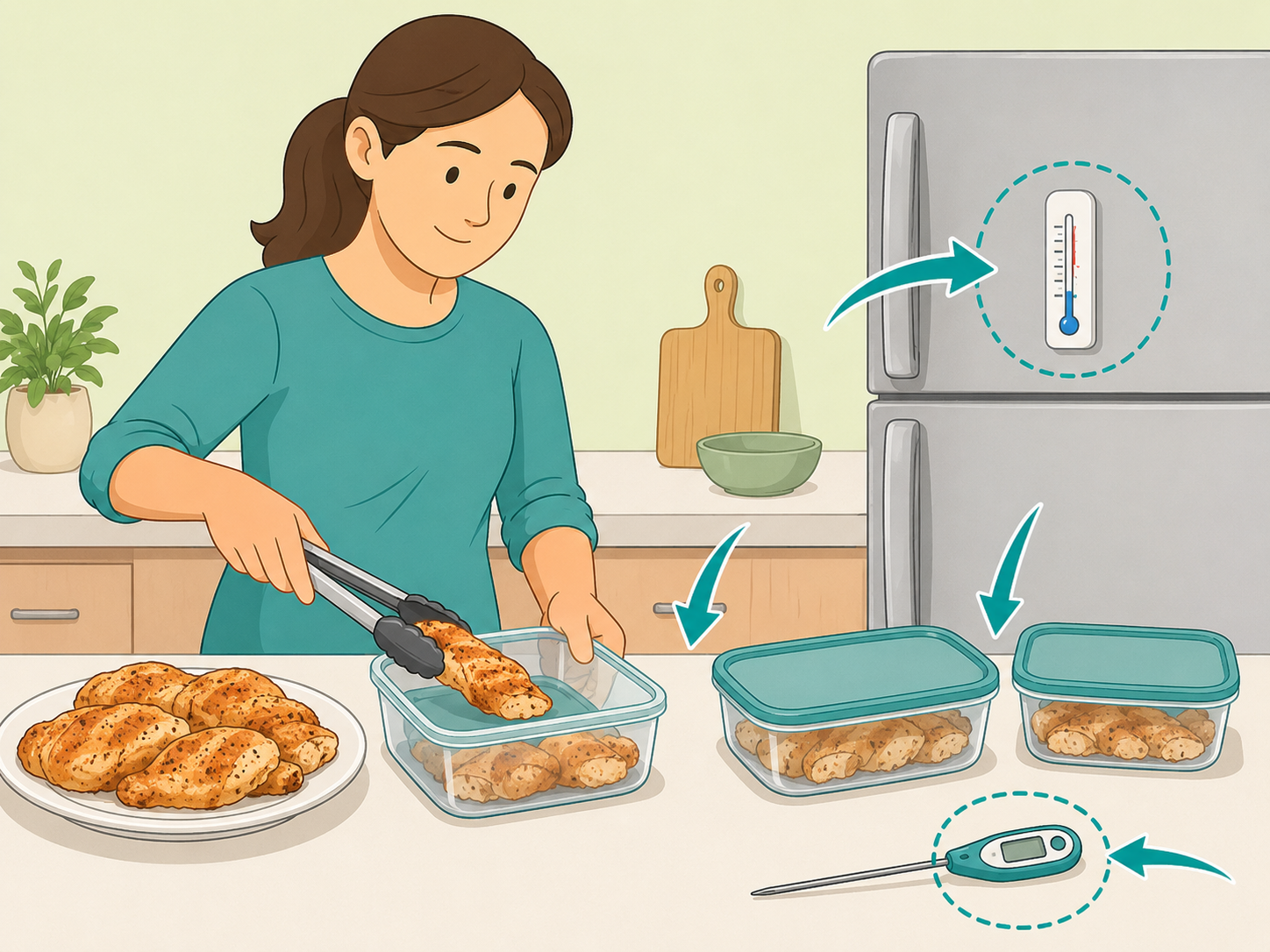
Cooked chicken is convenient for leftovers and meal prep, but it still needs careful storage after it leaves the stove, oven, grill, or restaurant. Germs can grow when cooked food sits too long at room temperature, and unsafe leftovers can cause food poisoning. This guide shows you how to cool, store, reheat, and discard cooked chicken safely.
Refrigerate cooked chicken within 2 hours
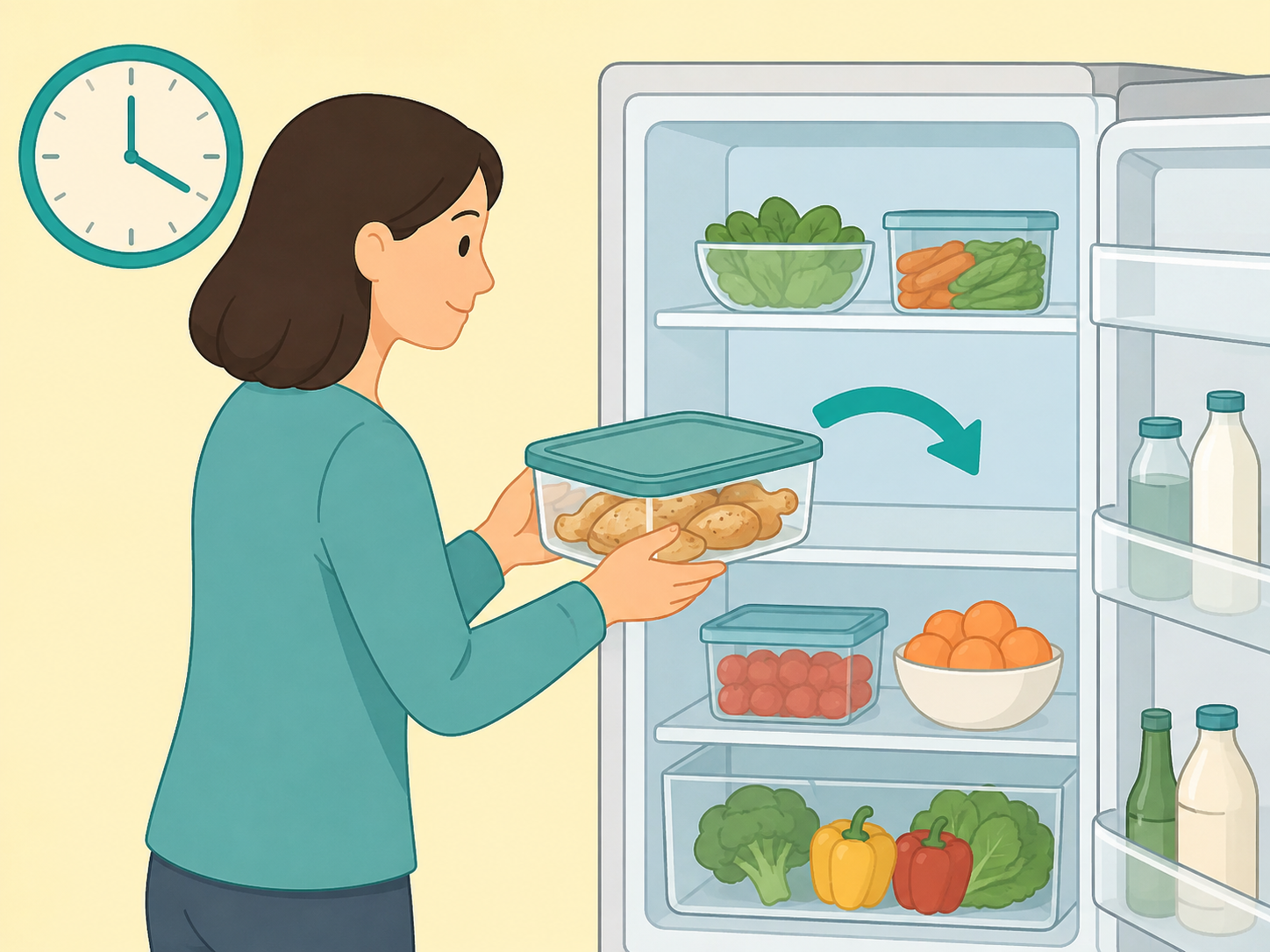
Put cooked chicken in the refrigerator or freezer within 2 hours of cooking, serving, or bringing it home. If the chicken has been in temperatures above 90°F, such as at a picnic or in a hot car, refrigerate it within 1 hour, as the CDC advises for leftover chicken.
Divide large portions into shallow containers
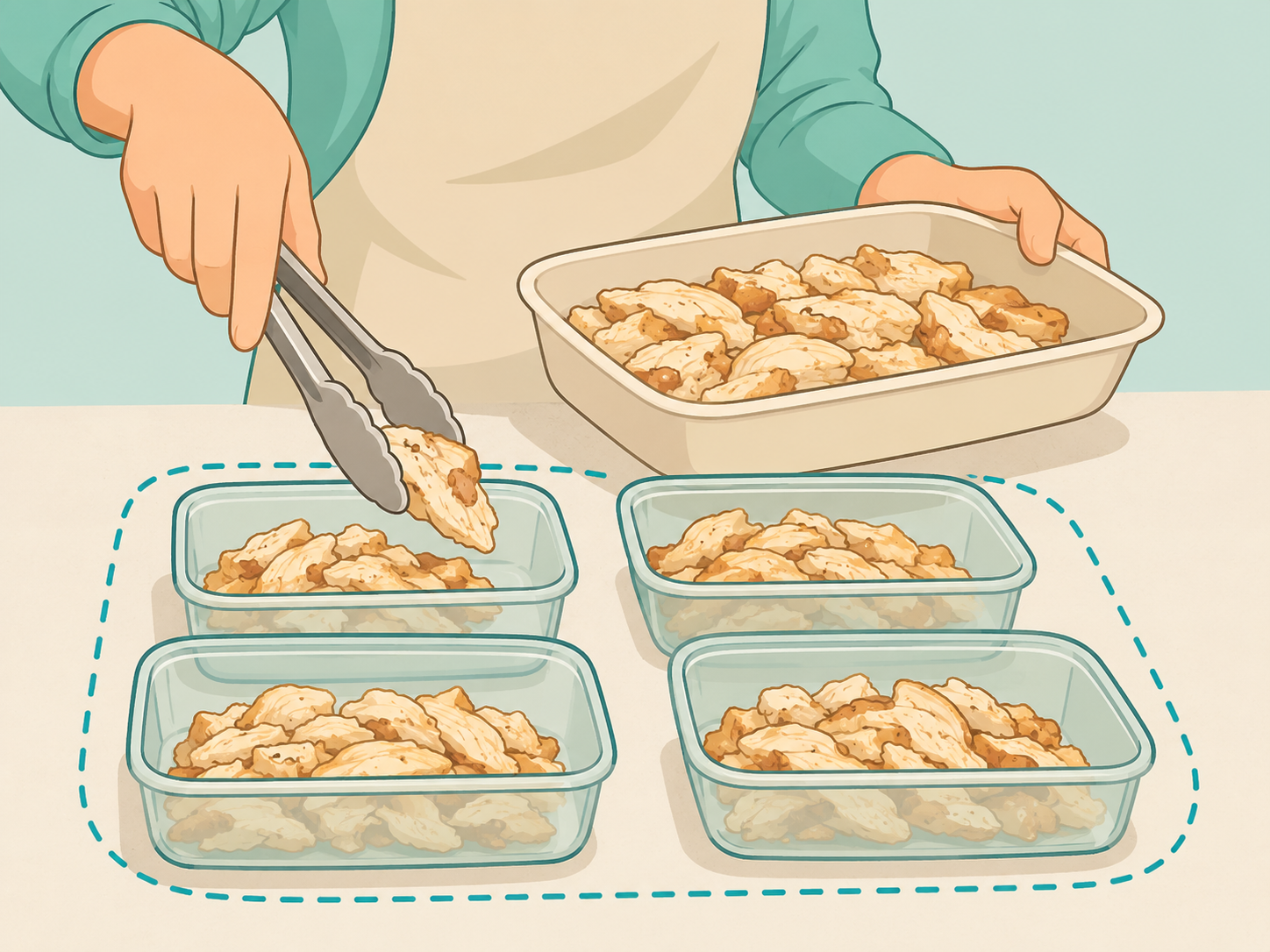
Move large batches, whole pieces, or meal-prep portions into clean shallow containers so the chicken cools evenly. The CDC recommends shallow containers for warm or hot leftovers because smaller portions chill faster in the refrigerator.
Keep your refrigerator at 40°F or below
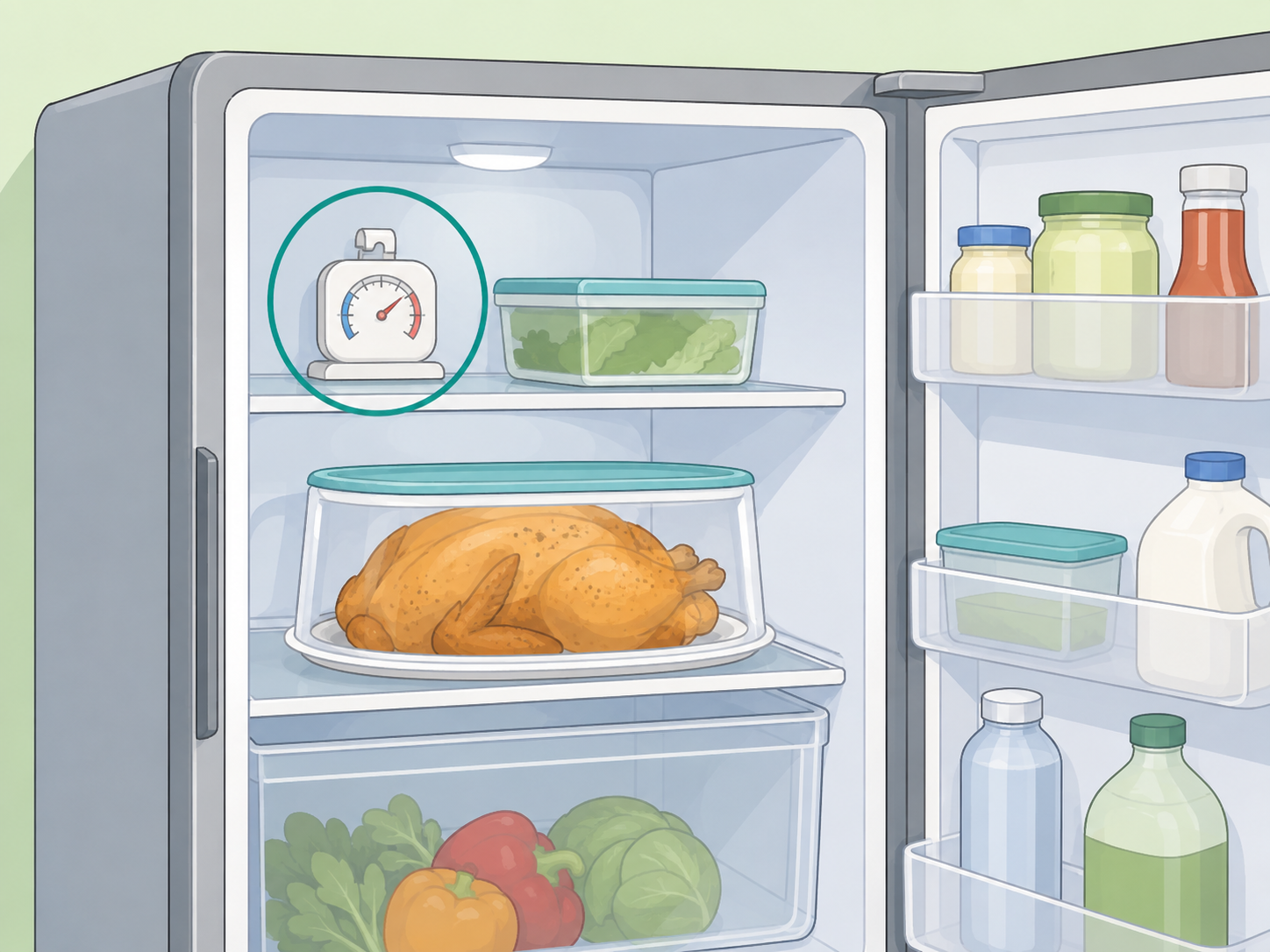
Store cooked chicken in a refrigerator set to 40°F or below, and keep the freezer at 0°F or below. Bacteria can multiply rapidly between 40°F and 140°F, often called the danger zone, according to CDC food safety guidance.
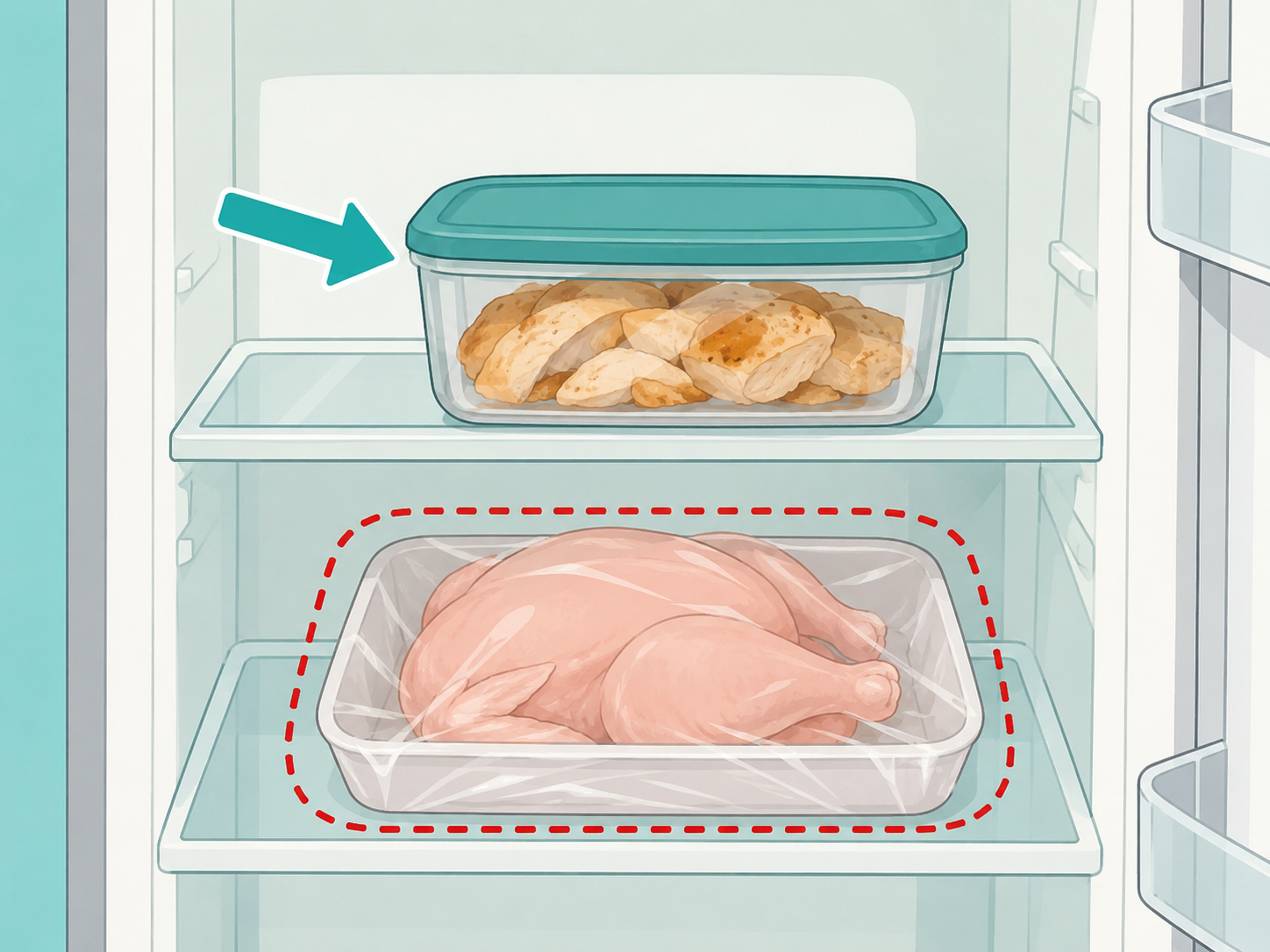
Cover and separate the chicken before storing
Use a covered container, foil, or a sealed food-storage bag to keep cooked chicken from drying out and from picking up drips or crumbs from other foods. Keep it away from raw poultry and raw meat, since separating raw foods from ready-to-eat foods helps prevent cross-contamination.
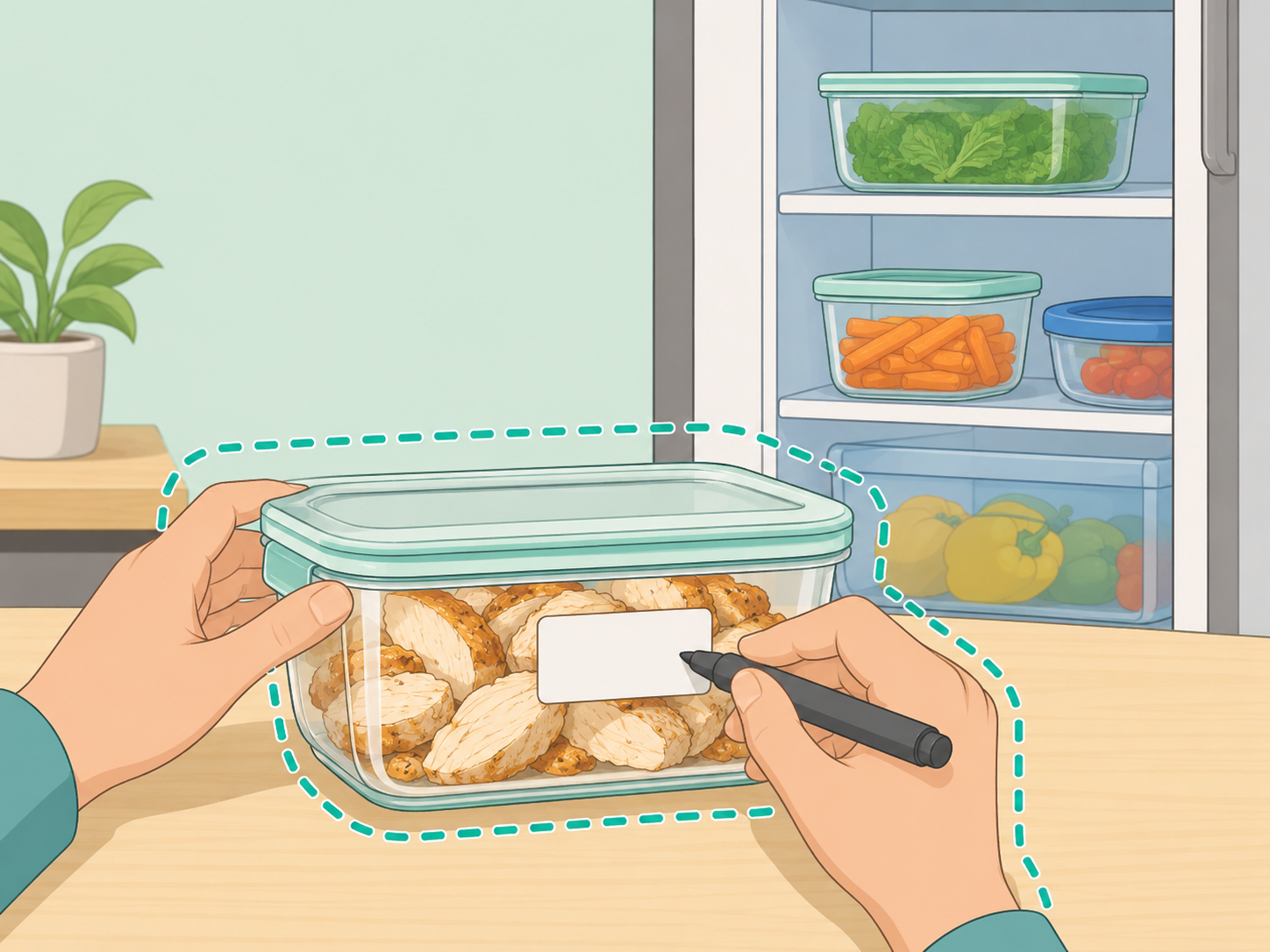
Use refrigerated cooked chicken within 3 to 4 days
Plan to eat refrigerated cooked chicken within 3 to 4 days. The FoodSafety.gov cold storage chart lists cooked meat and poultry leftovers at 3 to 4 days in a refrigerator at 40°F or below.
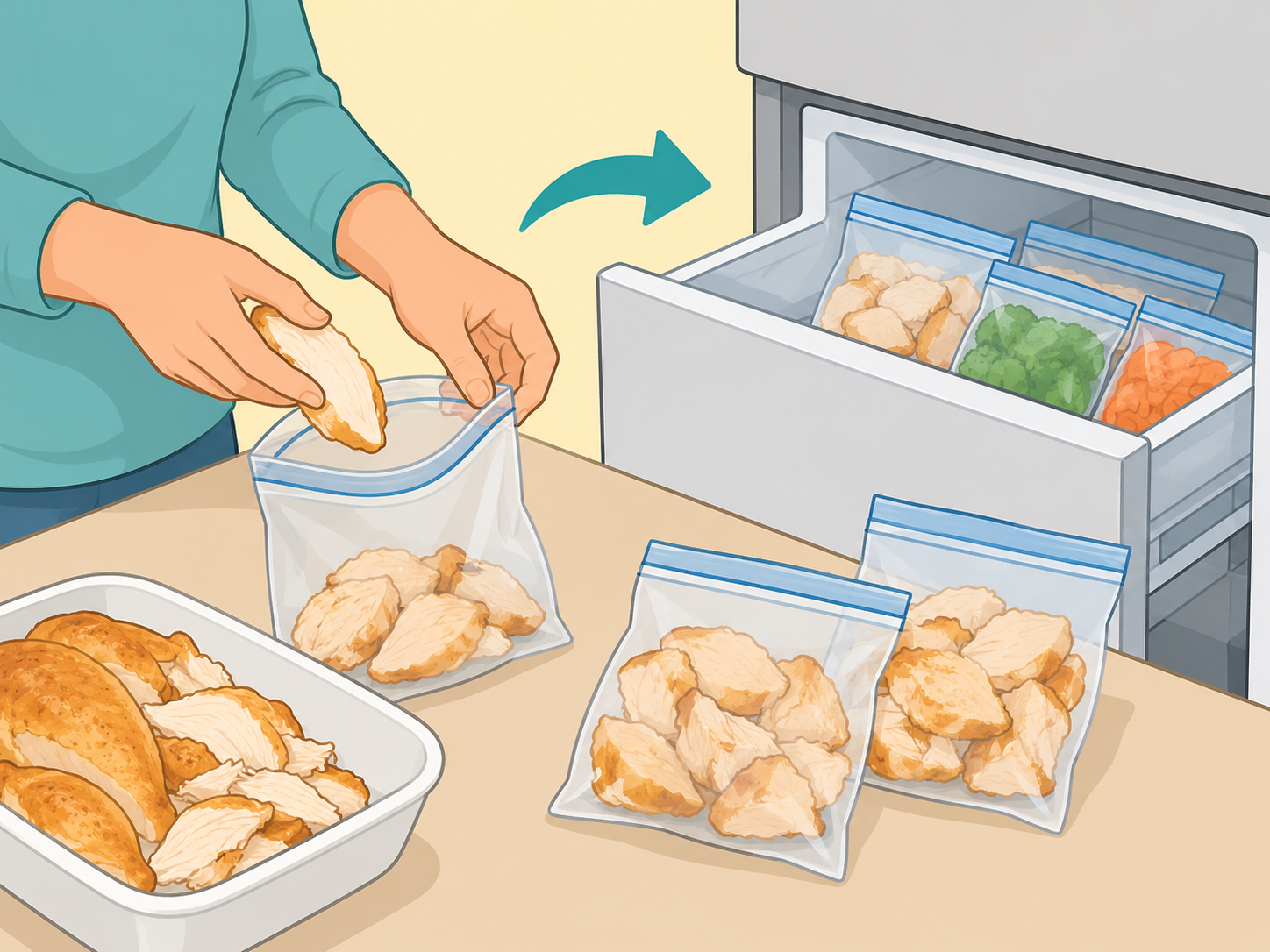
Freeze chicken you will not eat soon
If you will not use the chicken within a few days, freeze it in airtight portions while it is still within the safe refrigerator window. FoodSafety.gov notes that freezer storage times are mainly for quality when food stays continuously frozen at 0°F or below.
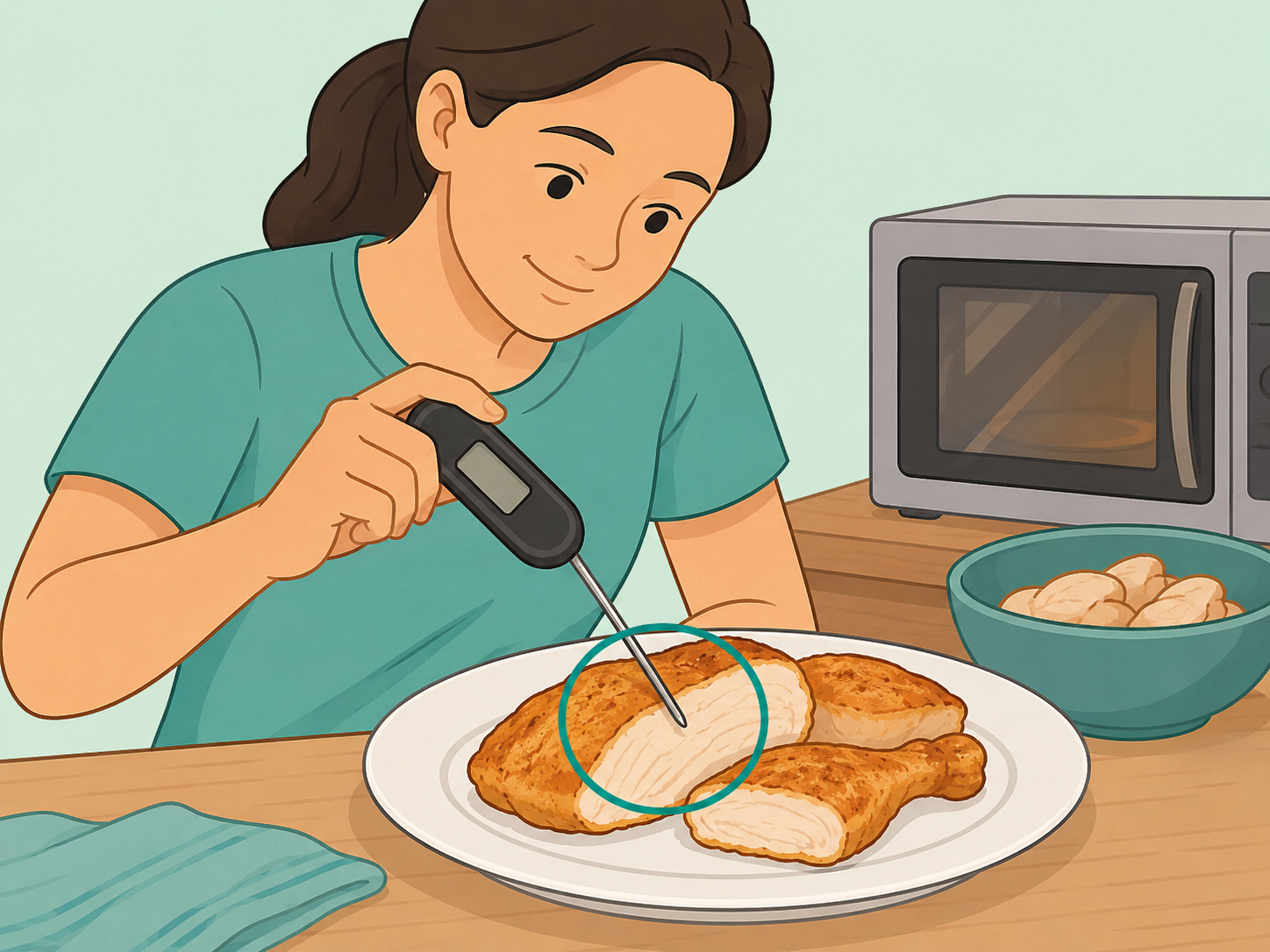
Reheat leftovers to 165°F before eating
Warm cooked chicken until the thickest part reaches 165°F, especially after microwaving, where cold spots can remain. FoodSafety.gov lists 165°F as the safe temperature for leftovers, so check with a food thermometer instead of judging by steam alone.
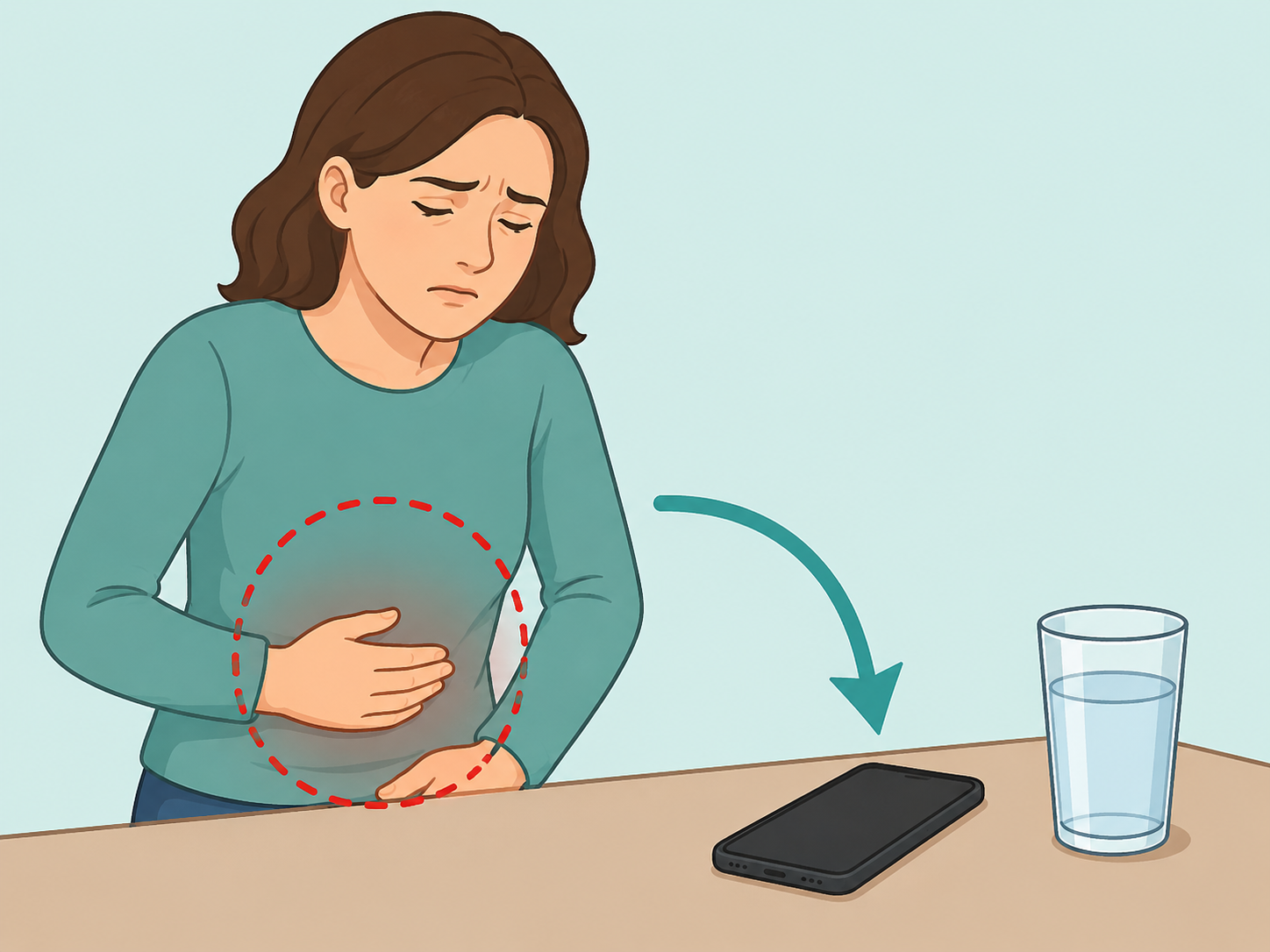
Seek help if food poisoning symptoms are severe
Watch for diarrhea, stomach cramps, nausea, vomiting, or fever after eating questionable food. See a doctor if symptoms are severe, including bloody diarrhea, diarrhea lasting more than 3 days, fever over 102°F, repeated vomiting, or signs of dehydration, as listed by the CDC food poisoning symptoms guide.
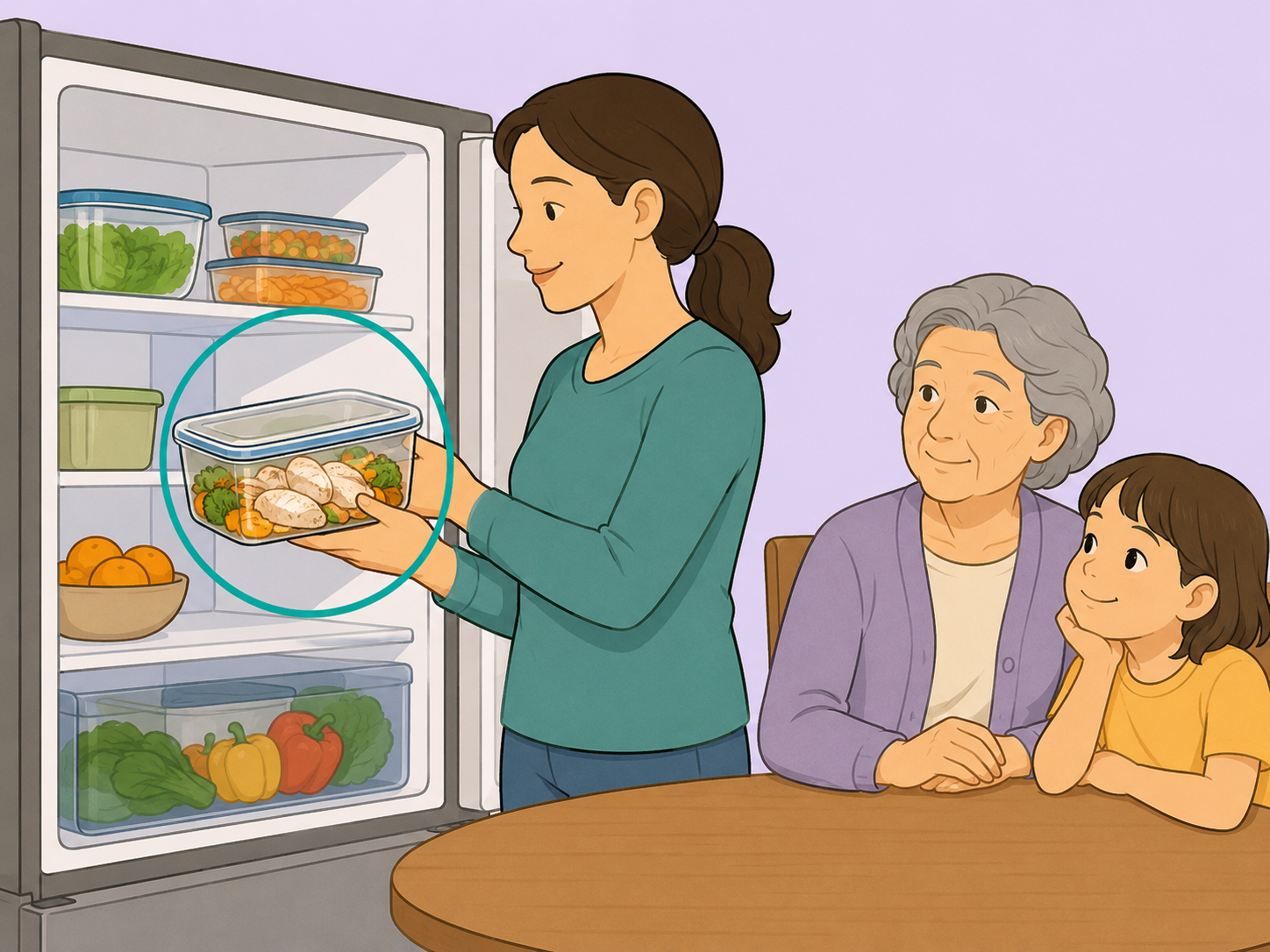
Be extra cautious for higher-risk people
Take fewer chances with cooked chicken if the meal is for an adult age 65 or older, a child under 5, a pregnant person, or someone with a weakened immune system. FoodSafety.gov explains that some people are more likely to get seriously ill from food poisoning, so discard questionable leftovers rather than stretching storage time.
Summary
The bottom line: cooked chicken is safest when it is cooled quickly, refrigerated within the proper time limit, stored at 40°F or below, and reheated to 165°F before eating. If it has been left out too long or you are unsure, throw it away.
Frequently Asked Questions
- How long can cooked chicken sit out?
Cooked chicken should not sit at room temperature for more than 2 hours, or more than 1 hour if it is in a hot place above 90°F. After that, throw it away rather than trying to save it.
- How long does cooked chicken last in the refrigerator?
Cooked chicken generally keeps for 3 to 4 days in a refrigerator at 40°F or below. Label the container with the date so you do not have to guess later.
- Can I put hot cooked chicken straight in the fridge?
Yes, small portions of hot food can go into the refrigerator. For faster cooling, divide a large batch into shallow containers before refrigerating it.
- Is cooked chicken safe if it smells fine?
Smell is not a reliable safety test. If cooked chicken has been stored too long, left out too long, or handled unsafely, discard it even if it looks and smells normal.
- What temperature should reheated chicken reach?
Reheated leftovers, including cooked chicken, should reach 165°F. Use a food thermometer in the thickest part instead of relying on color or steam.
- Can I freeze cooked chicken?
Yes. Freeze cooked chicken in airtight, freezer-safe containers or bags if you will not eat it within 3 to 4 days. Freezing keeps it safe longer, though texture and flavor are best when used within recommended quality times.
References
Reliable references aided in composing and refining this content.
- https://www.cdc.gov/food-safety/foods/chicken.html
- https://www.cdc.gov/food-safety/prevention/index.html
- https://www.foodsafety.gov/food-safety-charts/cold-food-storage-charts
- https://www.foodsafety.gov/food-safety-charts/safe-minimum-internal-temperatures
- https://www.foodsafety.gov/people-at-risk
- https://www.cdc.gov/food-safety/signs-symptoms/index.html
- https://www.mayoclinic.org/diseases-conditions/food-poisoning/symptoms-causes/syc-20356230