
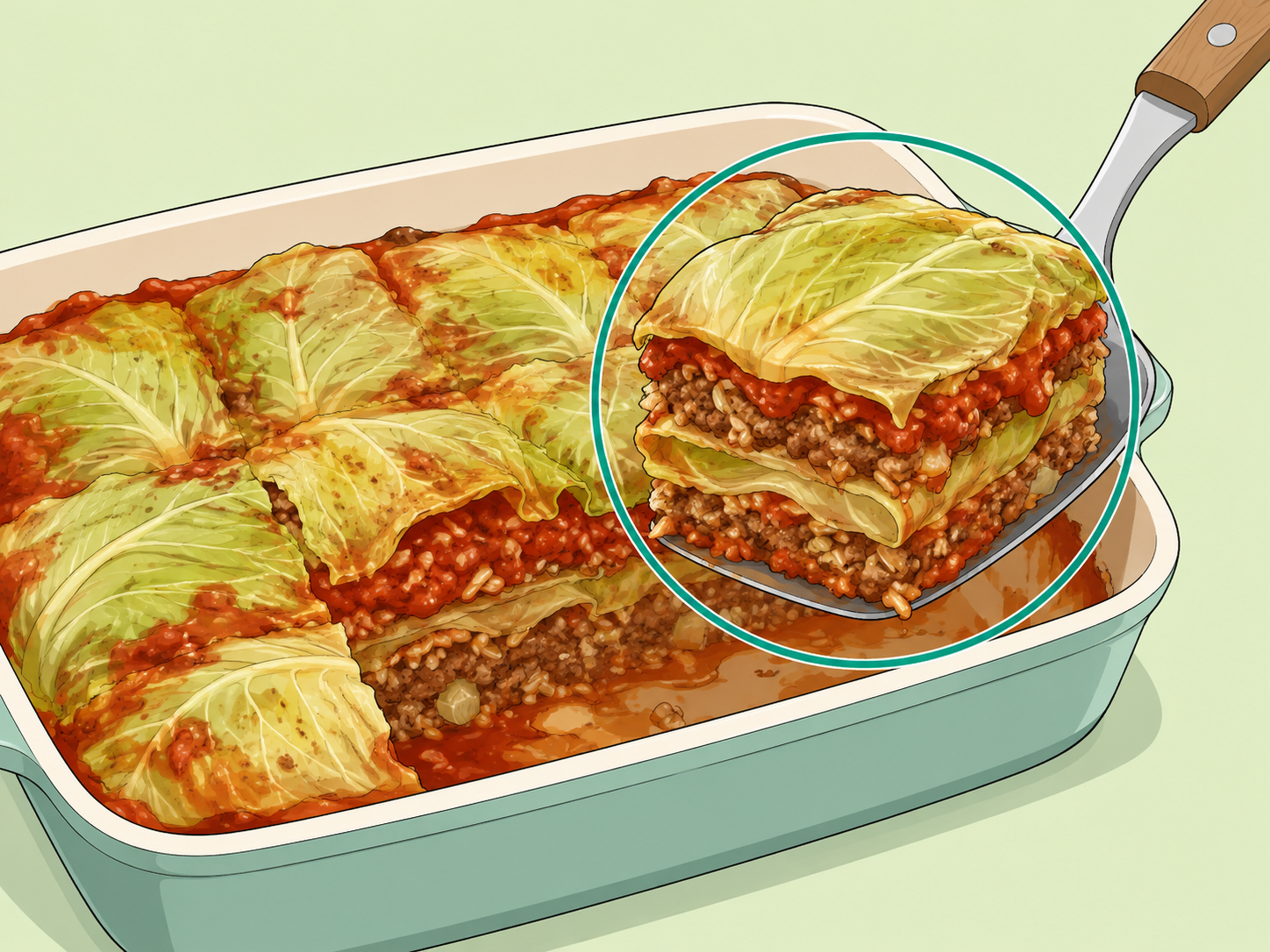
 Pin it
Stuffed cabbage casserole gives you the flavor of cabbage rolls without rolling individual leaves. This guide shows you how to prep the cabbage, build a tomato-rich beef and rice filling, layer the casserole, and bake it safely. Use it when you want a practical, oven-baked family dinner with familiar ingredients.
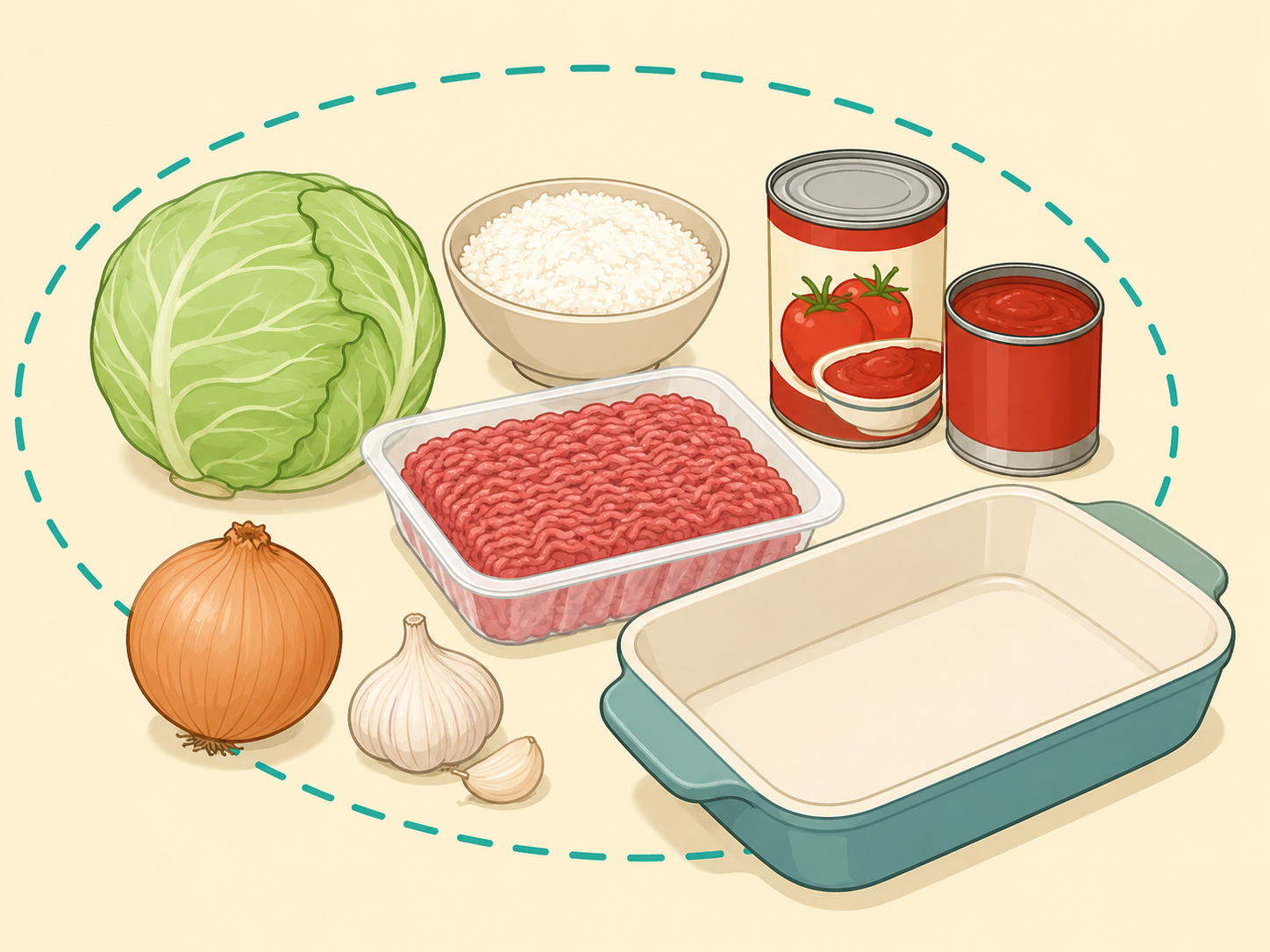
Gather the casserole ingredients
Plan on 1 medium head of cabbage, 1 pound lean ground beef or ground turkey, 2 to 3 cups cooked rice, onion, garlic, tomato sauce or crushed tomatoes, and seasonings such as paprika, oregano, black pepper, and a little salt. A casserole works best when the grain is cooked before baking; Illinois Extension's DIY casserole guide uses cooked rice or pasta as the base. Set out a 9-by-13-inch or similar 3-quart baking dish before you start.
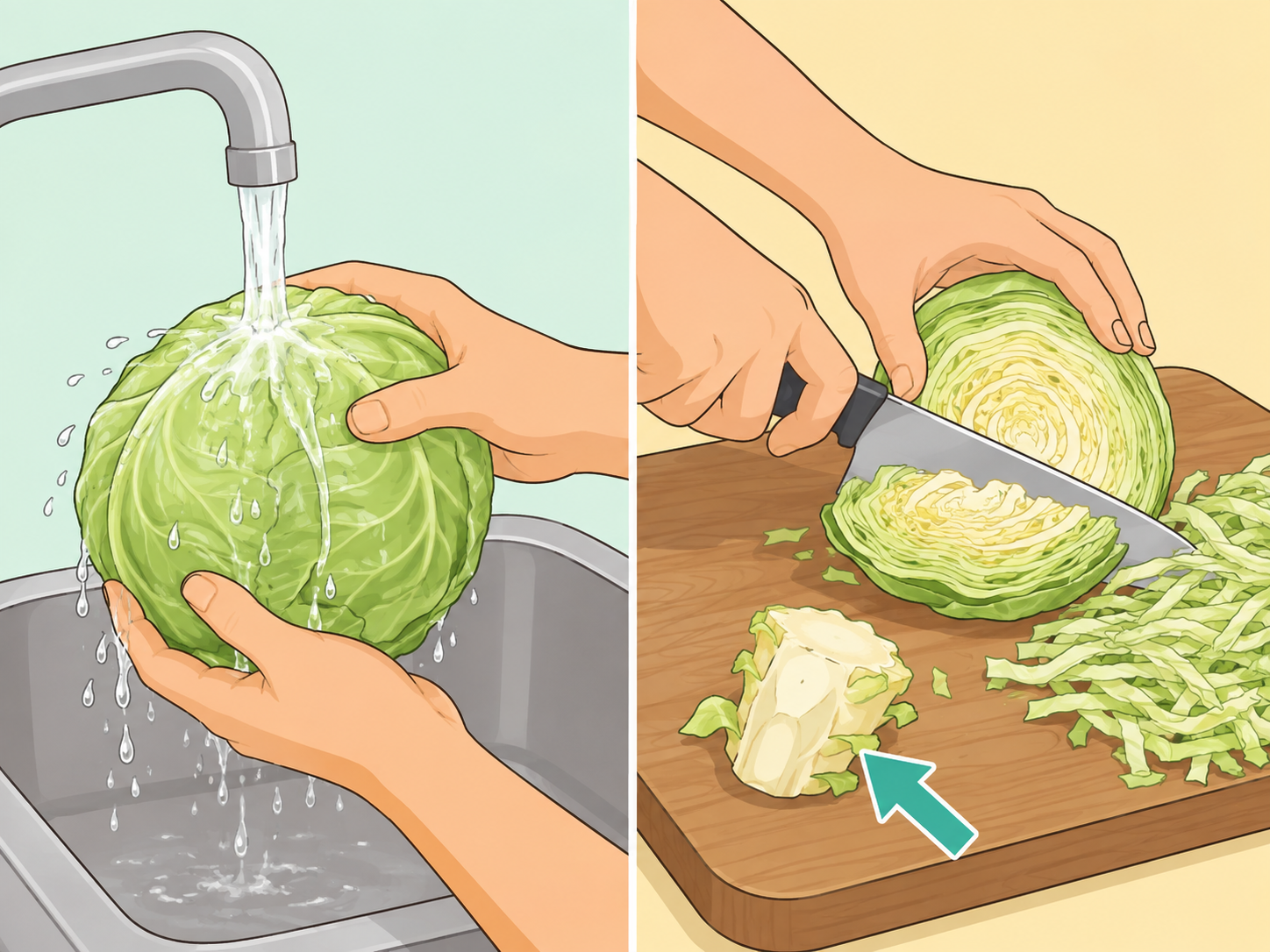
Rinse and chop the cabbage
Remove any damaged outer leaves, cut out the dense core, and chop the cabbage into bite-size pieces. Illinois Extension advises gently rubbing cabbage under cool running water before preparing it in a cabbage casserole. Choose a tight, heavy head without decay, which Illinois Extension notes is a sign of good quality in its cabbage guide.
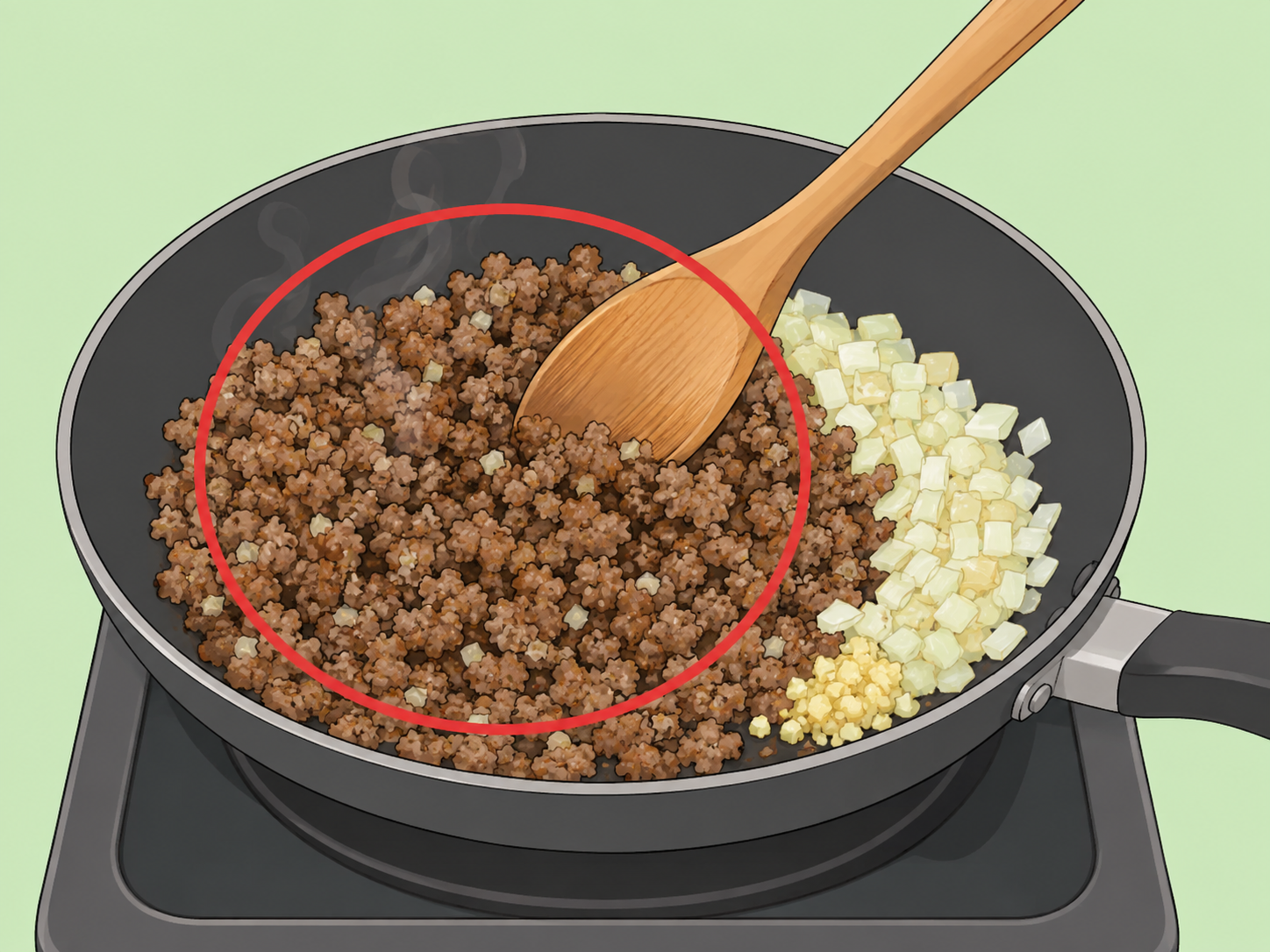
Brown the meat with aromatics
Cook the ground beef or turkey in a skillet with chopped onion until it is crumbled and browned, then stir in minced garlic for the last minute. Drain excess fat so the finished casserole is not greasy. When using ground meat, check that it reaches 160°F, as shown in Illinois Extension's ground beef and rice skillet directions.
Season the tomato filling
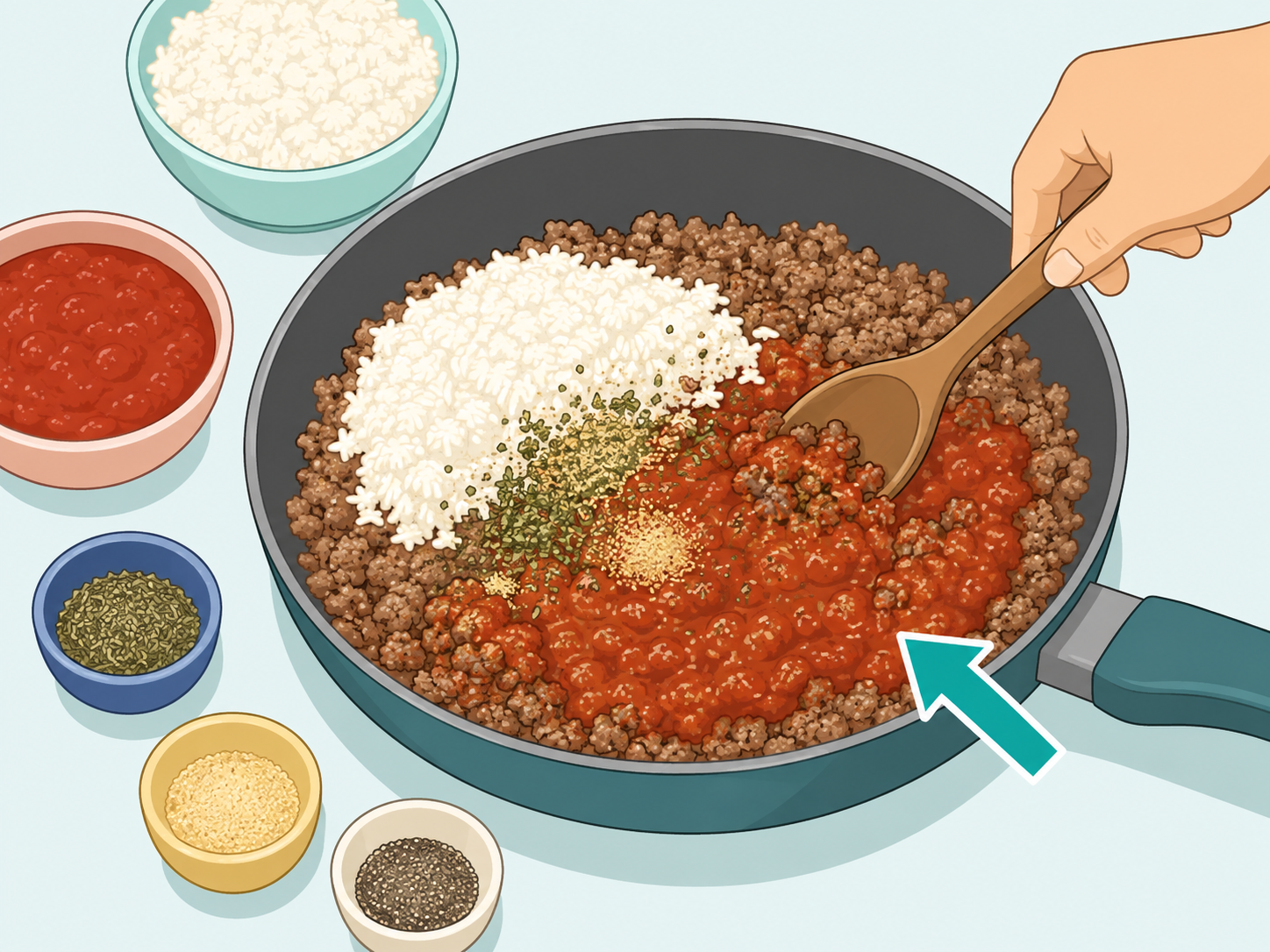
Stir tomato sauce or crushed tomatoes into the browned meat, then add cooked rice and seasonings. The cabbage roll flavor works well with tomato paste, paprika, oregano, thyme, and garlic, similar to the ingredients in Illinois Extension's cabbage roll soup. Simmer the mixture for a few minutes so the sauce coats the rice and meat.
Soften the cabbage briefly
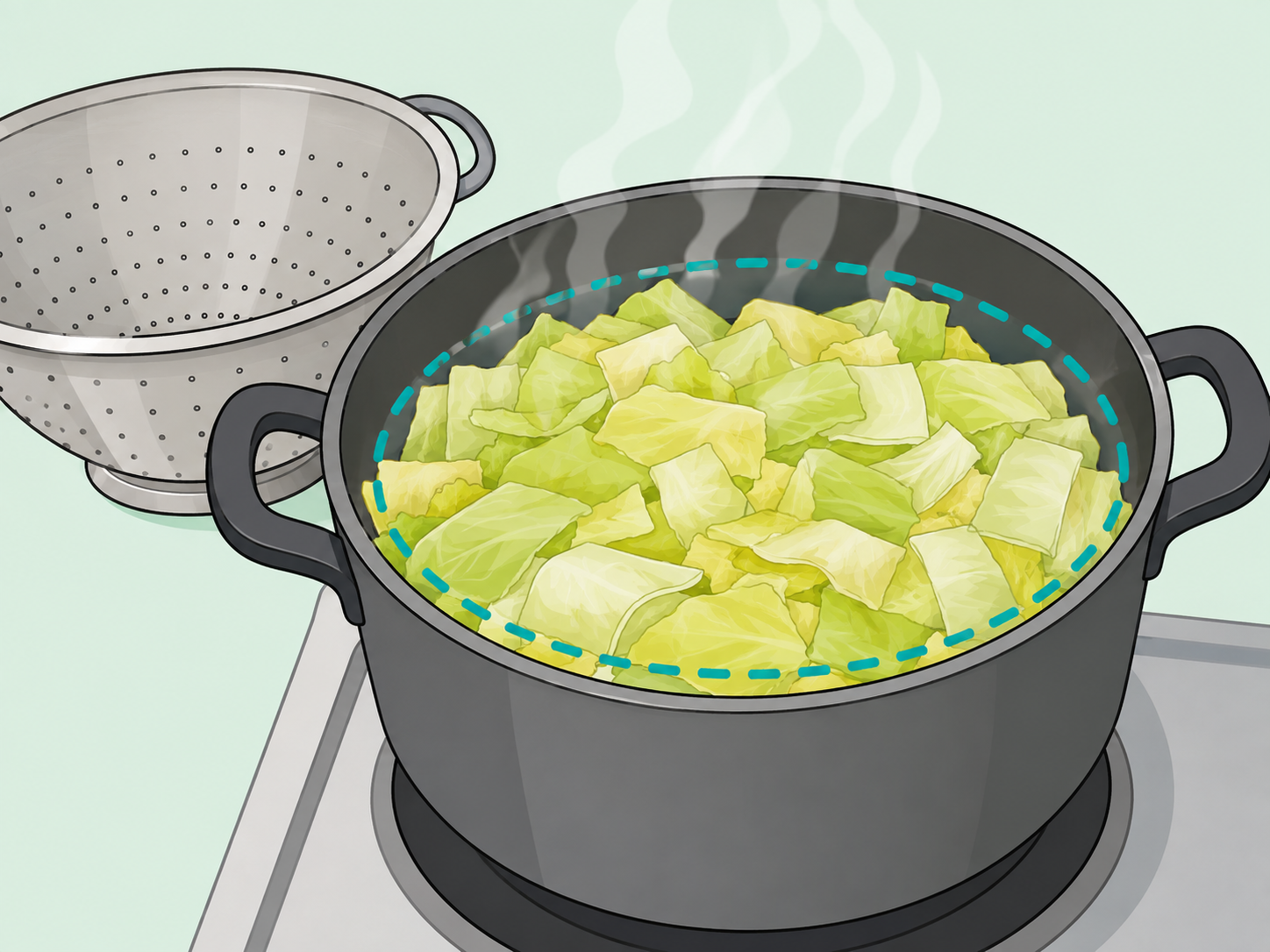
Steam or saute the chopped cabbage just until it begins to turn tender, then drain off extra liquid. Illinois Extension notes that overcooking cabbage can make the flavor and smell stronger, so cook it only until tender in its cabbage preparation guide. This short head start helps the casserole bake evenly without making the cabbage mushy.
Layer the cabbage, filling, and sauce
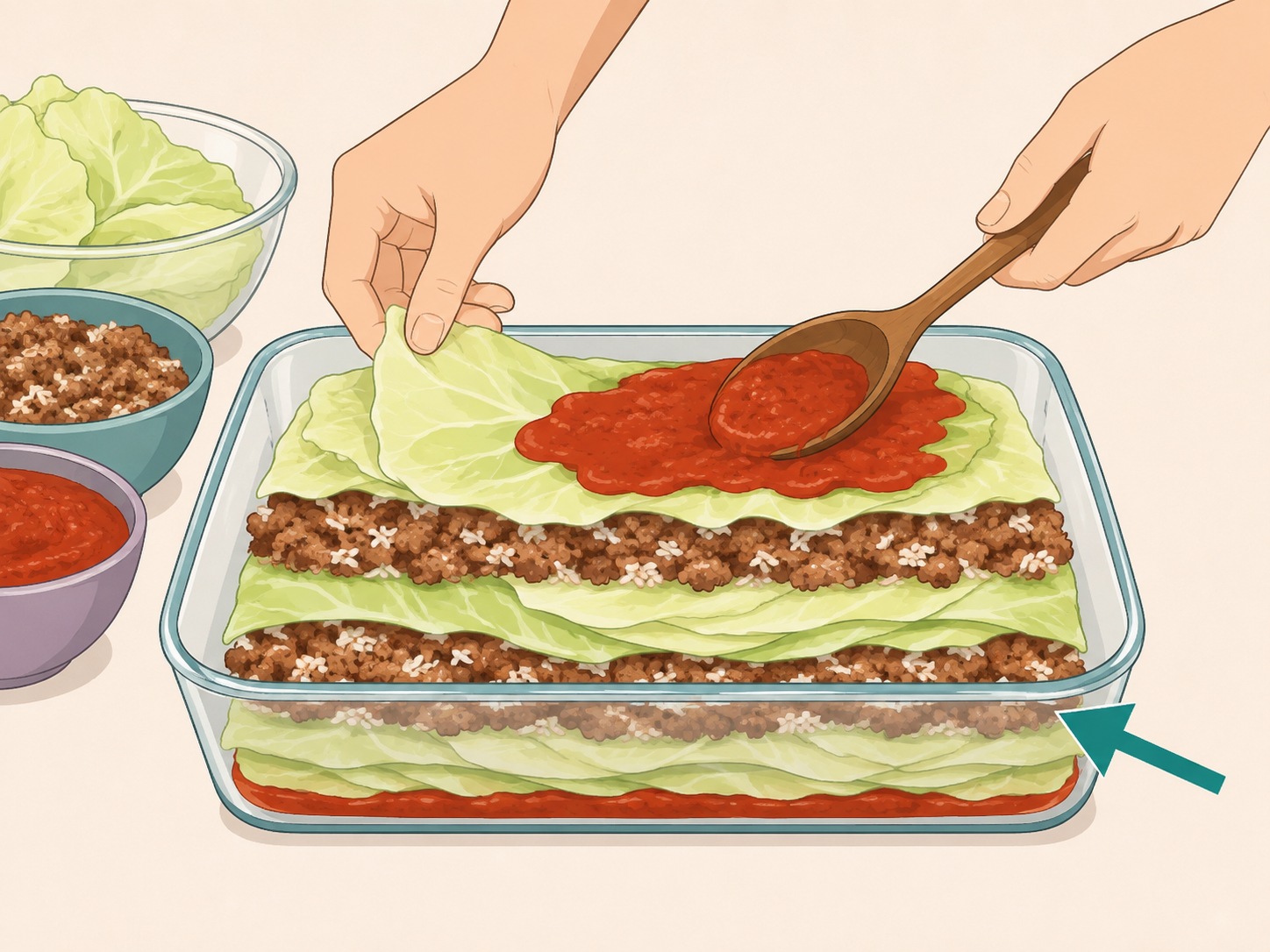
Lightly oil or spray the baking dish, then spread a thin layer of tomato sauce on the bottom. Add half the cabbage, half the meat-and-rice filling, and more sauce, then repeat the layers. The Illinois Extension casserole method recommends a 3-quart baking dish for oven casseroles, which gives the food room to heat through evenly in a standard baked casserole.
Bake until the center is hot
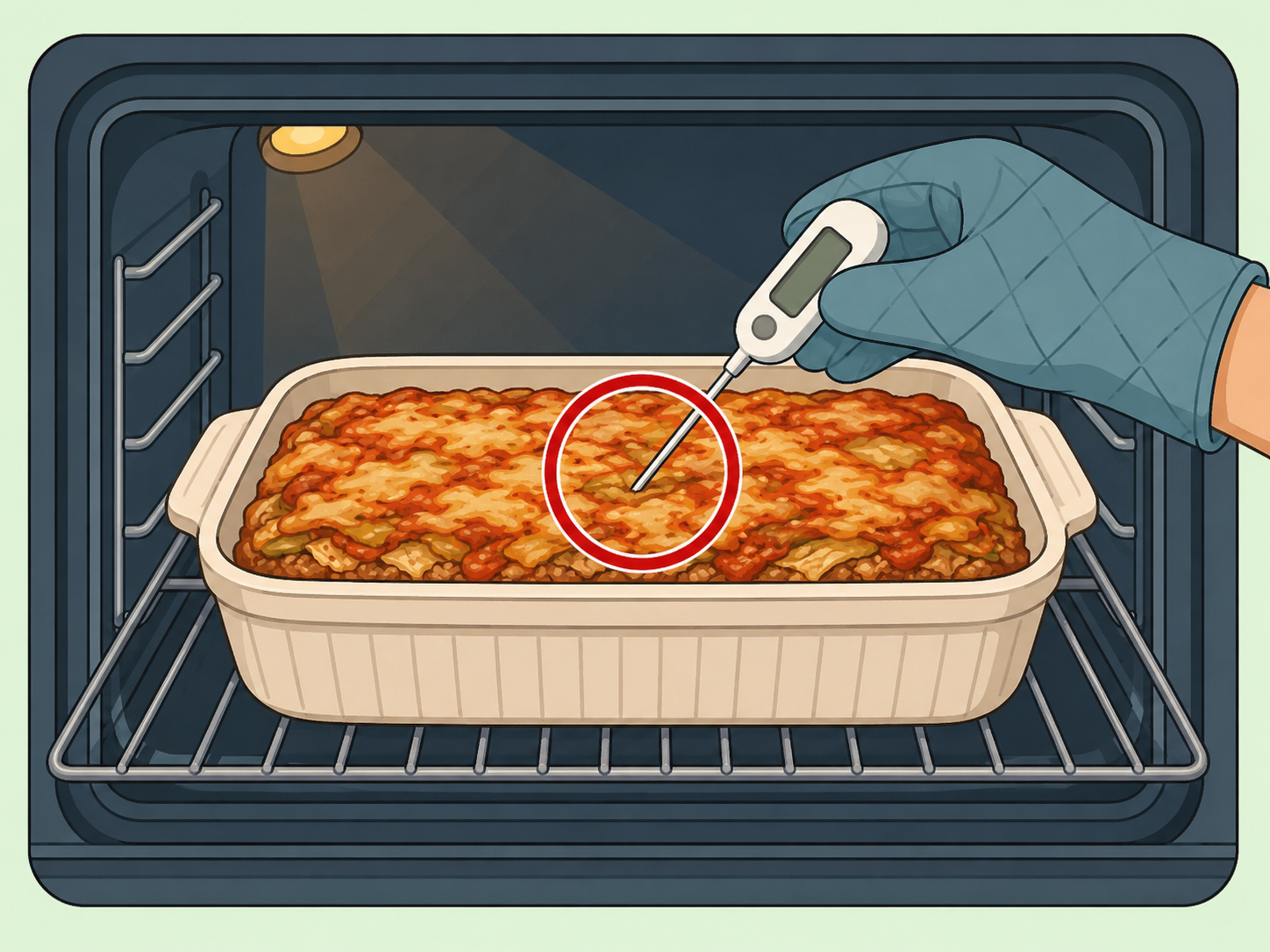
Cover the dish with foil and bake at 350°F until the cabbage is tender and the sauce is bubbling, usually about 35 to 45 minutes. Remove the foil for the last 10 minutes if you want the top to reduce slightly or brown around the edges. FoodSafety.gov lists 165°F as the safe minimum internal temperature for casseroles, so check the center with a food thermometer.
Rest, serve, and store leftovers safely
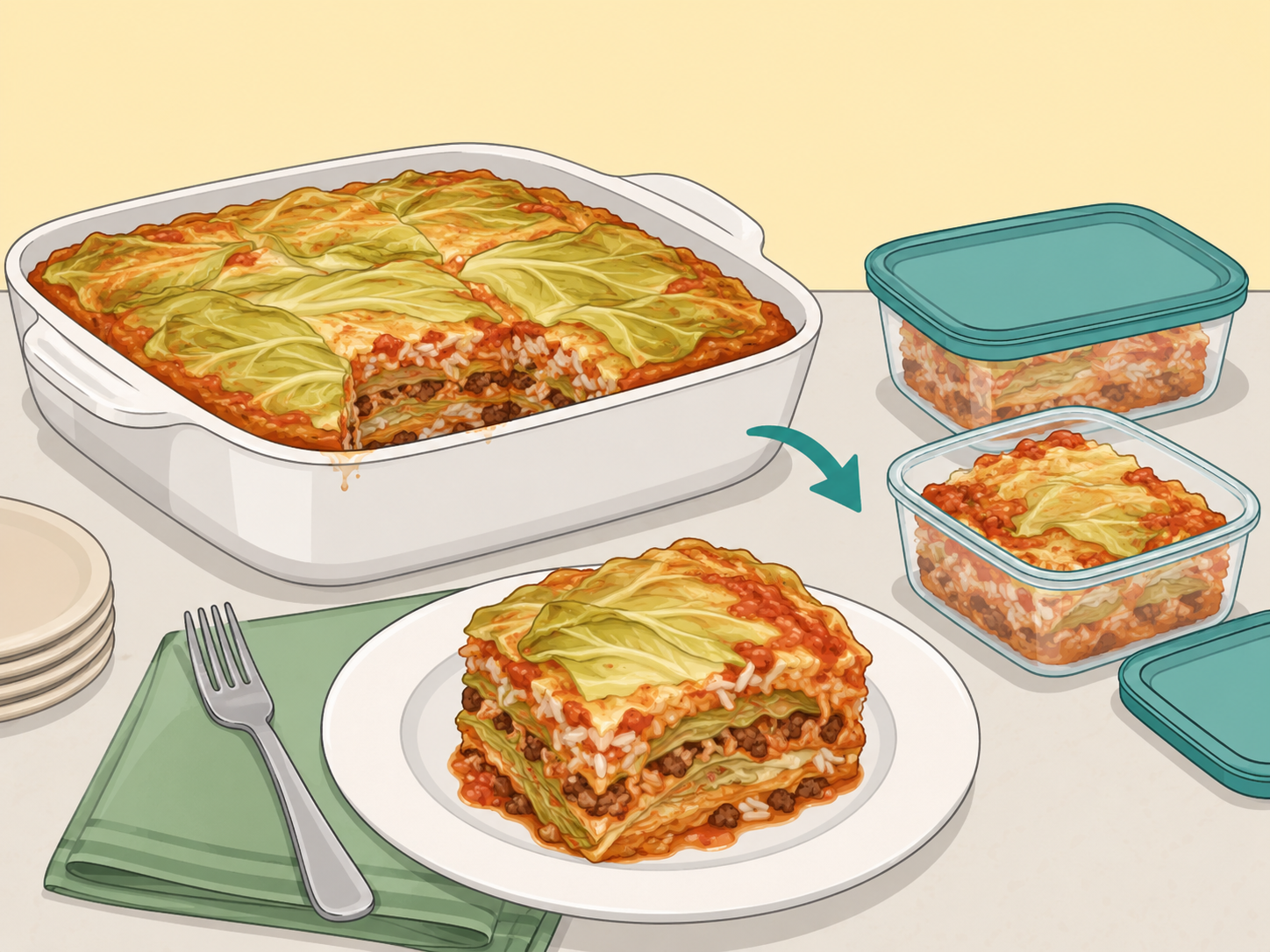
Let the casserole rest for 10 minutes before serving so the layers hold together better. Refrigerate leftovers in shallow containers soon after the meal; University of Minnesota Extension says perishable food should not sit out for more than 2 hours, or 1 hour above 90°F, in its home food safety guidance. Reheat portions until they reach 165°F in the center.
Summary
The bottom line: soften the cabbage first, brown and drain the meat, use cooked rice for reliable texture, layer everything with tomato sauce, and bake until the center reaches 165°F.
Frequently Asked Questions
- Can I use raw rice in stuffed cabbage casserole?
Cooked rice is the more reliable choice for an oven-baked casserole because it mixes evenly with the filling and will not compete with the cabbage and sauce for liquid. If you use raw rice, follow a tested recipe with enough liquid and baking time.
- What kind of cabbage works best?
Green cabbage is the classic choice because it is sturdy, easy to chop, and widely available. Savoy cabbage also works, but its thinner leaves may soften faster.
- Can I make stuffed cabbage casserole ahead of time?
Yes. Assemble it, cover it, and refrigerate it until you are ready to bake. Add extra baking time if it goes into the oven cold, and check the center with a food thermometer.
- How do I keep cabbage casserole from getting watery?
Drain the softened cabbage well, drain excess fat from the meat, and avoid adding more liquid than the rice and sauce need. Letting the casserole rest for 10 minutes after baking also helps the layers settle.
- How long do leftovers last?
Refrigerate leftovers promptly in shallow containers and use them within 3 to 4 days for best safety and quality. Reheat leftovers until the center reaches 165°F.
- Can I freeze stuffed cabbage casserole?
Yes. Cool it quickly, portion it into airtight freezer-safe containers, and freeze it for a future meal. Thaw in the refrigerator when possible and reheat until steaming hot and 165°F in the center.
References
Reliable references aided in composing and refining this content.
- https://extension.illinois.edu/gardening/cabbage
- https://extension.illinois.edu/gardening/preparing-cabbage
- https://eat-move-save.extension.illinois.edu/eat/recipes/cabbage-casserole
- https://eat-move-save.extension.illinois.edu/blog/whats-pantry-make-diy-casserole
- https://eat-move-save.extension.illinois.edu/eat/recipes/texas-hash
- https://extension.illinois.edu/lmw/recipes/cabbage-roll-soup
- https://www.foodsafety.gov/food-safety-charts/safe-minimum-internal-temperatures
- https://extension.umn.edu/es/node/161316