
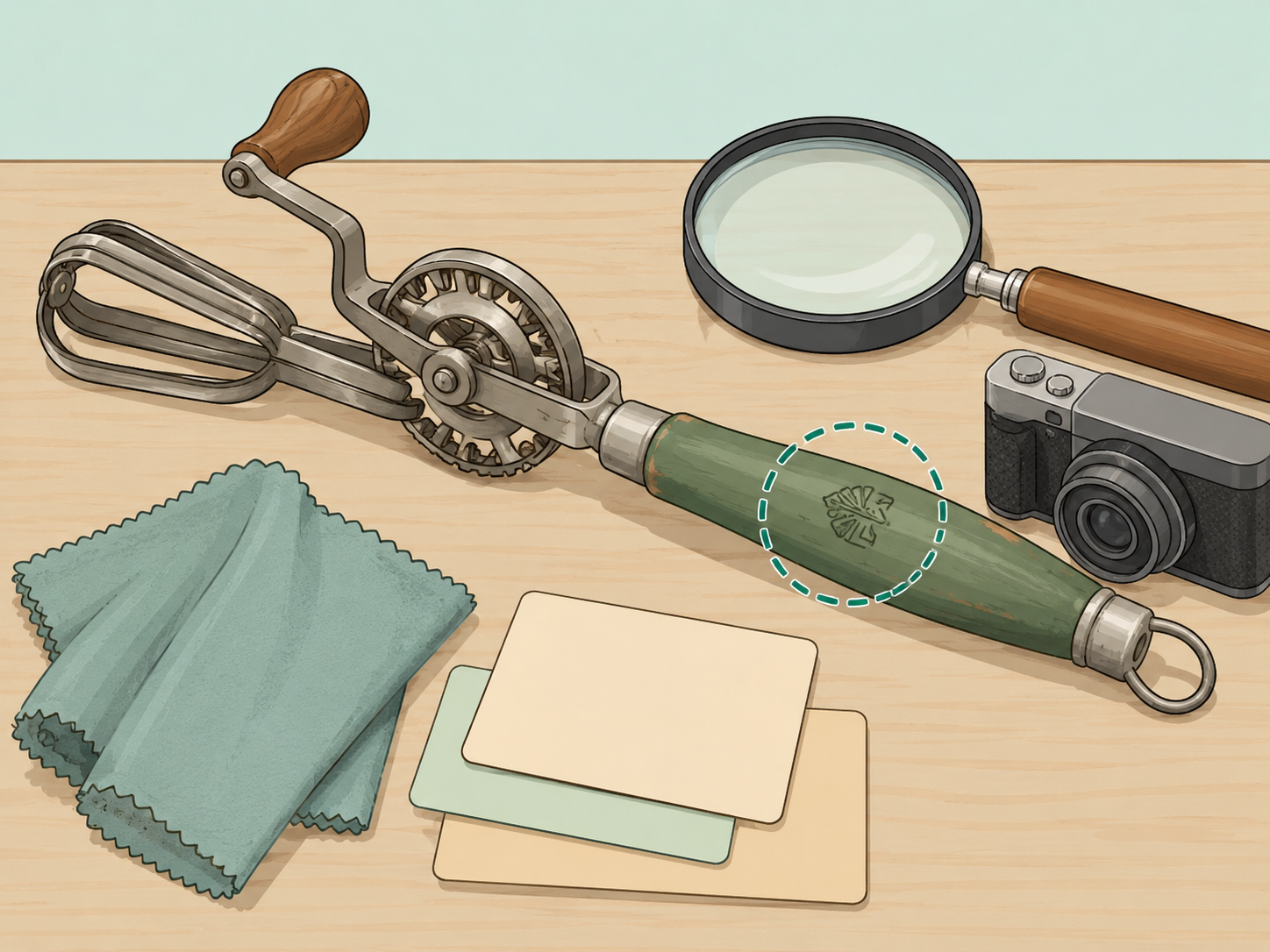
 Pin it
A strange old kitchen tool can look useless until you know what job it was designed to do. Many vintage utensils were made for one narrow task, such as beating eggs, straining food, opening cans, or lifting hot jars. This guide walks you through a careful way to identify one without damaging it or guessing from comments alone.
Handle the utensil gently before testing it
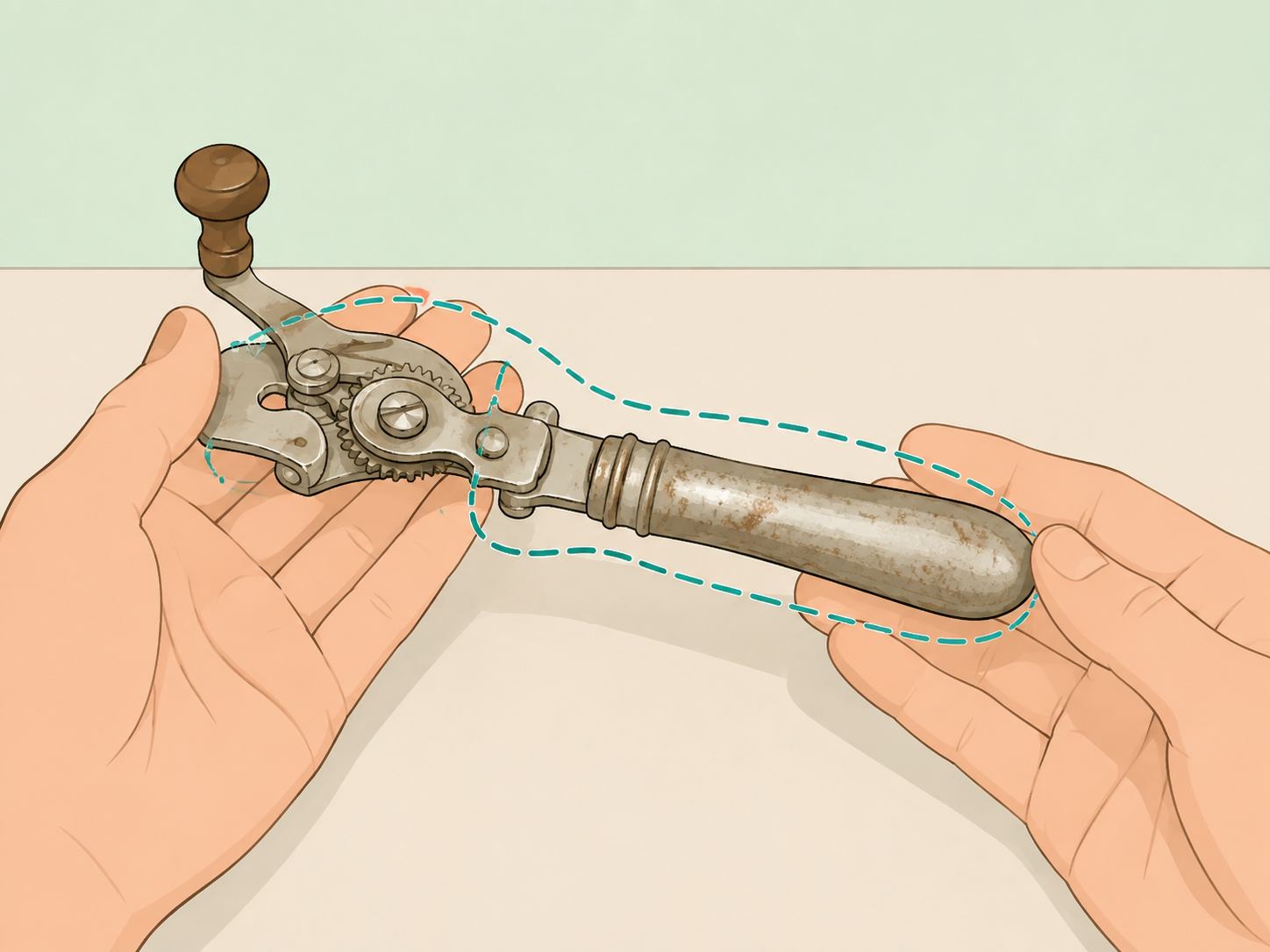
Place the utensil on a flat table and support it with both hands instead of grabbing a fragile handle or bent attachment. The National Archives advises careful artifact handling and warns against forcing moving parts because stress can cause damage, so treat the tool as an object to document before it is something to use. Handle old objects carefully until you know what they are made from.
Photograph every side and close-up mark
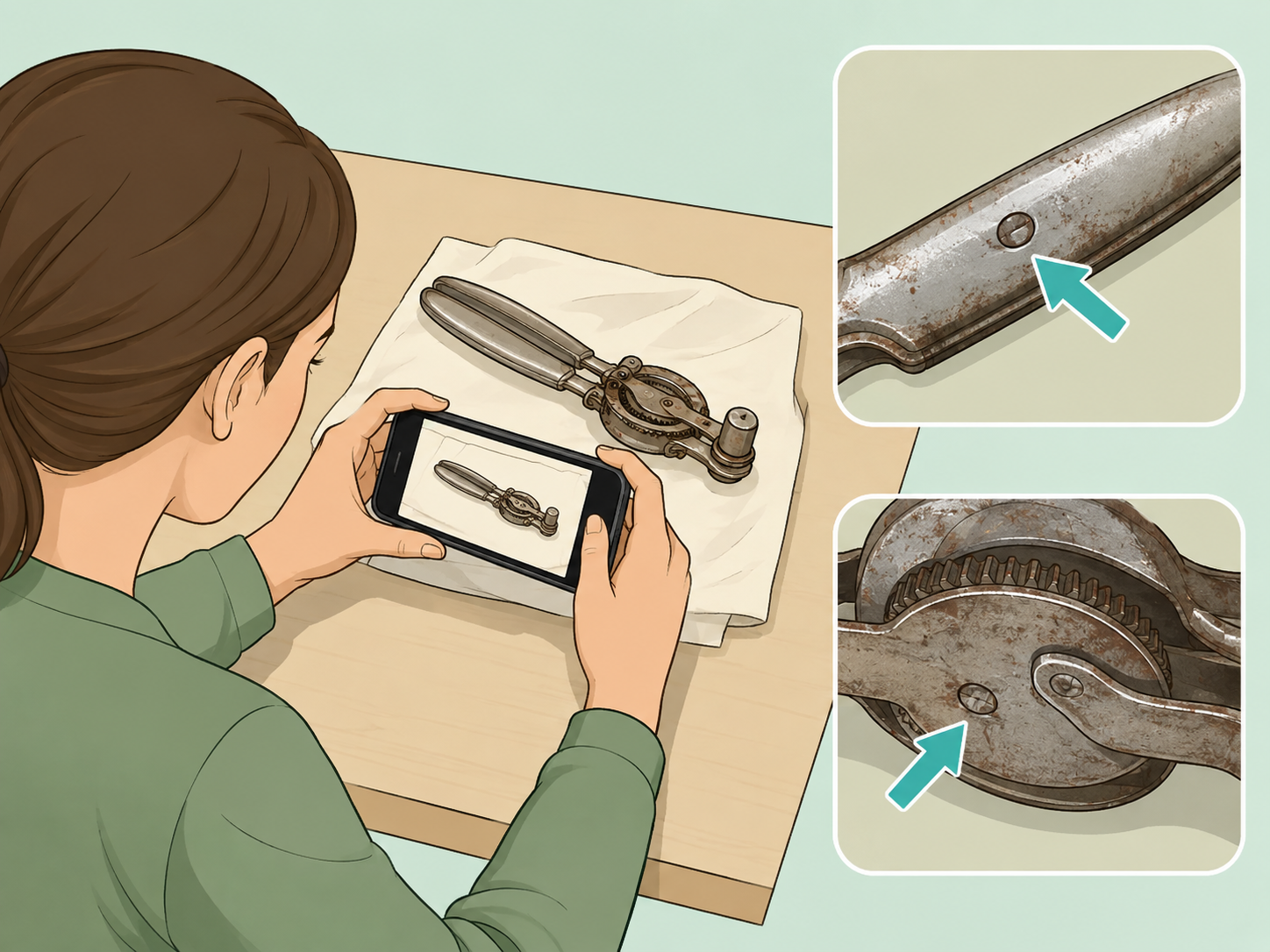
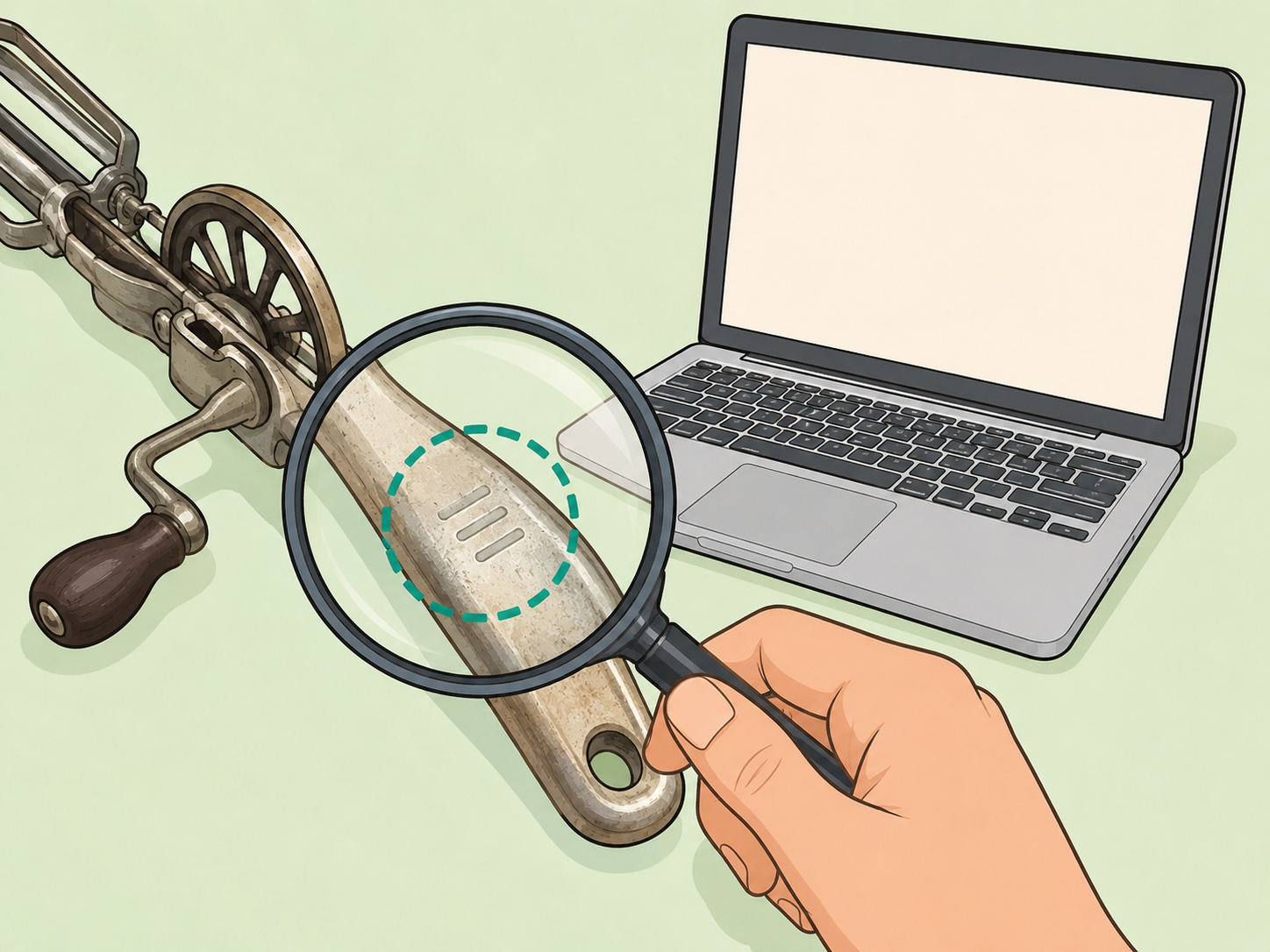
Take clear photos of the front, back, side profile, hinge, blade, handle, and any stamped words or patent numbers. Documentation matters because scratches, corrosion, weak joints, and maker marks can all help identify an object, and the National Archives preservation guidance recommends documenting weak or deteriorated areas before handling more.
Study the working end first
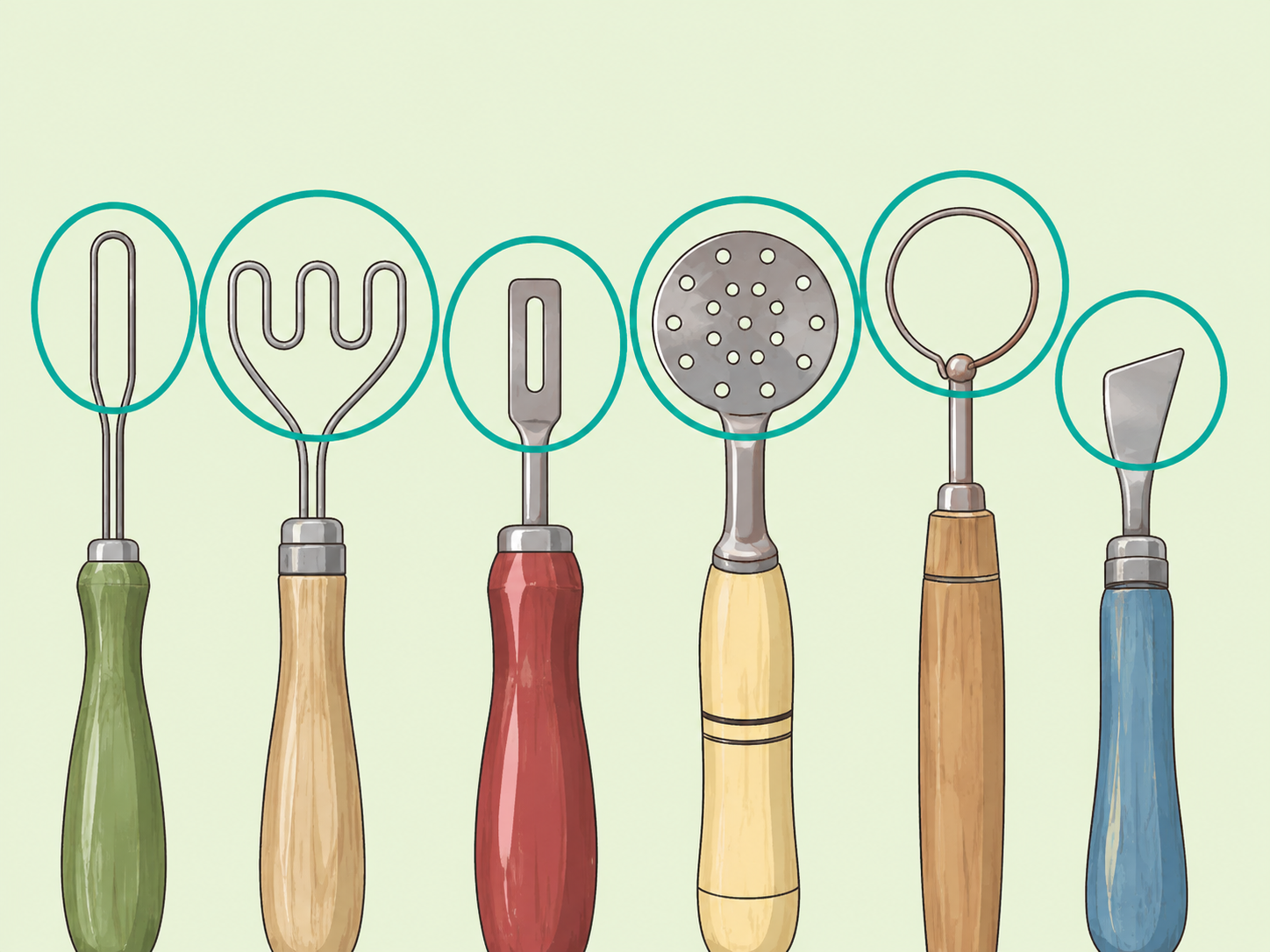
Look at the part that would touch food: slots suggest draining, holes suggest mashing or straining, wires suggest beating or slicing soft foods, and sharp wheels or blades suggest cutting. Smithsonian records for a handheld rotary egg beater show how gears, wires, maker names, and patent marks help connect a confusing shape to a specific kitchen job.
Match the shape to a likely food task
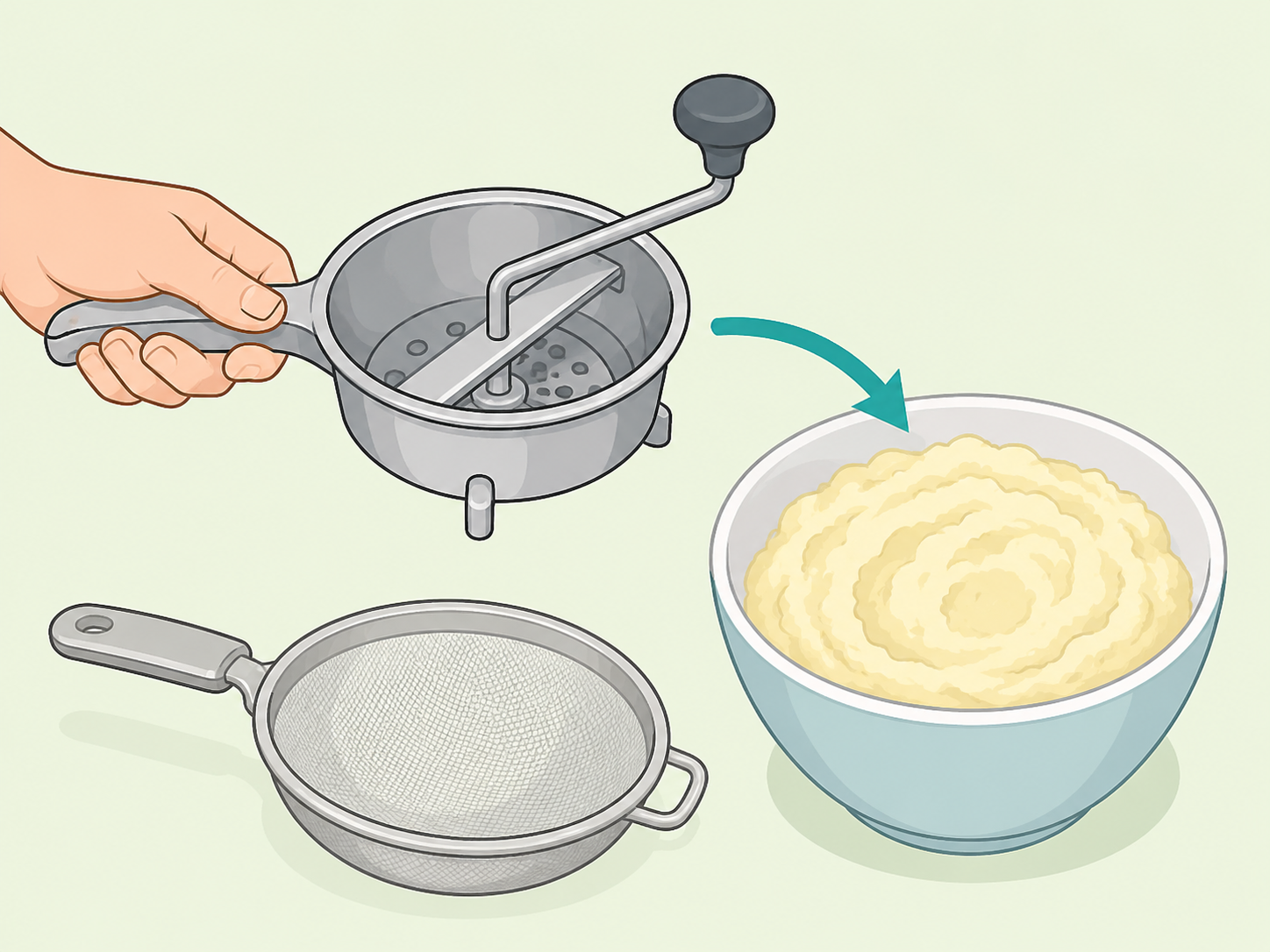
Ask what food could fit inside, under, or against the tool. A bowl with a crank and perforated bottom is likely meant to push cooked food through holes, like the food mill in Julia Child's kitchen; a flat slotted piece may have been held against a pan to drain liquid while food stayed inside.
Search the exact words and numbers you find
Enter any stamped brand, patent date, city, or model number in quotation marks, then compare the results with museum or archive records. Smithsonian object records often list object name, maker, related dates, materials, and measurements, which are the same clues you need when a tool looks like a mystery at first glance. Patent and maker details can turn a vague guess into a stronger identification.
Check whether the material is safe for food
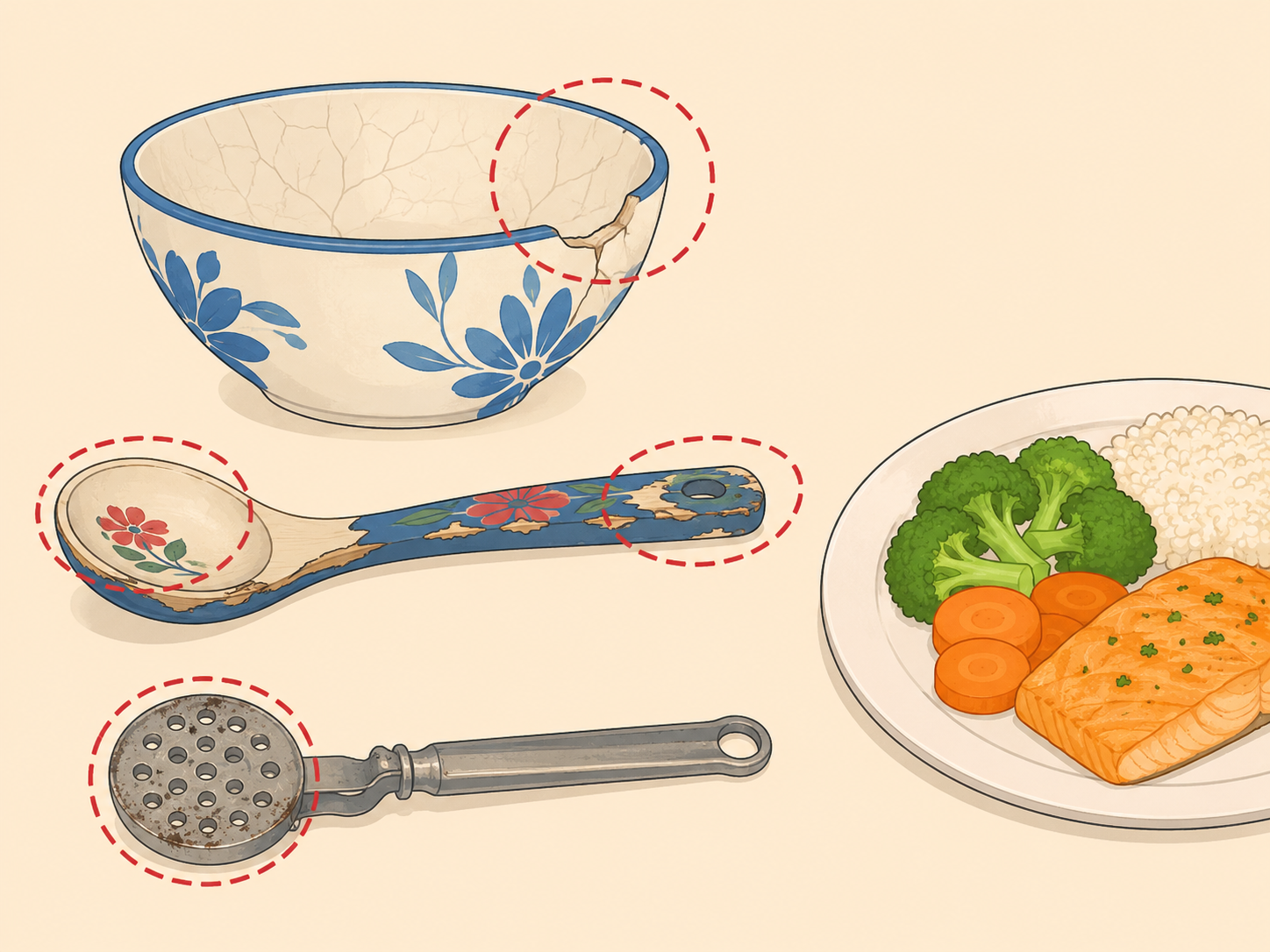
Do not assume an old utensil is safe just because it came from a kitchen drawer. The FDA warns that some antique, damaged, handmade, or brightly decorated pottery may leach lead into food or drink, and it advises against food use when leachable lead is found or safety cannot be determined. Be especially cautious with old ceramicware, flaking paint, unknown coatings, and loose plating.
Clean it only after you know it can be cleaned
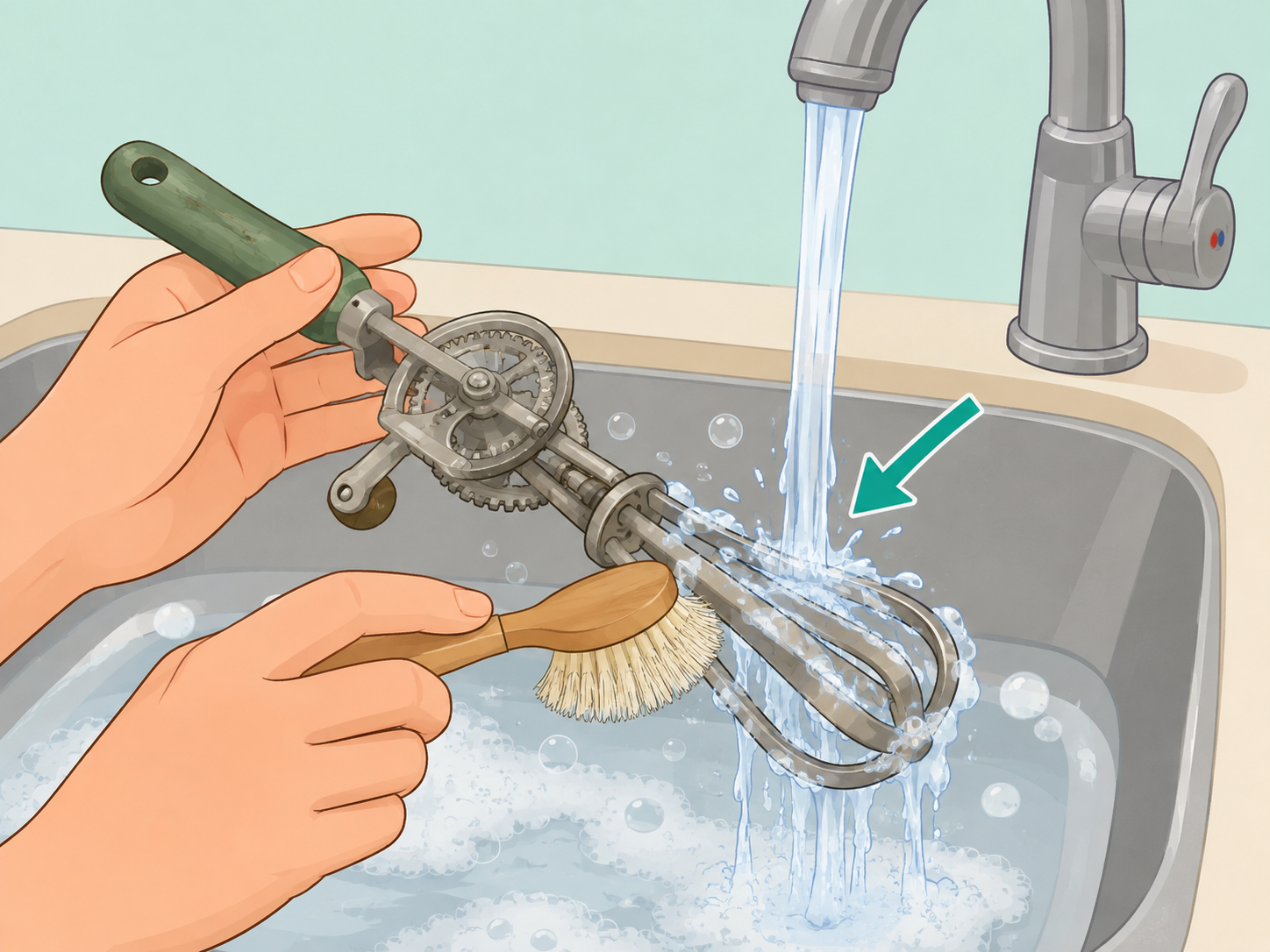
If the utensil is sturdy and intended for food use, wash it with hot, soapy water and rinse it well before any kitchen use. The CDC recommends washing utensils, cutting boards, and countertops after preparing each food item, and it explains that foodborne germs can spread around the kitchen. Keep food-contact tools clean and do not use abrasive scrubbing on fragile collectible pieces.
Sanitize food-contact tools the right way
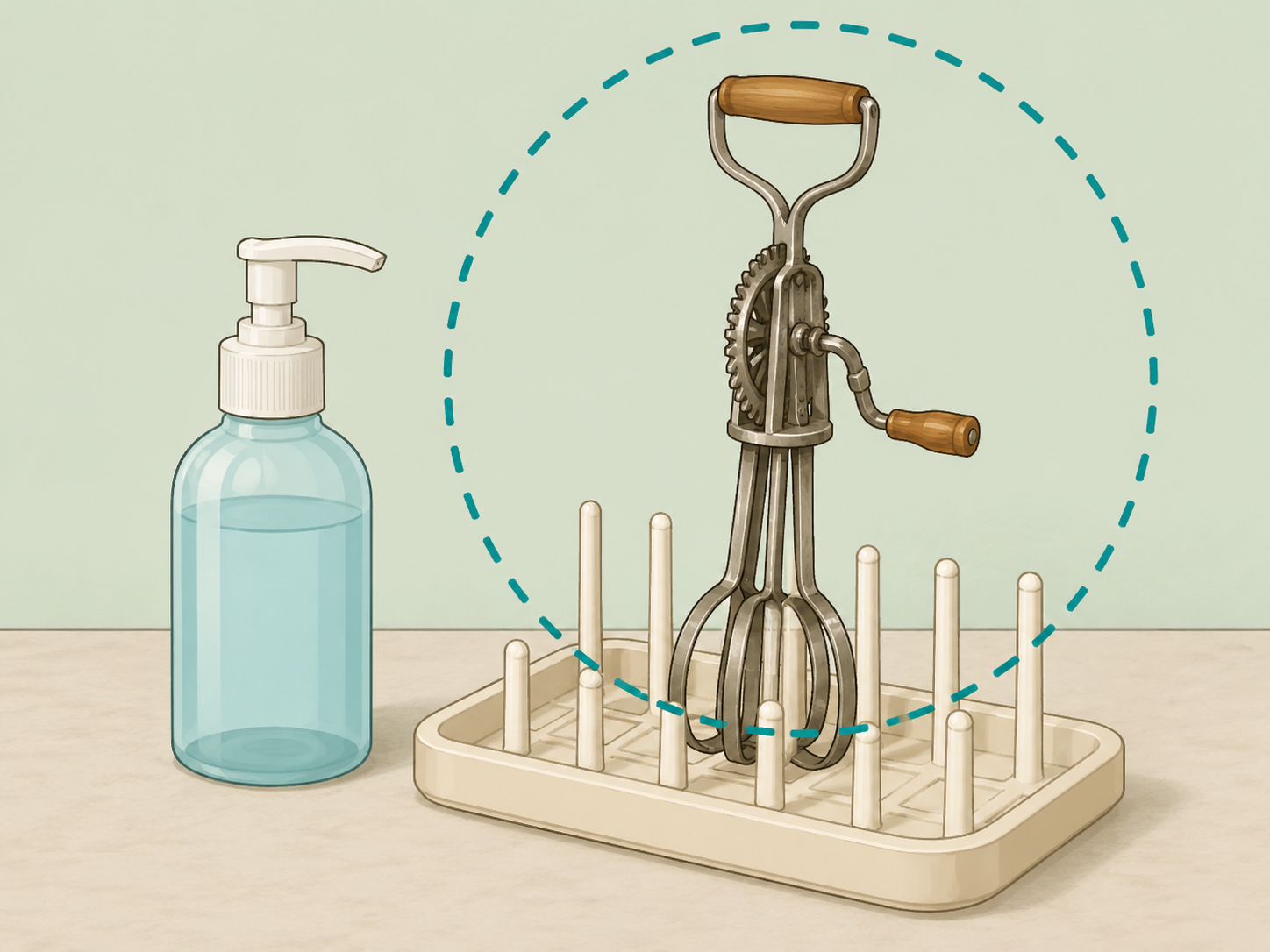
Cleaning and sanitizing are different steps: cleaning removes debris, while sanitizing reduces microorganisms to safer levels. The CDC says surfaces should be cleaned before sanitizing because dirt can make sanitizers work less effectively, and University of Minnesota Extension recommends using dish soap made for food-contact equipment and letting clean items air-dry. Follow the product label and use only appropriate sanitizing methods for the material.
Ask an expert before forcing a conclusion
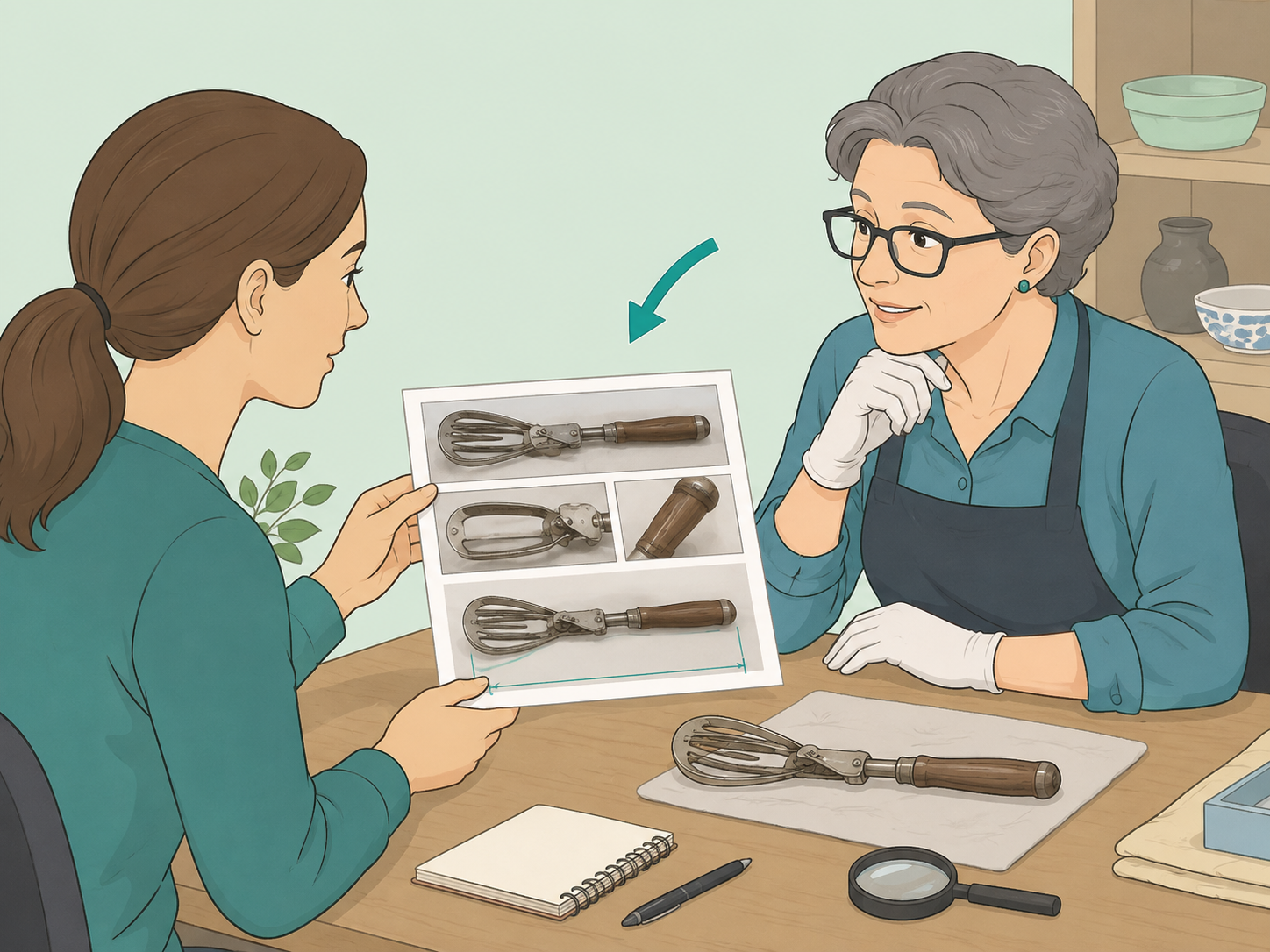
If the tool still does not make sense, share the photos, measurements, and marks with a local historical society, museum, Extension office, or careful identification group. An Ask Extension response about a mystery kitchen utensil shows why a photo-based answer may be framed as a best guess, so keep the identification open until the shape and evidence line up.
Summary
The bottom line: identify a vintage kitchen utensil by preserving clues first, then reading the working end, marks, material, and likely food task. If it is damaged, painted, glazed, or impossible to clean safely, keep it as a display piece instead of using it with food.
Frequently Asked Questions
- What if nobody in the comments agrees on what the utensil is?
- Treat comments as clues, not proof. Compare the shape, marks, and moving parts with museum records, university Extension answers, or collector guides before naming it.
- Is an old kitchen utensil automatically valuable?
- No. Age alone does not prove value; condition, maker, rarity, and whether the tool still has original parts usually matter more.
- Can I use a rusty vintage utensil after washing it?
- Use caution. If rust, pitting, loose plating, cracked handles, or flaking paint can touch food, keep the utensil for display unless a qualified restorer confirms it can be made food-safe.
- How do I know if old ceramic or glazed kitchenware is safe for food?
- The FDA warns that antique, damaged, handmade, or brightly decorated pottery can be a lead concern, especially if its source is unknown. If you cannot verify that it is food-safe, do not cook, serve, or store food in it.
- Should I polish a vintage metal utensil before identifying it?
- No. Polishing can remove marks, patina, wear patterns, and other clues that help identify the utensil. Photograph it first and clean only gently if cleaning is needed.
- Where can I ask for help identifying it?
- A local museum, historical society, university Extension office, antique kitchenware group, or careful online identification forum can help. Share clear photos, measurements, maker marks, and where the utensil was found.
References
Reliable references aided in composing and refining this content.
- https://www.archives.gov/preservation/holdings-maintenance/artifacts
- https://ask.extension.org/kb/faq.php?id=814073
- https://americanhistory.si.edu/collections/object/nmah_1459667
- https://americanhistory.si.edu/collections/object/nmah_998326
- https://www.fda.gov/food/environmental-contaminants-food/questions-and-answers-lead-glazed-traditional-pottery
- https://www.cdc.gov/food-safety/prevention/index.html
- https://www.cdc.gov/hygiene/cleaning-disinfecting/index.html
- https://extension.umn.edu/about/our-stories/news/cottage-food-connection/sink-essentials-for-your-home-kitchen