
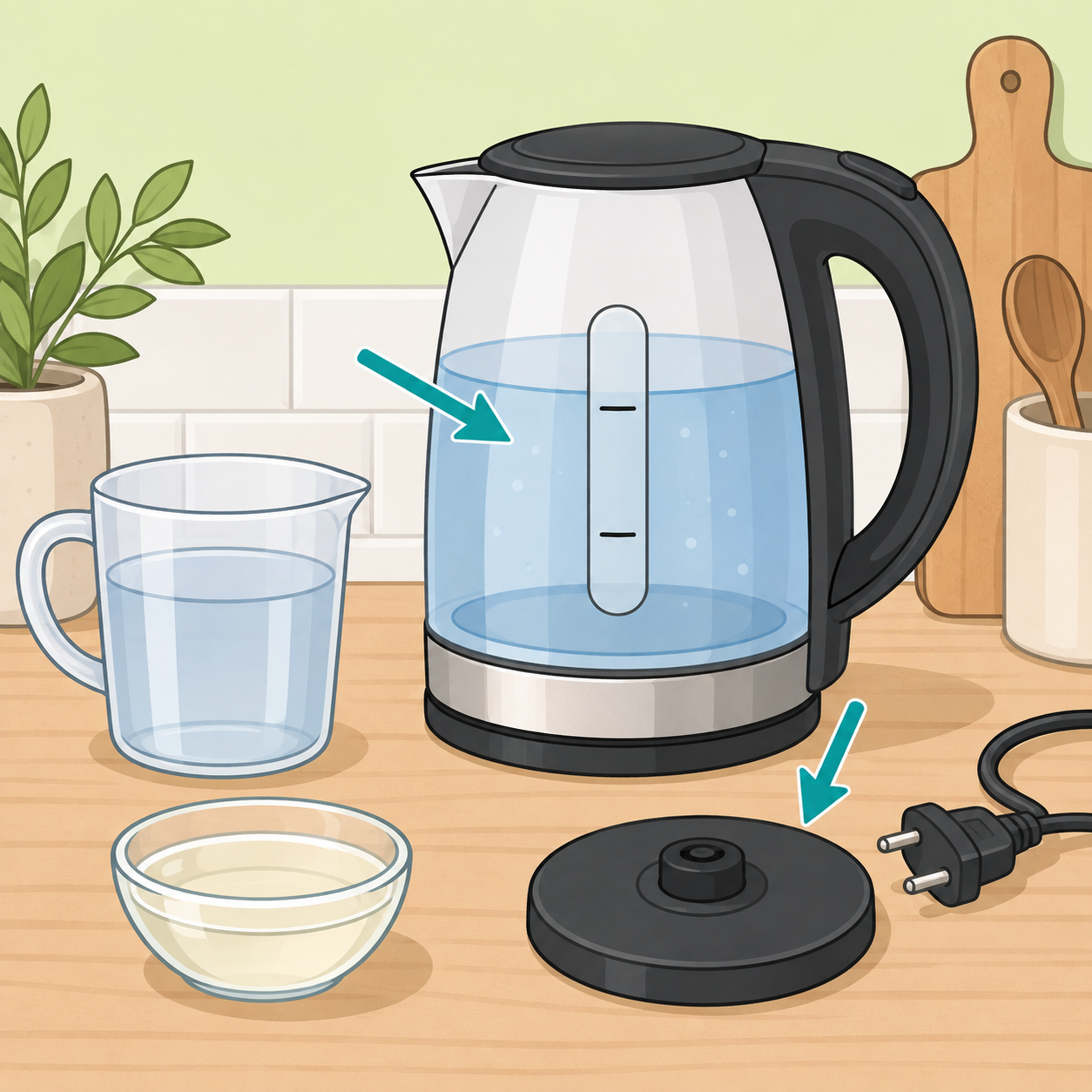
 Pin it
An electric kettle is easy to use, but the common household mistake is filling it with more water than needed and treating it like a set-and-forget appliance. This guide shows how to measure water, avoid overfilling, handle steam safely, and keep the kettle clean. It also explains what to do during a boil-water advisory or a burn.
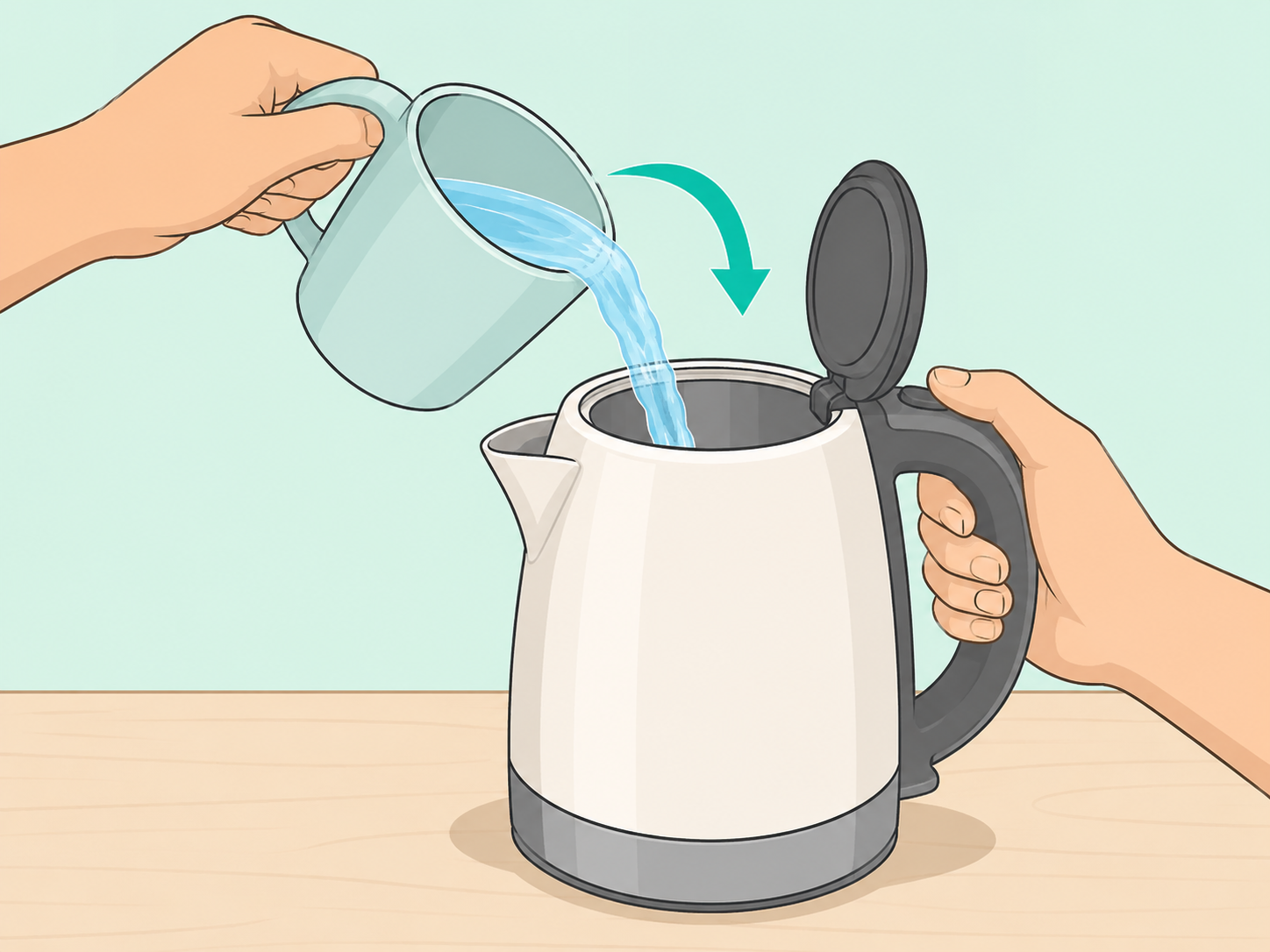
Measure only the water you need
Before you fill the kettle, use the cup, mug, or pan you are filling as a quick measuring guide. Energy Saving Trust notes that boiling only the water you need reduces wasted electricity, especially when you are making just one drink.
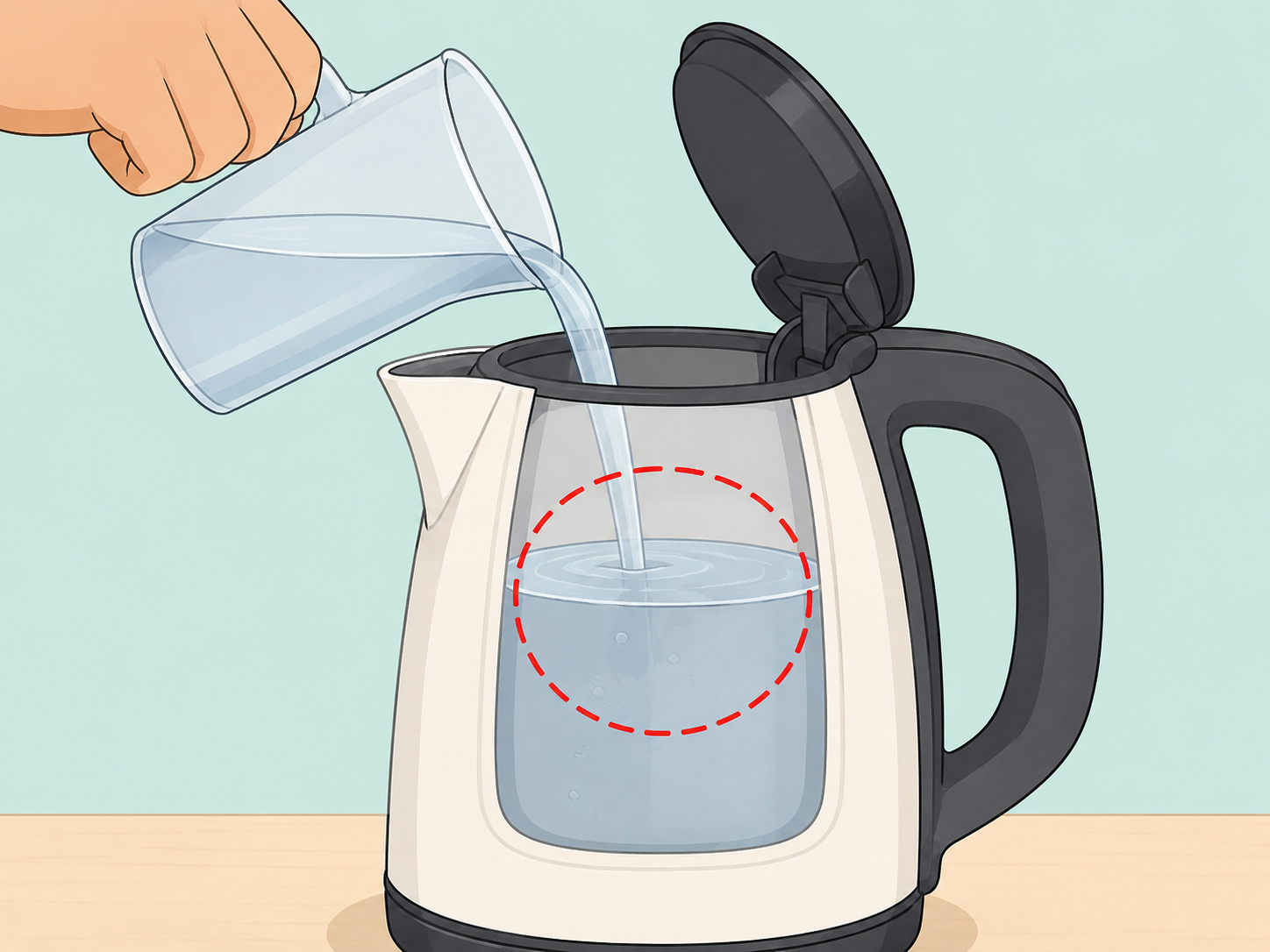
Stay between the minimum and maximum fill lines
Check the markings inside or outside the kettle every time you fill it. Too little water can expose the heating element on some models, while too much water can bubble up through the spout or lid; Health Canada advises people to read the instruction manual for safe use of electrical products.
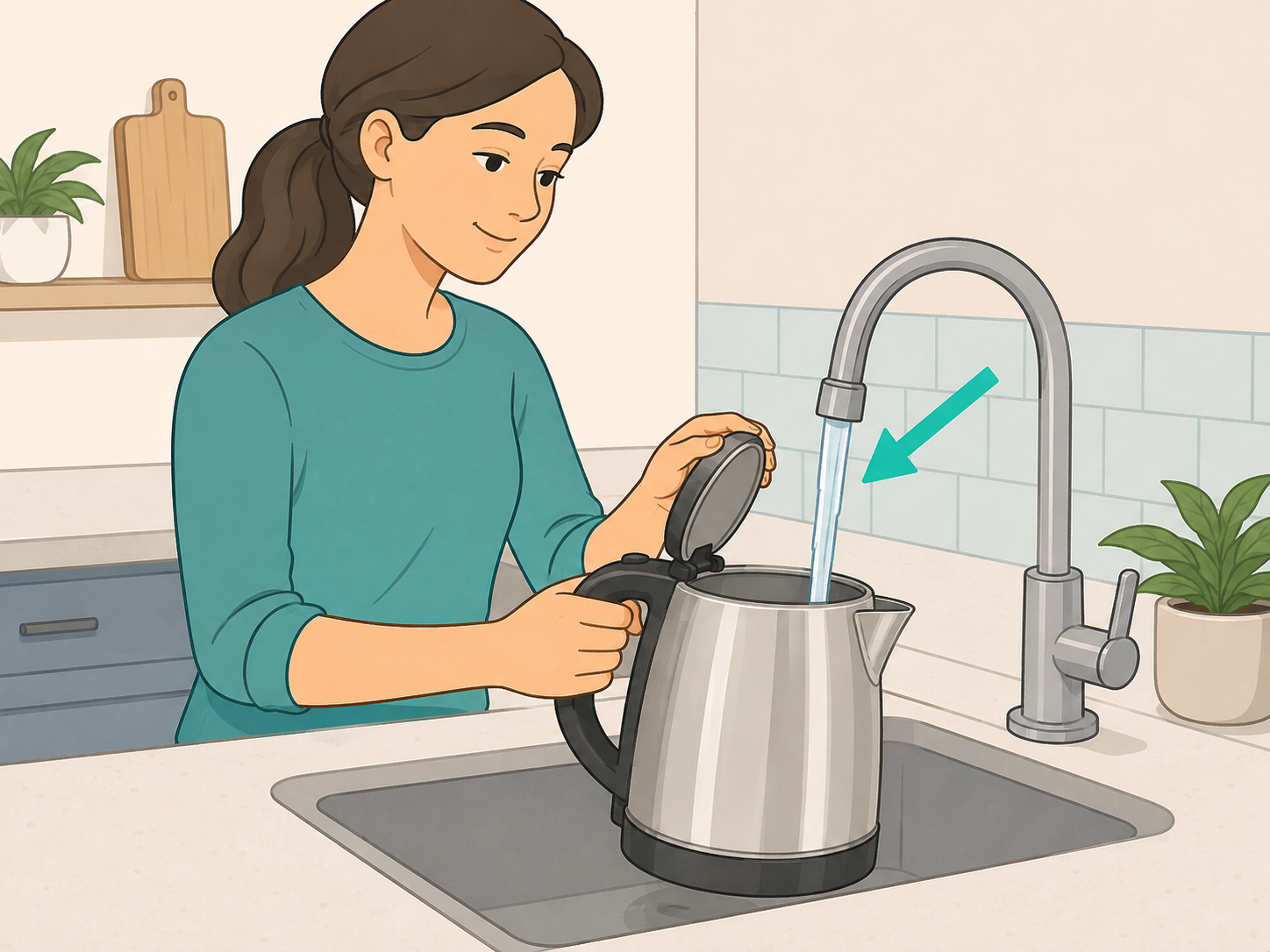
Use fresh drinking water from a safe source
Fill the kettle with water you would normally drink, not water from a heating system, outdoor hose, or unknown container. If your local authority says the tap water may be unsafe, follow the CDC's guidance to use bottled, boiled, or treated water as directed.
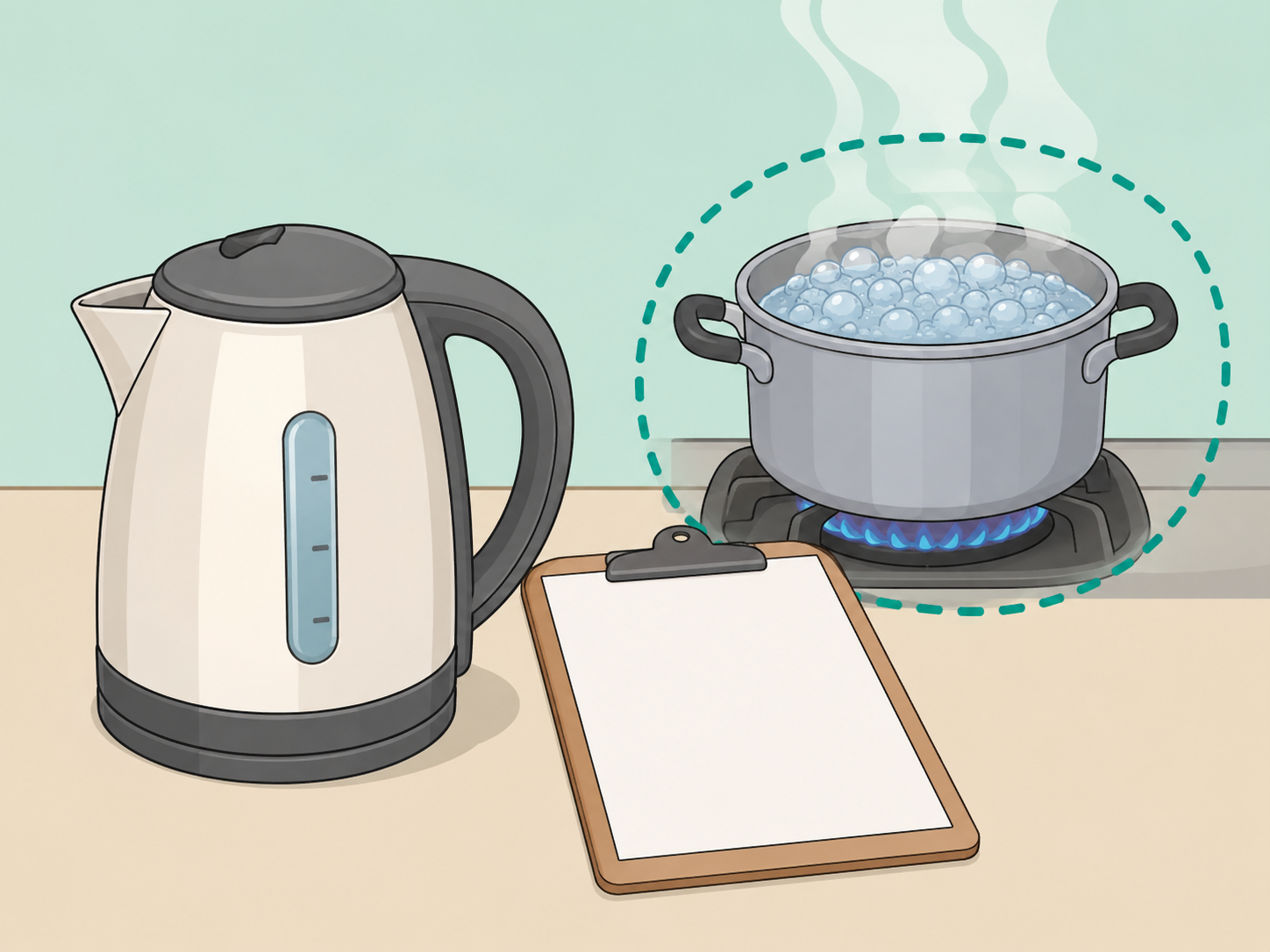
Follow boil-water advisories exactly
During an official boil-water advisory, do not assume a quick kettle cycle is always enough for every situation. The CDC says clear water should reach a rolling boil for 1 minute, or 3 minutes above 6,500 feet, and also warns that boiling does not remove chemical contamination.
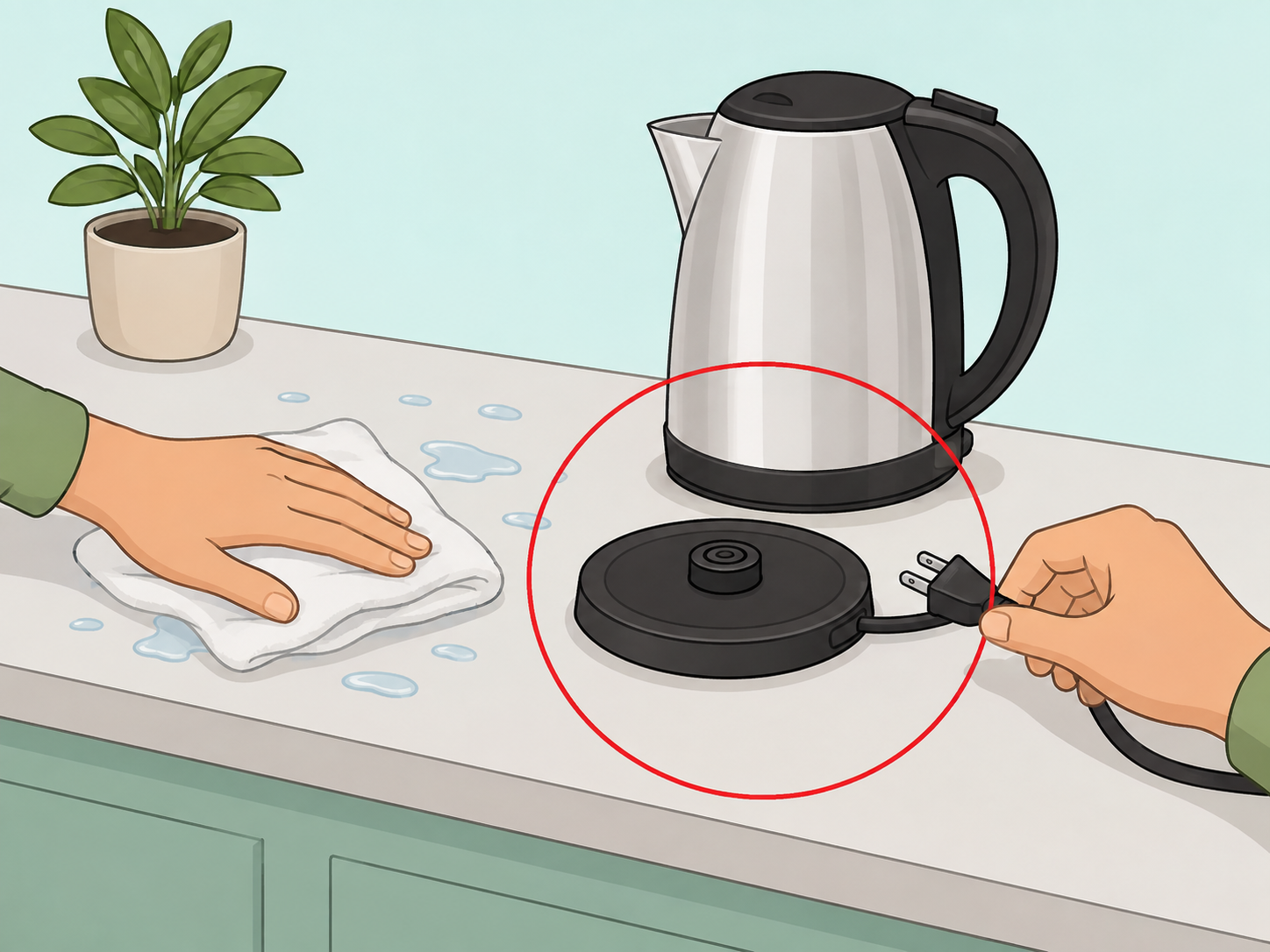
Keep the base, plug, and cord dry
Set the kettle on a dry, level counter before switching it on, and wipe up spills around the base before plugging it in. Health Canada recommends keeping electrical products dry and away from water to reduce shock and fire risks.
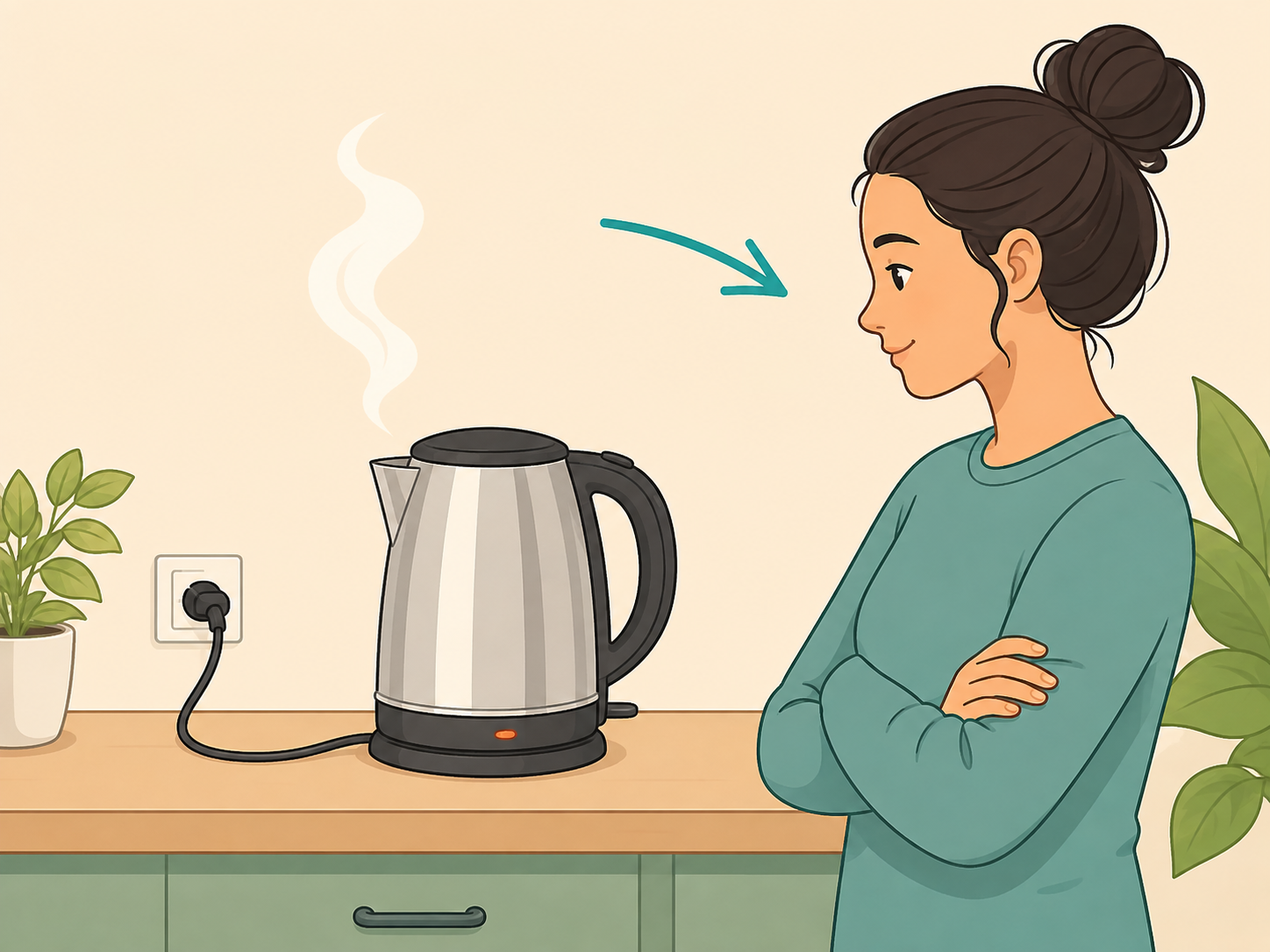
Stay nearby while the kettle heats
Most electric kettles shut off automatically, but you should still stay in the kitchen while one is heating. The U.S. Fire Administration advises people to unplug small appliances when not in use and replace appliances with cracked, damaged, or loose cords.
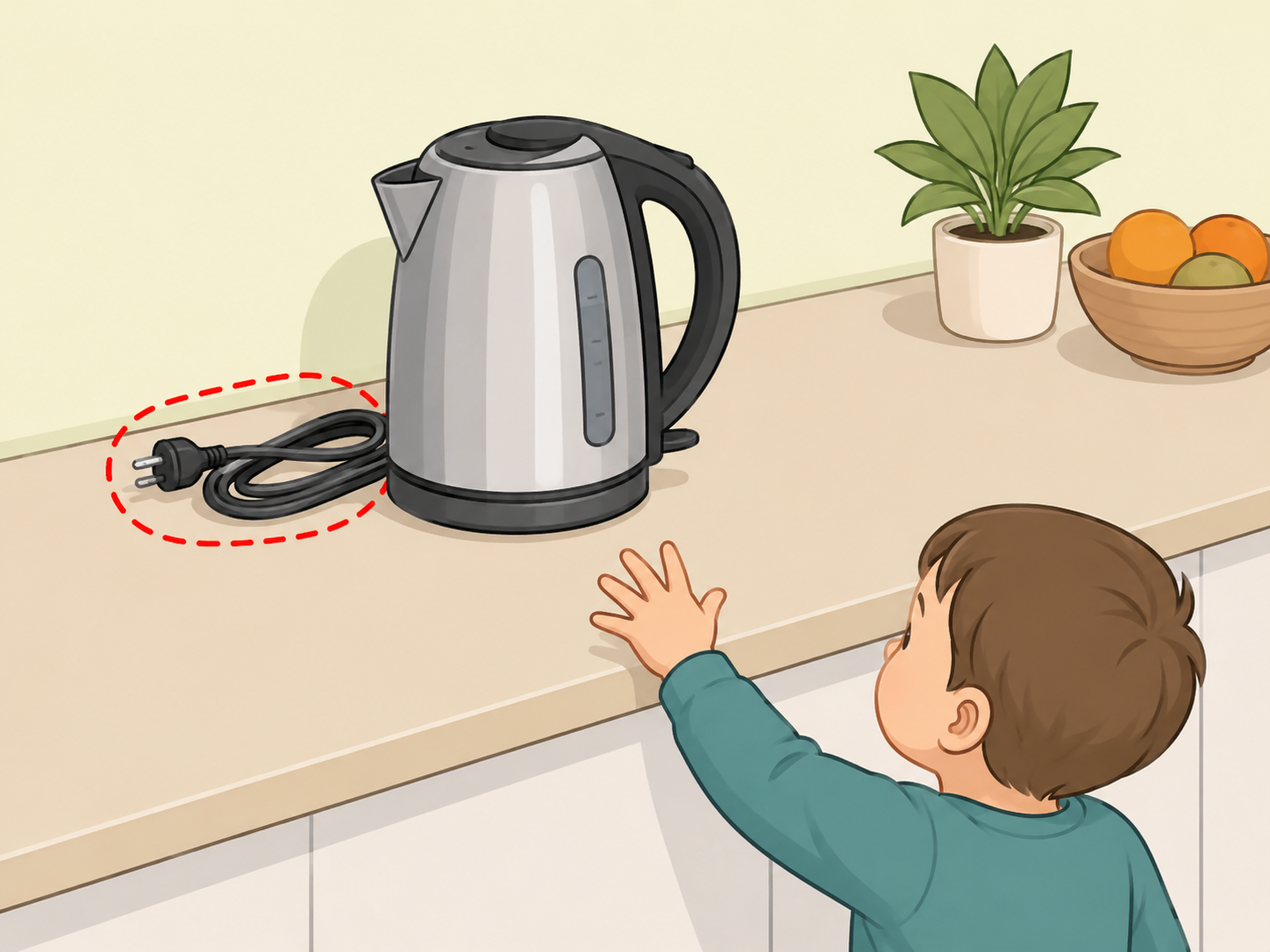
Turn the spout and cord away from children
Place the kettle where the cord does not hang over the counter and the spout is not aimed toward the counter edge. Health Canada warns that children can be hurt if they pull an appliance cord and bring a hot product down on themselves.
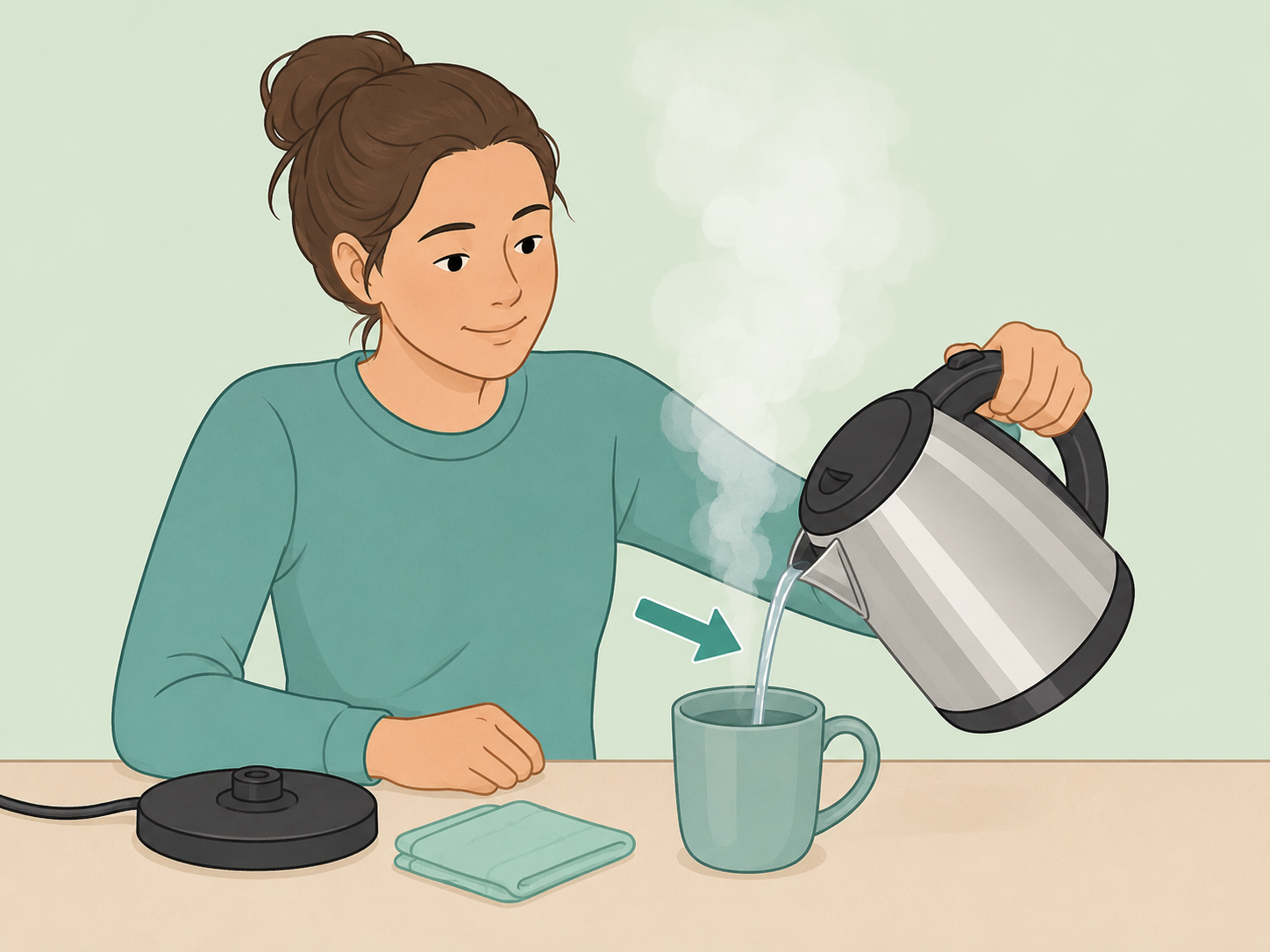
Let the kettle finish before pouring
Wait for the kettle to click off or stop boiling before you lift it. Open the lid only if the steam has settled, then pour slowly with the spout close to the cup so hot water does not splash back.
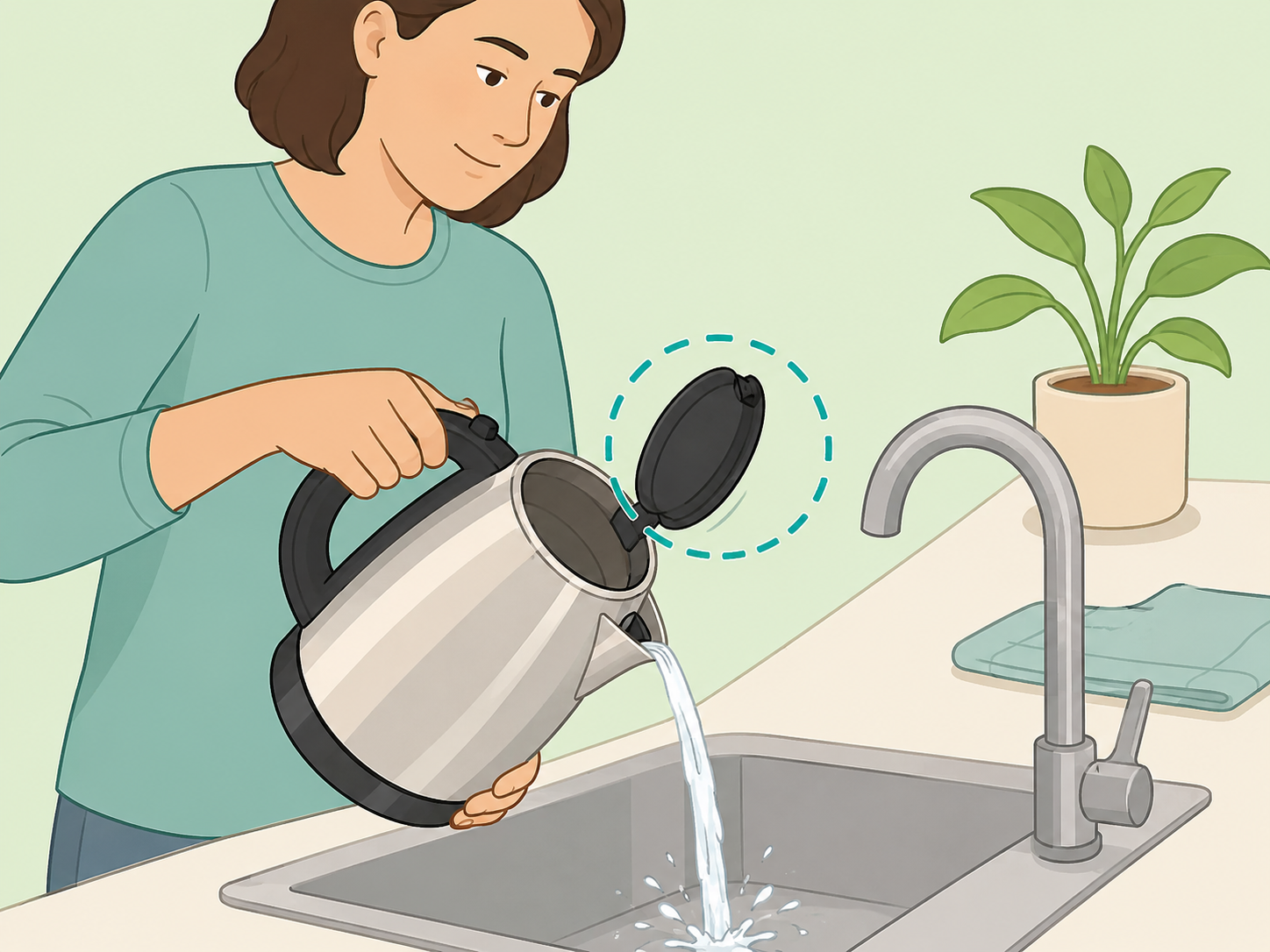
Empty leftovers and air the kettle out
After pouring, switch the kettle off, unplug it if you are done, and empty leftover water once it has cooled. Leaving the lid open for a short time helps the inside dry and makes it easier to spot new scale before it builds up.
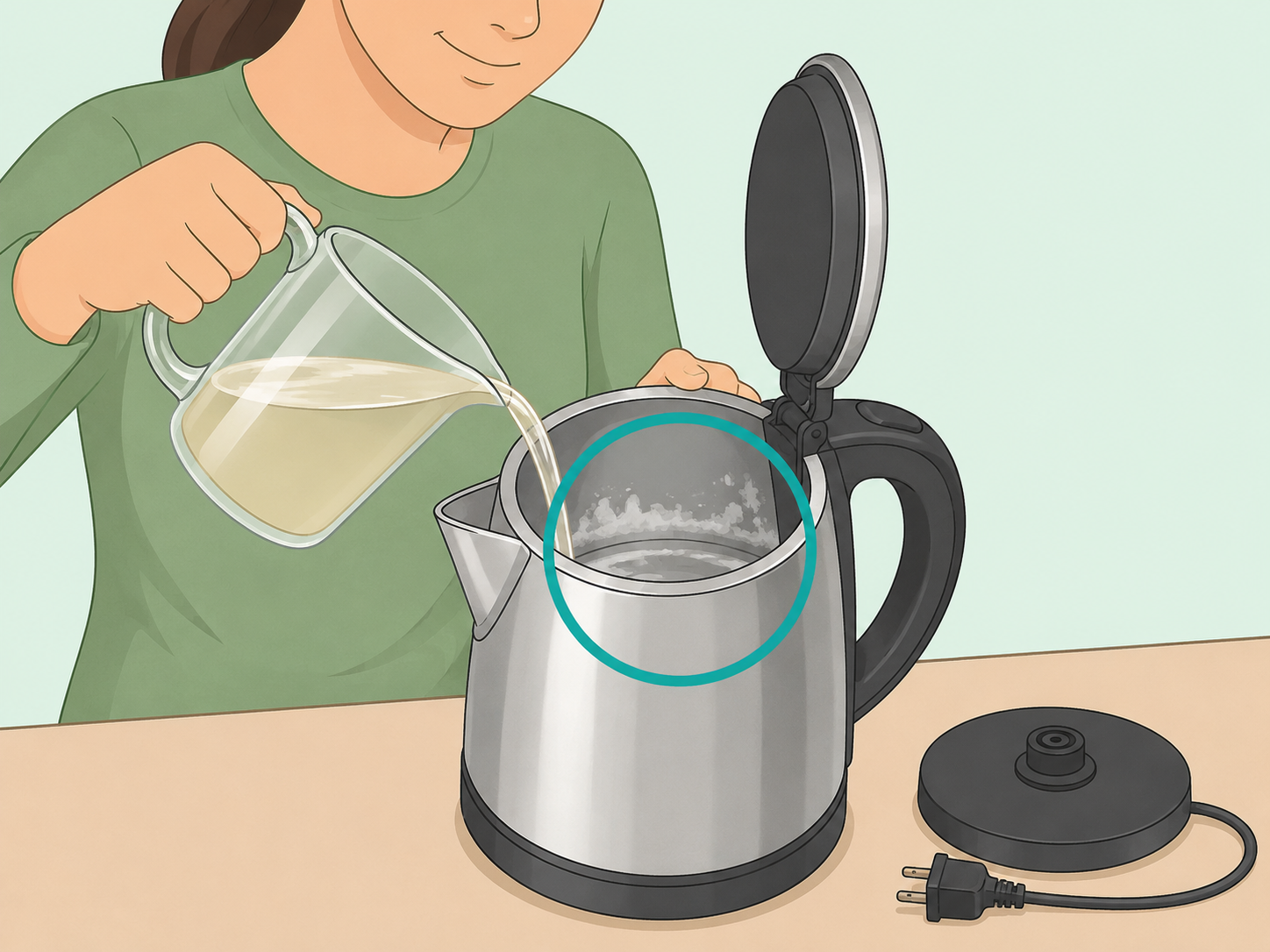
Descale white deposits when they appear
White deposits inside a kettle are usually mineral scale from calcium and magnesium in water. Milwaukee Water Works explains that this white scale can be rinsed with warm vinegar; after descaling, rinse the kettle well and boil then discard one plain-water cycle before making drinks.
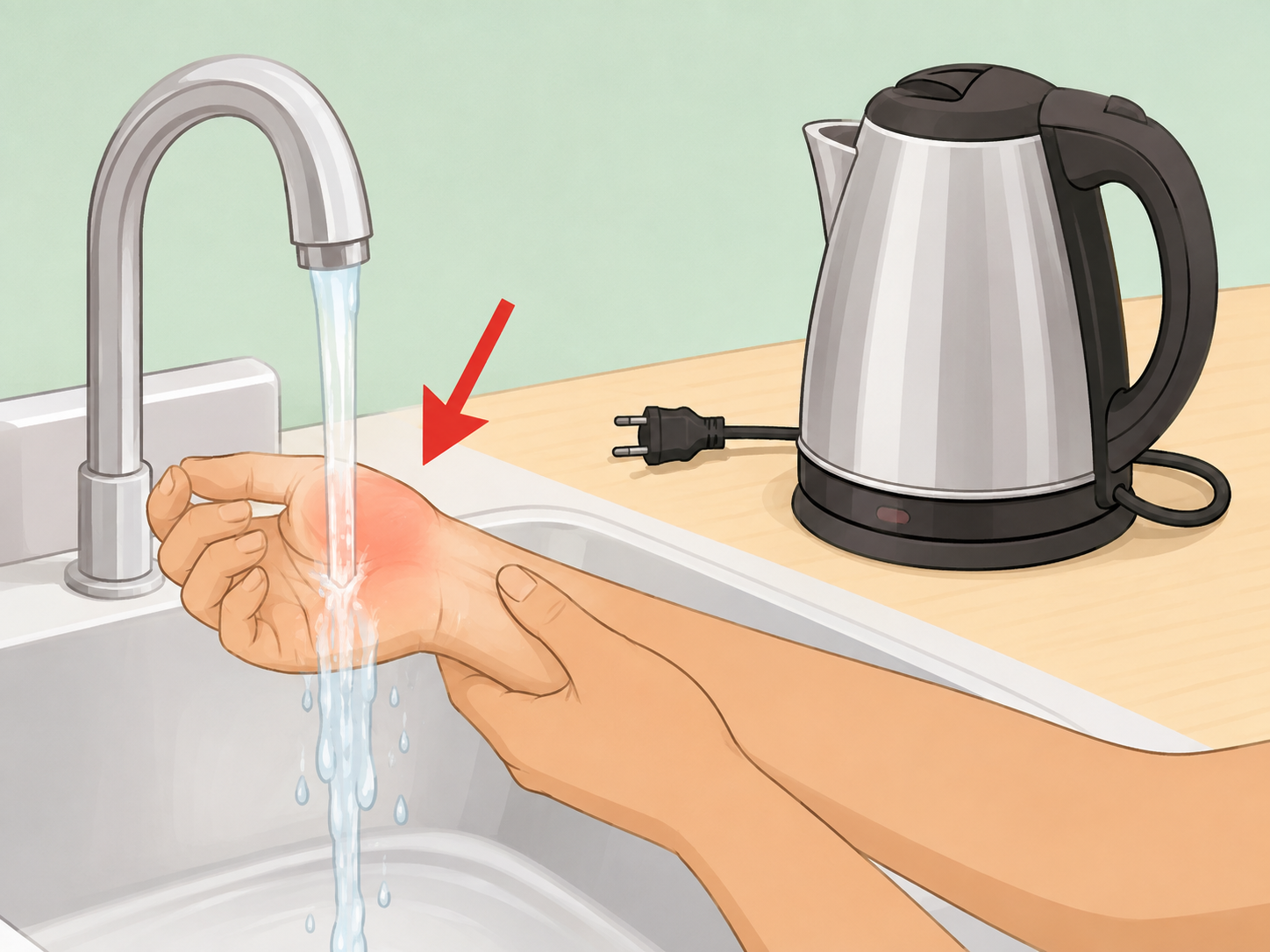
Get help quickly for burns or electrical problems
If someone is burned by hot water or steam, cool the area with cool water and treat it seriously if you are unsure how bad it is. MedlinePlus says to call 911 or seek medical help for large, severe, electrical, chemical, or uncertain burns, or if signs of infection develop.
Summary
The bottom line: use fresh drinking water, fill only to the amount you need, keep the electric parts dry, stay near the kettle, and descale mineral buildup before it becomes heavy. These small habits make kettle use safer, cleaner, and less wasteful.
Frequently Asked Questions
- What is the biggest mistake people make with an electric kettle?
The most common everyday mistake is boiling more water than needed. It takes longer, uses more energy, and can tempt people to refill past the safe line instead of measuring for the cup or pot they are making.
- Is it safe to leave water sitting in an electric kettle?
It is usually not a major safety issue if the kettle is clean and the water source is safe, but fresh water tastes better and makes it easier to notice mineral buildup. Empty leftover water after use if you will not need it soon.
- Can I reboil water in an electric kettle?
Reboiling safe drinking water is not automatically dangerous, but it is wasteful and may taste flat. For the best habit, boil only what you need and refill with fresh drinking water next time.
- Can an electric kettle make unsafe water safe?
Boiling can kill many germs, but it does not remove chemical contamination. During a boil-water advisory, follow your local health department's instructions and use bottled water if officials say boiling is not enough.
- How often should I descale an electric kettle?
Descale whenever you see white mineral deposits, the kettle gets noisier, or boiling takes longer than usual. Homes with hard water may need to do it more often than homes with soft water.
- Can I use freshly boiled kettle water for face care or beauty routines?
No. Freshly boiled water and steam can scald skin. Let boiled water cool fully before using it near your face, hands, or scalp.
References
Reliable references aided in composing and refining this content.
- https://energysavingtrust.org.uk/energy-mistakes-to-avoid/?cats%5B%5D=1906
- https://www.usfa.fema.gov/prevention/home-fires/prevent-fires/appliance-and-electrical
- https://www.canada.ca/en/health-canada/services/home-safety/electrical-products.html
- https://www.cdc.gov/water-emergency/about/index.html
- https://city.milwaukee.gov/water/customer/FAQs/waterappearance/White-scale.htm
- https://medlineplus.gov/ency/article/000030.htm