
 Pin it
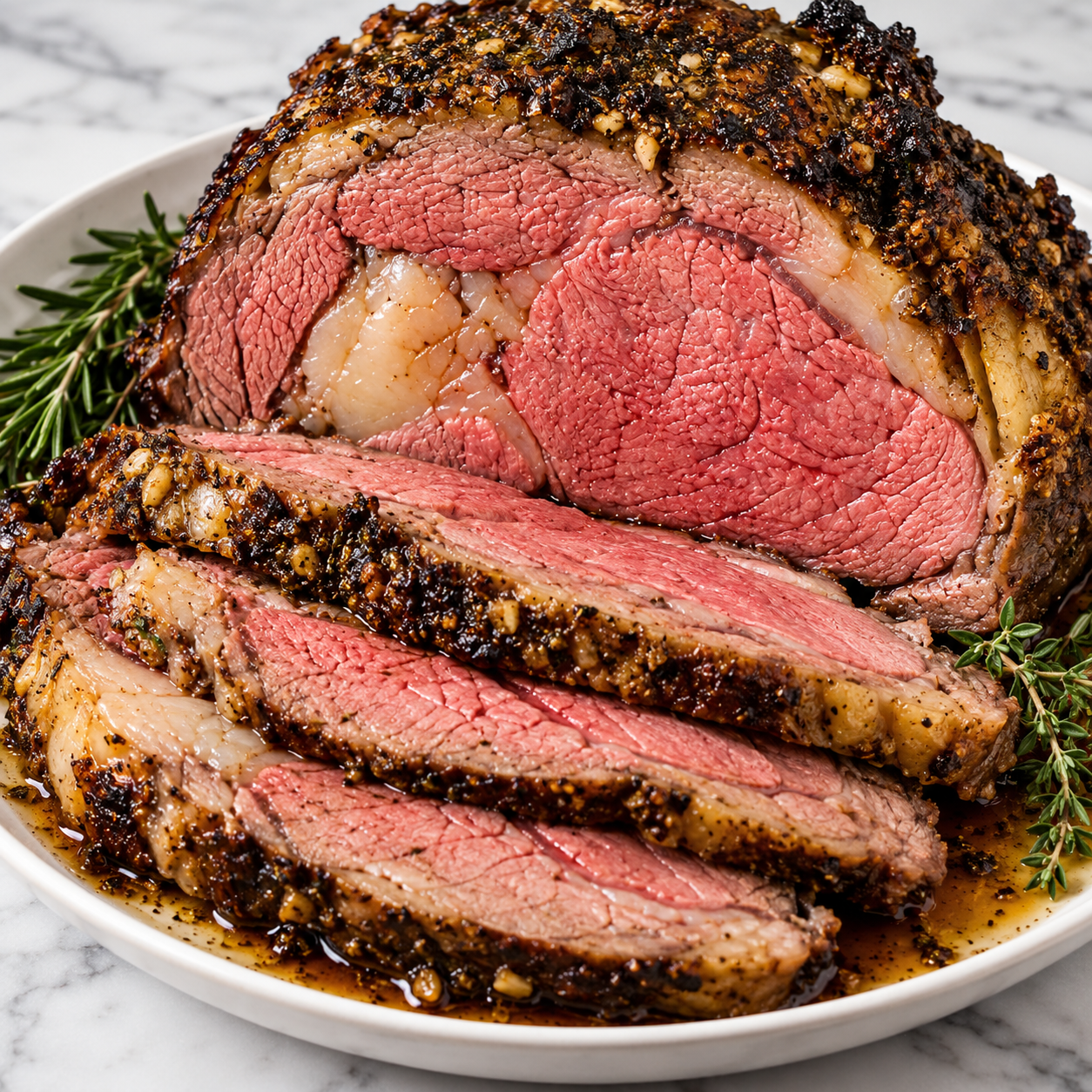
Perfect Prime Rib is the roast I save for the meal that needs to feel generous without making the cook frantic. The meat does most of the work if you season it early and let a thermometer lead the way.
This version uses a low oven first and a short hot finish at the end. You get a rosy center, a savory garlic-herb crust, and enough pan juices for a simple jus. It is calmer than trying to time everything by minutes per pound.
The Roast And Rub
Start with well-marbled beef and keep the seasoning simple. Salt, pepper, garlic, and herbs make the crust savory without hiding the flavor of the roast.
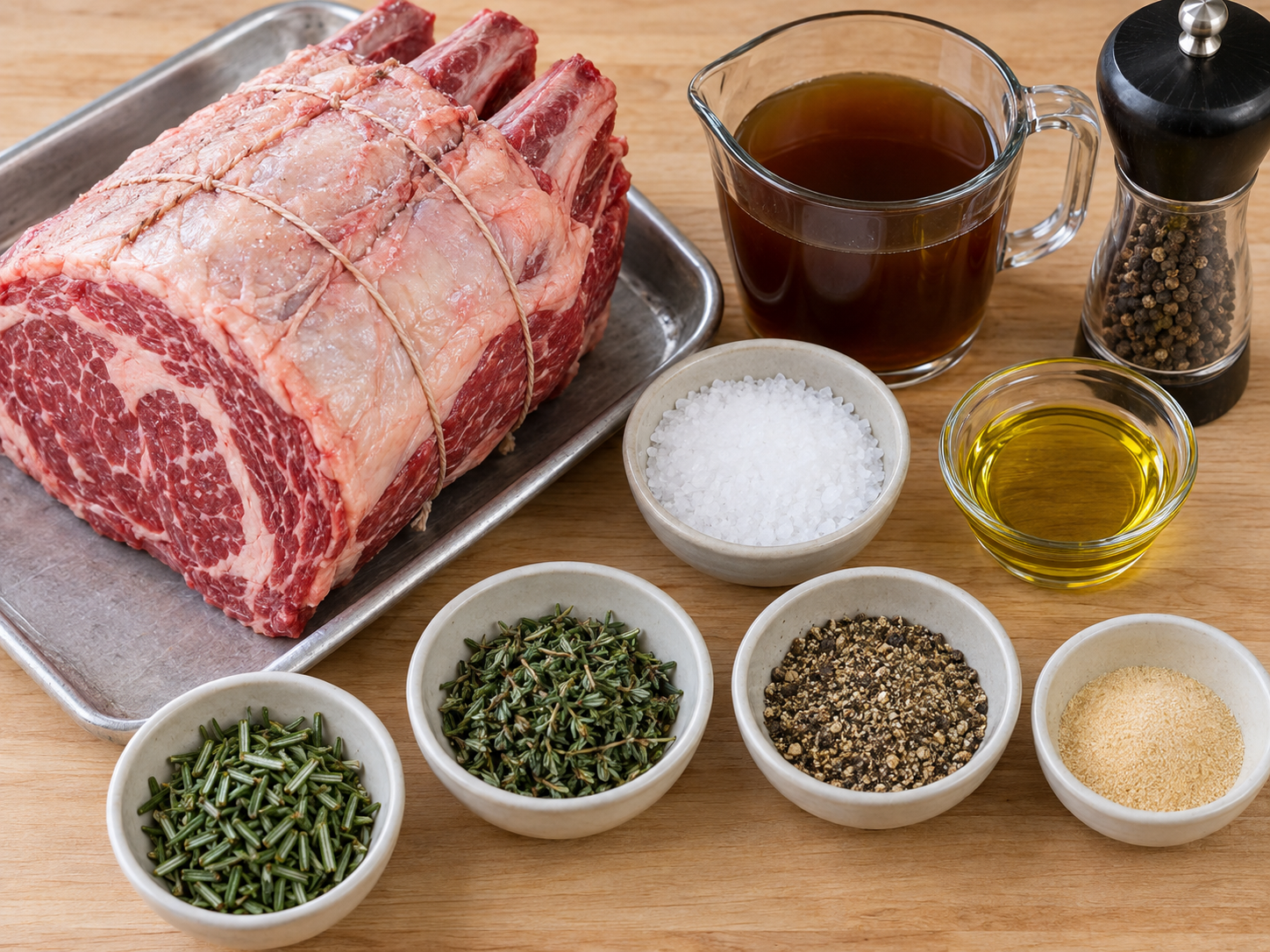
- Standing rib roast. The rich, tender beef cut that gives prime rib its deep flavor and impressive slices.
- Kosher salt. Seasons the meat throughout and helps the surface dry for better browning.
- Black pepper. Adds a warm bite that stands up to the beef.
- Garlic powder. Gives steady garlic flavor without burning during the hot sear.
- Rosemary and thyme. Bring a woodsy holiday aroma to the crust.
- Olive oil. Helps the rub cling evenly to the fat cap and sides.
- Beef broth. Turns the browned pan drippings into a quick, savory jus.
How To Cook Perfect Prime Rib
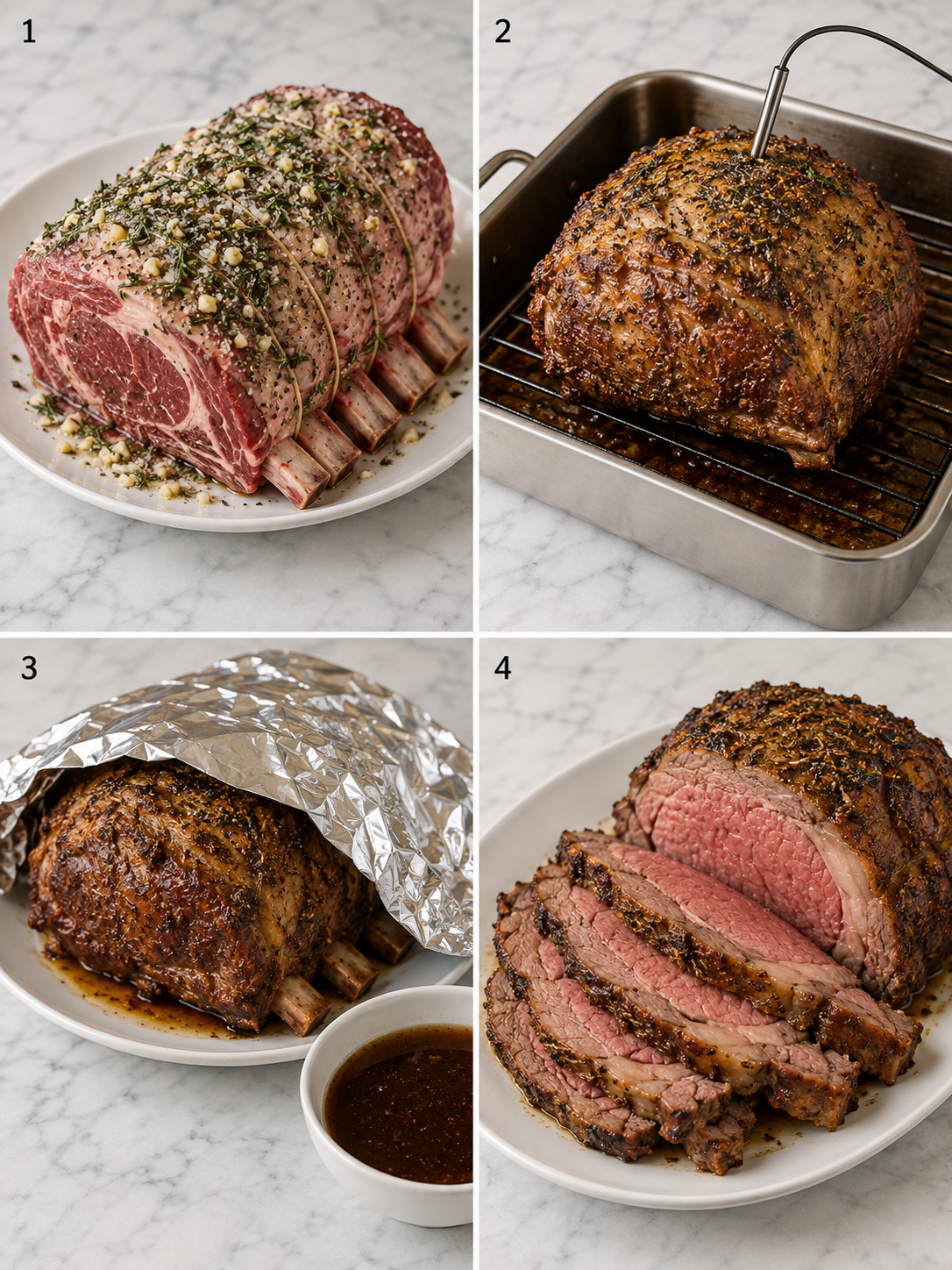
- Season ahead. Pat the roast dry, rub it all over with salt, pepper, garlic powder, rosemary, thyme, and olive oil, then refrigerate it uncovered on a rack overnight.
- Warm and set up. Let the roast sit at room temperature for 1 1/2 to 2 hours. Place it bone-side down in a roasting pan and insert a probe thermometer into the thickest part.
- Roast low. Cook at 250°F until the center reaches 118°F for medium rare or 125°F for medium. This usually takes about 3 to 3 1/2 hours for a 6-pound roast.
- Rest the beef. Move the roast to a board and tent it loosely for 30 to 45 minutes. The juices settle and the temperature keeps rising gently.
- Sear the crust. Heat the oven to 500°F, return the roast to the pan, and roast for 6 to 10 minutes until the outside is browned and sizzling.
- Slice and serve. Cut away the bones if needed, carve against the grain into thick slices, and spoon warm pan jus over the meat.
Why Low Heat Works
Prime rib is too expensive for rough guessing. A low oven lets the center climb slowly, so the outer slices stay tender instead of turning gray before the middle is ready. The hot finish then browns the outside right before serving.
The USDA lists 145°F with a rest as the safe minimum for beef roasts, which you can review in the USDA safe temperature chart. Many cooks prefer prime rib less done for texture. If you serve it medium rare, use fresh beef, clean handling, and an accurate thermometer.
Perfect Prime Rib Timing
For a 6-pound bone-in roast, plan on 20 minutes of active prep, an overnight dry brine, about 3 hours of low roasting, and a 30 to 45 minute rest. Larger roasts can take longer, but they do not scale in a neat straight line.
FoodSafety.gov notes that roasting charts are guides and that a food thermometer is the real check. Their meat and poultry roasting charts are helpful for planning the meal around a large roast.
Serving The Roast
Keep the sides steady and not too sweet. Mashed potatoes, green beans, roasted carrots, and a sharp horseradish sauce all make sense with rich beef. For a bright starter, Cowboy Caviar brings crunch and acid before the main course.
If you want dessert after a heavy dinner, go tart or nutty instead of overly rich. Homemade Lemon Meringue Pie cuts through the meal nicely, while Pecan Cheesecake Squares work well for a holiday tray.
Easy Flavor Changes
The basic salt and pepper crust is enough, but you can shift the flavor without changing the method. Add Dijon under the herb rub for a tangy crust. Mix in crushed fennel seed for a steakhouse feel. For a cleaner roast, skip herbs and use only salt, pepper, and garlic powder.
Keep wet ingredients light. A thick paste can steam the surface and slow browning. If you like bigger beef flavors, serve sauces on the side instead of burying the roast.
Leftovers Worth Keeping
Chill leftover prime rib in shallow containers and slice only what you need. Reheat slices in a covered skillet with a spoonful of broth over low heat. Stop as soon as the meat is warm.
Thin leftover slices make excellent sandwiches, hash, or quick beef bowls. If your family likes cozy beef dinners, save a few scraps for ideas inspired by Cornish Beef Pasties or use them in a low-carb plate with the same comfort as Low Carb Bacon Cheeseburger Casserole.
Summary
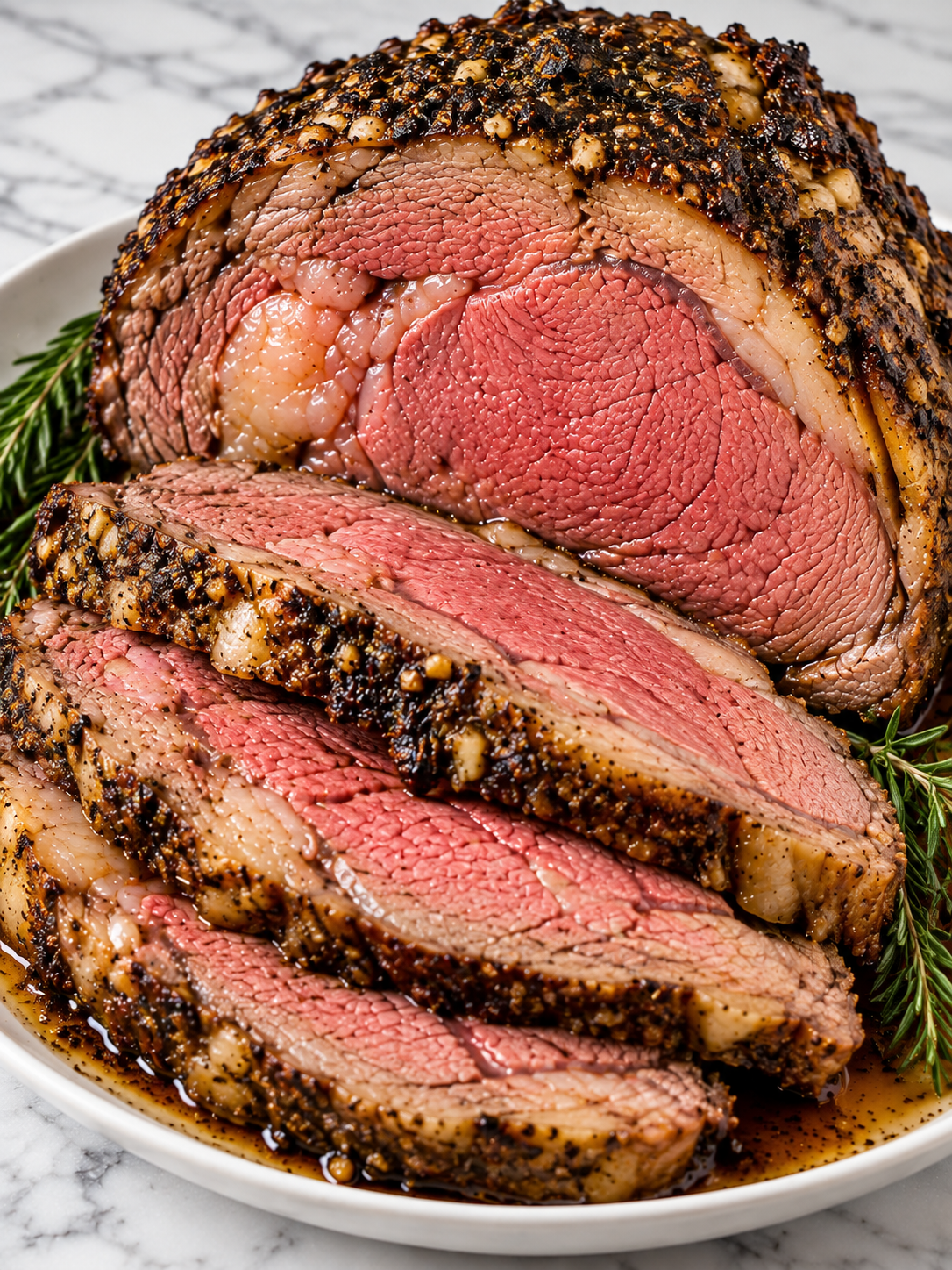
Serve the roast hot from the final sear with pan jus, horseradish, and simple sides. Save thin slices for sandwiches the next day.
Frequently Asked Questions
- What cut should I buy for Perfect Prime Rib?
-
Buy a standing rib roast, also sold as prime rib or bone-in rib roast. Ask the butcher to trim the fat cap to about 1/4 inch and cut the bones away, then tie them back on for easier carving.
- Can I make this with a boneless rib roast?
-
Yes. Tie a boneless roast every 1 1/2 to 2 inches so it holds an even shape. Start checking the temperature earlier because boneless roasts often cook a little faster than bone-in roasts.
- How long does prime rib take to cook?
-
At 250°F, a 6-pound roast usually takes about 3 to 3 1/2 hours before the final sear. Shape, starting temperature, and oven accuracy all matter, so use time as a planning guide only.
- What temperature is medium rare prime rib?
-
For medium rare, pull the roast from the low oven around 118°F to 120°F. It should rise a few degrees as it rests, then get a quick hot sear before slicing.
- Can I season prime rib the night before?
-
Yes, and it is worth doing. Salt the roast and leave it uncovered on a rack in the refrigerator overnight. The surface dries slightly, which helps the crust brown.
- How do I store leftover prime rib?
-
Refrigerate leftovers in an airtight container within 2 hours. Use them within 3 to 4 days, and reheat slices gently with a splash of broth so the meat does not overcook.
