
 Pin it
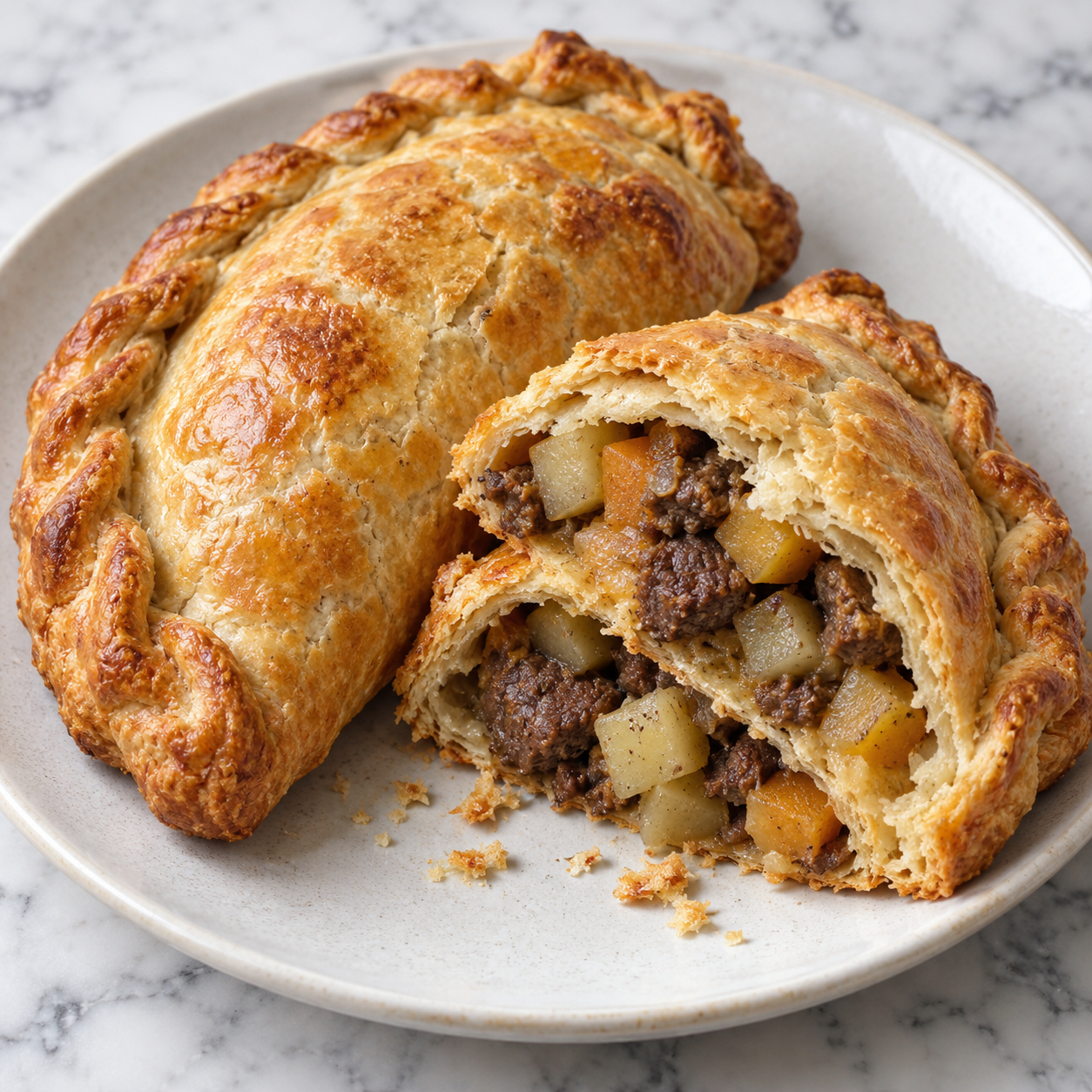
Cornish Beef Pasties are sturdy little meals wrapped in pastry. The filling is simple, just beef, potato, swede, onion, salt, and pepper, but it turns rich in the oven as the juices stay trapped inside the crimped crust.
This version keeps the spirit of the classic while staying practical for a home kitchen. The pastry is firm enough to hold, the filling is diced small so it cooks through, and the crimp seals in that savory steam.
The Proper Pasty Filling
Good pasties start with plain ingredients cut to the right size. Keep the beef and vegetables small, about 1/4 inch, so everything cooks at the same pace inside the sealed pastry.
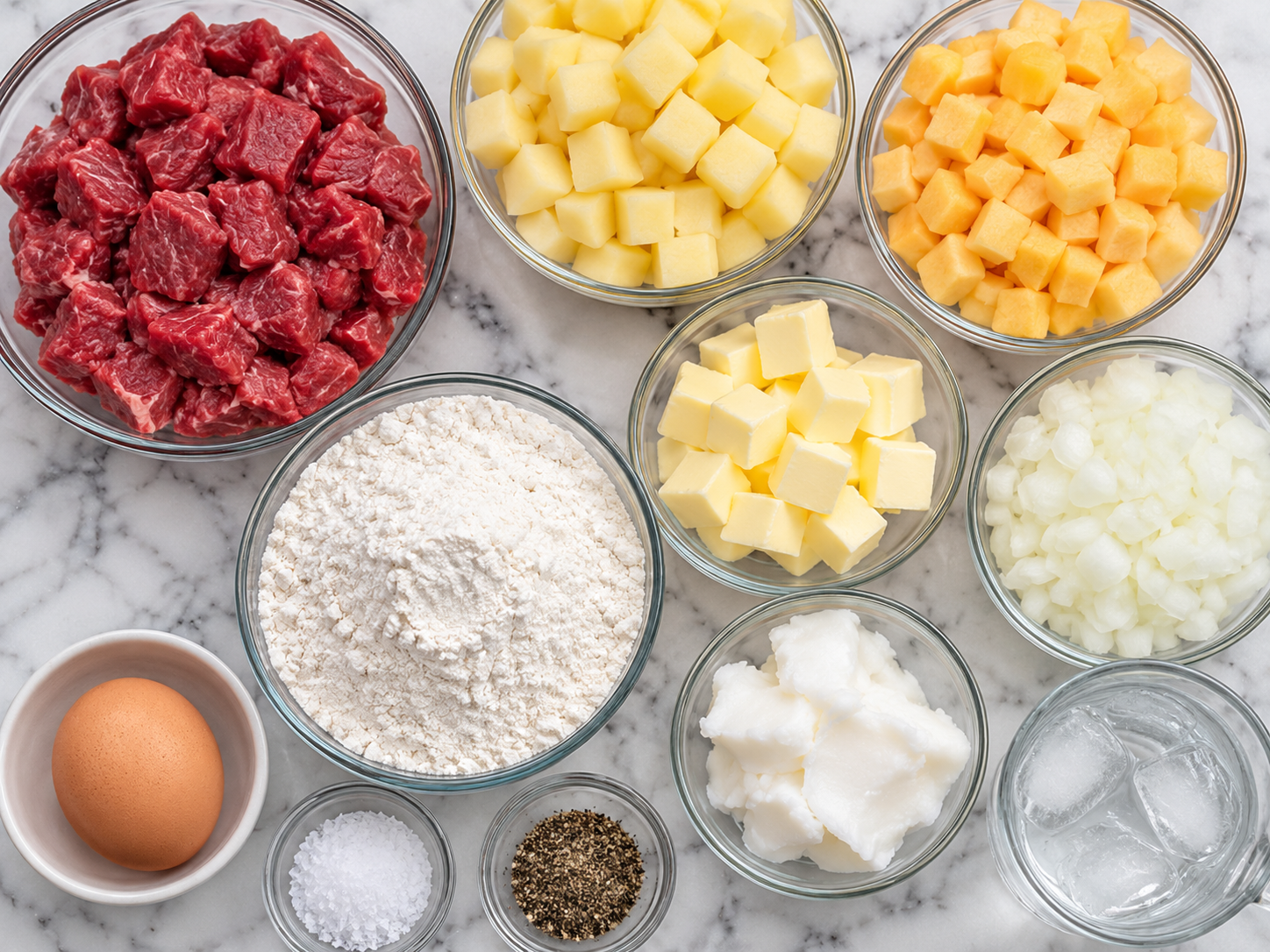
- Beef skirt or chuck. Gives the filling deep savory flavor and stays juicy when baked inside the pastry.
- Waxy potato. Adds body and soft, creamy bites without turning mushy.
- Swede or rutabaga. Brings earthy sweetness, which is part of the traditional Cornish taste.
- Yellow onion. Melts into the beef juices and keeps the filling from tasting flat.
- Butter and lard. Make a sturdy, flaky pastry with enough strength to hold the raw filling.
- Salt and black pepper. Pasties need confident seasoning because the filling is enclosed.
- Egg wash. Gives the crust a glossy golden finish and helps seal the edge.
Build Cornish Beef Pasties
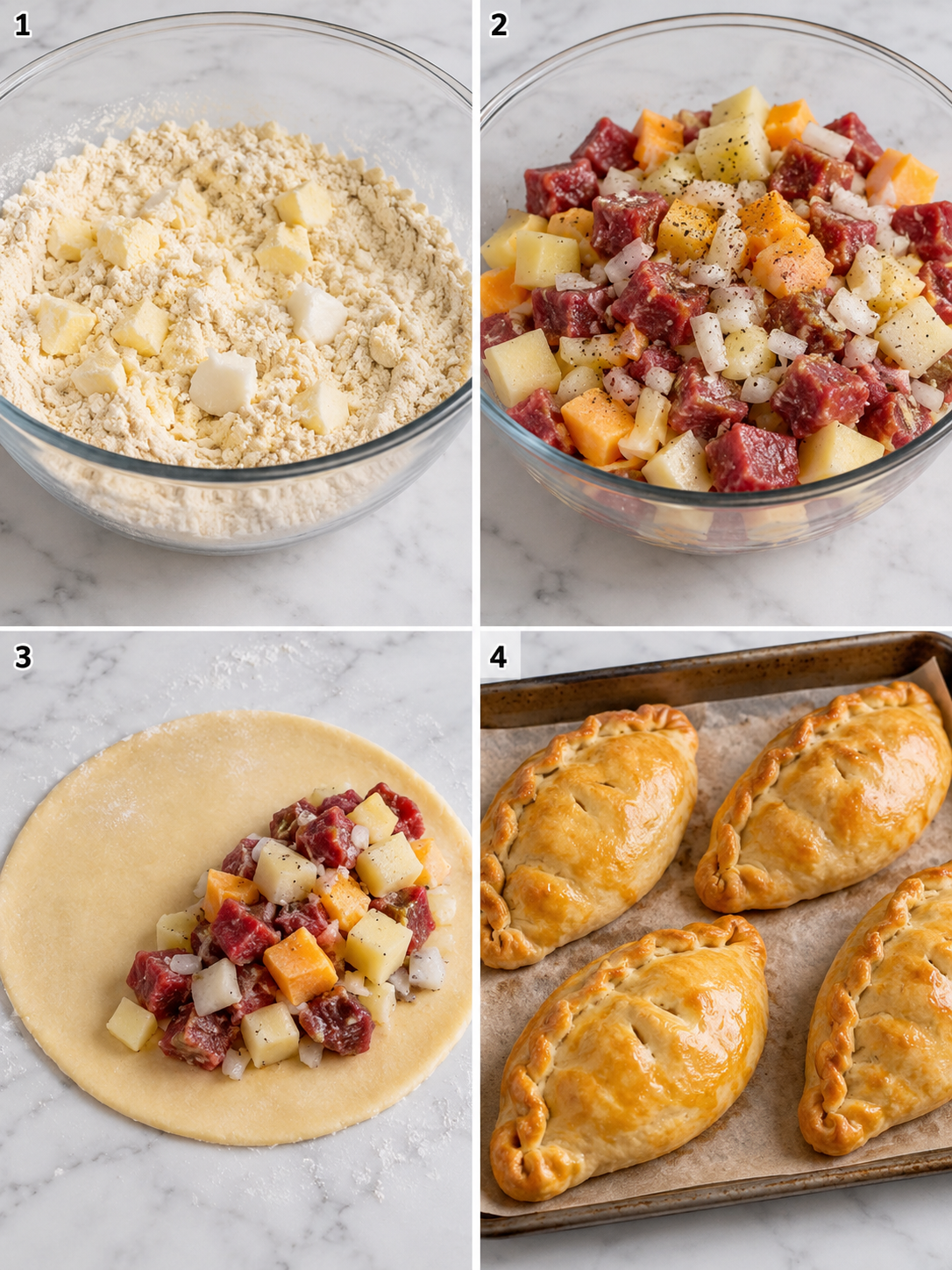
- Make the pastry. Rub cold butter and lard into flour and salt until the mixture looks crumbly with a few pea-size pieces. Add ice water slowly, knead just until smooth, then chill for at least 45 minutes.
- Prepare the filling. Dice the beef, potato, swede, and onion into small pieces. Toss with salt, plenty of pepper, and a few tiny knobs of butter.
- Roll the rounds. Divide the dough into 6 pieces and roll each one into an 8-inch circle. Keep the dough cool and flour the counter lightly so it does not stick.
- Fill and crimp. Spoon filling over one half of each round, leaving a wide border. Fold over, press out trapped air, seal, then crimp the edge firmly along the side.
- Glaze and bake. Brush with beaten egg, cut a small steam slit, and bake at 400°F for 15 minutes. Reduce to 350°F and bake 35-40 minutes more until deeply golden.
- Rest before eating. Let the pasties sit for 10 minutes. The filling will be very hot, and the juices settle into the potato as they cool slightly.
Why Raw Filling Works
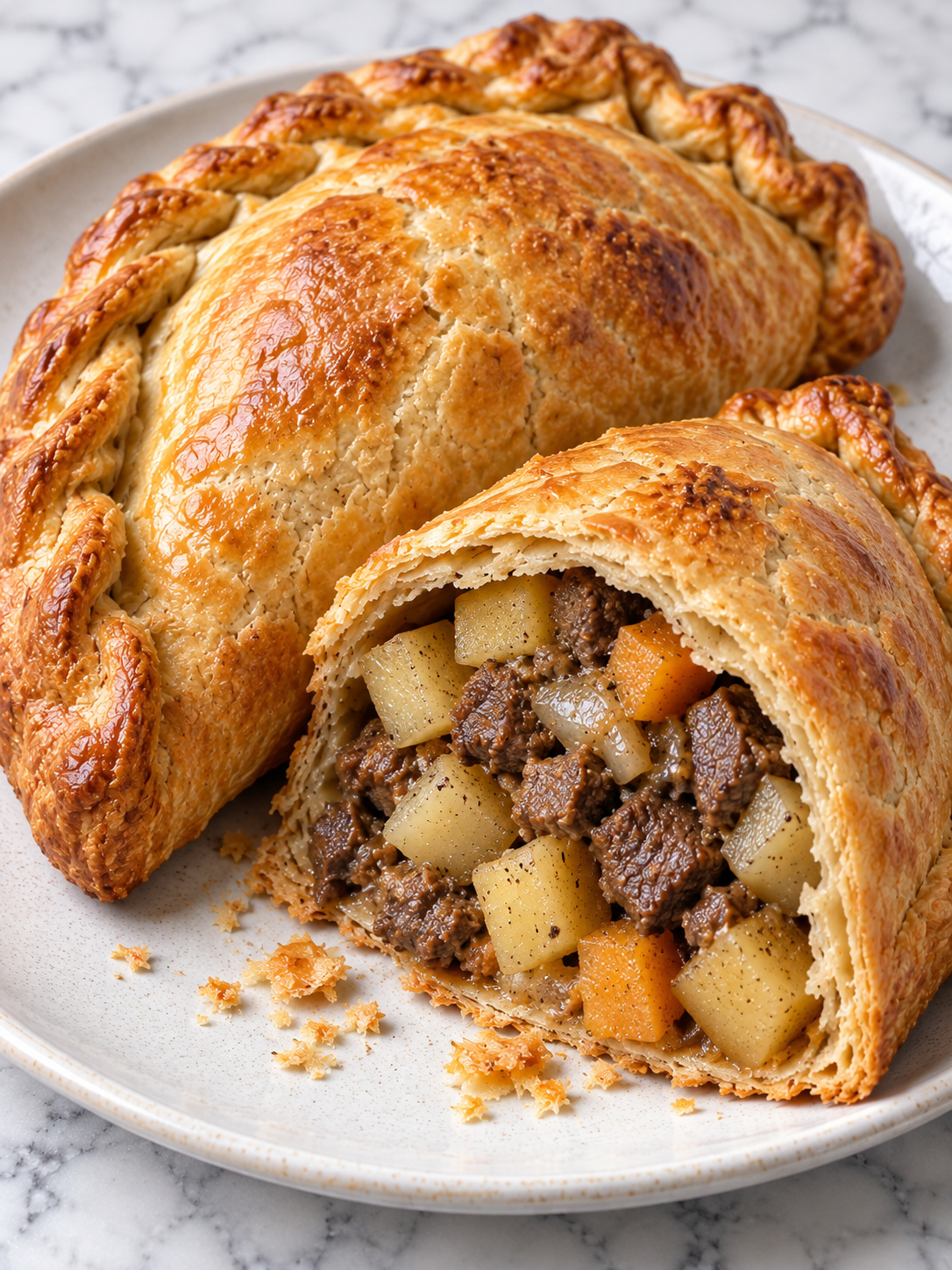
The traditional method uses raw beef and raw vegetables. That sounds risky at first, but it is the reason the filling tastes so rich. The sealed pastry traps steam, the onion releases moisture, and the beef juices season the potato as everything bakes together.
The Cornish Pasty Association lists beef, potato, swede, onion, salt, and pepper as the core filling for a genuine Cornish pasty. If you are making these outside Cornwall, think of this as a respectful homemade version. For a saucier beef dinner on another night, try slow cooker ground beef stroganoff.
The Crust Needs Backbone
A pasty crust is not delicate pie pastry. It needs enough structure to fold, crimp, and hold a hot filling without tearing. A mix of butter and lard gives flavor plus strength. If you prefer not to use lard, cold vegetable shortening works, though the flavor is milder.
Resting matters. After mixing, the dough should feel smooth and cool, not greasy. A 45-minute chill relaxes the gluten and firms the fat, which makes rolling easier. Roll the circles evenly rather than paper-thin. If the pastry is too thin near the crimp, the juices will find that weak spot.
Seasoning Inside The Shell
Because the filling is enclosed, you cannot fix blandness at the end. Season the raw mixture with enough salt and black pepper to smell peppery before it goes into the pastry. A tiny pinch of thyme is useful, but keep it quiet. The main flavor should be beef, onion, and buttery pastry.
If you enjoy beef with stronger sauces, save those cravings for dishes like Mongolian beef or sticky teriyaki beef. These pasties are gentler. Their comfort comes from steam, fat, and time.
Freezing And Reheating
Pasties freeze well before or after baking. For unbaked pasties, freeze them on a tray until firm, then bag them. Bake from frozen at 375°F, adding 15-20 minutes. Brush with egg wash right before baking so the crust browns properly.
Cooked leftovers keep best in the fridge for 3-4 days. The USDA recommends using cooked leftovers within that window in its leftovers food-safety guide. Reheat pasties in a 350°F oven until hot in the center. The microwave softens the crust, so use it only when speed matters.
Easy Variations
Carrot is common in many home versions, though it is not part of the protected Cornish formula. Add a small handful if you like a sweeter filling. You can also swap chuck for leftover roast beef, but add it in small cubes with an extra spoonful of butter because cooked meat will not release as much juice.
For a larger beef meal plan, use these pasties as the make-ahead bake and keep a quick skillet dinner like beef chow fun for a night when you want dinner faster. The ingredients are different, but both reward careful cutting before the heat goes on.
Summary
Homemade Cornish Beef Pasties are best when the pastry is cold, the filling is raw and finely diced, and the crimp is firm. Bake them until the crust is deep golden and give them a short rest before serving.
Frequently Asked Questions
- What cut of beef is best for Cornish Beef Pasties?
-
Beef skirt is the classic choice because it has strong flavor and cooks tender when diced small. Chuck steak also works well. Avoid very lean steak unless you add a little extra butter to the filling.
- Can I use ground beef instead?
-
You can, but the texture will be softer and less traditional. If using ground beef, keep it raw, break it into small pieces, and season it well before filling the pastry.
- What is swede in the United States?
-
Swede is usually sold as rutabaga in U.S. grocery stores. It tastes earthy and slightly sweet after baking. Turnip can be used in a pinch, but rutabaga is closer.
- Can I make the pasties ahead?
-
Yes. Assemble them and chill for up to 24 hours before baking. You can also freeze unbaked pasties on a tray, then store them in a freezer bag for up to 3 months.
- How do I stop pasties from leaking?
-
Do not overfill them. Leave a clear border, brush the edge lightly with egg, and crimp firmly all the way around. A small steam slit helps pressure escape without splitting the side.
- What should I serve with Cornish Beef Pasties?
-
They are filling on their own, but a sharp green salad, peas, pickled onions, or brown sauce all work. For a bigger dinner, serve one pasty with roasted carrots or cabbage.
