
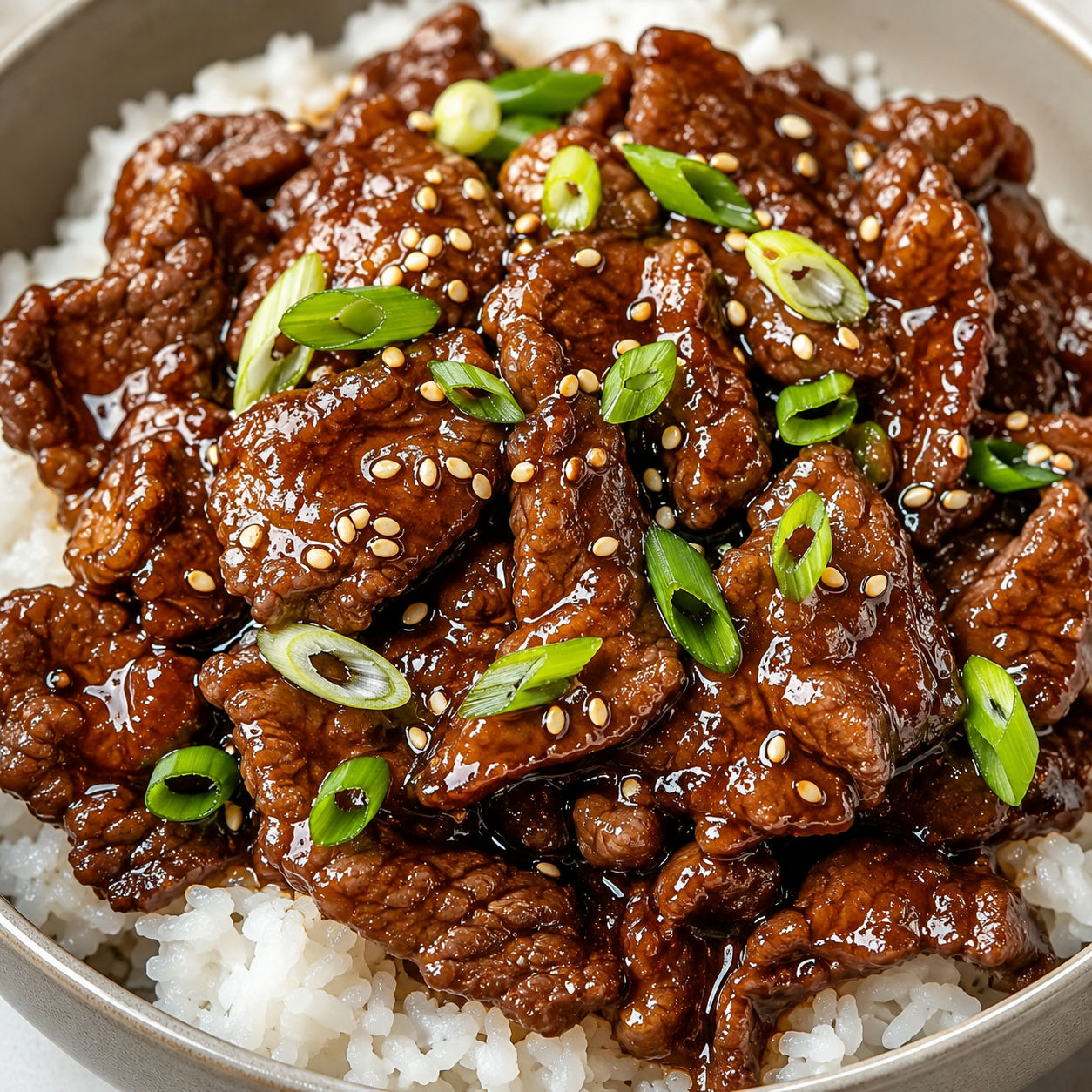
 Pin it
Sweet, savory, sticky, and loaded with flavor, this Teriyaki Beef comes together fast when the beef is sliced thin and the sauce is ready before the pan gets hot. The edges brown quickly, then the sauce bubbles into a shiny glaze that coats every strip.
I like this on a busy night because it feels like takeout without waiting for delivery. Start the rice first, keep the beef in a single layer as it sears, and dinner lands on the table with very little fuss.
Sticky Teriyaki Beef Lineup
Choose beef with visible grain so you can slice across it. Low-sodium soy sauce keeps the glaze savory without turning harsh, and fresh garlic and ginger make the sauce taste cooked from scratch.
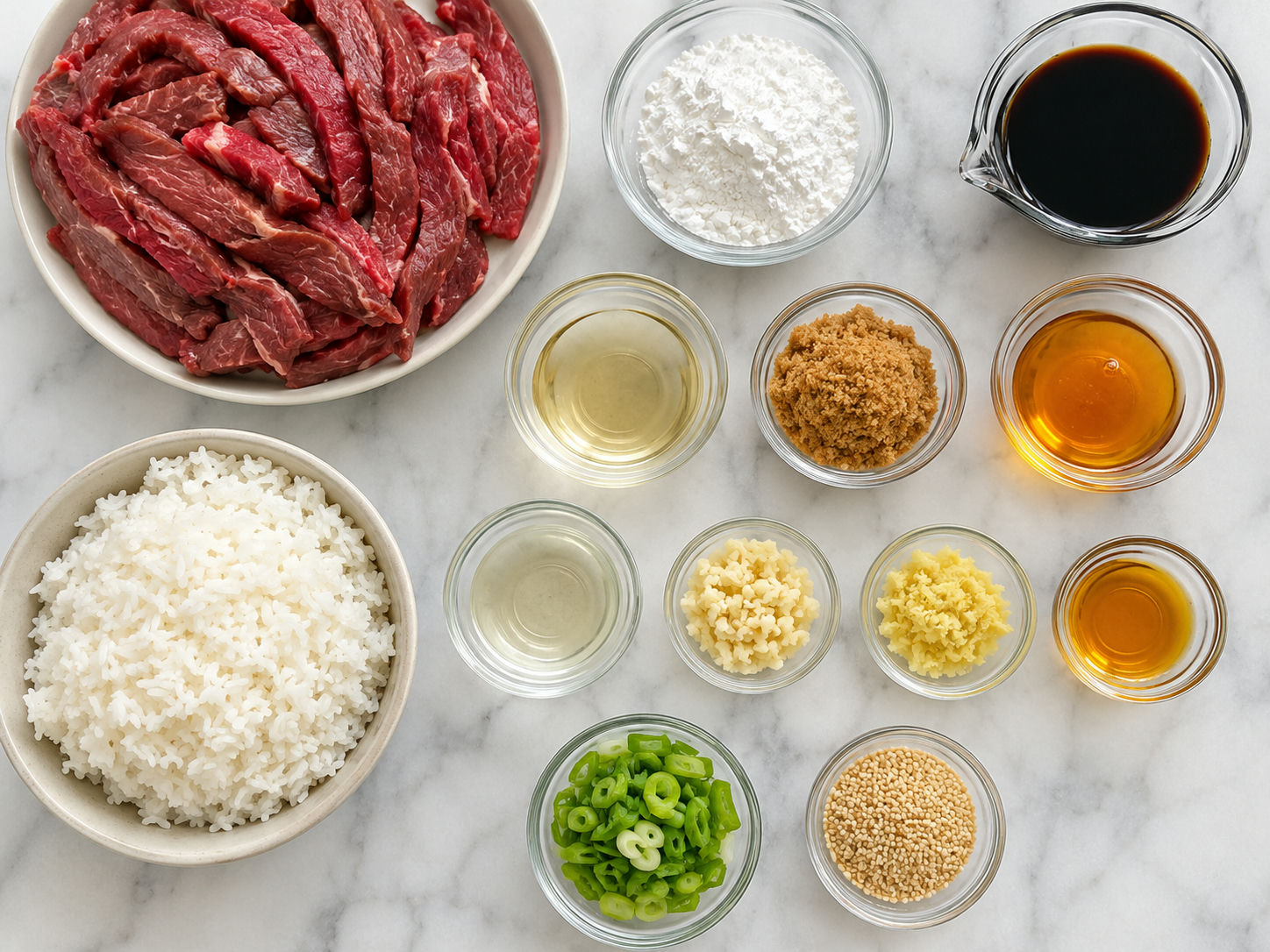
- Flank steak or sirloin. Thin slices sear fast and stay tender when cut across the grain.
- Cornstarch. Gives the beef a light coating and helps the sauce cling.
- Neutral oil. Handles high heat without adding a strong flavor.
- Low-sodium soy sauce. Brings the salty, savory base of the teriyaki glaze.
- Mirin. Adds gentle sweetness and shine. Water with a little extra sugar works in a pinch.
- Brown sugar and honey. Build the sticky finish and balance the soy sauce.
- Rice vinegar. Keeps the sauce from tasting flat or too sweet.
- Garlic and ginger. Add warmth and bite in the background.
- Sesame oil. Goes in at the end for a toasted aroma.
- Green onions and sesame seeds. Finish the bowl with freshness and crunch.
Sweet Sticky Teriyaki Beef Method
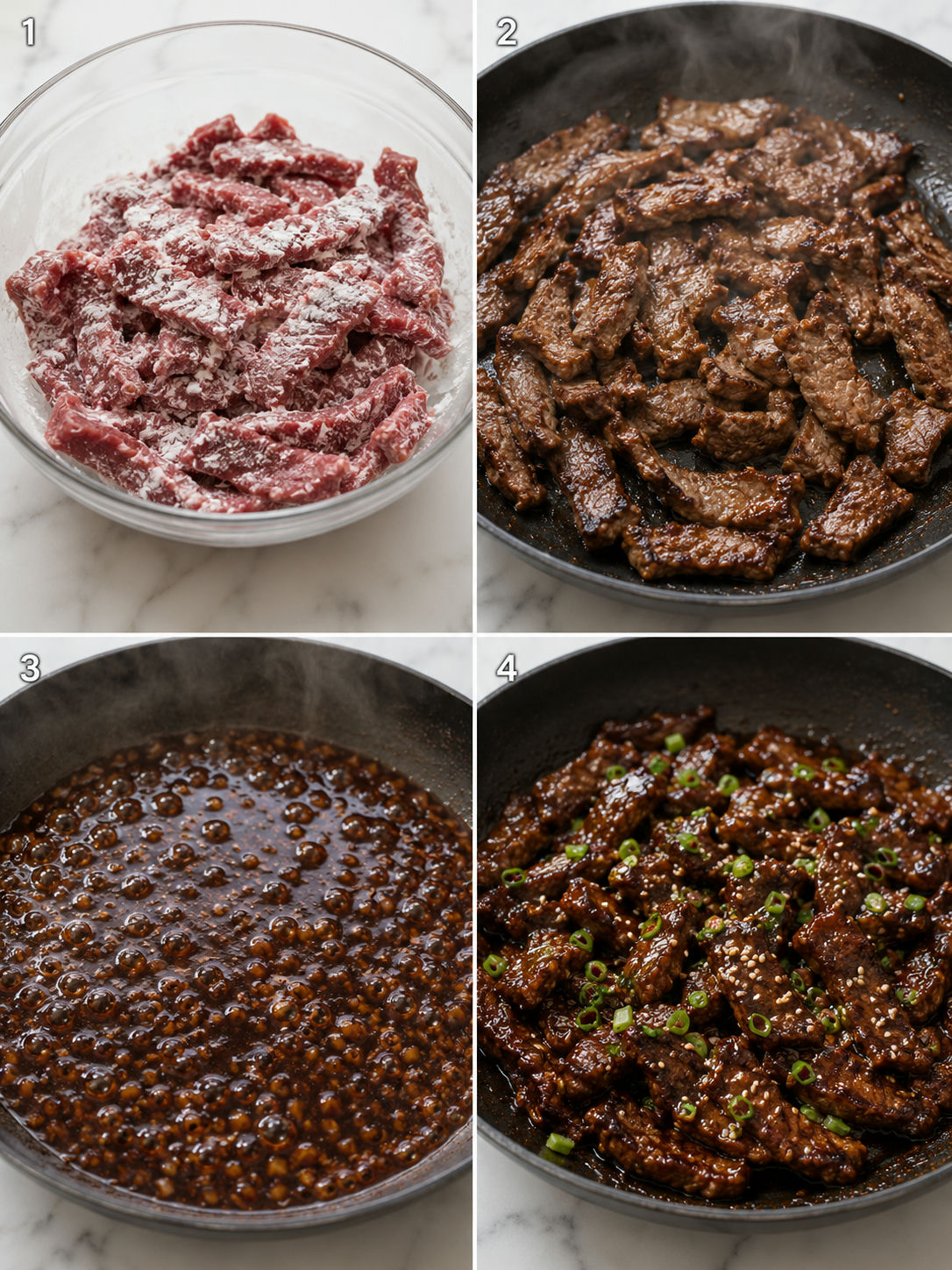
- Slice the beef. Freeze the steak for 15 minutes if it feels soft, then slice it thinly across the grain. Pat it dry and toss with cornstarch.
- Mix the sauce. Whisk soy sauce, water, mirin, brown sugar, honey, rice vinegar, garlic, ginger, and the cornstarch slurry in a small bowl.
- Sear in batches. Heat oil in a large skillet until shimmering. Cook the beef in a single layer for 1-2 minutes per side, then move it to a plate.
- Bubble the glaze. Lower the heat to medium. Pour in the sauce and scrape up the browned bits as it thickens.
- Coat the beef. Return the beef and toss for 1-2 minutes until glossy and hot.
- Finish and serve. Stir in sesame oil, then top with green onions and sesame seeds. Spoon it over hot rice right away.
Thin Slices Matter Most
The tenderness starts before the beef hits the pan. Look closely at the meat and find the long muscle fibers. Slice across those lines, not with them. That shortens the fibers so each bite pulls apart easily.
A brief chill in the freezer helps a lot. The steak firms up enough to cut cleanly, which means thinner strips and faster cooking. Keep the pieces about 1/4 inch thick. If they are much thicker, the sauce may reduce before the centers are ready.
This same slicing habit helps with saucy beef dinners like Sizzling Saucy Asian Beef Stir-Fry and Best Beef Broccoli Noodles. Once you learn the angle, it becomes automatic.
The Glossy Sauce Balance
Teriyaki gets its signature shine from a sweet-salty sauce that thickens as it cooks. Traditional versions often lean on soy sauce, mirin, sake, and sugar. For a weeknight skillet, this version keeps the same idea but uses pantry-friendly honey, brown sugar, garlic, ginger, and a small cornstarch slurry. The Mayo Clinic has a simple teriyaki sauce guide that shows the same basic balance of soy, sweetness, and thickening.
Keep the heat at medium once the sauce goes in. It should bubble, turn glossy, and coat a spoon. If it tightens too much, add water one tablespoon at a time. If it tastes too salty, add a small splash of water and a squeeze more honey.
Doneness Without Dry Beef
Because the beef is sliced thin, you do not need a long cook. Sear it quickly, pull it out, and let the sauce finish in the pan. The beef only returns for a minute or two so it can warm through and pick up the glaze.
For food safety, whole beef cuts should reach 145°F with a 3-minute rest, according to the FoodSafety.gov temperature chart. Thin stir-fry strips can move past that point quickly, so use visual cues too. The edges should be browned, the centers should no longer look raw, and the meat should still bend easily when tossed.
Bowls, Noodles, And Veg
Hot steamed rice is the easiest base because it catches every drop of sauce. Short-grain white rice gives the bowl a soft, sticky bite. Jasmine rice smells good with the ginger. Brown rice works too, though it makes the bowl heartier.
Noodles are another good move. Toss the beef with cooked udon, ramen, or rice noodles and loosen the glaze with a splash of water. For more saucy dinner ideas, try Spicy Garlic Beef Noodles or Quick, Saucy, Flavor-Packed Noodle Bowls.
For vegetables, keep them crisp. Broccoli, snap peas, bell peppers, or green beans can cook in the same skillet after the beef comes out. Add the sauce once the vegetables are bright and still snappy.
Leftovers That Reheat Well
Teriyaki Beef keeps nicely if you cool it quickly and store it with some sauce. The USDA advises refrigerating leftovers within 2 hours and using refrigerated leftovers within 3-4 days, as noted in its leftovers safety guidance.
Reheat in a skillet over medium-low heat with a spoonful of water. Stir gently until the sauce loosens and the beef is hot. The microwave works for lunch, but use short bursts and stir between them so the edges do not toughen.
Make It Your Own
For heat, add chili flakes or a spoonful of chili garlic sauce to the teriyaki mixture. For a sweeter, fruitier version, replace a tablespoon of water with pineapple juice. If you need a gluten-free bowl, use certified gluten-free tamari and check every bottled ingredient.
Ground beef also works when you do not want to slice steak. Brown it well, drain excess fat, then simmer it with the sauce until shiny. The texture is different, but it makes a fast rice bowl. If sticky-saucy beef is your dinner lane, Mongolian Beef is another one to keep close.
Summary
This Teriyaki Beef is best served right away over hot rice, with the sauce glossy and the beef still tender. Keep the skillet hot for searing, then lower the heat when the sauce goes in.
Frequently Asked Questions
- What cut of beef is best for Teriyaki Beef?
-
Flank steak, sirloin, or skirt steak all work well because they cook quickly when sliced thin. Cut across the grain so the strips bite tender instead of chewy.
- Can I make this without mirin?
-
Yes. Use water in its place and add an extra teaspoon of brown sugar or honey. The sauce will still be glossy, though mirin gives a rounder sweetness when you have it.
- How do I keep the beef tender?
-
Slice it thin, pat it dry, and sear it in batches over high heat. A light cornstarch coating also helps protect the surface and gives the sauce something to cling to.
- Can I use bottled teriyaki sauce?
-
You can use about 1/2 cup bottled sauce as a shortcut. Taste it first because many bottled sauces are very sweet or salty. Thin it with a splash of water if it feels heavy.
- How long does Teriyaki Beef keep?
-
Store cooled leftovers in an airtight container in the fridge for 3-4 days. Reheat gently in a skillet with a spoonful of water so the sauce loosens without drying out the beef.
- What should I serve with Teriyaki Beef?
-
Steamed white rice is the easiest choice, but jasmine rice, brown rice, noodles, or broccoli all fit. For a bigger bowl, add cucumbers, shredded carrots, or quick sauteed green beans.
