
 Pin it
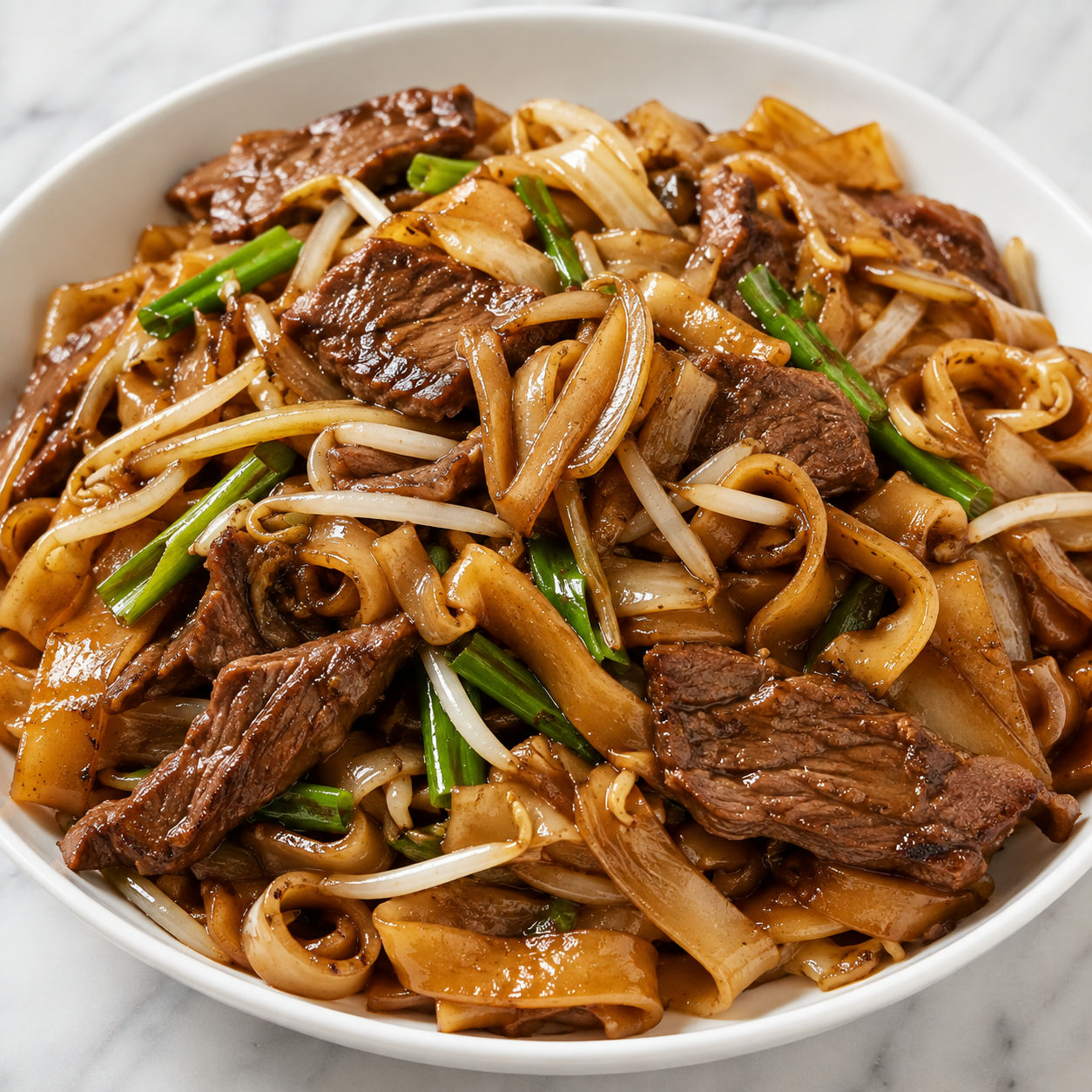
This beef chow fun is the quick stir-fry I make when I want takeout-style noodles without waiting on delivery. The beef gets a short cornstarch marinade, the fresh rice noodles turn glossy in the sauce, and the bean sprouts keep each bite from feeling heavy.
The dish moves fast once the pan is hot. Have the sauce mixed, the scallions cut, and the noodles separated before you start. That little bit of prep is what keeps the beef tender and the noodles intact.
Beef Chow Fun Pantry Lineup
Fresh wide rice noodles give this dish its signature silky chew. Look for noodles labeled ho fun, hor fun, or fresh wide rice noodles, then keep the sauce ingredients simple and strong.
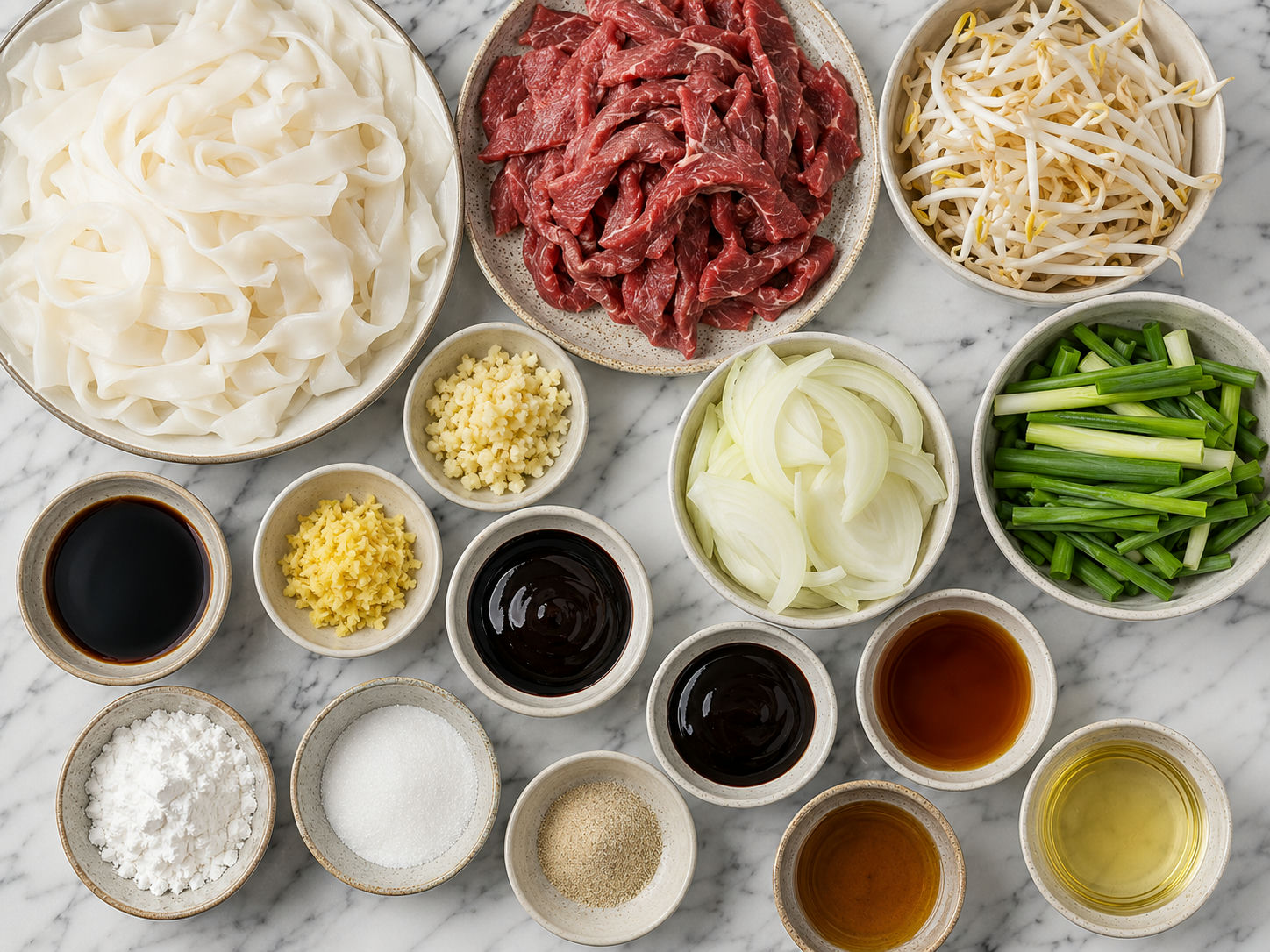
- Fresh wide rice noodles. They make the dish soft, slippery, and satisfying. Fresh noodles stir-fry faster than dried ones.
- Flank steak. Thin slices cook in under two minutes and stay tender when cut across the grain.
- Cornstarch. A small amount helps the marinade cling and gives the beef a soft restaurant-style texture.
- Light soy sauce. Seasons the beef and sauce without making the dish too dark.
- Dark soy sauce. Adds deep brown color and a mild caramel note.
- Oyster sauce. Brings savory body and a little sweetness to the noodles.
- Shaoxing wine. Adds aroma and helps the beef taste rounder. Dry sherry can stand in.
- Garlic and ginger. They perfume the oil before the noodles go in.
- Bean sprouts. Their crunch keeps the soft noodles lively.
- Scallions and onion. They add sweetness, color, and fresh bite at the end.
Fast Wok Method
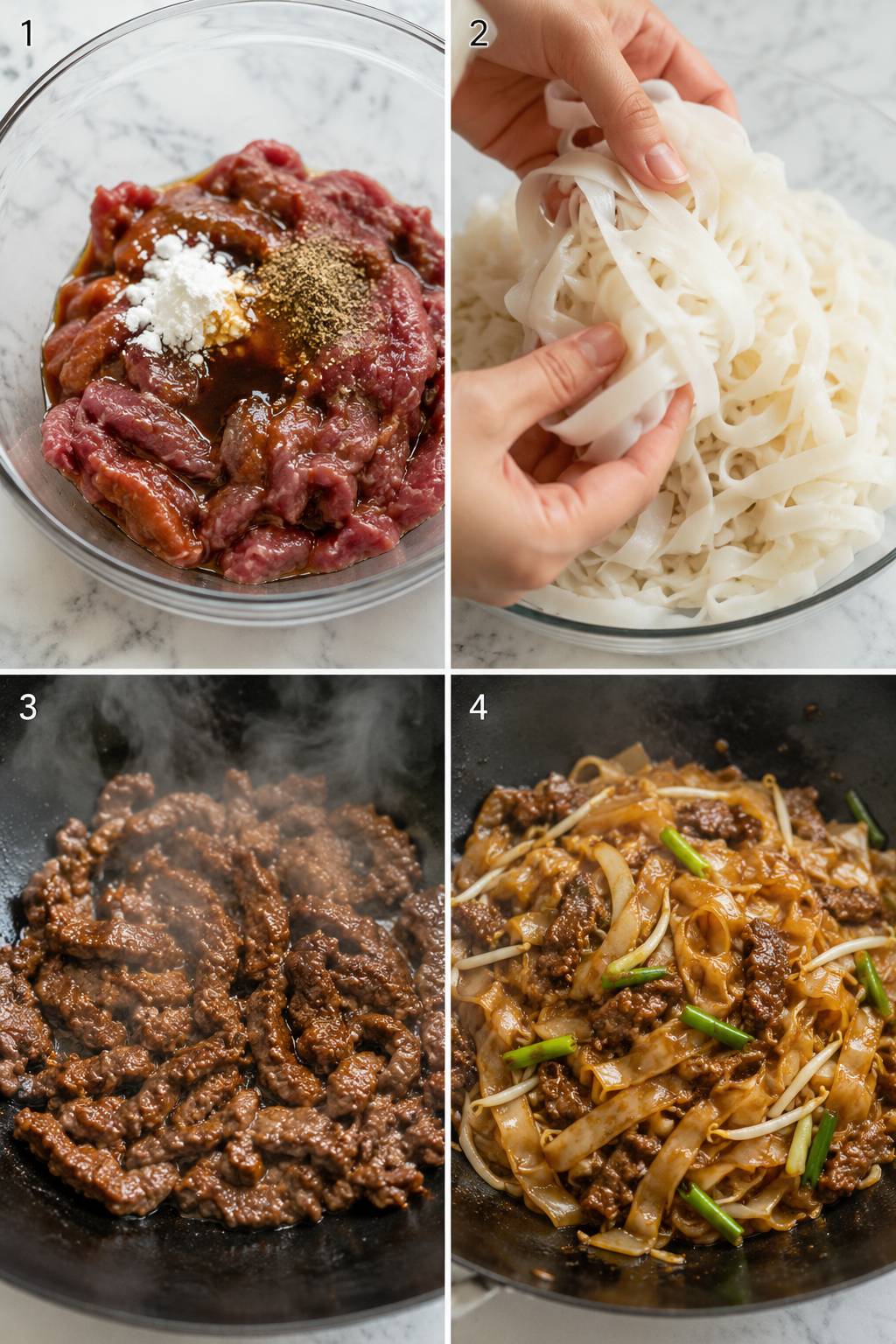
- Marinate the beef. Toss thin flank steak with soy sauce, Shaoxing wine, cornstarch, sesame oil, and a pinch of white pepper. Let it sit for 15-20 minutes while you prep.
- Mix the sauce. Stir together light soy sauce, dark soy sauce, oyster sauce, sugar, and water in a small bowl. Keep it beside the stove.
- Loosen the noodles. Gently separate fresh rice noodles by hand. If they feel stiff, warm them briefly with steam or a quick rinse of warm water, then drain well.
- Sear the beef. Heat a wok or large skillet until very hot. Add oil, spread the beef in a thin layer, and sear until mostly browned. Transfer it to a plate.
- Cook the aromatics. Add a little more oil, then stir-fry the ginger, garlic, and onion for 30-45 seconds until fragrant.
- Toss the noodles. Add the noodles and sauce. Lift and fold until the noodles are glossy and evenly stained.
- Finish quickly. Return the beef with bean sprouts and scallions. Stir-fry for 1-2 minutes, just until everything is hot and the sprouts still crunch.
Heat Matters More Than Sauce
Beef chow fun is not a saucy noodle bowl. It is a hot, fast stir-fry where the sauce coats the noodles instead of pooling underneath them. Classic dry-fried versions, like the Cantonese style discussed by The Woks of Life, rely on high heat, quick movement, and restraint. Too much sauce turns the noodles soggy.
At home, use the widest pan or wok you own and give it time to heat before the food goes in. Cook the beef first, then remove it so it does not overcook while the noodles soften. If your stove runs gentle, make two smaller batches. You will get better browning and fewer broken noodles that way. The same hot-pan habit also helps with steak black pepper fried rice and other quick beef dinners.
Keep Those Noodles Whole
Fresh wide rice noodles can be fragile, especially after a day in the fridge. Do not pull them apart cold with force. Warm them just enough to soften, then tease the strands apart with oiled fingers. If some pieces tear, keep going. A few broken noodles are normal.
The stir-fry motion matters too. Slide the spatula under the noodles and lift rather than cutting down through them. Tongs can help, but squeeze gently. Once the sauce hits the pan, the noodles will loosen more. This is also why the sauce should be mixed before cooking. You do not want to measure dark soy sauce while the noodles are sitting over high heat. For another noodle dinner with a saucy, flexible style, try quick saucy noodle bowls.
Swaps For Real Kitchens
Flank steak gives the cleanest chew, but sirloin works well if it is sliced thin. Skirt steak has bigger flavor and needs careful cutting across the grain. For the vegetables, bean sprouts and scallions are the usual pair, but sliced bell pepper, baby bok choy stems, or a handful of snow peas can fit if you keep the amount modest.
Shaoxing wine adds the right aroma. Dry sherry is the easiest substitute. If you avoid oyster sauce, use vegetarian mushroom stir-fry sauce. The flavor will be less briny but still savory. The smoky note people associate with wok cooking is often called wok hei. Michelin's guide explains that it comes from intense heat, fast tossing, and caramelization in the wok, which is why smaller batches help at home. If beef noodles are your weeknight lane, spicy garlic beef noodles are a bolder option.
Storing The Leftovers
Beef chow fun tastes best right after cooking, when the noodles are springy and the sprouts still snap. Leftovers are still good, but they need a little care. Pack them into a shallow airtight container and refrigerate within 2 hours. Reheat in a skillet over medium-high heat with a teaspoon or two of water to loosen the noodles.
The beef is thin, so it can overcook during reheating. Stop as soon as the noodles are hot and glossy again. For food safety, the USDA lists 145 F with a rest for whole beef cuts, and leftovers should be reheated thoroughly. If you want to prep ahead, slice and marinate the beef, wash the sprouts, cut the scallions, and mix the sauce. Cook the noodles fresh. For another fast beef skillet that stores a bit better, keep quick beef broccoli noodles in your rotation.
Serve It Hot
Bring beef chow fun straight to the table. I like it with chili crisp, sliced cucumbers, or a quick plate of garlicky greens. The noodles are rich enough that you do not need a heavy side. A little acidity helps, so quick pickles or a cold cucumber salad work especially well.
If you are feeding four hungry people, add a second vegetable dish rather than doubling everything in one pan. A double batch can steam before it sears. For a spread with more noodle variety, pair this with japchae or shrimp pad thai. Keep the plates warm if you can. Wide rice noodles cool quickly and taste flatter once they sit.
Summary
Serve beef chow fun straight from the wok while the noodles are hot, glossy, and springy.
Frequently Asked Questions
- What is beef chow fun made of?
-
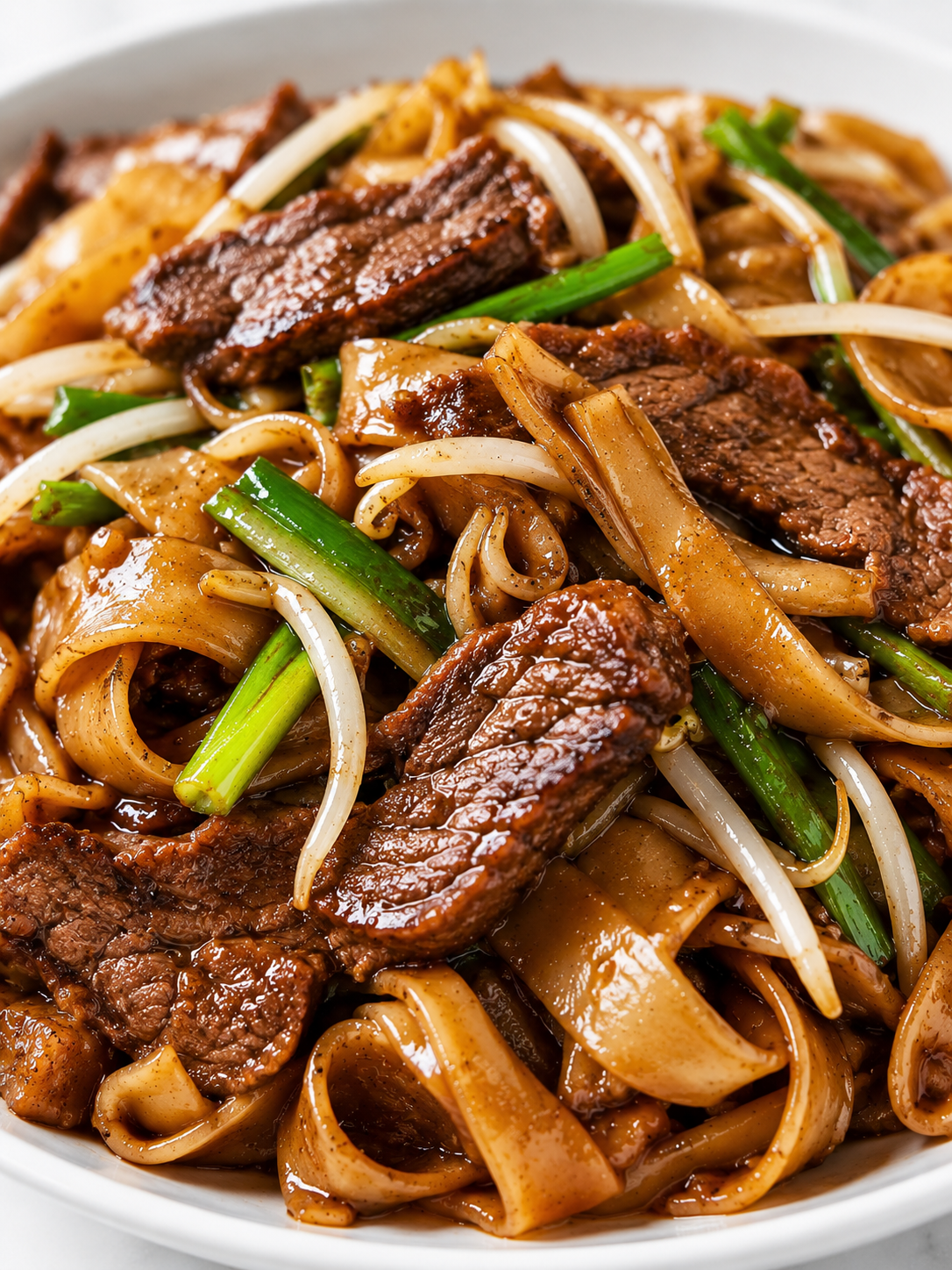
Beef chow fun is a Cantonese-style stir-fry made with wide rice noodles, thin slices of beef, scallions, bean sprouts, and a savory soy-based sauce. Many versions use dark soy sauce for color and oyster sauce for depth.
- Can I use dried rice noodles instead of fresh?
-
Yes, but the texture will be different. Soak dried wide rice noodles according to the package until pliable, then drain them very well before stir-frying. Do not boil them fully soft or they can turn mushy in the wok.
- What cut of beef is best?
-
Flank steak is the classic choice because it slices thin and cooks quickly. Sirloin or skirt steak also works. Cut across the grain so each piece stays tender.
- How do I keep the noodles from breaking?
-
Warm and loosen fresh rice noodles before they go into the wok. Toss with a lifting motion instead of chopping through them with a spatula. If the noodles are cold and stiff, a quick warm-water rinse can help.
- Can I make beef chow fun gluten-free?
-
You can make a gluten-free version with rice noodles, gluten-free tamari, and a gluten-free oyster sauce or mushroom sauce. Check every bottled sauce because regular soy sauce usually contains wheat.
- How should I store leftovers?
-
Store leftovers in an airtight container in the fridge for up to 3 days. Reheat in a hot skillet with a small splash of water. The microwave works in a pinch, but the noodles are softer that way.
- What should I serve with beef chow fun?
-
It can stand alone as dinner because it has beef, noodles, and vegetables. For a bigger meal, add cucumber salad, steamed greens, or another quick dish like stir-fried vegetables.
