
 Pin it
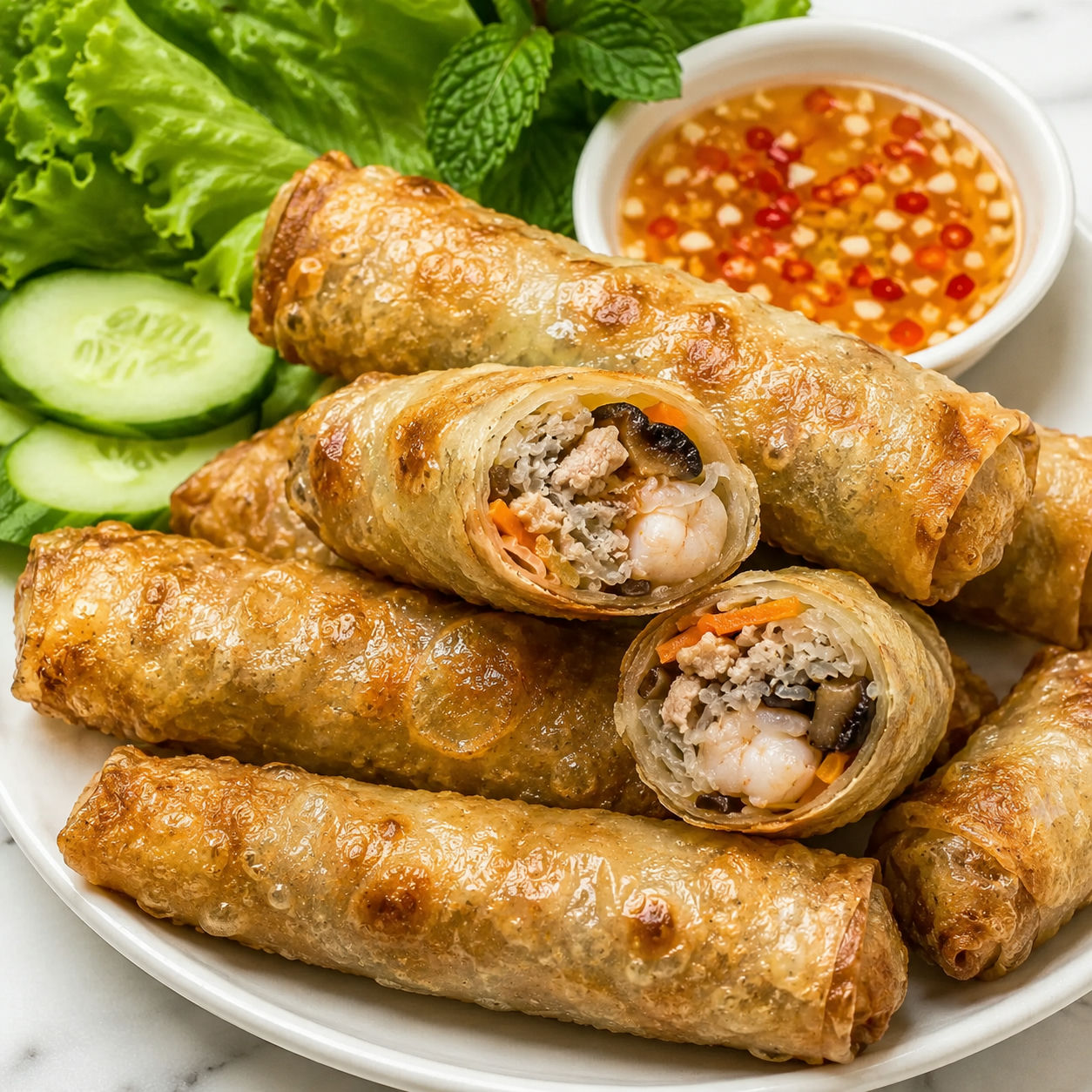
Crispy Rice Paper Spring Rolls the ultimate crunch and served with a sweet, tangy dipping sauce is a long name for a very simple craving. You want that shattering shell, a hot savory center, and a dip bright enough to make the next bite feel fresh.
This version keeps the classic pork and shrimp filling but makes the home-cook details clearer. The rice paper is moistened lightly, the rolls rest before frying, and the sauce is sharp, sweet, salty, and garlicky.
The Pork-Shrimp Crunch Mix
The filling should be finely chopped, not pureed, so each bite has a little bounce from shrimp, chew from noodles, and sweetness from carrot. Rice paper varies by brand, so choose round 8-inch sheets that feel sturdy and smooth.
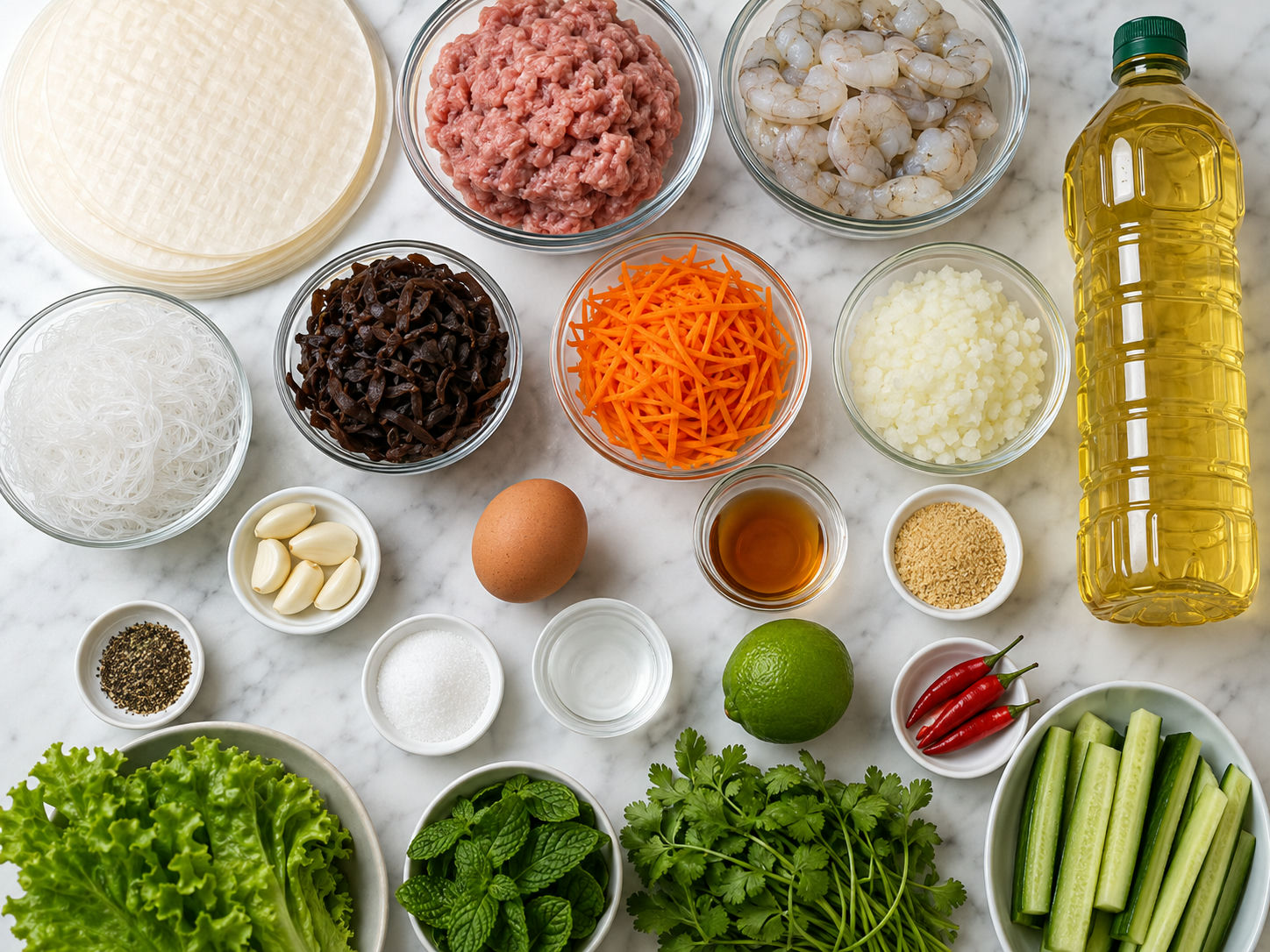
- Rice paper sheets. They fry into the bubbly, brittle shell that makes these rolls different from wheat-wrapper egg rolls.
- Ground pork. Adds richness and keeps the filling juicy.
- Raw shrimp. Brings a sweet seafood snap when chopped by hand.
- Glass noodles. Absorb juices from the filling and give the center a springy texture.
- Wood ear mushrooms. Add a light crunch and earthy flavor.
- Carrot and onion. Bring sweetness and moisture without making the filling loose.
- Egg. Helps bind the mixture so it stays neat inside the wrapper.
- Fish sauce. Seasons the filling and the dipping sauce with salty depth.
- Lime, vinegar, sugar, garlic, and chilies. Build the sweet tangy sauce that cuts through the fried shell.
Wrap And Fry Cleanly
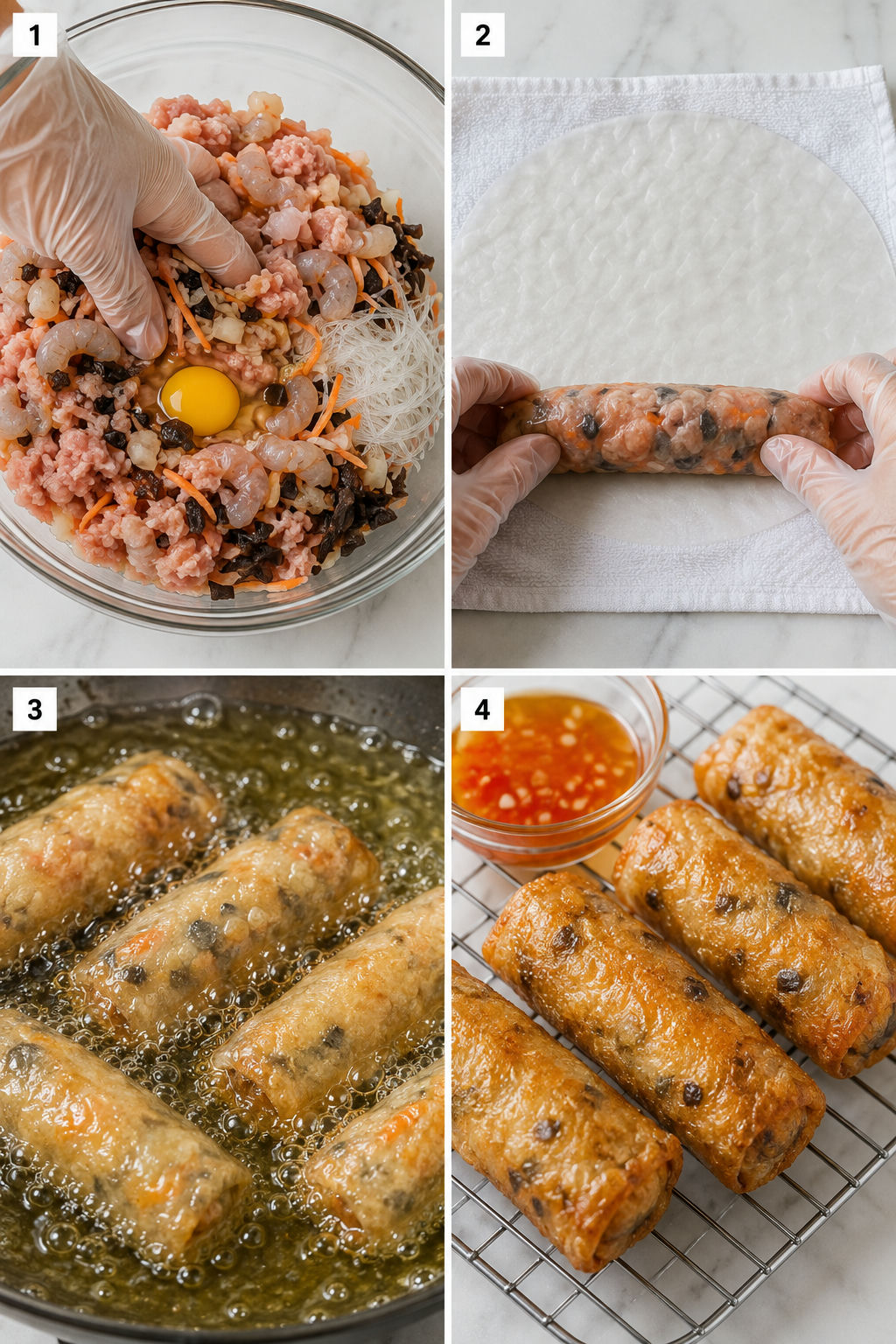
- Soak the noodles. Cover glass noodles with hot water until flexible, then drain and cut them short so they mix evenly.
- Mix the filling. Combine pork, chopped shrimp, noodles, mushrooms, carrot, onion, garlic, egg, fish sauce, bouillon, pepper, and salt until just sticky.
- Make the dip. Stir warm water, sugar, vinegar, fish sauce, lime, garlic, and chilies until balanced and bright.
- Soften the wrapper. Dip one rice paper sheet briefly in warm water and lay it on a damp towel. It should still feel a little firm.
- Roll tightly. Add a small log of filling, fold in the sides, and roll into a compact cylinder with no air pockets.
- Rest the rolls. Let them sit seam-side down for 10 minutes so the surface dries slightly.
- Fry in batches. Fry at 325°F until cooked through, then briefly fry hotter for a deeper golden crunch.
Crispy Rice Paper Spring Rolls Fixes
The biggest mistake is treating rice paper like a fresh summer roll wrapper. For frying, it only needs a quick dip. It will keep softening on the towel while you add the filling. If it feels floppy before you roll, it is already too wet. The Vietnamese fried roll known as cha gio often uses rice paper for a thin shell with a blistered crunch, a detail explained well in this Vietnamese cha gio guide. Keep the rolls small, about one heaping tablespoon of filling each. A smaller roll cooks through before the outside gets too dark. If you like this rice paper style, the site's Korean BBQ Beef Rice Paper Rolls are a good fresh contrast.
Sweet Tangy Sauce Balance
The dipping sauce should hit salty first, then sweet, then sharp. Start with warm water and sugar so the grains dissolve. Add fish sauce, vinegar, lime, garlic, and chilies after that. If it tastes flat, add lime. If it tastes harsh, add a spoon of water. If it tastes thin, add a few more drops of fish sauce. This sauce is closer to nuoc cham than a sticky glaze, so it should be pourable and bright. For a party tray, set out this sauce beside Hot Honey Chili Ranch so people can choose fresh and tangy or creamy and spicy.
Serve Them Fresh And Bright
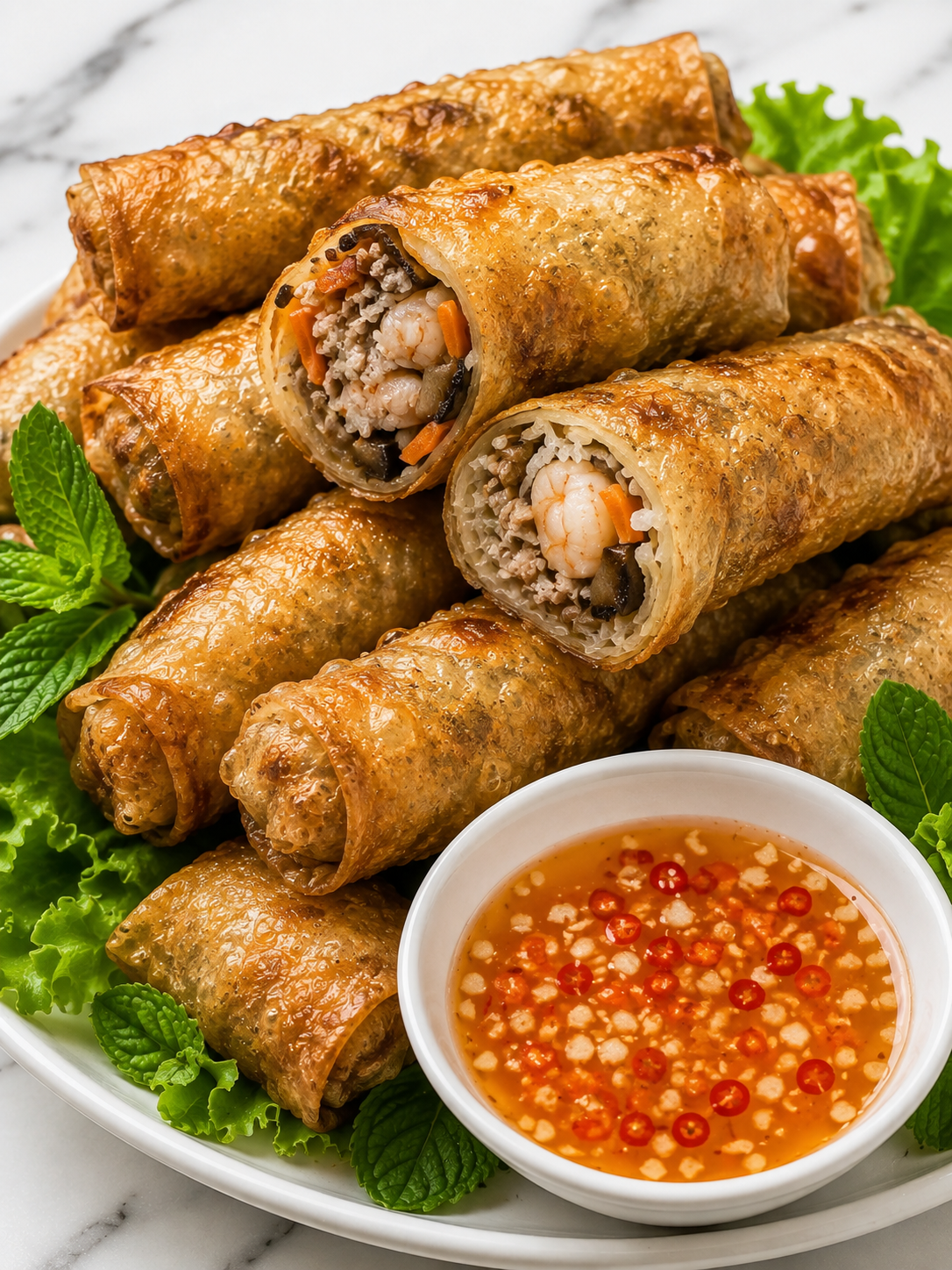
Serve the rolls hot on a rack or platter, not stacked in a deep bowl where steam softens the shell. Lettuce leaves, cucumber sticks, mint, cilantro, and Thai basil make each bite lighter. Wrap one hot roll in lettuce, tuck in herbs, and dip. That cool-crisp layer keeps the fried shell from feeling heavy. For a bigger appetizer spread, these sit naturally next to Golden Crunchy Wonton Shrimp, Quick Pickled Red Onions, or a bowl of Pineapple Salsa for a sweet acidic side.
Make-Ahead Without Soggy Shells
You can mix the filling one day ahead and keep it covered in the fridge. Wrapped rolls are more delicate. If you need to prep them early, separate layers with parchment and keep them uncovered just long enough for the surfaces to dry slightly. For freezing, arrange uncooked rolls in a single layer until hard, then bag them. Fry from frozen so the rice paper does not thaw into a sticky sheet. Since the filling contains ground pork, egg, and shrimp, use a thermometer when you can. The safe minimum temperature chart lists 160°F for ground meat and egg dishes, while the FDA seafood guide notes shrimp should turn firm and opaque.
Air Fryer And Oven Notes
Deep frying gives the loudest crunch. The air fryer can still work if you brush each roll well with oil and leave space around every piece. Cook at 375°F for about 12-15 minutes, turning once, until browned and hot in the center. The shell will be crisp but less bubbly. For the oven, place oiled rolls on a wire rack over a sheet pan and bake at 400°F for 20-25 minutes. Turn them once. If a roll leaks, leave it alone until it firms up. Moving it too early tears the wrapper.
Summary
Serve crispy rice paper spring rolls right after frying, with lettuce, herbs, and a sweet tangy dipping sauce. The small details matter most: barely wet wrappers, tight rolling, a short rest, and enough oil temperature control to cook the filling before the shell darkens.
Frequently Asked Questions
- Why did my rice paper spring rolls split in the oil?
-
They were likely too wet, overfilled, or rolled with trapped air. Dip the rice paper for only a second or two, keep the filling compact, and let the wrapped rolls sit uncovered for 10 minutes before frying.
- Can I make these spring rolls without shrimp?
-
Yes. Use extra ground pork, finely chopped chicken, or a mix of mushrooms and tofu. Keep the total filling amount about the same so the rolls cook evenly.
- Can I freeze rice paper spring rolls?
-
Freeze them uncooked in one layer until firm, then move them to a freezer bag. Fry from frozen without thawing, adding a few extra minutes so the center cooks through.
- What oil is best for frying them?
-
Use a neutral high-heat oil such as canola, peanut, vegetable, or rice bran oil. Avoid olive oil here because the flavor is too strong and the heat is less forgiving.
- How do I know the filling is cooked?
-
The rolls should be golden, bubbling less, and feel lighter when lifted from the oil. For the safest check, the pork and egg filling should reach 160°F in the center.
- What should I serve with crispy rice paper spring rolls?
-
Serve them with lettuce leaves, mint, cilantro, cucumber, and the sweet tangy dipping sauce. The fresh vegetables cool the fried shell and make the rolls easier to eat by hand.
