
 Pin it
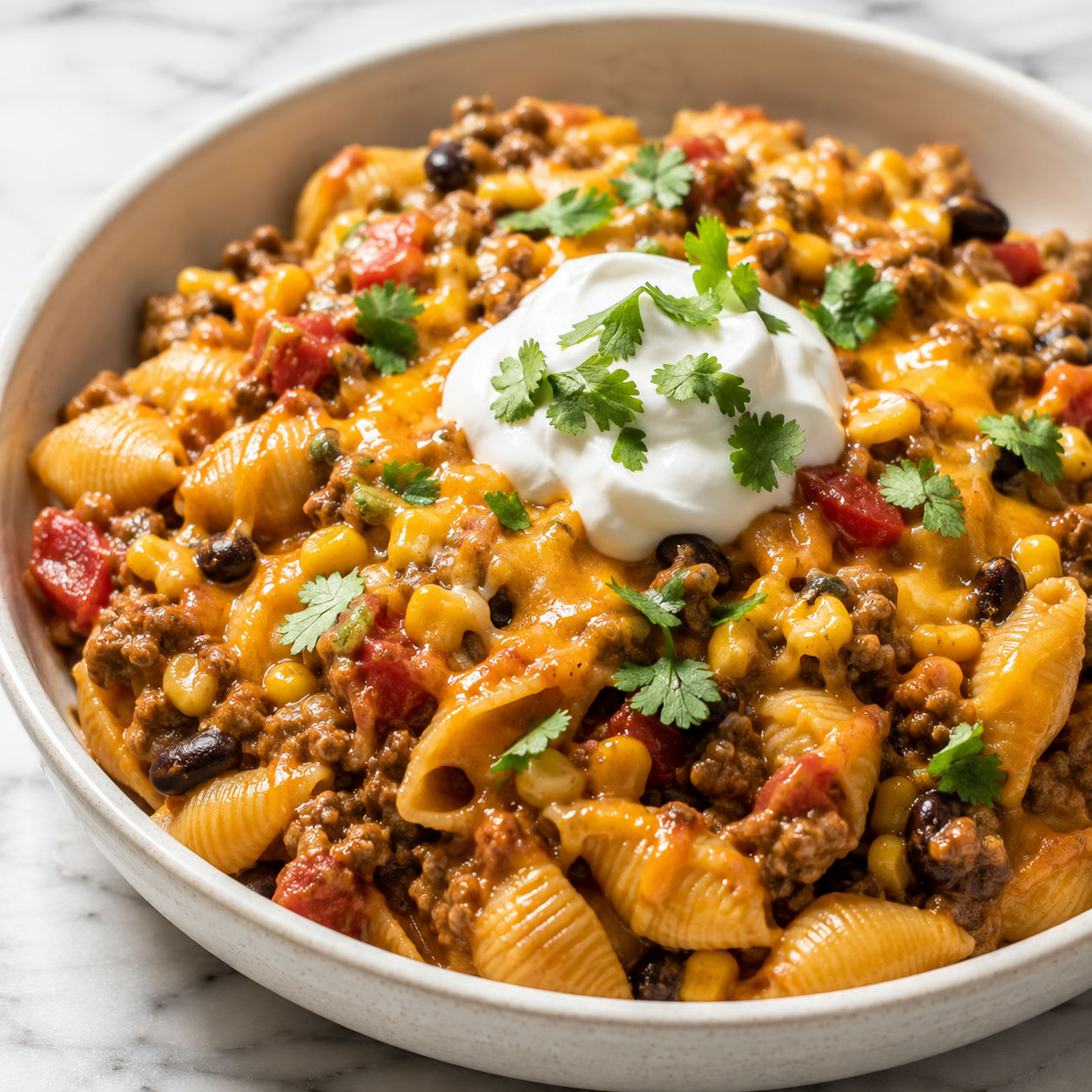
This taco pasta is what I make when tacos sound good but I do not want to warm tortillas or set out a whole topping bar. It has the same cozy seasoned beef flavor, but the shells cook right in the pan and turn the tomato salsa broth into sauce.
The finish is creamy without being heavy. Sour cream adds tang, cheddar melts into the warm pasta, and a squeeze of lime keeps the skillet from tasting flat.
The taco pasta lineup
Most of the flavor comes from pantry ingredients, so use ones you already like. Choose a salsa that tastes good from the jar and shred the cheddar yourself if you can.
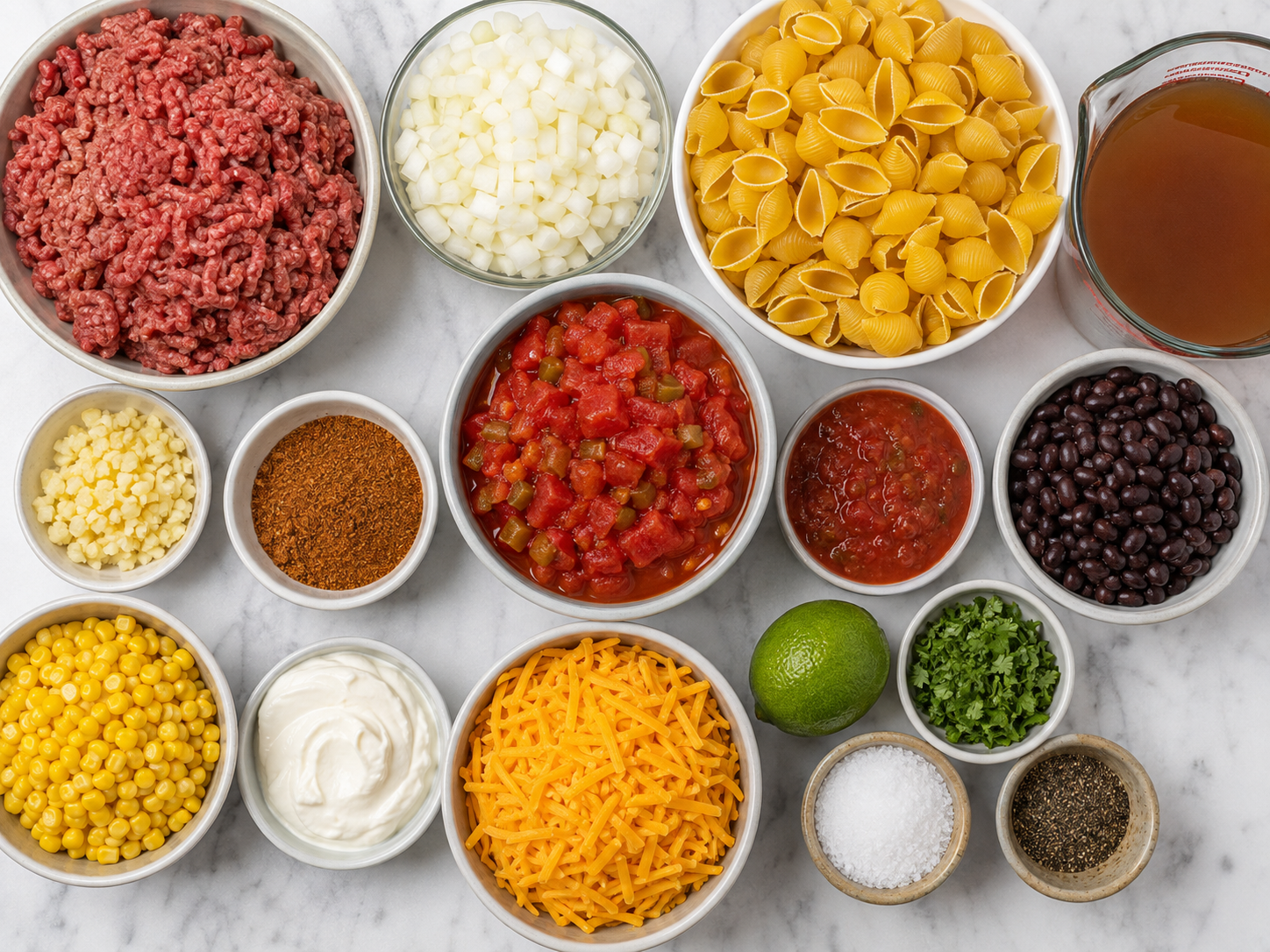
- Ground beef. Gives the pasta a savory taco base and enough richness to carry the sauce.
- Onion and garlic. Build a sweet, aromatic start before the spices go in.
- Taco seasoning. Brings chili, cumin, paprika, oregano, and garlic flavor in one scoop.
- Diced tomatoes and salsa. Add acidity, moisture, and a gentle chile flavor for the pasta to absorb.
- Beef broth. Simmering liquid that gives the shells more flavor than plain water.
- Medium pasta shells. Hold little pockets of beef, sauce, and melted cheese.
- Black beans and corn. Make the skillet heartier and add color without extra work.
- Sour cream and cheddar. Turn the tomato sauce creamy, tangy, and glossy.
- Cilantro and lime. Freshen the finished pan right before serving.
Cook it in one skillet
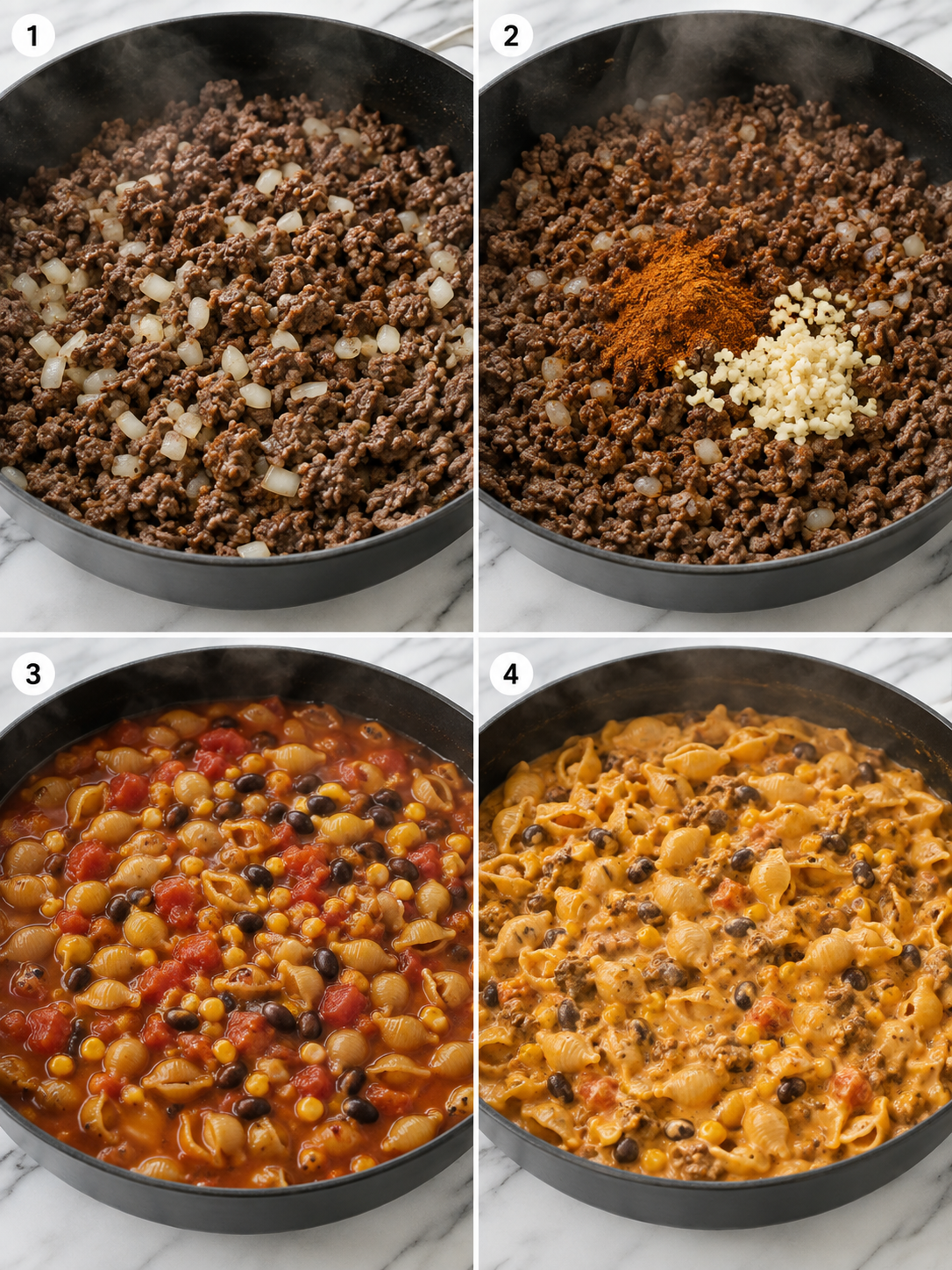
- Brown the beef. Heat the oil in a deep skillet or Dutch oven, then cook the beef and onion until the beef is browned and the onion has softened. Drain extra grease if the pan looks oily.
- Bloom the seasoning. Stir in the garlic and taco seasoning for about 30 seconds. This wakes up the spices before the liquid goes in.
- Add the sauce base. Pour in the diced tomatoes, salsa, broth, and water. Scrape the bottom of the pan so the browned bits melt into the sauce.
- Simmer the pasta. Stir in the dry shells, black beans, and corn. Cover and cook at a steady simmer for 11-13 minutes, stirring once or twice, until the pasta is tender.
- Make it creamy. Turn off the heat. Stir in the sour cream, then add the cheddar in handfuls until melted.
- Finish and serve. Taste for salt, add lime juice, and scatter cilantro over the top. Serve while the sauce is loose and glossy.
Brown the beef first
A little patience at the start pays off. Let the beef touch the hot pan for a minute before you start breaking it into tiny pieces. You want a few browned spots, not gray steamed meat. Those browned bits dissolve into the tomato broth later and make the whole skillet taste fuller.
For food safety, ground beef should reach 160 F according to the FoodSafety.gov temperature chart. Since the beef continues cooking while the pasta simmers, it has plenty of time, but do not rush the initial browning step. If you like dinners built around the same easy skillet rhythm, try the Mexican beef and rice skillet next.
Keep the sauce creamy
The dairy goes in after the burner is off. That one detail keeps the sour cream smooth and helps the cheddar melt instead of clumping. If the pasta looks a little loose when you shut off the heat, that is fine. The shells keep drinking sauce for a few minutes.
Freshly shredded cheese melts better than bagged shreds because it has less anti-caking starch on the surface. Bagged cheese still works for a fast dinner, but stir it in slowly. If the sauce tightens too much, add a splash of hot broth or water and stir until it relaxes. For another creamy pasta night with a different spice profile, the creamy Cajun chicken pasta hits the same comfort spot.
Fix the simmer as it cooks
One-pot pasta is simple, but it asks you to watch the liquid. Keep the heat at a steady bubble, not a hard boil. A hard boil can make the shells rough around the edges before the centers are tender.
If the pan looks dry before the pasta is cooked, add hot water a quarter cup at a time. If it looks soupy when the pasta is nearly done, remove the lid for the last few minutes and stir more often. The starch from the shells will thicken the sauce as long as you give it a chance. Taste one shell before adding the dairy. The sauce can be fixed, but overcooked pasta cannot.
Easy swaps for busy nights
This recipe is flexible. Use ground turkey, ground chicken, or plant-based crumbles instead of beef. Pinto beans can replace black beans, and frozen corn can go in straight from the freezer. If you only have crushed tomatoes, use them and add an extra spoonful of salsa for texture.
For a lighter finish, replace sour cream with plain Greek yogurt, but add it off the heat just like sour cream. For more heat, use pepper jack or a hot salsa. If you want the taco flavor without pasta, the loaded taco salad bowl is fresher and crunchier. If pasta is the plan and you want more ideas, keep pasta dinner recipe ideas handy for weeknights.
How to serve it
Serve taco pasta right away while the cheese is still stretchy and the sauce is glossy. I like it with cilantro, lime, sliced avocado, and a spoonful of salsa on top. Crushed tortilla chips are good too, especially if you want a little crunch against the soft shells.
Keep the sides simple. A green salad, cucumbers with lime, quick pickled onions, or fresh fruit all balance the warm, cheesy skillet. If you are feeding kids, put the toppings in small bowls and let everyone finish their own serving. It makes the same pan work for mild eaters and spice lovers.
Save leftovers without mush
Leftovers keep well for 3-4 days in an airtight container. The USDA recommends chilling leftovers promptly and using refrigerated leftovers within that window in its leftover safety guidance. Let the pasta cool in a shallow container so it chills quickly.
Reheat gently with a splash of water, broth, or milk. A skillet over low heat gives you the best texture because you can loosen the sauce as it warms. The microwave works too, but stop and stir once so the edges do not dry out. Freezing is possible, though the shells will be softer after thawing. I save freezing for single lunch portions rather than company dinner.
Frequently Asked Questions
- Can I make taco pasta with ground turkey instead of beef?
-
Yes. Ground turkey works well, but it is leaner, so add an extra teaspoon of oil when browning it. Season it generously and cook it until no pink remains before adding the liquid and pasta.
- What pasta shape works best for taco pasta?
-
Medium shells are my first pick because they catch the beef, sauce, and melted cheese. Elbows, rotini, cavatappi, or small penne also work. Avoid very thin pasta because it can soften too quickly in a one-pot simmer.
- How do I keep the sauce from getting grainy?
-
Take the pan off the heat before stirring in the sour cream and cheese. High heat can make dairy separate. Add the cheese in handfuls and stir until each handful melts before adding more.
- Can I make this taco pasta ahead?
-
You can cook it ahead, but the pasta will keep absorbing sauce as it sits. For the best texture, make it fresh. If you need to prep early, chop the onion, shred the cheese, rinse the beans, and measure the spices ahead of time.
- Can I make it spicier?
-
Use hot salsa, diced tomatoes with green chiles, pepper jack cheese, or a minced jalapeno cooked with the onion. For smoky heat, add a small pinch of chipotle powder with the taco seasoning.
- What should I serve with taco pasta?
-
It is rich enough to stand alone, so keep sides fresh. A crisp salad, quick pickled onions, lime wedges, sliced avocado, or a scoop of pico de gallo all work well.
