
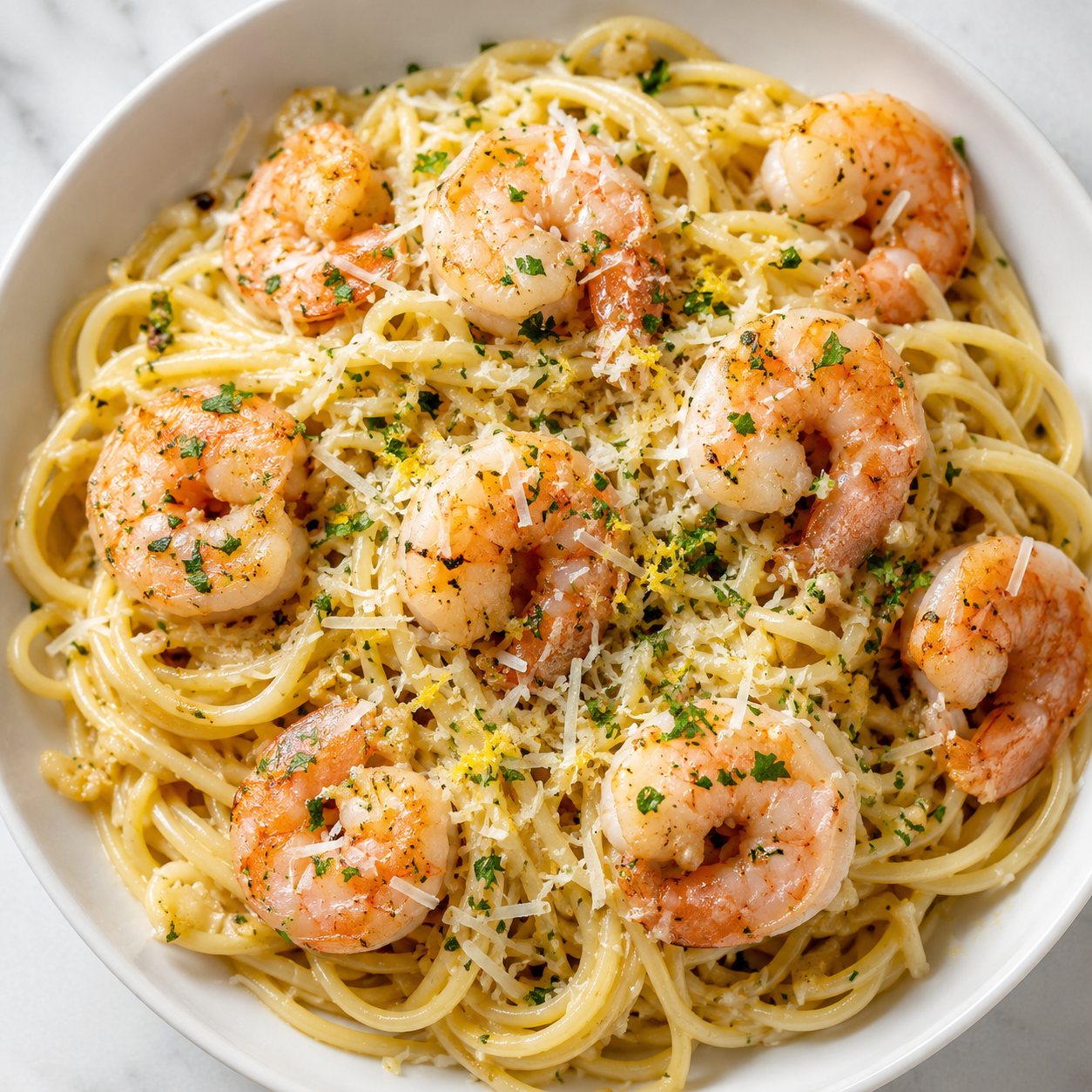
 Pin it
Garlic Shrimp Pasta is one of those dinners that gives you a lot back for very little effort. The shrimp cook in minutes, the sauce uses the same pan, and the lemon keeps the butter from feeling heavy.
I like this version with spaghetti or linguine, plenty of garlic, a little red pepper, and just enough pasta water to make the sauce cling. It is simple food, but the timing matters.
Have everything chopped before the shrimp hits the skillet. Once you start cooking, the whole dish moves quickly.
The Garlicky Lineup
Use large shrimp if you can. They give you a juicy bite and are easier to pull from the heat before they overcook. Fresh garlic, real lemon juice, and a small knob of butter make the sauce taste clean and full.
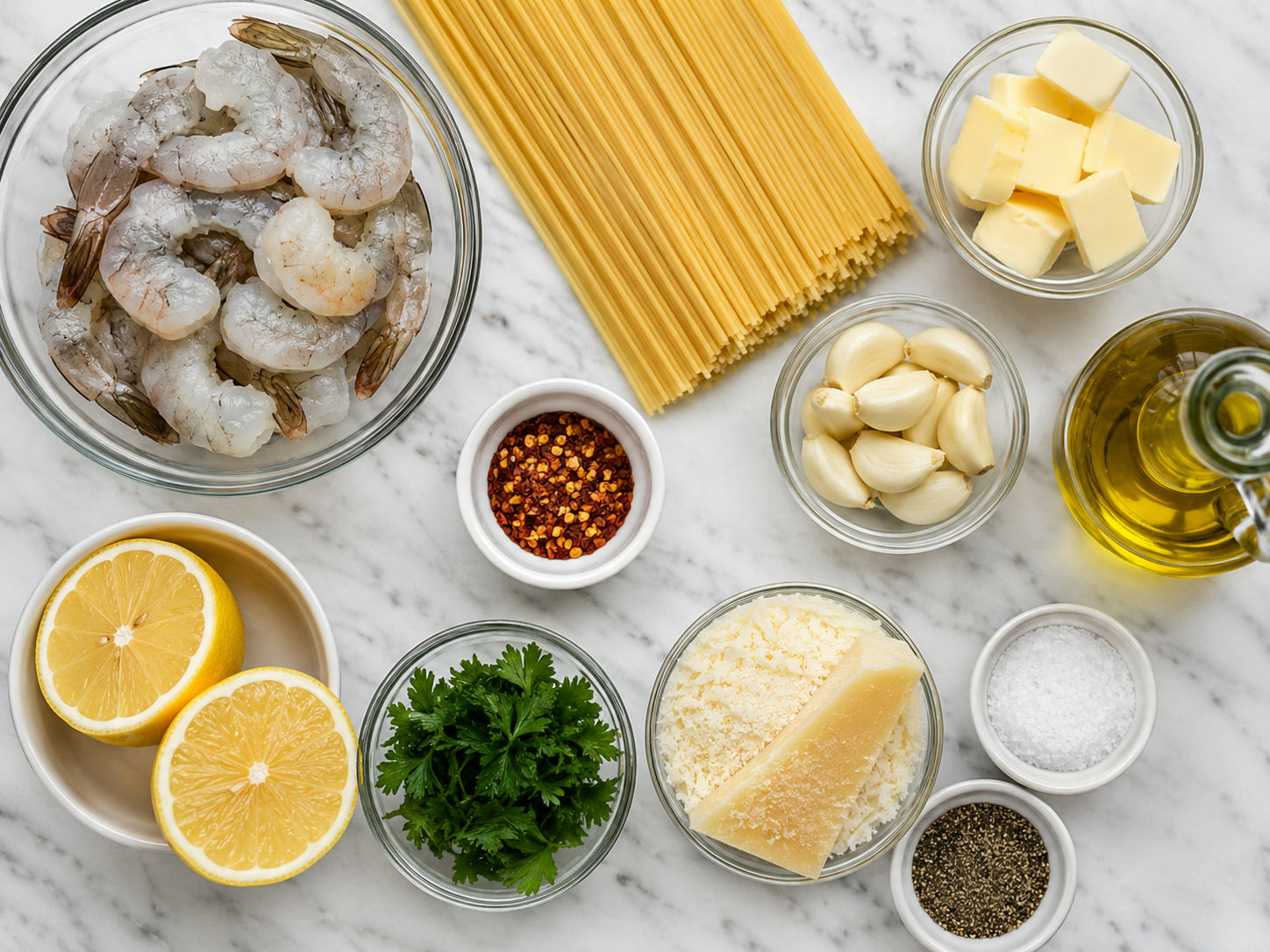
- Large shrimp. The main protein. They cook quickly and stay tender when seared in a hot skillet.
- Spaghetti or linguine. Long pasta catches the light garlic butter sauce without burying the shrimp.
- Unsalted butter. Gives the sauce body and a soft richness.
- Olive oil. Helps the shrimp sear while keeping the butter from darkening too fast.
- Fresh garlic. The backbone of the dish. Mince it finely so it flavors the butter quickly.
- Red pepper flakes. Adds a gentle heat that wakes up the butter and lemon.
- Lemon juice and zest. Brightens the sauce and keeps the pasta from tasting flat.
- Reserved pasta water. Loosens the sauce and helps it coat the noodles.
- Parsley. Adds a fresh finish right before serving.
- Parmesan. Optional, but it adds savory depth and a little salt.
Build It In One Skillet
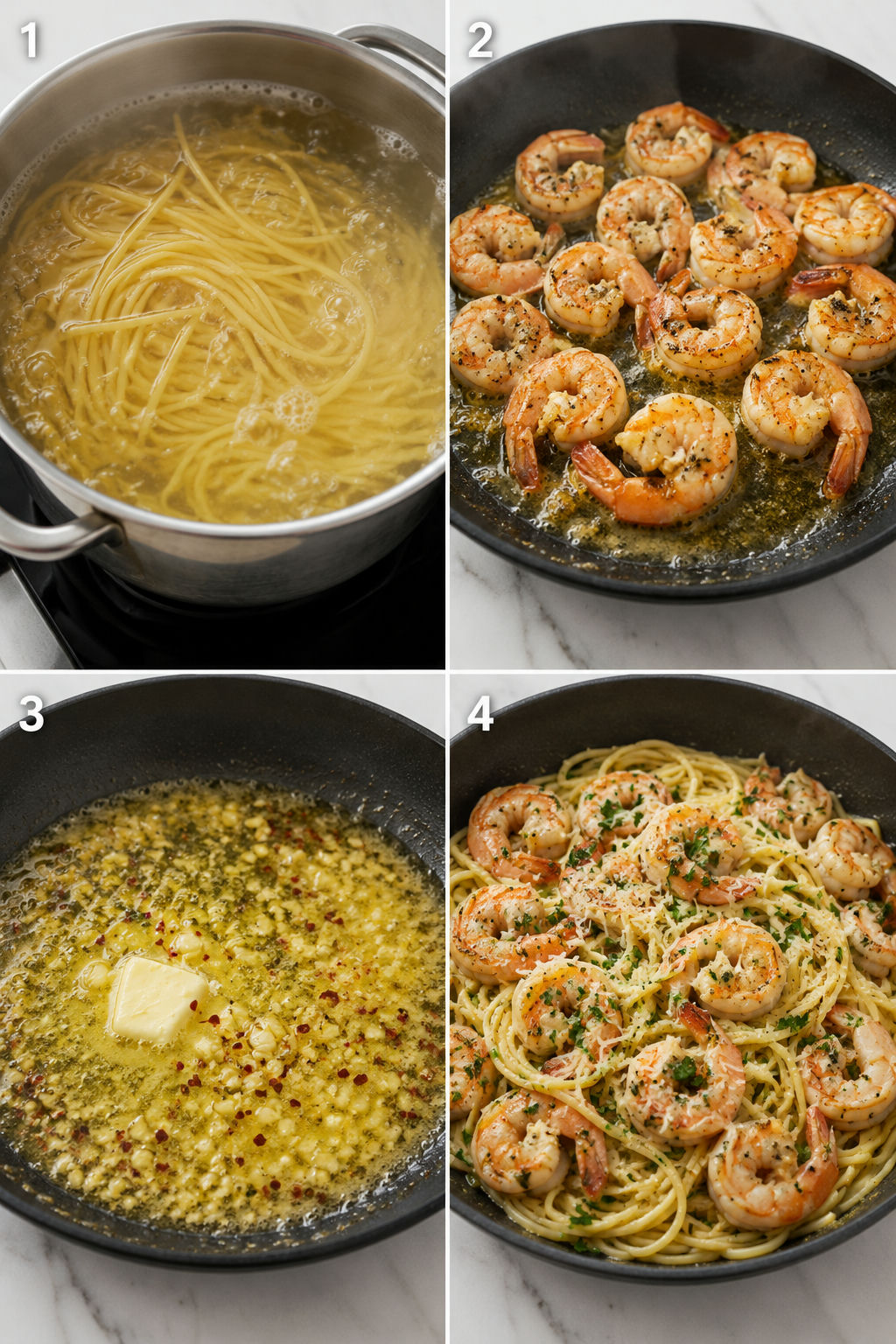
- Boil the pasta. Cook spaghetti in salted water until just shy of al dente. Scoop out 1/2 cup of the cloudy cooking water before draining.
- Dry and season the shrimp. Pat the shrimp with paper towels, then season with salt and black pepper. Dry shrimp brown faster and taste sweeter.
- Sear the shrimp. Heat olive oil and a little butter in a wide skillet. Cook the shrimp in one layer for 1-2 minutes per side, then move them to a plate.
- Soften the garlic. Lower the heat and add the remaining butter, garlic, and red pepper flakes. Stir for 30-45 seconds, just until fragrant.
- Toss the pasta. Add the drained pasta, lemon juice, lemon zest, and a splash of pasta water. Toss until the noodles look glossy, adding more water as needed.
- Finish with shrimp. Return the shrimp to the skillet with parsley and Parmesan if using. Toss briefly, taste, and serve while the sauce is silky.
Garlic Shrimp Pasta Timing
The only fussy part of Garlic Shrimp Pasta is timing the shrimp. They go from sweet and springy to tight in a very short window. I use medium-high heat, spread them in a single layer, and take them out as soon as they are pink and opaque. The FDA seafood guide notes that shrimp should become firm, pearly, and opaque when cooked.
If your skillet is small, cook the shrimp in two batches. Crowding drops the pan temperature and gives you steamed shrimp with no color. This is the same quick-cook idea that makes garlic butter chili shrimp so good. Fast heat, short contact, then out of the pan.
Make The Sauce Glossy
Do not drain the pasta and walk away. That cloudy cooking water is what helps the butter, lemon, and garlic turn into a sauce instead of a slick puddle at the bottom of the bowl. Add a small splash first, then toss with tongs until the noodles look shiny. If the pan looks dry, add another spoonful.
Keep the heat moderate once the garlic goes in. Garlic burns quickly in butter, and burnt garlic tastes sharp in a way lemon cannot fix. The pasta should finish in the skillet for a minute, soaking up the sauce while it is still a touch firm. If you want more noodle dinners that use this same fast skillet rhythm, save these pasta dinner recipe ideas for later.
Swaps That Still Taste Fresh
This recipe is flexible as long as you keep the sauce bright. Linguine, spaghetti, and thin fettuccine all work. For heat, use red pepper flakes, Calabrian chili paste, or a spoonful of chili crisp stirred in at the end. For a richer version, add a splash of cream after the garlic softens, then finish with lemon off the heat.
You can add vegetables, but pick quick ones. Baby spinach wilts right into the hot pasta. Cherry tomatoes can blister in the skillet after the shrimp comes out. Thin asparagus pieces cook in a few minutes. If you want a shrimp dinner with a different flavor profile, shrimp pad Thai is sweet, tangy, and peanutty instead of buttery and lemony.
Storage Without Tough Shrimp
Garlic shrimp pasta is best right away, but leftovers are still useful. Pack them in a shallow airtight container once they cool slightly. The USDA leftover guidance recommends using refrigerated leftovers within 3-4 days.
For reheating, skip high heat. Add the pasta to a skillet with a tablespoon or two of water and warm it gently while tossing. Stop as soon as the noodles loosen and the shrimp are heated through. Freezing is not my favorite for this dish because shrimp can turn spongy and pasta softens. If you plan ahead, prep the garlic, parsley, lemon, and cleaned shrimp earlier in the day, then cook fresh.
What To Serve Beside It
This pasta does not need much. A crisp green salad, roasted broccoli, or warm bread is enough. I like something fresh and acidic next to the butter sauce, especially if I add Parmesan. A quick cucumber salad or a pile of arugula with lemon juice works well.
For a bigger seafood spread, serve smaller portions of the pasta with grilled shrimp pineapple mango salad. For a creamy pasta night with chicken instead of seafood, creamy Cajun chicken pasta is the cozy opposite. Keep the plates warm if you can. Butter sauces tighten as they cool, and this one tastes best when the noodles are still loose and glossy.
Frequently Asked Questions
- Can I use frozen shrimp for Garlic Shrimp Pasta?
-
Yes. Thaw frozen shrimp in the refrigerator overnight, or seal them in a bag and place the bag in cold water for a quicker thaw. Pat them very dry before cooking so they sear instead of steam.
- What pasta shape works best?
-
Spaghetti and linguine are my first picks because the long strands grab the garlic butter sauce well. Fettuccine also works. If you use angel hair, start checking early because it overcooks fast.
- Can I make this without Parmesan?
-
Yes. The sauce still works with butter, garlic, lemon, and pasta water. Parmesan adds salt and body, but you can leave it out and finish with extra parsley, lemon zest, and black pepper.
- How do I keep shrimp from getting rubbery?
-
Cook shrimp just until they turn pink, opaque, and lightly curled. For large shrimp, that usually takes 1-2 minutes per side. Remove them from the pan while you make the sauce, then return them only long enough to warm through.
- Can I add cream to the sauce?
-
You can add 2-3 tablespoons of cream after the garlic softens if you want a richer sauce. Keep the heat moderate and add lemon at the end so the cream stays smooth.
- How should I reheat leftovers?
-
Reheat gently in a skillet with a splash of water. Use low heat and stop as soon as the pasta is warm. The microwave works in short bursts, but it can make shrimp tougher if you heat it too long.
