
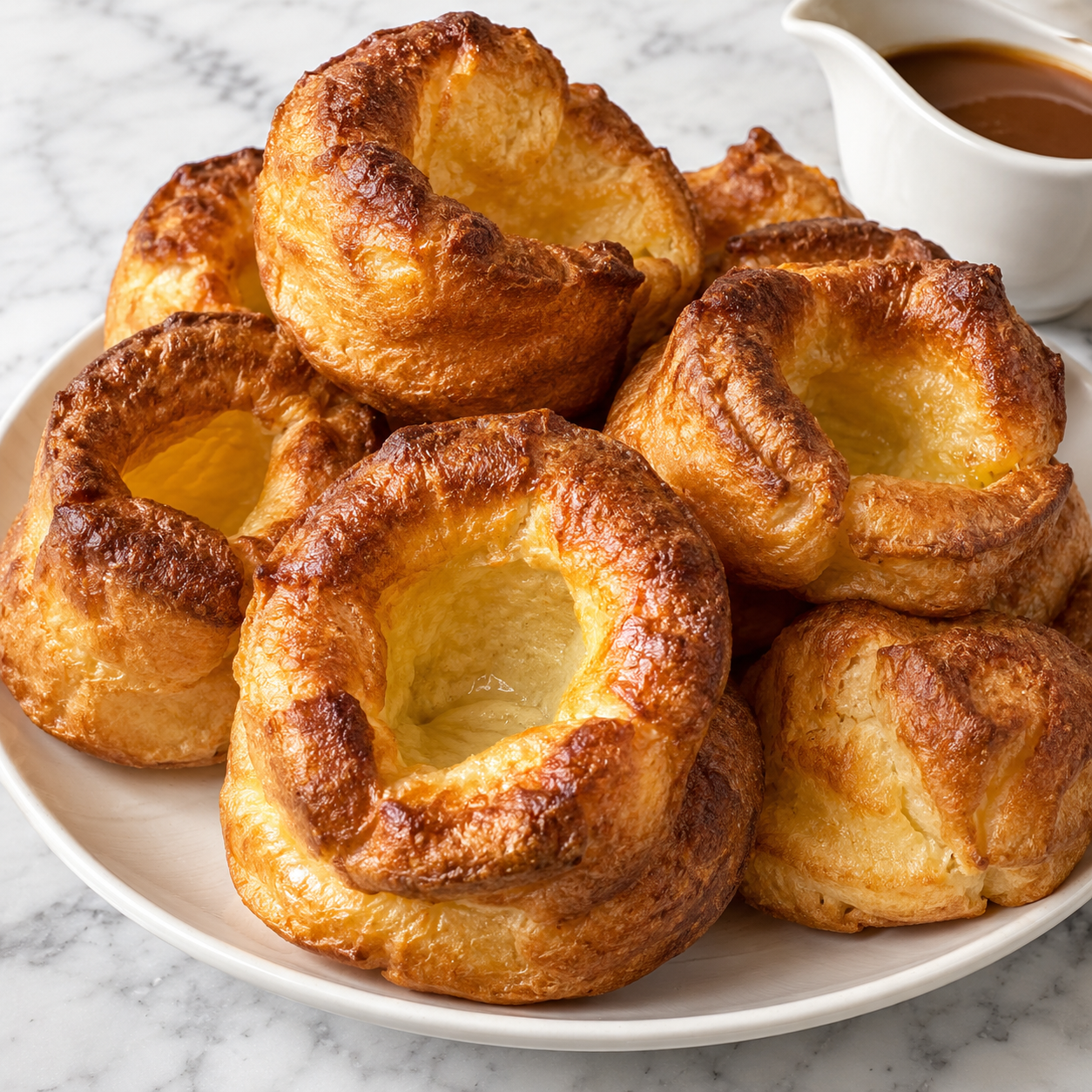
 Pin it
Yorkshire puddings look dramatic, but the batter is plain and honest. Eggs, flour, milk, and hot fat do the work. The oven gives you those high sides and hollow middles.
This Yorkshire puddings 1st Recipes style version keeps the small muffin-tin format and the quick bake. I rest the batter first because it pours more smoothly and rises with better structure.
Yorkshire Pudding Batter Basics
The batter is just eggs, flour, milk, water, and seasoning, so measure carefully and whisk until only tiny lumps remain. Use fresh eggs, plain flour, and a neutral oil that can handle high oven heat.
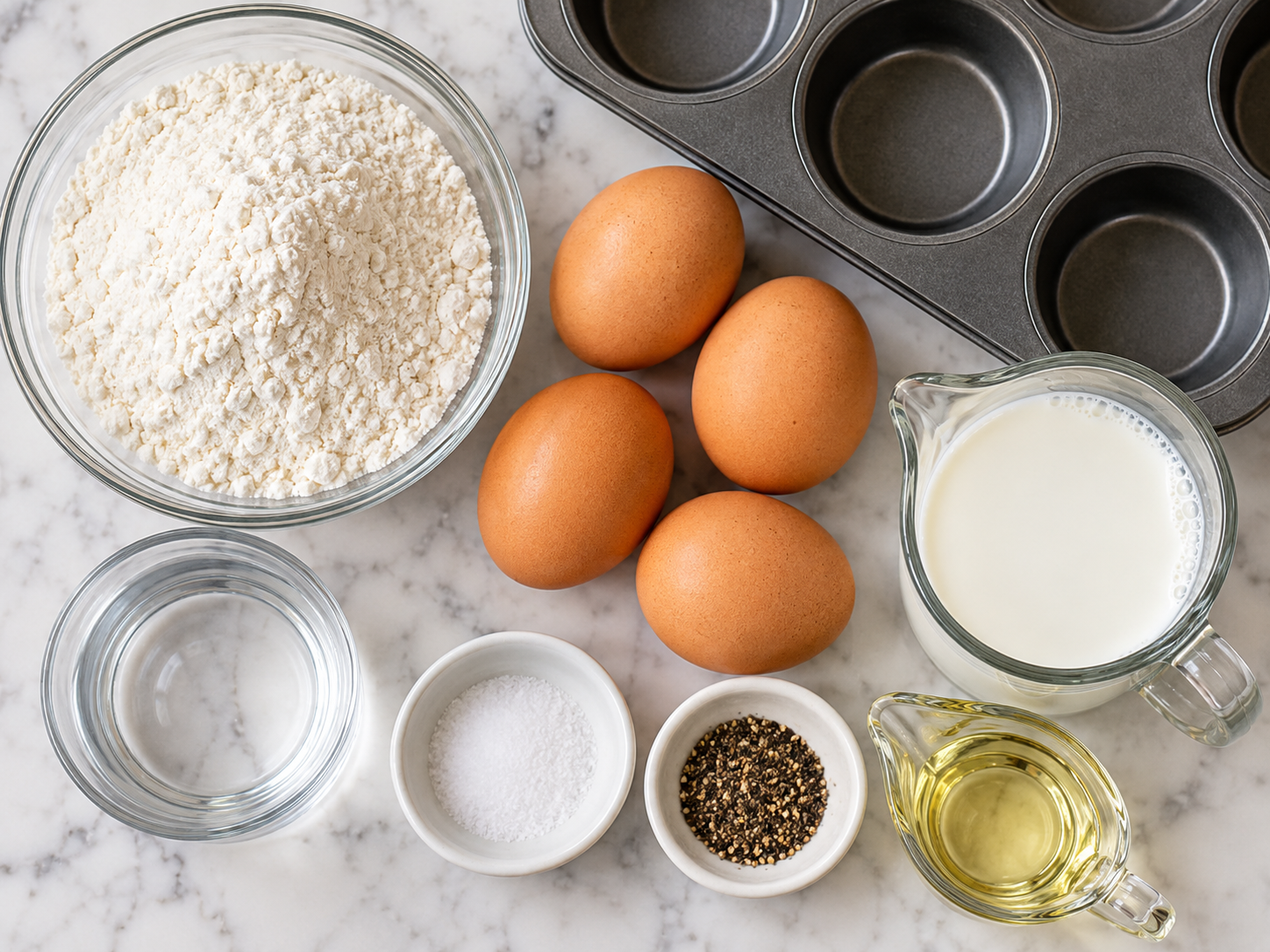
- Plain all-purpose flour. Gives the puddings enough structure to climb up the sides of the tin.
- Large eggs. Add lift, color, and the custardy stretch inside each pudding.
- Whole milk. Makes the batter tender without making it heavy.
- Water. Lightens the batter so the edges bake crisp and tall.
- Fine sea salt. Seasons the batter all the way through.
- Black pepper. Adds a quiet savory note that works well with roast dinners.
- Vegetable oil. Heats hard in the muffin tin and helps the batter puff fast.
Bake Them While Fat Sizzles
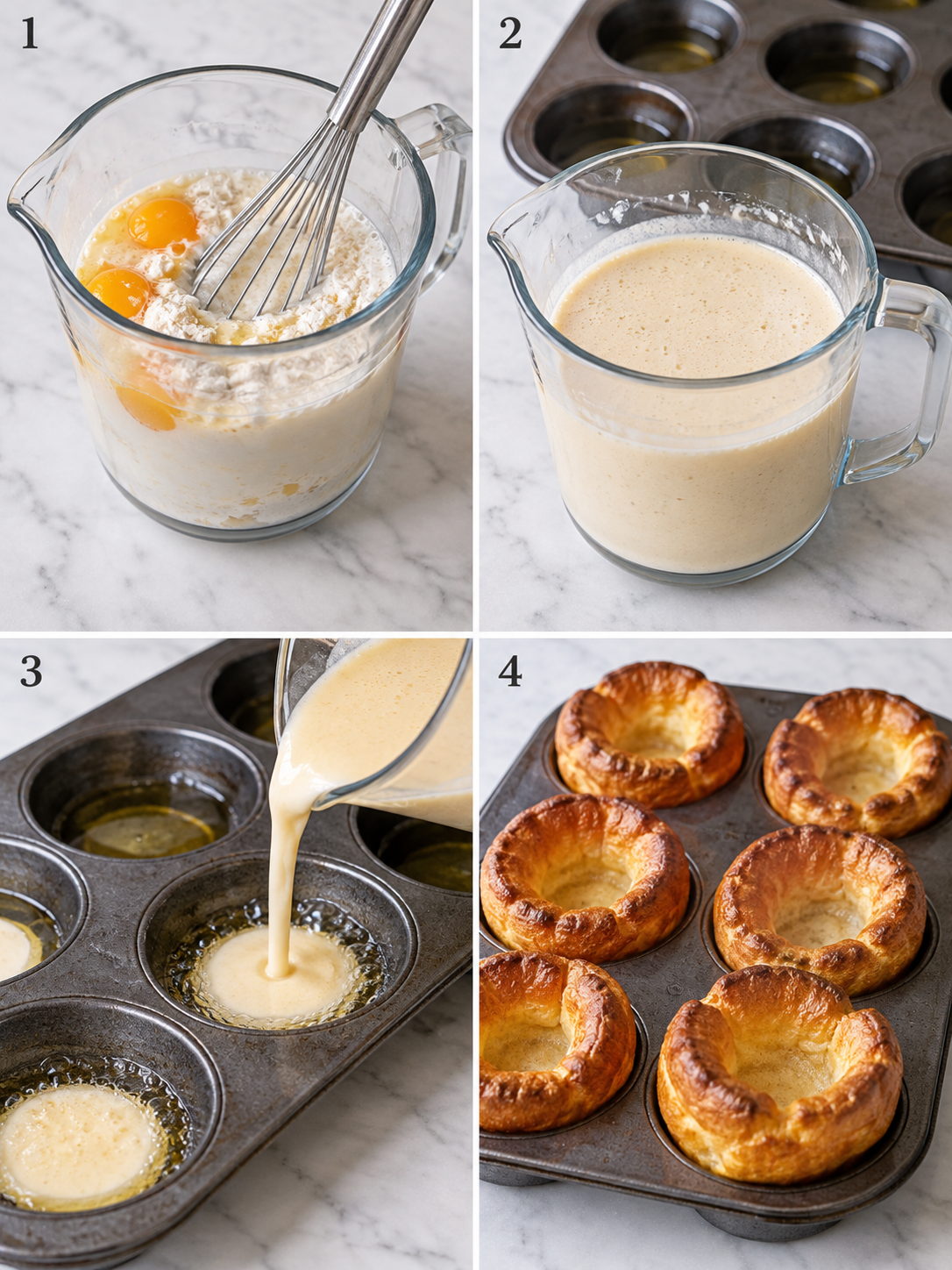
- Whisk the batter. Beat the eggs, flour, milk, water, salt, and pepper until thin and mostly smooth. A few small lumps are fine.
- Rest it well. Cover the jug and chill for at least 30 minutes, or overnight if that suits your roast-dinner timing.
- Heat the tin. Add oil to each muffin cup and heat the tin at 425 degrees F until the oil looks shiny and very hot.
- Pour quickly. Whisk the batter once, then divide it between the hot cups. Work with confidence so the tin stays hot.
- Bake until puffed. Return the tin to the oven and bake for 16-18 minutes until the puddings are risen, crisp, and deep golden.
Resting Builds Better Rise
A short rest is not busywork. It lets the flour hydrate and gives the batter a smoother pour. I like 30 minutes for a weeknight roast and overnight for a holiday meal. The longer rest gives a slightly stretchier inside, which is what makes those gravy-catching pockets. Serious Eats has tested this deeply and found that rested batter rises with a more open structure, see their Yorkshire pudding testing. If your batter has been in the fridge overnight, let it stand while the oven preheats. Cold batter still works, but a slightly warmer batter pours faster and does not cool the tin as much.
Heat Is The Whole Trick
The most important moment is the pour. The oil should be hot enough to sizzle as soon as the batter hits it. Jamie Oliver's classic Yorkshire pudding method also starts with a very hot oven and heated oil, which is the same practical idea used here. Do not set the hot tin on the counter and wander off. Pull it out, fill the cups halfway, and get it back in the oven. I set the batter jug, oven mitts, and a clear landing spot beside the stove before the tin comes out. That small setup makes the baking part feel calm.
Choosing The Right Fat
Vegetable oil is clean, dependable, and easy to use. It also keeps the recipe vegetarian. If you are serving beef and want deeper flavor, swap in beef dripping or lard in the same amount. The puddings will taste more savory and the edges may brown a little harder. Avoid butter by itself because the milk solids can scorch at this oven temperature. Clarified butter works better, but it still gives a softer finish than oil or dripping. Fill each muffin cup with about 3/4 teaspoon of fat. Too little can make the batter stick. Too much can pool in the center and weigh down the cup.
Serve Them Straight Away
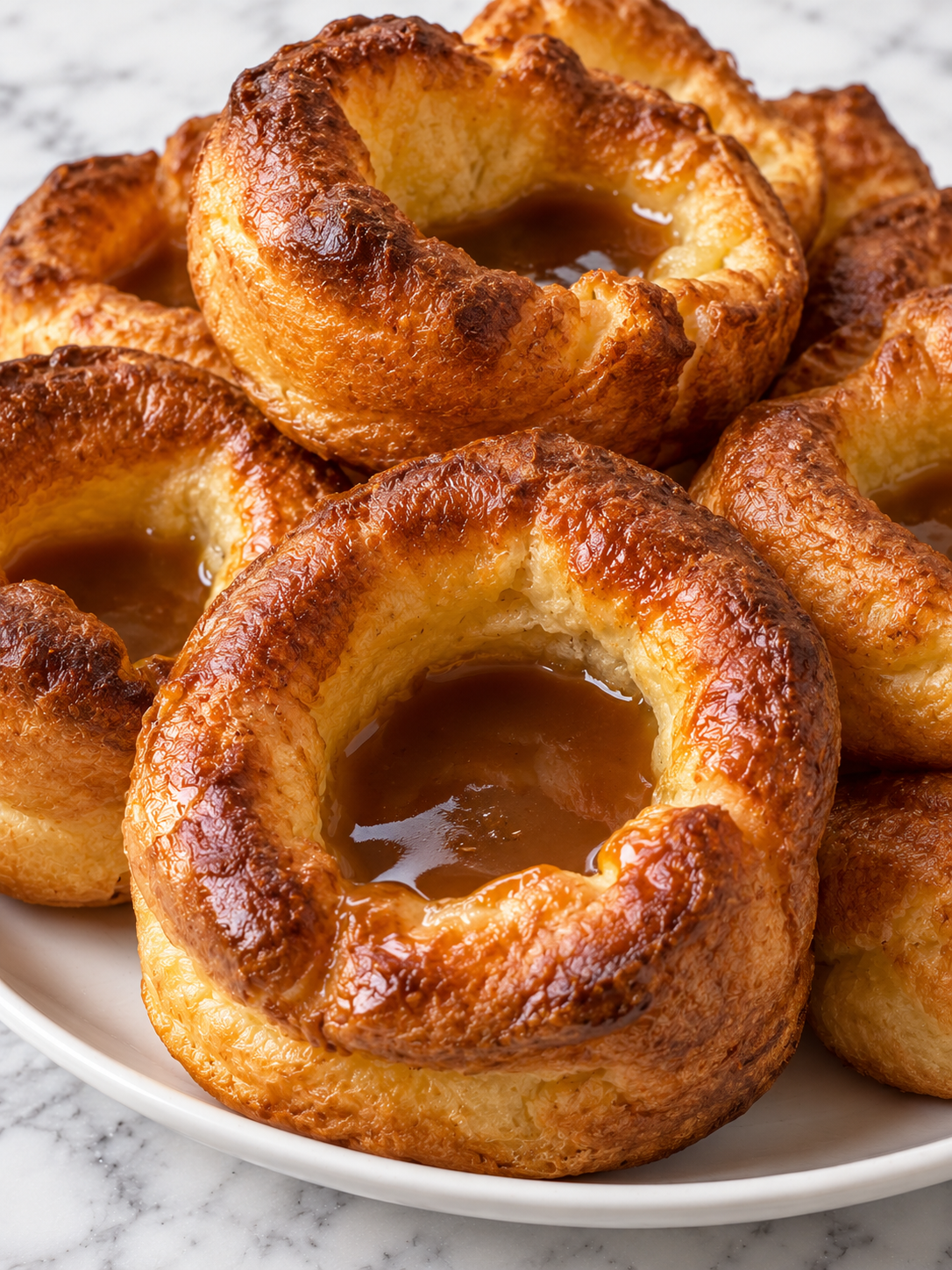
Yorkshire puddings are at their best in the first 5 minutes out of the oven. The edges are crisp, the centers are steamy, and the hollow cups are ready for gravy. Serve them beside prime rib, saucy roast-style mains from beef recipes loaded with flavor, or a simple pan of garlic mushrooms. A spoonful of turkey gravy works nicely too, especially if you are making these outside of a beef roast dinner. Put the platter on the table while they are still crackling from the oven.
Saving Extras Without Sogginess
Leftover Yorkshire puddings soften as they sit, but they are easy to bring back. Cool them fully, then store them airtight in the fridge for up to 3 days. The USDA advises refrigerating cooked leftovers promptly and using them within 3 to 4 days in its leftovers safety guidance. Reheat on a baking sheet at 375 degrees F for 6-8 minutes. Skip the microwave unless you only care about warming them. It turns the crisp shell chewy fast.
Frequently Asked Questions
- Can I make Yorkshire pudding batter ahead?
-
Yes. Whisk the batter up to 24 hours ahead, cover it, and keep it in the fridge. Let it sit on the counter while the oven heats, then whisk once before pouring.
- Why did my Yorkshire puddings not rise?
-
The usual causes are oil that was not hot enough, an oven that cooled down, or a tin that was overfilled. Heat the oiled tin until the fat shimmers, then fill each cup about halfway.
- Can I use self-raising flour?
-
Plain all-purpose flour gives the best classic texture. Self-raising flour can make the batter behave unevenly and may give you a cakier pudding instead of a crisp shell with a hollow middle.
- Can I use lard or beef dripping instead of vegetable oil?
-
Yes. Beef dripping and lard give a richer roast-dinner flavor and a crisp finish. For a vegetarian batch, stick with vegetable, sunflower, or canola oil.
- Can Yorkshire puddings be gluten-free?
-
They can, but this recipe is written for wheat flour. Use a tested gluten-free flour blend made for baking, and expect a slightly more delicate structure.
- How do I store and reheat leftovers?
-
Cool them, refrigerate in an airtight container, and use within 3 days. Reheat on a tray at 375 degrees F until hot and crisp again.
- What should I serve with Yorkshire puddings?
-
They are made for roast beef and gravy, but they also work with roast chicken, mushrooms, onions, and vegetable gravy. Serve them hot so the crisp edges do not soften.
