
 Pin it
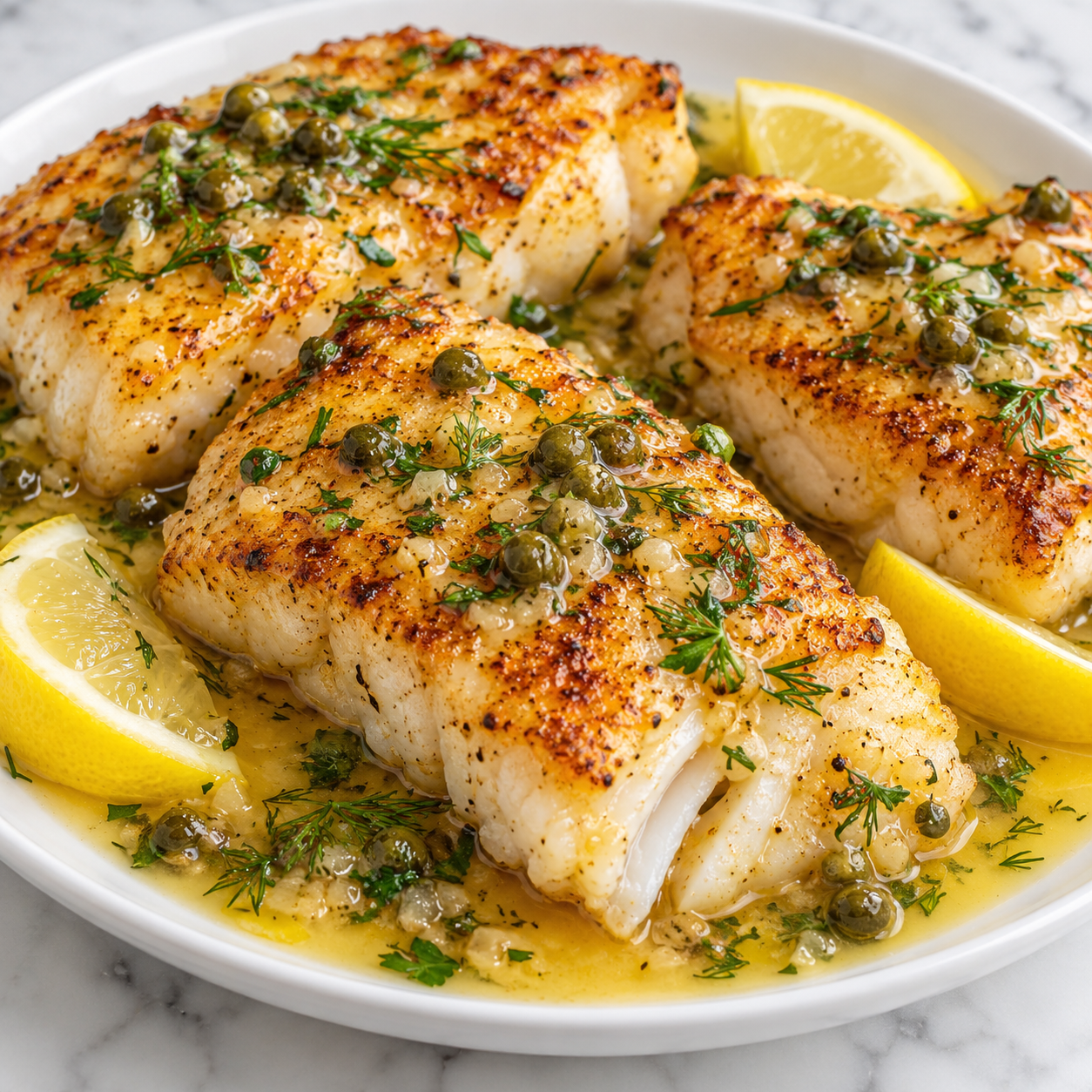
Pan Fried Cod with Lemon Butter Sauce is the kind of dinner that looks calm and polished even when you made it after a long day. The fish stays mild and flaky, the edges get lightly golden, and the sauce tastes bright without burying the cod.
I like this version unbreaded, with just enough seasoning to help the surface brown. The sauce comes together after the fish rests, so the pan drippings, butter, lemon, garlic, and herbs all land in one spoonable finish.
Bright Skillet Cod Lineup
Choose thick cod fillets that look moist and firm, with no strong fishy smell. Fresh lemon, real butter, and soft herbs do the heavy lifting, so this short list is worth keeping simple.
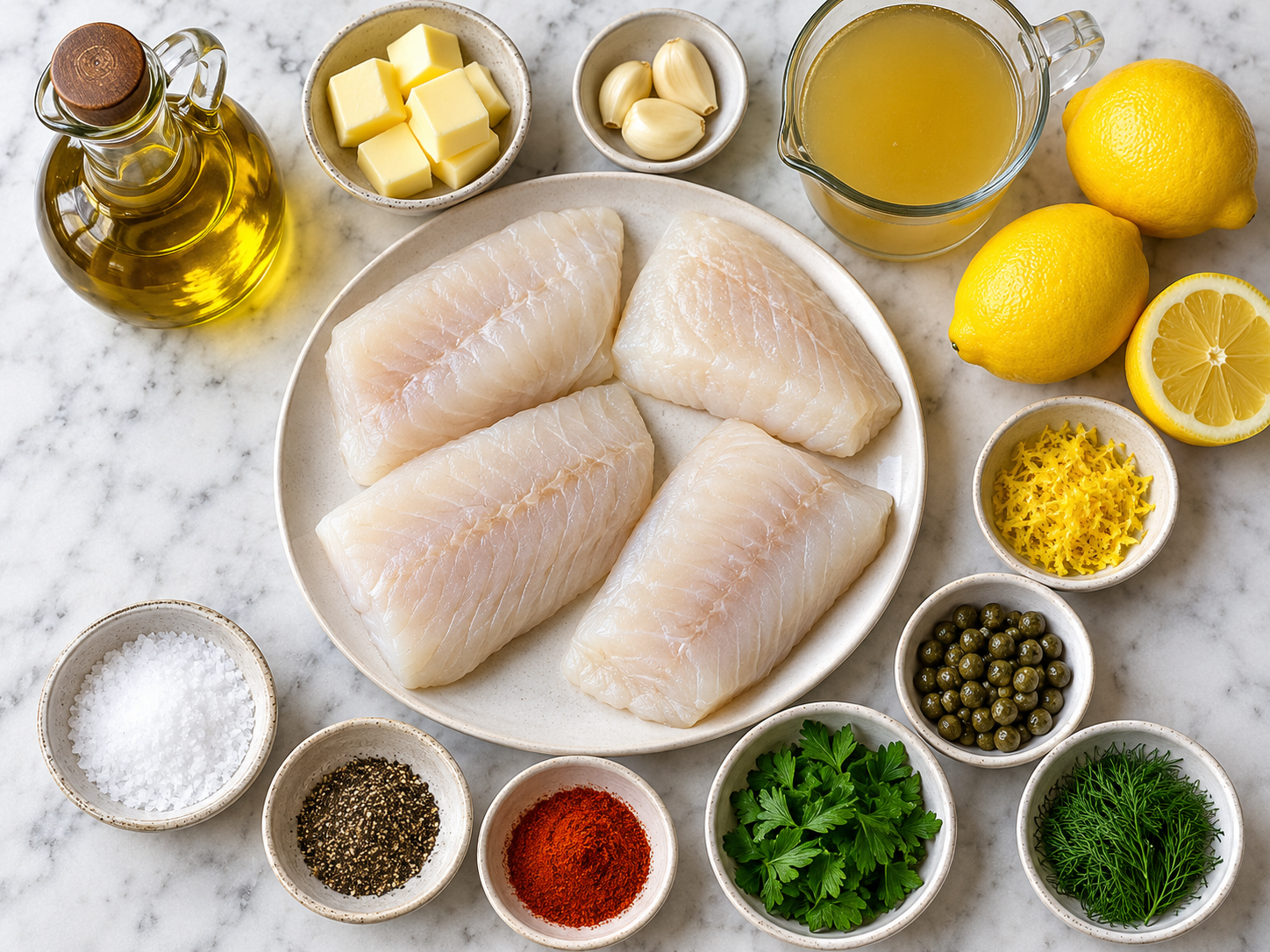
- Cod fillets. Mild white fish that cooks quickly and flakes into tender pieces.
- Olive oil. Helps the fish sear before the butter goes into the sauce.
- Salt, pepper, and paprika. Season the surface and add a little color without masking the fish.
- Unsalted butter. Gives the sauce body and lets you control the salt at the end.
- Garlic. Adds savory warmth when cooked briefly, not browned hard.
- Lemon juice and zest. Cut through the butter and make the sauce taste fresh.
- Low-sodium stock. Loosens the pan sauce and helps it spoon cleanly over the fish.
- Parsley and dill. Add a fresh green finish that suits delicate cod.
- Capers. Optional, but their briny pop works well with lemon and butter.
Pan Fried Cod Method
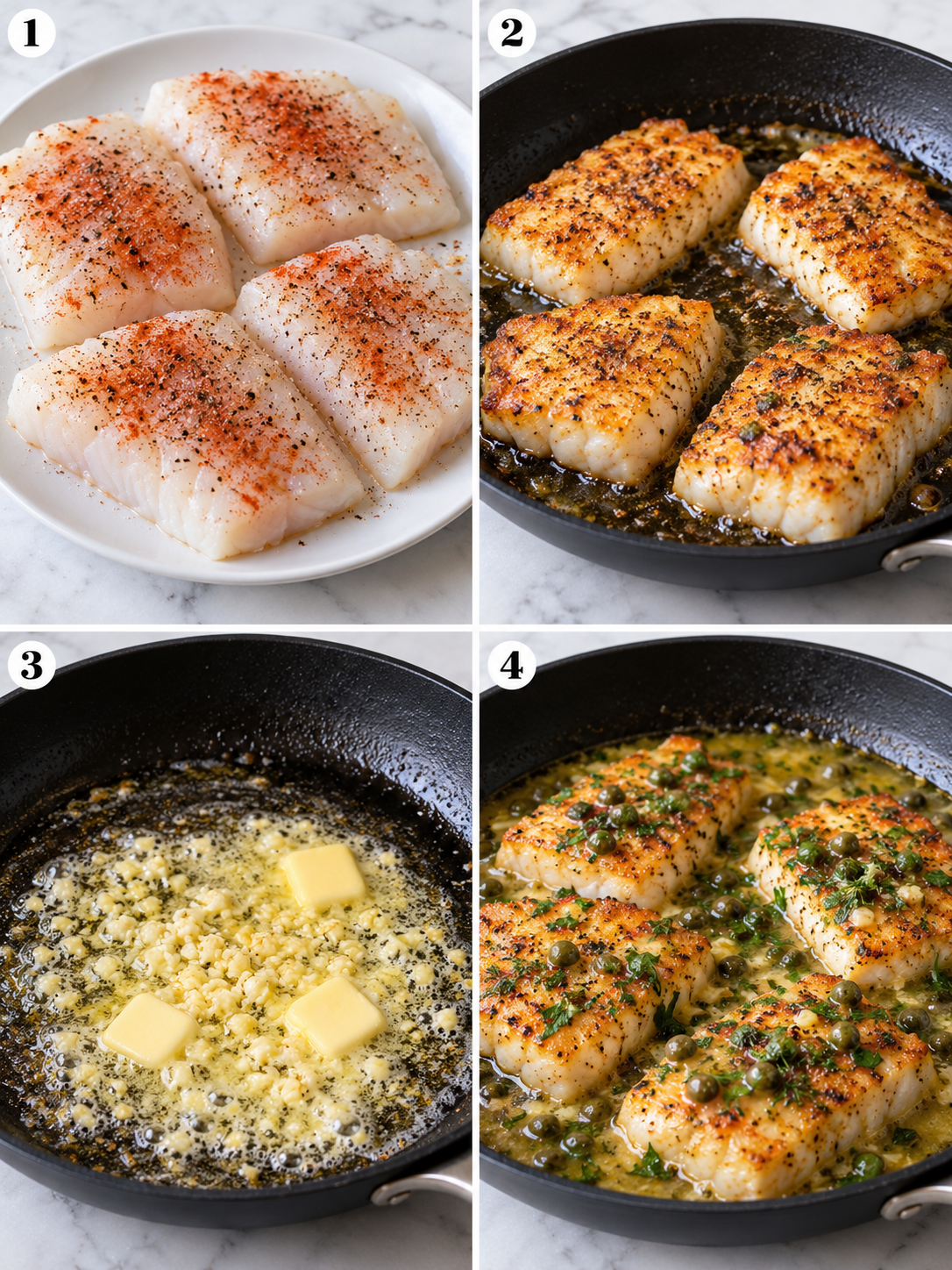
- Dry and season. Pat the cod very dry on all sides, then season with salt, pepper, and paprika. Let it sit for 5 minutes while the skillet heats.
- Sear the first side. Heat olive oil in a large skillet over medium-high heat. Add the cod and cook undisturbed for 3-4 minutes, until the bottom is golden and releases easily.
- Flip gently. Turn the fillets with a thin fish spatula and cook 2-4 minutes more, depending on thickness. Move the cod to a warm plate when it is opaque and flakes easily.
- Cook the garlic. Lower the heat to medium-low. Add butter and garlic to the same pan, stirring for about 30 seconds until fragrant.
- Finish the sauce. Add stock, lemon juice, lemon zest, capers if using, and herbs. Swirl until glossy, then taste for salt and pepper.
- Spoon and serve. Return the cod briefly to the pan or plate it right away. Spoon the lemon butter sauce over the top and serve with extra lemon wedges.
Dry Fish Browns Better
The most important move happens before the cod touches the skillet. Moisture on the surface turns to steam, and steam keeps the fish pale. Pat the fillets with paper towels until the surface feels almost tacky. Letting them sit uncovered in the refrigerator for 15-20 minutes helps even more if you have time.
A hot pan matters too. The Kitchn's fish-cooking guidance points to dry fish and a hot pan as key parts of getting a good sear. Once the cod is in the skillet, leave it alone. If you try to move it too soon, the crust tears and the fillet breaks.
Pan Fried Cod Timing
Pan fried cod with lemon butter sauce cooks fast, so keep your sides nearly ready before the fish goes in. A 1-inch thick fillet usually needs 3-4 minutes on the first side and 2-4 minutes after flipping. Thin pieces can finish sooner. Thick center-cut fillets may need another minute.
The safest check is temperature. The FDA seafood guide recommends cooking most seafood to 145°F, and cod should look opaque and separate easily. Pull it as soon as it reaches that point. Fish keeps cooking a little from carryover heat, and overcooked cod turns firm and dry.
Keep The Sauce Silky
Butter sauce can taste flat if the lemon goes in too early or the heat is too aggressive. Lower the burner before adding the butter, then stir in the garlic just until you can smell it. Garlic that browns too much turns sharp, and that bitterness shows up quickly in a simple sauce.
Add lemon juice after the butter melts, then swirl in a splash of stock to bring everything together. Some skillet cod recipes use flour and a larger amount of stock for a thicker sauce, like this lemon butter pan seared cod. This version stays lighter. If the sauce looks separated, pull the pan off the heat and whisk in 1 teaspoon of warm water.
Easy Swaps That Fit
Haddock, pollock, halibut, or tilapia can step in for cod. The timing changes with thickness, so watch the fish rather than the clock. For a brinier plate, add capers. For a warmer one, add a pinch of chili flakes with the garlic. If you want more garlic butter seafood, try Garlic Butter Chili Shrimp another night.
This cod also sits nicely beside other lemony mains. The same bright-butter mood runs through lemon garlic butter baked salmon, while one-pan lemon herb chicken and vegetables is useful when you want chicken instead of fish. For more sauce ideas, keep Creamy Sauce Favorites in your back pocket.
Serve It While Glossy
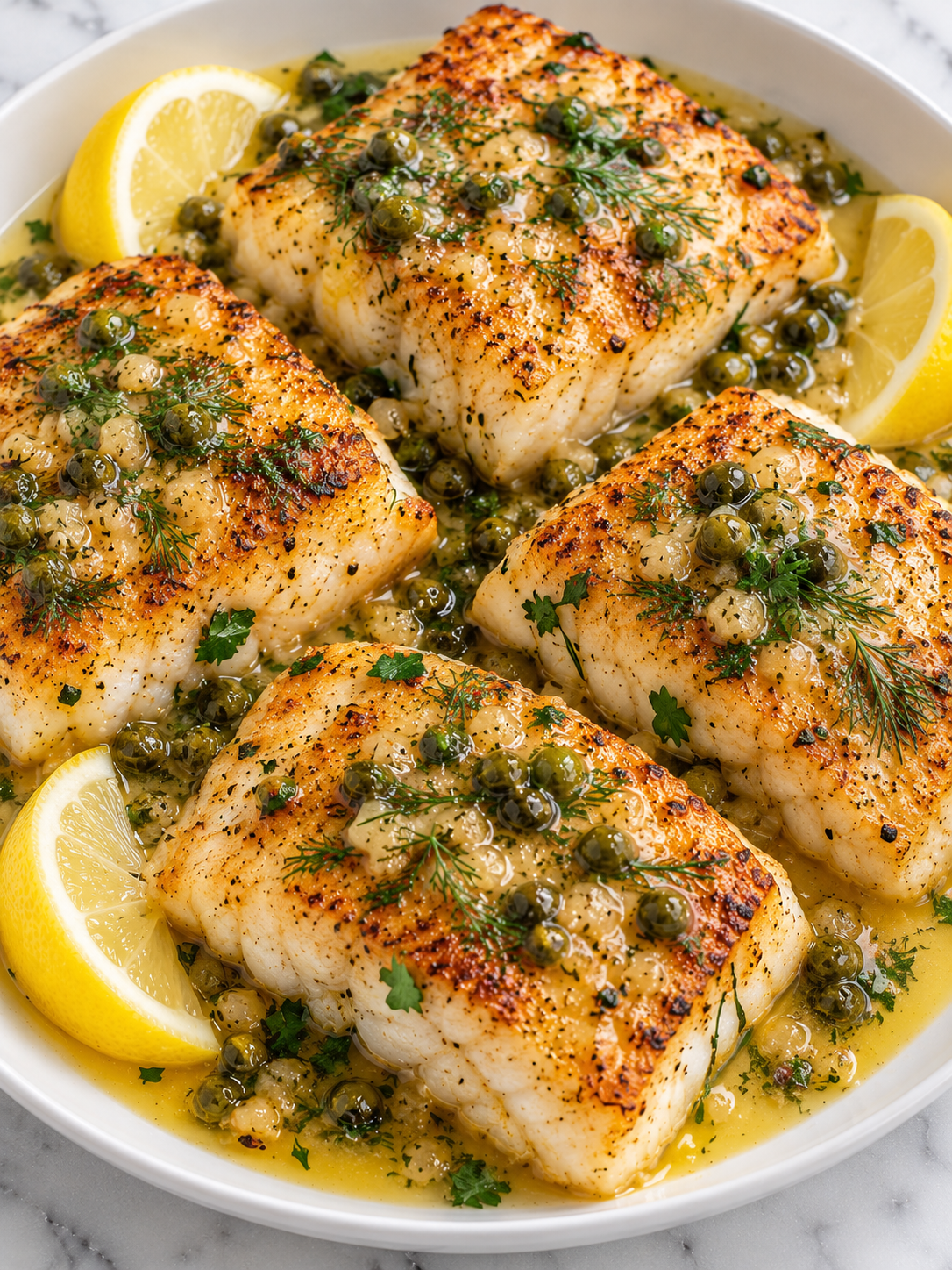
This dish is best straight from the skillet. Spoon the sauce over the fish at the last minute, then serve with something that catches the butter. Steamed rice, mashed potatoes, roasted baby potatoes, or crusty bread all work. For vegetables, go simple. Asparagus, green beans, spinach, zucchini, or a crisp cucumber salad keep the plate light.
If you want a fuller dinner, start the potatoes first and cook the cod once they are nearly done. Cod waits poorly, but potatoes and vegetables wait well. That order keeps the fish hot, the sauce shiny, and the whole meal calm.
Storing Leftovers Kindly
Leftover cod is delicate, but it can still be good the next day. Store the fish and extra sauce in a sealed container in the refrigerator for up to 2 days. The FDA advises keeping seafood refrigerated at 40°F or below if you plan to use it within 2 days.
Reheat gently. Put the cod in a covered skillet over low heat with a spoonful of water, stock, or leftover sauce. Stop as soon as it is warm. The microwave works in a pinch, but use short bursts at reduced power. High heat makes the flakes tighten and pushes out moisture.
Frequently Asked Questions
- How do I know when pan fried cod is done?
-
Cod is done when it turns opaque and flakes at the thickest part with gentle pressure. A thermometer should read 145°F in the center, which is the seafood temperature recommended by the FDA.
- Can I use frozen cod fillets?
-
Yes. Thaw them overnight in the refrigerator or seal them in a bag and thaw in cold water. Pat them very dry before seasoning so they sear instead of steam.
- Can I make this without butter?
-
You can use extra virgin olive oil for a dairy-free version, but the sauce will be lighter and less velvety. Add a small splash of stock and whisk well with the lemon juice to help it come together.
- Why did my cod fall apart in the pan?
-
Cod is delicate, especially thinner tail pieces. Let the first side cook undisturbed until it releases easily, then flip with a thin fish spatula. If it sticks, give it another 30 seconds before trying again.
- What can I serve with lemon butter cod?
-
Serve it with baby potatoes, rice, green beans, asparagus, or a simple salad. Anything mild and starchy is useful because it catches the extra sauce.
- How long do leftovers keep?
-
Cooked cod keeps for up to 2 days in an airtight container in the refrigerator. Reheat it gently in a covered skillet over low heat with a spoonful of water or stock.
