
 Pin it
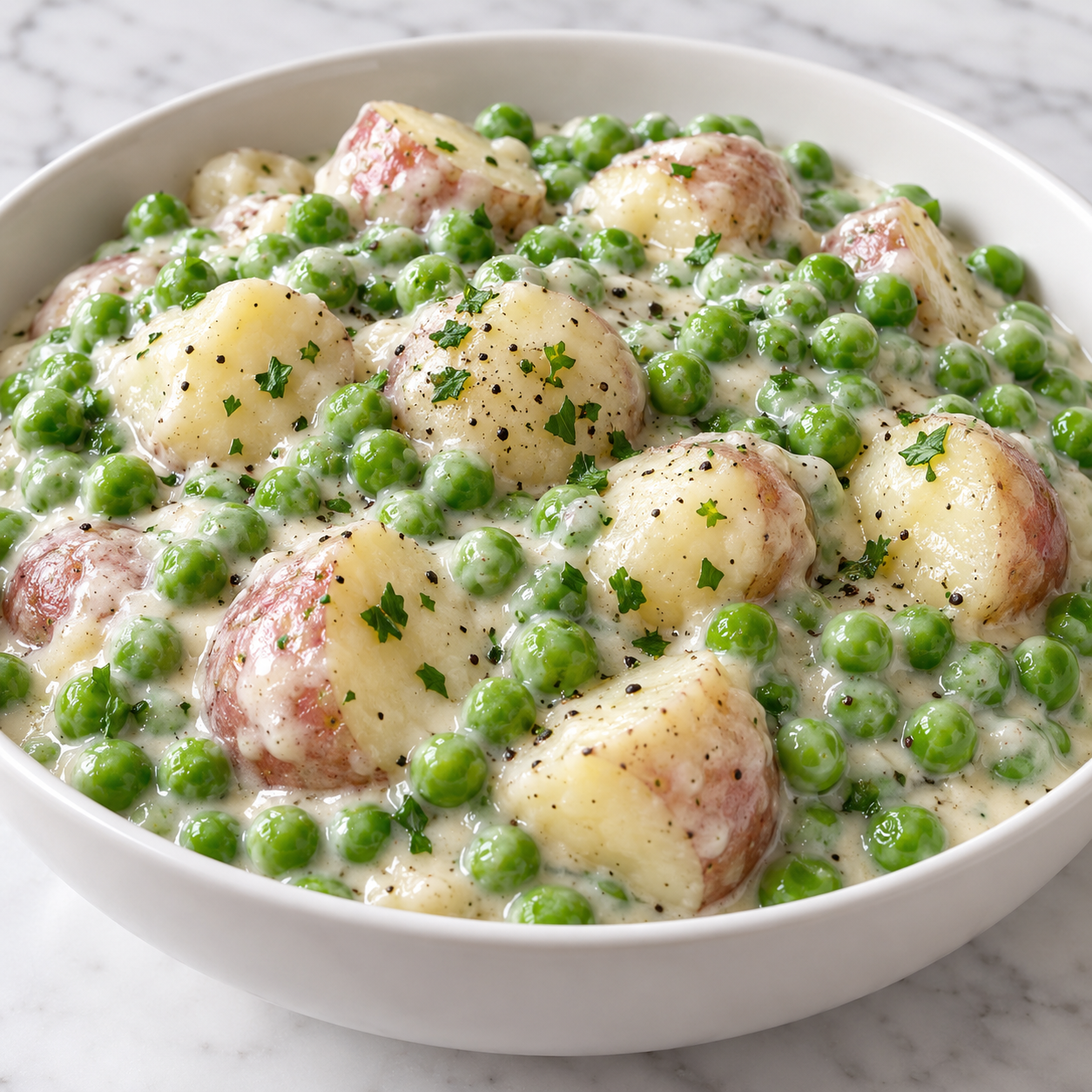
Creamed Peas and Potatoes is the kind of side dish that feels quiet and familiar in the best way. You get tender little potatoes, bright green peas, and a creamy sauce that clings without turning heavy.
I like this with baby red or yellow potatoes because the skins stay delicate and the centers turn buttery. Frozen peas work well too. They keep their color and sweetness as long as you add them near the end.
The trick is not complicated. Salt the potato water, cook the flour in butter for a minute, and keep the peas from simmering too long. That is where the whole dish comes alive.
What Makes It Creamy
The ingredient list is short, so each piece matters. Choose small potatoes that feel firm, use sweet peas rather than canned peas, and reach for milk with enough body to make the sauce smooth.
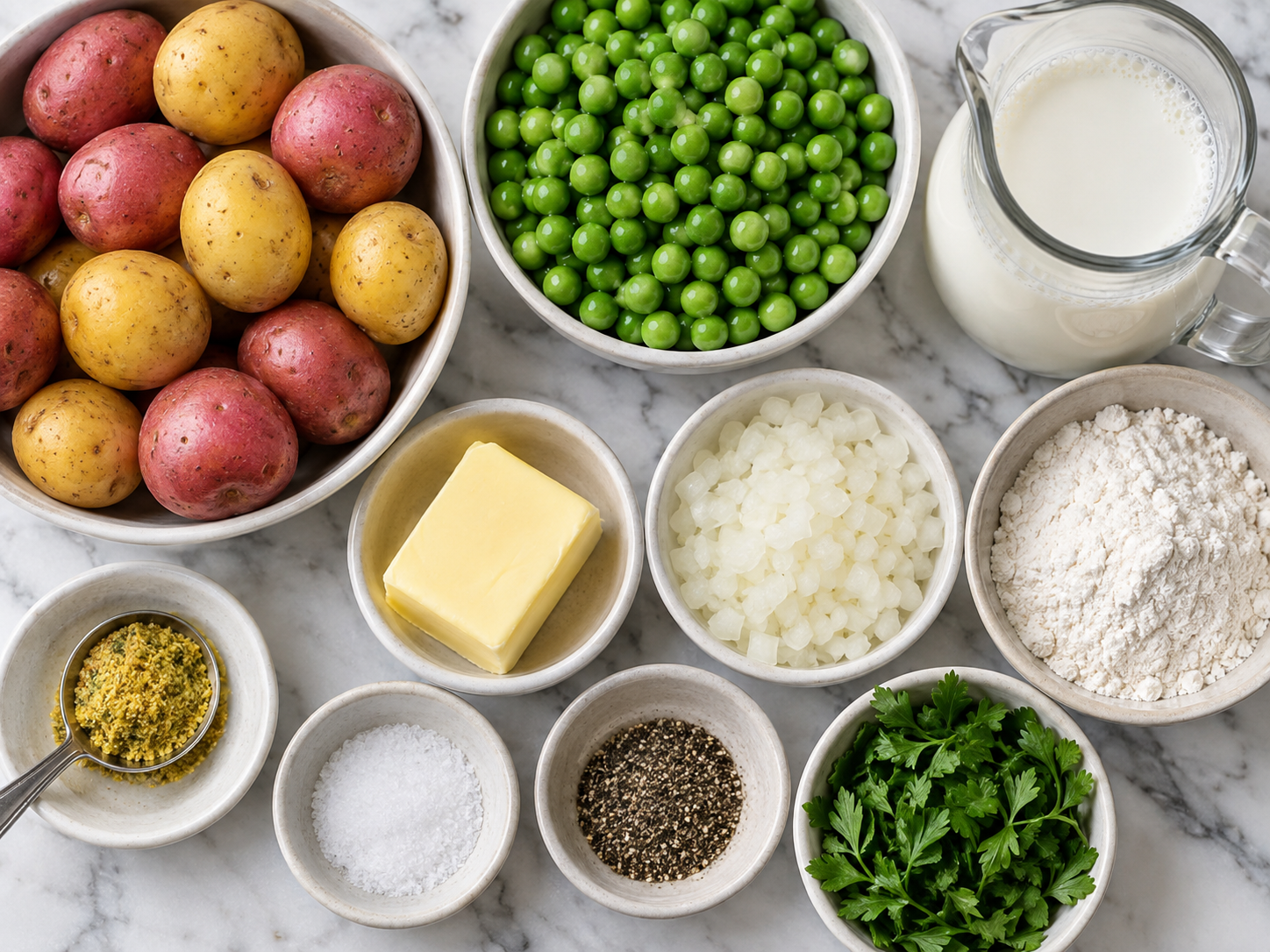
- Baby potatoes. They bring a tender, buttery bite and hold their shape better than floury baking potatoes.
- Green peas. They add sweetness, color, and a little pop against the creamy sauce.
- Butter. It carries the flour and gives the white sauce a round, gentle richness.
- All-purpose flour. It thickens the milk into a sauce that coats instead of pooling.
- Whole milk. It keeps the dish creamy without needing heavy cream.
- Onion. A small amount adds savory depth without taking over.
- Vegetable bouillon. A tiny spoonful makes the sauce taste seasoned from the inside.
- Black pepper. It wakes up the potatoes and cuts through the dairy.
Creamed Peas and Potatoes Method
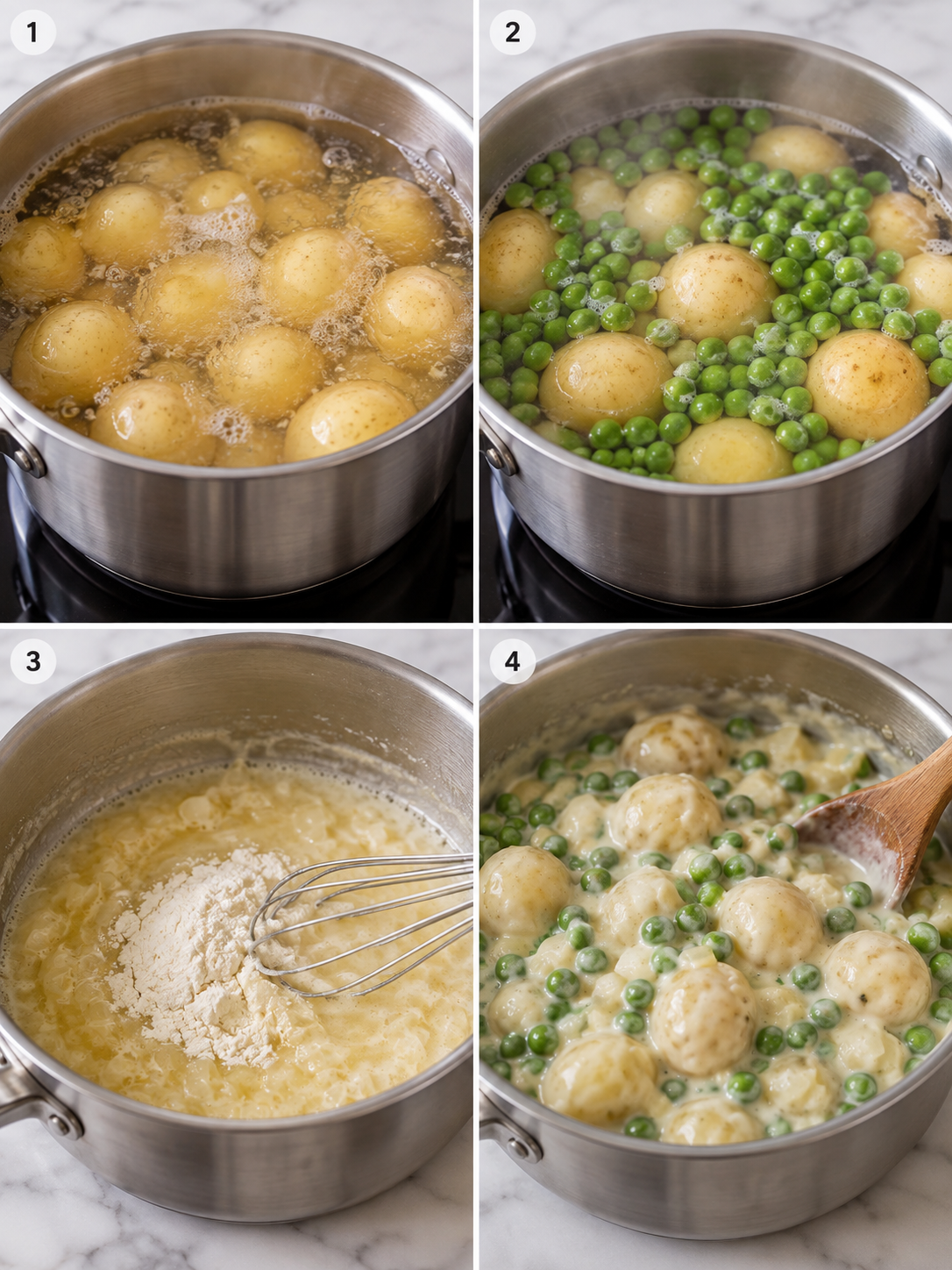
- Start the potatoes. Scrub the potatoes and halve any large ones so they cook evenly. Simmer in well-salted water until a knife slides through with light resistance.
- Warm the peas. Add fresh or frozen peas during the last minute of cooking, or warm them separately if your potatoes need more time. Drain well so the sauce does not thin out.
- Cook the onion. Melt butter in a wide saucepan and soften the onion over medium heat until it smells sweet but has not browned.
- Make the roux. Stir in the flour and cook for about 1 minute. This removes the raw flour taste and helps the sauce thicken smoothly.
- Whisk in milk. Add the milk slowly while whisking. Cook until the sauce coats a spoon, then season with bouillon, salt, and pepper.
- Fold and serve. Add the drained potatoes and peas. Stir gently until everything is coated and hot, then finish with parsley if you like.
Keep The Sauce Gentle
A good white sauce is calm cooking. Melt the butter, stir in the flour, and give it a full minute before the milk goes in. That short cook helps the flour hydrate in fat, which keeps lumps away and softens the raw taste. The Illinois Extension guide to simple sauces explains why mixing starch with fat first helps a sauce thicken evenly.
Add the milk in a slow stream and whisk as you pour. If the sauce gets too thick before the vegetables go in, add milk one tablespoon at a time. It should look like loose gravy, not paste. The potatoes will absorb some sauce as they sit, so stop slightly softer than you think.
Peas Need Less Heat
The potatoes need real simmering time. The peas do not. Frozen peas are already blanched before freezing, so they only need enough heat to turn tender and bright. Fresh shelled peas may need 2-4 minutes depending on size. Canned peas are softer and darker, so use them only when that is what you have. Drain them well and fold them in at the very end.
The biggest mistake is letting the finished dish bubble hard after the peas go in. That dulls the color and gives them a tired texture. Keep the heat low once the vegetables meet the sauce. A wide pan helps because you can fold gently instead of stirring hard enough to break the potatoes.
Smart Swaps That Work
You can make this with baby Yukon golds, red potatoes, fingerlings, or peeled russets cut into sturdy chunks. Russets are softer, so handle them lightly. For a richer sauce, replace 1/2 cup of the milk with half-and-half. For a lighter one, use 2 percent milk and keep the butter the same so the roux still works.
Need it vegetarian? Use vegetable bouillon or skip it and season with extra salt. For a gluten-free version, skip the flour roux and thicken the milk with cornstarch slurry instead. If you are planning a potato-heavy dinner, pair this with something crisp or roasted. The contrast works well beside garlic parmesan potatoes when you want a potato spread, or with marinated cucumbers, onions, and tomatoes for a cooler plate.
Serving And Storing It
Serve creamed peas and potatoes hot, right after the sauce turns glossy around the vegetables. It is a natural side for roast meats and holiday dinners. I like it with one-pan lemon herb chicken and vegetables on a weeknight, and it also belongs near perfect turkey gravy when the table leans cozy.
Leftovers thicken in the refrigerator because the potatoes keep drinking in the sauce. Store them in a covered container and reheat gently in a saucepan with a splash of milk. The USDA says cooked leftovers are usually best refrigerated within 2 hours and used in 3-4 days, as covered in its leftovers and food safety guide. I do not love freezing this dish because milk sauces can turn grainy once thawed.
Summary
This old-fashioned side dish is simple, cozy, and easy to adjust. Keep the potatoes tender, the peas bright, and the white sauce loose enough to coat every bite.
Frequently Asked Questions
- Can I use frozen peas for creamed peas and potatoes?
-
Yes. Frozen peas are a reliable choice because they are picked and frozen while sweet. Add them after the potatoes are tender and warm them just until hot so they stay bright and slightly firm.
- What potatoes work best?
-
Baby red potatoes, baby Yukon gold potatoes, or true new potatoes work best. Their thin skins and creamy centers hold together in the sauce. If you use large potatoes, peel them if the skins are tough and cut them into 1-inch chunks.
- Can I make this without flour?
-
You can thicken the sauce with cornstarch instead. Whisk 1 tablespoon cornstarch into 2 tablespoons cold milk, then stir it into the hot milk and butter until thickened. The sauce will look glossier and slightly less old-fashioned than a flour-thickened white sauce.
- How do I keep the sauce from tasting bland?
-
Salt the potato water first, then taste the finished white sauce before adding the vegetables. Potatoes soak up seasoning quickly. A small pinch of vegetable bouillon, black pepper, and a final taste at the end make a big difference.
- Can creamed peas and potatoes be made ahead?
-
It is best right after cooking, but you can boil the potatoes a day ahead and refrigerate them. Make the sauce fresh, then add the chilled potatoes and peas and warm gently. Add a splash of milk if the sauce thickens too much.
- What should I serve with creamed peas and potatoes?
-
Serve it with roast chicken, ham, pork chops, turkey, or a simple meatloaf dinner. It is also good beside a crisp cucumber salad because the creamy sauce likes something cool and bright on the plate.
