
 Pin it
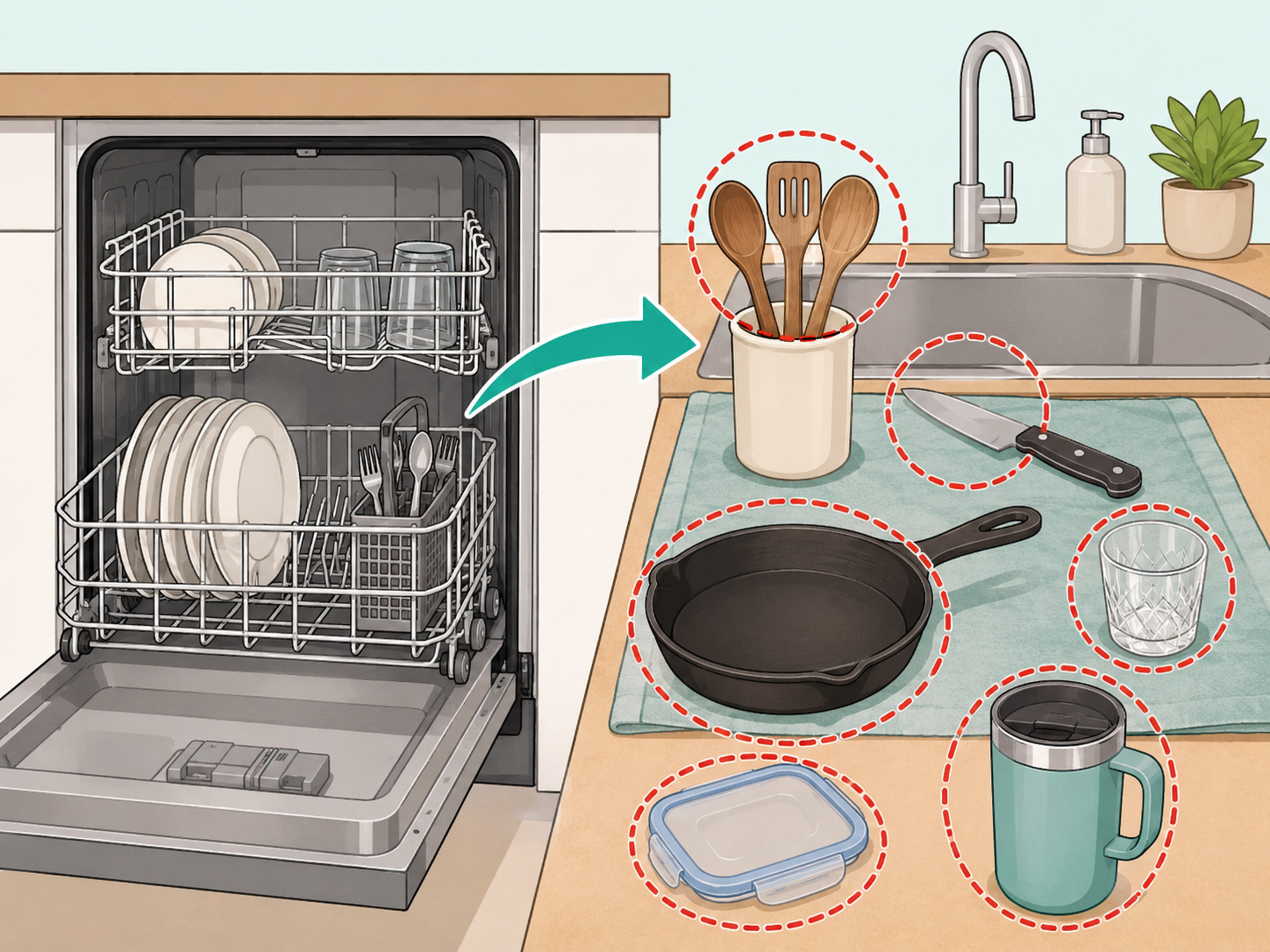
The dishwasher is convenient, but heat, detergent, water pressure, and long moisture exposure can ruin certain kitchen items. This guide groups 18 common things that are better washed by hand. When an item has a care label or manual, follow that first; when in doubt, hand-washing is the safer choice.
Hand-wash wooden utensils and cutting boards
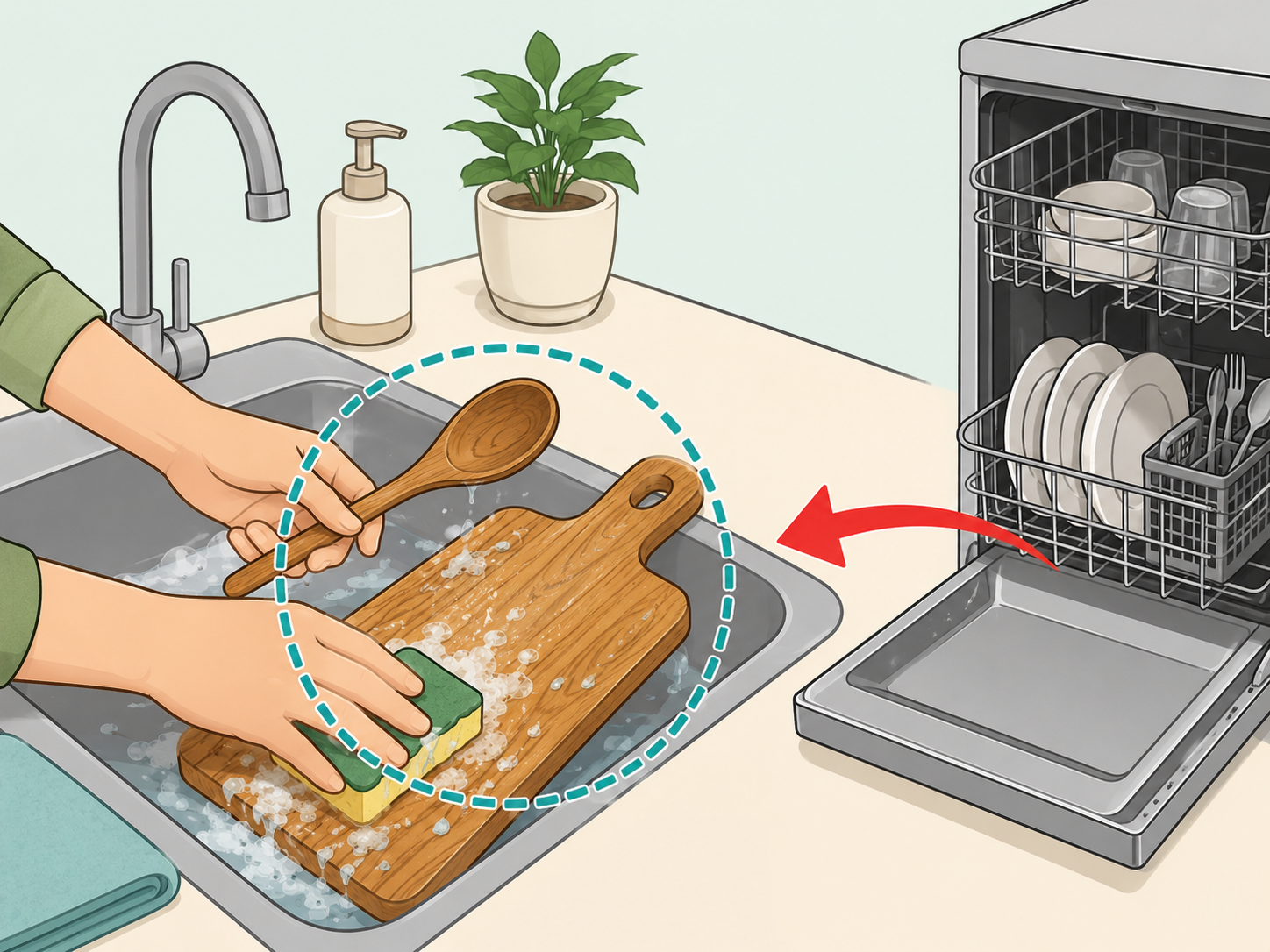
Put wooden spoons, salad servers, and wooden cutting boards in the hand-wash pile. Heat and humidity can make wood swell, warp, or crack, and the University of Maine Extension cutting board guidance notes that some wood boards can separate in dishwashers. Wash wood with warm soapy water, rinse, and dry it right away.
Keep chef's knives and hollow-handled knives out
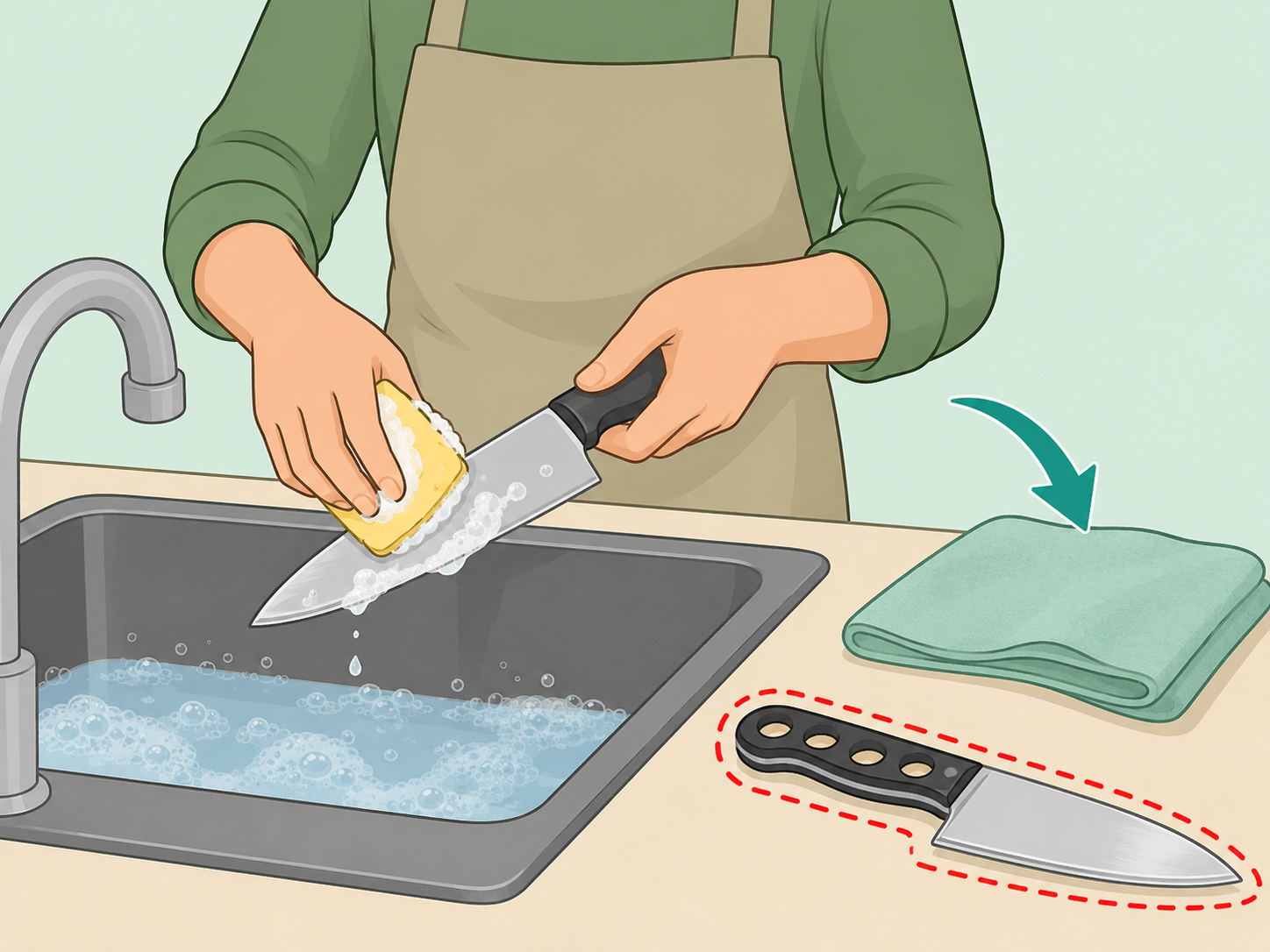
Wash sharp chef's knives by hand so the blade does not get nicked, dulled, or knocked against other utensils. Hollow-handled knives are also risky because dishwasher heat can loosen the adhesive that holds some handles together, according to Whirlpool product guidance. Dry knives immediately before storing them safely.
Protect cast iron and carbon steel pans
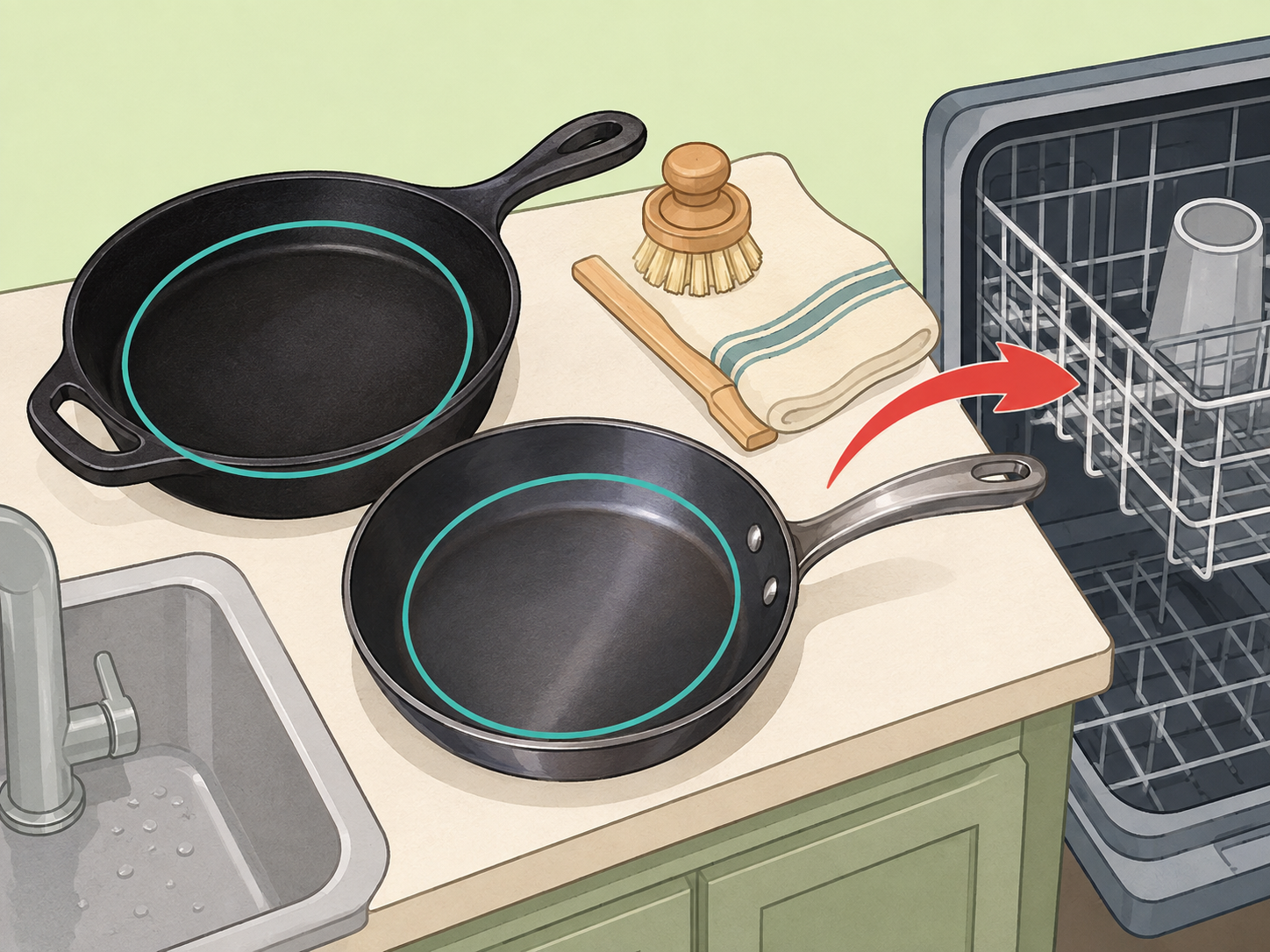
Keep cast iron pans and carbon steel pans out of the dishwasher. Whirlpool's cookware care guidance says cast iron should be hand-washed to preserve seasoning, and carbon steel should avoid the dishwasher for the same reason. Clean both with hot water, a sponge or brush, and a prompt towel dry, then oil or season as your pan maker recommends.
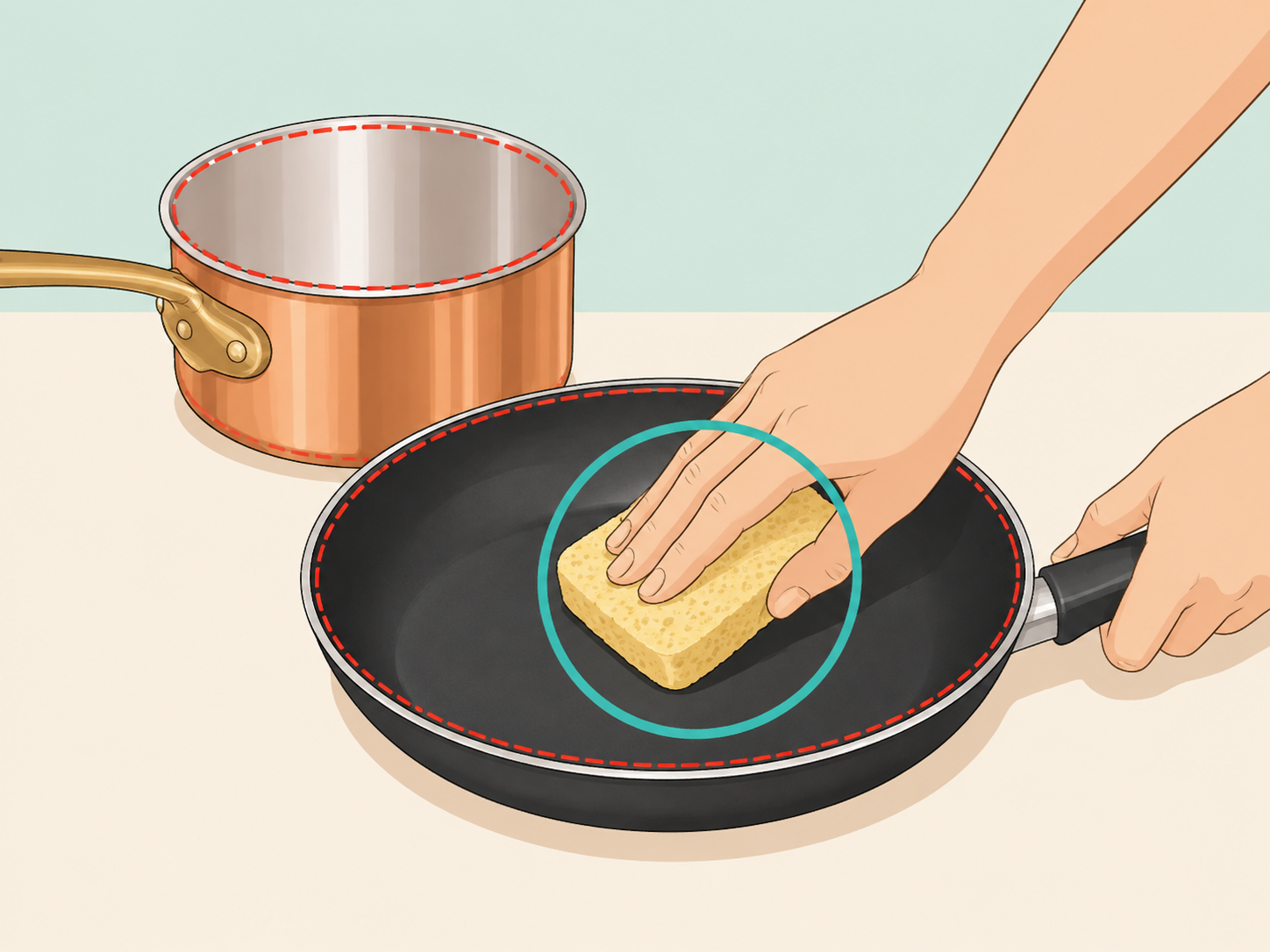
Wash nonstick and copper cookware by hand
Set aside nonstick pans and copper cookware before loading the racks. The American Heart Association recommends hand-washing nonstick skillets with soft sponges or cloths because dishwasher cleaning can damage the pan and may void a warranty. Copper can discolor or pit in the dishwasher, so wash it gently and dry it well.
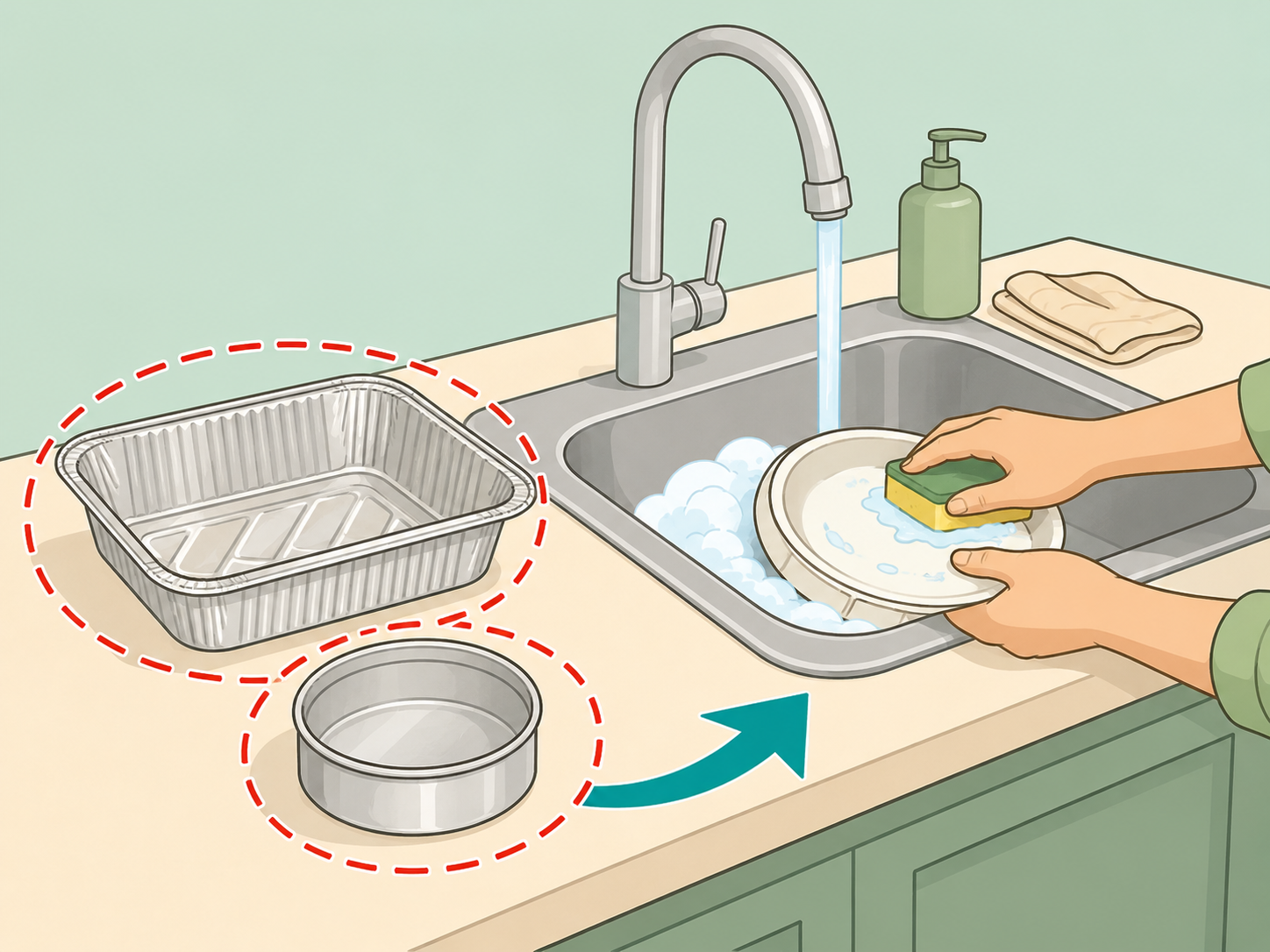
Skip disposable aluminum pans and tin items
Do not run disposable aluminum pans or tin items through a dishwasher. Whirlpool notes that throwaway aluminum can shift and leave black marks on dishes, while tin can rust in the dishwasher. Hand-wash these pieces only if they are meant to be reused, and recycle or discard single-use pans when appropriate.
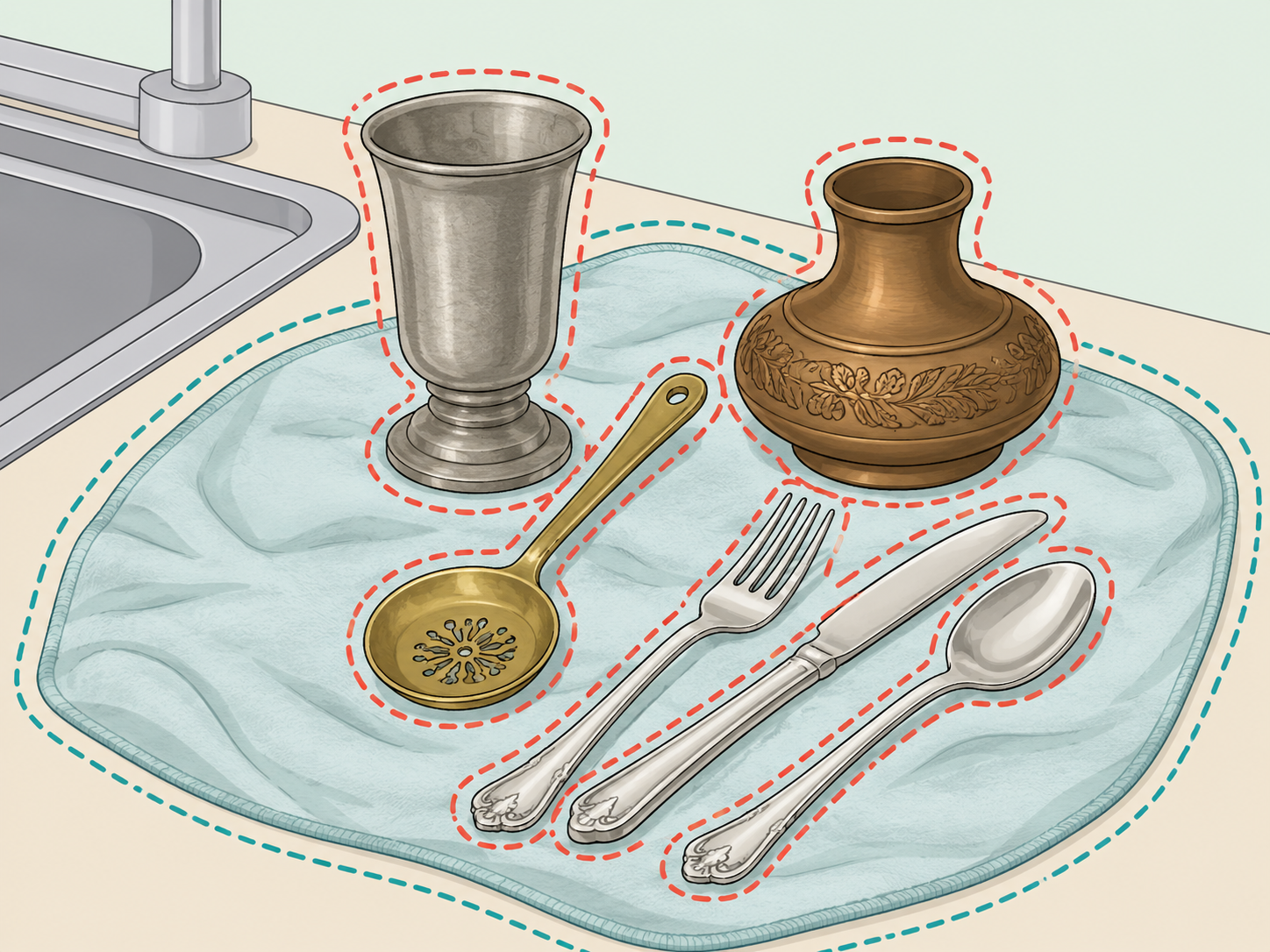
Set aside pewter, brass, bronze, and silver
Keep pewter, brass, bronze, and sterling silver or silver-plated pieces out unless the maker specifically says otherwise. Whirlpool's dishwasher-safe item guide warns that high water temperatures and detergent can discolor or pit pewter, brass, and bronze, and that silver can be damaged by contact with certain foods or stainless steel. Wash these pieces separately with a gentle cleaner made for the metal.
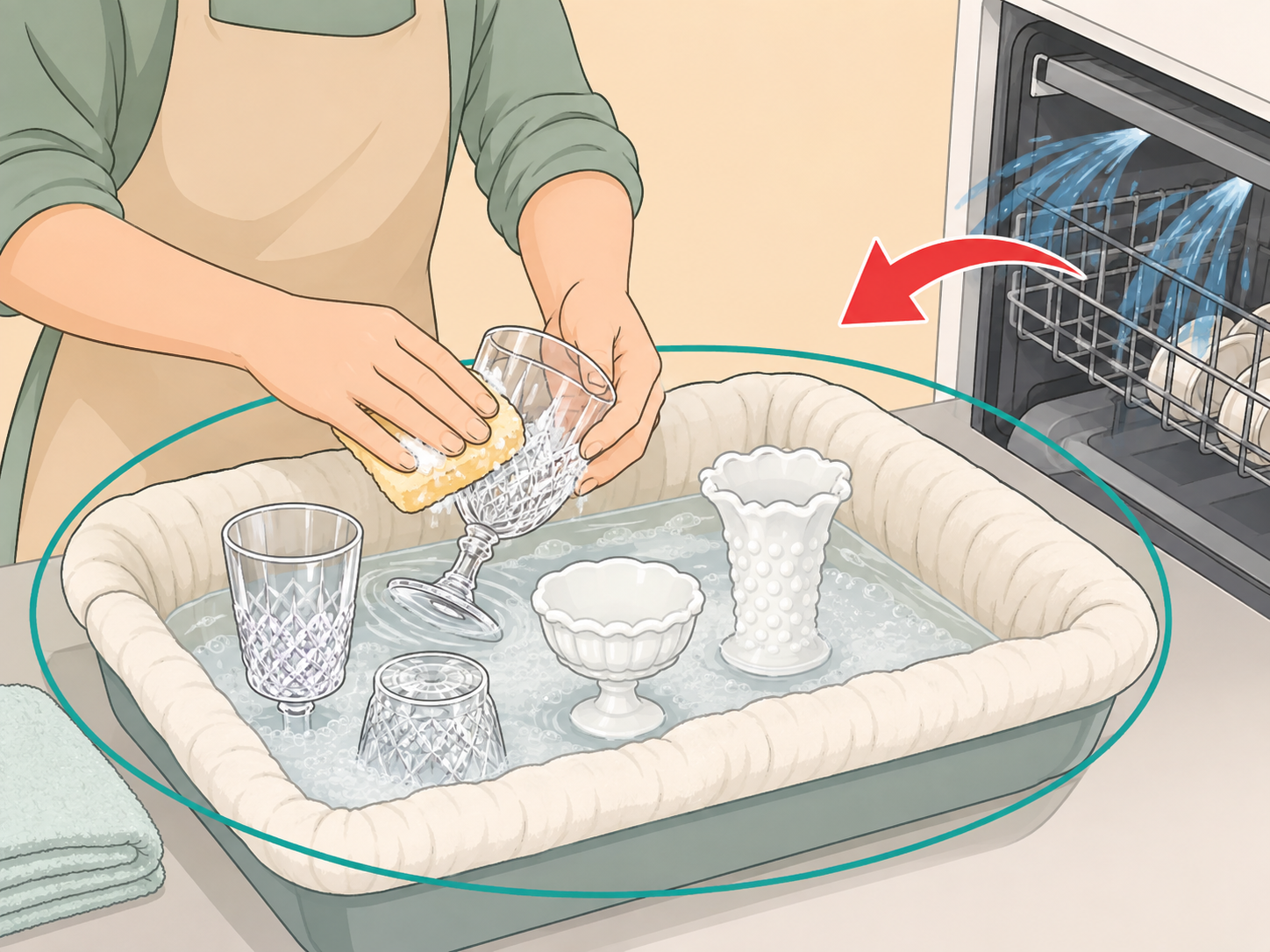
Protect crystal, delicate glassware, and milk glass
Hand-wash crystal, delicate glassware, and milk glass, especially if the pieces are old, thin, or sentimental. Whirlpool says delicate glass, hand-blown or painted glass, milk glass, and crystal may break, yellow, or etch in the dishwasher. Use a padded sink or basin, mild soap, and a soft towel to reduce bumps and chips.
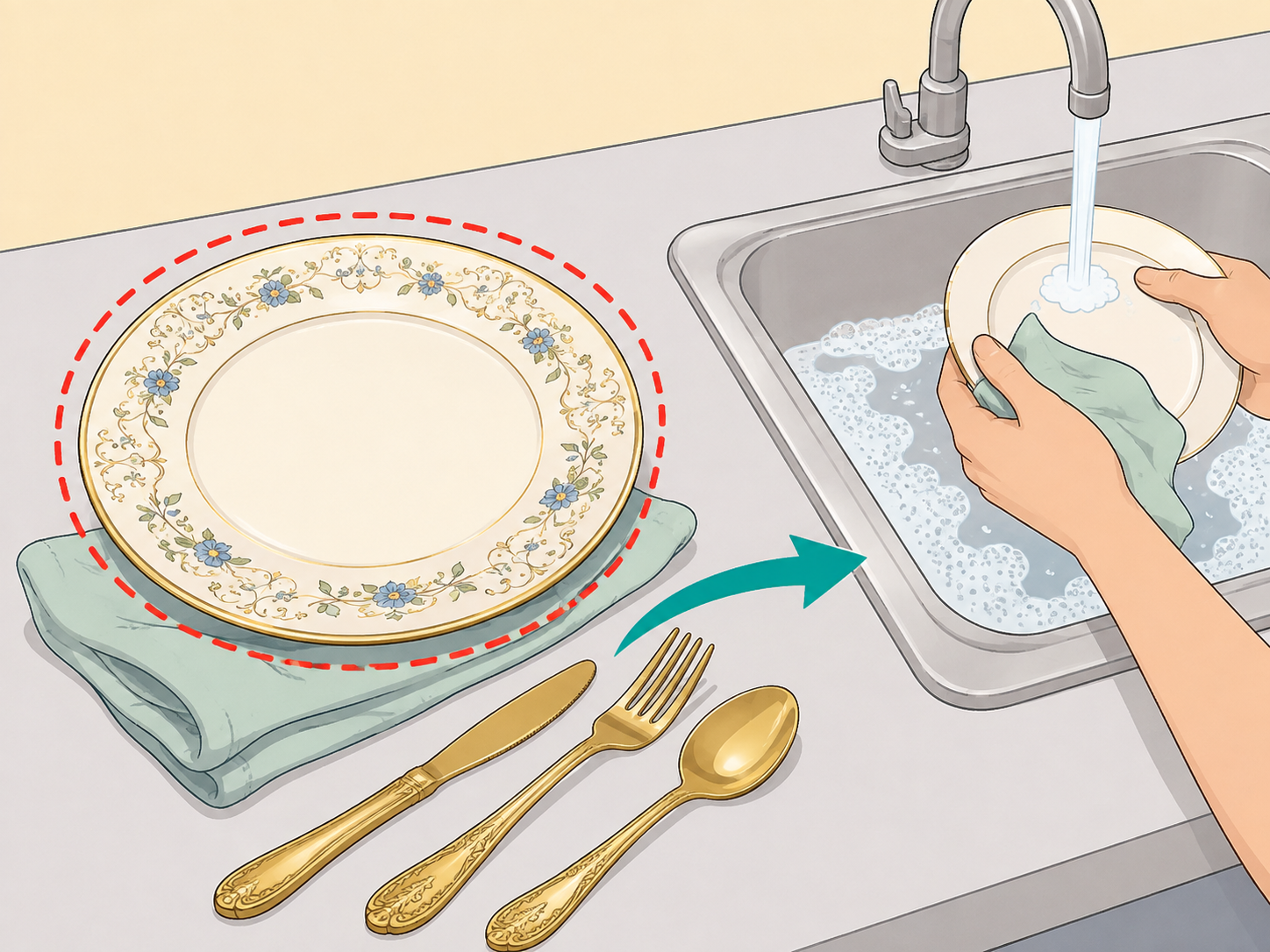
Hand-wash antique china and gold-colored flatware
Do not put antique china, hand-painted china, metal-rimmed china, or gold-colored flatware in a normal dishwasher load. GE Appliances warns that antique, metal-trimmed, hand-painted, and over-the-glaze patterns can fade or be damaged by high water temperature and detergent, even though some modern china may be dishwasher-safe. Treat decorated pieces as hand-wash-only unless their care instructions clearly say otherwise.
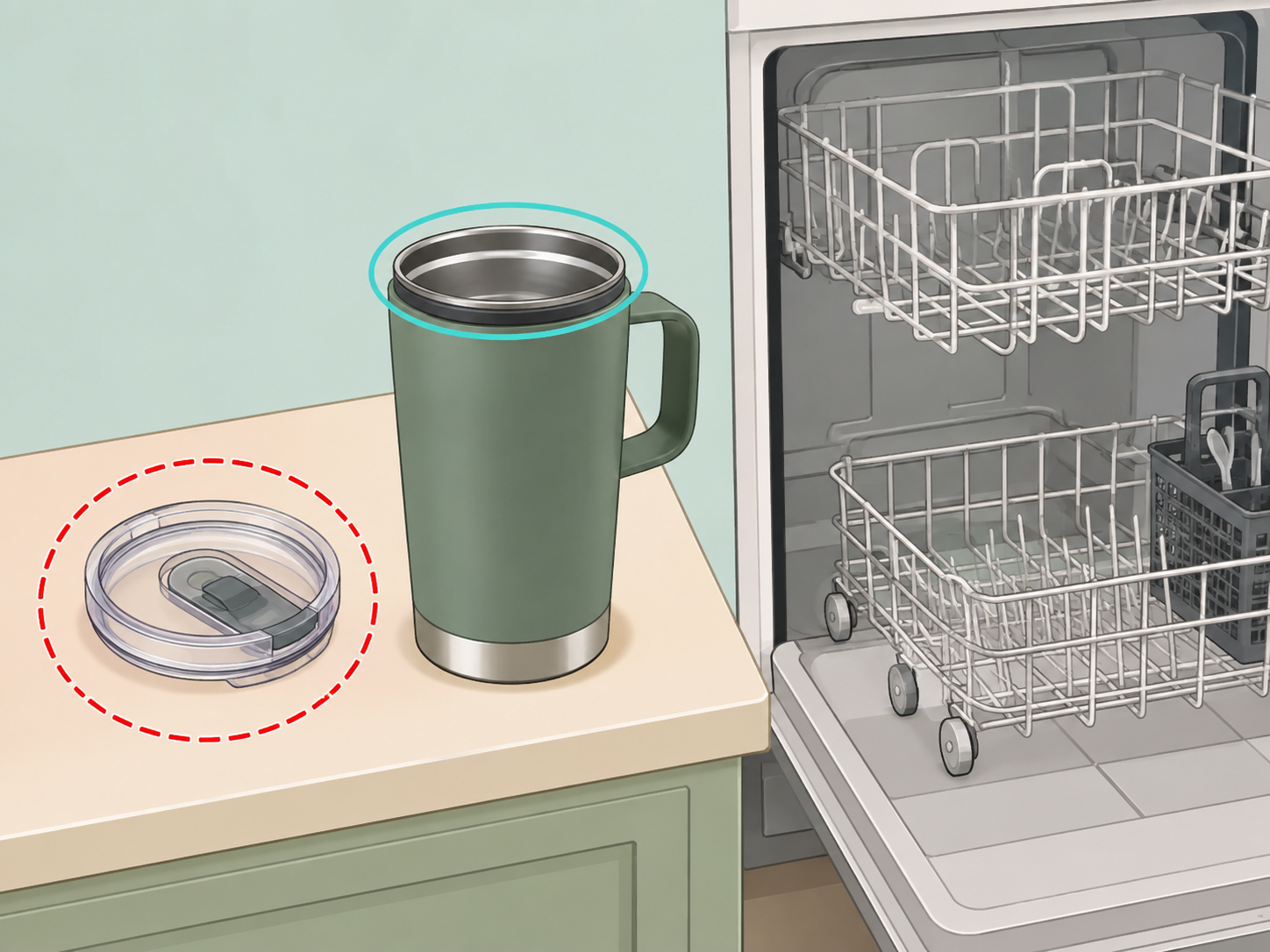
Keep thin plastics and insulated containers off the racks
Leave thin or disposable plastics and insulated mugs or food containers out of the dishwasher. Plastic food-contact materials are made for specific uses, and the FDA explains that food-contact substances are reviewed for their intended use, so a flimsy takeout lid is not the same as a dishwasher-safe container. Whirlpool also notes that thin plastics can melt and that heat or water can damage the seal and insulation in travel mugs.
Summary
The bottom line: save the dishwasher for sturdy, clearly dishwasher-safe items. Hand-wash anything wooden, sharp, seasoned, coated, delicate, metallic-trimmed, heat-sensitive, or insulated so it lasts longer and stays safer to use.
Frequently Asked Questions
- What are the 18 things you should keep out of the dishwasher?
- The 18 items are wooden utensils, wooden cutting boards, chef's knives, hollow-handled knives, cast iron pans, carbon steel pans, nonstick pans, copper cookware, disposable aluminum pans, tin items, pewter or brass or bronze pieces, sterling silver or silver plate, crystal or delicate glassware, milk glass, antique or hand-painted china, gold-colored flatware, thin or disposable plastics, and insulated mugs or containers.
- Is stainless steel dishwasher-safe?
- Many stainless steel bowls, measuring cups, and utensils are dishwasher-safe, but check the care label first. Whirlpool notes that prolonged contact with salty or acidic foods can affect stainless finishes, so rinse if you will not run the dishwasher right away.
- Can I put dishwasher-safe plastic on the bottom rack?
- Usually no. Even dishwasher-safe plastics are typically best on the top rack, away from the heating element, because plastics vary in how well they handle heat and detergent.
- What if I already put cast iron in the dishwasher?
- Dry it immediately and check for rust or dull, stripped seasoning. Clean off any rust gently, then re-season the pan according to the manufacturer's directions before cooking with it again.
- Can a delicate cycle make crystal safe?
- A delicate cycle may be gentler, but it does not make every crystal or antique piece safe. GE Appliances says antique, metal-trimmed, hand-painted, and over-the-glaze patterns are vulnerable to fading or damage from heat and detergent.
- What is the safest way to hand-wash these items?
- Use warm water, mild dish soap, and a soft sponge or cloth. Rinse well, dry promptly with a clean towel, and avoid soaking wood, seasoned pans, silver, copper, and delicate pieces.
References
Reliable references aided in composing and refining this content.
- https://www.whirlpool.com/blog/kitchen/what-is-and-is-not-dishwasher-safe.html
- https://producthelp.whirlpool.com/Dishwashers/Product_Info/Dishwasher_Product_Assistance/Is_this_Item_Dishwasher_Safe%253F
- https://www.whirlpool.com/blog/kitchen/how-to-clean-pots-and-pans.html
- https://extension.umaine.edu/publications/3108e
- https://www.heart.org/en/healthy-living/healthy-eating/cooking-skills/preparing/caring-for-your-non-stick-skillets
- https://www.fda.gov/food/food-ingredients-packaging/food-packaging-other-substances-come-contact-food-information-consumers
- https://products.geappliances.com/appliance/gea-support-search-content?contentId=17909