
 Pin it
A vegetable peeler looks simple, but many models have small features that make prep faster, neater, and safer. This guide explains how to use the blade, pointed tip, and shaving motion without wasting food or risking slips. You will also learn when to wash produce, how to handle potatoes, and how to clean the tool afterward.
Identify the peeler type before you start
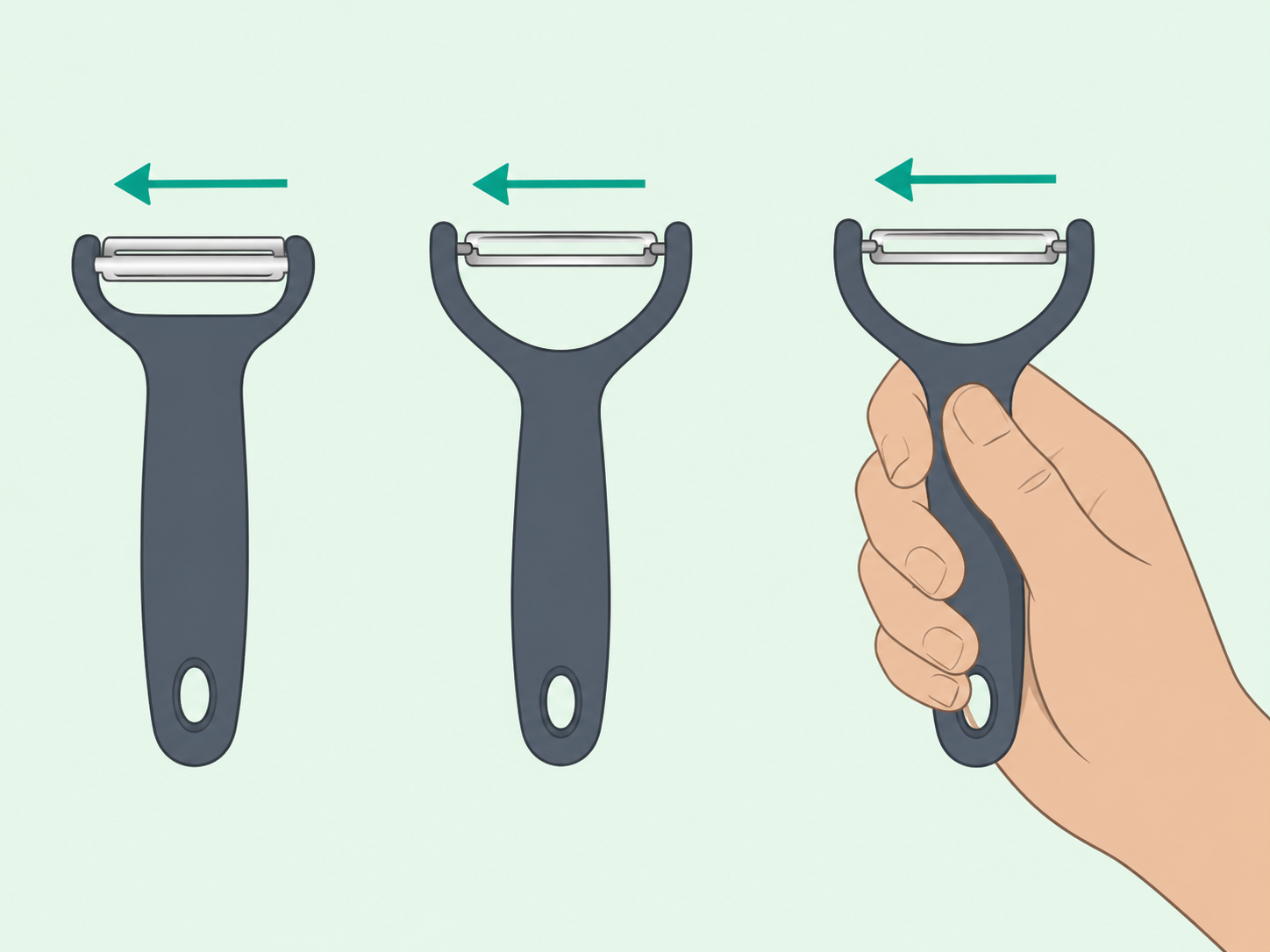
Look at the blade and handle so you know which motion the tool is designed for. A straight peeler usually runs along produce with a pushing motion, while a Y-shaped peeler is commonly pulled toward you, according to the Academy of Nutrition and Dietetics guide to common peeler types. Knowing the style helps you keep the blade moving smoothly instead of forcing it.
Wash produce before you peel it
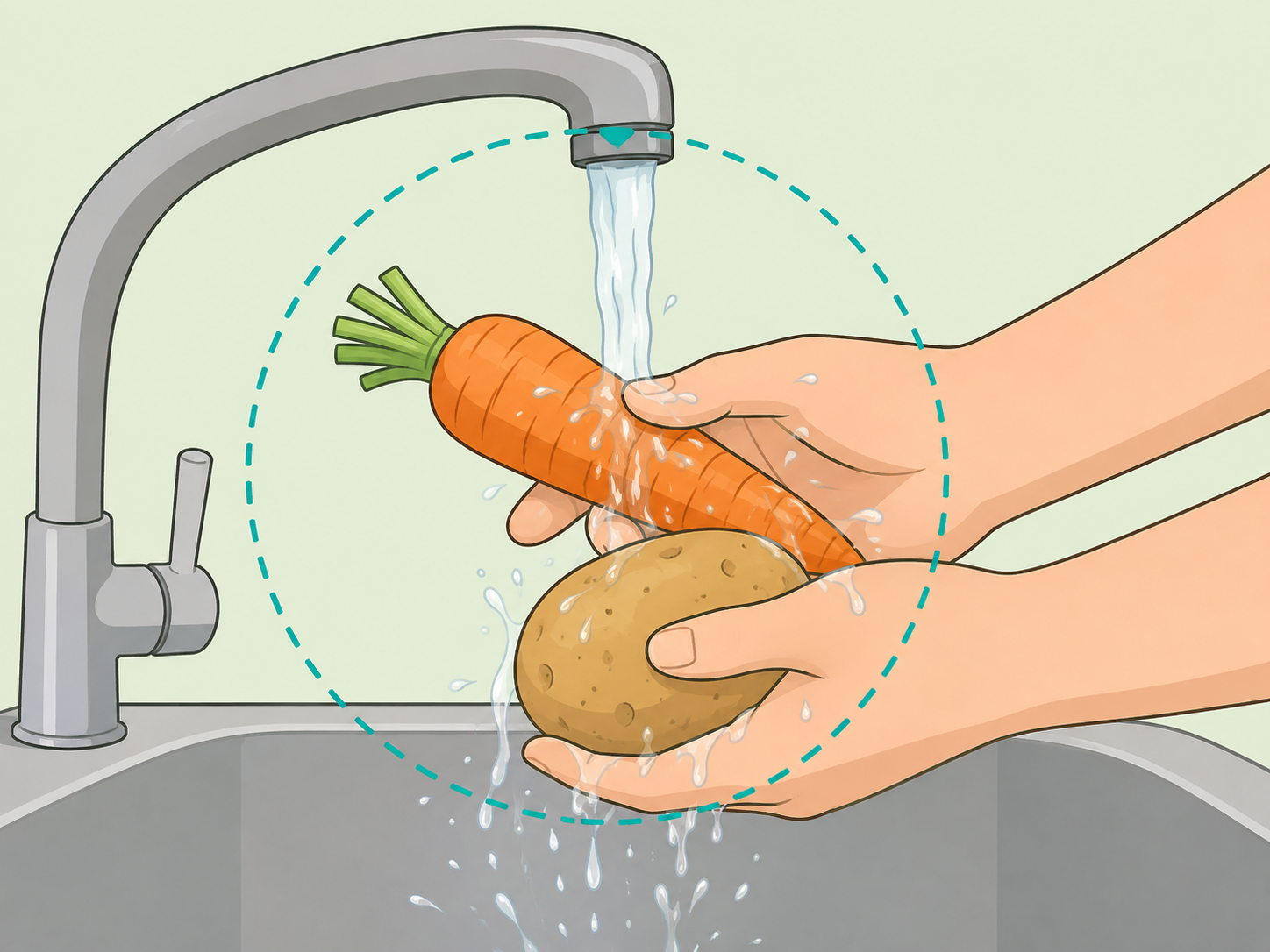
Rinse fruits and vegetables under running water before peeling, even if you plan to throw the peel away. The FDA says this helps keep dirt and bacteria from being transferred from the surface into the food as you peel or cut it, and it advises against using soap or detergent on produce in its produce safety guidance. Dry the produce afterward so it is easier to grip.
Dry your hands and steady the food
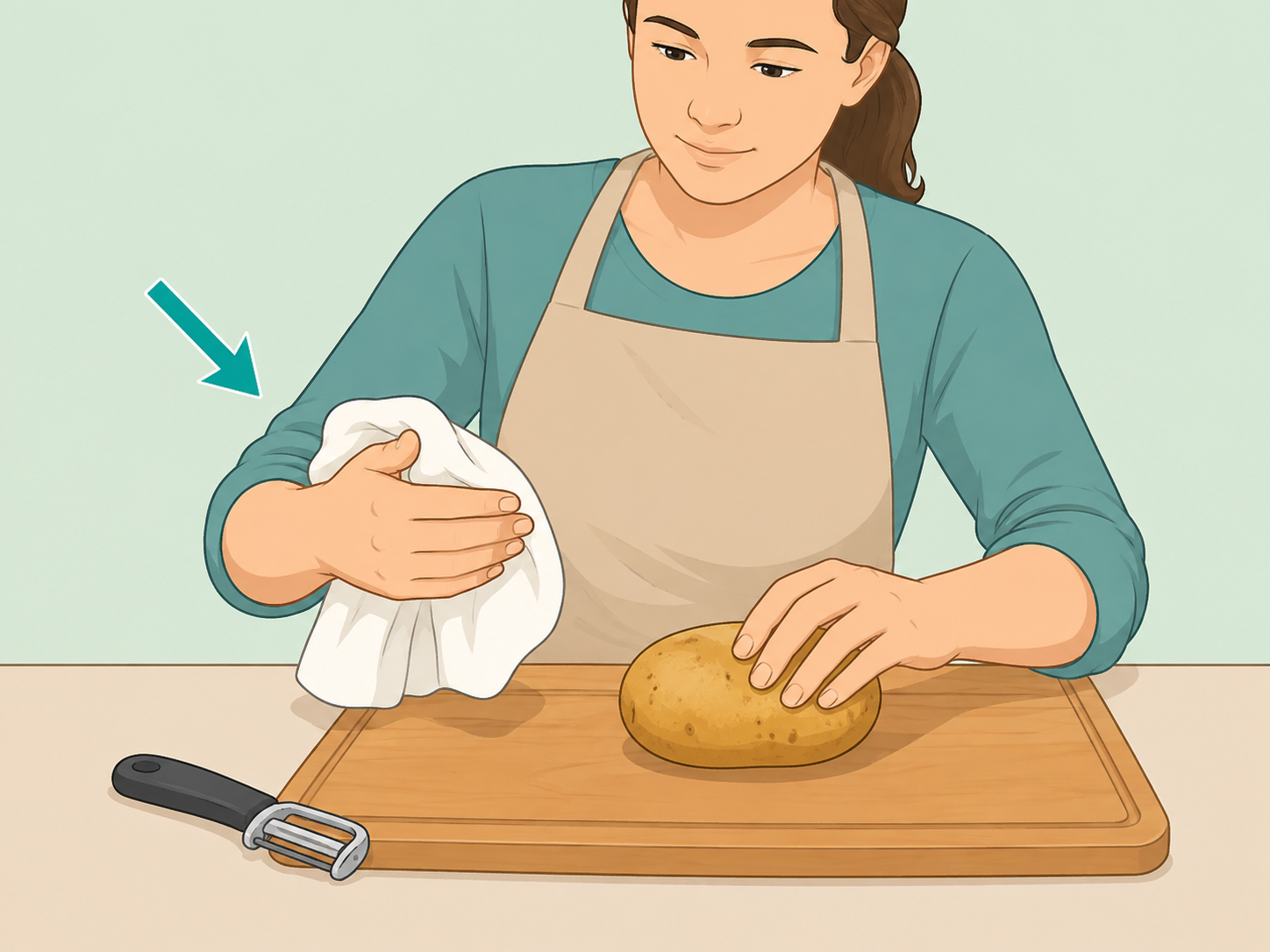
Before peeling, make sure your hands, handle, and produce are not wet or greasy. The Academy of Nutrition and Dietetics notes that clean, dry hands and smooth motions can help lower the chance of the peeler slipping during safe peeler use. For round foods, rest one side on a cutting board or hold the food low over the board so it cannot roll far.
Peel in long, smooth strokes
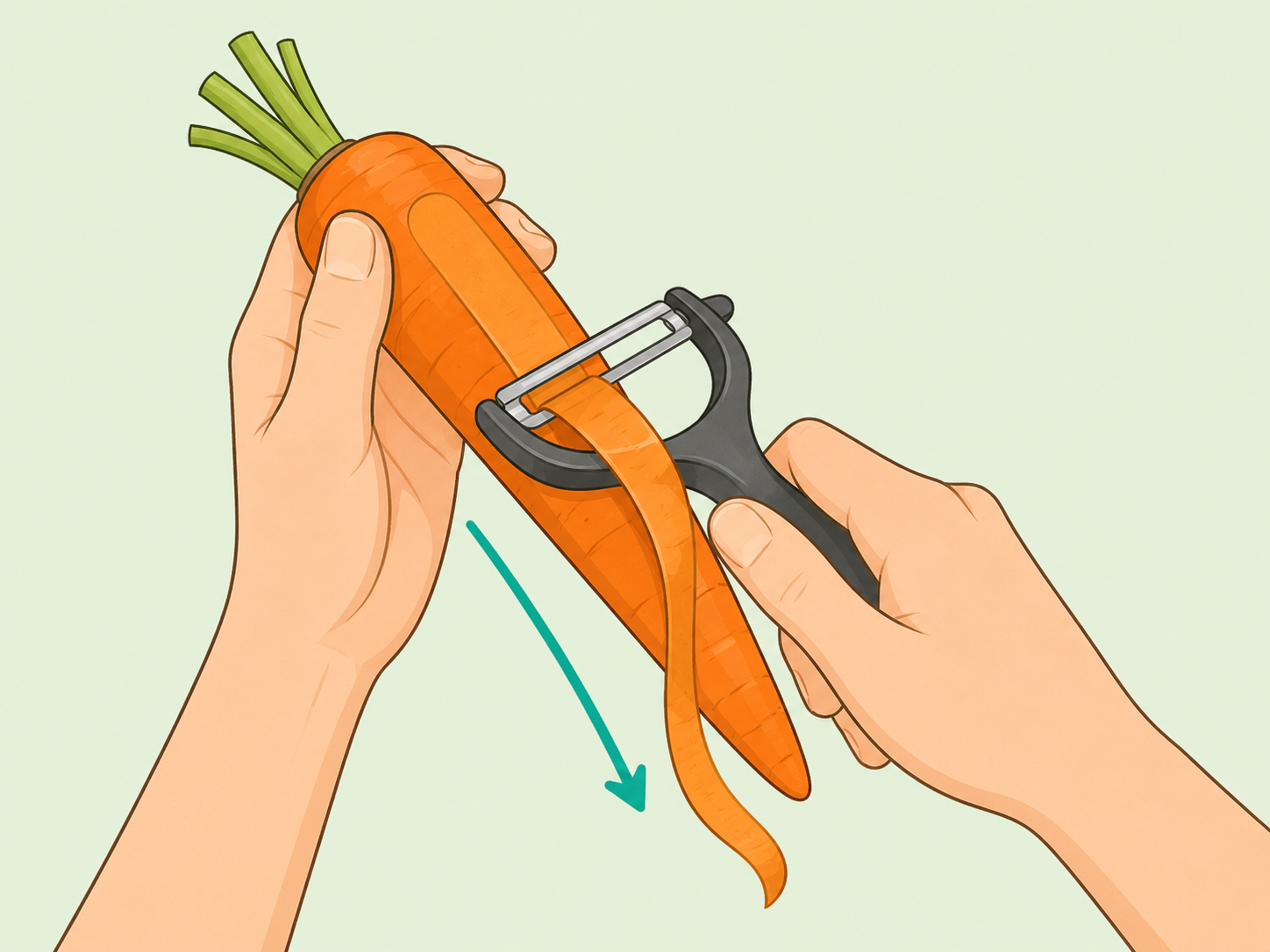
Use light, even pressure and let the blade do the work. If the peeler catches, adjust the angle instead of pressing harder, because extra force can make the tool jump. Work from one end to the other in strips, rotating the produce as each section is peeled.
Use the pointed tip to remove small flaws
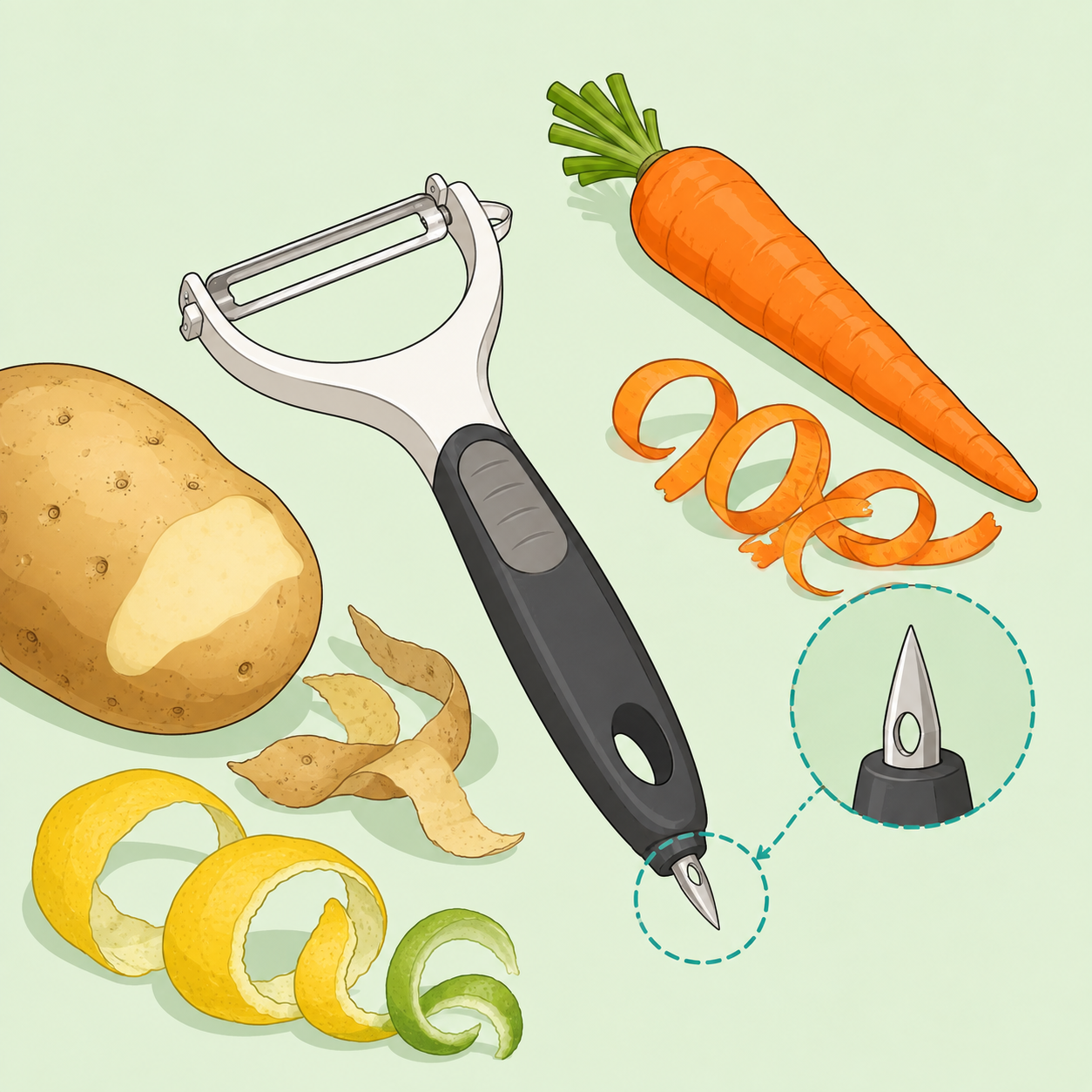
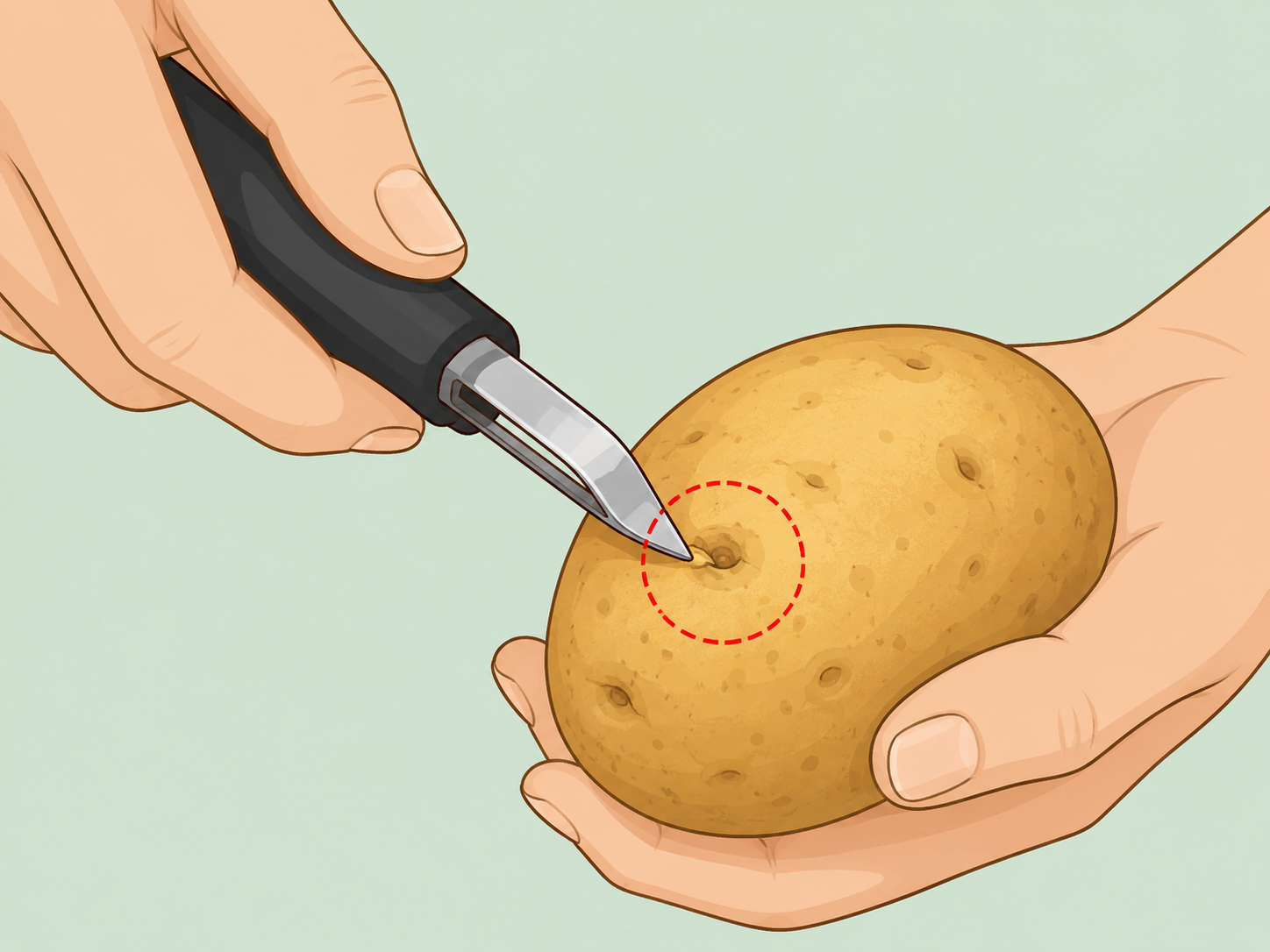
Many straight peelers have a pointed end made for digging out small blemishes, and some Y-peelers have a side loop that works the same way. For potatoes, UConn Extension recommends scrubbing well and removing eyes and traces of green before cooking in its potato preparation guidance. Press the tip into the spot, twist gently, and lift out only the damaged bit instead of cutting away a large chunk.
Make thin shavings for garnishes
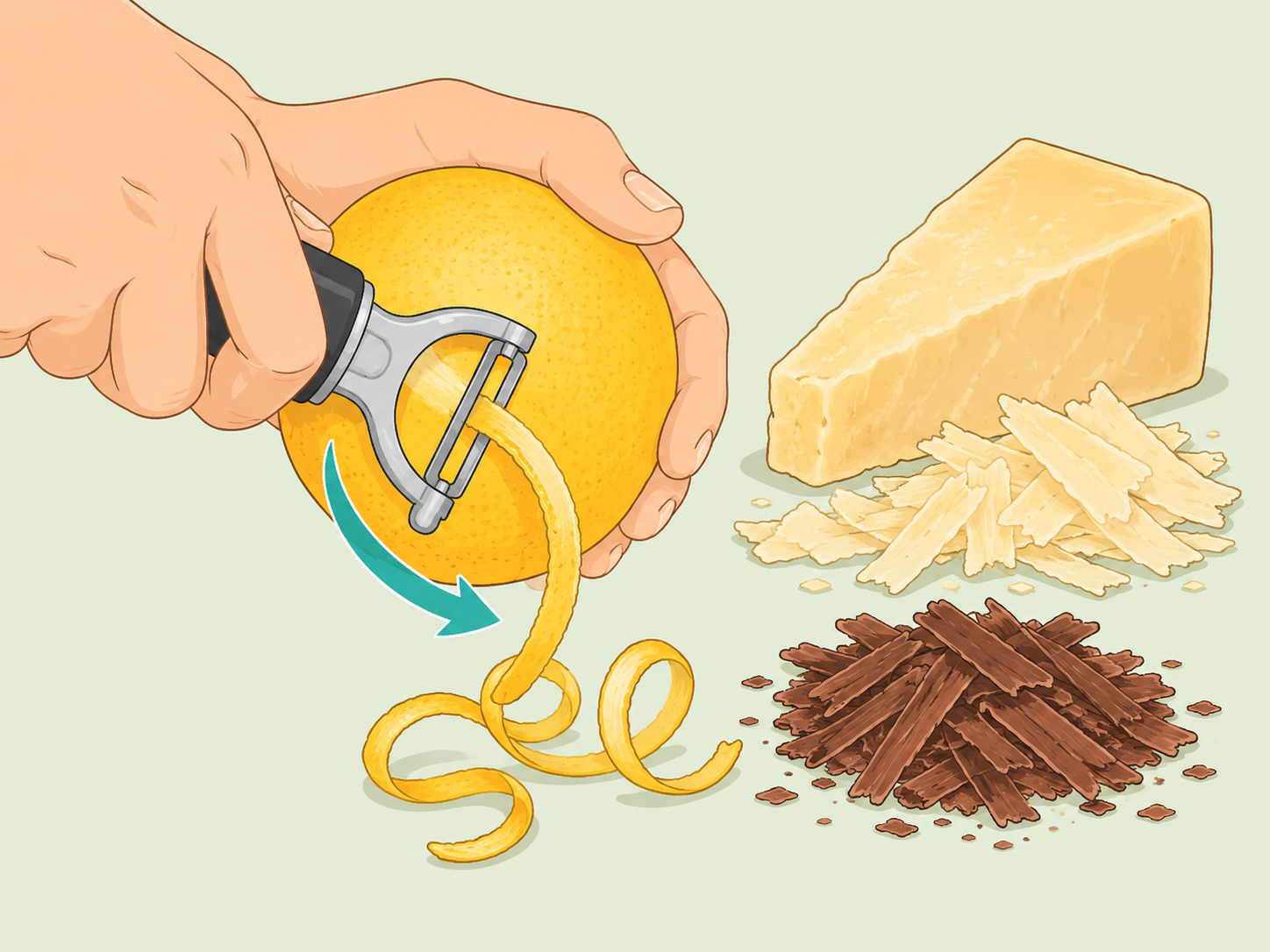
A peeler can also shave thin strips from firm foods. The Academy of Nutrition and Dietetics lists citrus peel, cheese, and chocolate among the extra uses for paring and finishing with a peeler. Hold the food steady and draw the blade slowly so the shavings stay even.
Keep it away from raw meat tools
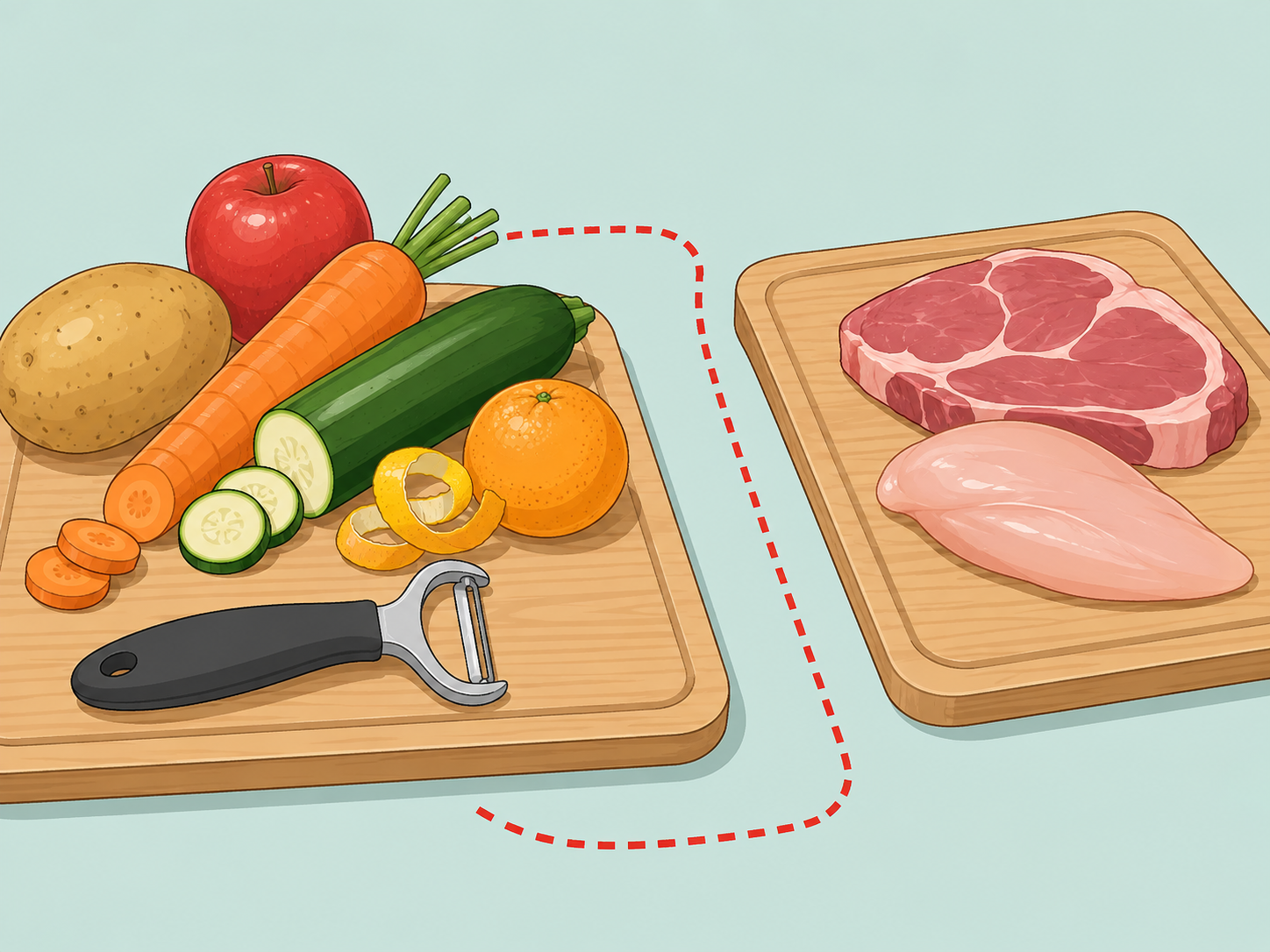
Do not set a clean peeler on a cutting board, plate, or counter that touched raw meat, poultry, seafood, or eggs. The CDC's food safety advice says to keep foods separate and wash utensils, cutting boards, and counters with hot, soapy water after preparing each food item to reduce cross-contamination risks. Use a separate clean surface for fruits and vegetables.
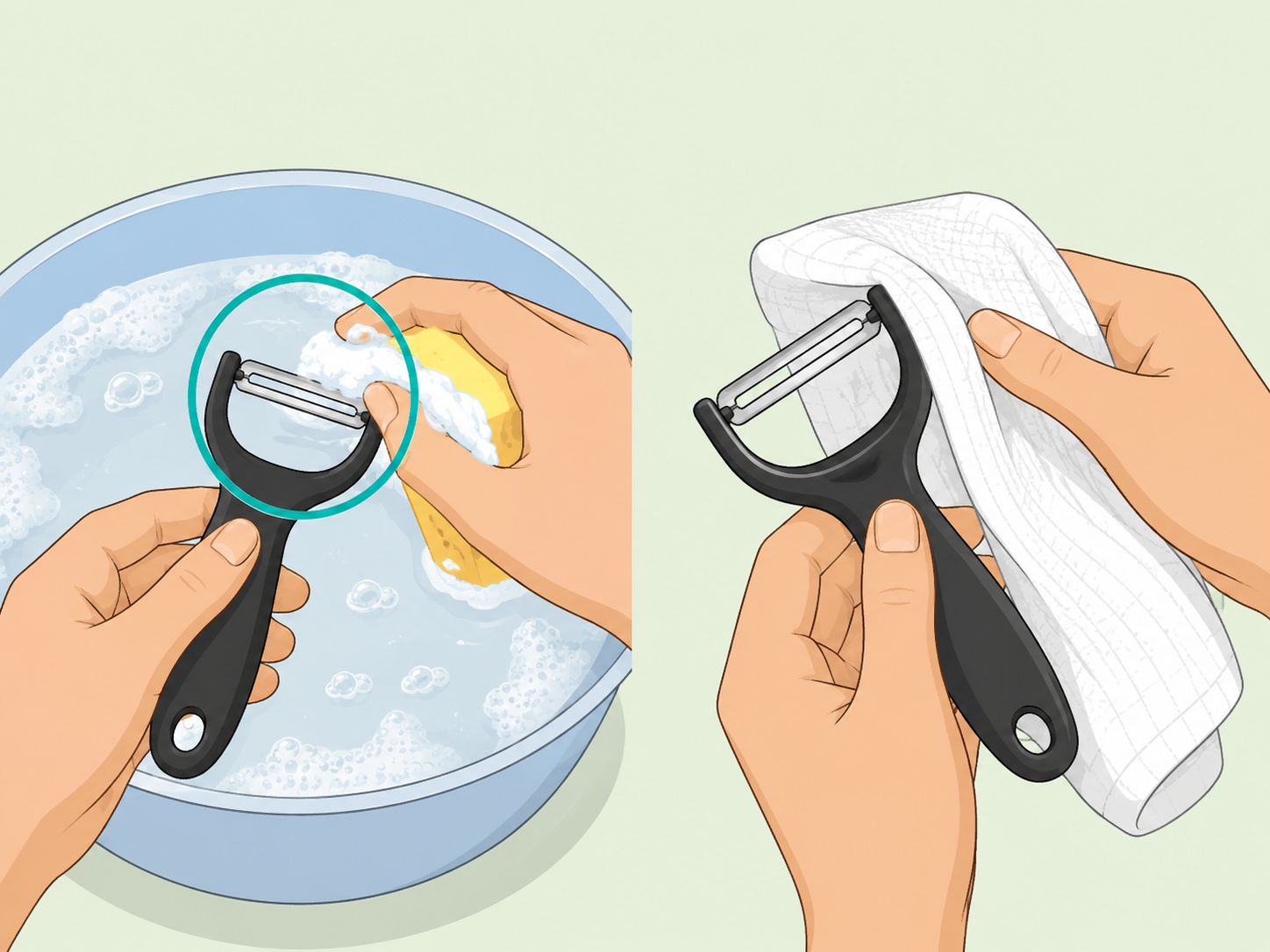
Wash and dry the peeler after use
Clean the blade and handle with hot, soapy water after peeling, especially if bits of food are stuck under the blade. The CDC recommends washing utensils after preparing food, and the Academy of Nutrition and Dietetics notes that hand washing and drying can help reduce rusting and dulling on many peelers. Store it dry, with the blade protected if your drawer is crowded.
Summary
The bottom line: a vegetable peeler works best when the produce is washed, your hands are dry, and you use the right part of the tool for each task. The small pointed tip is especially useful for removing tiny blemishes without cutting away too much food.
Frequently Asked Questions
- What is the hidden part of a vegetable peeler for?
- On many straight or Y-shaped peelers, the small pointed tip or side loop is meant for digging out small blemishes, potato eyes, or tiny damaged spots without using a knife.
- Should I wash vegetables before peeling them?
- Yes. Wash produce under running water before peeling so dirt and bacteria on the surface are less likely to be carried into the flesh by the blade.
- Is a Y-peeler better than a straight peeler?
- Neither is automatically better. A Y-peeler is usually pulled toward you, while a straight peeler is often pushed away, so the better choice is the one you can control comfortably.
- Can I use a peeler for foods besides potatoes and carrots?
- Yes. A clean, sharp peeler can make thin shavings from foods like citrus peel, cheese, chocolate, cucumber, zucchini, mango, or eggplant, as long as the food is firm enough to handle safely.
- How do I keep a peeler from slipping?
- Dry your hands, hold the food on a stable surface when possible, and use smooth strokes instead of quick jerky movements. If the handle or blade is greasy, stop and wash it before continuing.
- When should I replace a vegetable peeler?
- Replace it if the blade is dull, rusty, bent, loose, or hard to clean. A dull peeler needs more pressure, which can make it less predictable in your hand.
References
Reliable references aided in composing and refining this content.