
 Pin it
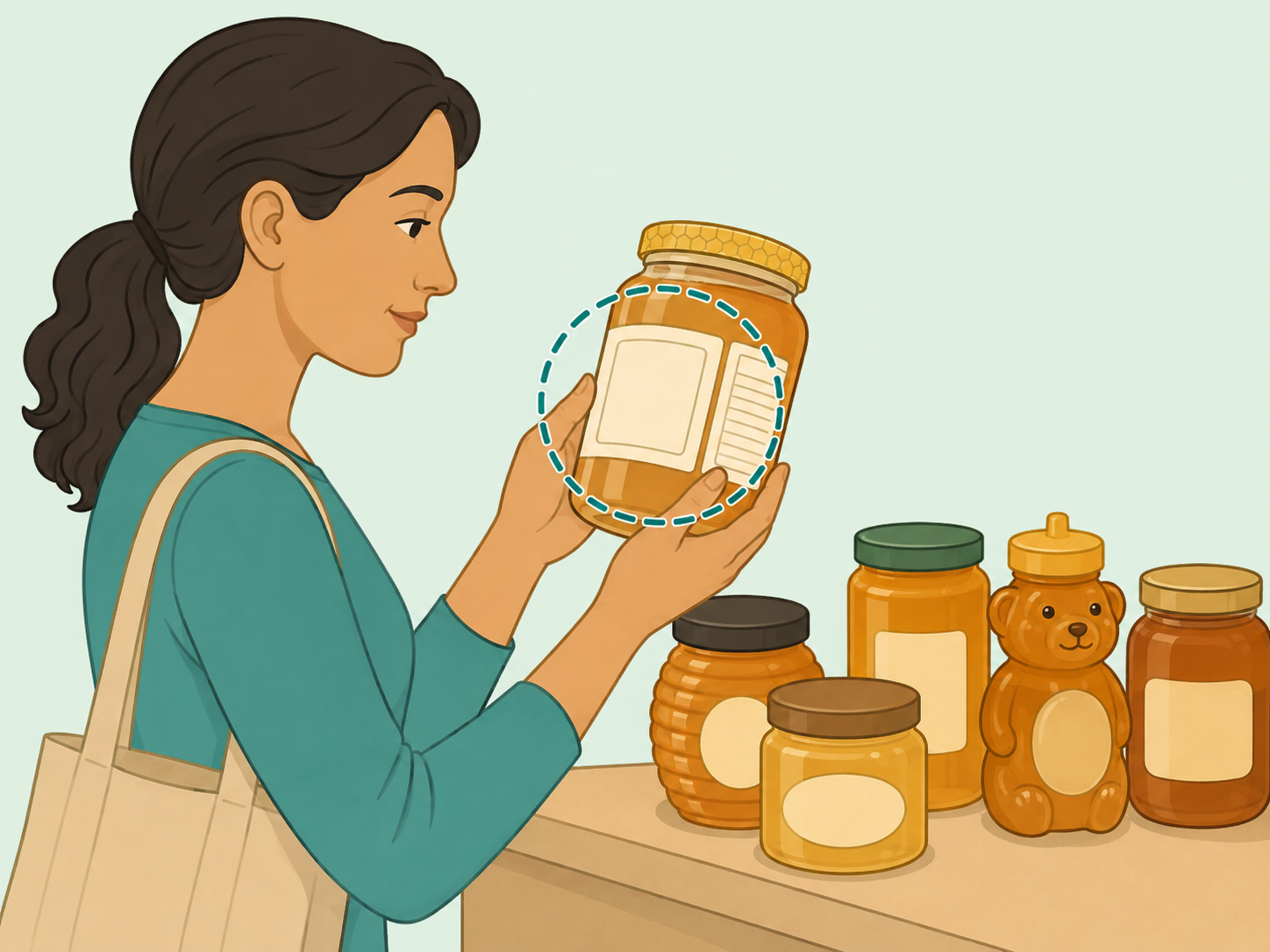
Honey fraud usually means a product is sold as honey even though cheaper sweeteners have been added or substituted. You cannot prove purity with a quick kitchen trick, but you can make a much better choice by reading the label and buying from sources that are easy to trace. This guide shows what to check before you put a jar in your cart.
Read the product name first
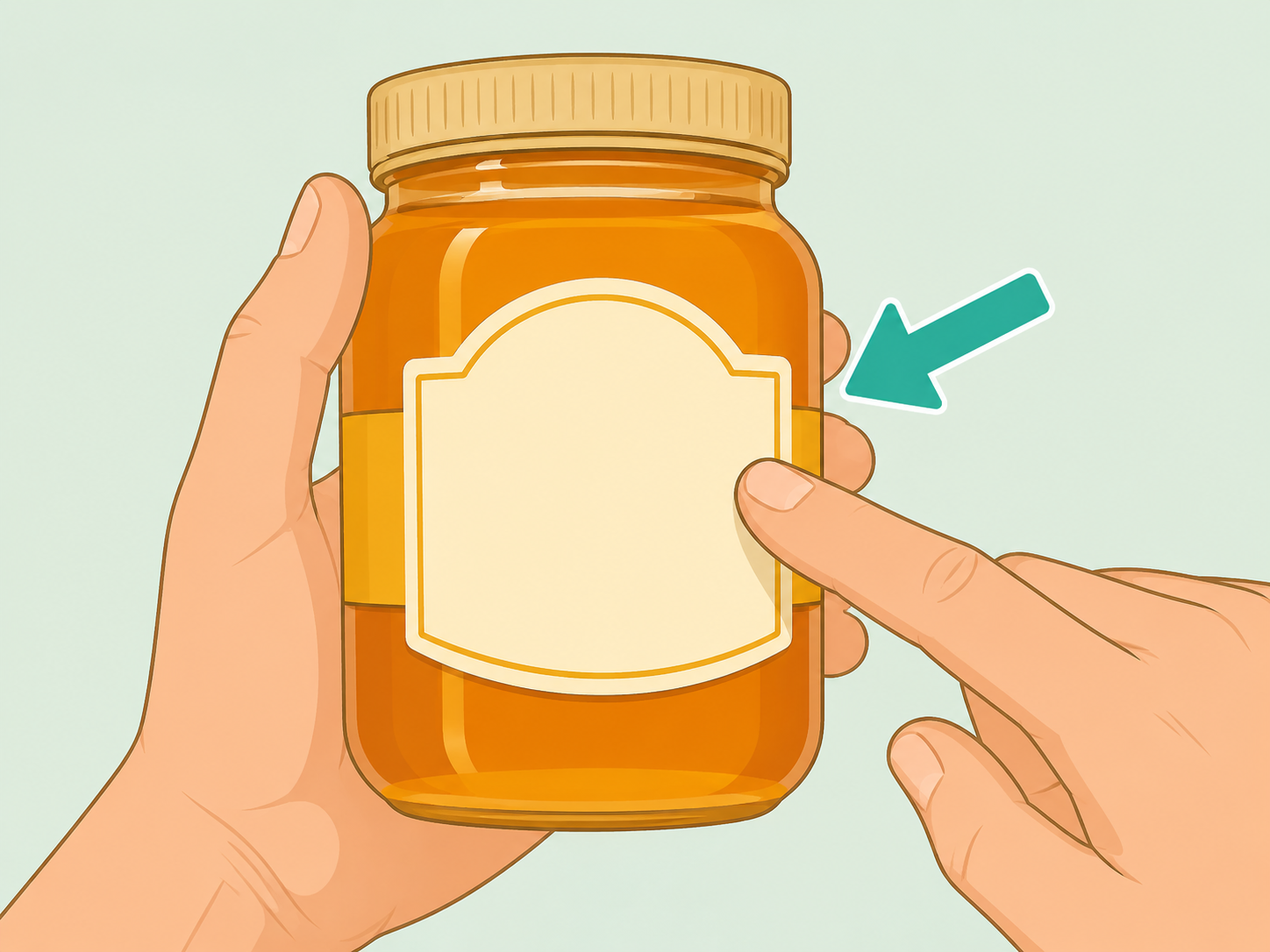
Look for a clear statement of identity such as "honey" on the front label. Under FDA honey labeling guidance, a product that contains honey plus another sweetener should be described as a blend, not just honey. If the front label uses loose words like "honey flavored" or "honey syrup," slow down and read the rest of the package.
Check the ingredients for added sweeteners
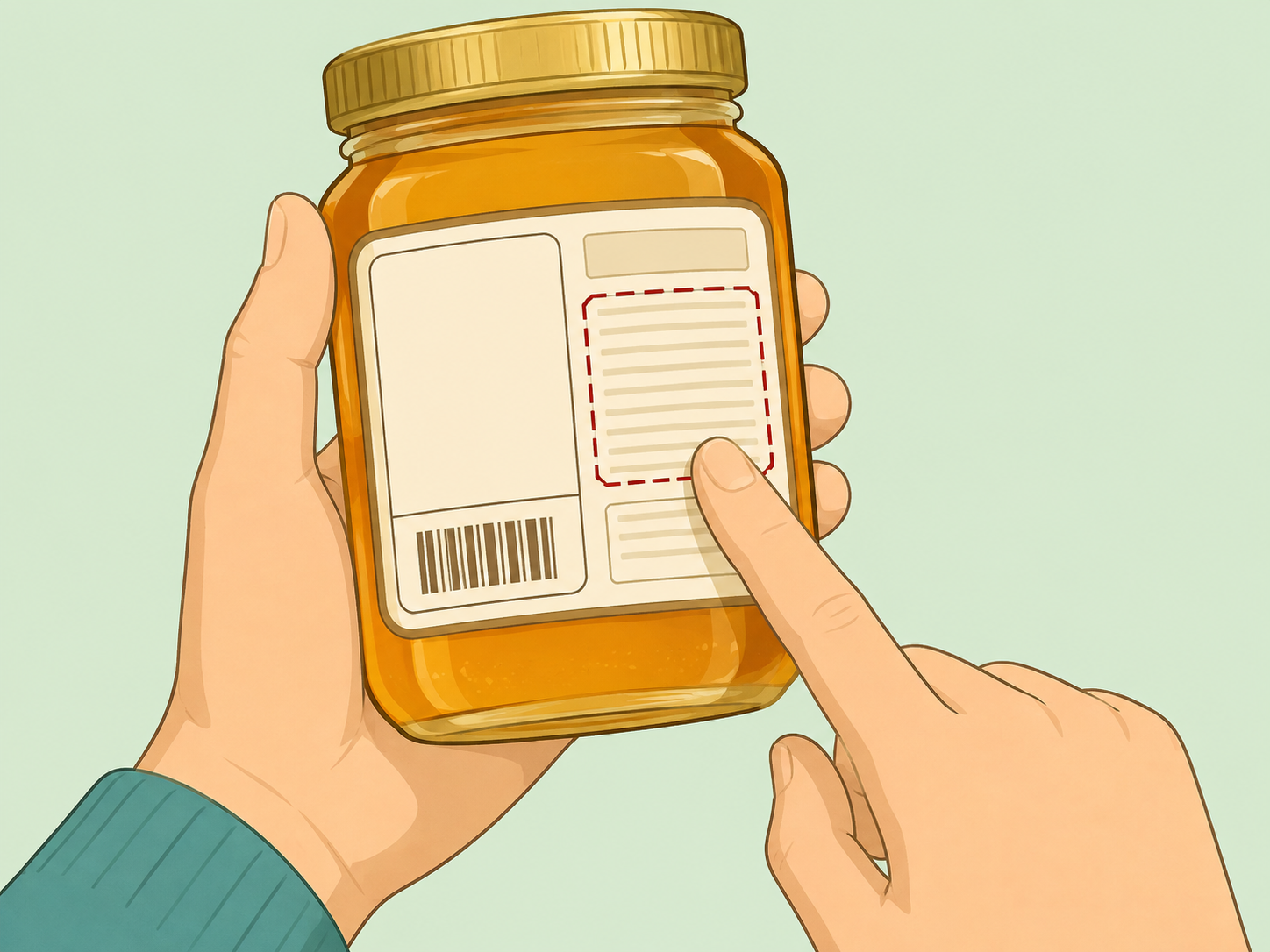
Turn the jar around and look for words such as corn syrup, sugar, rice syrup, cane syrup, or flavoring. The FDA says products represented as honey but containing undeclared sweeteners may be adulterated or misbranded, and its FY25 honey testing looked for undeclared added sweeteners in domestic and imported samples. If you want only honey, choose a jar where the labeling does not point to a blend.
Skip viral purity tests
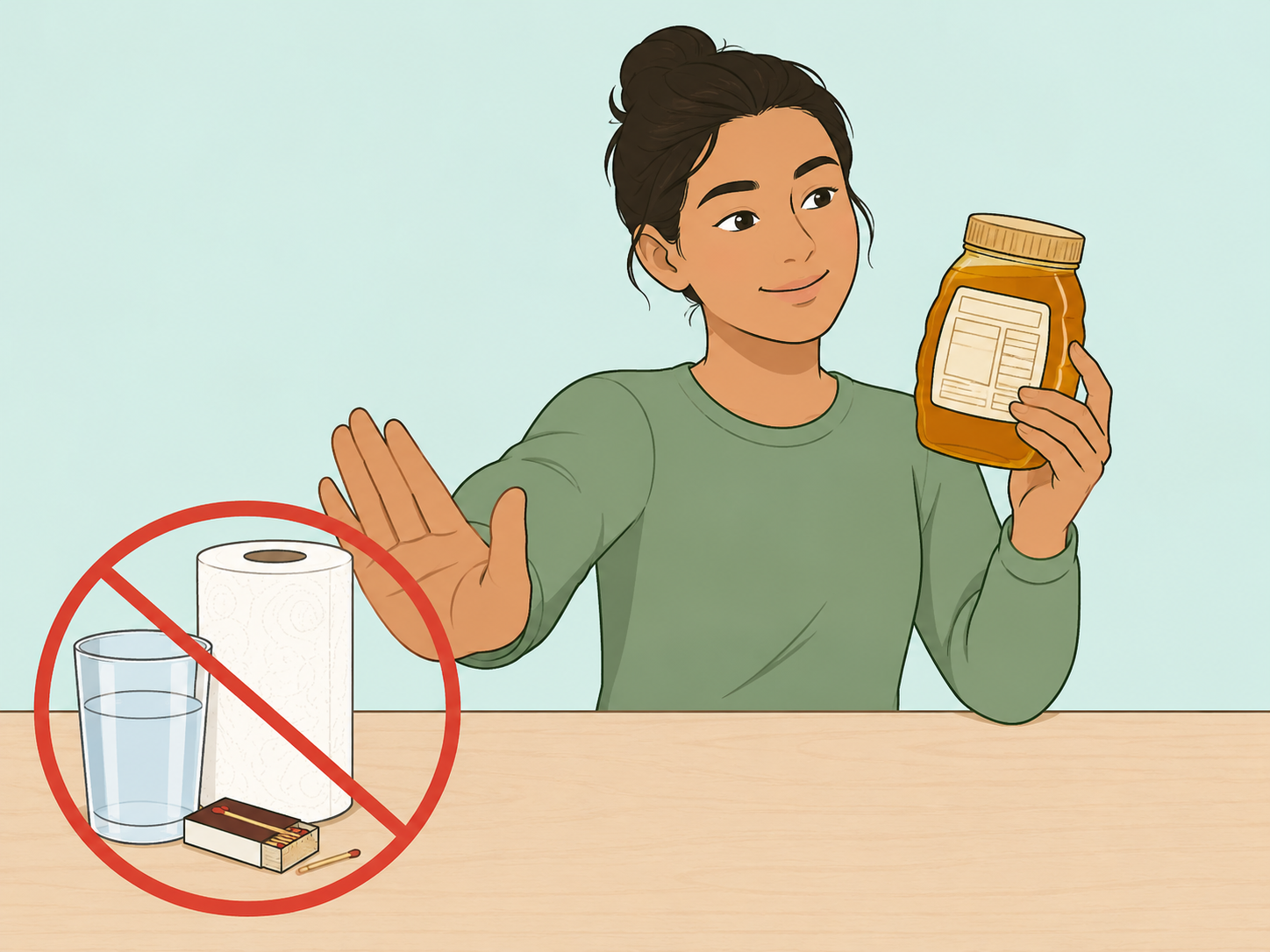
Do not rely on the water test, thumb test, paper test, or flame test to prove a jar is real honey. Honey naturally varies by floral source, temperature, age, and processing, and sophisticated adulteration is a laboratory problem, not a kitchen trick. The FDA describes honey fraud as economically motivated adulteration, which regulators monitor with inspections, sampling, and analytical testing.
Look for traceable sourcing
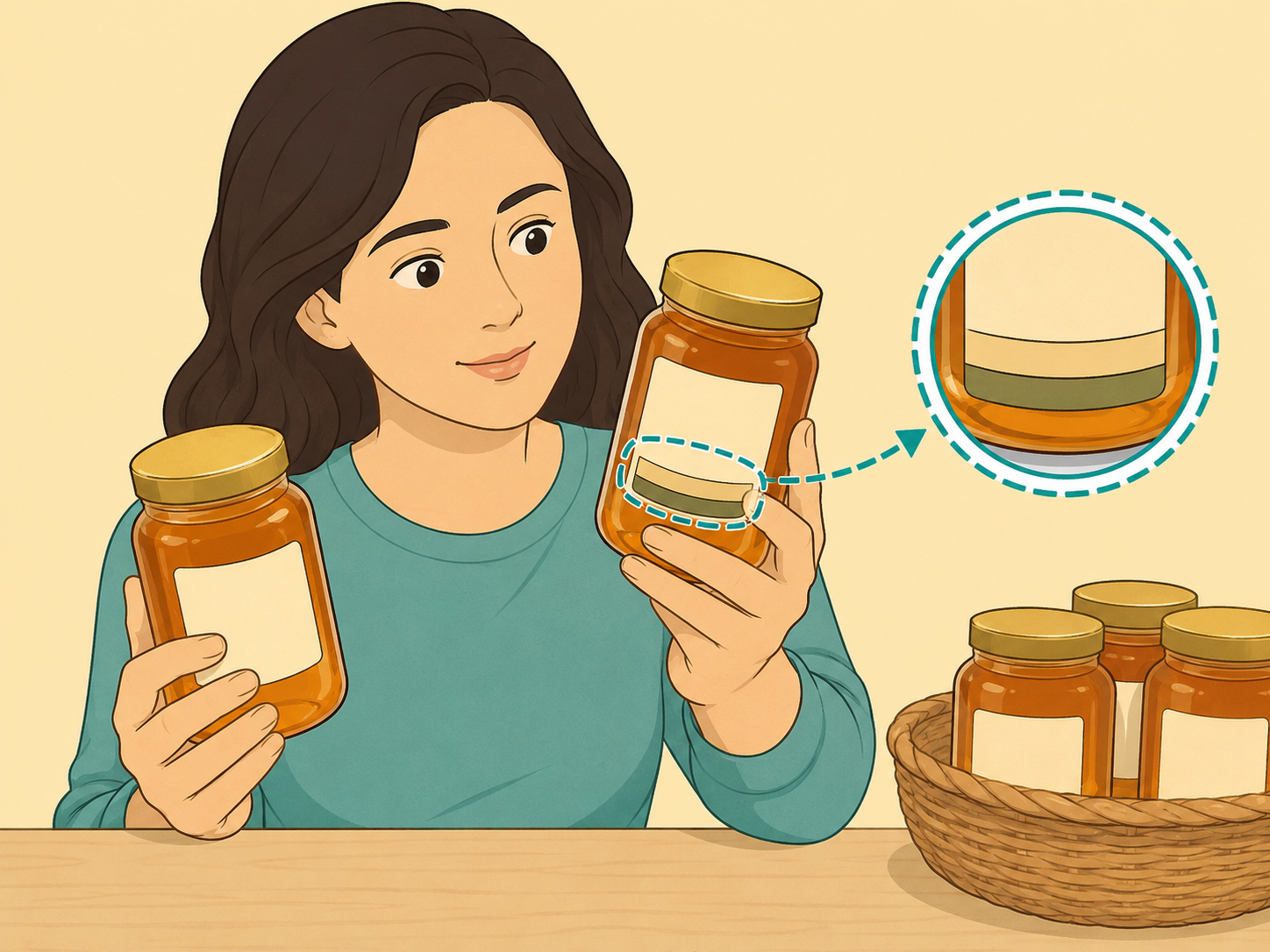
Choose jars that name the packer, producer, country or region of origin, and a lot or batch code. Specific floral names such as clover, orange blossom, or wildflower should be truthful and supported by the producer, according to FDA labeling guidance. Clear sourcing does not guarantee purity by itself, but it makes the seller easier to question and the product easier to trace.
Understand quality and organic claims
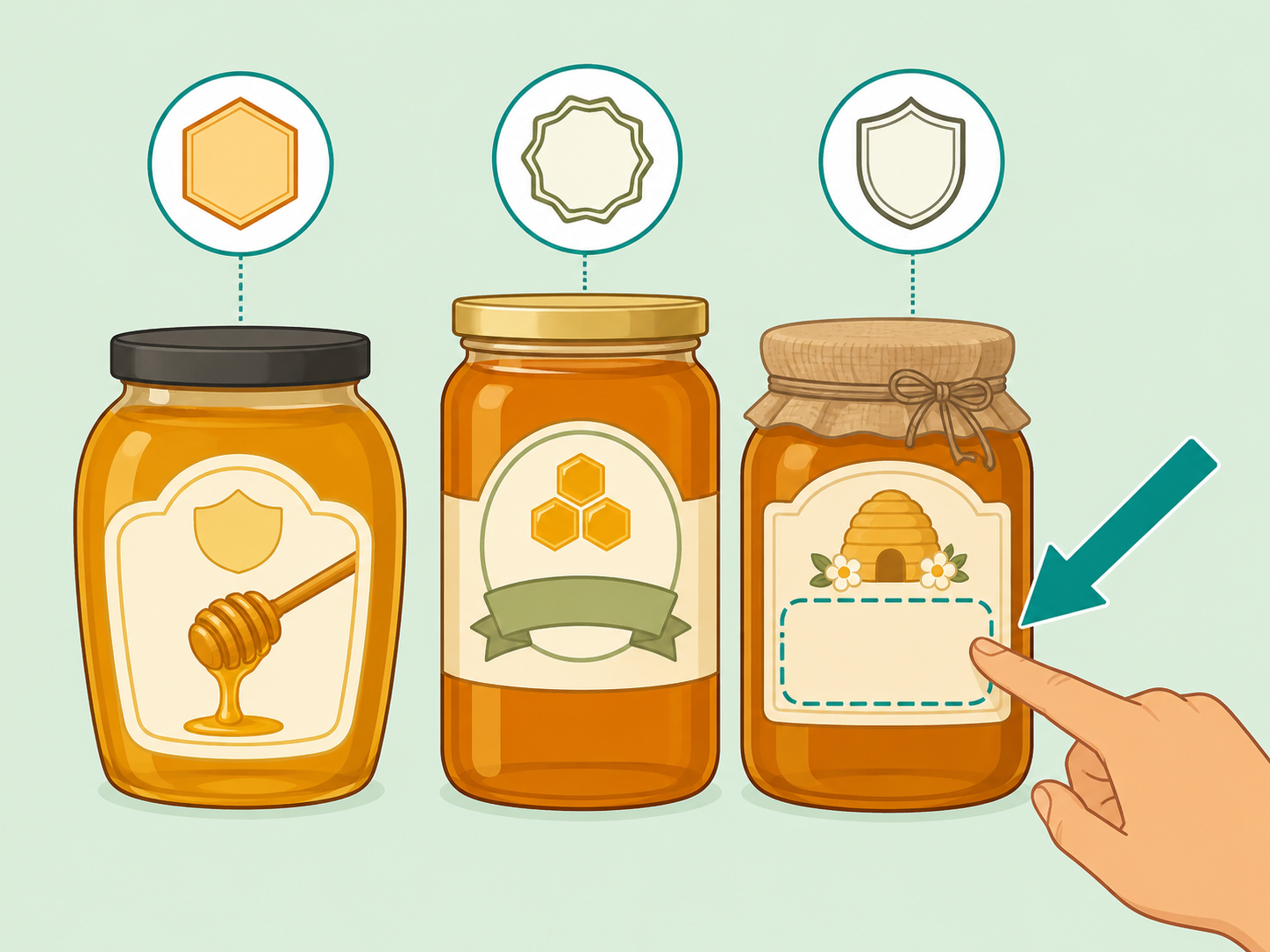
Do not confuse a quality claim with proof that no sweetener was added. USDA extracted honey grades score quality factors, while authenticity depends on the product being what the label says it is. If a jar uses the USDA organic seal, the USDA organic program requires certification and oversight, but you should still read the product name and ingredients.
Expect natural variation
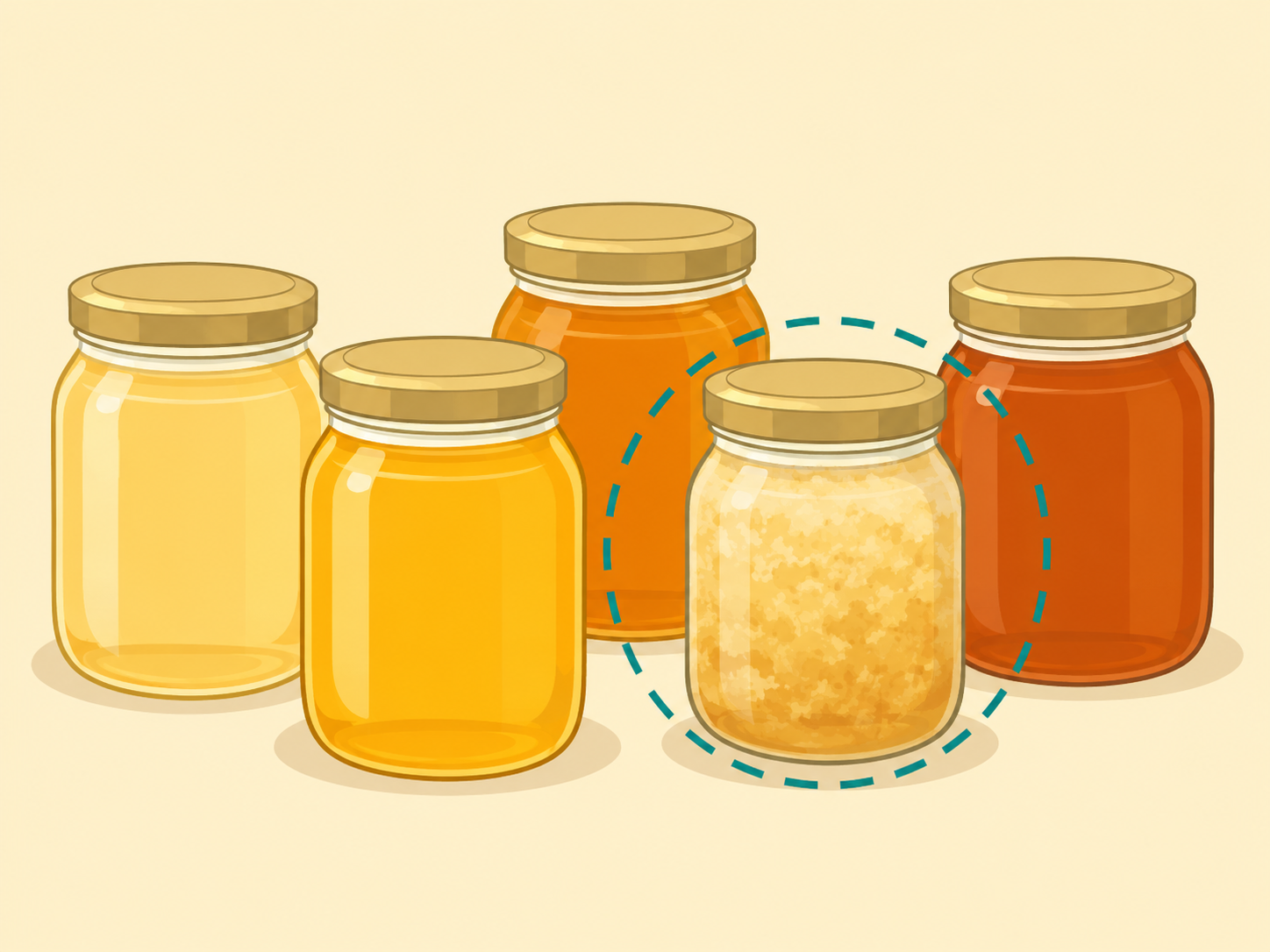
Real honey can be light or dark, thin or thick, mild or strong, depending on the nectar source and handling. Crystallization is also normal, and Penn State Extension notes that honey should not be refrigerated because cool temperatures can promote crystallization. A perfectly clear, uniform jar is not automatically fake, and a cloudy or crystallized jar is not automatically bad.
Store the jar correctly after buying
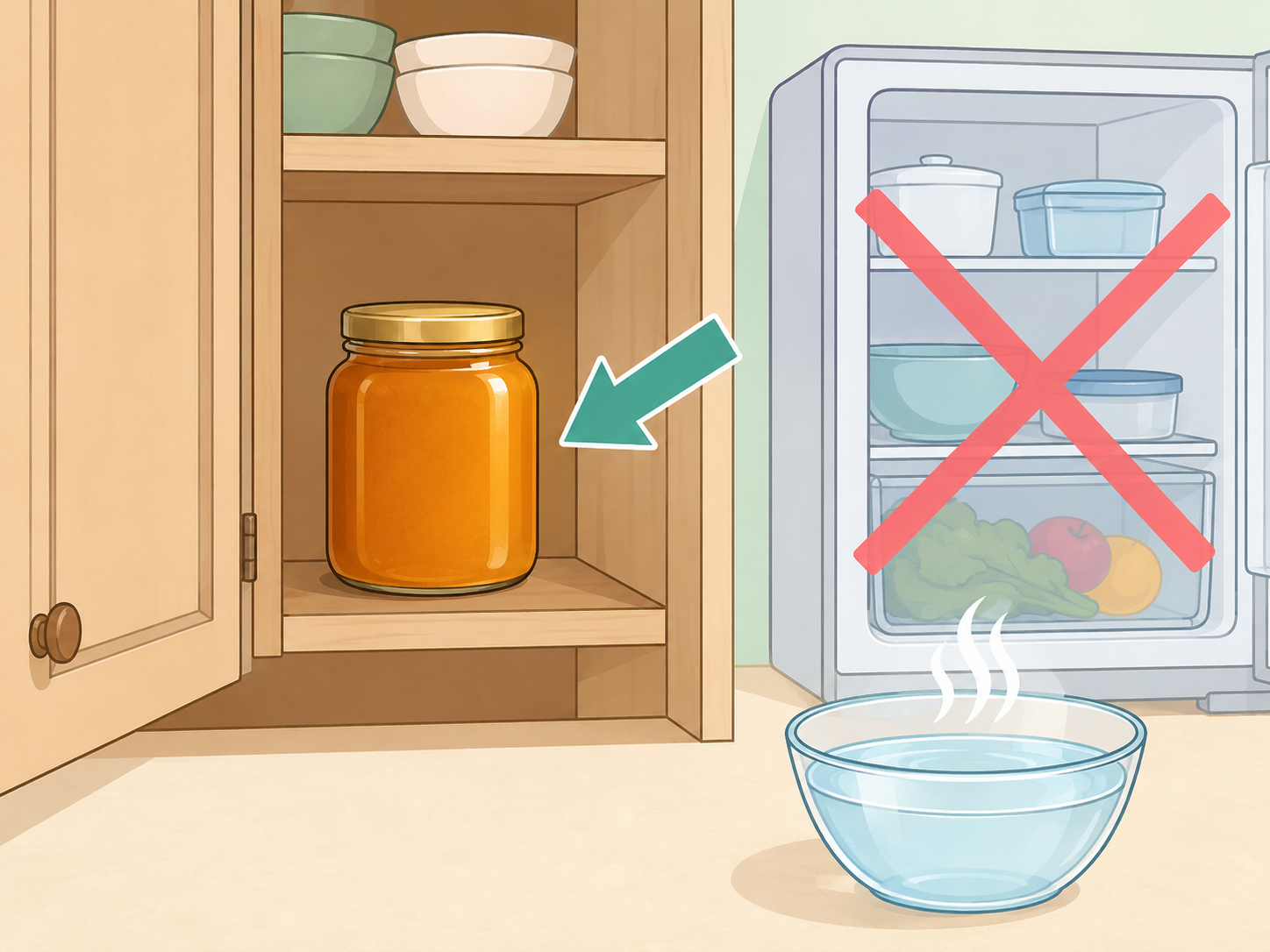
Keep honey tightly covered at room temperature in a dry place. Penn State Extension says honey keeps best covered tightly and should not be refrigerated; if it crystallizes, warm the open jar in hot water. Discard honey that foams, smells alcoholic, or seems fermented.
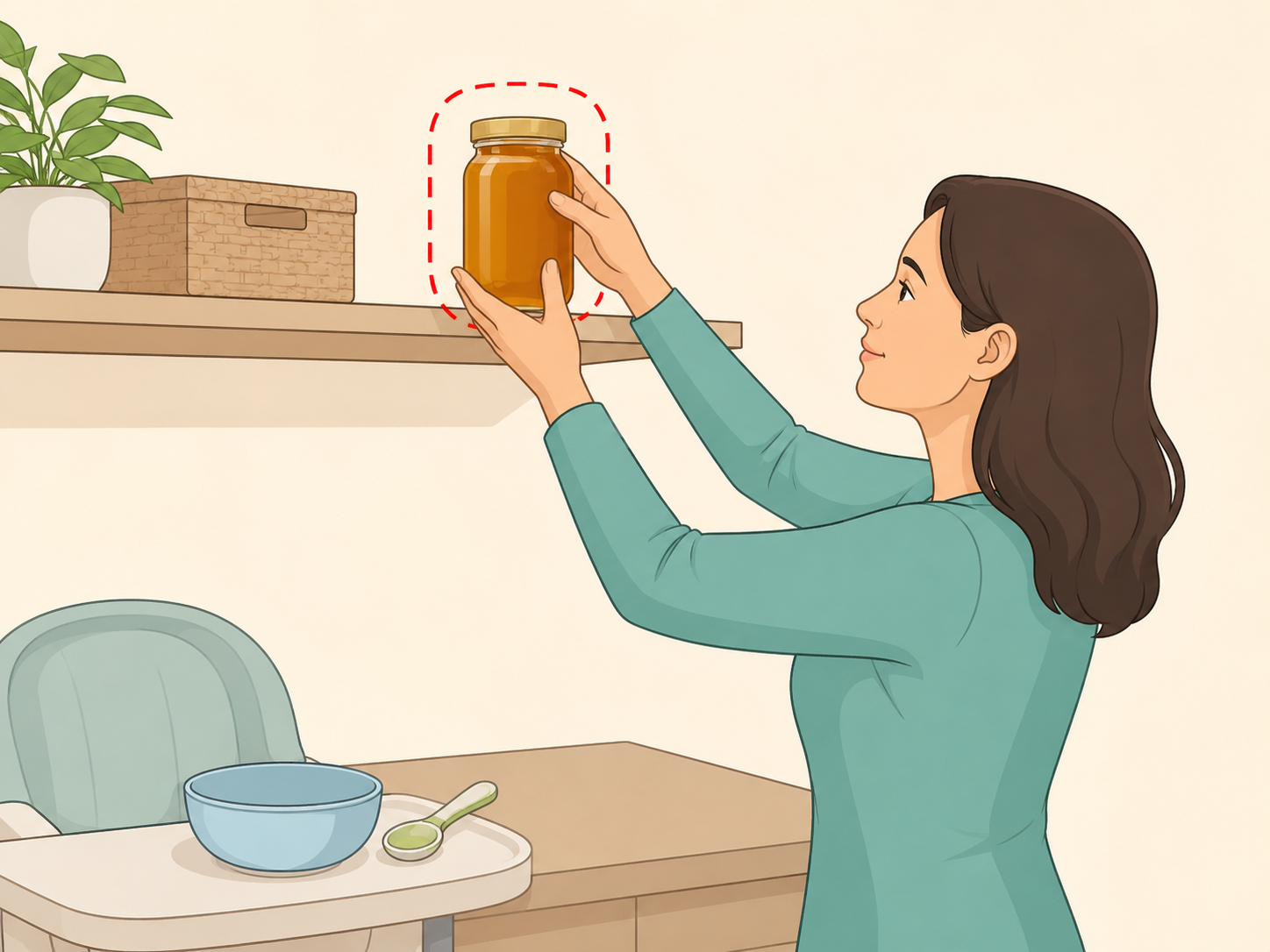
Keep honey away from babies under 12 months
Even real honey is not safe for infants. The CDC warns not to give honey to children younger than 12 months because it may cause infant botulism. This includes honey mixed into food, water, formula, or put on a pacifier.
Summary
The bottom line: buy honey by reading the label, not by trusting home tests or vague marketing words. A jar labeled only as honey should not hide added sweeteners, and a trustworthy seller should make the source, product type, and claims clear.
Frequently Asked Questions
- Does crystallized honey mean it is fake?
No. Crystallization is a natural change in honey, especially as it ages or gets cold. Penn State Extension says crystallized honey can be warmed gently in hot water to return it to liquid form.
- Should real honey have an ingredient list?
A single-ingredient jar labeled simply as honey does not need an ingredient statement under FDA guidance. If the product includes corn syrup, sugar, flavoring, or another ingredient, the label should identify it clearly.
- Does Grade A mean the honey is pure?
Not by itself. USDA Grade A is a quality grade for extracted honey, while authenticity depends on whether the product is accurately labeled and free of undeclared added sweeteners.
- Are the water test and flame test reliable?
No home test can prove honey purity. Those tests mostly react to thickness, moisture, and temperature, while official checks rely on laboratory methods and label review.
- Is organic honey automatically real honey?
USDA certified organic products are regulated and inspected, but you should still read the product name and ingredient information. Organic is a production claim, not a substitute for checking whether the jar is honey or a blend.
- Can babies eat honey?
No. The CDC says children younger than 12 months should not be given honey because it may cause infant botulism.
References
Reliable references aided in composing and refining this content.
- https://www.fda.gov/media/110846/download
- https://www.fda.gov/food/economically-motivated-adulteration-food-fraud/fy25-sample-collection-and-analysis-domestically-produced-and-imported-honey-economically-motivated
- https://www.fda.gov/food/compliance-enforcement-food/economically-motivated-adulteration-food-fraud
- https://www.ams.usda.gov/grades-standards/extracted-honey-grades-and-standards
- https://www.ams.usda.gov/services/organic-certification/organic-basics
- https://extension.psu.edu/storing-staple-ingredients-in-the-kitchen
- https://www.cdc.gov/infant-toddler-nutrition/foods-and-drinks/foods-and-drinks-to-avoid-or-limit.html