
 Pin it
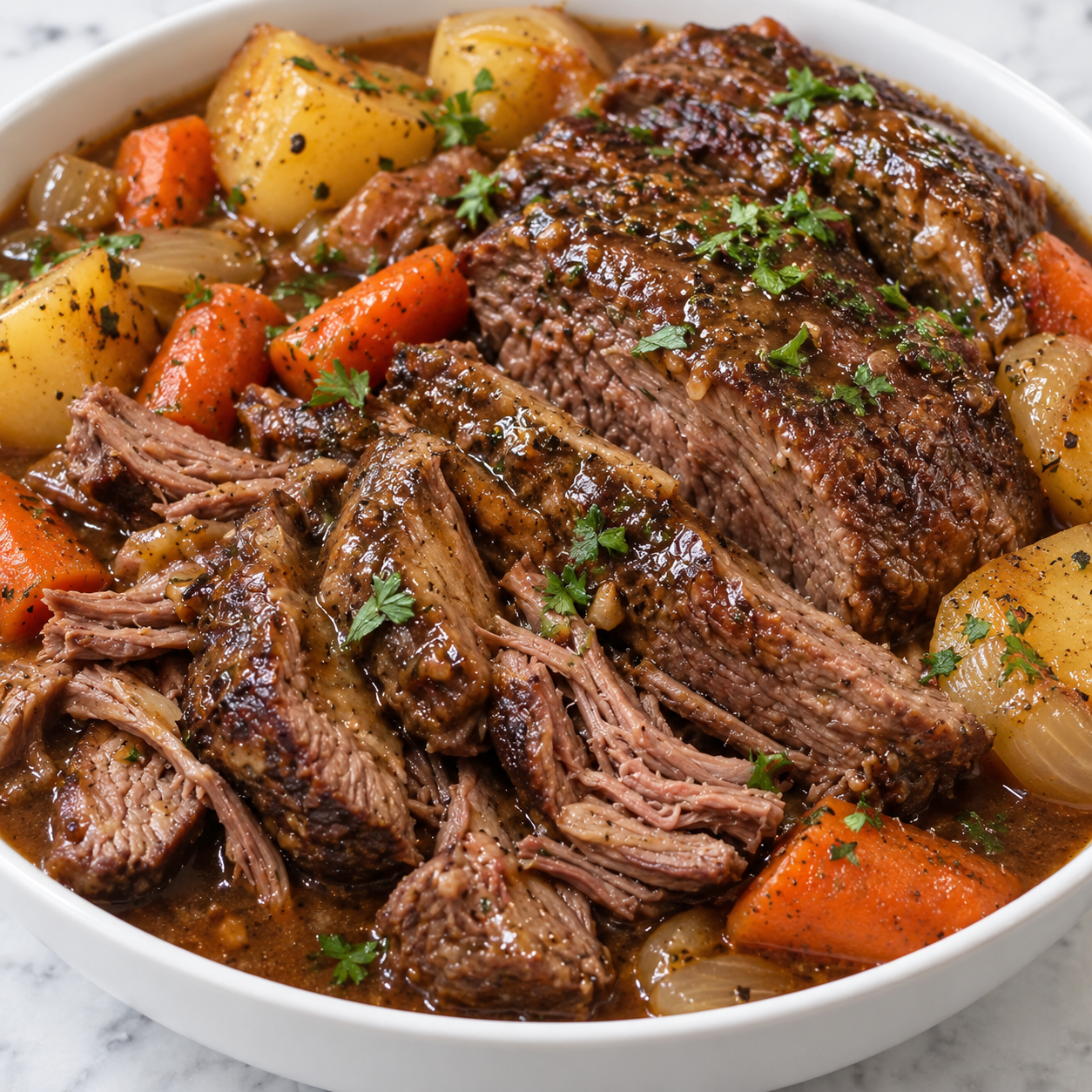
This Beef Roast Pot 1st Recipes style dinner is the kind of roast that makes the kitchen smell settled and cozy. The beef gets a bold rub of Creole seasoning, garlic powder, onion powder, black pepper, and dried celery, then it slowly braises until the slices pull apart with a fork.
I like this version because it keeps the original simple spirit, but gives you clearer timing and better texture. The vegetables go in after the beef has had a head start, so the carrots stay sweet and the potatoes hold their shape.
Beef Roast Pot 1st Recipes basics
The ingredient list is short, so the beef and seasoning matter. Choose a well-marbled chuck roast, a Creole blend you already like, and firm potatoes that can handle a long bake.
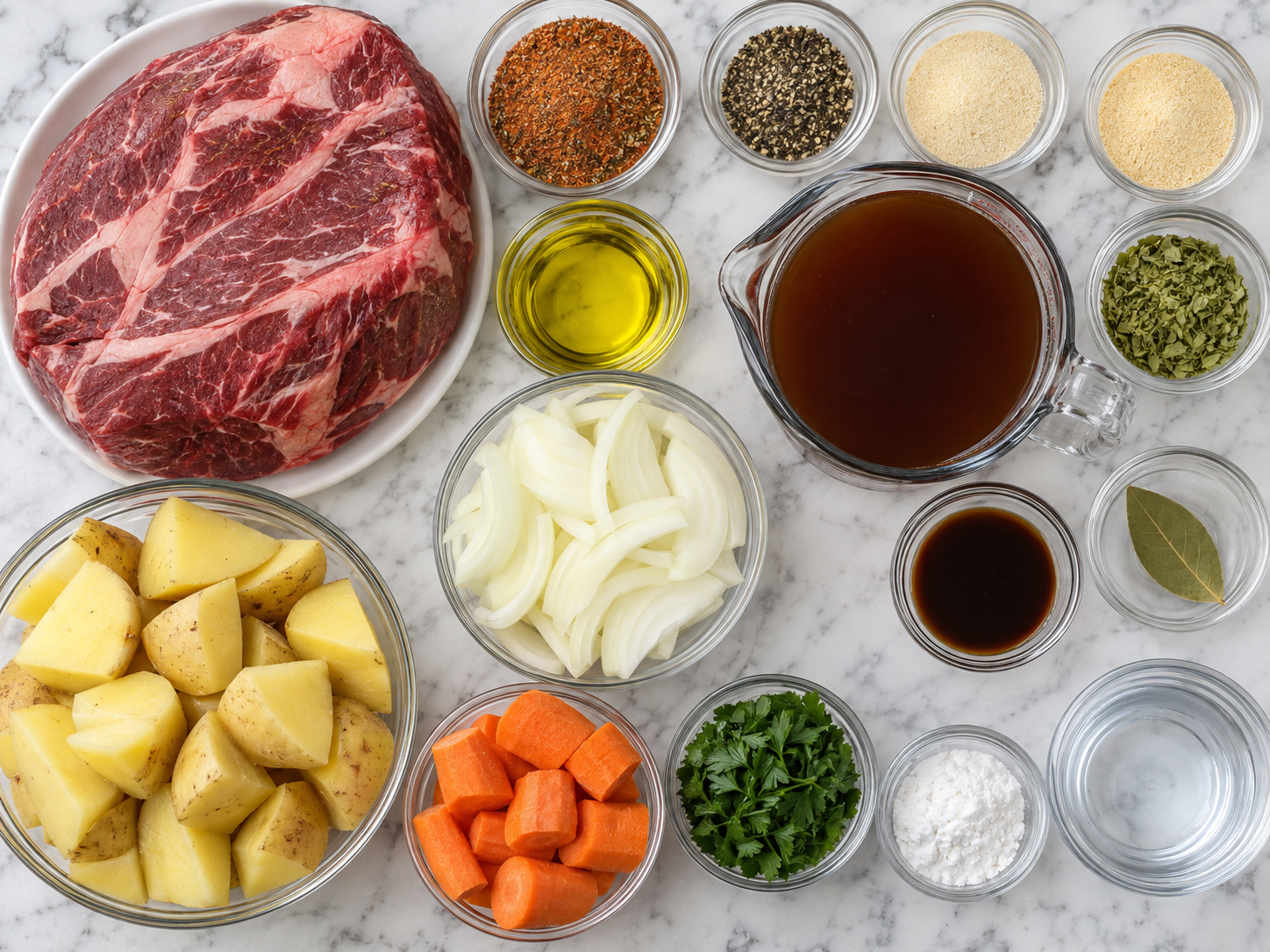
- Chuck roast. The right cut for slow braising because it turns juicy and fork-tender with time.
- Creole seasoning. Adds salt, peppery heat, paprika warmth, and a little Southern-style depth.
- Black pepper. Sharpens the spice rub and keeps the roast from tasting flat.
- Onion powder and garlic powder. Build a savory crust before the beef ever goes into the oven.
- Dried celery flakes. Echo the flavor of a classic pot roast vegetable base without extra chopping.
- Beef broth or water. Creates steam and pan juices so the roast braises instead of drying out.
- Carrots. Turn sweet in the pan juices and add color to the finished dish.
- Yukon Gold potatoes. Stay creamy inside and hold together better than small-cut russets.
- Onion and Worcestershire. Optional but useful for deeper, rounder pan juices.
Brown, braise, then add vegetables
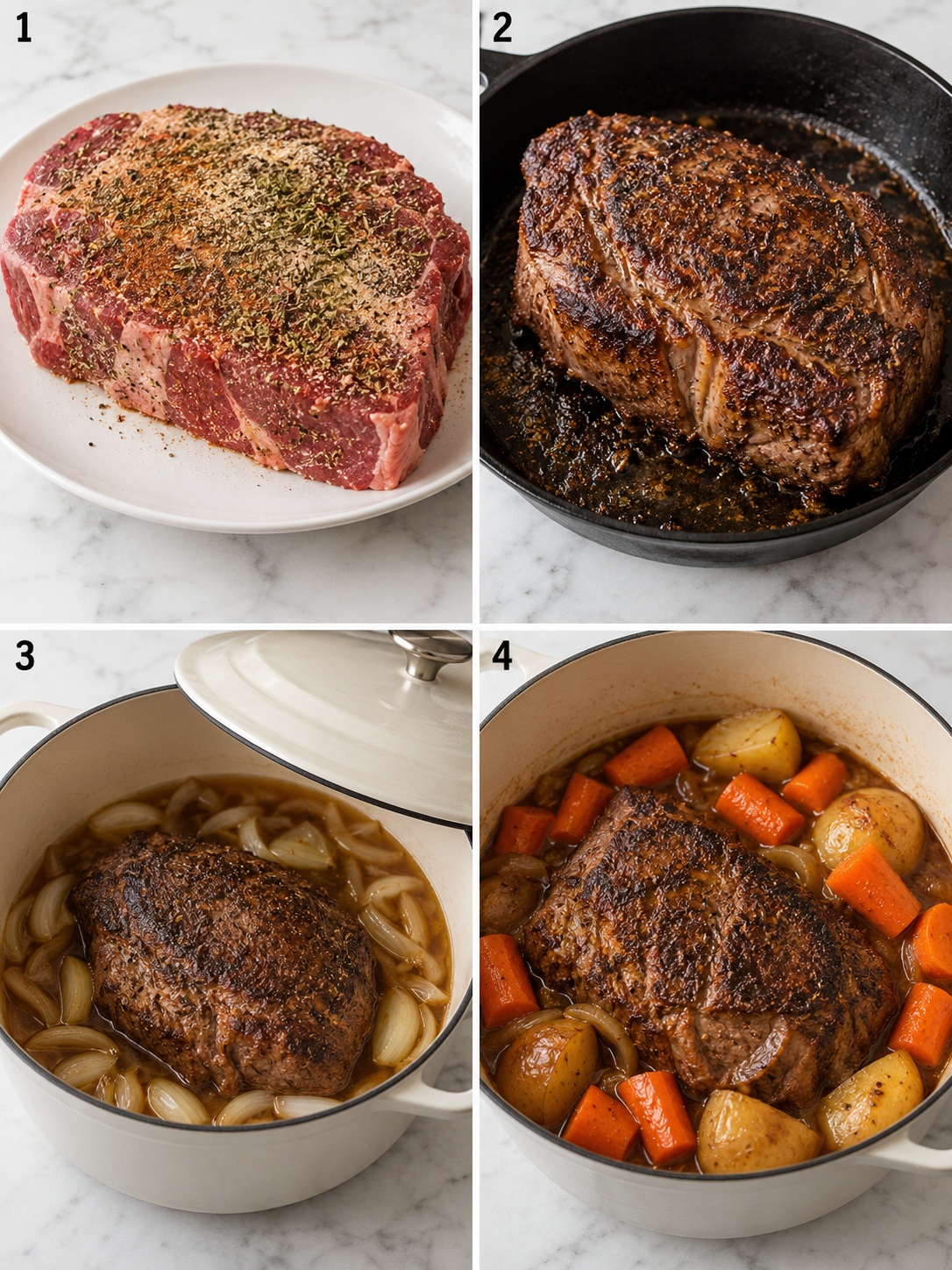
- Season the beef. Pat the roast dry, then coat it all over with Creole seasoning, pepper, onion powder, garlic powder, and dried celery flakes. Let it sit while the oven heats.
- Sear the roast. Brown the beef in hot oil on all sides. This takes about 8-10 minutes and gives the pan juices a richer flavor.
- Start the braise. Move the roast to a Dutch oven or covered casserole. Add onion, broth or water, and Worcestershire if using. Cover tightly.
- Bake until partly tender. Roast at 350°F for about 2 hours and 15 minutes. The beef should be starting to soften but not falling apart yet.
- Add the vegetables. Tuck carrots and potatoes around the beef, spoon some pan juices over them, and cover again.
- Finish and rest. Bake 45-60 minutes longer, until the beef pulls apart and the vegetables are tender. Rest 15 minutes before slicing or pulling.
The sear is not optional
The original quick method works, but browning the beef first is what makes the juices taste like roast instead of plain broth. Dry the meat well. Heat the pan until the oil shimmers, then leave each side alone long enough to form a dark brown crust.
Do not worry about cooking the center at this stage. You are only building flavor on the outside. A similar oven-braised approach shows up in this pot roast method, where the roast is browned before a long covered bake. If you enjoy saucy beef dinners, the same browning habit helps in beef recipes loaded with flavor and sauce.
Keep the vegetables intact
Carrots and potatoes need time, but not as much time as chuck roast. Add them too early and they soak up flavor, then collapse. Add them too late and the beef is ready before the vegetables are soft. The sweet spot is after the roast has braised for a little over 2 hours.
Cut the potatoes into large chunks, about 2 inches wide. Thick carrot pieces work better than thin coins. If you want a softer, old-fashioned casserole feel, leave the vegetables in for the full last hour. For cleaner slices on the plate, check them after 45 minutes.
Fork-tender beats thermometer readings
A chuck roast is safe before it is satisfying. The goal is not a pink center like prime rib. The goal is a roast that gives when pressed with a fork. Beef safety and doneness rules are useful, but braised chuck needs extra time for tenderness. For a different beef dinner where temperature matters more, see Perfect Prime Rib.
If the beef still resists, it is not ruined. Put the lid back on and give it more time. The moisture in the pot protects it as long as there is liquid in the bottom.
Make the juices richer
The pan juices can be spooned over the beef as they are, especially if you like a thinner broth-style sauce. For a thicker gravy, remove the beef and vegetables, then simmer the liquid on the stove for a few minutes. Stir 1 tablespoon cornstarch with 1 tablespoon cold water, whisk it in, and cook until glossy.
A teaspoon of Worcestershire adds savory depth without making the roast taste sharp. Tomato paste is another good add-in if you want a darker sauce. Cook 1 tablespoon in the pan after searing, then add the broth and scrape up the browned bits. That trick is common in Dutch oven pot roasts like this chuck roast with carrots and potatoes.
Sides that fit the mood
This roast already brings potatoes and carrots, so sides can stay simple. Fried cabbage with bacon, onion, and garlic fits the Creole seasoning nicely. Noodles Romanoff is a good choice if you want a creamy side that catches the juices.
For leftovers, shred the beef and warm it with the pan juices for sandwiches, rice bowls, or baked potatoes. Follow USDA leftovers guidance and refrigerate cooked food within 2 hours.
Summary
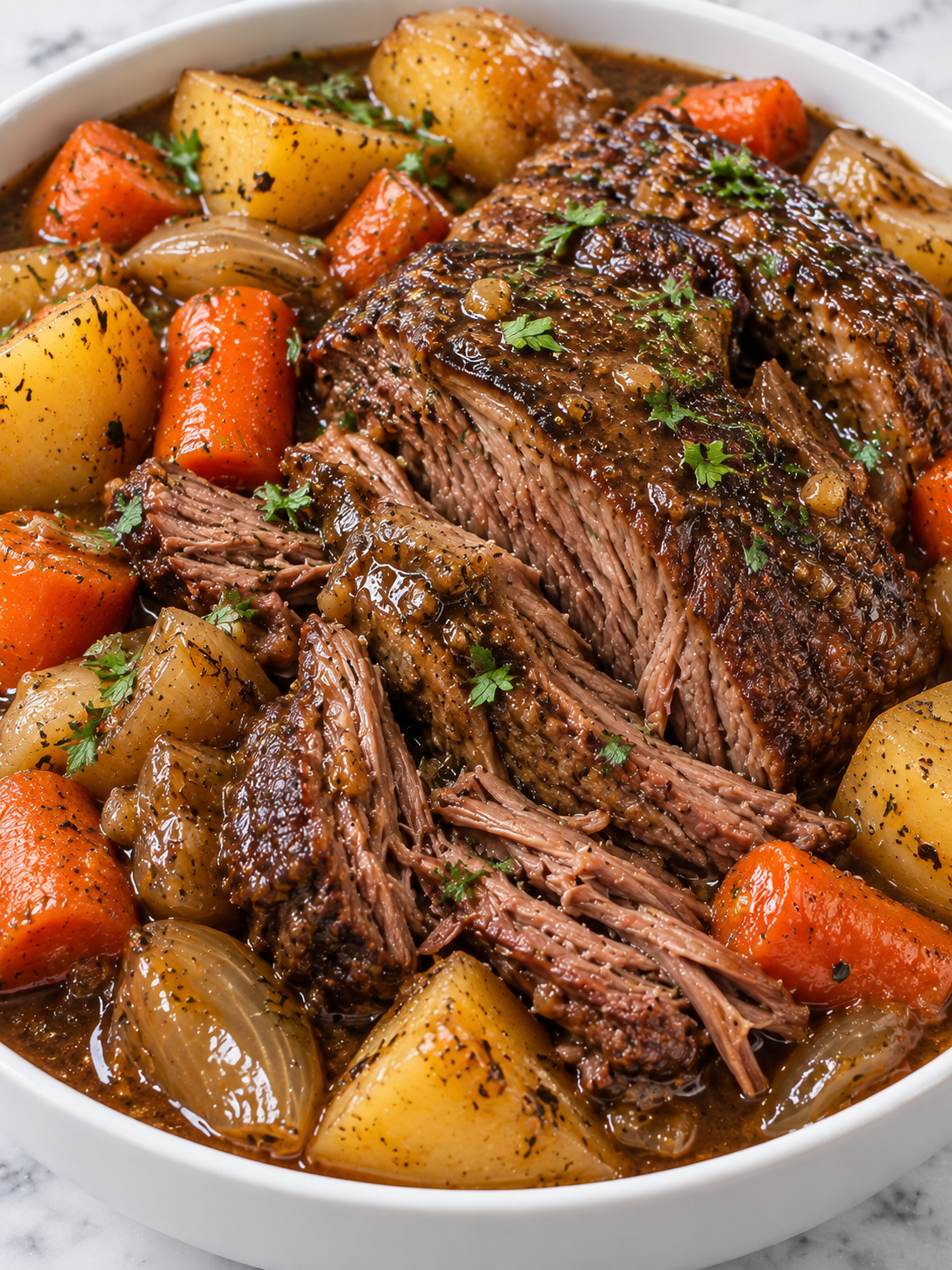
Serve this roast with its pan juices, extra potatoes, or a simple green side for a full comfort-food meal.
Frequently Asked Questions
- What cut of beef is best for beef roast pot?
-
Chuck roast is the best choice because it has enough fat and connective tissue to soften during a long braise. Shoulder roast or blade roast can also work. Very lean roasts can turn dry before they become tender.
- Can I make this without Creole seasoning?
-
Yes. Use seasoned salt, paprika, garlic powder, onion powder, black pepper, and a pinch of cayenne instead. Start with less salt because many Creole blends are already salty.
- Why is my pot roast still tough?
-
It likely needs more time. Pot roast can be fully cooked and still feel firm until the connective tissue breaks down. Cover it again and keep braising, checking every 20-30 minutes.
- Can I add the potatoes and carrots at the beginning?
-
You can, but they may get too soft during the long covered bake. Adding them after the beef has cooked for about 2 hours keeps the potatoes intact and the carrots tender instead of mushy.
- How should I store leftover beef roast pot?
-
Cool the beef and vegetables, then refrigerate them with some pan juices in an airtight container for up to 3-4 days. Reheat gently in a covered skillet or low oven with a splash of broth.
- What should I serve with this roast?
-
The potatoes and carrots make it a full meal, but cabbage, buttered noodles, or mac and cheese all fit the plate. A crisp salad also helps balance the rich beef and gravy-style juices.
