
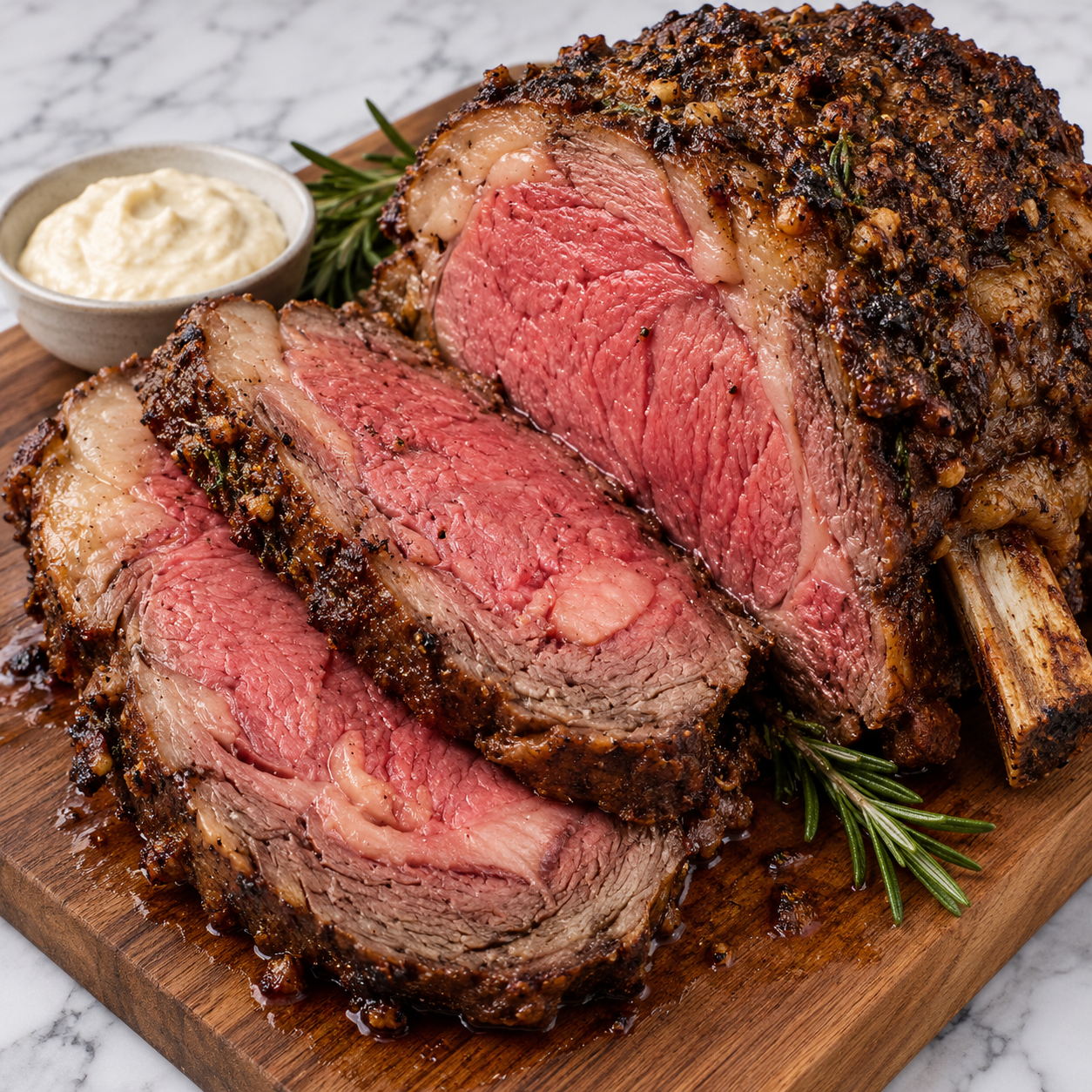
 Pin it
Perfect Prime Rib feels like a special-occasion roast, but the cooking is calmer than most people expect. The real secret is patience. Salt it early, roast it gently, and let the thermometer tell you when to stop.
This version uses a low oven first, then a hot finish at the end. You get a deeply browned garlic-pepper crust with more rosy meat from edge to edge. The pan smells rich and beefy long before you carve.
The Roast Lineup
Choose a well-marbled standing rib roast with a creamy fat cap and bright red meat. A 5-6 pound roast feeds about 6-8 people and fits most home roasting pans without crowding.
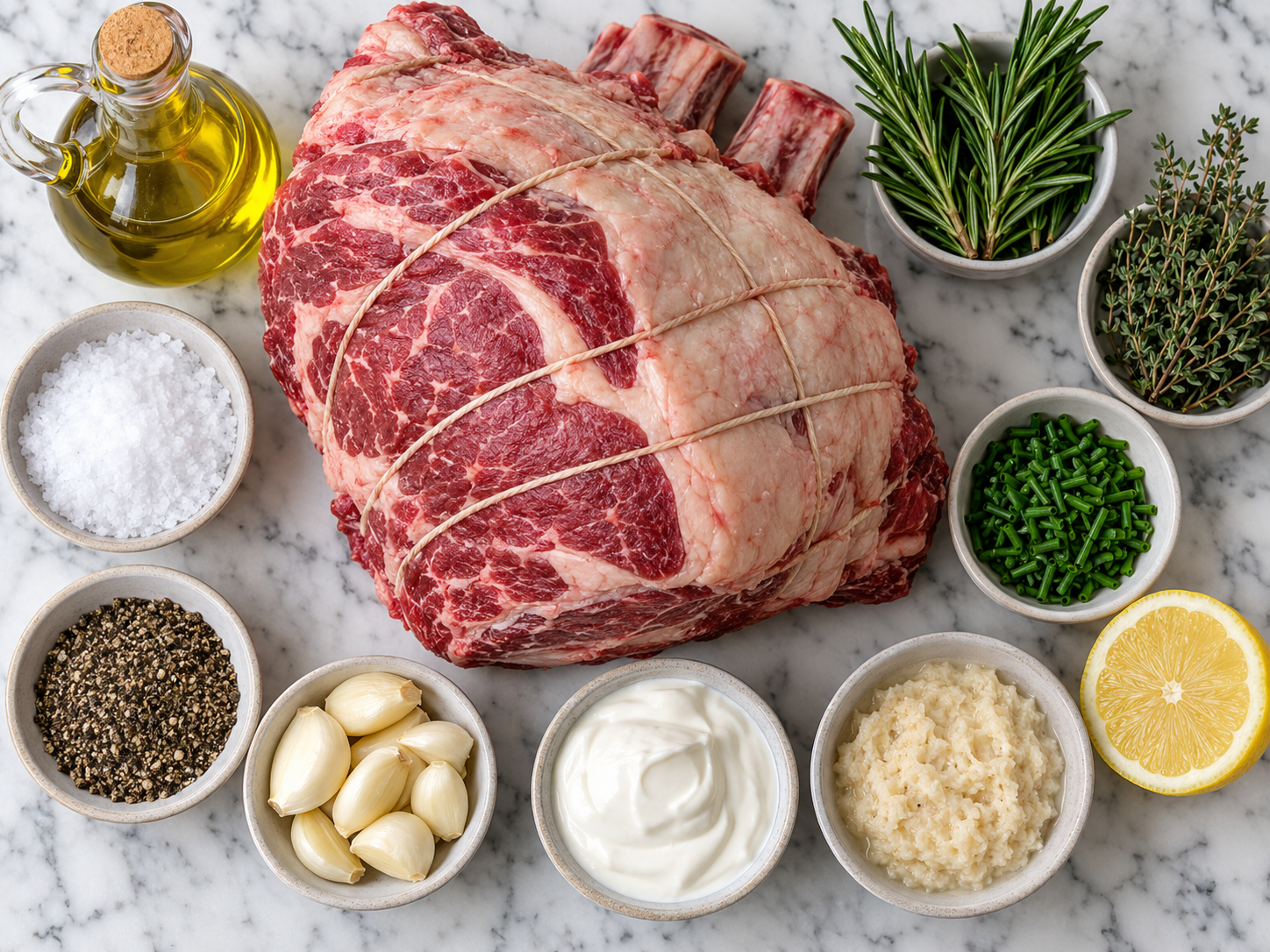
- Prime rib roast. The star of the meal. Bone-in gives great flavor and a built-in roasting rack.
- Kosher salt. Seasons the roast deeply and helps the surface dry for better browning.
- Black pepper. Adds heat and a steakhouse-style bite to the crust.
- Garlic. Brings a savory aroma that works into the fat as it roasts.
- Rosemary and thyme. Classic herbs that make the beef smell holiday-ready without covering its flavor.
- Olive oil. Helps the seasoning cling and encourages an even crust.
- Horseradish cream. A cool, sharp sauce that cuts through the richness of the beef.
Perfect Prime Rib Method
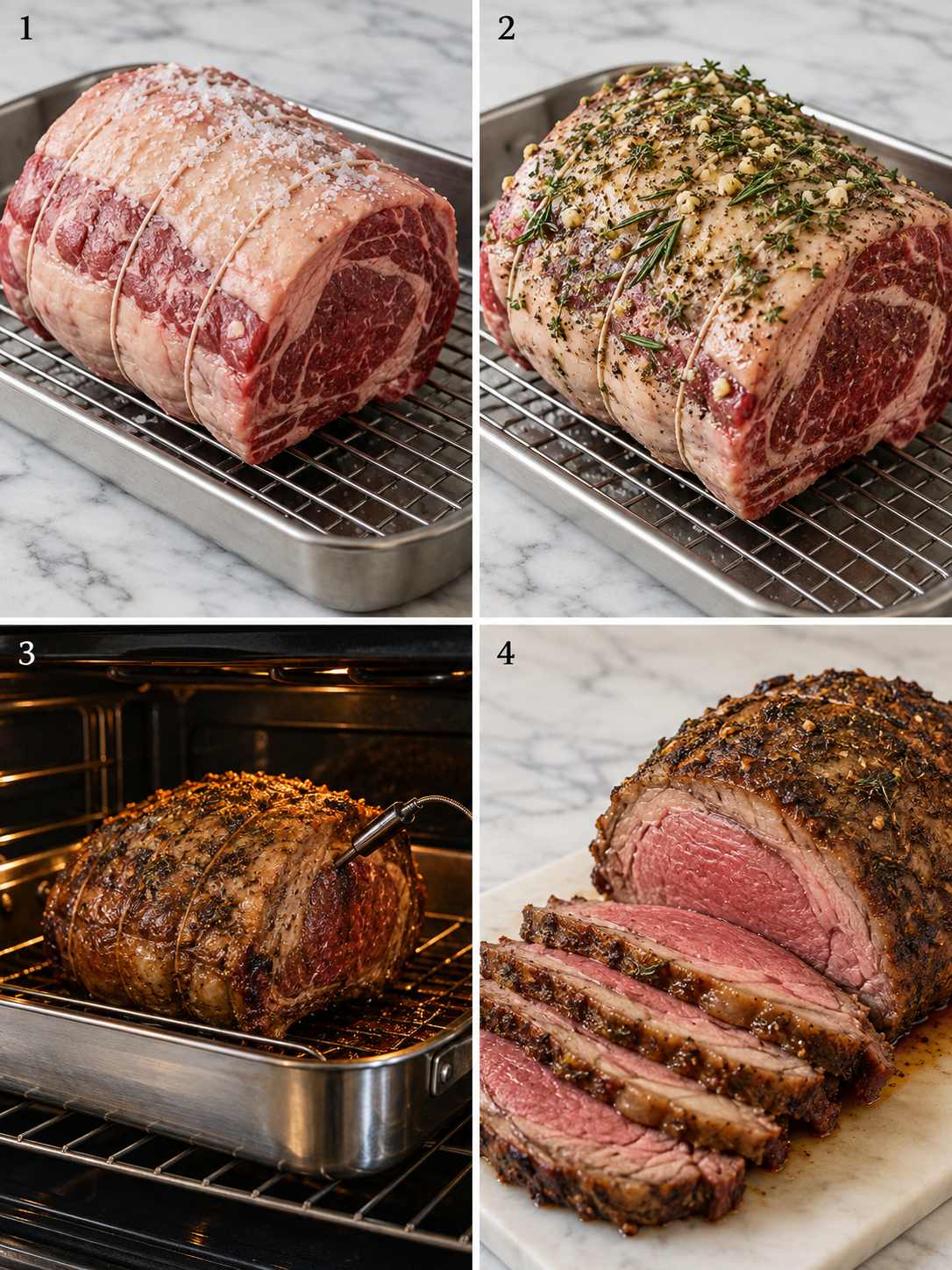
- Salt ahead. Pat the roast dry, season it all over with salt, and refrigerate it uncovered for at least 8 hours. This firms the surface and seasons the meat better than salting right before roasting.
- Rub and temper. Let the roast sit at room temperature for 2 hours. Mix olive oil, garlic, pepper, rosemary, and thyme, then rub it over the top and sides.
- Roast low. Set the roast bone-side down on a rack and cook at 225°F until the center reaches 118-120°F for medium-rare style slices, about 30-35 minutes per pound.
- Rest deeply. Move the roast to a board and rest it loosely covered for 45-60 minutes. The juices settle and the temperature continues to rise.
- Finish hot. Heat the oven to 500°F. Return the roast for 8-12 minutes until the outside is dark, crisp, and sizzling.
- Carve cleanly. Cut the bones away in one piece, then slice the roast across the grain into thick, juicy portions.
Temperature Runs the Show
A prime rib is too expensive to cook by hope. Use a probe or instant-read thermometer and check the thickest part, away from bone and fat. Food Network's reverse-sear method also leans on low heat first, then a hot finish for crust, which you can see in this prime rib guide. If you want to follow the USDA safety target, cook beef roasts to 145°F with a short rest, as listed on the USDA temperature chart.
Bone-In or Boneless
Bone-in prime rib looks dramatic and helps protect the underside from harsh heat. Boneless is easier to carve and season evenly. Both can turn out beautifully with this low-roast method. If you buy bone-in, ask the butcher to cut the bones off and tie them back on. You get the flavor and shape of a standing roast with much easier carving at the table.
Carving Without Losing Juice
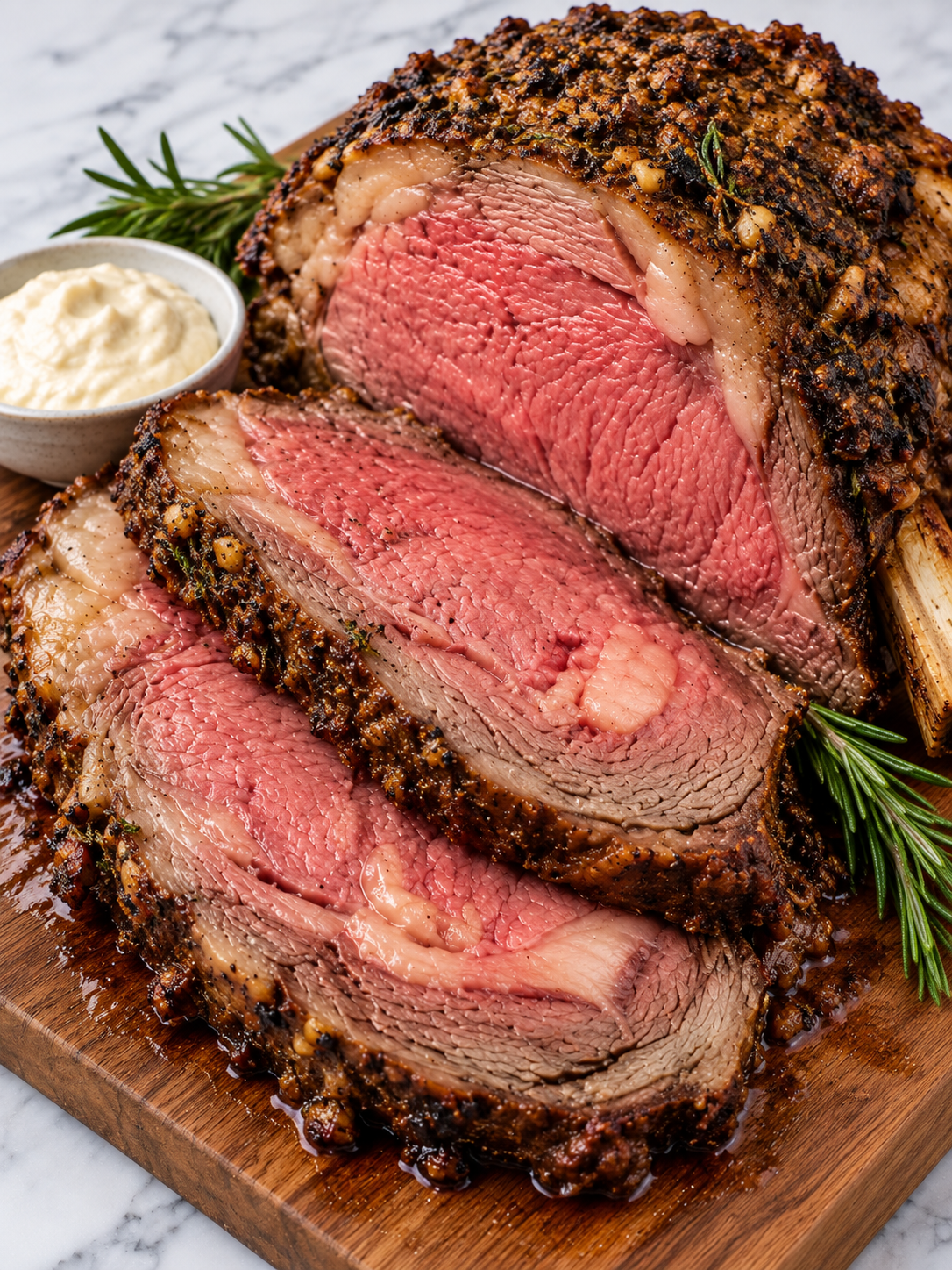
Resting is not optional here. Cut too early and the board floods. After the hot finish, wait 10 minutes if the roast already rested before searing. Slice with a long sharp knife and keep the pieces thick enough to show that rosy center. For a classic plate, serve it with Perfect Turkey Gravy or a simple beef jus, plus Yorkshire Puddings to catch every drop.
Sides That Make Sense
Prime rib is rich, so the best sides bring either comfort or brightness. Creamy potatoes are the usual favorite, but Creamed Peas and Potatoes fit the mood without fighting the beef. For something earthy, add Garlic Mushrooms in Parmesan Cheese. A crisp green salad or sharp horseradish sauce helps reset your palate between bites.
Leftovers Worth Saving
Wrap leftover slices tightly and refrigerate them for up to 4 days. Reheat gently, or do not reheat them at all. Cold prime rib sliced thin is excellent with horseradish, arugula, and toasted bread. Save the bones too. They make a rich broth for soup or a quick pan sauce the next day. Food Network notes that roast size and oven temperature change timing, so treat leftovers as the reward for buying generously, not as a mistake.
Frequently Asked Questions
- How much prime rib should I buy per person?
-
For a bone-in roast, plan on about 1 pound per person. For boneless prime rib, 1/2 to 3/4 pound per person usually works. Buy a little more if you want leftovers for sandwiches.
- Can I make Perfect Prime Rib without the bones?
-
Yes. Boneless prime rib cooks well with this same method, but it may finish a little faster. Tie it every 1 1/2 inches so the roast holds an even shape.
- What temperature should prime rib be cooked to?
-
For a medium-rare style roast, many cooks pull it around 118-120°F and let carryover heat raise it. The USDA recommends beef roasts reach 145°F with a 3-minute rest for food safety. Use a thermometer and choose the doneness that fits your table.
- Do I have to dry brine it overnight?
-
Overnight salting gives the best crust and seasoning. If you are short on time, salt the roast at least 2 hours before cooking and leave it uncovered in the refrigerator.
- How do I reheat leftover prime rib?
-
Warm slices gently in a covered skillet with a spoonful of beef broth or pan juices. Keep the heat low so the meat warms without turning gray. Thin cold slices are also excellent on sandwiches.
- What should I serve with prime rib?
-
Prime rib loves simple, rich sides. Try gravy, Yorkshire puddings, creamed vegetables, roasted mushrooms, potatoes, or a crisp salad to cut the richness.
References
Reliable references aided in composing and refining this content.
- https://www.foodnetwork.com/recipes/food-network-kitchen/the-best-prime-rib-7422442
- https://www.foodnetwork.com/how-to/packages/food-network-essentials/everything-to-know-about-prime-rib
- https://www.fsis.usda.gov/food-safety/safe-food-handling-and-preparation/food-safety-basics/safe-temperature-chart
