
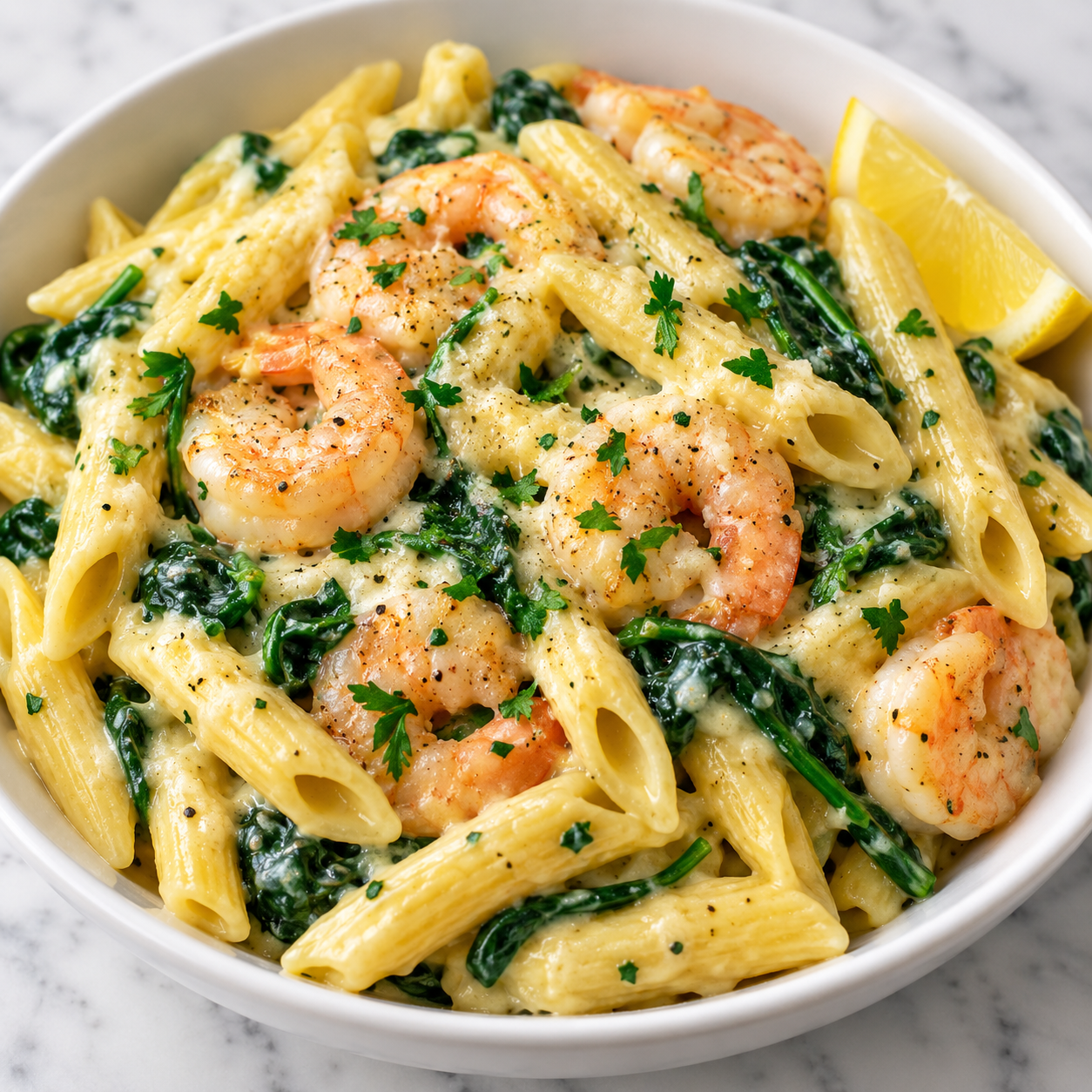
 Pin it
This Cheese Shrimp Penne Pasta & Spinach recipe is the kind of dinner that looks like more effort than it is. The shrimp stay sweet and tender, the spinach folds into the sauce, and the penne catches little pockets of melted cheese.
I like this version because it fixes the usual problem with cheesy shrimp pasta. Instead of dumping cheese into dry noodles, you build a loose garlic cream sauce first. A splash of starchy pasta water keeps it glossy.
It is rich, but not heavy in a sleepy way. Lemon and parsley wake it up at the end, which matters when shrimp, cream, and cheese are all in the same pan.
What Makes This Skillet Work
The ingredient list is short, so each choice shows up in the final bowl. Use raw shrimp, fresh spinach, and cheese you grate yourself if you can.
Pre-shredded cheese often melts less smoothly because it is coated to keep the shreds separate. A block of mozzarella and a wedge of Parmesan give the sauce a softer pull and cleaner flavor.
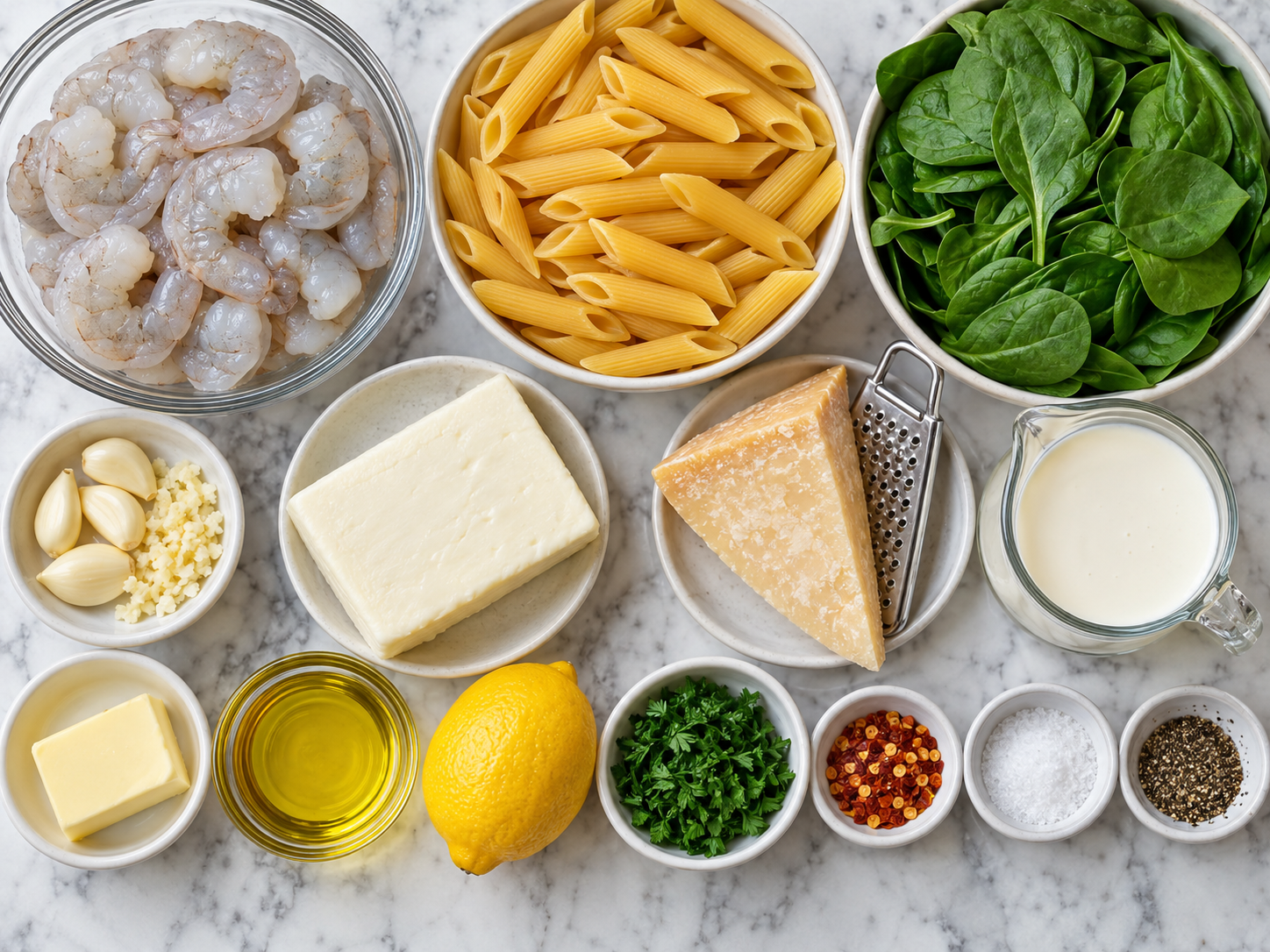
- Large shrimp. They cook fast and make the pasta feel generous without a long simmer.
- Penne pasta. The ridges and hollow centers hold the creamy cheese sauce.
- Fresh spinach. It wilts quickly and adds color, freshness, and a gentle earthy note.
- Garlic. A quick sizzle in butter gives the sauce its base flavor.
- Mozzarella. It melts into the sauce and gives the pasta a stretchy, creamy finish.
- Parmesan. It adds salty depth and keeps the sauce from tasting flat.
- Heavy cream. A small amount helps the cheese melt into a smooth coating.
- Pasta water. The starchy splash loosens the sauce and helps it cling to the penne.
- Lemon and parsley. They brighten the shrimp and cut through the richness.
Cheese Shrimp Penne Spinach Method
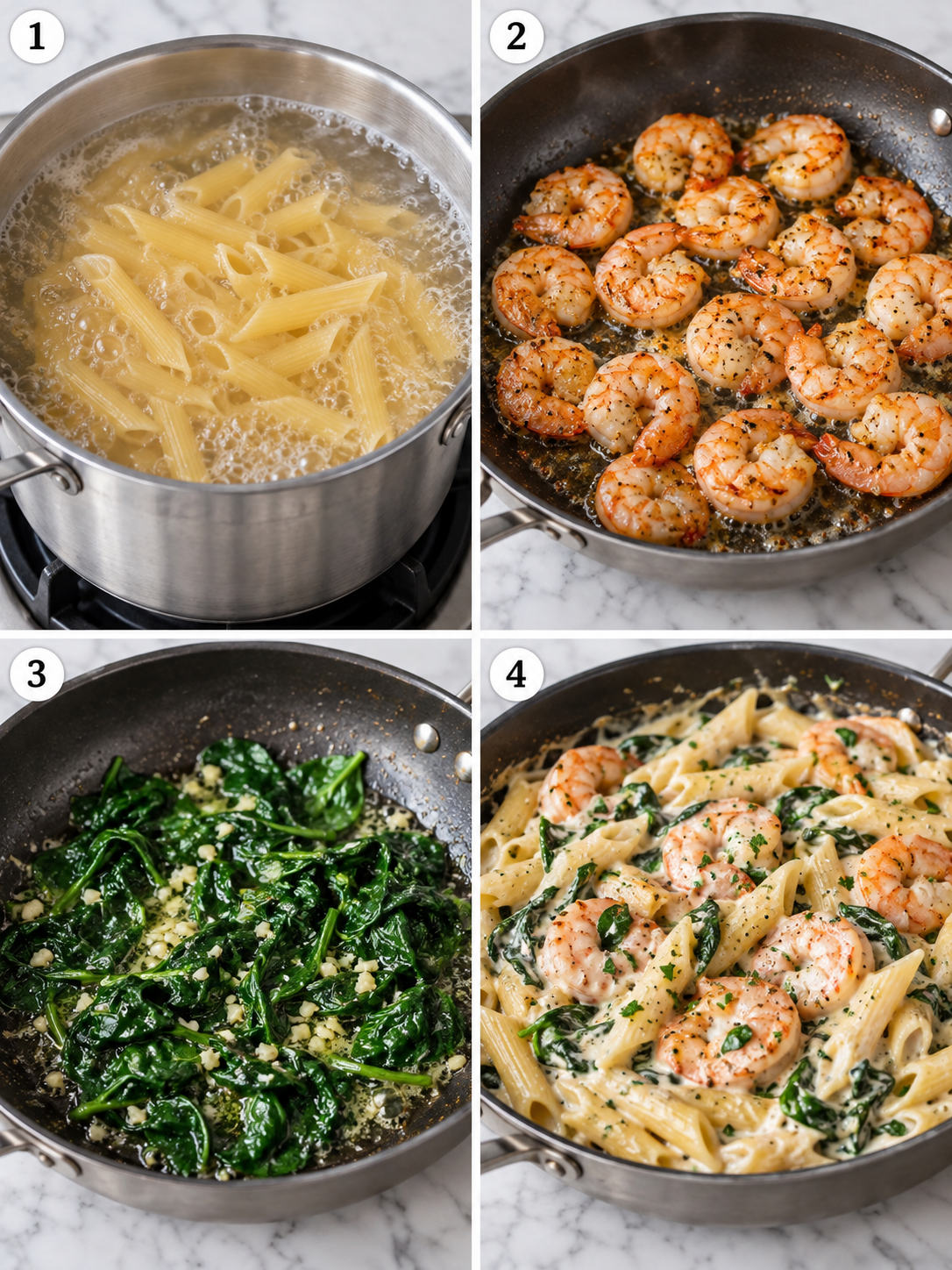
- Boil the penne. Cook it in well-salted water until just al dente. Save some pasta water before draining because it is the easiest way to loosen the sauce later.
- Sear the shrimp. Pat the shrimp dry, season them, and cook them in a hot skillet for 1-2 minutes per side. Move them to a plate as soon as they turn pink and opaque.
- Start the garlic base. Lower the heat and melt butter in the same skillet. Stir in the garlic and red pepper flakes for about 30 seconds, just until fragrant.
- Wilt the spinach. Add the spinach by handfuls and stir until it collapses but still looks bright green. Do not cook it until dull and wet.
- Melt the cheese gently. Pour in cream and a splash of pasta water. Add mozzarella and Parmesan in small handfuls, stirring on low heat until smooth.
- Toss and finish. Add the penne and shrimp back to the skillet. Toss until coated, then finish with parsley, lemon juice, and black pepper.
Keep The Shrimp Tender
Shrimp are quick, which is the good news and the trap. If they stay in the pan while you build the sauce, they can turn tight and bouncy before the pasta is even tossed. Cook them first, then take them out. The warm sauce will finish the job at the end.
Look for shrimp that smell clean and mild. The FDA notes that shrimp should become firm, pearly, and opaque when cooked, and seafood should reach 145°F for food safety. Their seafood safety guide is a useful reference if you cook shrimp often.
If you like garlic-forward shrimp dinners, this pasta sits in the same weeknight lane as Garlic Shrimp Pasta and Garlic Parmesan Roasted Shrimp.
Why The Sauce Turns Silky
Mozzarella can clump if it hits a dry pan or high heat. The fix is simple. Give it liquid, keep the heat low, and add the cheese gradually. Cream gives the sauce body. Parmesan gives it flavor. Pasta water helps everything move around the penne instead of sticking in one heavy patch.
Take the skillet off the heat if the sauce starts looking stringy. Add a spoonful of pasta water and toss for a few seconds. It usually relaxes right away. Freshly grated cheese matters here because it melts into the sauce instead of sitting on top like a coating.
For a cozier, baked-style pasta night, pair this recipe idea with Philly Cheesesteak Pasta Bake. For a broader dinner list, bookmark Pasta Dinner Recipe Ideas.
Spinach Swaps That Cook Cleanly
Fresh spinach is easiest because it wilts right in the skillet and does not water down the cheese sauce. Baby spinach can go in whole. Mature spinach is better roughly chopped so it folds through the pasta instead of clumping. Kale works too, but slice it thin and cook it a few minutes longer before adding the cream.
I would skip frozen spinach unless you have time to thaw it and squeeze it almost dry. Even then, the texture is softer and the sauce can turn a little loose. Arugula is a good last-minute swap if you want a peppery edge. Stir it in after the heat is off so it wilts gently.
Want more spinach with cheese in a different format? Cheesy Bacon Spinach Omelette has the same comfort-food feel for breakfast or brunch.
Storage Without A Broken Sauce
This pasta is best right after tossing, but leftovers are still worth keeping. Cool the pasta, pack it in a shallow airtight container, and refrigerate it within 2 hours. USDA guidance says cooked leftovers should be used within 3-4 days, and refrigeration slows bacterial growth without stopping it. You can read their leftover storage guidance for the details.
Reheat gently in a skillet over low heat with a splash of milk, cream, or water. Stir often and stop as soon as it is hot. The microwave works for a quick lunch, but use short bursts and stir between them. Shrimp do not forgive long reheating.
Easy Ways To Change It
This recipe takes small changes well. Add sliced mushrooms after the shrimp comes out and brown them before the garlic. Stir in sun-dried tomatoes with the spinach for a sharper flavor. A spoonful of pesto at the end also works, but add less salt if your pesto is already salty.
For a lighter plate, use 10 ounces of pasta and add another handful or two of spinach. For a richer one, finish with extra Parmesan and a knob of butter off the heat. If you need it gluten-free, use a sturdy gluten-free penne and watch the timing closely. Some brands go from firm to soft quickly.
Summary
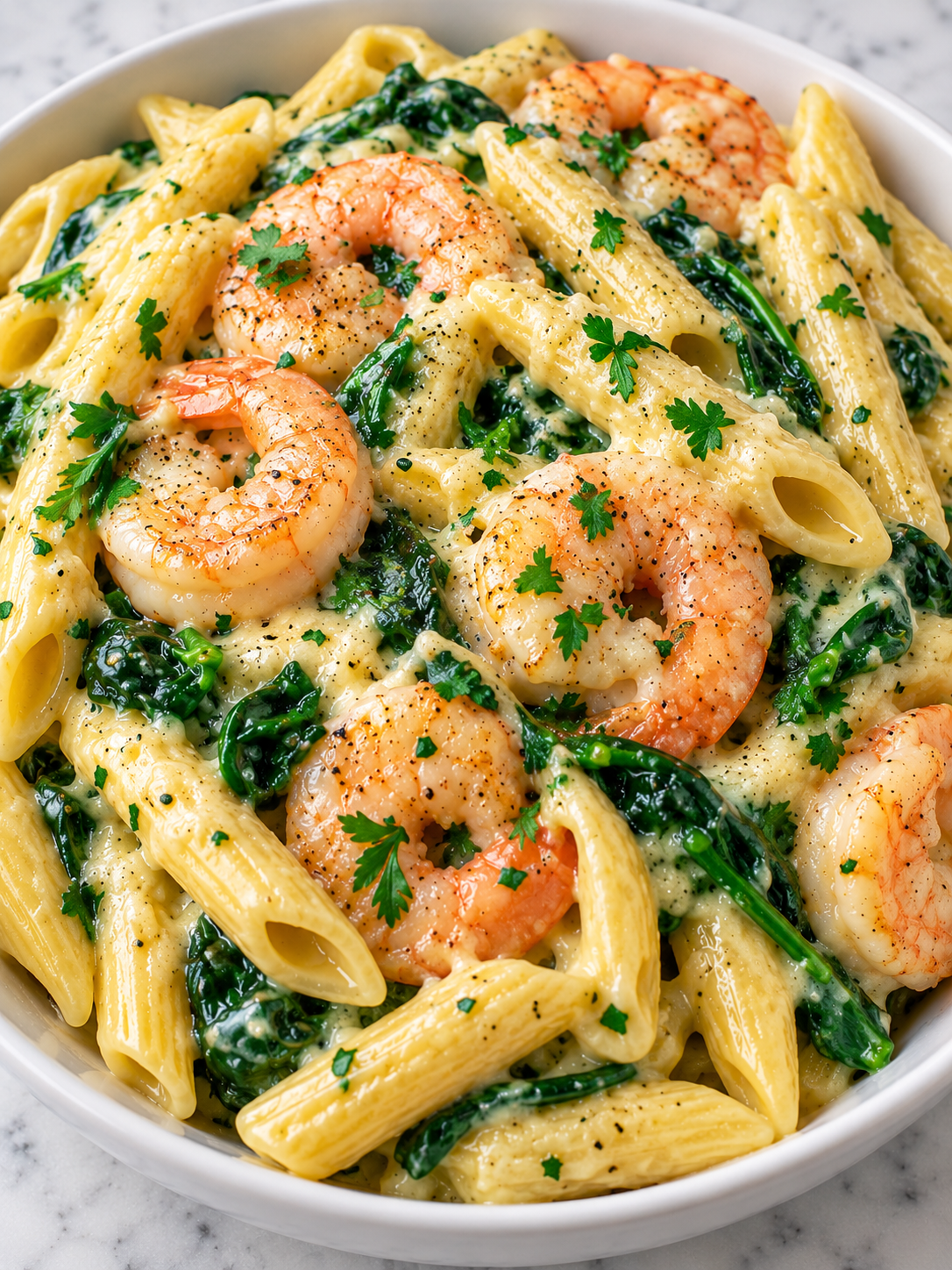
Serve this pasta right away while the sauce is smooth and the shrimp are tender. For the best texture, use fresh spinach, freshly grated cheese, and shrimp that have been patted very dry before cooking.
Frequently Asked Questions
- Can I use frozen shrimp for cheese shrimp penne pasta?
-
Yes. Thaw frozen shrimp overnight in the refrigerator or in a sealed bag under cold running water. Pat them very dry before cooking so they sear instead of releasing water into the skillet.
- Can I use a different pasta shape?
-
Penne works well because the tubes hold the creamy cheese sauce. Rigatoni, ziti, rotini, or medium shells also work. Avoid very tiny pasta shapes because they can make the dish feel heavy and dense.
- Can I make this without heavy cream?
-
You can use half-and-half for a lighter sauce, but keep the heat low once it goes into the pan. Whole milk can work in a pinch, though the sauce will be thinner. Add the cheese slowly and use pasta water to help it come together.
- How do I stop the shrimp from getting rubbery?
-
Cook shrimp only until they are pink, opaque, and curled into a loose C shape. Pull them from the pan before making the sauce, then add them back at the end. That short final toss warms them without overcooking.
- Can I make this pasta ahead?
-
You can prep the garlic, grate the cheese, wash the spinach, and thaw the shrimp ahead. For the best texture, cook the pasta and sauce right before serving. Fully assembled leftovers are still good, but the sauce is creamiest on day one.
- What can I serve with shrimp penne and spinach?
-
Serve it with garlic bread, a crisp green salad, or roasted vegetables. Since the pasta is creamy, something bright helps. Lemon wedges on the table are a simple finish.
- Can I make it spicy?
-
Yes. Add red pepper flakes with the garlic or finish each bowl with a pinch of cayenne. Start small because shrimp and cheese pick up heat quickly. You can always add more at the table.
