
 Pin it
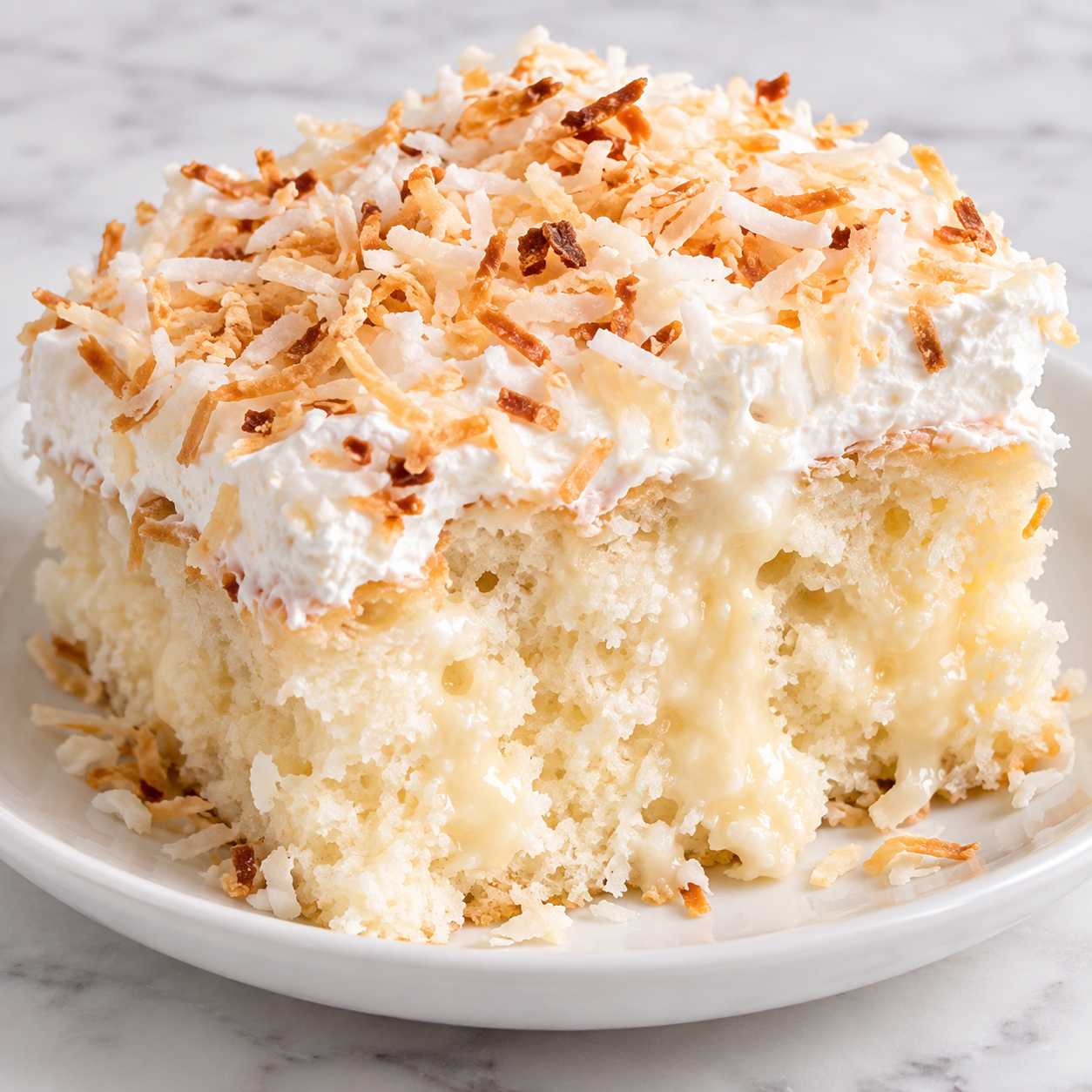
Creamy Coconut Cake is the kind of dessert that gets better after a few quiet hours in the fridge. The cake starts light and fluffy, then soaks up a sweet coconut mixture that settles into the holes without turning the crumb mushy.
I like this version because it tastes rich without needing a heavy frosting. Toasted coconut on top gives each bite a little chew and crunch, which keeps all that creaminess from feeling flat.
What Builds The Coconut Flavor
This cake uses coconut in three places, so each slice tastes creamy instead of faintly flavored. Use cream of coconut, not plain coconut milk, and stir the can well before measuring because it can separate on the shelf.
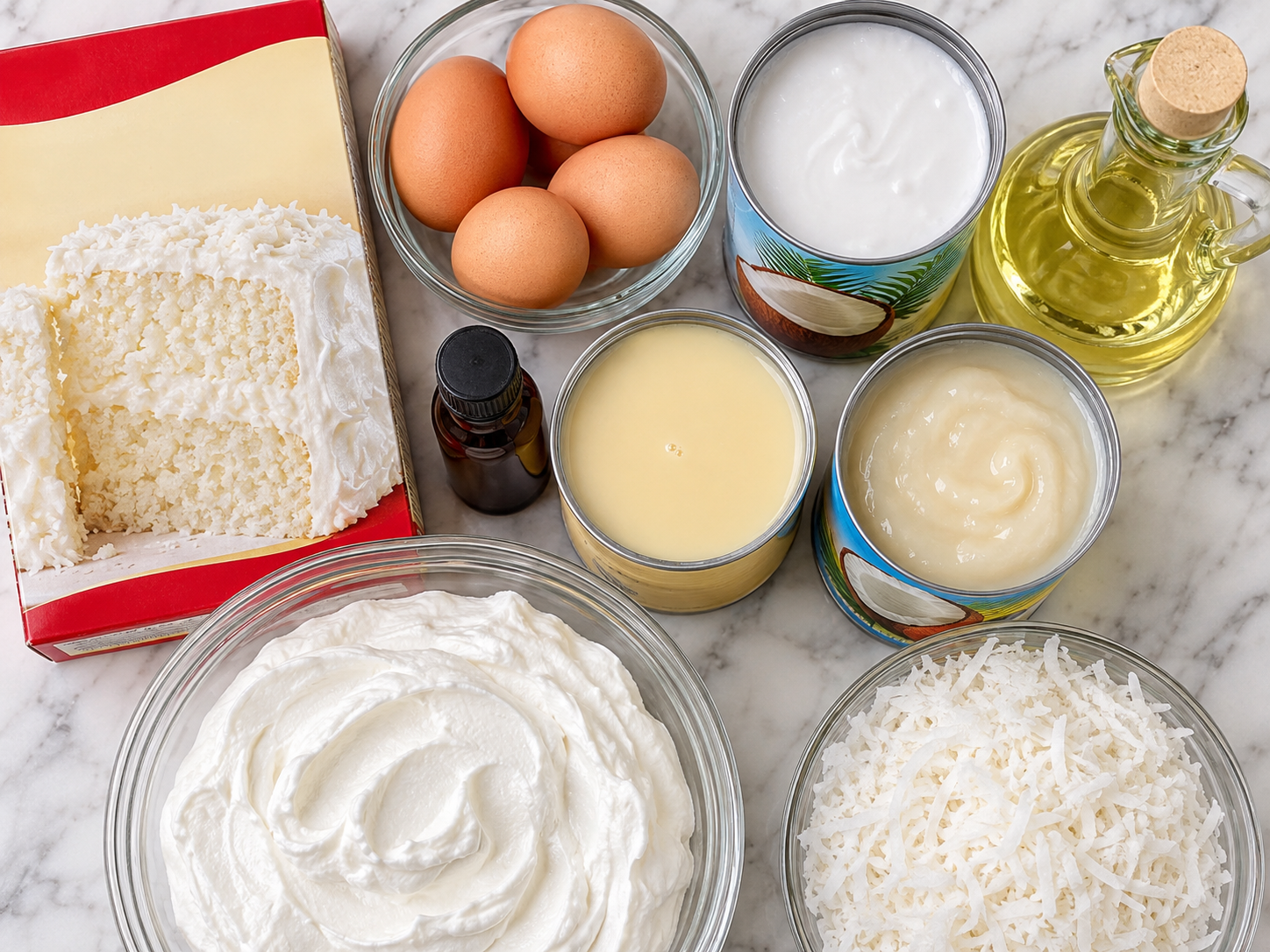
- White cake mix. Gives you a soft, reliable base that absorbs the coconut soak without collapsing.
- Eggs and oil. Keep the cake tender and help it bake with an even crumb.
- Coconut milk. Replaces the water in the cake mix for a quiet coconut note from the start.
- Coconut extract. Adds clear coconut aroma without needing extra liquid.
- Sweetened condensed milk. Makes the soak rich and gives the chilled cake its creamy bite.
- Cream of coconut. Brings the strongest coconut flavor and the thick texture this cake needs.
- Whipped topping. Keeps the top light and easy to spread after the cake cools.
- Sweetened shredded coconut. Toasts into a golden, chewy topping with a nutty edge.
How The Cake Gets Creamy
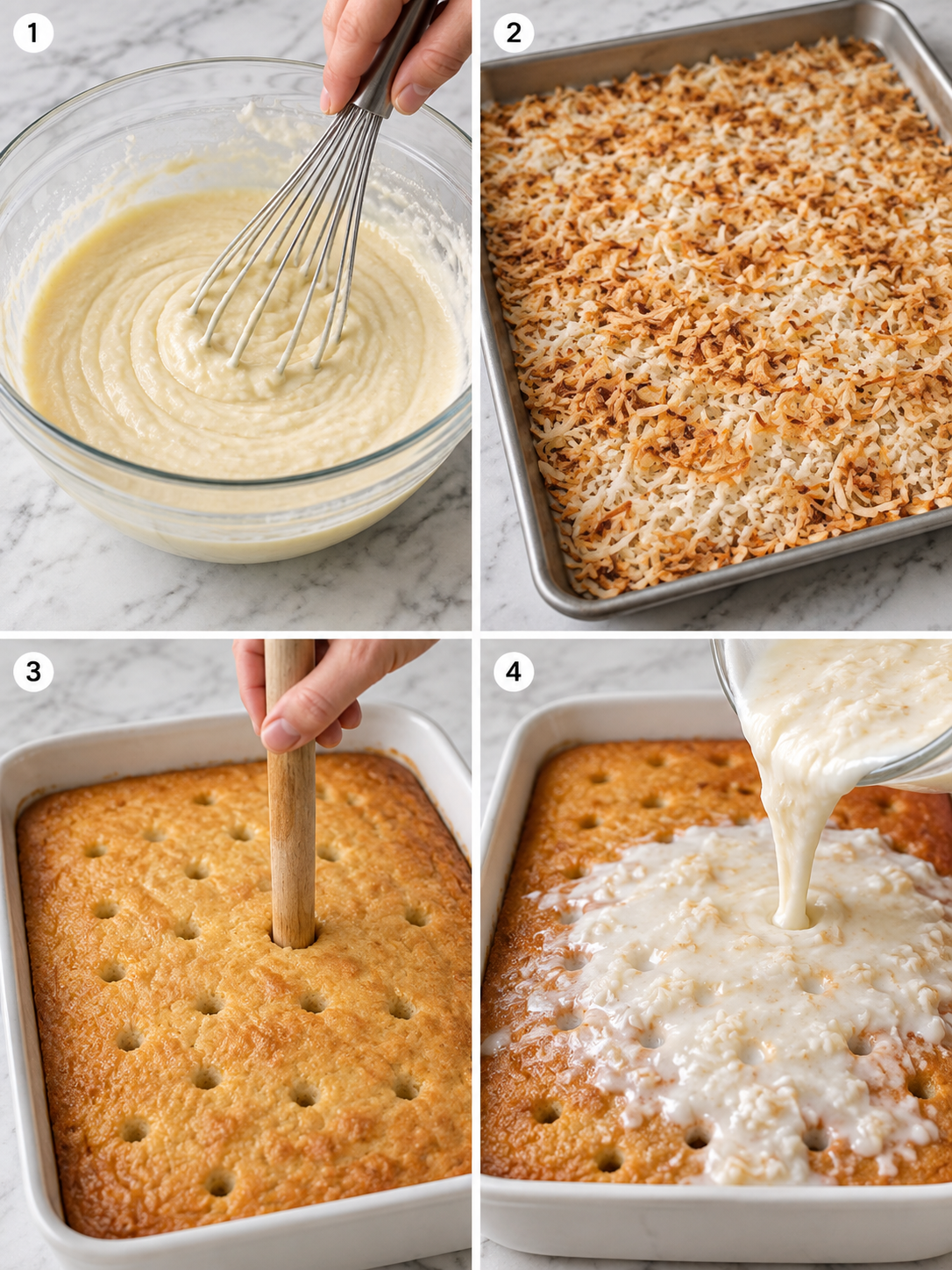
- Bake the cake. Heat the oven to 350°F, mix the cake batter with coconut milk, oil, eggs, and coconut extract, then bake it in a 9x13-inch pan until the center springs back.
- Toast the coconut. Spread the shredded coconut on a baking sheet and toast it for a few minutes while the cake bakes. Stir once and pull it when the edges turn golden.
- Poke the warm cake. Let the cake stand for 15 minutes, then poke deep holes across the surface with the handle of a wooden spoon.
- Pour the coconut soak. Whisk the condensed milk with the cream of coconut until smooth. Pour it slowly over the cake so it runs into the holes.
- Cool and top. Let the cake cool completely, spread whipped topping over it, and scatter toasted coconut across the top.
- Chill before slicing. Cover the pan and refrigerate for at least 4 hours. Use a clean sharp knife for neat squares.
The Soak Matters Most
The creamy center comes from pouring the filling over a cake that is warm, but no longer steaming hot. If the cake is too hot, the crumb can tear and the liquid can pool at the edges. If it is cold, the filling sits on top and struggles to move down through the holes.
Cream of coconut is the key ingredient here. It is sweet, thick, and made for desserts and drinks. Coco Lopez describes its cream of coconut as coconut cream blended with cane sugar, which is why it behaves so differently from plain coconut milk. You can read more from Coco Lopez if the cans at your store look confusing.
Toast The Coconut Lightly
Toasted coconut makes this cake taste finished. Spread it thinly on a rimmed baking sheet and keep it near the center of the oven. It can go from pale to too dark fast, so stir after 2 minutes and watch the edges.
Pull the coconut when about half of it is golden. It keeps cooking for a short minute on the hot pan. I scrape it into a bowl right away so it stays sweet and nutty, not bitter. If you already like coconut desserts, this is the same cozy flavor family as no-bake coconut cream balls and homemade Mounds bars.
Smart Swaps For Real Kitchens
A yellow cake mix works if that is what you have, though the color will be warmer and the flavor a little more buttery. You can use homemade whipped cream, but stabilized whipped topping holds longer in the fridge and slices cleaner for a potluck table.
For a less sweet cake, use 1/2 cup condensed milk and 3/4 cup cream of coconut. You still get a creamy coconut soak, just with less sugar. Unsweetened shredded coconut also helps balance the top. For another chilled coconut idea, pair this dessert menu with a pineapple coconut smoothie.
Serving It Without A Mess
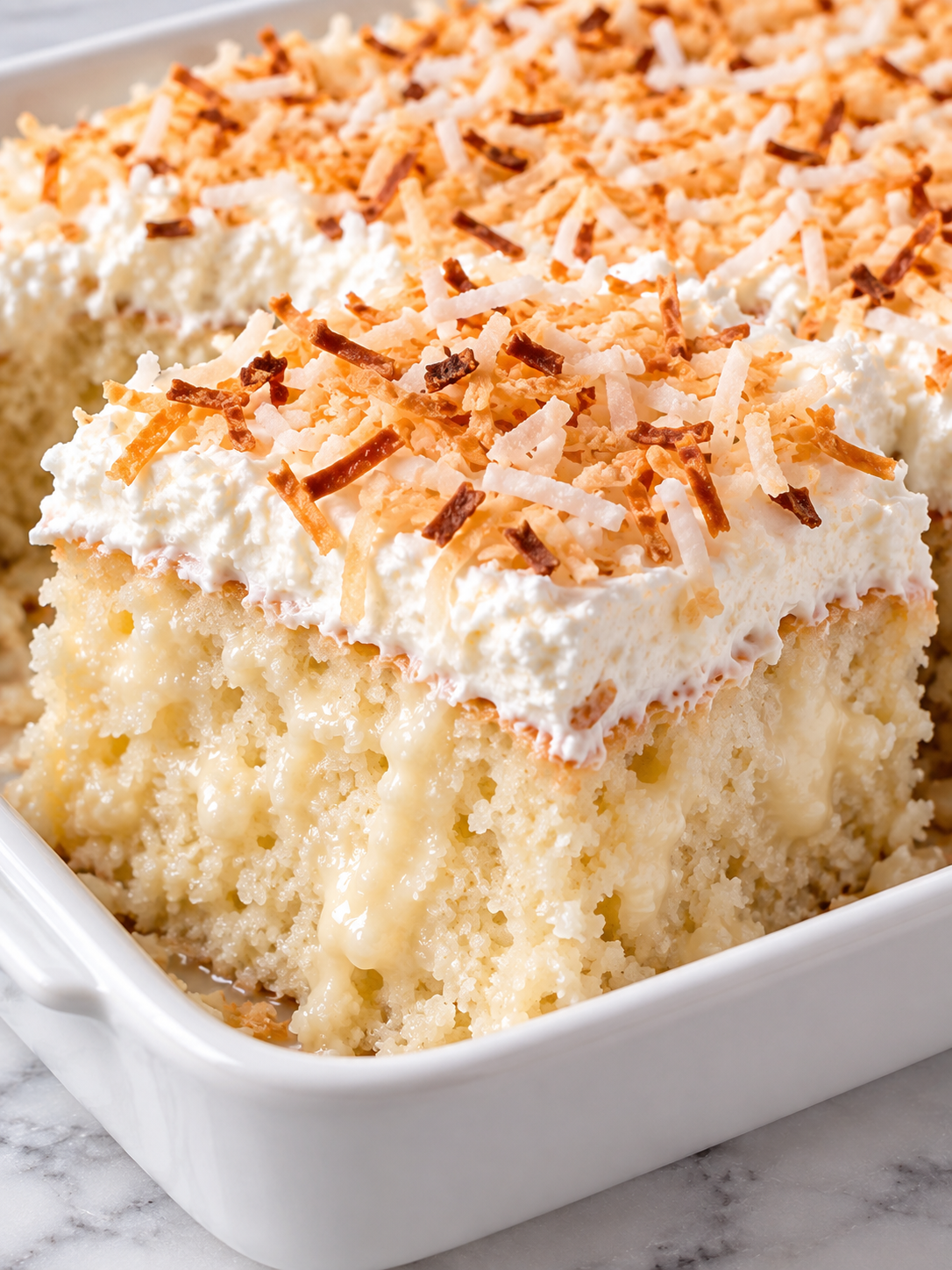
For tidy squares, chill the cake overnight and wipe the knife between cuts. A small offset spatula helps lift the first piece from the pan. After that, the rest usually comes out cleanly.
This cake is rich, so small pieces work well. Serve it after grilled food, Sunday dinner, or a holiday meal when you want something cool. It also sits nicely beside other soft desserts like salted caramel Kentucky butter cake or homemade German chocolate cake on a dessert table.
Storing Creamy Coconut Cake
Because this cake has a dairy-rich soak and whipped topping, keep it covered in the refrigerator. The USDA says perishable leftovers should be refrigerated within 2 hours and kept for 3-4 days, which is a good guide for this cake too. Here is the USDA leftovers guide.
You can freeze individual slices, but the topping softens after thawing. For best texture, freeze the soaked cake without the whipped topping, then thaw it in the fridge and top it the day you serve.
Summary
Serve this chilled coconut cake straight from the refrigerator, sliced into neat squares with extra toasted coconut on top.
Frequently Asked Questions
- Is Creamy Coconut Cake the same as coconut poke cake?
-
Yes, this style of Creamy Coconut Cake is a coconut poke cake. Holes are made in the warm cake so the coconut filling can soak down into the crumb instead of sitting only on top.
- Can I use coconut milk instead of cream of coconut?
-
Coconut milk is much thinner and usually unsweetened, so it will not give the same creamy texture. If you only have coconut milk, reduce it slightly in a saucepan with sugar until it tastes sweet and coats a spoon, then cool it before using.
- How long should the cake chill before serving?
-
Four hours is the minimum for a clean slice and a creamy center. Overnight is even better because the filling has time to settle evenly through the cake.
- Can I make this cake ahead for a party?
-
Yes. Bake, soak, top, and refrigerate it the day before serving. Add a little extra toasted coconut right before serving if you want the topping to taste freshly crisp.
- How do I keep the cake from getting soggy?
-
Let the baked cake rest for 15 minutes before poking it, then pour the coconut mixture slowly. Use the handle of a wooden spoon for deep holes and give the liquid time to sink in before adding more.
- Can I make Creamy Coconut Cake gluten-free?
-
Yes, use a 15-ounce gluten-free white or yellow cake mix and check the labels on the whipped topping, condensed milk, and coconut products. The texture may be a little more delicate, so chill the cake well before slicing.
