
 Pin it
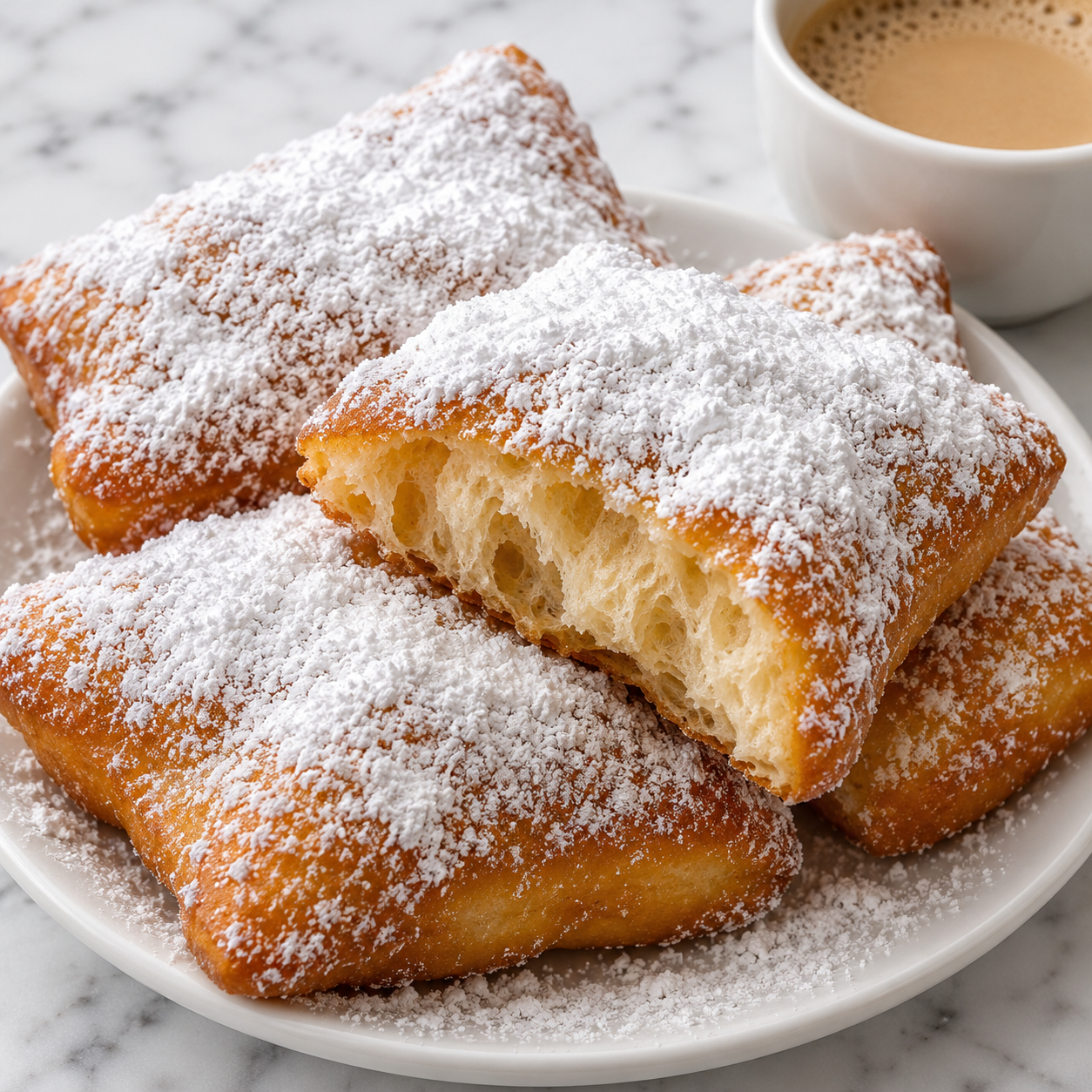
New Orleans Beignets - 1st Recipes Style are the kind of sweet that make the kitchen go quiet for a minute. They puff fast in hot oil, turn pale gold at the edges, and need much more powdered sugar than feels reasonable.
This version keeps the dough soft and manageable. Evaporated milk gives it a tender crumb, a little vanilla rounds out the flavor, and a short rest makes the squares easier to roll and fry.
New Orleans Beignets dough basics
Use fresh yeast, room-temperature egg, and evaporated milk for dough that fries up tender instead of bready. Measure the flour gently and stop adding it once the dough is soft, smooth, and just a little tacky.
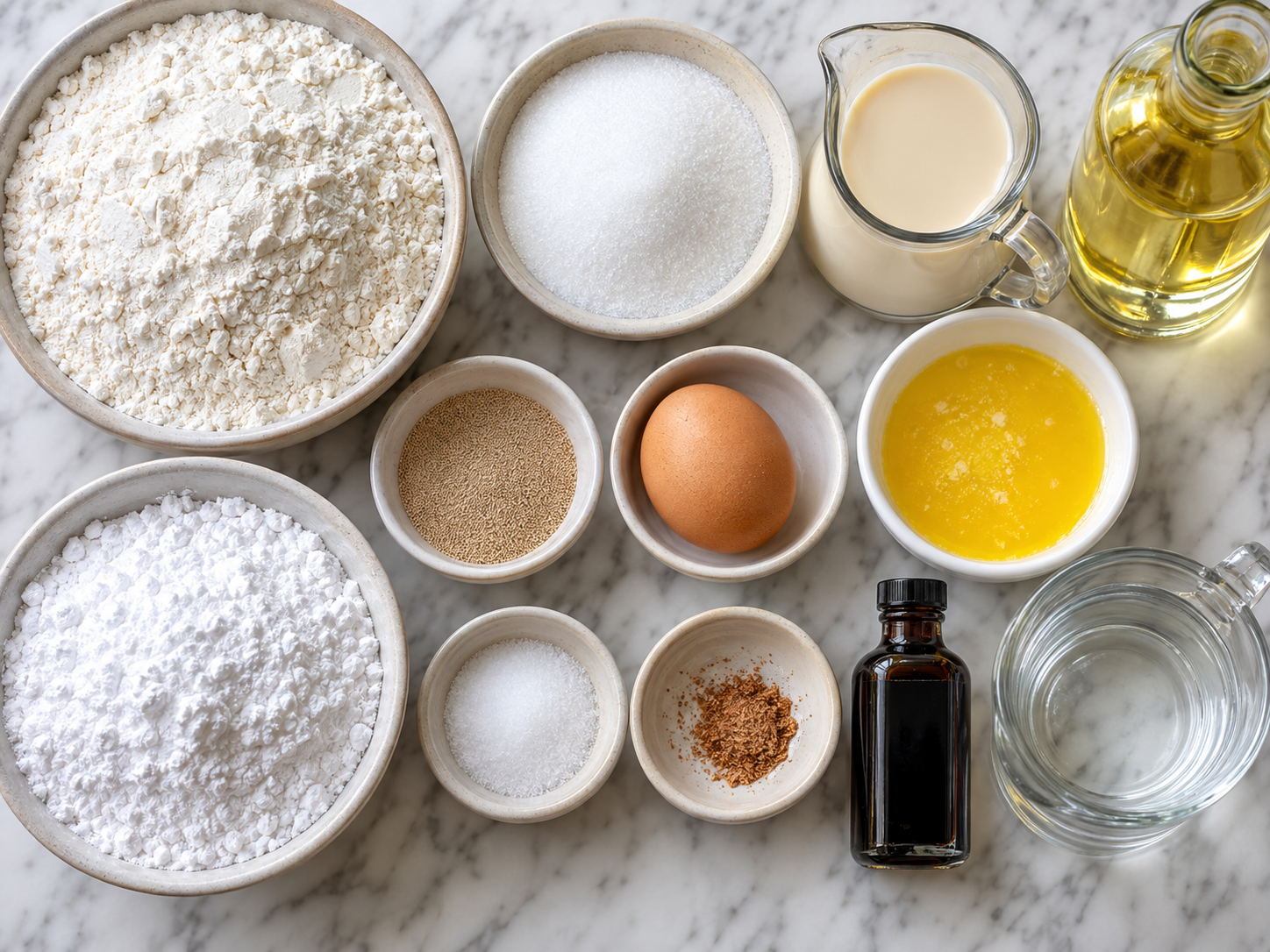
- All-purpose flour. Builds the structure without making the beignets tough.
- Instant yeast. Gives the dough its lift and airy middle.
- Evaporated milk. Adds richness and a soft, fine crumb.
- Granulated sugar. Lightly sweetens the dough and helps the yeast wake up.
- Egg. Adds tenderness and helps the dough fry into a golden shell.
- Melted butter. Brings a richer flavor than plain shortening.
- Vanilla and nutmeg. Add warmth without making the dough taste spiced.
- Neutral oil. Fries cleanly without covering the flavor of the dough.
- Powdered sugar. Melts slightly onto the hot beignets and gives them their classic finish.
Roll, cut, and fry
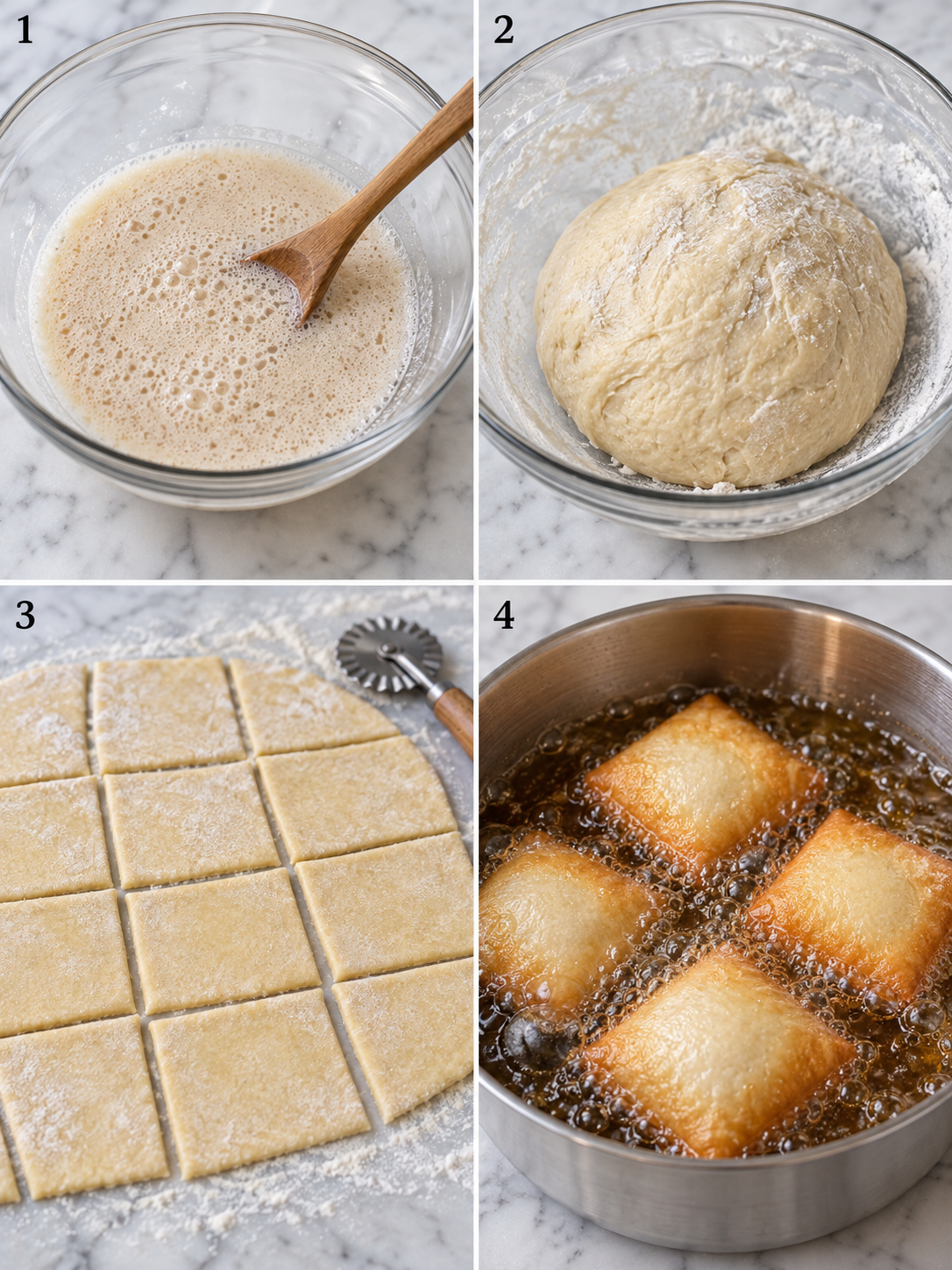
- Wake the yeast. Stir warm water, sugar, and yeast together, then wait until the top looks foamy and alive.
- Mix the dough. Add evaporated milk, egg, butter, vanilla, salt, nutmeg, and flour. Knead until the dough turns smooth and soft.
- Let it rise. Cover the bowl and let the dough puff for 1-1 1/2 hours. It should look lighter and springy.
- Cut the squares. Roll the dough to about 1/4 inch thick and cut it into small squares with a knife or pizza wheel.
- Fry in batches. Cook a few pieces at a time in 360 F oil until puffed and golden, about 1-2 minutes per side.
- Sugar while warm. Drain briefly, then coat the hot beignets heavily with powdered sugar before serving.
Why the dough rests
Beignet dough needs time to relax and rise because the airy middle comes from yeast, not baking powder. King Arthur Baking describes classic beignets as yeast-raised and heavily dusted with sugar, which is the texture goal here. The dough should feel soft after kneading and slightly elastic after resting. If it fights the rolling pin, leave it covered for another 10 minutes. That short pause makes neater squares and less shrinkage in the fryer.
Oil temperature decides the puff
Hot oil makes the outside set quickly while steam lifts the center. Aim for 360 F and adjust the burner as you fry. Too cool, and the beignets soak up oil before they puff. Too hot, and the outside browns before the middle has time to cook. Fry only four or five at a time so the temperature does not crash. The same careful frying mindset helps with treats like strawberry cheesecake eggroll bites and savory favorites like potato pancakes.
Powdered sugar is not optional
The dough itself is only lightly sweet. The real sweetness comes after frying, when the hot beignets get buried in powdered sugar. Dust once right after draining, then dust again at the table if you want the classic messy plate. A paper bag works well for coating, but a fine-mesh sieve gives you more control. For a sweet brunch spread, pair them with cinnamon apple cake or the gooey cinnamon roll bliss bars.
Make-ahead timing that works
You can chill the dough after the first rise for up to 24 hours. Keep it covered so the surface does not dry out. Cold dough is easier to roll and cut, which is useful if you want fresh beignets for breakfast without starting from scratch. Fried beignets do not keep their magic for long. FoodSafety.gov gives general cold storage guidance for cooked leftovers in its cold food storage chart, but beignets are a quality issue more than a long-storage dessert. Eat them warm if you can.
Serve them New Orleans style
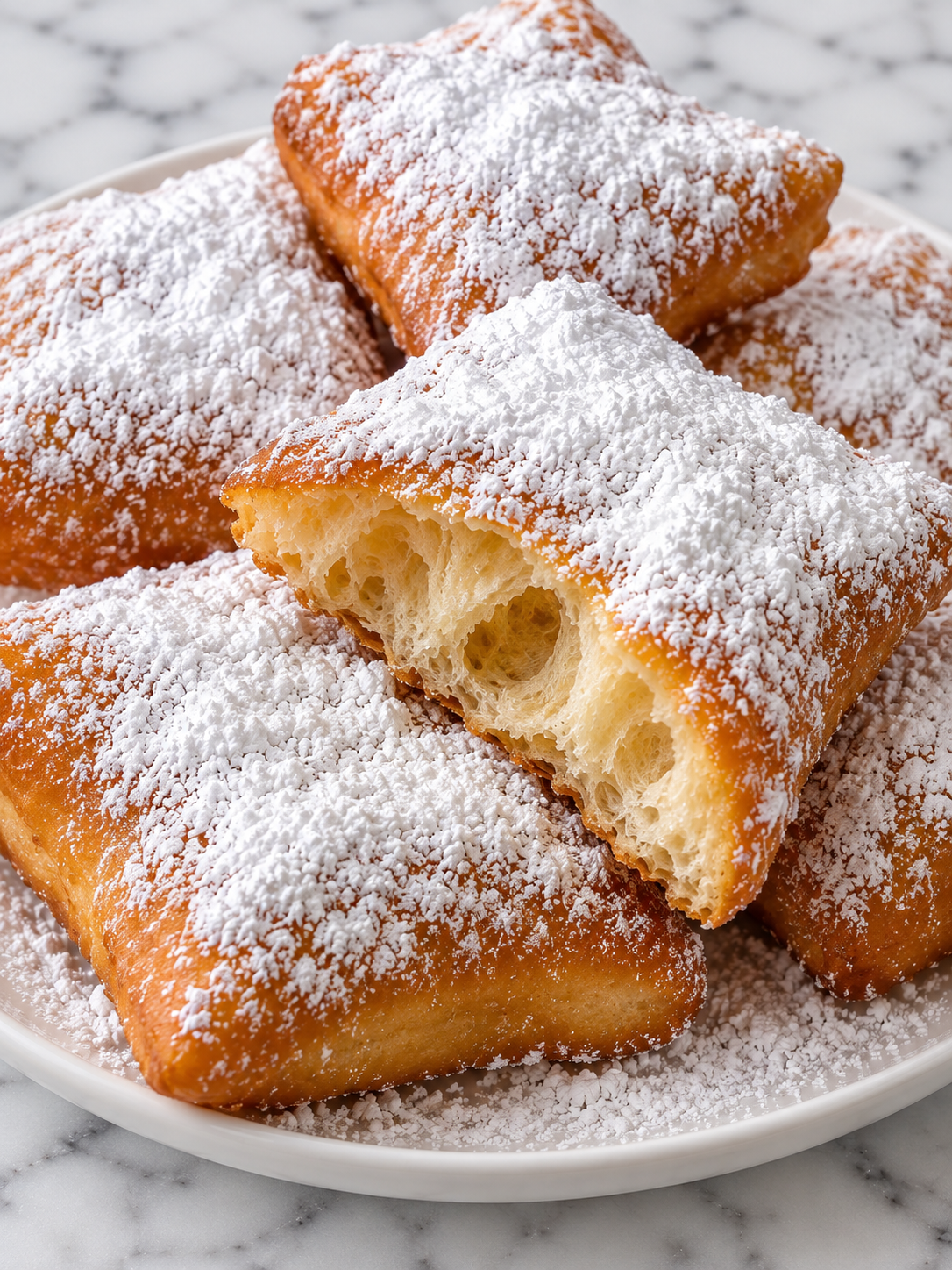
Serve beignets on a platter with extra powdered sugar and strong coffee. A cafe au lait is the classic move, but hot chocolate is a good call for kids. The dough is mild enough to take a little cinnamon sugar too, though I still like the snowy sugar finish best. The beignets should feel light when you pick them up and sound faintly crisp when you bite through the edge. Inside, they should be tender, warm, and almost hollow in spots.
Summary
Serve these beignets hot from the fryer with coffee, milk, or hot chocolate. They are best the day they are made, but the dough can be chilled ahead for easier morning frying.
Frequently Asked Questions
- Can I make beignet dough the night before?
-
Yes. Let the dough rise once, cover it tightly, and refrigerate it overnight. The cold dough rolls cleanly and usually fries with a slightly deeper flavor.
- Can I use regular milk instead of evaporated milk?
-
Yes, but the dough will taste a little less rich. Whole milk is the best swap because it keeps the crumb tender.
- Why did my beignets stay flat?
-
The yeast may have been weak, the dough may not have rested long enough, or the oil may have been too cool. Look for dough that feels puffy before rolling and keep the oil near 360 F.
- What oil is best for frying beignets?
-
Use a neutral oil with a high smoke point, such as canola, vegetable, or peanut oil. Avoid olive oil because its flavor is too strong here.
- How do I store leftover beignets?
-
Beignets are best warm and fresh. If you have leftovers, keep them loosely covered at room temperature for one day and refresh them briefly in a low oven before adding more sugar.
- Can I make these without a stand mixer?
-
Yes. Stir the dough with a sturdy spoon until shaggy, then knead by hand on a floured counter for 4-5 minutes. Stop when it feels smooth, soft, and a little tacky.
