
 Pin it
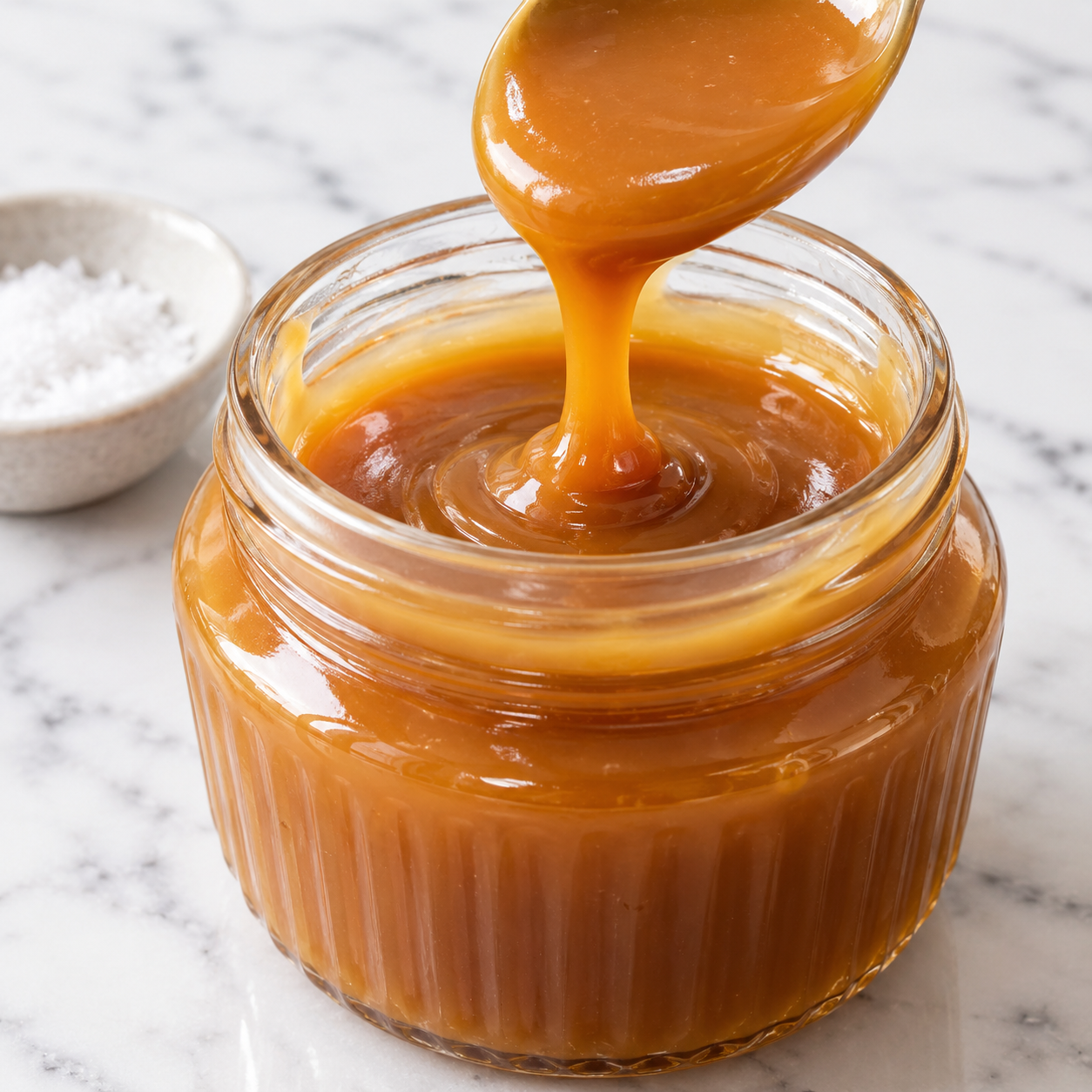
A jar of warm caramel changes dessert fast. This 6-Minute Caramel Recipe gives you a glossy sauce with real cooked-sugar flavor, not a shortcut that tastes like melted candy.
The timing is quick because the batch is small and the cream is ready before the sugar darkens. Use your eyes more than the clock. When the syrup turns amber and smells toasted, move right into the cream.
Small-Batch Caramel Lineup
Use plain granulated sugar and fresh heavy cream for the cleanest flavor. Measure everything before you heat the pan because caramel does not wait once it turns amber.
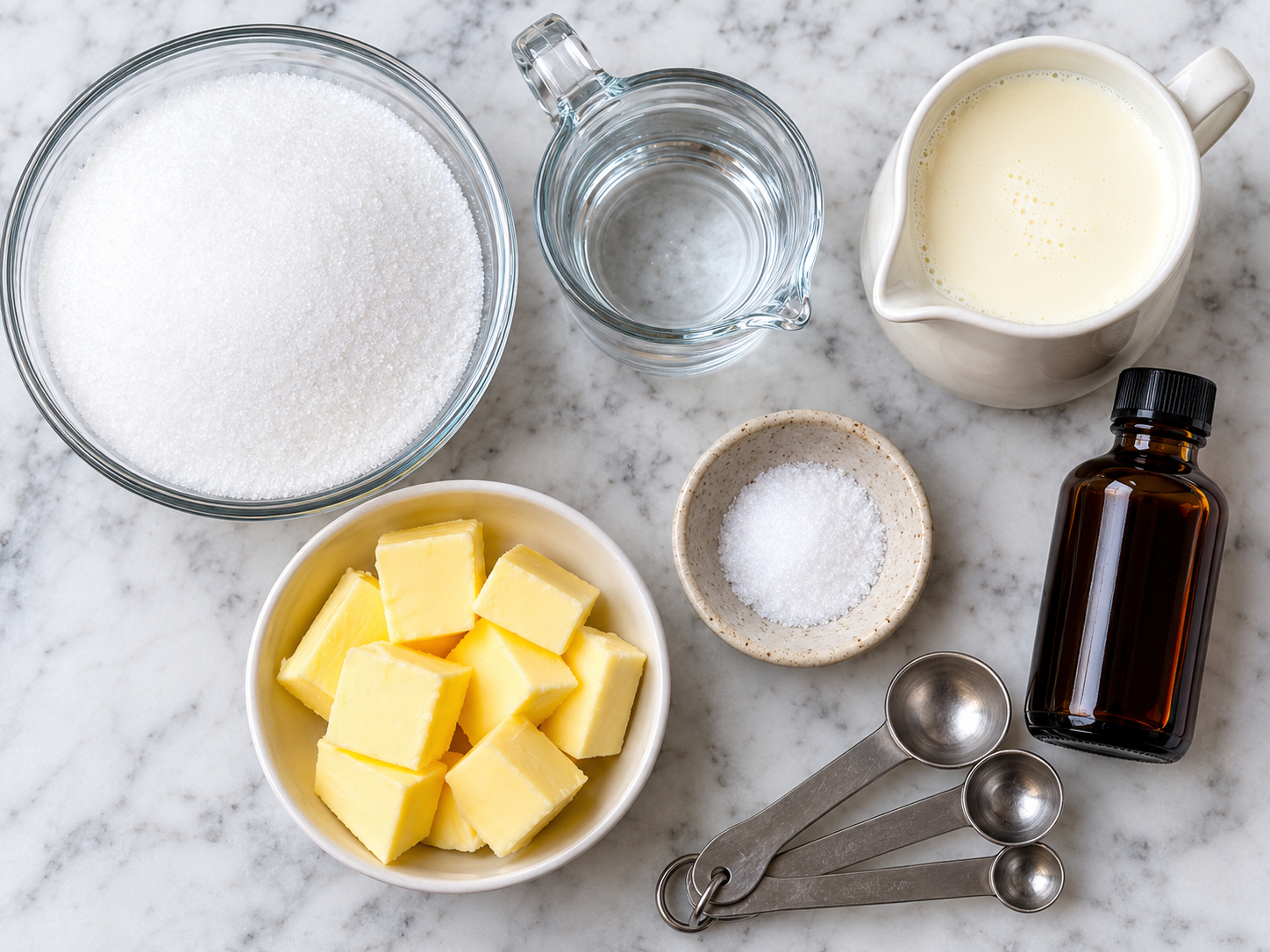
- Granulated sugar. Cooks into the amber base and gives the sauce its toasted sweetness.
- Water. Moistens the sugar so it melts evenly before it caramelizes.
- Heavy cream. Stops the cooking and turns the hot syrup into a pourable sauce.
- Unsalted butter. Adds body and a soft dairy richness.
- Vanilla extract. Rounds out the cooked sugar flavor after the heat is off.
- Fine salt. Keeps the sauce from tasting flat and balances the sweetness.
6-Minute Caramel Recipe Method
- Set up first. Warm the cream until it is no longer cold, cut the butter, and keep a whisk nearby.
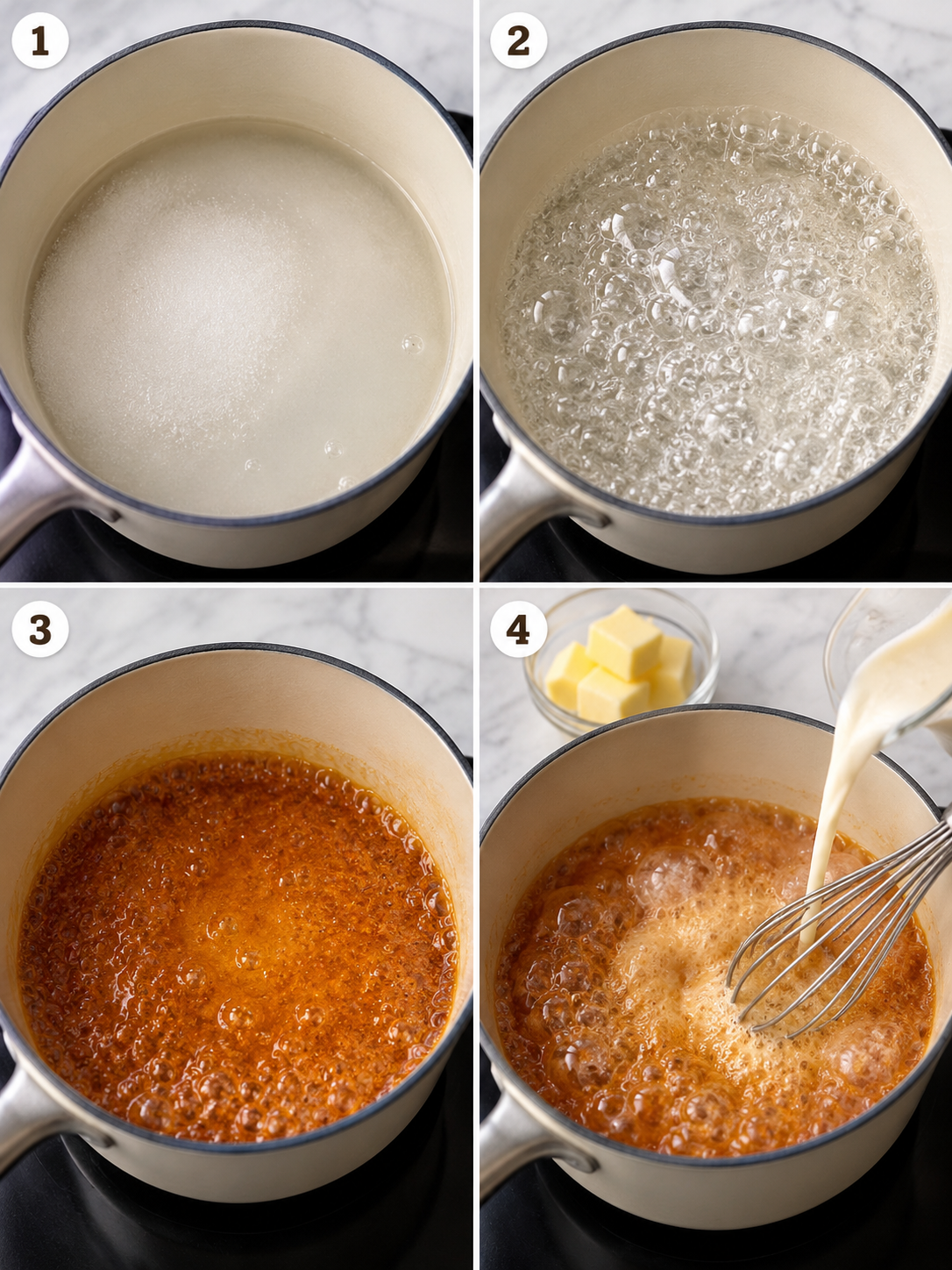
- Dissolve the sugar. Combine sugar and water in a deep light-colored saucepan. Heat over medium-high until the sugar melts into a clear syrup.
- Cook to amber. Stop stirring once it boils. Swirl the pan gently and cook until the syrup turns honey-amber, about 4-6 minutes after boiling.
- Add the cream. Remove the pan from the heat. Slowly whisk in the warm cream, standing back as it bubbles hard.
- Finish the sauce. Whisk in butter, vanilla, and salt until smooth. Let it cool for a few minutes before drizzling.
Read The Color
The clock is only a guide. A wide pan, a strong burner, and a dry kitchen can make caramel move faster. A narrow pan can take longer. Sugar starts to behave like caramel once it reaches high heat, and temperature guides such as ThermoWorks candy temperature guidance place caramelized sugar around the 320-350°F range.
For this sauce, aim for amber rather than dark brown. Pale caramel tastes mostly sweet. Deep brown can taste bitter in a small batch. I pull the pan when the syrup looks like strong honey and the bubbles are slower and shinier.
Cream Goes In Slowly
Caramel is much hotter than boiling water, so the cream will foam hard when it hits the pan. Warm cream helps soften the shock, but you still need a deep pot and a steady hand. Add it in a thin stream while whisking from a safe distance.
If the sauce clumps, do not panic. Put the pan back over low heat and whisk until the hardened bits melt back in. This same caramel is lovely over Salted Caramel Kentucky Butter Cake or spooned across Lunch Lady Brownies.
Fixes For Sauce Texture
Too thin right after cooking is normal. Caramel thickens as it cools. Give it 10 minutes before judging it. If it cools thicker than you like, warm it with 1-2 teaspoons of cream and stir until glossy again.
If it tastes too sweet, add another small pinch of salt. If it tastes bitter, the sugar cooked too far. There is no real fix for burnt caramel, so start again and pull the next batch earlier. For a dessert table, serve it beside Amazing New York Cheesecake or drizzle a little over Cinnamon Apple Cake.
Storage And Reheating
Let the caramel cool until warm, then pour it into a clean jar. Refrigerate it once cooled and use it within 2 weeks for best quality. The USDA advises refrigerating perishable foods promptly and keeping leftovers cold, which is useful guidance for cream-based sauces too. You can read more in the USDA leftovers guide.
To reheat, microwave in 10-second bursts and stir between each one. For a larger amount, warm it in a saucepan over low heat. Do not boil it again.
Ways To Use It
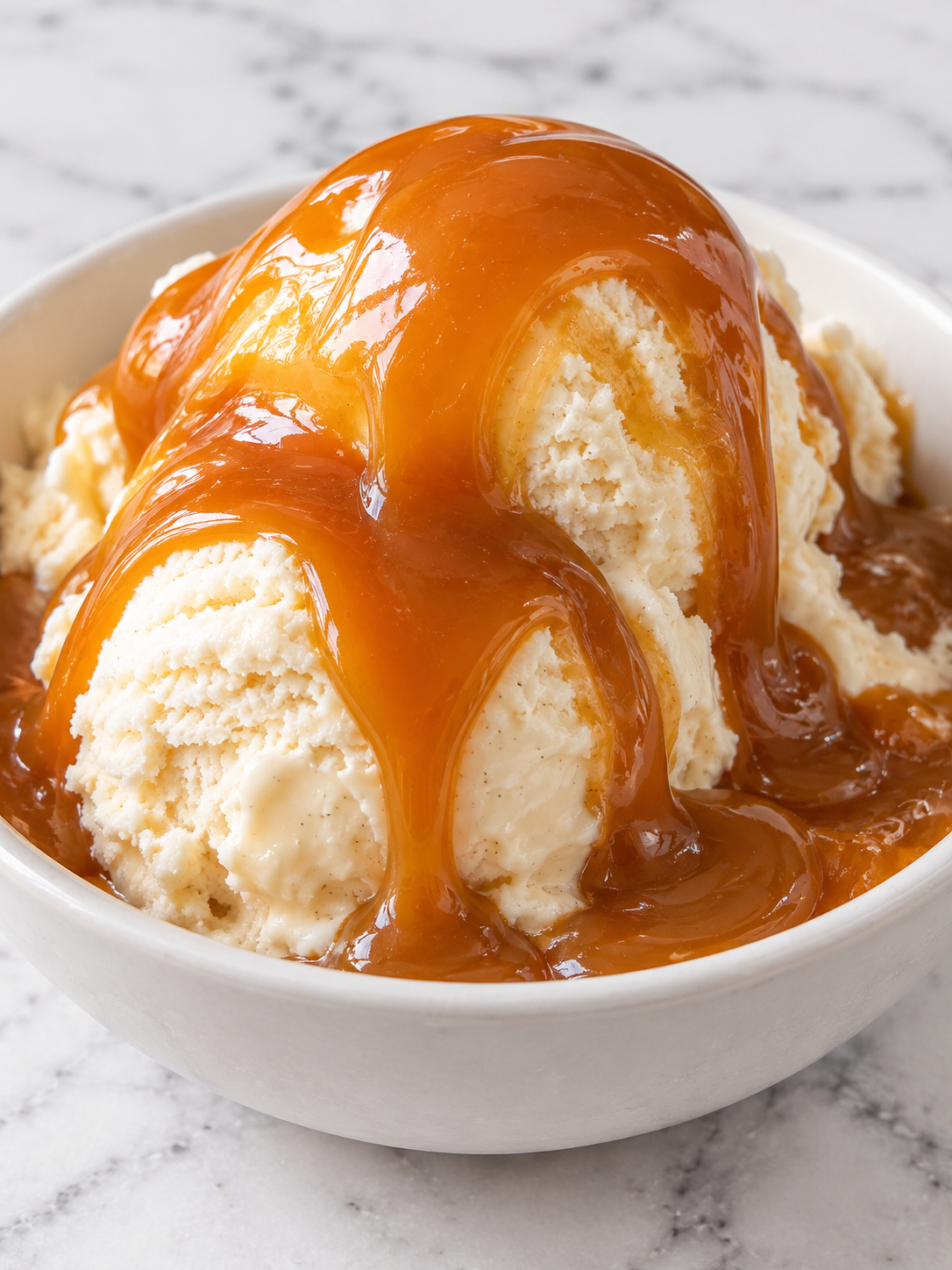
This sauce is thick enough for spooning and loose enough for drizzling while warm. Pour it over vanilla ice cream, pancakes, waffles, baked apples, bread pudding, or a simple slice of pound cake. It also turns a plain coffee into something that tastes like a small dessert.
For baking, let it cool until it moves slowly from a spoon. That texture is better for cake layers, cheesecake swirls, and bars. For a quick reference on another classic stovetop version, Martha Stewart's quick caramel sauce uses the same wet-caramel idea with cream added at the end.
Summary
Keep this caramel in the fridge for quick sundaes, cake slices, apple dipping, and coffee drinks. Warm it gently before serving so it turns pourable again.
Frequently Asked Questions
- Can I make this caramel without a candy thermometer?
-
Yes. This recipe is written around color and smell, not a thermometer. Pull the pan when the syrup is amber, glossy, and smells toasted, then add the cream right away.
- Why did my caramel turn grainy?
-
Grainy caramel usually comes from sugar crystals on the pan sides or stirring after the syrup starts boiling. Brush the sides with a wet pastry brush and swirl the pan gently instead of stirring.
- Can I use milk instead of heavy cream?
-
Heavy cream gives the smoothest sauce because it has more fat. Whole milk can make a thinner caramel and may splatter more. If you try it, warm the milk first and expect a lighter sauce.
- How long does homemade caramel sauce keep?
-
Store it in a clean airtight jar in the refrigerator for up to 2 weeks. Reheat only what you need, either in short microwave bursts or in a small saucepan over low heat.
- Can I make it salted caramel?
-
Yes. Increase the salt to 1/2 teaspoon, then taste a cooled spoonful before adding more. Flaky salt on top is nice when serving it over brownies or cheesecake.
- What should I serve with quick caramel sauce?
-
It is great over ice cream, apple slices, pound cake, brownies, pancakes, and cheesecake. It also works as a drizzle for cinnamon desserts and warm coffee drinks.
