
 Pin it
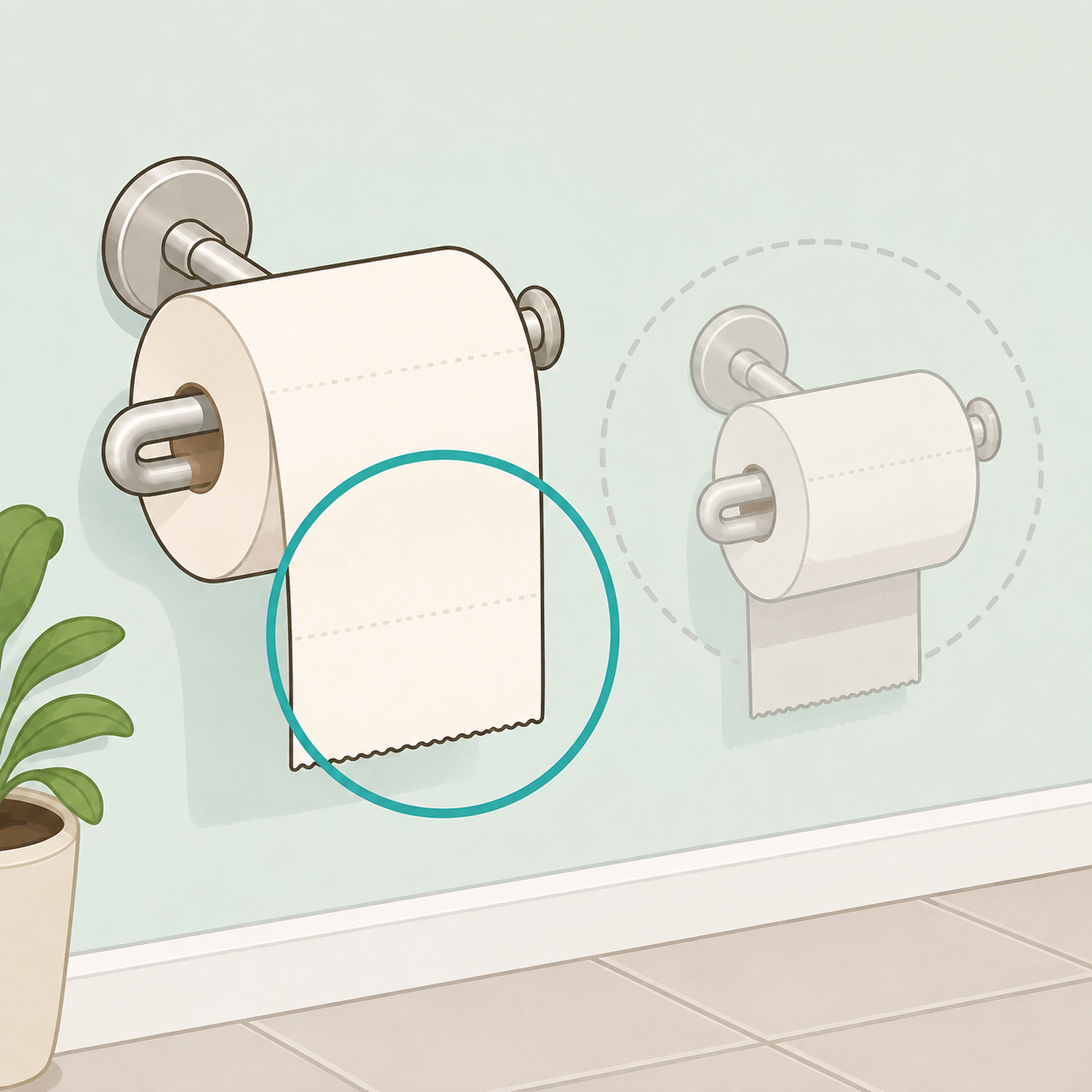
The over-or-under toilet paper debate has a simple practical answer: over is usually the better choice. It makes the loose end easier to find, easier to tear, and less likely to brush the wall. Still, there are a few situations where under makes sense, especially if pets or young children keep unrolling the roll.
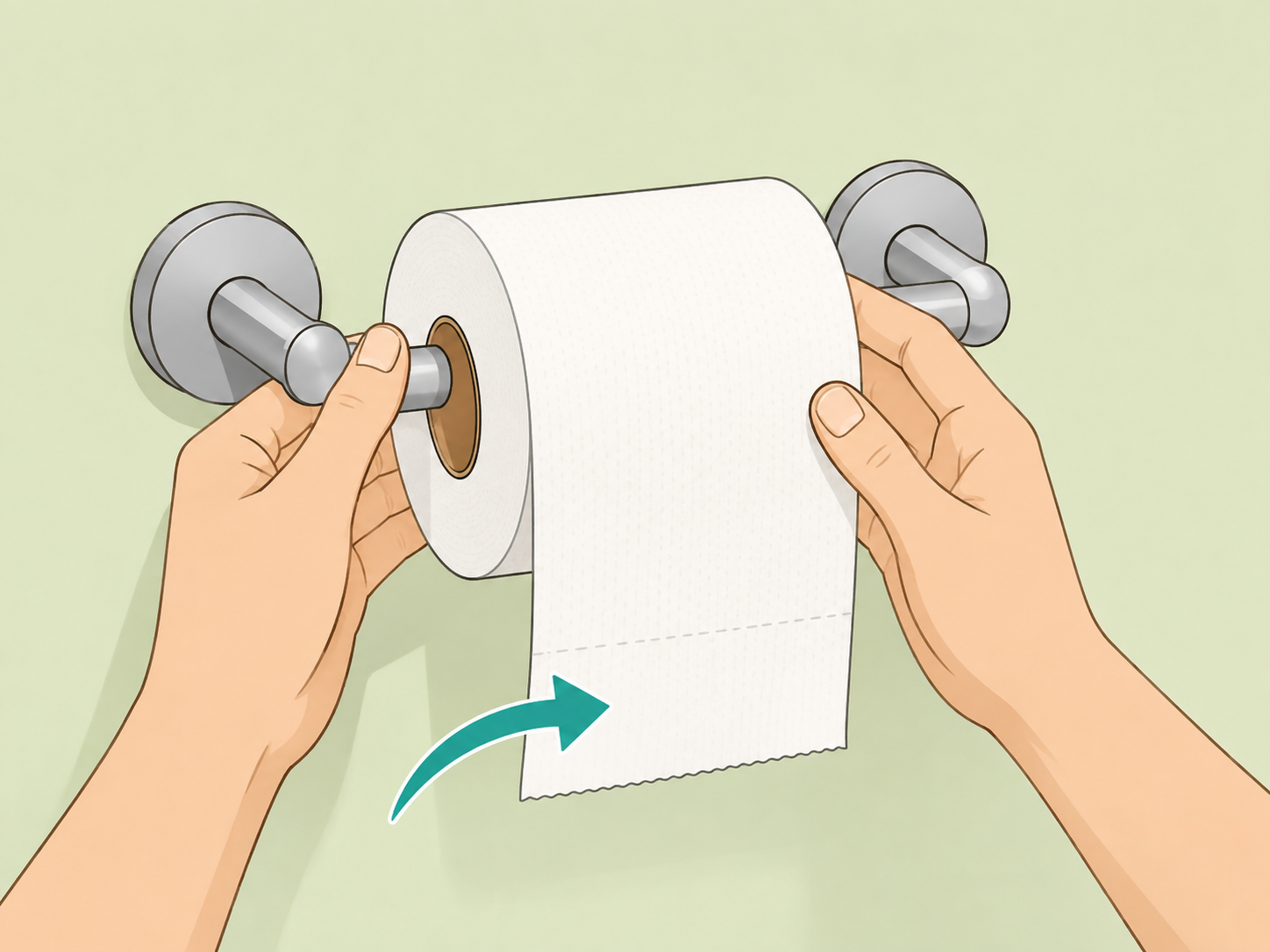
Hang the roll over for most bathrooms
Place the roll so the loose end comes over the top and hangs in front. This is the easiest setup for most people because the edge is visible, simple to grab, and less likely to drag against the wall. The famous 1891 toilet-paper roll patent also shows a sheet hanging over, although it was not written as a household rule.
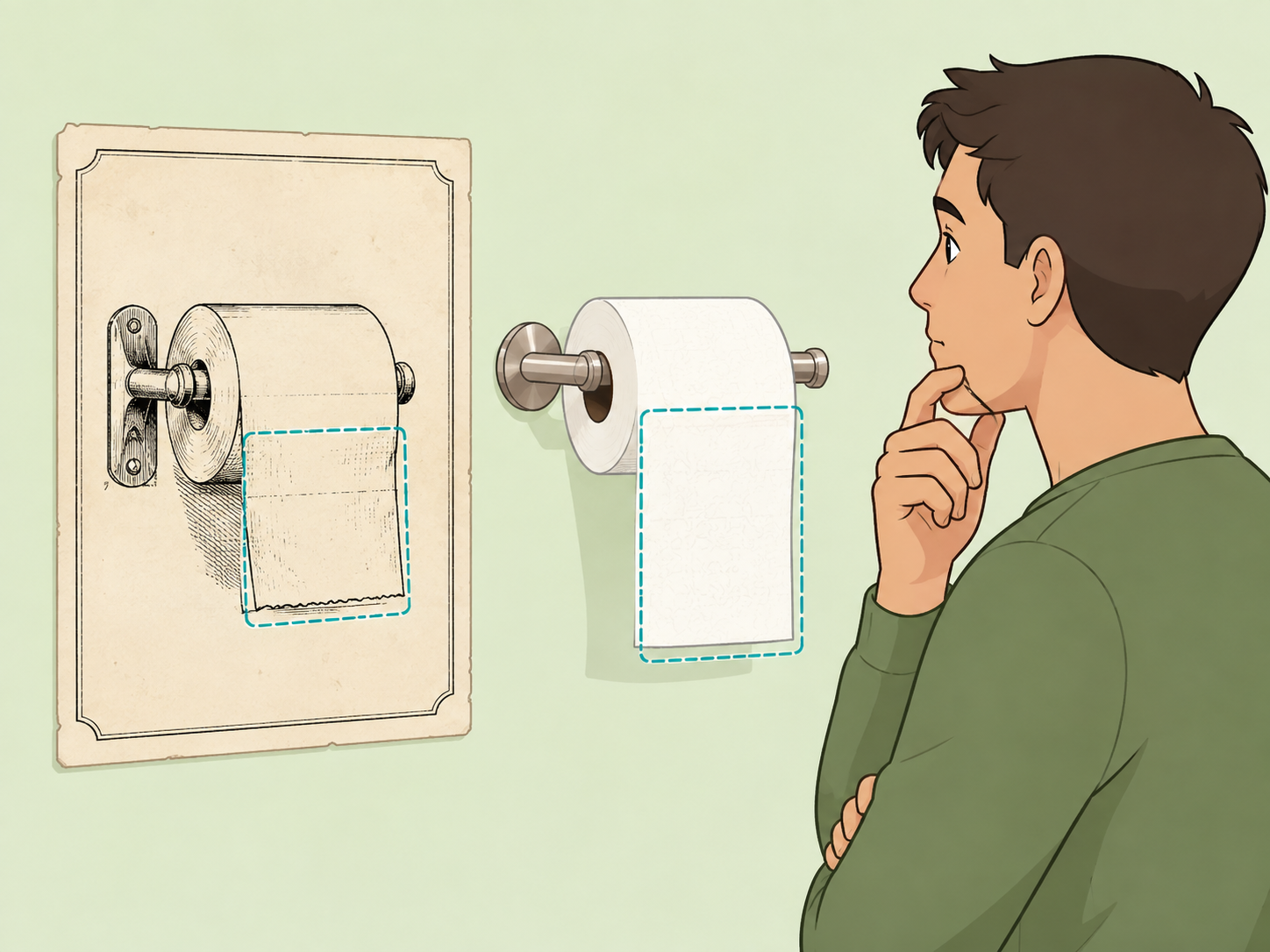
Treat the patent as context, not a command
The patent is useful history, but the real answer comes down to daily use. Seth Wheeler's patent focused on connected sheets and easier tearing, not bathroom etiquette or hygiene. So use the patent as a clue, then choose the setup that makes the roll easiest and cleanest to use.
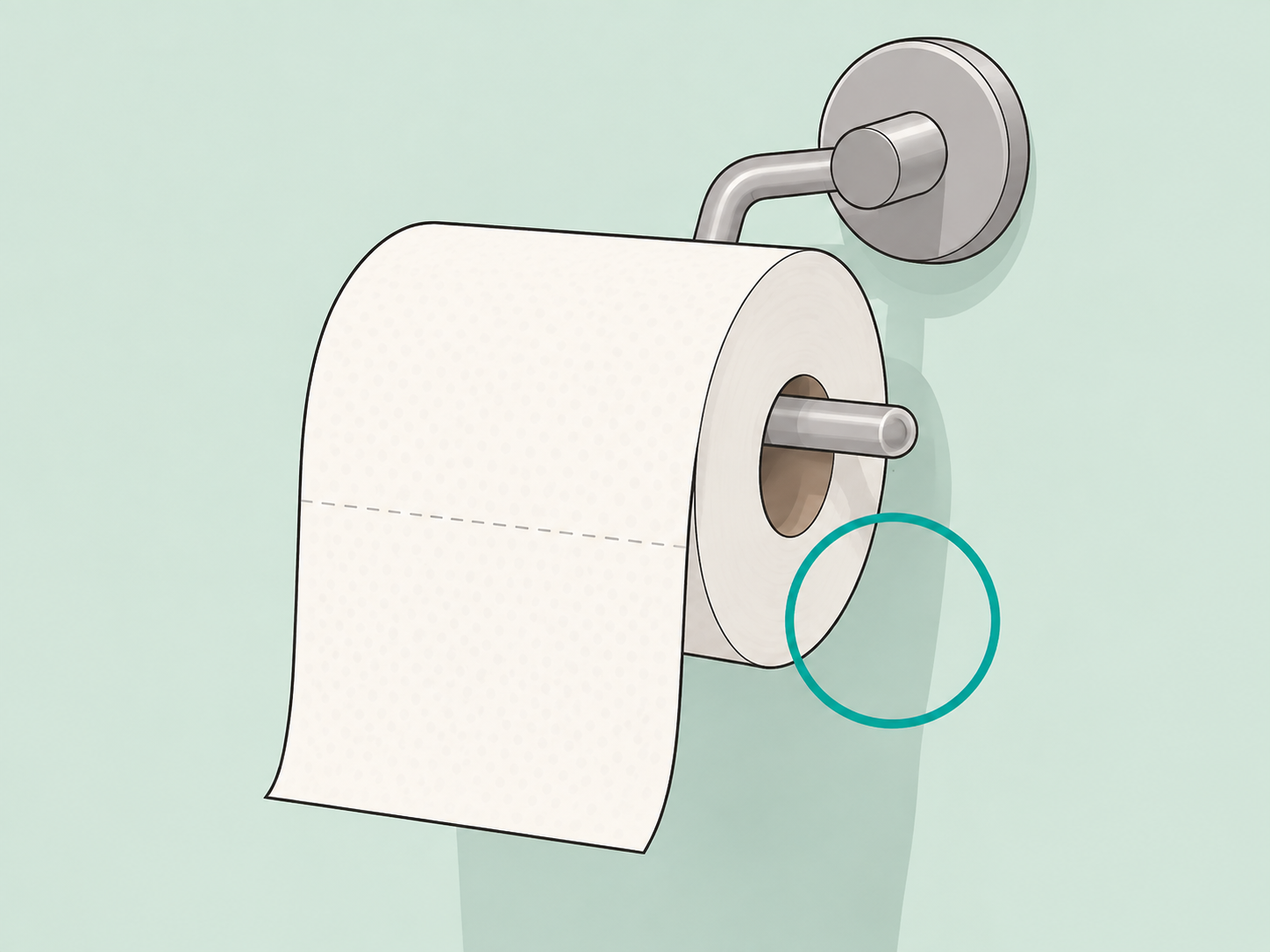
Keep the loose end away from the wall
After you place the roll over, check that the loose end hangs freely instead of brushing paint, tile, or the holder bracket. Public restroom research has found different microbial communities on common restroom surfaces, including handles and toilet-area surfaces, so it is sensible to reduce unnecessary contact with surrounding surfaces when you can in bathroom spaces.
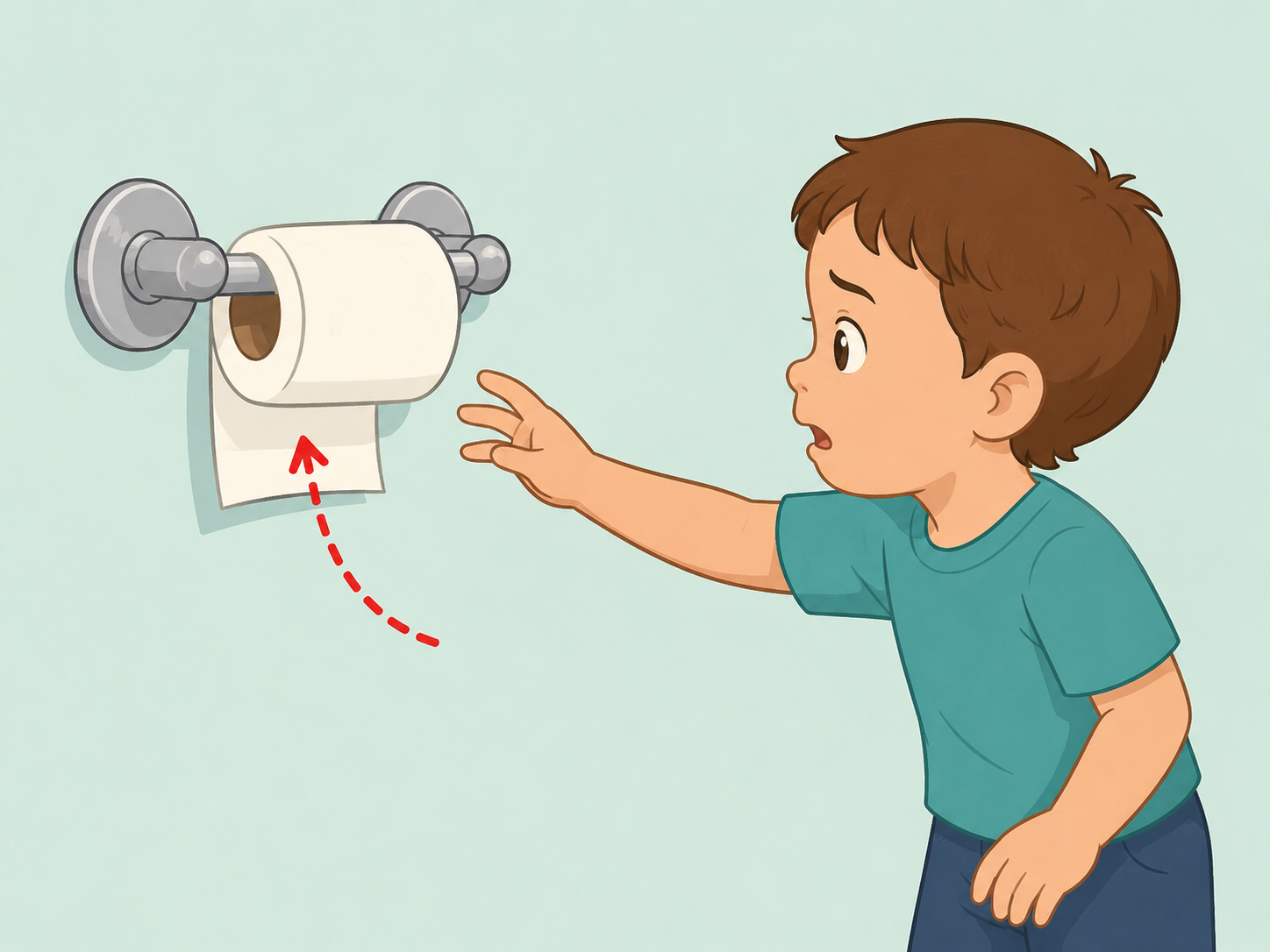
Use under when pets or toddlers unroll it
If a cat, dog, or small child keeps batting the roll downward, flip it so the loose end hangs behind the roll. The under position can make it harder to spin the paper loose in one swipe. This is the main practical exception to the over rule.
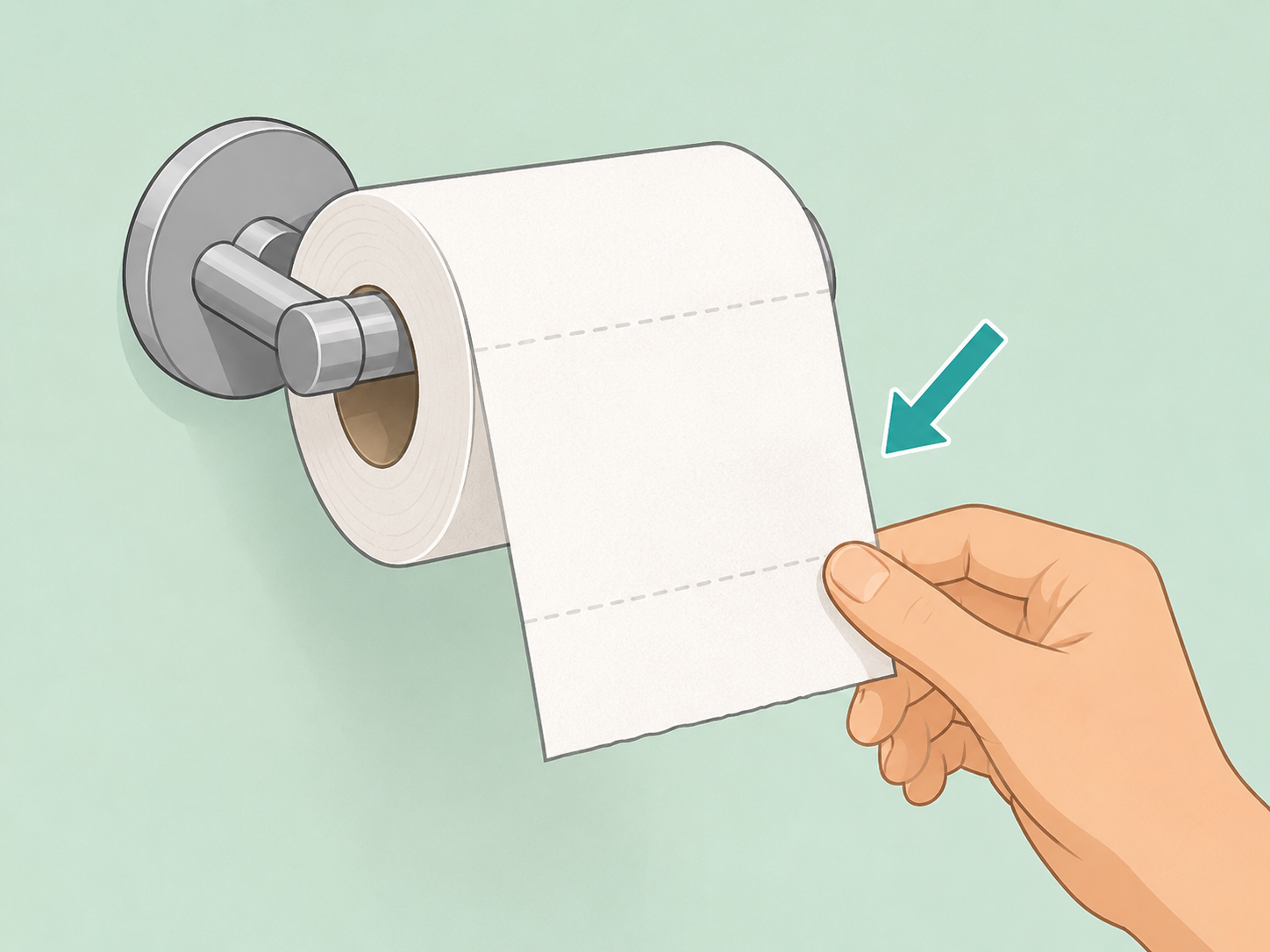
Make the end easy to see and tear
Leave one or two squares hanging below the roll so the next person does not have to search around the tube. If the roll is squeezed tightly in the holder, adjust the spindle or holder arms so it spins smoothly. A roll that turns freely is easier to tear with one hand and less likely to shred.
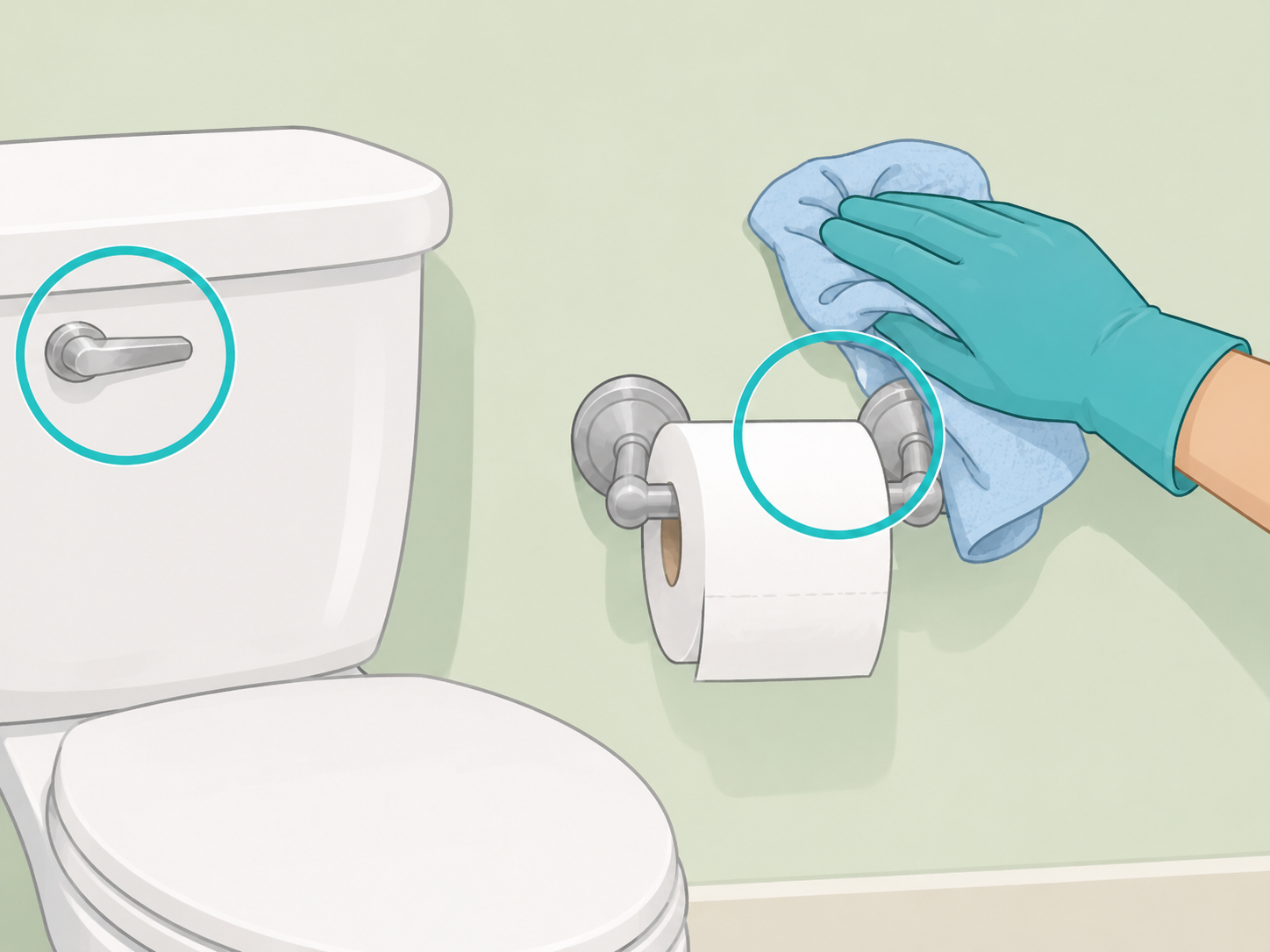
Clean the holder and nearby surfaces regularly
Wipe the toilet paper holder, flush handle, faucet handles, and nearby wall area during normal bathroom cleaning. The CDC says regular cleaning of home surfaces helps remove germs, dirt, and other impurities, and high-touch surfaces should be cleaned regularly and when visibly dirty.
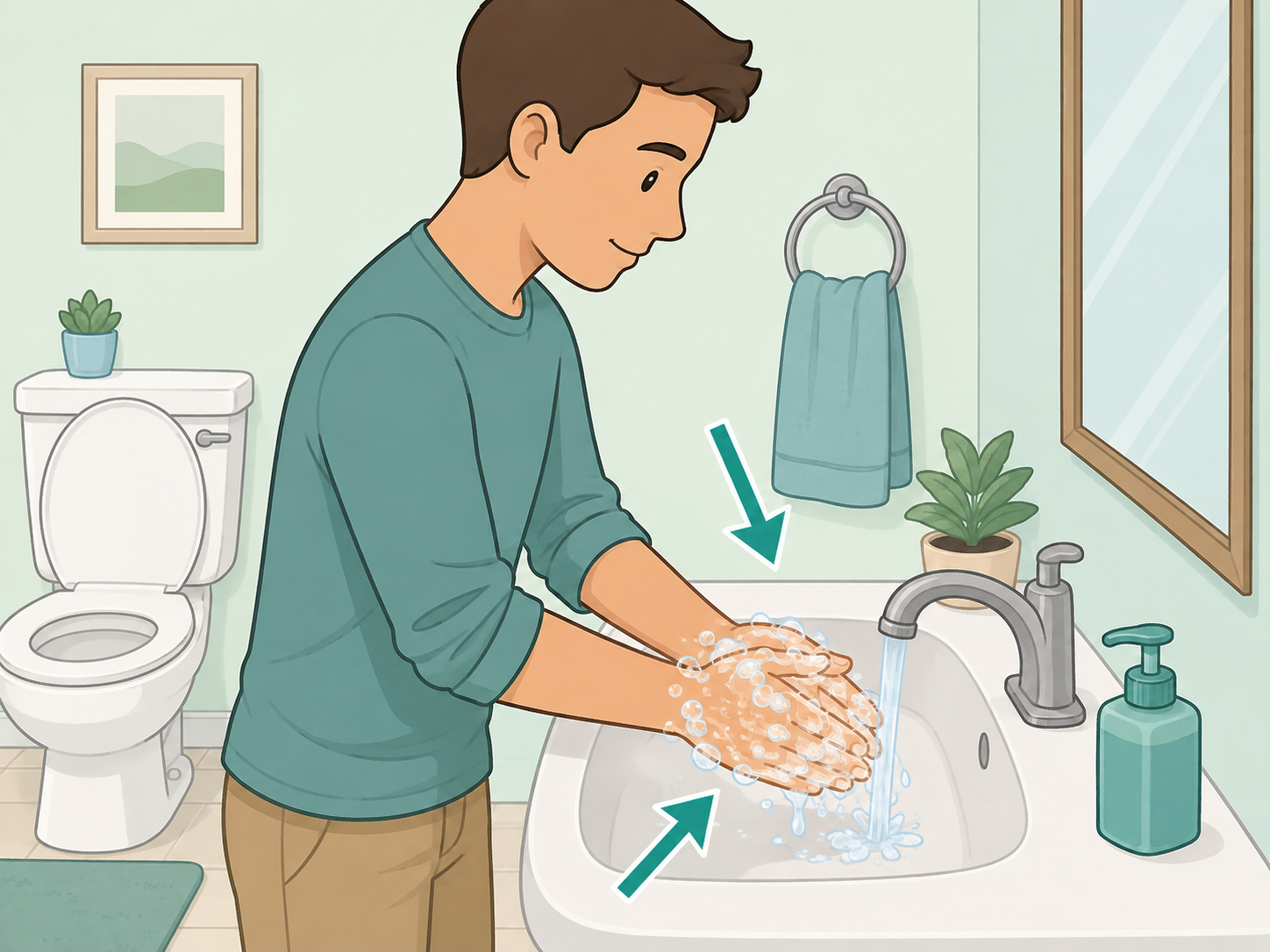
Wash your hands after using the toilet
The direction of the roll matters less than hand hygiene. The CDC recommends washing your hands every time after using the toilet, and notes that scrubbing with soap and water for 20 seconds helps remove germs and chemicals from your hands after bathroom use.
Switch paper or seek help if wiping irritates your skin
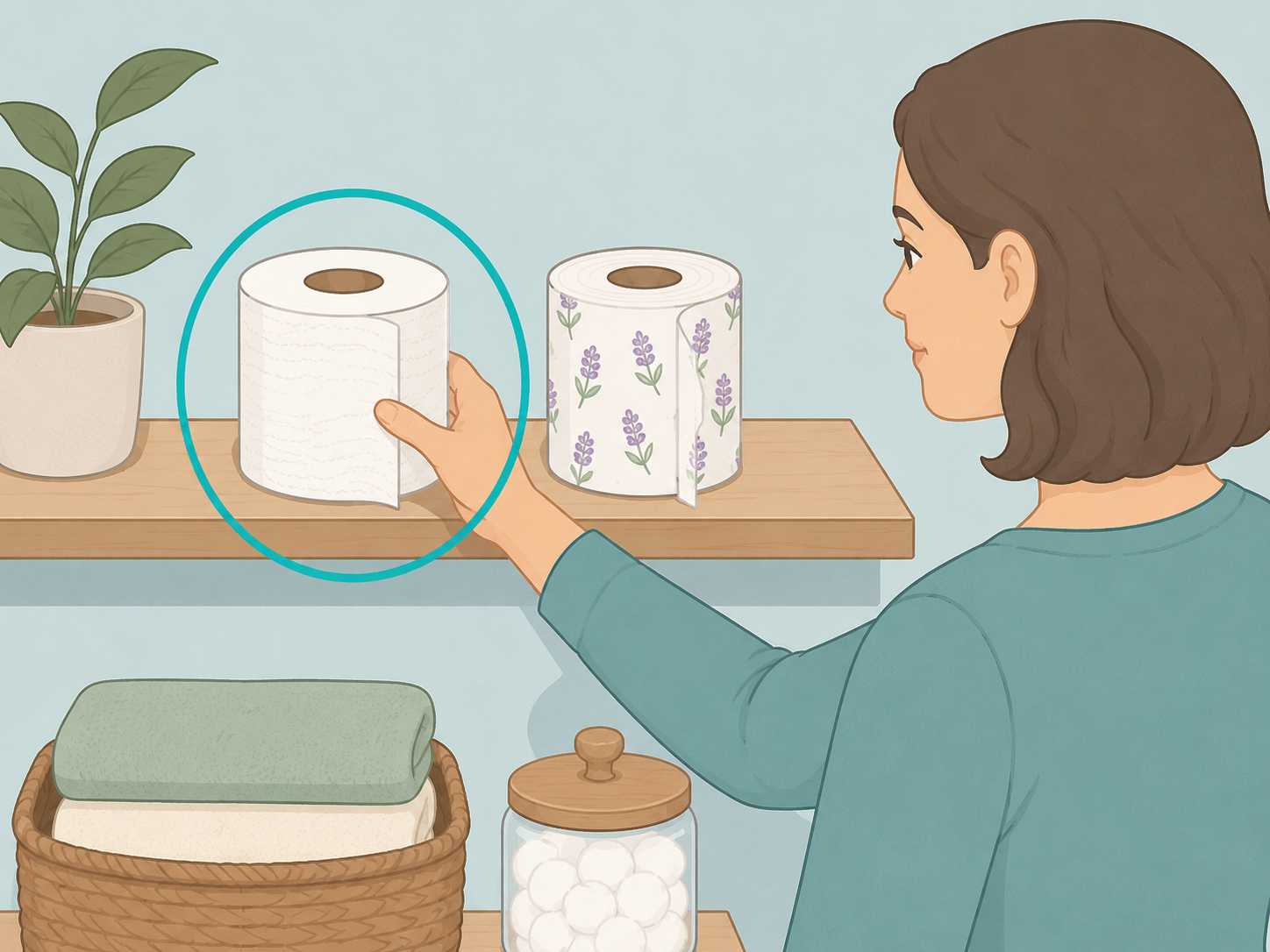
If toilet paper feels scratchy or leaves irritation, try a softer unscented option and wipe gently rather than scrubbing. MedlinePlus notes that scents or dyes in toilet paper or soap can irritate the anal area, and advises contacting a health care provider for symptoms such as rash, lump, bleeding, discharge, fever, or irritation that does not improve with self-care within a few weeks.
Summary
The bottom line: hang toilet paper over the roll in most bathrooms, keep the loose end away from the wall, and clean the holder regularly. If pets or toddlers keep pulling the paper down, switching to under is a practical exception.
Frequently Asked Questions
- Is over really the correct way to hang toilet paper?
For most bathrooms, yes. Over makes the loose end easier to see and grab, and it helps keep the paper from resting against the wall. It is a practical rule, not a law.
- Does the original toilet paper patent prove the over method?
The well-known 1891 Seth Wheeler patent drawing shows a sheet hanging over the roll, but the patent is about the roll and its tear-off sheets, not a formal rule for bathroom setup.
- When should I hang toilet paper under instead?
Use under if a pet or small child keeps pulling the roll downward and unspooling it. Under can make accidental unraveling less likely, even though it is less convenient for most adults.
- Is one direction more hygienic?
Over can help because the loose end is easier to grab without reaching around the roll or brushing the wall. The bigger hygiene habits are washing your hands after using the toilet and cleaning high-touch bathroom surfaces.
- Should the loose end touch the wall?
No. If the paper rubs the wall, flip the roll over, adjust the holder, or use a stand that keeps the paper clear. The goal is a loose end that hangs forward and stays easy to reach.
- What if toilet paper irritates my skin?
Try a softer, unscented, dye-free paper and wipe gently. If itching, bleeding, pain, discharge, or irritation continues, contact a qualified health professional.
References
Reliable references aided in composing and refining this content.
- https://patents.google.com/patent/US465588A/en
- https://journals.plos.org/plosone/article?id=10.1371/journal.pone.0028132
- https://www.cdc.gov/hygiene/about/when-and-how-to-clean-and-disinfect-your-home.html
- https://www.cdc.gov/clean-hands/faq/index.html
- https://medlineplus.gov/ency/patientinstructions/000689.htm