
 Pin it
A tall or skinny pole on a pickup truck can look strange if you do not know what it is for. In most cases, it is not decorative or mysterious; it is a practical add-on for communication, off-road visibility, parking, or work use. This guide shows you how to identify the common types by location, shape, and clues around the truck.
Start by checking where the pole is mounted
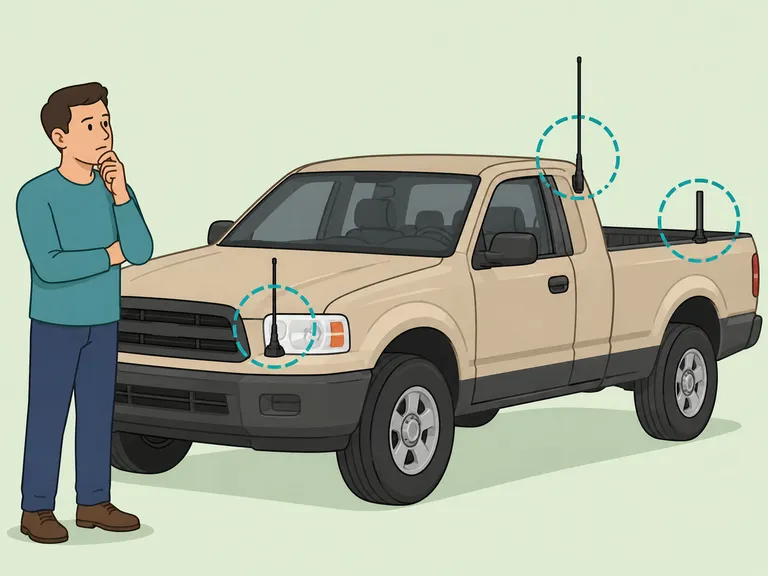
Look at the pole before guessing what it is. A pole at the front corner often points to a parking guide, a pole behind the cab often points to an antenna, and a pole with a bright flag usually points to off-road visibility. Ford describes a bumper guide marker as a rod placed at a vehicle corner so the driver can know where that corner is, which is one reason a short front pole may look like an odd antenna when it is really a guide vehicle corner marker.
Look for signs of a radio antenna
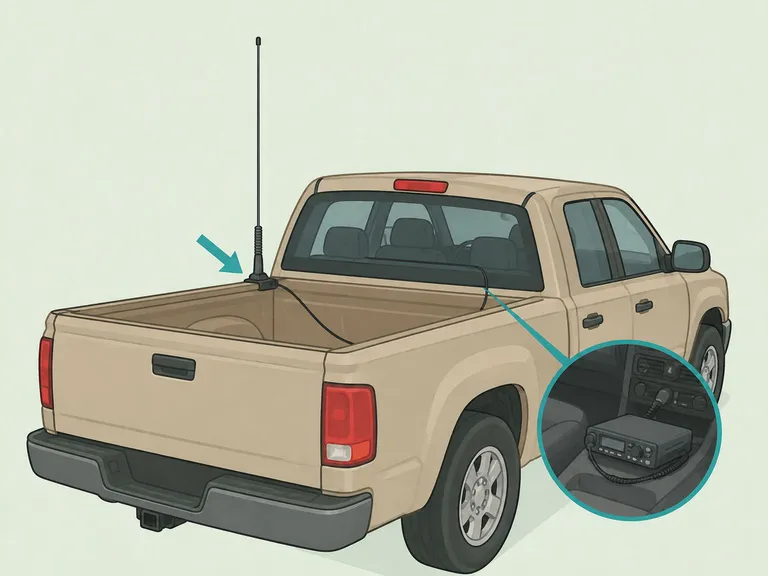
A long flexible whip, fiberglass rod, or metal antenna with a coax cable usually means the truck has a two-way radio setup. Pickup owners may use CB or other radio services for local communication on highways, farms, work sites, or trails. CB radio in the United States is governed under Part 95 CB Radio Service rules, so a tall pole may be part of a regulated radio system rather than a decoration.
Check for a cell signal booster setup
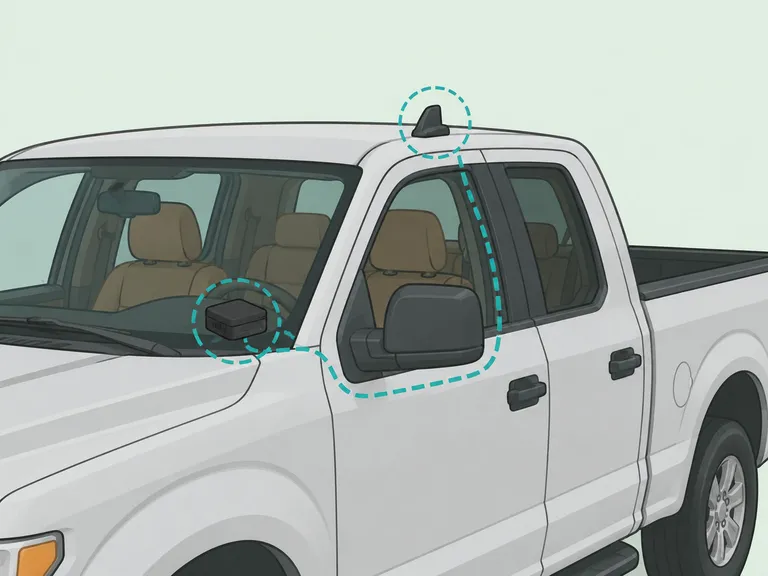
If the pole is a clean, modern antenna connected to a small box inside the cab, it may be part of a mobile cell signal booster. These systems use an outside antenna, a booster, and an inside antenna to improve cellular reception where service is weak. Consumer signal boosters have FCC-related operating requirements, including use with approved antennas and registration through the carrier under federal signal booster rules.
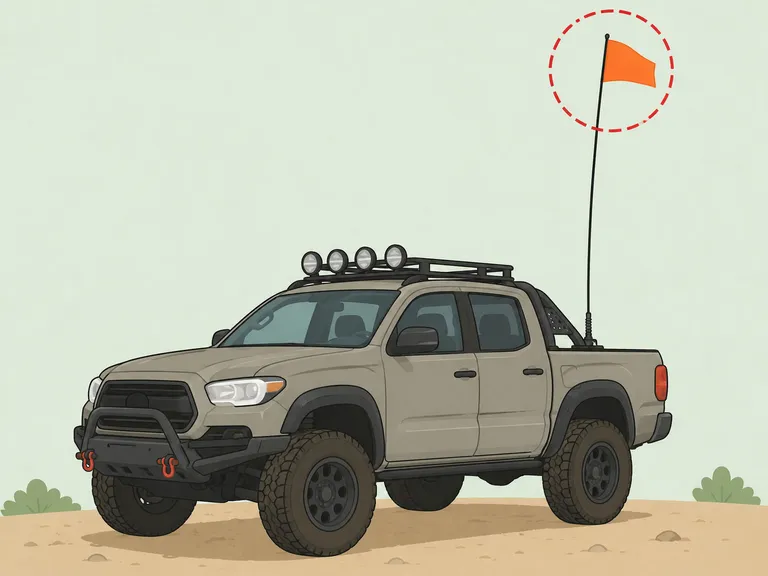
Recognize an off-road whip flag
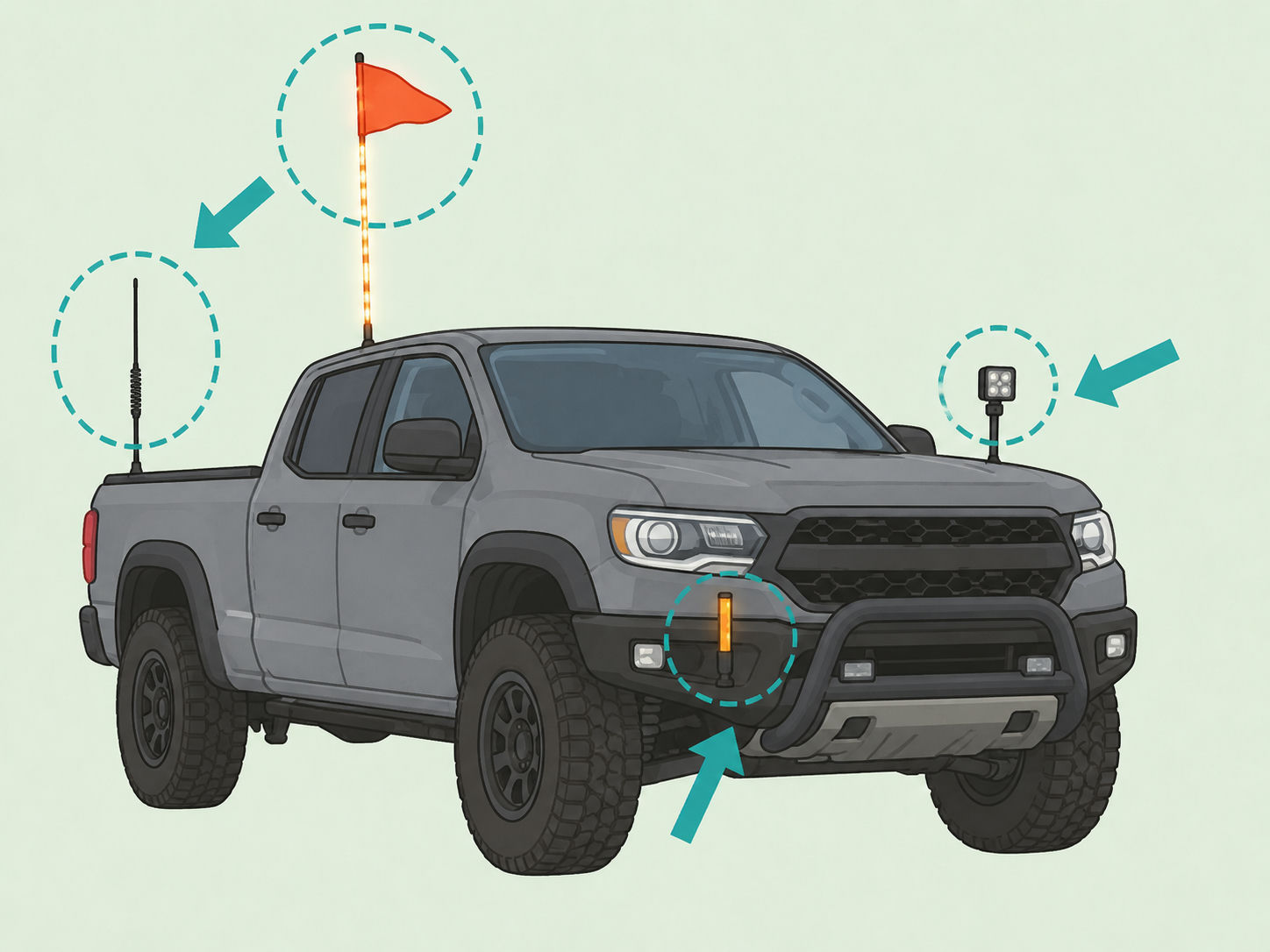
A tall flexible pole with a red, orange, or bright flag near the top is usually an off-road safety flag. In dune areas, these flags help drivers see vehicles over crests and through dusty or uneven terrain. The Bureau of Land Management requires safety flags on all vehicles at the Imperial Sand Dunes Recreation Area, with a whip mast and red or orange flag meeting its posted dimensions for dune visibility.
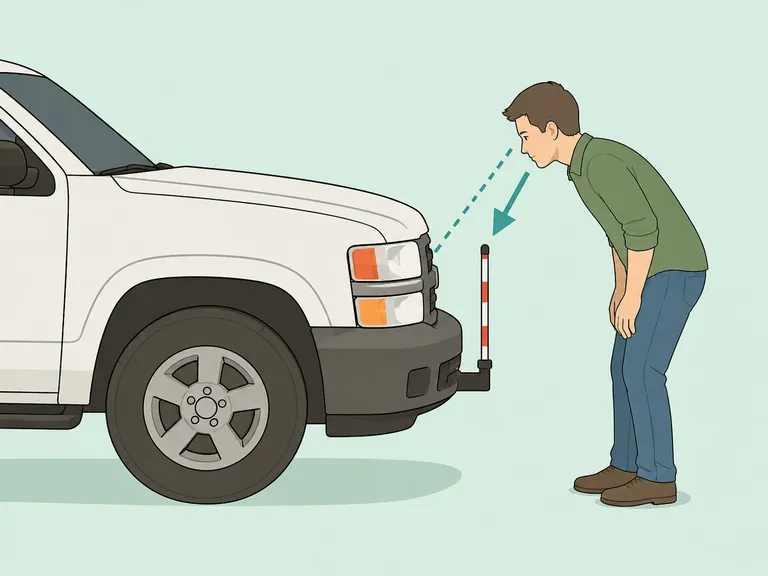
Identify a front-corner parking guide
A short pole at the front bumper or fender corner may be a parking guide, sometimes called a corner pole or bumper guide marker. Its purpose is to give the driver a visible reference for the far corner of the truck when parking, pulling close to a wall, or judging a tight turn. This is especially useful on vehicles with high hoods or hard-to-see front corners, and it matches the purpose described for an illuminated bumper guide marker.
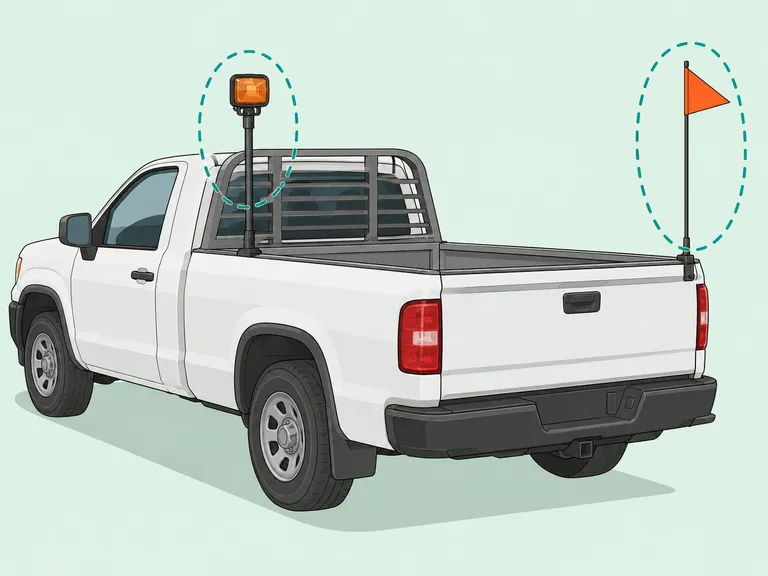
Notice lights, flags, or work-site attachments
Some poles support amber lights, small flags, reflectors, or job-site equipment instead of radio hardware. Treat these as safety accessories, especially on utility trucks, pilot vehicles, farm trucks, and construction pickups. NHTSA guidance explains that added lighting or equipment should not impair required vehicle lighting, so unusual lighted poles should be installed with vehicle lighting effectiveness in mind.
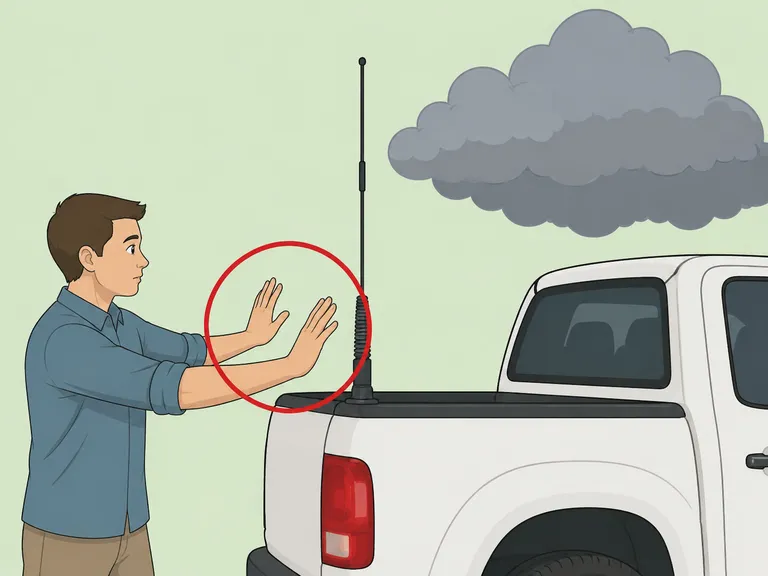
Avoid touching or pulling the pole
Do not tug on a truck pole just to see what it does. It may be wired into a radio, booster, light, or retractable marker, and pulling it can damage the mount or weather seal. During lightning, NOAA advises staying in an enclosed metal-topped vehicle with windows up and avoiding contact with conducting paths such as radios and CB equipment inside the vehicle.
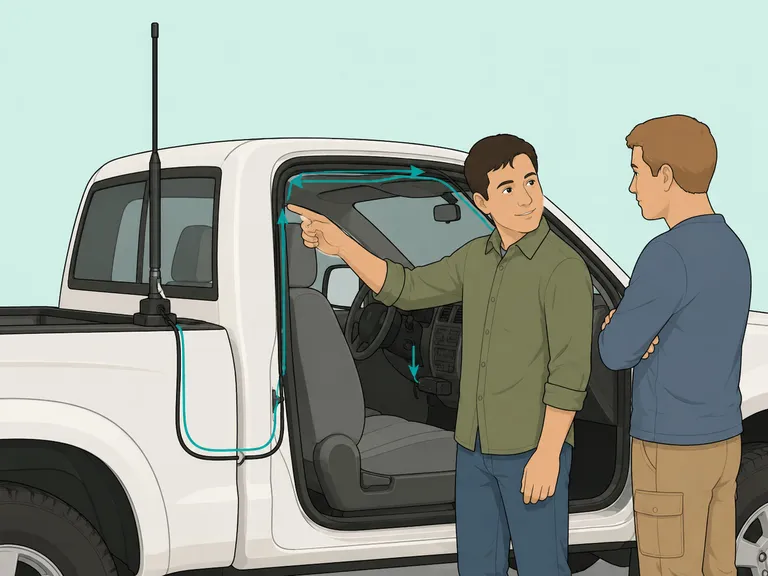
Ask the owner or inspect the cable path
If you still cannot tell, follow the clues calmly. A cable into the cab suggests radio or cellular equipment, a flag suggests off-road visibility, a light suggests work or safety use, and a front-corner position suggests a parking guide. When the truck is not yours, ask the owner instead of handling the pole, because the same shape can serve different purposes on different trucks.
Summary
The bottom line: a pole on a pickup is usually there to make the truck communicate better, show up better, or help the driver judge space. Look at where it is mounted, whether it has a flag, cable, light, or bumper-corner placement, and you can usually tell its purpose quickly.
Frequently Asked Questions
- Is the strange pole on a pickup truck usually an antenna?
- Often, yes. A flexible pole mounted on the roof, bed rail, toolbox, bumper, or behind the cab is commonly a radio antenna or a cellular booster antenna, especially if you can see a cable running from the mount.
- Why are some pickup truck poles so tall?
- Height helps some antennas clear the cab and helps safety flags stay visible over dunes, brush, or other vehicles. A tall pole can also make a truck easier to see in off-road areas with limited sightlines.
- What is a whip flag on a truck?
- A whip flag is a flexible pole with a bright flag near the top. It is used in some off-road and dune areas so other drivers can see a vehicle before it comes over a ridge or out of a low spot.
- Can a pole on a pickup truck be removed?
- Usually, but it depends on what the pole does. Removing an antenna, booster, light, or guide marker may leave holes, wiring, or exposed fittings, so identify the part and disconnect it properly before taking it off.
- Does a truck antenna make lightning more dangerous?
- During a thunderstorm, the safer choice is to stay inside a fully enclosed metal-topped vehicle with the windows up and avoid touching conducting paths such as radios or CB equipment. Do not stand outside near the pole.
- Why do pickups have these poles more often than cars?
- Pickups are often used for rural driving, job sites, towing, and off-road travel, where extra communication range, visibility, or positioning help can matter. Cars can have similar accessories, but they are less common.
References
Reliable references aided in composing and refining this content.
- https://www.law.cornell.edu/cfr/text/47/part-95/subpart-D
- https://www.law.cornell.edu/cfr/text/47/20.21
- https://www.blm.gov/visit/imperial-sand-dunes/rules-and-regulations
- https://www.ford.com/product/reinforcement-p4000102524
- https://www.nhtsa.gov/interpretations/ncc-231121-001-autoliv-veoneer-spotlight-interpretation-1
- https://prod-01-alb-www-noaa.woc.noaa.gov/jetstream/lightning/lightning-safety