
 Pin it
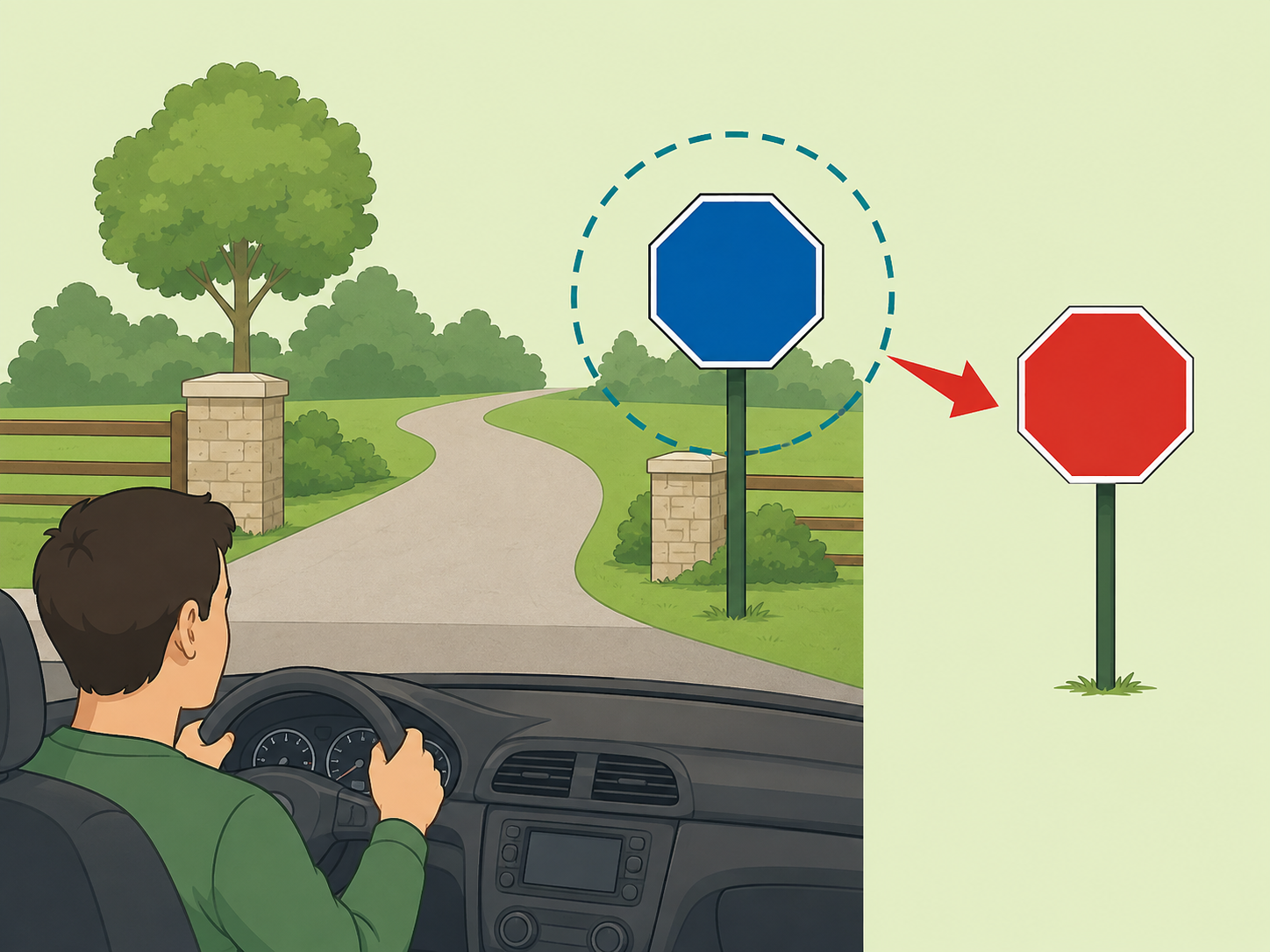
A blue stop sign can be confusing because most drivers expect stop signs to be red. In the United States, official traffic-control devices are governed by the Federal Highway Administration's Manual on Uniform Traffic Control Devices, commonly called the MUTCD. This guide explains what a blue stop sign usually means, how to respond to one, and when to question whether it belongs there.
Stop first and interpret the color second
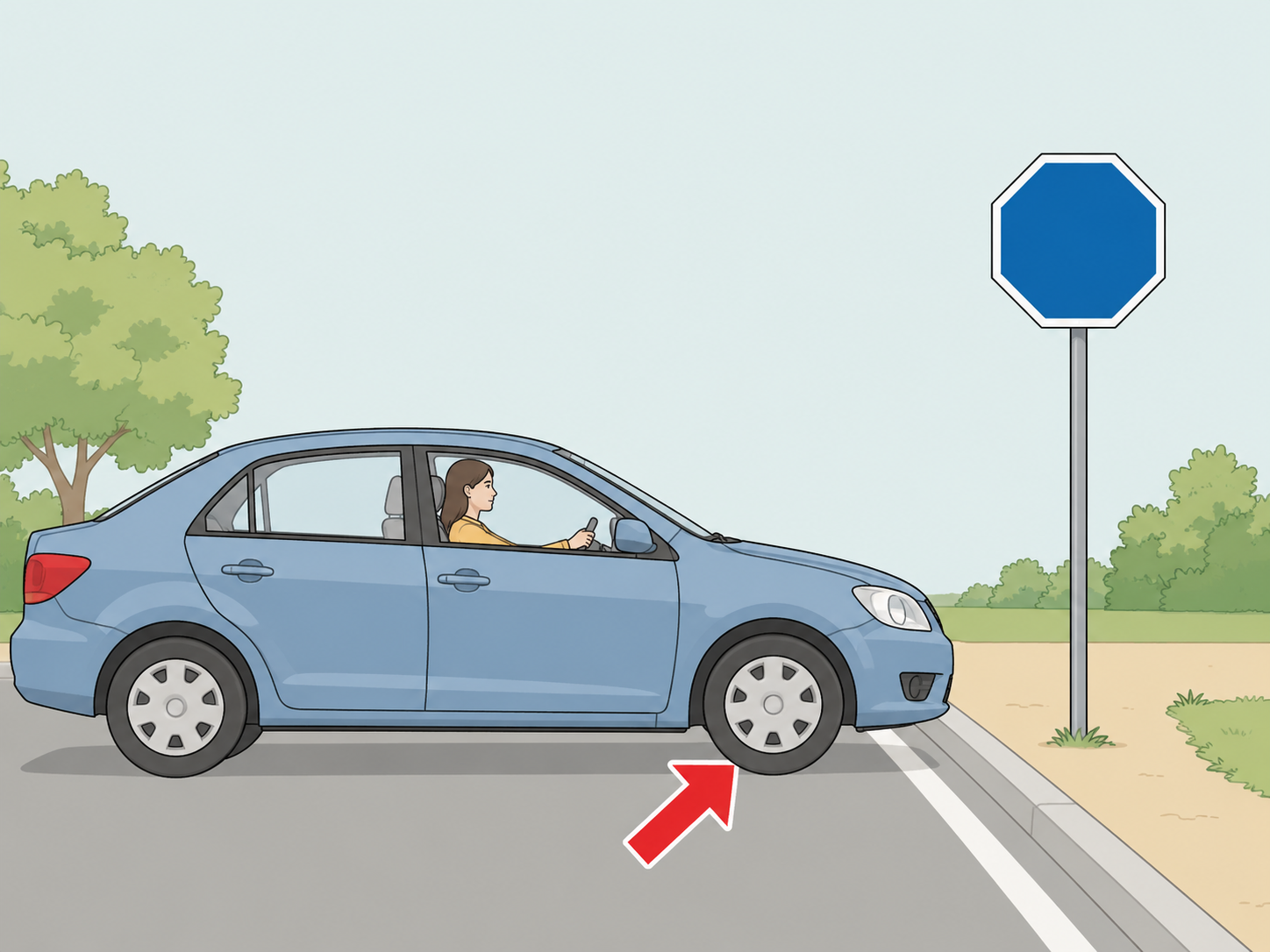
If you are driving and the sign clearly tells traffic to stop, make safety your first priority. A required stop means a complete halt in ordinary traffic-law language; for example, Hawaii's driver-safety materials say a driver approaching a stop sign should stop at the stop line, before the crosswalk, or where the driver can see approaching traffic if no line exists before entering the intersection. Do not roll through just because the color is unfamiliar.
Check whether the sign is on a public road or private property
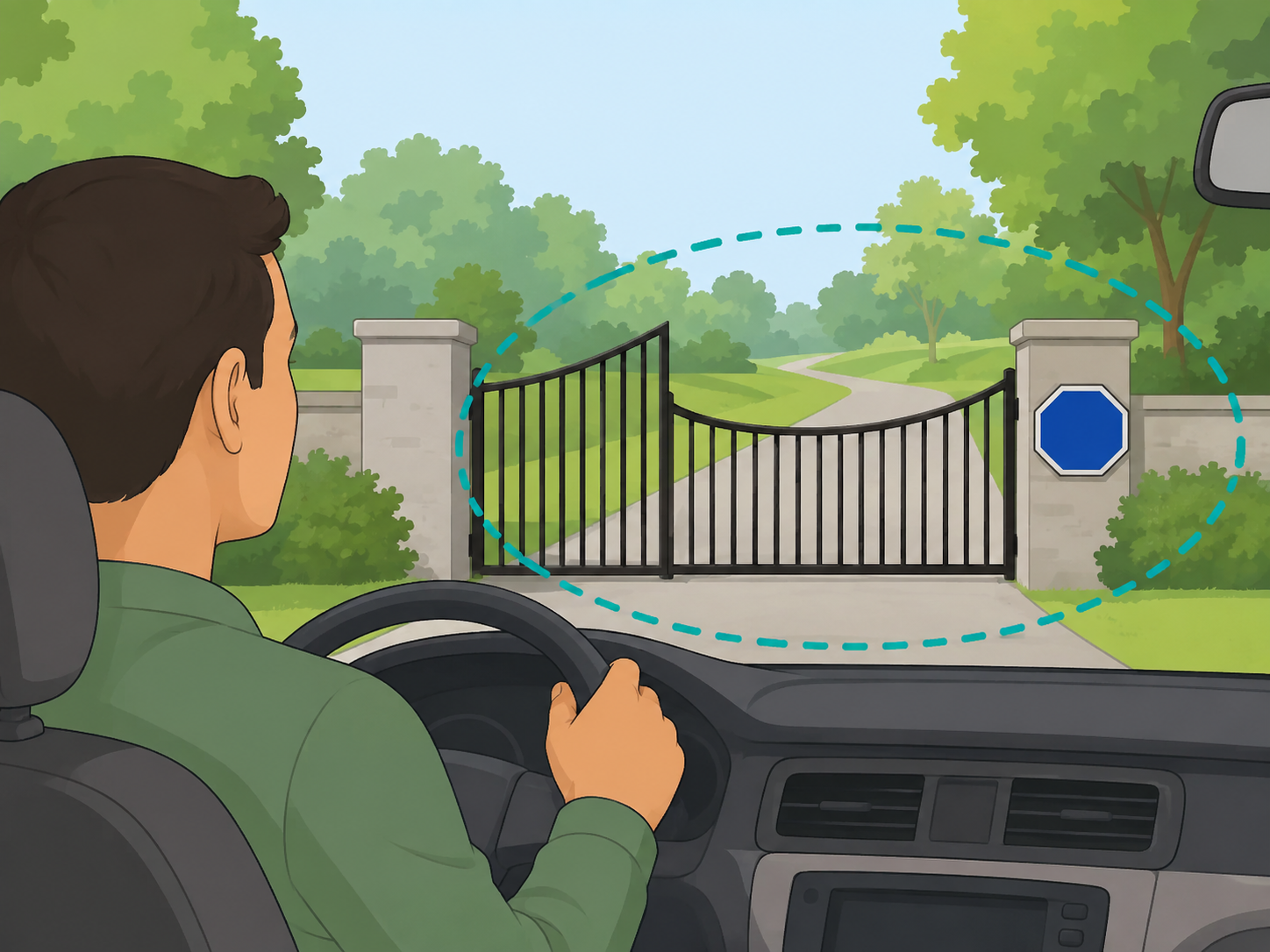
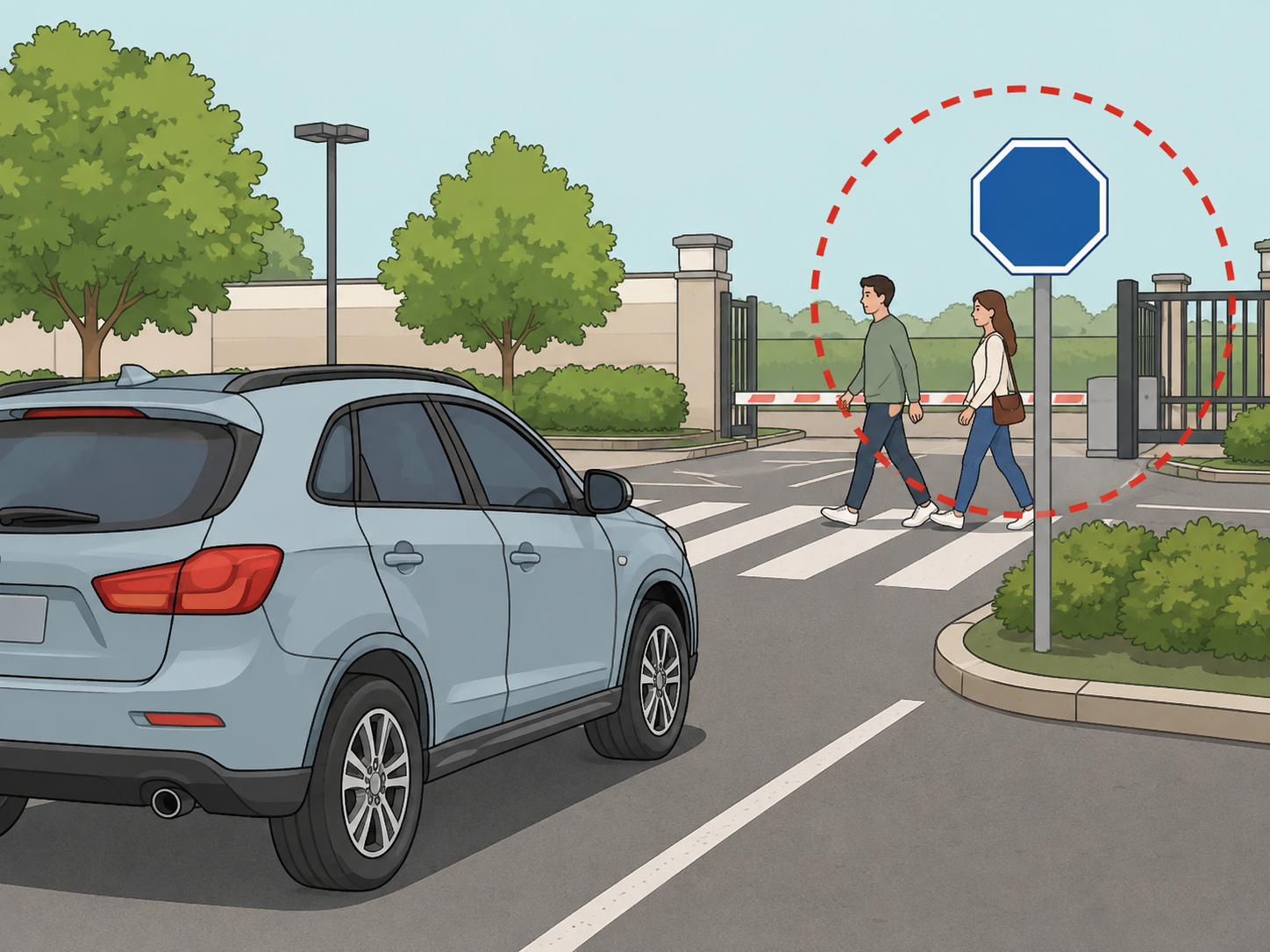
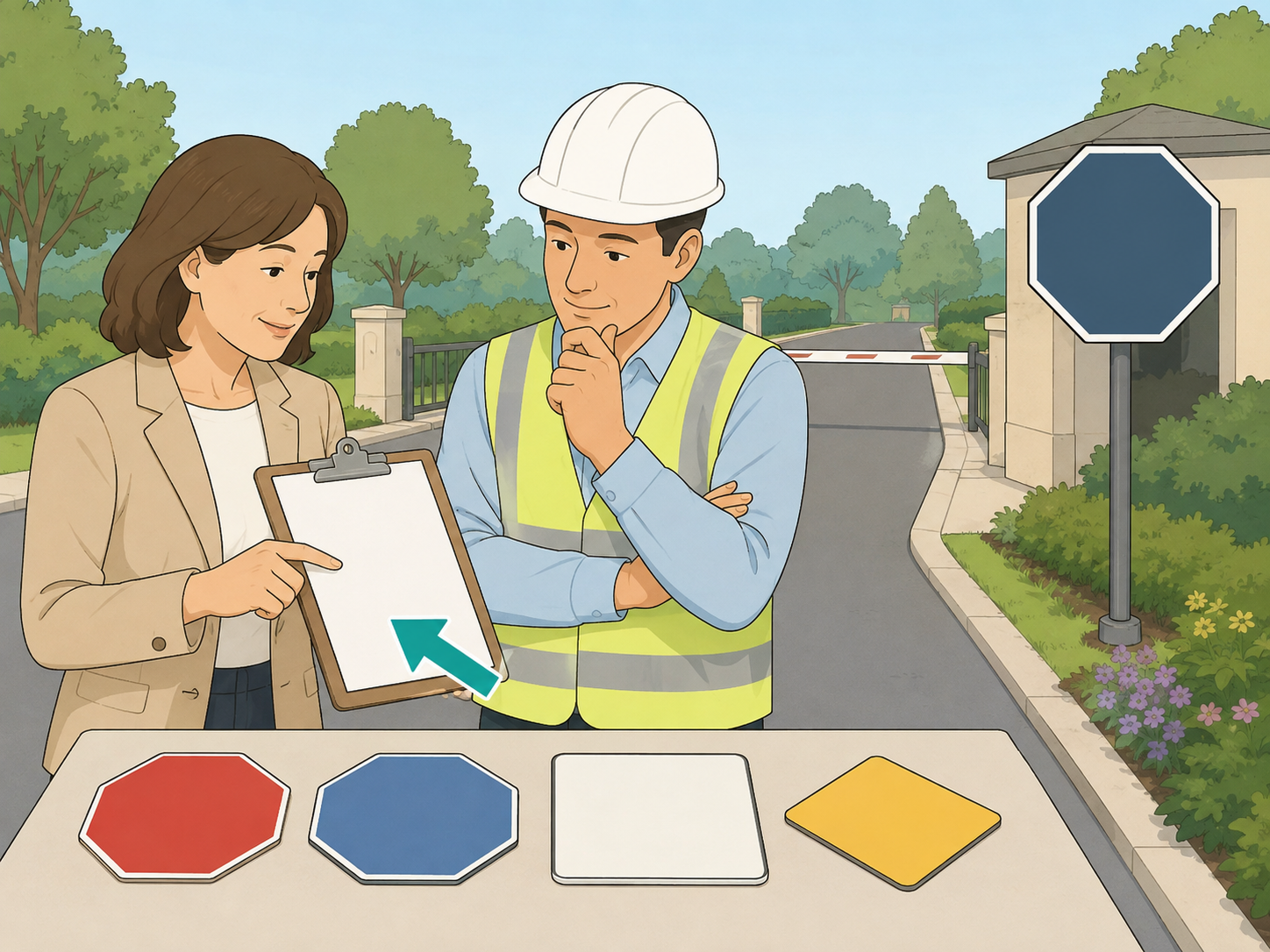
Location is the biggest clue. Federal regulations state that the MUTCD is the national standard for traffic-control devices on streets, highways, bicycle trails, and some places open to public travel, including certain privately owned roads where the public can enter without access restrictions under 23 CFR 655.603. A blue stop sign is more likely to appear in a private-property setting, such as a gated area, campus, resort road, or parking facility.
Compare it with the standard U.S. stop sign
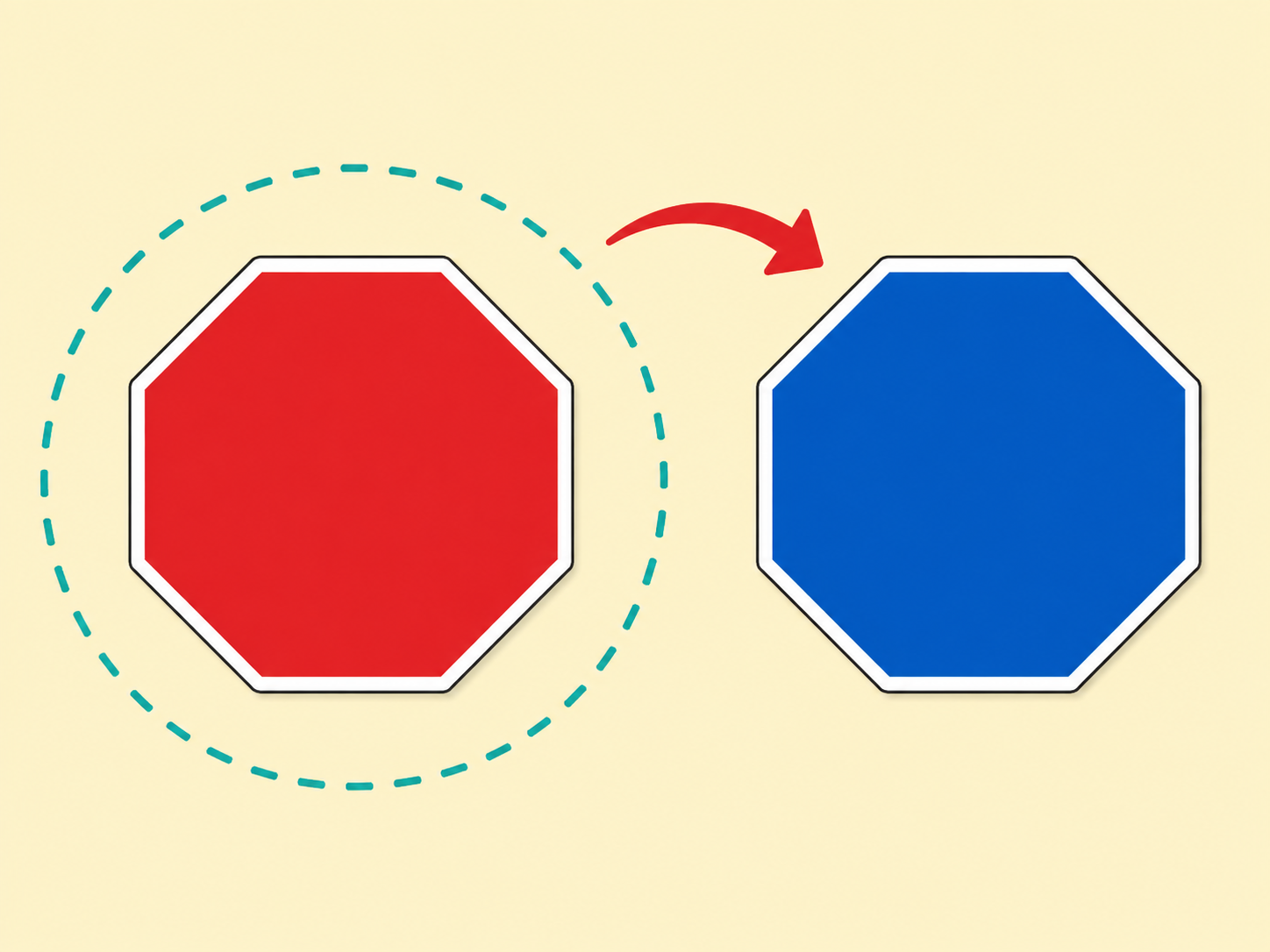
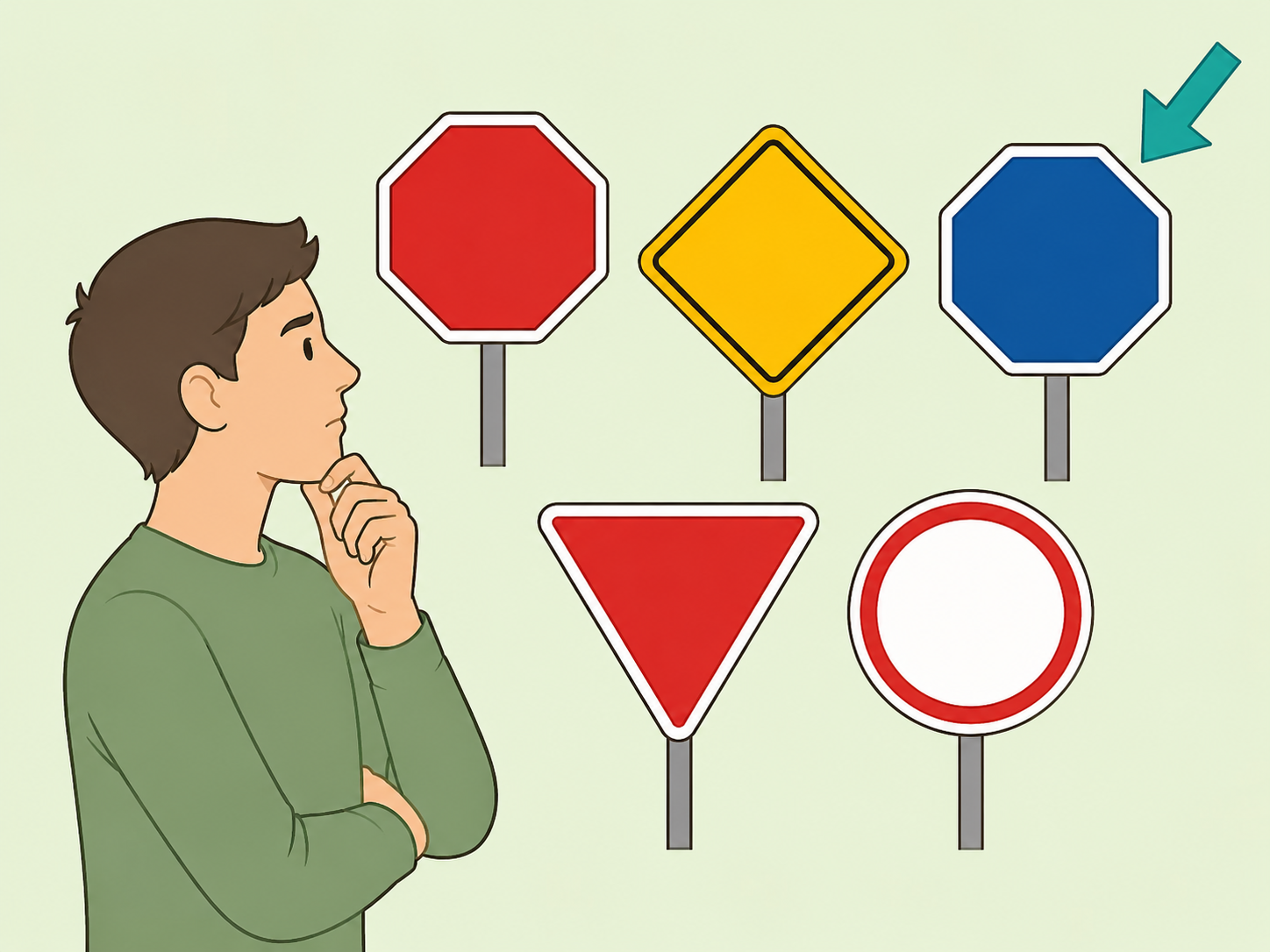
The familiar public-road stop sign in the United States is standardized: the MUTCD describes the STOP sign as an octagon with a white legend and border on a red background in its stop-sign standards. A blue octagonal sign may copy the shape and message, but the color does not match the standard red stop-sign design. That is why it should raise a question about where it is installed and who controls it.
Use blue as a clue that the sign is nonstandard
Traffic-sign colors are not random. In MUTCD color guidance, red is associated with stop or prohibition, while blue is associated with road-user services guidance, tourist information, and evacuation routes in the color code. So a blue stop sign usually means the stop message is being shown in a nonstandard color, not that blue has become the normal color for official stop signs.
Take private-property signs seriously
On private roads open to public travel, the FHWA explains that the owner is responsible for traffic-control devices, while state or local governments may also have approval requirements in some places for private-road signs. A blue stop sign may be posted to manage traffic near a gate, driveway, blind corner, pedestrian path, loading zone, or parking-lot crossing. Even when you are unsure about legal enforcement, stopping is the safest response.
Stop in the right place before moving on
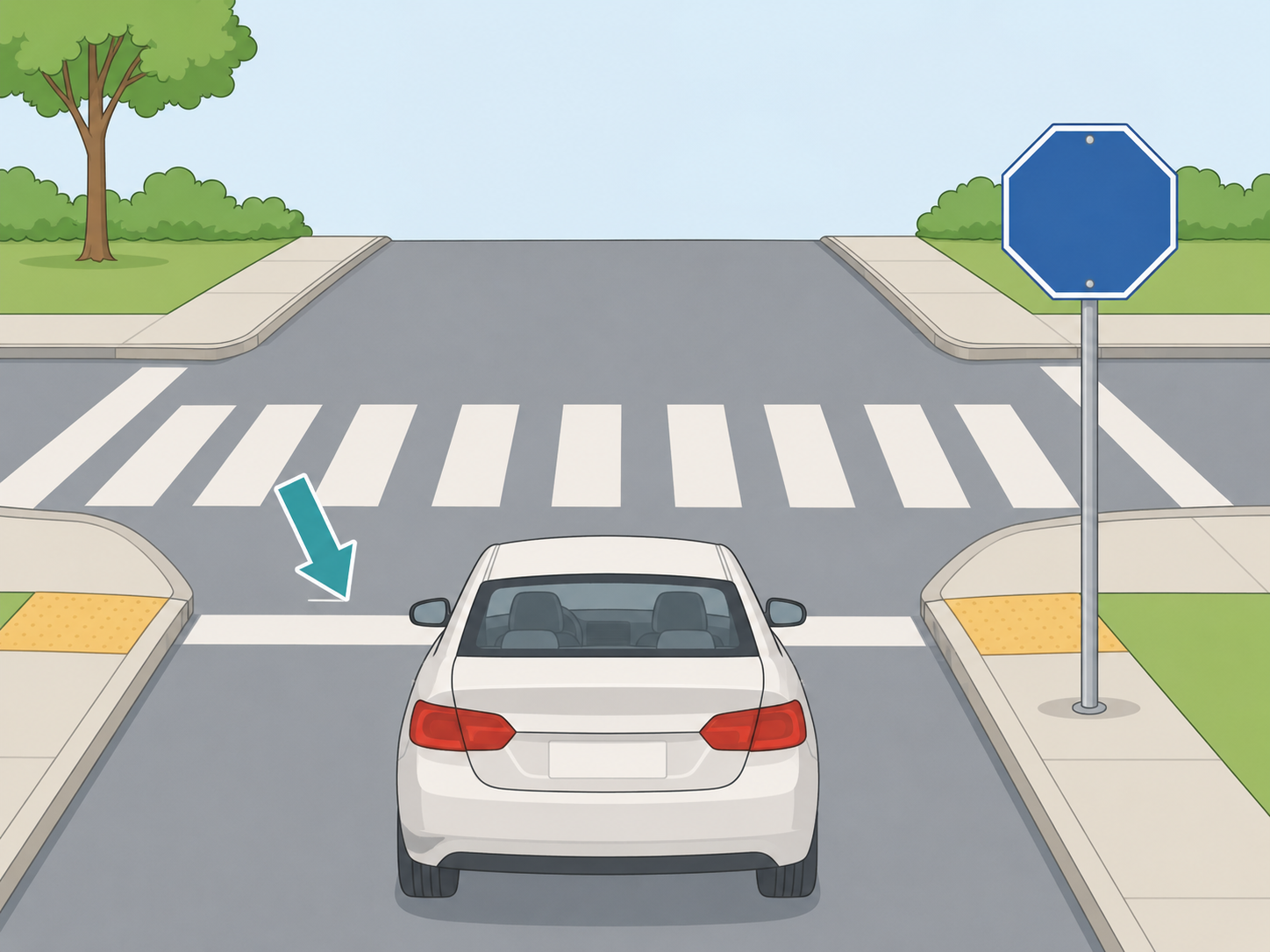
Look for a stop line first, then a crosswalk, then the place where you can see approaching traffic without entering the conflict area. Hawaii's driving guidance gives this same order for a stop intersection: stop at the marked line, before the near crosswalk if there is no line, or at the nearest point with a view if neither is present under its stop-sign FAQ. After stopping, yield to pedestrians, cyclists, and vehicles that have the right of way.
Report a confusing sign on a public road
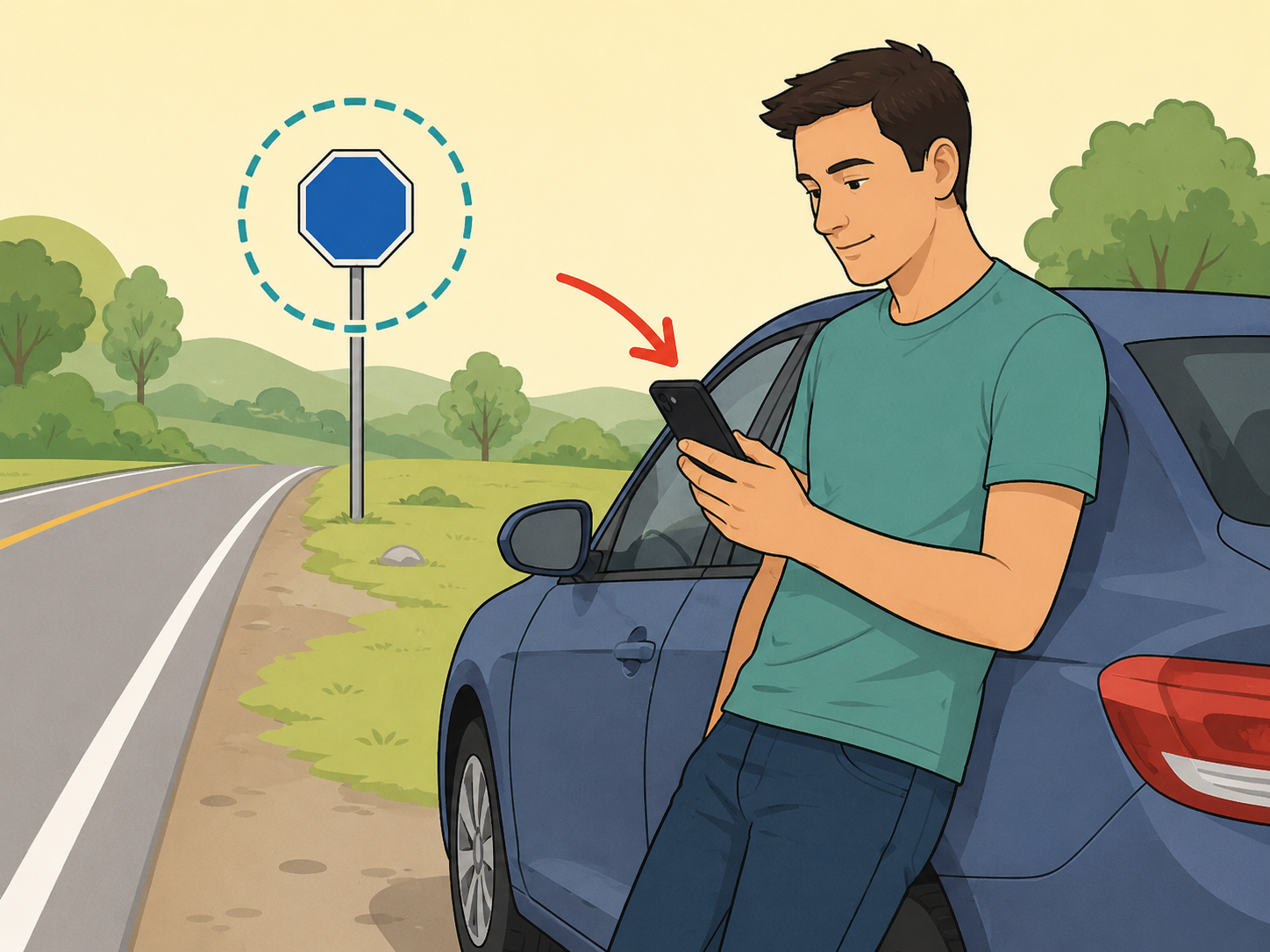
If a blue stop sign appears to control a public street, do not remove it, cover it, or assume it is meaningless. The FHWA says state and local highway agencies select, install, operate, and maintain traffic-control devices on public roadways nationwide. Note the location when it is safe to do so and contact the local public works, transportation, or road-maintenance agency.
Follow local rules before installing one
If you manage a driveway, private lane, business campus, or community road, check local requirements before installing any stop sign. Federal rules require traffic-control devices on facilities open to public travel to conform to the MUTCD, and states or local agencies may have additional standards for conformance. When in doubt, ask a qualified traffic engineer or your local road authority what sign design is appropriate.
Summary
The bottom line: a blue stop sign is best understood as a stop instruction first and a nonstandard color clue second. Stop safely, check your surroundings, and remember that official U.S. stop signs use the familiar red-and-white design.
Frequently Asked Questions
- Does a blue stop sign still mean stop?
- Yes. For practical safety, treat it as a stop instruction, come to a full stop, check for people and traffic, and proceed only when clear.
- Is a blue stop sign an official U.S. stop sign?
- A standard U.S. stop sign is not blue. The MUTCD describes the official STOP sign as an octagon with a white legend and border on a red background.
- Why would a stop sign be blue?
- A blue stop sign is usually a nonstandard sign used in a private-property or unusual setting. The color helps distinguish it from the standard red public-road sign, but the exact reason depends on who installed it.
- Can I ignore a blue stop sign on private property?
- No. Even if the sign is nonstandard, it may warn you about pedestrians, gates, parking-lot traffic, or other hazards. Property rules and local laws can also matter.
- What does blue normally mean on U.S. traffic signs?
- In MUTCD color guidance, blue is generally associated with road-user services, tourist information, and evacuation routes, while red is associated with stop or prohibition.
- What should I do if I see a blue stop sign on a public road?
- Stop safely first. If it appears to be on a public street or highway, report it to the local road agency or public works department rather than moving or altering it yourself.
References
Reliable references aided in composing and refining this content.
- https://mutcd.fhwa.dot.gov/kno_11th_Editionr1.htm
- https://www.ecfr.gov/current/title-23/chapter-I/subchapter-G/part-655/subpart-F/section-655.603
- https://mutcd.fhwa.dot.gov/knowledge/faqs/faq_general.htm
- https://mutcd.fhwa.dot.gov/htm/2009r1r2/part2/part2b.htm
- https://mutcd.fhwa.dot.gov/htm/2009/part1/part1a.htm
- https://hidot.hawaii.gov/highways/safe-communites/walkwisehawaii/faq