
 Pin it
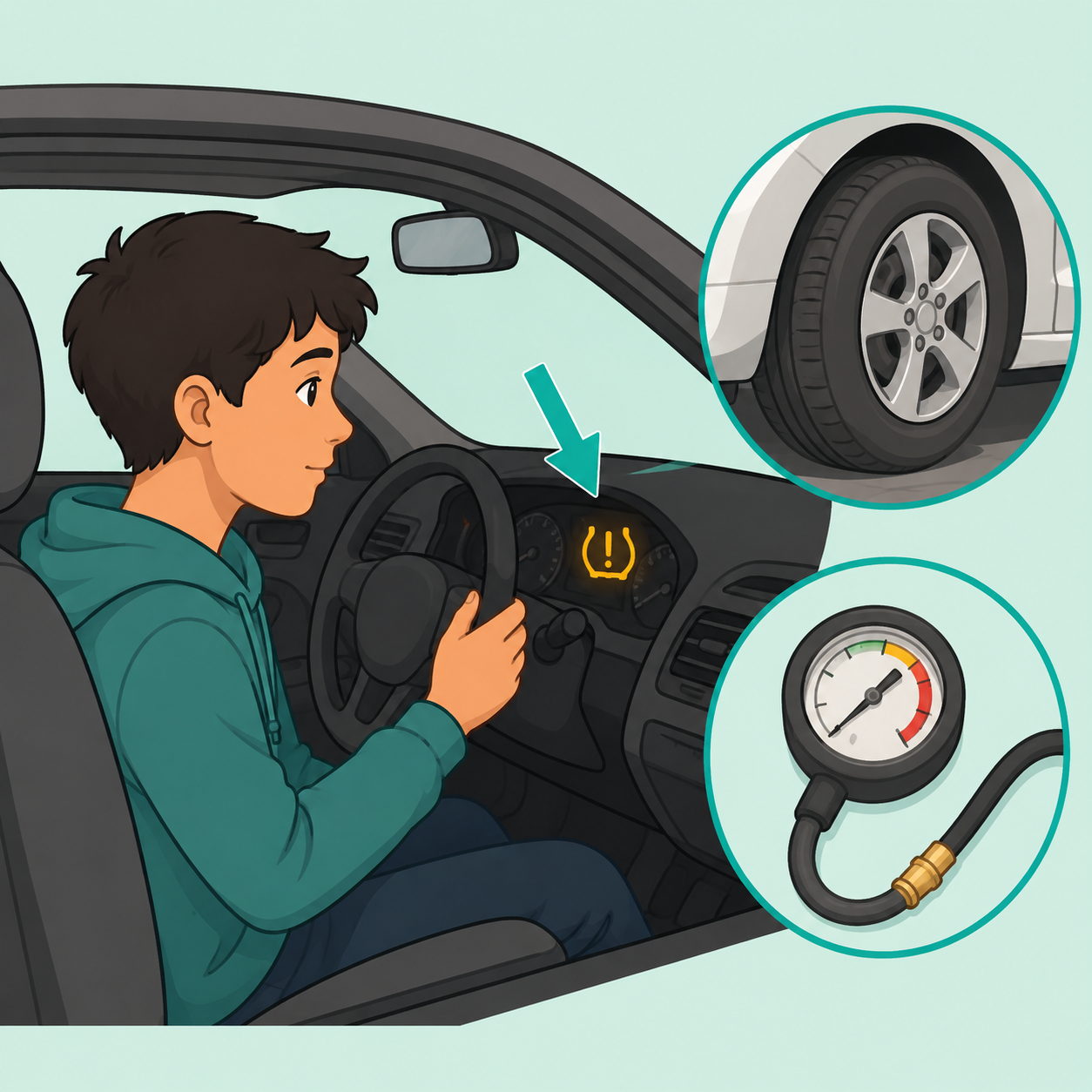
Many drivers have a built-in tire pressure monitoring system, or TPMS, without realizing what it does. This dashboard feature warns you when one or more tires may be significantly underinflated, but it does not replace regular tire checks. Here is how to find it, understand it, and use it as part of simple tire maintenance.
Confirm that your car has TPMS
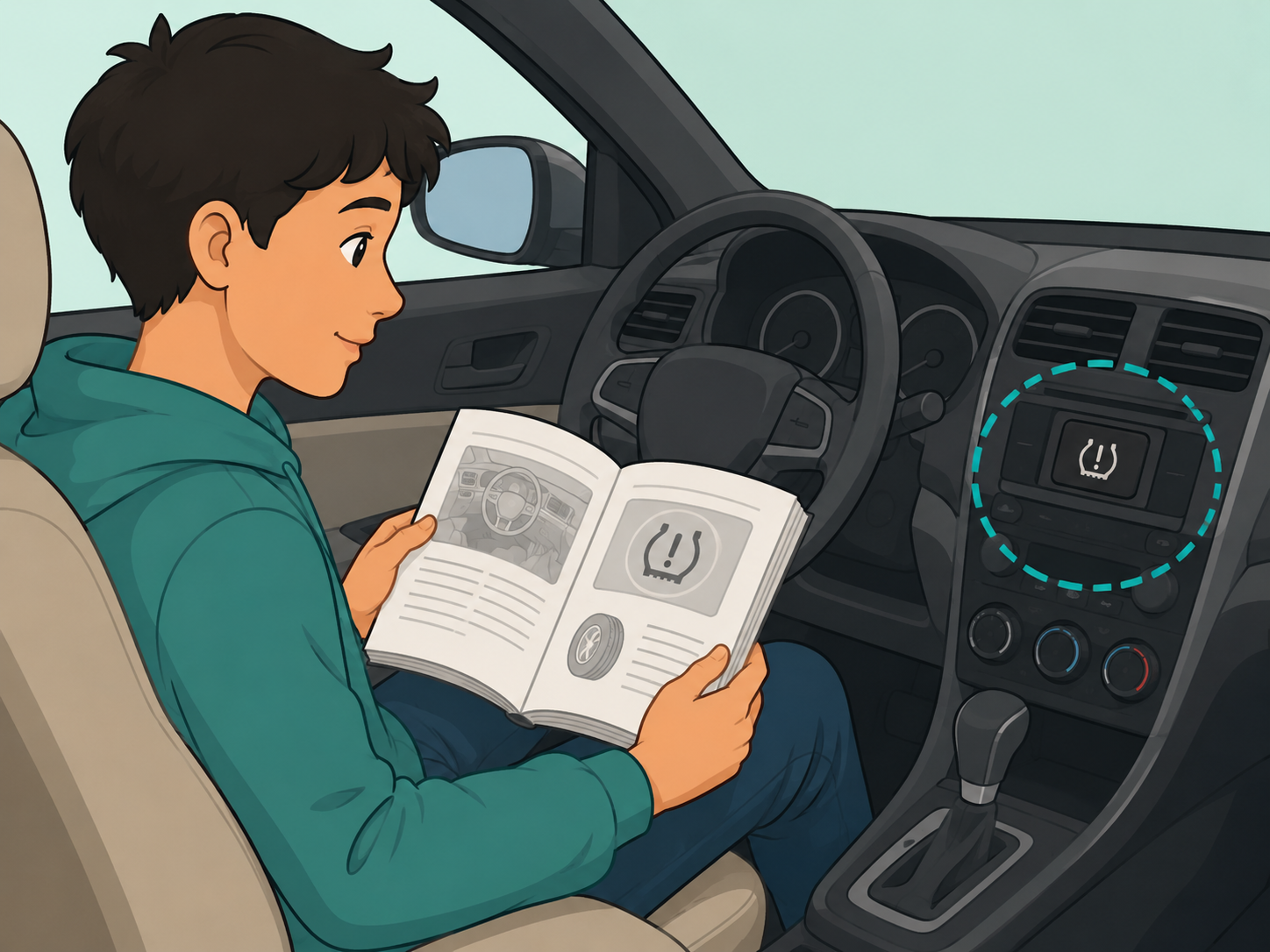
Start by checking your owner's manual or looking for a tire-pressure section in the vehicle settings. In the United States, NHTSA says passenger cars, light trucks, and vans from model year 2008 or newer are required to have this feature, while some 2006 and 2007 models also include it. If your car is older or imported, confirm the equipment before relying on the warning light.
Learn what the dashboard symbol looks like
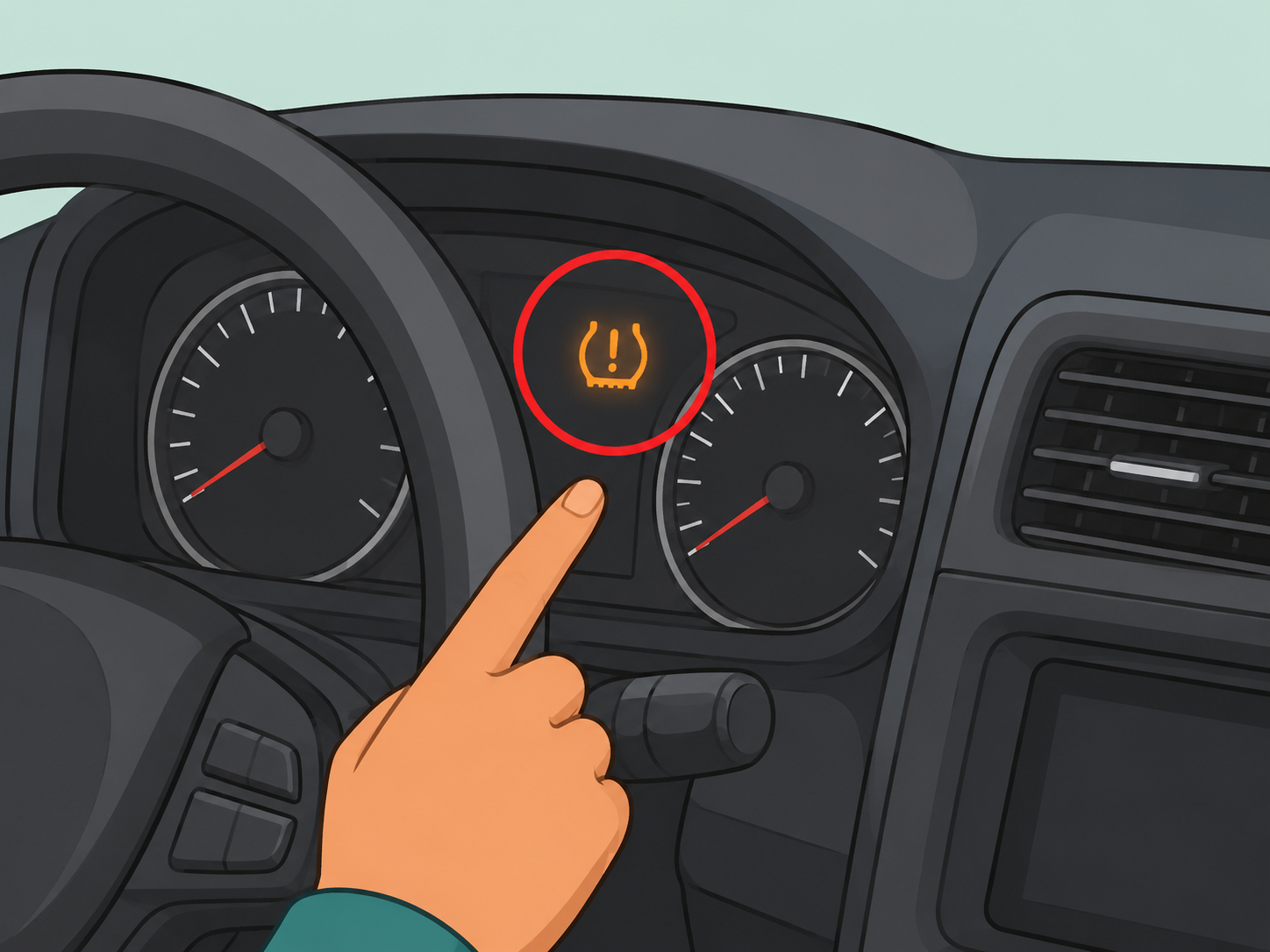
Look for a yellow or amber symbol that resembles a tire cross-section with an exclamation point, or a top-view car icon showing all four tires. NHTSA explains that either warning can mean tire pressure is significantly low. Review your manual so you can recognize the symbol quickly instead of mistaking it for a general warning light.
Find the correct pressure on the doorjamb label
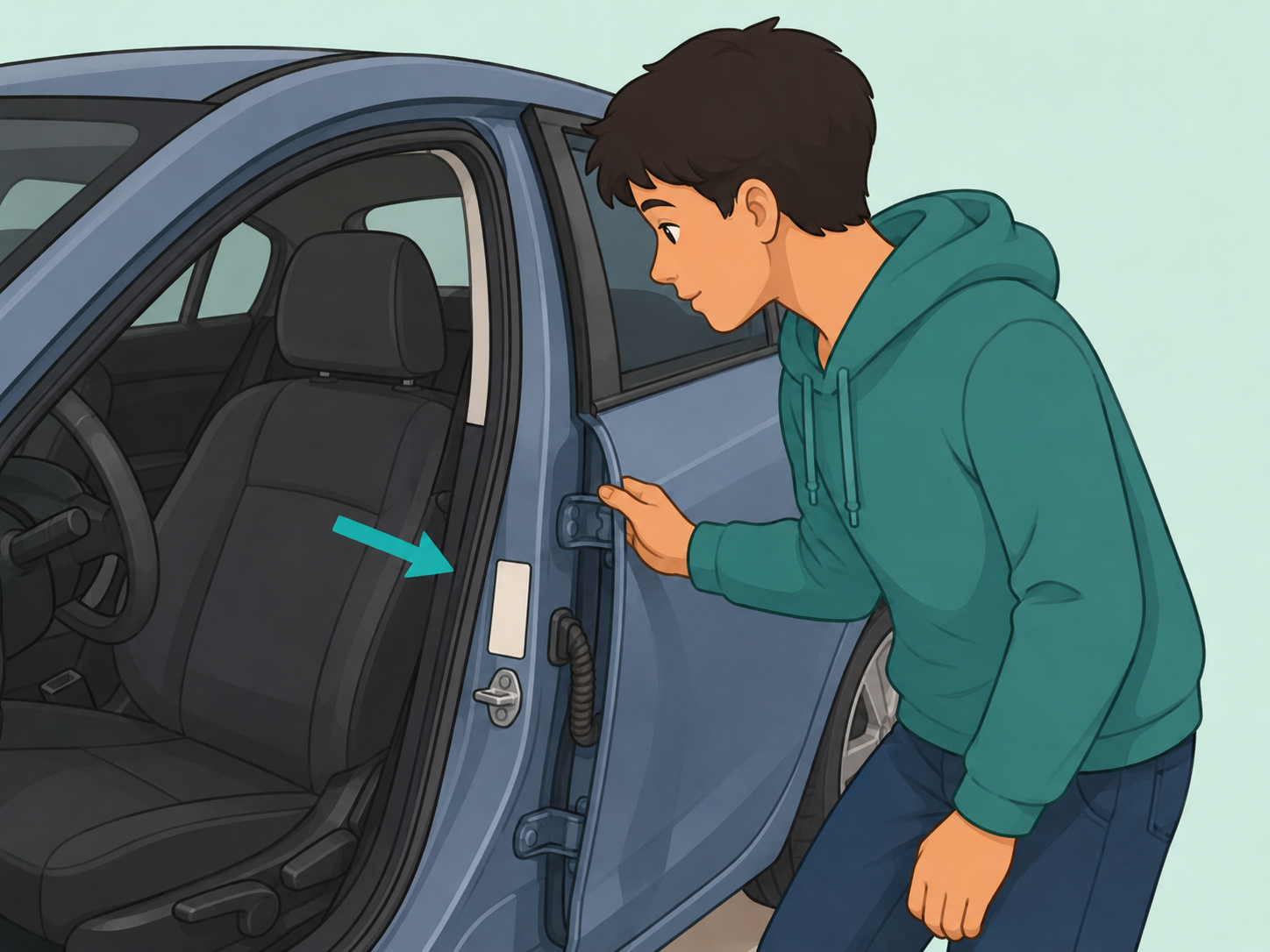
Open the driver's door and look for the Tire and Loading Information Label on the door edge, doorjamb, or nearby pillar. Use the vehicle manufacturer's recommended cold tire pressure listed there or in the owner's manual, not the number molded onto the tire sidewall. NHTSA identifies that label as the proper source for your vehicle's tire pressure.
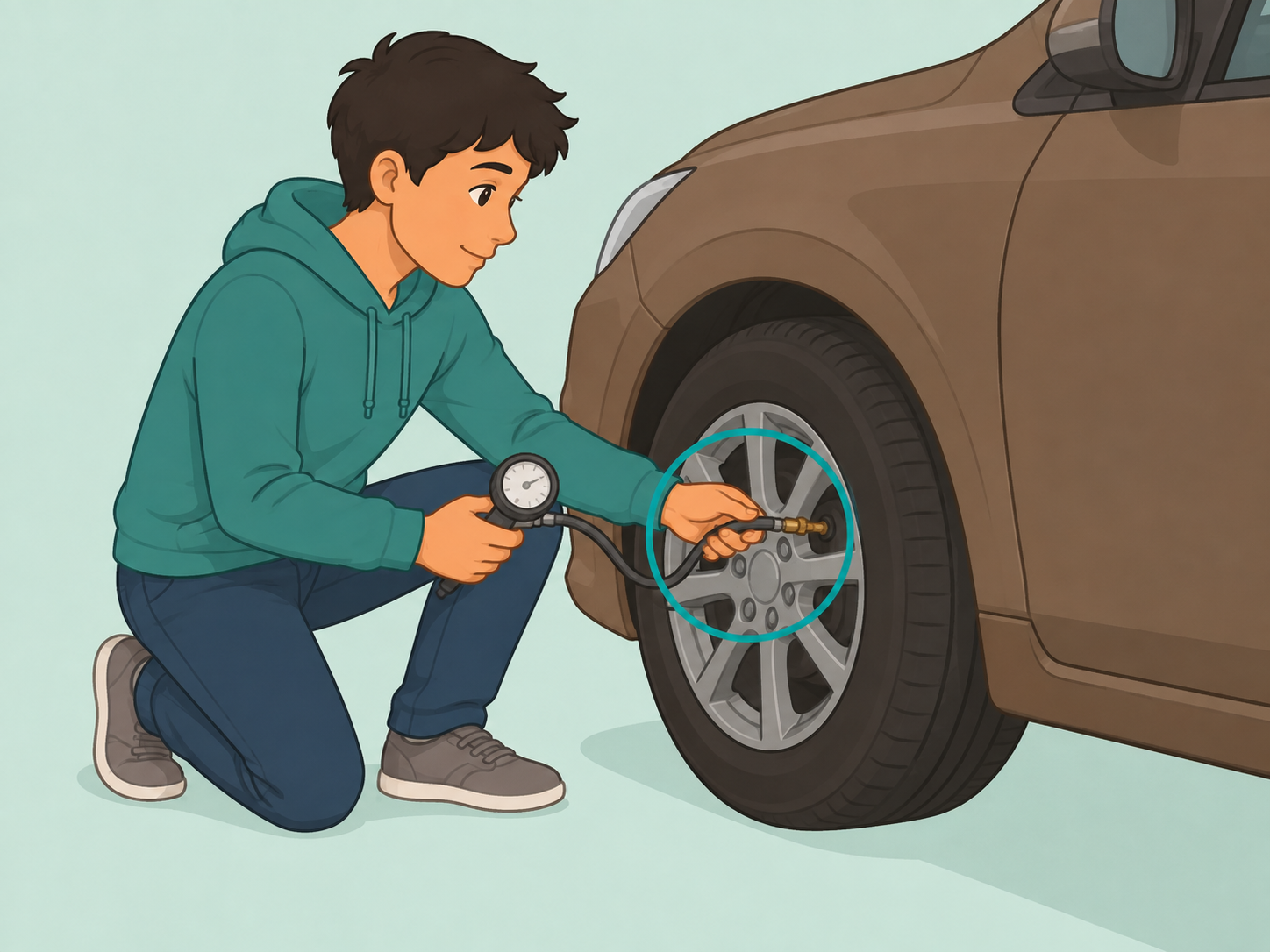
Check the tires monthly when they are cold
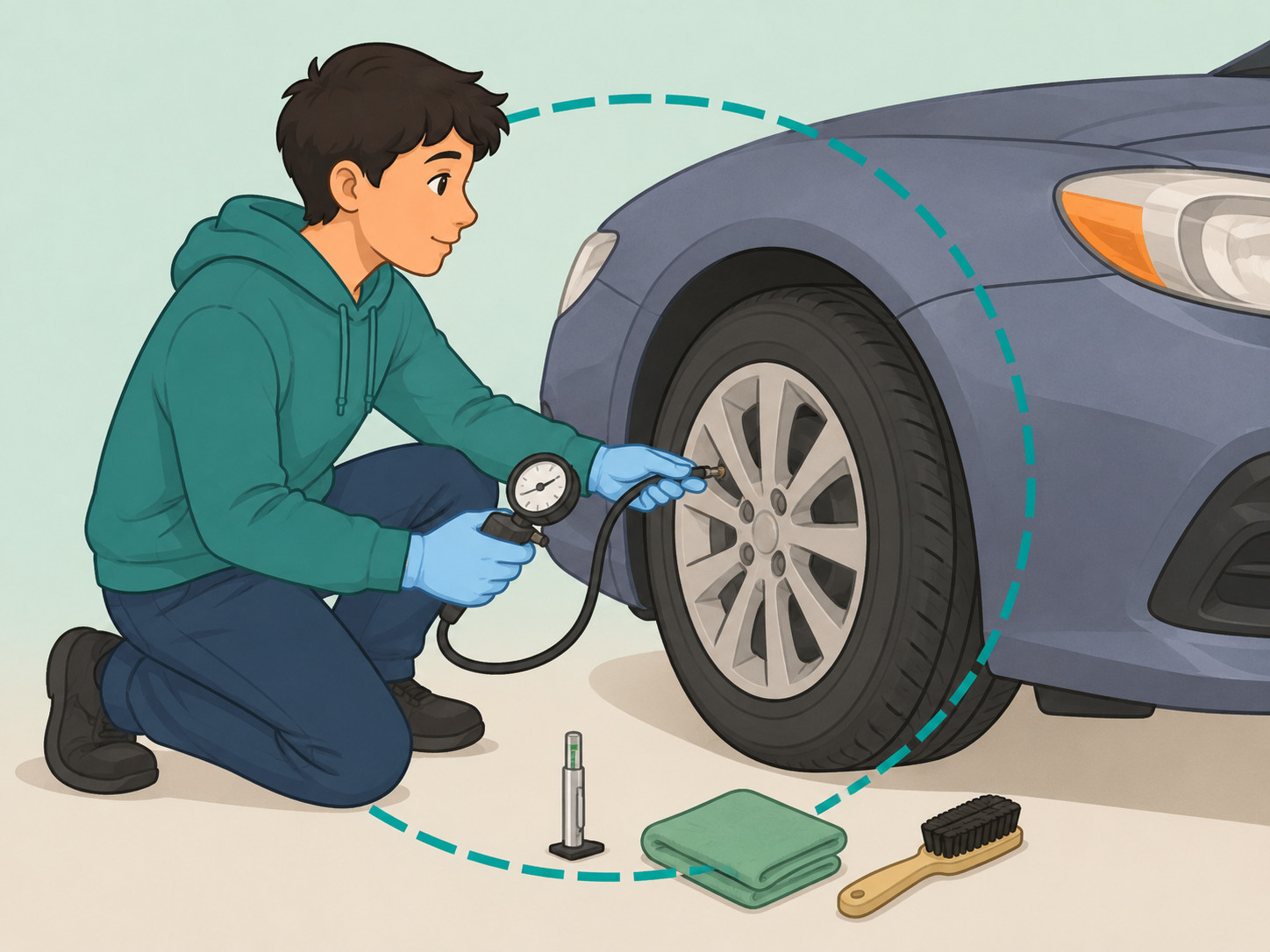
Use a reliable tire pressure gauge at least once a month, including on the spare tire if your vehicle has one. For the most accurate reading, check when the tires are cold, meaning the car has not been driven for at least three hours. Regular checks still matter because TPMS is not meant to replace tire maintenance.
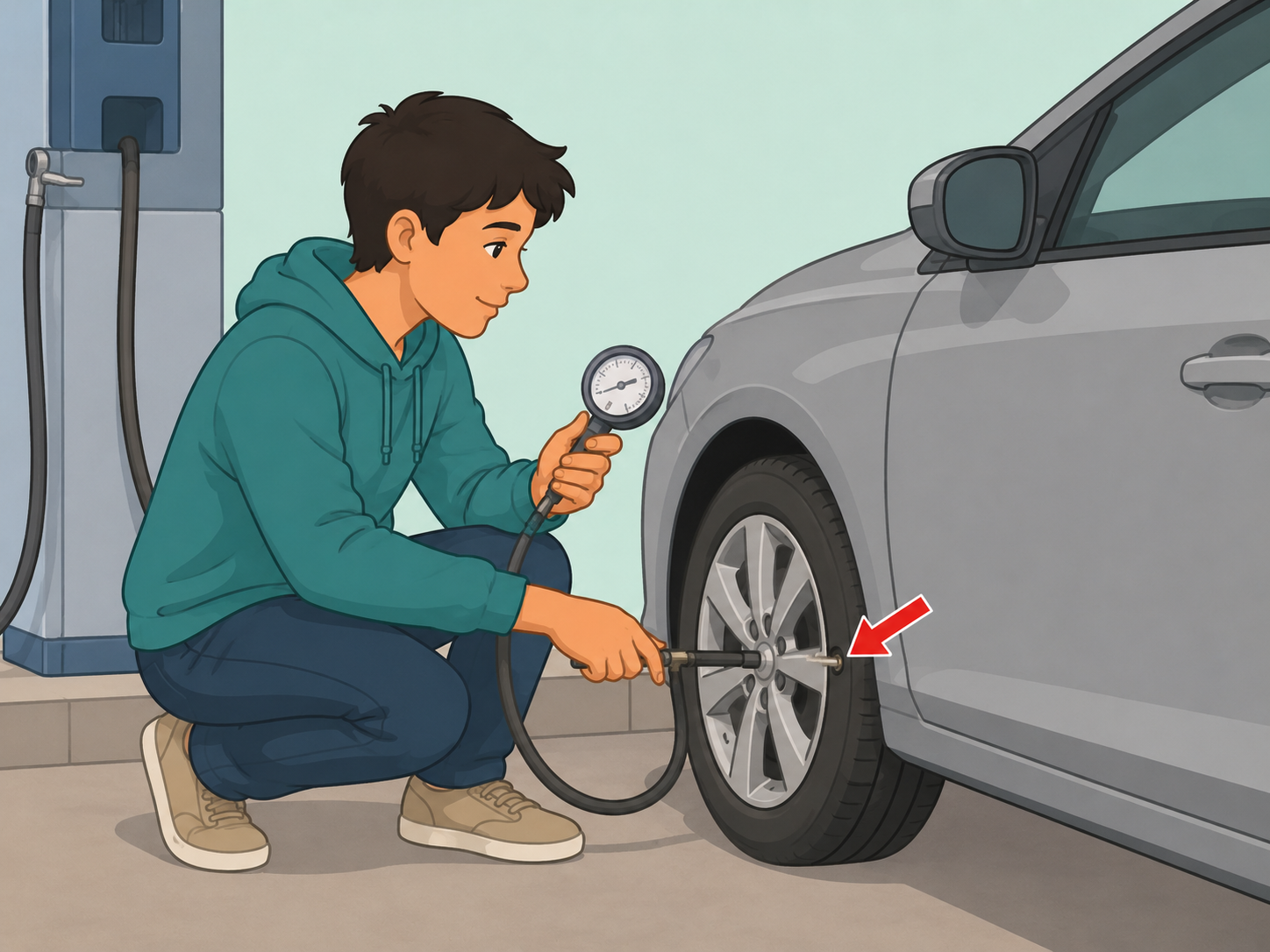
Act quickly when the TPMS light stays on
If the light stays on while you drive, pull over when it is safe and inspect the tires for obvious damage, a flat, or a very low tire. Check each tire with a gauge and add air to the recommended pressure on the doorjamb label. NHTSA advises checking tire pressure as soon as possible when the TPMS symbol appears.
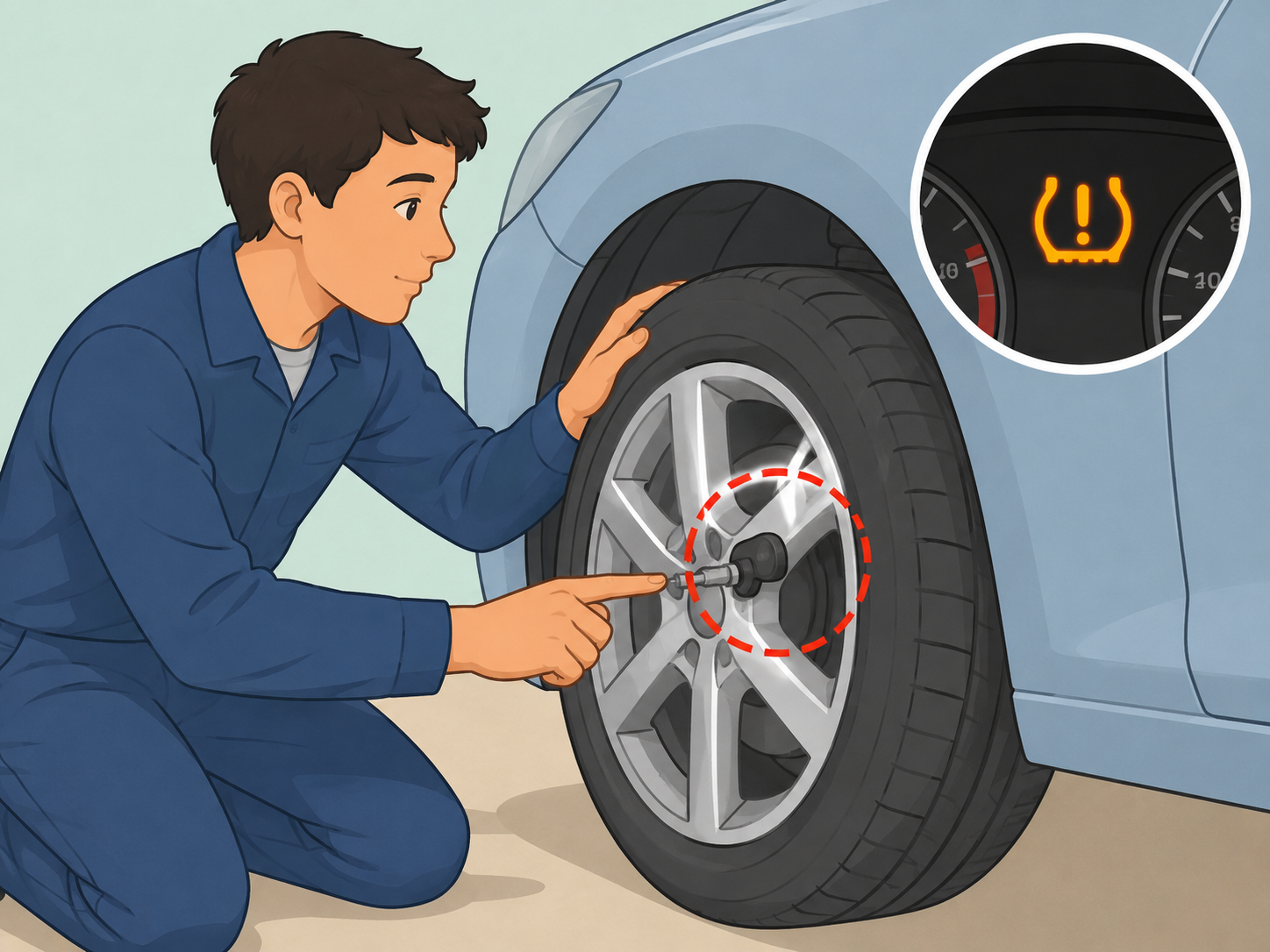
Treat a flashing light as a service signal
If the TPMS light flashes for about a minute and then remains on, the system may not be working properly. Federal TPMS rules require the system to warn the driver about certain malfunctions, and 49 CFR 571.138 describes TPMS as a system that warns drivers of significant underinflation. Schedule an inspection with a dealer or qualified tire shop so the sensors and system can be checked.
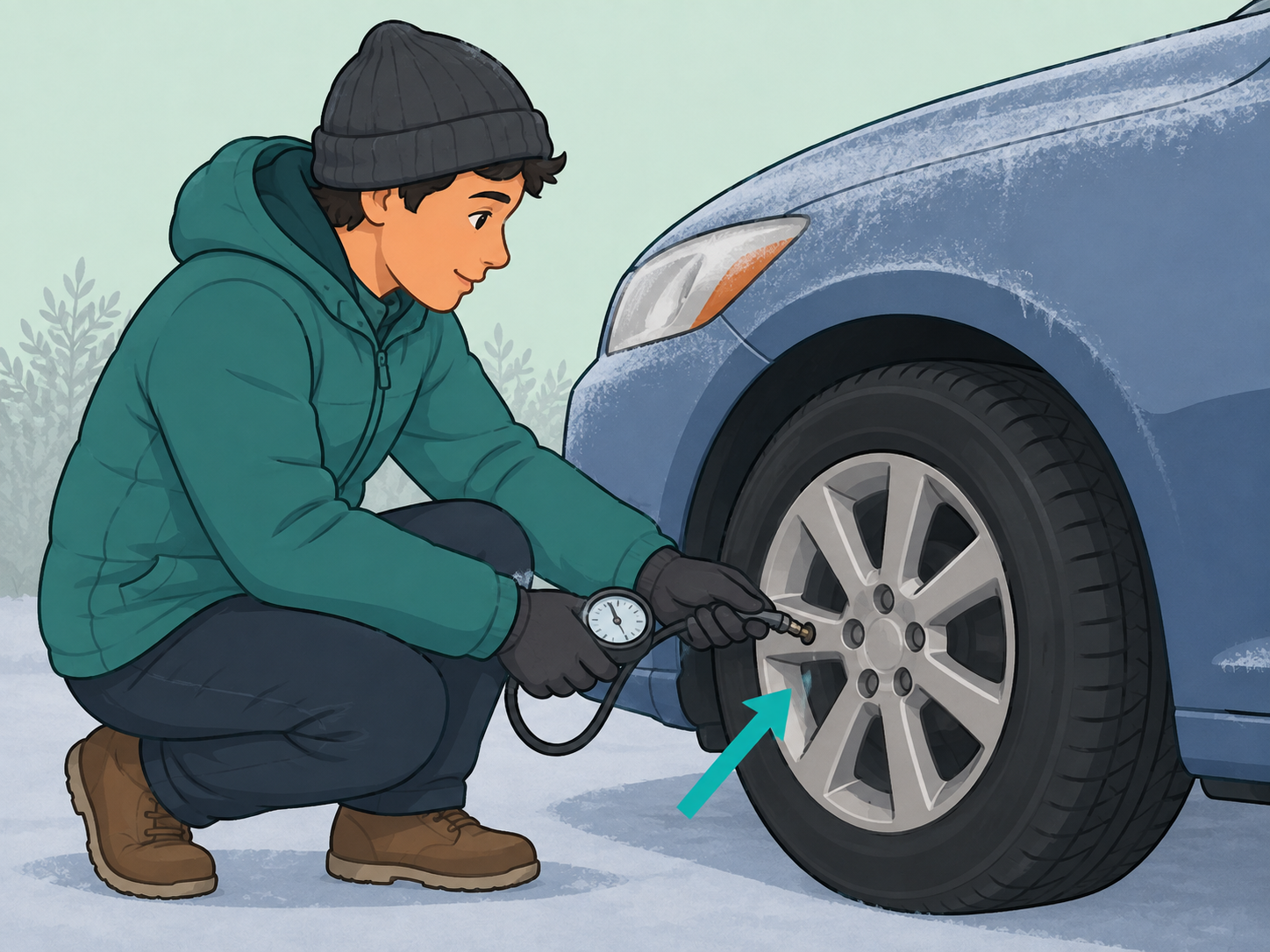
Recheck pressure after cold mornings
A TPMS light that comes on in the morning and goes off later can still be worth checking. NHTSA notes that cold mornings can temporarily trigger the light when marginally low pressure drops below the warning threshold. Add air as needed to the cold tire pressure listed for your vehicle rather than waiting for the light to disappear.
Keep using basic tire maintenance habits
Use TPMS as one warning tool, not the whole maintenance plan. Properly inflated tires support safety, tire life, and fuel economy; the U.S. Department of Energy says proper tire inflation can improve gas mileage. Check tread, look for damage, rotate tires as your owner's manual recommends, and ask a tire professional about repeated pressure loss.
Summary
The bottom line: treat the TPMS light as an early warning, not a full tire inspection. Check tire pressure monthly with a gauge, use the pressure listed by your vehicle manufacturer, and arrange service if the warning flashes, stays on after inflation, or keeps coming back.
Frequently Asked Questions
- What does TPMS mean?
TPMS stands for tire pressure monitoring system. It uses tire sensors or vehicle sensor data to warn you when tire pressure is low enough to trigger the dashboard warning.
- Do all cars have a tire pressure monitoring system?
In the United States, passenger cars, light trucks, and vans from model year 2008 or newer are required to have TPMS. Some 2006 and 2007 vehicles also have it, so check your owner's manual if your car is older.
- Can I keep driving if the TPMS light is on?
You should check the tires as soon as it is safe. A steady TPMS light usually means at least one tire is significantly underinflated, and driving too long on a very low tire can damage the tire or affect handling.
- Why does my tire pressure light come on in cold weather?
Cold air can lower tire pressure enough to trigger a warning, especially if the tire was already near the limit. Check the pressure with a gauge and inflate to the vehicle's recommended cold tire pressure.
- Does TPMS mean I do not need to check my tires?
No. TPMS is not a substitute for monthly tire pressure checks because it usually warns only after pressure is already significantly low.
- What does it mean if the TPMS light flashes first and then stays on?
A flashing TPMS light followed by a steady light usually points to a system malfunction. Have the system inspected by a dealer or qualified tire service professional.
References
Reliable references aided in composing and refining this content.